体育赛事

Search documents
焦点访谈丨“为一场比赛,奔赴一座城” 赛事如何成为带动发展的“经济引擎”?
Yang Shi Xin Wen· 2025-08-08 06:09
Core Insights - The article discusses the growing trend of sports events driving local economies by boosting consumption in transportation, tourism, dining, and accommodation sectors. It emphasizes the transformation of event traffic into economic growth for various regions [1][11][36] Group 1: Event-Driven Economic Growth - Local sports events are becoming a focal point for economic development, with many regions leveraging these events to stimulate consumption and tourism [1][11] - The "event economy" is seen as a way to turn sports events into economic engines, benefiting both individuals and local areas [1][11] - The integration of cultural experiences and local attractions into sports events enhances participant engagement and drives additional spending [5][7] Group 2: Policy and Strategic Support - National policies are promoting the development of event economies, encouraging the creation of unique event brands and integrating sports events into tourism and commercial activities [11][13] - The government has issued guidelines to foster new consumption scenarios through sports events, responding to the public's demand for enhanced consumer experiences [11][36] Group 3: Case Studies and Examples - The Sanya economic circle's trail running event showcases how sports can connect scenic spots and cultural experiences, leading to increased participation and spending [3][5] - Shanghai's hosting of international events like the Formula 1 Grand Prix has generated significant economic benefits, with direct economic impacts reaching 11.378 billion yuan in 2024 [15][17] - Chengdu is focusing on utilizing its event legacy to create new consumption opportunities, with venues like the Phoenix Mountain Sports Park attracting local engagement and tourism [25][30] Group 4: Consumer Engagement and Experience - Events are evolving to provide immersive experiences, with participants seeking not just competition but also cultural and social engagement [5][7] - The concept of "观赛之旅" (watching events as a journey) is being implemented, where ticket holders receive discounts at local businesses, enhancing the overall consumer experience [19][21] - Understanding participant demographics and preferences is crucial for tailoring services and maximizing economic impact [23][37]

多地探索“美食+文旅体” 特色餐饮,不只满足舌尖
Ren Min Ri Bao· 2025-08-08 05:50
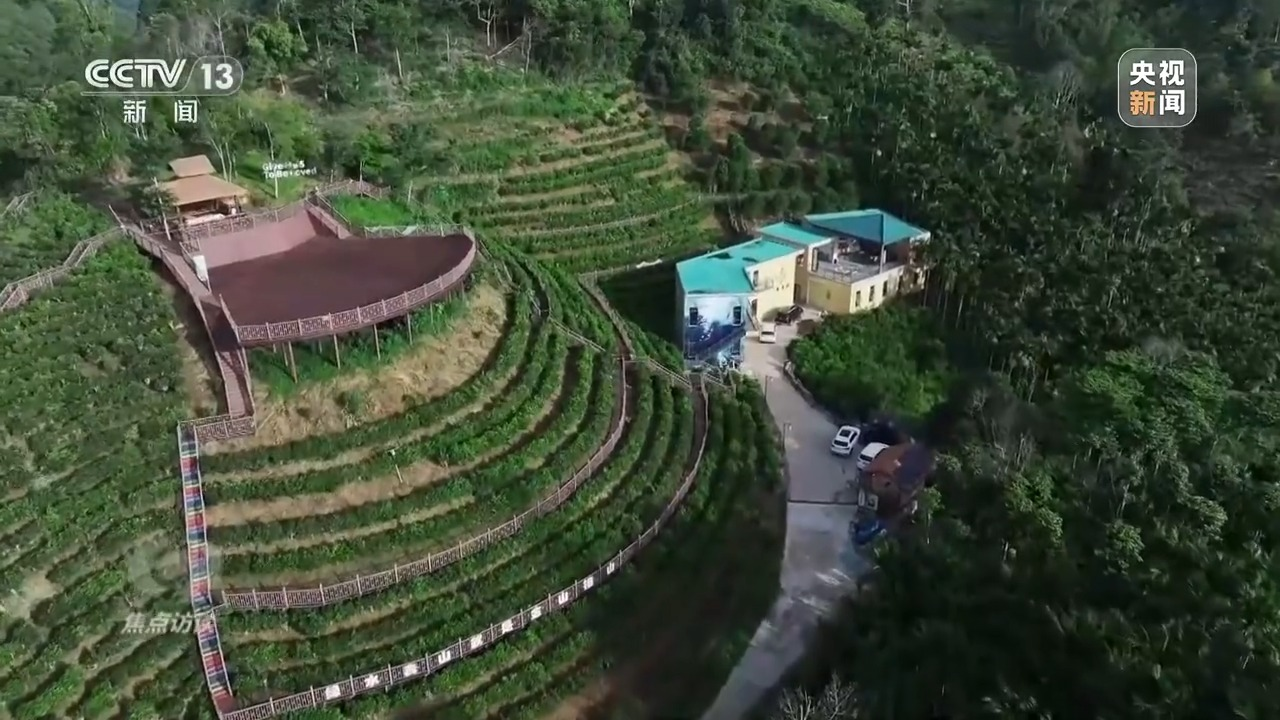
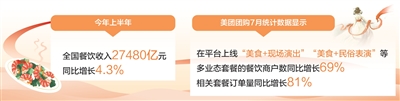
Core Insights - The article emphasizes the importance of enhancing consumption, particularly in the food and beverage sector, as part of a broader initiative to stimulate economic growth through diversified service consumption [1] Group 1: Restaurant Consumption Trends - The Central Political Bureau of the Communist Party of China has called for actions to boost consumption, focusing on both goods and services [1] - In various regions, there is a trend towards improving the quality of dining services and integrating food with cultural and tourism experiences to drive summer consumption [1] Group 2: Case Study - Luoyang - Luoyang's night market features over 200 types of local snacks, attracting daily foot traffic of over 10,000, which can exceed 30,000 on holidays [3] - The market has undergone upgrades to ensure food safety and comfort, including the use of electric cooking facilities and modernized stalls [4] Group 3: Case Study - Mianyang - Mianyang's rural tourism base has become popular, receiving 200,000 visitors last year and generating approximately 8 million yuan in revenue [6][7] - The base offers a "food + countryside" experience, allowing visitors to pick fresh vegetables and enjoy farm-to-table dining [5][6] Group 4: Case Study - Qingdao - Qingdao has successfully integrated sports events with food consumption, with the recent fashion sports festival attracting 8,000 participants and boosting local dining and accommodation sectors [8][9] - The synergy between sports events and local food products, such as blueberries, has created new consumer trends and increased local agricultural revenue [9]
北京奥运城市体育文化节暨“8·8”北京体育消费节开幕
Xin Jing Bao· 2025-08-08 02:31
8月7日晚,第十六届北京奥运城市体育文化节暨第六届"8·8"北京体育消费节开幕式在北京奥运博物馆 双奥庭院举行。据介绍,本届北京奥运城市体育文化节推出20余项群众体育赛事和文化交流活 动,"8·8"北京体育消费节为市民提供一站式体育消费服务。 国际奥委会新任主席发来贺信 奥林匹克中心区将举办4场活动 活动期间,奥林匹克中心区将举办4场活动,推动文商旅体融合发展,促进国际消费中心城市建设。 由北京市体育局、北京市商务局、北京市文化和旅游局、天津市体育局、河北省体育局、北京市朝阳区 人民政府主办的"AI尚体育 悦动一夏"第六届"8·8"北京体育消费节线下嘉年华于8月7日至10日在奥林匹 克中心区庆典广场举行,共举办17项体育赛事和活动,涉及专业竞技、文化表演、互动体验等。本次线 下嘉年华吸引超过80家商户参与,涵盖体育科技、户外用品、体育旅游、运动康复、文创产品、金融服 务等领域。现场设置"双奥"文化展,全面展示北京"双奥之城"的辉煌历程与独特魅力。 开幕式以"跃动北京城 悦享健康行"为主题,发布了北京市下半年将举办的一系列重要体育赛事,包括 中国网球公开赛、世界乒乓球职业大联盟中国大满贯、世界田联洲际巡回赛(北 ...
WTA1000蒙特利尔站:张帅/汤森德获女双亚军
Xin Hua Wang· 2025-08-08 01:40
Group 1 - The WTA 1000 Montreal event concluded with Zhang Shuai and Taylor Townsend finishing as runners-up in the women's doubles final, losing to the American duo Coco Gauff and Jessica Pegula with scores of 4:6, 6:1, and 11:13 [1] - The match was closely contested, with both teams evenly matched, leading to a decisive third set that extended to 13:11 before a winner was determined [1] - Despite the loss, 36-year-old Zhang Shuai showcased her veteran skills, particularly excelling in net play during the second set [1] Group 2 - In the women's singles semifinals, Canadian player Leylah Fernandez defeated Kazakhstan's Elena Rybakina with a score of 2:1, while Japan's Naomi Osaka won against Denmark's Clara Tauson with a score of 2:0 [1] - Fernandez's victory was notable as she came back from losing the first set 1:6, winning the next two sets 7:5 and 7:6(4) to secure her place in the final [1] - The women's singles final is scheduled to take place on the 7th [1]
多地探索“美食+文旅体”——特色餐饮,不只满足舌尖
Ren Min Ri Bao· 2025-08-07 23:47
Group 1: Core Insights - The central government emphasizes the implementation of actions to boost consumption, particularly in the service sector, with a focus on enhancing dining services and exploring new growth points in service consumption [1] Group 2: Regional Highlights - In Luoyang, the vibrant night market at Cross Street attracts over 10,000 daily visitors, with peak holiday traffic exceeding 30,000, showcasing over 200 local delicacies [2] - The unique Luoyang Water Banquet, a traditional meal with 24 dishes, highlights the cultural and culinary heritage of the region [2] - The night market has undergone upgrades to improve safety and aesthetics, transitioning to electric cooking facilities and enhancing the overall dining environment [3] Group 3: Agricultural and Culinary Integration - In Mianyang, the rural tourism base integrates agricultural experiences with dining, attracting 200,000 visitors last year and generating approximately 8 million yuan in revenue [4] - The base offers hands-on activities like vegetable picking and chicken catching, enhancing the dining experience with fresh, locally sourced ingredients [4][5] - Mianyang's restaurant revenue reached 15.62 billion yuan in the first half of the year, reflecting a 6.2% year-on-year growth [5] Group 4: Sports and Culinary Synergy - In Qingdao, the integration of sports events with dining experiences has led to increased consumer engagement, with the recent sports festival attracting 8,000 participants [6] - The collaboration between the sports festival and the international beer festival has stimulated local dining and accommodation sectors, enhancing overall consumer spending [6] - The region has hosted 62 sports events this year, drawing 240,000 participants and generating approximately 200 million yuan in related consumption [7]
加速释放体育消费潜力
Jing Ji Ri Bao· 2025-08-07 23:23
Core Insights - Sports consumption is a key area for cultivating new growth points in consumption, with retail sales of sports and entertainment goods increasing by 22.2% year-on-year in the first half of this year [1] - The government aims to release the consumption potential in culture, tourism, and sports through special actions to boost consumption [1] Policy Measures and Development Potential - Sports consumption can be categorized into tangible, participatory, and spectator consumption, with a shift towards service expenditure in participatory and spectator categories [2] - Since 2014, a series of policies have been implemented to unleash sports consumption potential, including top-level design in national sports strategy and various action plans to stimulate market vitality [3] - The "14th Five-Year Plan" targets a total scale of over 2.8 trillion yuan in sports consumption, with a noticeable shift from tangible to participatory and spectator consumption [4] Market Trends and Opportunities - The sports consumption market is expected to grow significantly, driven by rising disposable income and increased awareness of sports and leisure [5] - The integration of sports with culture, tourism, health, and education is deepening, creating new market segments [5] - Digital transformation is accelerating, with smart wearable devices and online fitness platforms enhancing consumer experiences [5][6] Role of Sports Events - Sports events are becoming a crucial engine for expanding domestic demand, directly driving the demand for related sports products and services [7][8] - Events like the Chengdu International Table Tennis Championships have demonstrated significant economic impact, generating substantial ticket sales and boosting local hospitality and dining sectors [8] Venue Development and Consumer Experience - High-quality sports venue construction is essential for promoting sports consumption, with examples showing significant increases in local spending during major events [11][12] - The number of sports venues has increased significantly, with a total of 484.2 million venues and a total area of 4.23 billion square meters by the end of 2024 [13] Challenges and Recommendations - Despite progress, there are challenges such as uneven regional development and a lack of diverse event offerings [10][20] - Recommendations include tailoring events to local needs, enhancing collaboration across sectors, and improving venue operations to better meet consumer demands [10][15]
【智库圆桌】加速释放体育消费潜力
Sou Hu Cai Jing· 2025-08-07 22:54
Core Insights - Sports consumption is a key area for cultivating new growth points in consumption, with retail sales of sports and entertainment goods increasing by 22.2% year-on-year in the first half of this year [1] - The government aims to release the consumption potential in culture, tourism, and sports through special actions to boost consumption [1] Policy Measures and Development Potential - Sports consumption can be categorized into tangible, participatory, and spectator consumption, with a shift towards service expenditure in participatory and spectator categories [2] - Since 2014, a series of policies have been implemented to unleash sports consumption potential, including top-level design in national sports strategy and various action plans to stimulate market vitality [3] - The "14th Five-Year Plan" targets a total scale of over 2.8 trillion yuan in sports consumption, indicating a continuous growth trend [4] Market Trends and Consumer Behavior - The structure of sports consumption is optimizing, with a decline in tangible consumption from 53.7% in 2014 to a lower percentage, while participatory and spectator consumption are on the rise [4] - High-income regions show a growing demand for high-end sports products and services, with outdoor and ice sports gaining popularity among young consumers [4] - The per capita sports consumption in first-tier cities is projected to be around $500 by 2024, compared to over $1,000 in the U.S., indicating significant room for growth [4] Integration and Digital Transformation - The integration of sports with culture, tourism, health, and education is deepening, creating new market segments [5] - Digital transformation is accelerating, with smart wearable devices and online fitness platforms enhancing consumer experiences [5][6] Role of Sports Events - Sports events are becoming a crucial engine for expanding domestic demand, directly driving the demand for related sports products and services [7][8] - Events like the Chengdu International Table Tennis Championships have demonstrated significant economic impact, generating substantial revenue and boosting local hospitality and dining sectors [8] Venue Development and Consumer Experience - The construction of sports venues is essential for improving conditions for sports participation and consumption, with examples showing significant increases in local spending during events [11][12] - The number of sports venues has grown significantly, with over 484.2 million venues nationwide, indicating a robust infrastructure to support sports consumption [13] Challenges and Recommendations - Despite progress, challenges remain, such as the need for diversified post-event operations and improved service quality in venues [14] - Recommendations include enhancing venue operations through professional management, embracing smart technologies, and integrating venues with urban development to create multi-functional spaces [15][16] Trends in Fitness and Training - The trend is shifting towards personalized and intelligent services in fitness and sports training, with a growing demand for niche sports and tailored experiences [17][18] - Community-level sports activities are gaining traction, with initiatives aimed at increasing participation and enhancing public health awareness [19][20]
我运动 我快乐 我精彩(新时代画卷)
Ren Min Ri Bao· 2025-08-07 22:40
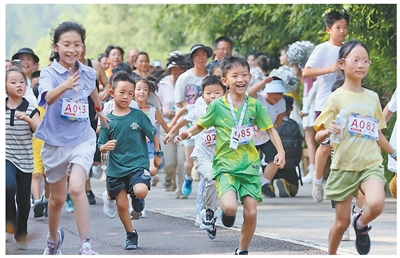
Core Viewpoint - The increase in the percentage of people regularly participating in sports activities from 28.2% to 37.2% over the past decade reflects the growth of the fitness community and the flourishing of the national fitness initiative in China [17][18][24]. Group 1: Growth of Sports Participation - The proportion of individuals engaging in regular physical exercise has risen by 9 percentage points, indicating a significant expansion of the fitness demographic [17]. - The surge in participation is attributed to the increasing variety of community sports events, which have become more accessible and appealing to the public [18][21]. Group 2: Impact of Community Sports Events - A record attendance of 60,396 at a "Su Super" match highlights the popularity of amateur sports events in China [19]. - Community sports events are characterized by their local flavor and emotional connections, fostering a sense of belonging and engagement among participants [20]. Group 3: Upgrading Public Services - The enhancement of public sports facilities, with 3,050 venues subsidized in 2024, has made sports more accessible to the general public [22]. - The development of convenient sports facilities, such as basketball courts under overpasses and pocket parks, contributes to the establishment of a "15-minute fitness circle" [22]. Group 4: Integration of Fitness and Health - The recognition of exercise as a key component of health has led to the introduction of personalized exercise prescriptions in national health monitoring [24]. - The focus on preventive health measures, such as weight management and sports rehabilitation, reflects a shift in health management from treatment to prevention [24].
怎么看9个百分点的攀升
Ren Min Ri Bao· 2025-08-07 22:40
Core Insights - The establishment of National Fitness Day has led to an increase in the proportion of people regularly participating in sports from 28.2% to 37.2%, reflecting a growth of 9 percentage points over the past decade [1][2][6]. Group 1: Growth in Sports Participation - The increase in sports participation is attributed to the growing number of community sports events [2]. - A record attendance of 60,396 people at a "Su Super" match highlights the popularity of amateur sports events in China [3]. - The success of these events is driven by their ability to attract local communities and foster emotional connections [4]. Group 2: Community Sports Events - Community sports events are flourishing across the country, from village basketball tournaments in Hainan to dragon boat races, showcasing the vibrant sports culture [5]. - These events are not only promoting sports but also stimulating local economies and industries, such as dragon boat manufacturing and water performances in Guangdong [5]. Group 3: Public Service Improvements - The increase in participation reflects enhancements in public service systems, including the free or low-cost opening of sports venues, with 3,050 venues subsidized in 2024 [6]. - The average sports facility area per person is projected to reach 3.0 square meters in 2024, making it easier for people to access fitness opportunities [6]. Group 4: Integration of Health and Fitness - The integration of fitness and health is becoming more pronounced, with a societal consensus that "exercise is medicine" [7]. - The focus on preventive health measures is shifting, with an emphasis on weight management and exercise rehabilitation, contributing to an expected average life expectancy of 79 years in 2024 [7]. - Initiatives to ensure inclusive access to sports facilities and events for all demographics are being implemented, reinforcing the commitment to a healthy society [7].
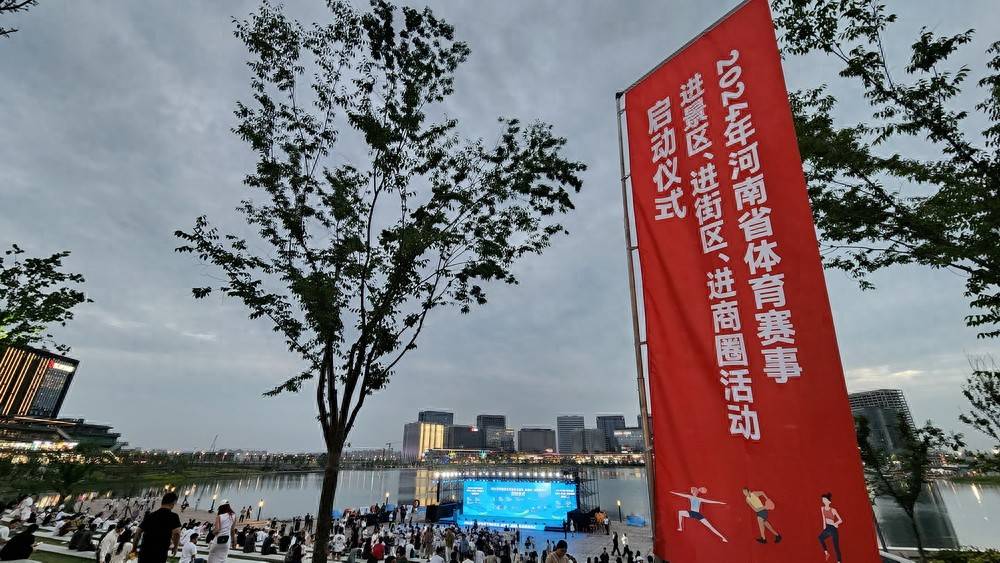
体育促消费 河南在“提速”
Sou Hu Cai Jing· 2025-08-07 15:28
Core Viewpoint - The article emphasizes the importance of sports consumption as a means to stimulate economic growth and improve people's livelihoods in Henan Province, highlighting various measures taken to enhance sports consumption and its positive impacts on the economy and society [1][2]. Group 1: Sports Consumption Statistics - As of the end of 2023, 82.85% of residents in Henan participated in sports consumption, with a total sports consumption scale reaching 140.3 billion yuan, and a per capita sports consumption amount of 1,429 yuan, reflecting a year-on-year growth of 1.81% [2][4]. - Sports consumption accounts for 4.78% of residents' disposable income, indicating its significant role in the local economy [2]. Group 2: Policy and Infrastructure Development - The Henan Provincial Sports Bureau has implemented policies to support sports consumption, including the "Outdoor Sports Industry Development Plan (2024-2026)" and initiatives to bring sports events into scenic areas and commercial districts [4][6]. - A budget of over 370 million yuan has been allocated for the construction of 245 sports facilities, aiming to create a "15-minute fitness circle" in urban communities, with 70% of residential areas equipped with complete sports facilities [6][8]. Group 3: Event Organization and Participation - In 2024, the Provincial Sports Bureau plans to organize various events, including the "Ten Thousand Villages and Thousand Towns" basketball tournament and other community sports activities, with a target of hosting over 5,743 events and engaging more than 8.26 million participants [10][12]. - The province has successfully hosted high-level sports events, including international competitions, to meet diverse public demands and enhance sports consumption [10][12]. Group 4: Sports Consumption Coupons - The Provincial Sports Bureau has introduced sports consumption coupons as a direct measure to stimulate sports consumption, with the total value of coupons increasing from 6 million yuan in 2020 to 10 million yuan in 2024 [13][15]. - From 2020 to 2023, 18 million yuan in fitness vouchers were distributed, benefiting 200,000 participants and generating over 57 million yuan in sports consumption [15][19]. Group 5: Integration of Sports and Tourism - The article discusses the integration of sports events with tourism, promoting the concept of "traveling with events," which has become a trend in Henan, with various events being held in scenic areas to attract tourists [22][23]. - The province has developed 24 national-level sports tourism projects, creating favorable conditions for the "traveling with events" initiative [23]. Group 6: Youth Sports Initiatives - The Provincial Sports Bureau has organized over 30 provincial youth sports events during the summer months, significantly boosting local consumption through increased participation from families [25][26]. - The establishment of over 1,000 sports training institutions supports youth engagement in sports, contributing to the overall growth of sports consumption [26][27].