
新能源

Search documents
六枝特区区长刘强:六枝实现从“卖资源”向“卖产品”的华丽转变
Xin Lang Cai Jing· 2026-01-31 14:19
Core Viewpoint - Since the "14th Five-Year Plan," Liuzhi Special District has focused on high-quality development, leveraging its resource advantages in coal, lithium, and fluorite to attract significant industrial projects, achieving an average GDP growth rate of 6% during this period [1][4]. Group 1: Economic Development - The region's GDP is expected to have an industrial contribution rate exceeding 60% by 2025 [1]. - The industrial system has transitioned from "selling resources" to "selling products," enhancing economic advantages [1]. Group 2: Strategic Initiatives - The district will continue to implement the "Rich Mines and Fine Opening" strategy and focus on four major strategic tasks during the "15th Five-Year Plan" [4]. - Key projects include the construction of a 160,000 tons/year nitro water-soluble fertilizer project and a 50,000 tons/year deep processing project for coal tar [4]. Group 3: Industry Chain Development - The district aims to establish a complete hydrogen energy industry chain, including production, storage, transportation, and utilization, while accelerating infrastructure development [4]. - There are plans to introduce advanced technologies for producing new materials and pharmaceutical/agricultural intermediates [4]. Group 4: Lithium Battery and Textile Industry - The district is pushing for the construction of a 40,000 tons/year sodium iron phosphate project and accelerating the production line for lithium iron phosphate [4]. - Aiming to create a comprehensive textile industry cluster, the district will integrate spinning, weaving, dyeing, and garment production [4].

科技+新能源巨头入核热潮起,核电迎来多元新格局:机械设备
Huafu Securities· 2026-01-31 14:15
Investment Rating - The industry rating is "stronger than the market" indicating that the overall return of the industry is expected to exceed the market benchmark index by more than 5% in the next 6 months [13]. Core Insights - Major technology and new energy companies are entering the nuclear power sector, creating a diversified new landscape for nuclear energy in China. Companies like Alibaba and Geely are investing in coastal nuclear power projects, focusing on stable energy to support computing power demands [3][4]. - The policy environment is increasingly favorable for private investment in nuclear power, with the proportion of private capital expected to rise to 10% by 2024. This trend is supported by the integration of AI and nuclear energy, which is anticipated to deepen as the demand for computing power grows [4]. - Small Modular Reactors (SMR) are highlighted as a key solution to meet the energy demands of AI, with significant interest from technology giants. Companies are developing tailored energy solutions for data centers using SMR technology [5]. Company Summaries - **Jingye Intelligent**: Plans to establish a subsidiary focused on SMR technology for AI data center power supply [6]. - **Jia Electric**: Its main helium fan is the only power device for the fourth-generation high-temperature gas-cooled reactor's primary circuit, leading in the nuclear power business segment [6]. - **Guoguang Electric**: Provides critical components for the ITER project, focusing on filter and cladding systems [6]. - **Lanshi Heavy Industry**: Covers the entire nuclear energy supply chain from upstream nuclear fuel systems to downstream spent fuel processing [6]. - **Kexin Electromechanical**: Produces high-temperature gas-cooled reactor products and has developed domestic alternatives for new fuel transport containers [6]. - **Hailu Heavy Industry**: Services various reactor types, including third and fourth-generation reactors and fusion reactors [6]. - **Jiangsu Shentong**: Secured over 90% of orders for nuclear-grade butterfly valves and ball valves for new nuclear power projects in China [6].


甘肃零碳园区建设:储能容量占比/绿电直供比例/需求响应能力纳入指标体系
Xin Lang Cai Jing· 2026-01-31 13:45
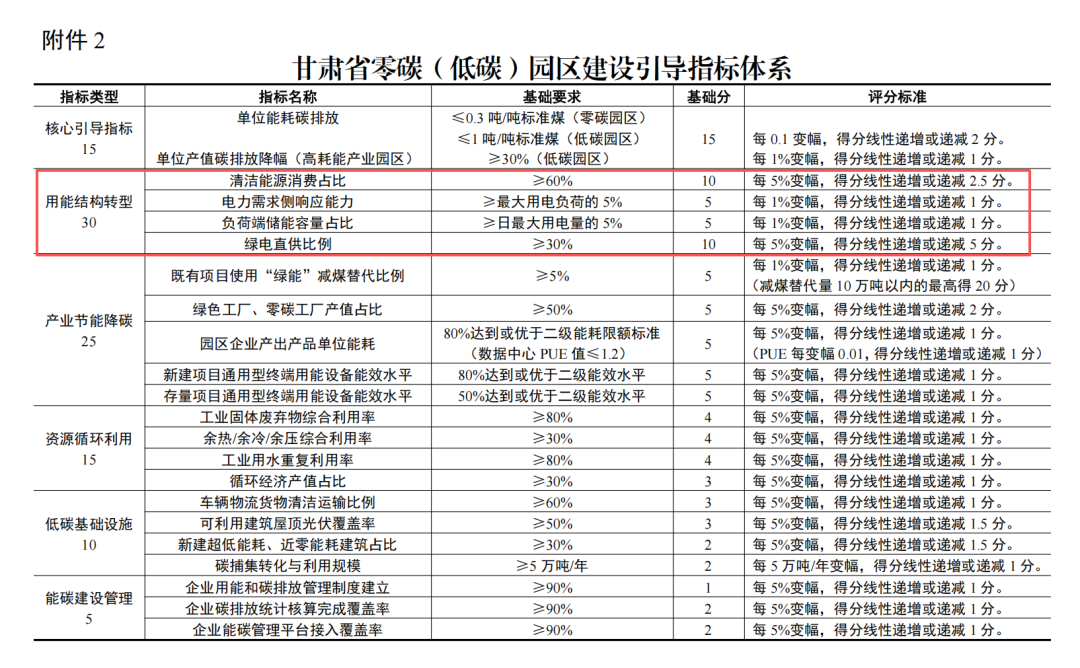
Core Viewpoint - Gansu Province has issued a "Zero Carbon Park Construction Plan" aiming to establish a framework for low-carbon and zero-carbon parks, with specific targets for clean energy consumption, energy storage capacity, and green electricity supply by 2035 [1][10]. Group 1: Main Goals - By 2027, Gansu aims to establish around 5 zero-carbon (low-carbon) parks, and by 2030, around 10, with a goal of achieving national-level zero-carbon park status [1][10]. - By 2035, over half of the parks in the province are expected to complete low-carbon transformation, contributing to the province's carbon neutrality goals [1][10]. Group 2: Construction Pathways - The plan emphasizes increasing the proportion of green energy supply in parks, promoting direct green electricity supply models, and encouraging investment in distributed renewable energy systems [2][10]. - It includes accelerating energy storage peak-shaving construction and developing a new energy system that integrates various renewable energy sources [3][11]. Group 3: Indicator System - The guiding indicator system for zero-carbon park construction includes a 30% weight for energy structure transformation indicators, with specific requirements for clean energy consumption, demand response capability, and energy storage capacity [4][6][23]. - Clean energy consumption must reach at least 60%, with a scoring system that rewards incremental improvements [4][23]. Group 4: Support Policies - The plan outlines financial support mechanisms, including prioritizing funding for parks included in national and provincial zero-carbon construction lists [16]. - It encourages the use of green finance tools such as green loans and bonds to support zero-carbon park projects [16][17]. Group 5: Implementation and Coordination - The provincial development and reform commission will lead the coordination of efforts to implement the zero-carbon park construction plan, ensuring collaboration among various departments [19][20]. - Local governments are tasked with analyzing their parks' conditions and potential for low-carbon development, creating a dynamic list of parks for construction [20].
科技+新能源巨头入核热潮起,核电迎来多元新格局
Huafu Securities· 2026-01-31 12:44
Investment Rating - The industry rating is "Outperform the Market," indicating that the overall return of the industry is expected to exceed the market benchmark index by more than 5% in the next 6 months [14]. Core Insights - The entry of technology and new energy giants into the nuclear power sector is creating a diversified new landscape, with companies like Alibaba and Geely participating in coastal nuclear power projects in China [3][4]. - The policy environment is supportive, with increasing participation of private capital in nuclear projects, projected to reach a 10% stake by 2024, and further support for private enterprises by 2026 [4]. - The integration of AI and nuclear energy is anticipated to deepen, with a focus on "computing power + nuclear energy" and the implementation of a "wind-solar-nuclear-storage integration" model in coastal bases [4]. Summary by Sections Industry Participation - Major technology companies are investing in nuclear power through equity stakes, focusing on stable energy to support computing needs, while new energy firms are providing storage solutions and core equipment manufacturing [3][4]. - The domestic nuclear equipment localization rate has reached 93.4%, establishing an ecosystem led by state-owned enterprises, empowered by private capital, and supported by technology [3]. Future Outlook - The demand for AI computing power is expected to drive the development of small modular reactors (SMR) as a key solution for energy needs, with significant interest from technology giants [5]. - Companies like Jingye Intelligent are advancing SMR technology, with plans to establish a subsidiary focused on powering AI data centers [6]. Recommended Companies - Jingye Intelligent: Plans to establish a subsidiary focused on SMR for AI data centers [6]. - Jiadian Co.: Leading position in the nuclear power sector with its helium fan products [6]. - Guoguang Electric: Key components for the ITER project [6]. - Lanshi Heavy Industry: Covers upstream nuclear fuel systems to downstream spent fuel processing [6]. - Kexin Electromechanical: Producing high-temperature gas-cooled reactor products [6]. - Hailu Heavy Industry: Services for various reactor types including third and fourth generation [6]. - Jiangsu Shentong: Secured over 90% of orders for nuclear-grade valves in new nuclear projects [6].
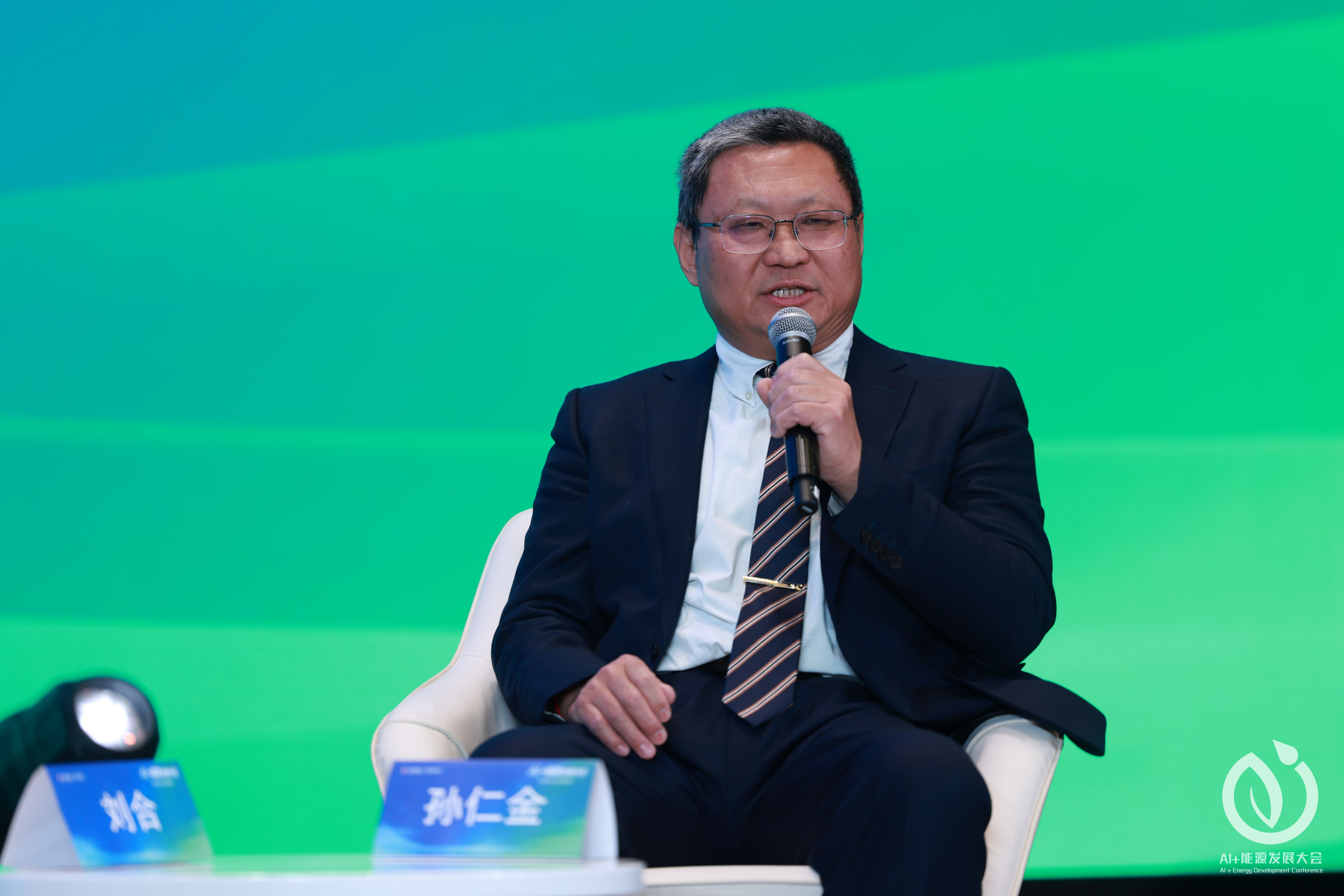
划重点!中国石油大学孙仁金解读能源四大议题:油价、碳双控、AI、近零碳
Zhong Guo Neng Yuan Wang· 2026-01-31 08:55
Core Insights - The global energy transition is currently in its third critical phase, shifting from fossil fuels to renewable and sustainable energy, but faces significant challenges as fossil fuels still account for nearly 80% of the global primary energy structure [4] - The international oil price is experiencing an unusual decline despite a tense global situation, primarily due to an oversupply of crude oil, with the latest forecast indicating global oil inventories could exceed 4 million barrels per day by 2026 [4] - The implementation of China's dual carbon control policy, which began on January 1, aims to control carbon emission intensity and total emissions, significantly impacting high-energy-consuming industries [5] Energy Transition Challenges - The transition from fossil fuels to renewable energy is complex and arduous, with traditional energy's dominance unlikely to change in the short term [4] - The International Energy Agency (IEA) initially predicted a global oil inventory of 1.22 million barrels per day for 2026, but recent data suggests it will surpass 4 million barrels per day, affecting oil price trends [4] - The carbon market in China is progressing, with a 30% increase in trading volume last year, although carbon prices decreased, indicating a potential impact on corporate development and economic trends [5] AI Empowerment in Energy Sector - AI technology is expected to significantly enhance efficiency in the oil and gas exploration and development sector, potentially increasing energy supply and facilitating market-oriented operations of oil storage facilities [6] - Companies are increasingly willing to invest in digital energy, with applications in platform construction, data asset management, and energy forecasting becoming crucial for the digital and intelligent transformation of the energy industry [6] - The concept of "near-zero carbon oilfields" is proposed as a more accurate term, as true zero carbon is unattainable in fossil fuel extraction, with over 60% of carbon emissions occurring at the consumption stage [6] International Experience and Future Directions - Nordic countries have made significant progress in near-zero carbon development, with some achieving nearly 100% renewable electricity and initiating numerous CCUS zero-carbon pilot projects [7] - Major international oil companies have adjusted their green development strategies due to poor profitability in green businesses, increasing investments in oil and gas exploration instead [7] - China's energy transition can benefit from international technological experiences, but it possesses unmatched advantages in the full industrial chain of renewable energy sources, making market-driven applications crucial for future development [8]

未来的机会在这里!任泽平带你看前沿科技
泽平宏观· 2026-01-31 03:38
Core Insights - The article emphasizes the importance of practical learning experiences in cutting-edge technology sectors, highlighting the value of direct engagement with leading companies and experts in the field [12][24][46]. Schedule Overview - The schedule for 2025 includes visits to major technology companies such as Huawei, BYD, Tencent, and others, focusing on sectors like artificial intelligence, new energy, and biotechnology [23][24][61]. - Specific events are planned, including closed-door investment research meetings and thematic explorations of emerging industries [8][9][10]. Learning Experience - Participants will engage in deep explorations of technology companies, gaining insights into the full chain of technology development from laboratory to industrialization [12][24]. - The program aims to provide practical empowerment through discussions on frontier technology trends, emerging industry ecosystems, and innovative business strategies [12][24]. Participant Feedback - Feedback from participants indicates that the program significantly enhances their understanding of macroeconomic trends and investment opportunities, fostering a community of like-minded entrepreneurs and investors [46][47][48]. - Participants express appreciation for the opportunity to learn from industry leaders and to engage in meaningful discussions that elevate their strategic thinking [46][47][48].

国家能源局原副局长张玉清谈“AI+能源”:示范先行 + 协同攻关 + 产学研用
Zhong Guo Neng Yuan Wang· 2026-01-31 03:17
2026年1月30日,以"智赋未来.能启新篇"为主题的AI+能源发展大会在中关村会议中心举行。在大会圆桌论坛环节,国家能源局原副局长张玉清围绕人工智 能与能源行业融合发展展开分享,深度解读国家发改委、能源局《人工智能+能源高质量发展的实施意见》出台背景,阐释人工智能赋能能源行业的核心价 值,并提出三大实践路径,为推动AI与能源行业深度融合、助力能源产业高质量发展提供了清晰的实践指引。 张玉清指出,《人工智能+能源高质量发展的实施意见》的出台,是深入贯彻党中央、国务院关于发展人工智能的决策部署,落实国务院深入实施"人工智 能+"行动的具体举措。其核心目的,是抓住人工智能发展的重大战略机遇,推动人工智能技术在能源行业的落地应用,通过人工智能与能源行业的深度融 合,激活能源产业发展新动能,进而推动能源行业实现高质量发展。 在张玉清看来,人工智能对能源行业的赋能价值覆盖全产业链,成为推动能源产业升级的重要抓手。从生产、传输到加工、利用,能源行业的各个核心环节 都能借助AI技术实现创新突破,既可以推动传统能源行业的转型升级,也能优化新能源的消纳与利用效率,助力新能源产业高质量发展。而人工智能与能 源行业的深度融合,最终 ...
新华社丨国家能源局:2025年系列政策文件推动能源向“绿”而兴 投资向“新”而行
国家能源局· 2026-01-31 03:02
国家能源局发展规划司副司长邢翼腾1月30日在国家能源局例行新闻发布会上表示,2025年,全国 能源投资保持较快增长,年度重点项目完成投资额首次超过3.5万亿元,同比增长近11%。 国家能源局 国家能源局微信公众号是国家能源局新闻宣传、信息公开、服务群众的重要平台。 · 公开 政务信息 · 发布 行业动态 ·提供 公众服务 "大力发展能源新技术新场景打造新的增长点。"邢翼腾说,架起"充电桩",深入开展电动汽车充电 设施服务能力"三年倍增"行动,预计拉动投资2000亿元以上;升级"充电宝",开展新型储能制造 业高质量发展行动和电力系统调节能力优化行动,将带动投资约2500亿元;搭好"路由器",加快 发展虚拟电厂,深挖各类调节资源潜力,聚合分布式电源、可调节负荷、储能等各类分散资源参与 市场交易,拓宽收益渠道。 此外,一系列促进能源行业高质量发展的政策文件从供需两侧协同发力开拓绿色发展新空间,系统 性重塑能源转型新生态、培育新动能,着力破除制度壁垒、构建投资新环境。 "2026年,国家能源局将围绕激发市场活力、优化发展环境等方面加大政策支持力度,打通项目落 地'最后一公里'。"邢翼腾说,一方面,强化政策靶向发力,让 ...

宝馨科技,立案通知与亏损预警齐至
Shen Zhen Shang Bao· 2026-01-31 02:33
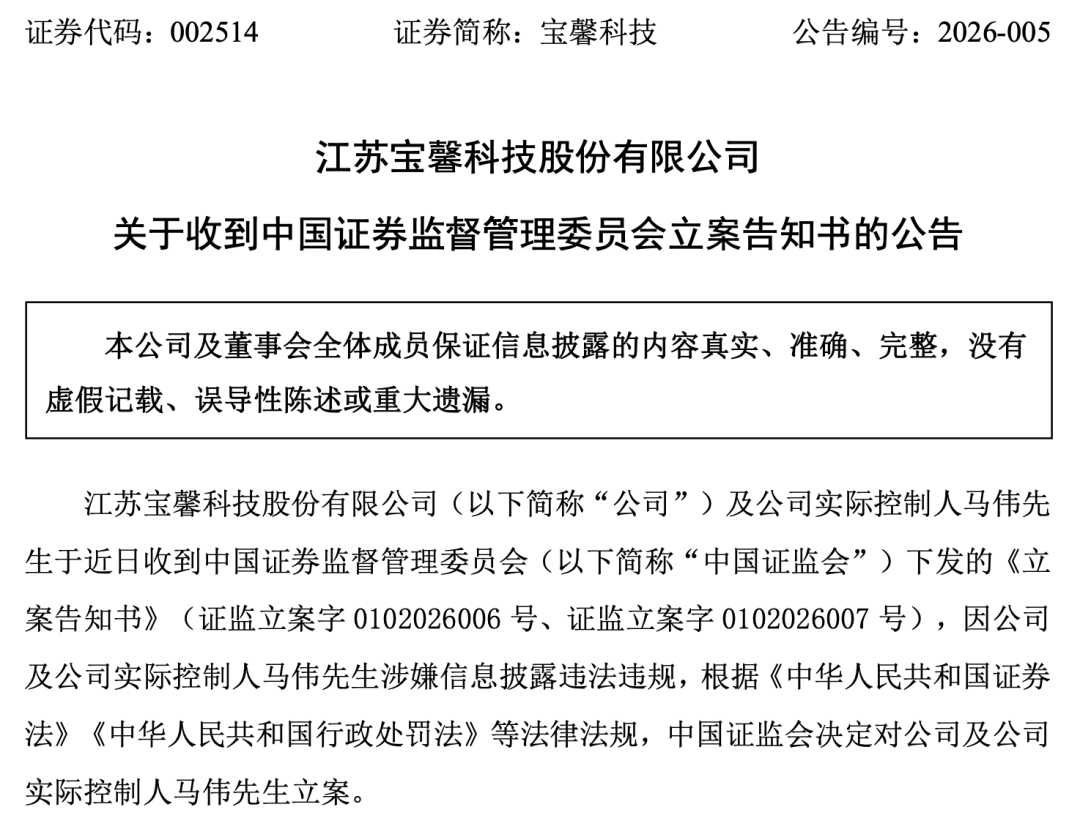
Group 1 - The company and its actual controller, Ma Wei, have received a notice of investigation from the China Securities Regulatory Commission (CSRC) for suspected violations of information disclosure laws [1] - The company stated that Ma Wei does not hold any position within the company and that normal production and operations are ongoing without impact from the investigation [1] Group 2 - For the fiscal year 2025, the company forecasts revenue between 310 million and 330 million yuan, a slight decrease from 336 million yuan in the previous year [4] - The expected net loss attributable to shareholders for 2025 is between 60 million and 100 million yuan, a significant reduction from a loss of 767 million yuan in the previous year [4] - The company has reported a substantial decrease in net losses, with a year-on-year improvement of 86.97% for net profit attributable to shareholders [6] Group 3 - The company has faced declining revenues in recent years, with a 15.09% and 42.16% year-on-year decrease in 2023 and 2024, respectively [8] - The company has been operating at a loss for two consecutive years, with net profits of -193 million yuan in 2023 and -767 million yuan in 2024 [9] - The company is at risk of being flagged for delisting if it fails to meet certain financial criteria as outlined in the Shenzhen Stock Exchange regulations [9] Group 4 - The company is attempting to pivot its business model by developing integrated equipment for the shared economy sector to counteract declining orders in its traditional manufacturing segment [6] - The company has initiated the sale of certain photovoltaic assets, with a valuation of 50.23 million yuan for the assets being publicly listed for transfer [10]

李忠军在IEC国际标准促进中心(南京)调研
Nan Jing Ri Bao· 2026-01-31 01:22
Core Viewpoint - The IEC International Standard Promotion Center (Nanjing) is a key platform for the city to integrate into the international innovation network, with the annual International Standardization Conference becoming an important brand event for Nanjing to expand its influence [1] Group 1: Government Initiatives - The city of Nanjing is accelerating the deep integration of technological innovation and industrial innovation, aiming to build a globally influential industrial technology innovation center [1] - The mayor expressed a desire for continued practical cooperation with the center in areas such as smart grids, new energy, and intelligent manufacturing [1] Group 2: Collaboration and Development - There is an emphasis on building an open and collaborative ecosystem to jointly establish an international standard source and promote the industrialization of technical standards [1]