餐饮服务

Search documents
服贸会迎来首个公众开放日,这里有一篇逛吃全攻略
Xin Jing Bao· 2025-09-13 06:02
Group 1 - The 2025 China International Service Trade Fair is open to the public on September 13-14, featuring a blend of digital trade and local food experiences [1][2] - The venue, Shougang Park, has over 12,000 dining seats planned, with a variety of food options from local and international brands [4][10] - The event includes interactive experiences in the cultural and tourism exhibition area, suitable for families, showcasing advanced technologies like MR and XR [5][7] Group 2 - The "Jiangxi Small Fry Food Market" features 16 local restaurants, offering traditional dishes that attract visitors from the tech exhibits [2][4] - The event promotes cultural innovation by integrating classic IPs with culinary experiences, exemplified by themed food markets [4] - Various consumer activities are scheduled, including the Candy Carnival and sports events, enhancing the overall visitor experience [9][10]

每经热评 | 西贝当务之急,是直面公众对预制菜的质疑,重新分类菜品并公示
Mei Ri Jing Ji Xin Wen· 2025-09-13 04:21
但他眼中的这个"规定""定义",还没有被消费者充分认知与广泛接受,甚至有违消费者的常识。在很多 消费者眼里,那些保质期长达1年的食品,怎么不是"预制菜"?这样的"预制作"和"预制菜"有什么区 别?餐饮企业的中央厨房预制和工厂生产有什么区别?直播现场层出不穷的冷冻食品,也加强了公众的 判断。 每经评论员 付克友 罗永浩和贾国龙的预制菜之争演成了连续剧,而且请全国人民连夜观看。9月12日晚,罗永浩在多个平 台直播回应西贝预制菜风波;与此同时,西贝在全国各地,邀请多家媒体进入后厨直播。 这场全民围观的商业奇观,流量都很爆棚,但双方得失天差地别。 罗永浩成功将议题从一家企业的争议,升维至推动整个预制菜行业透明化和保障消费者知情权的公共讨 论,应者云集,甚至直播第一次得到了90%的人支持,罗永浩为此感动落泪。 而西贝方面,虽然敢于明厨亮灶,果断推动全国后厨直播,其开放姿态和透明举措,勇气可嘉且难能可 贵,但是直播过程中,被媒体发现使用大量预制品,如保质期18个月的海鲈鱼、保质期24个月的羊前 腿、熟肉制品的肉夹馍肉馅,以及袋装冷冻鸡汤和西兰花等。成了很多人眼中的"大型翻车现场"。 为什么"翻车"?原因在于,贾国龙手中几 ...
专访西贝贾国龙:我现在陷入自证清白的循环
虎嗅APP· 2025-09-13 03:24
Core Viewpoint - The article discusses the ongoing crisis faced by the company Xibei, triggered by public criticism from influencer Luo Yonghao, which has led to a significant decline in revenue and customer traffic [6][10][30]. Group 1: Impact of Luo Yonghao's Criticism - Luo Yonghao's criticism began on September 10, leading to a rapid decline in Xibei's daily revenue, with estimates of a drop of 1 million yuan on September 11 and between 2 to 3 million yuan on September 12 [11][12][8]. - The company is experiencing a "cliff-like" drop in customer traffic, which has been described as the largest external crisis in its history [30][6]. - Xibei's CEO, Jia Guolong, expressed his determination to pursue legal action against Luo Yonghao, emphasizing the importance of clarifying the truth despite the potential short-term impact on business [16][18][17]. Group 2: Company Background and Current Status - Founded in 1988, Xibei has grown to over 370 stores and 18,000 employees, with a revenue of 6.2 billion yuan in 2023 [6]. - The company has faced various internal challenges but has not previously encountered such a significant external crisis [30][32]. - Jia Guolong has been actively involved in the company's operations since returning as CEO in September 2024, aiming to improve business performance [33][34]. Group 3: Clarification on Pre-made Dishes - Jia Guolong clarified that while Xibei employs pre-preparation techniques, it does not serve pre-made dishes as defined by industry standards [35][41]. - The company previously operated a fast-food brand that included pre-packaged items, but this brand has since been closed, and no pre-made dishes are currently offered in Xibei's restaurants [35][36]. - The distinction between pre-preparation and pre-made dishes is emphasized, with the latter being defined as fully cooked and packaged meals that require only reheating [37][38][39].
成都3日游要花多少钱?看完省钱又省心!
Sou Hu Cai Jing· 2025-09-13 01:46
Core Insights - The article highlights a three-day trip to Sichuan, emphasizing the region's natural beauty, rich history, and delicious cuisine [1][7]. Day-by-Day Summary Day 1: Arrival in Chengdu - The journey begins with a flight to Chengdu, where a local guide named Linlin assists with luggage and hotel check-in [3]. - The first attractions visited are Jinli Ancient Street and Kuanzhai Alley, known for their traditional architecture and local snacks [3]. Day 2: Historical and Cultural Exploration - The second day features a visit to Wuhou Shrine, dedicated to Zhuge Liang from the Three Kingdoms period, providing historical insights [4]. - The afternoon is spent at the Chengdu Research Base of Giant Panda Breeding, showcasing the conservation efforts for giant pandas [4]. Day 3: Natural Wonders - The final day includes a visit to Dujiangyan, an ancient irrigation system recognized as a UNESCO World Heritage site, followed by a trip to Qingcheng Mountain, a famous Taoist site [5]. Cost and Experience - The total cost for the three-day trip ranges from 800 to 1000 yuan per person, with a well-organized itinerary that caters to personal interests and physical conditions [7]. - The guide Linlin is praised for her knowledge and ability to avoid common tourist traps, enhancing the overall experience [7]. Travel Tips - Important travel considerations include checking weather conditions, planning transportation routes, and booking tickets for popular attractions in advance [9]. - Emphasis is placed on food safety, recommending dining at reputable restaurants and being mindful of local customs [13].

贾国龙急了,西贝到了生死存亡的时刻
Feng Huang Wang Cai Jing· 2025-09-13 01:32
Core Viewpoint - The ongoing public dispute between Luo Yonghao and Xibei highlights significant consumer concerns regarding the use of pre-prepared dishes in the restaurant industry, particularly focusing on transparency and consumer rights [2][3][25]. Group 1: Controversies Surrounding Xibei - Xibei is facing backlash over allegations of using pre-prepared dishes, with consumers sharing negative experiences related to food quality [4][5][8]. - The pricing and taste of Xibei's dishes have also come under scrutiny, with some consumers expressing dissatisfaction despite the founder's claims of reasonable pricing and low profit margins [8][9]. - The controversy intensified when a live broadcast revealed the use of genetically modified oils in Xibei's dishes, further complicating the brand's image [9]. Group 2: Xibei's Pre-prepared Dish Strategy - Xibei had previously made a significant investment in the pre-prepared dish market, launching its first product in September 2019 and later expanding this line during the pandemic [15][17]. - Despite initial enthusiasm, consumer feedback has been largely negative, leading to the gradual removal of pre-prepared dishes from Xibei's offerings [24]. - As of this year, Xibei claims to have eliminated all pre-prepared dishes from its menu, responding to consumer preferences [24]. Group 3: Trust Crisis and Growth Challenges - The perception of Xibei's dishes as similar to pre-prepared options has led to a trust crisis among consumers, questioning the value of dining at a higher-priced establishment [25]. - Xibei's attempts to diversify its offerings have largely failed, with multiple new projects not resonating with consumers, leading to a focus on its core brand [25]. - The ongoing debate about the definition and regulation of pre-prepared dishes poses broader implications for the restaurant industry, necessitating a clearer understanding and communication with consumers [32][33].
面对罗永浩,回应就输,西贝应该怎么办?
Hu Xiu· 2025-09-13 00:50
Core Viewpoint - The response from Xibei to accusations of being a "pre-made dish" by Luo Yonghao indicates a strategic misstep, as engaging in a public dispute can amplify negative associations rather than mitigate them [1][5][25]. Group 1: Public Relations Strategy - Conventional wisdom suggests that brands should respond to accusations to clear their name, but this approach can often exacerbate the situation [3][16][18]. - The case of McDonald's facing similar accusations illustrates that negative associations can be more damaging than the accusations themselves, as consumers may not need logical explanations to form negative perceptions [12][22][24]. - Xibei's public response to Luo Yonghao's claims inadvertently brought more attention to the negative association, reinforcing the connection between Xibei and "pre-made dishes" in consumers' minds [26][28][40]. Group 2: Alternative Approaches - Instead of engaging in a back-and-forth dispute, brands should focus on building positive associations and narratives around their products [29][32][40]. - McDonald's successfully countered negative perceptions by showcasing its commitment to health and quality through positive imagery and messaging, which could serve as a model for Xibei [33][34][46]. - Xibei should avoid mentioning "pre-made dishes" or "Luo Yonghao" in its communications to prevent further entrenching negative associations [37][39]. Group 3: Brand Building and Emotional Value - Effective brand management involves creating emotional connections with consumers, which can be achieved by consistently presenting positive narratives and imagery [47][76]. - By focusing on the quality and sourcing of ingredients, Xibei can shift consumer perceptions and reinforce positive associations with its brand [41][46][80]. - The concept of a "brand connection group" can be utilized to evoke positive emotions and associations, enhancing consumer trust and loyalty [50][76].
专访西贝贾国龙:我现在陷入自证清白的循环
Hu Xiu· 2025-09-13 00:44
本文来自微信公众号:中国企业家杂志 (ID:iceo-com-cn),作者:张文静,头图来自:中国企业家杂志(邓攀摄) 沉默许久,贾国龙开口说了第一句话:"我又进入了这个循环。" "什么循环",记者问。 "要自证清白。" 9月12日下午两点,在位于北京中粮祥云小镇的西贝店——就在罗永浩吃饭的那个包间里,《中国企业家》见到了贾国龙,此时的他一身疲惫,满脸憔悴。 接受采访时,也明显不在状态,甚至不愿意多说话,他已连续两个晚上没怎么睡。 北京中粮祥云小镇西贝店 摄影:邓攀 2025年是他创业的第37个年头。1988年,他在内蒙古巴彦淖尔市临河县创立西贝。如今的西贝有370多家直营门店和1.8万多名员工,2023年营收为62亿元。 2024年9月,他重回CEO的岗位,启动一线变革,恰在回归满一年之际,罗永浩炮轰西贝,贾国龙将之称为西贝成立以来最大的一次外部危机。 从9月10日发布第一条吐槽西贝的微博开始,到12日晚上9点半,罗永浩连发了30多条针对西贝和预制菜的微博。甚至在12日晚上8点半,他还开了场针对西 贝的直播,开播1分钟,在线人数破10万。 单从线上来看,这是一场不对等之战,罗永浩全网粉丝达数千万。在罗永浩的 ...
“洋老板”涌入义乌,投资的不仅是生意
Sou Hu Cai Jing· 2025-09-13 00:30
Core Insights - Yiwu has become the first county-level city in China to exceed 10,000 foreign-funded enterprises, with a total of 10,000 foreign business entities as of July 31, 2023 [2][4] - The foreign investment in Yiwu covers over 160 countries and regions, with 81% coming from countries involved in the Belt and Road Initiative [5][11] - The city has a diverse range of foreign businesses, with 89% in wholesale and retail, and significant growth in sectors like rental and business services, as well as manufacturing [5][11] Group 1: Business Environment - Yiwu's business environment has been enhanced by policy reforms, including the reduction of registration time for foreign companies from 15 days to 3 days [7][11] - The city has seen a significant increase in foreign entrepreneurs, with many establishing networks and sharing resources, leading to a collaborative business ecosystem [8][11] - The foreign trade export scale of Yiwu has grown from 0.1% of national exports in 2011 to 2% in 2024, highlighting its importance in China's foreign trade landscape [11][26] Group 2: Entrepreneurial Opportunities - Foreign entrepreneurs in Yiwu are increasingly moving from simple trading roles to more integrated supply chain operations, with examples of businesses expanding into manufacturing and brand creation [8][17] - The local market is perceived as having abundant opportunities, with many foreign business owners expressing confidence in the potential for growth and collaboration [8][20] - The rise of the foreign restaurant industry in Yiwu, with 443 foreign-funded entities, reflects the city's cultural diversity and the growing demand for international cuisine [20][23] Group 3: Future Prospects - Yiwu's foreign investment ecosystem is expected to continue evolving, with a focus on high-value manufacturing and service-oriented businesses [19][26] - The city is positioning itself as a hub for international trade and investment, with ongoing improvements in the business environment and support for foreign entrepreneurs [11][26] - The integration of foreign businesses into the local economy is fostering a sustainable and resilient trade environment, contributing to both local and global economic growth [26]
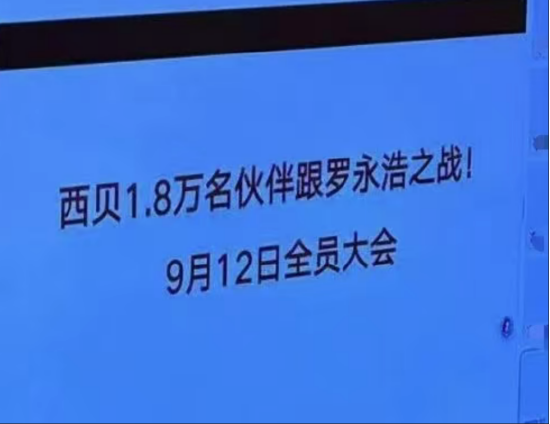
西贝召开全员大会:1.8万人备战罗永浩! 老罗:这次90%人支持我!
Xin Lang Cai Jing· 2025-09-13 00:13
文 | 《BUG》栏目 张奥、刘丽丽、张俊 专题:专题|罗永浩直播曝光西贝后厨:鲈鱼保质期18个月,羊腿肉生产于2024年,网友称"西贝儿童餐 的年龄可 炒股就看金麒麟分析师研报,权威,专业,及时,全面,助您挖掘潜力主题机会! 在刚刚过去的深夜,罗永浩和西贝员工可能都无法安心入睡。 今天凌晨3点21分,罗永浩依然在发微博质疑:如果不使用防腐剂,有机西蓝花的保质期能到24个月? 还能做成适合给儿童食用的菜肴?……而西贝则召开了一场全员大会,会议题目为"1.8万名伙伴跟罗永 浩之战"…… 就在昨晚,罗永浩在持续1小时的直播中,反复回应了西贝预制菜事件。 他直言"西贝称没有预制菜是100%撒谎,因为国家还没有相关标准出台"。 罗永浩的直播间中背景板上挂着"不反对预制菜,推动预制菜透明化,维护消费者知情权"字样,他多次 表明态度:自己不反对预制菜,反对的是卖预制菜伪装成不是预制菜。 "有人说我直播间也卖预制菜,这是事实,我们知道卖的是预制菜,也说了是预制菜,这没有任何问 题。你买的时候也知道是预制菜,预制菜本身是合法的。" 他在直言,我是个褒贬不一的人,但这个事件的评论把我感动了,支持的人超过了90%。"今天受宠若 ...
西贝再晒菜品制作过程
Nan Fang Du Shi Bao· 2025-09-12 23:13
罗永浩悬赏10万"扒"预制菜 9月10日,罗永浩公开发布微博称,"好久没吃西贝了,今天下飞机跟同事吃了一顿,发现几乎全都是预 制菜,还那么贵。希望国家尽早推动立法,强制饭馆注明是否用了预制菜"。随后,罗永浩多次发文质 疑西贝"预制菜"问题。 9月11日晚间,罗永浩在社交平台连发多条内容,征集西贝预制菜证据,并称"如果有录像之类的、法律 上可以采信的真凭实据,奖励十万元"。此后,再度表示,"本人实名追加两万,只想要个真相"。 | | 餐員 | 9寸靖义盘 7.5寸靖兰盘底座 | | --- | --- | --- | | | 出餐鉴别 | 牛肉条软嫩,土豆口感软糯形状完整 口味干香浓郁 | | 二.切配 | | | | 工器具:绿色砧板,绿色刀具 | 储存:冷藏 | 赏味期:2餐(不隔夜) | | | | 大葱花川短线 清洗,去根蒂,直刀切0.3-0.5cm未 | | | | 蒜片 清洗,去蒂,切0.2-0.3cm片 | | | | 图0.7cm条,自然长度 书记得 (或0.7cm切条器) | | | | 改刀后清洗,粒水、分份感封冷藏储存 | | 压制 | | | 分份 | | | | | --- | --- ...