
电子信息制造业

Search documents
重要方案!两部门印发
Shang Hai Zheng Quan Bao· 2025-09-04 07:04
Core Viewpoint - The Ministry of Industry and Information Technology and the State Administration for Market Regulation have issued the "Action Plan for Stable Growth of the Electronic Information Manufacturing Industry (2025-2026)", aiming to enhance industry governance and promote high-quality development while ensuring safety and innovation [1][2]. Summary by Relevant Sections Industry Governance and Market Dynamics - The plan emphasizes the combination of proactive government intervention and effective market mechanisms to improve industry governance capabilities and respect market laws [1]. - It aims to create a synergistic relationship between market and government roles, promoting mutual support and coordination [1]. Growth and Quality Enhancement - The strategy focuses on both expanding the overall scale and improving quality, consolidating existing industry size while fostering new growth points [1]. - It seeks to comprehensively address "involution" competition within the industry [1]. High-Quality Development and Safety - The plan advocates for high-quality development alongside high-level safety, enhancing high-end supply capabilities and optimizing the industrial layout in key areas [1]. - It aims to improve the resilience and safety of industrial and supply chains [1]. Self-Reliance and Open Cooperation - The strategy promotes self-reliance and strength while encouraging open cooperation, enhancing independent innovation capabilities [1]. - It emphasizes high-level openness and deep integration into the global electronic information manufacturing division [1]. Expected Goals for 2025-2026 - The plan sets a target for the average growth rate of the value-added output in the computer, communication, and other electronic equipment manufacturing industries to be around 7% [1]. - Including lithium batteries, photovoltaics, and related fields, the electronic information manufacturing industry is expected to achieve an annual revenue growth rate of over 5% [1]. - By 2026, it aims for revenue scale and export ratios to maintain the top position among 41 industrial categories, with five provinces achieving over 1 trillion yuan in electronic information manufacturing revenue [1]. - The server industry is projected to exceed 400 billion yuan, with a domestic market penetration rate of over 40% for color TVs of 75 inches and above, and personal computers and mobile phones advancing towards intelligence and high-end features [1].
两部门:推进人工智能服务器、高效存储等先进计算系统建设
Zheng Quan Shi Bao Wang· 2025-09-04 06:31
Core Viewpoint - The Ministry of Industry and Information Technology and the State Administration for Market Regulation have issued the "Action Plan for Stable Growth in the Electronic Information Manufacturing Industry for 2025-2026," focusing on integrating electronic information infrastructure with new urban infrastructure to meet demands across various sectors [1] Group 1: Infrastructure Development - The plan emphasizes the promotion of electronic information infrastructure and new urban infrastructure integration [1] - It aims to select and promote typical solutions in fields such as industrial, cultural tourism, education, health, and smart cities [1] Group 2: Product and Service Enhancement - There is a focus on improving the design of smart products for the elderly and increasing the supply of high-quality smart health and elderly care terminal products [1] - The plan supports the construction of advanced computing systems, including artificial intelligence servers and efficient storage, to enhance intelligent cloud service levels [1] Group 3: Industry Support and Digital Transformation - The initiative supports the development of industries such as automotive electronics, marine electronics, aviation electronics, and medical electronics [1] - It aims to promote digital transformation and intelligent upgrades within these industries [1] Group 4: Integration of Technologies - The plan seeks to build a precise time-space information service system based on Beidou and promote deep integration with artificial intelligence, intelligent connected vehicles, and low-altitude economy [1]
贵阳贵安 聚焦算力数据应用产业 持续做强做优数字经济
Ren Min Ri Bao· 2025-08-28 21:45
Core Viewpoint - The 2025 China International Big Data Industry Expo, held in Guizhou, marks a decade of significant growth in the big data sector, transforming from a regional event to a national industry benchmark, reflecting the rapid development of Guizhou's digital economy [1] Group 1: Computing Power - Guizhou has positioned itself as a leader in computing power, with a focus on integrating storage and computing, achieving a computing power scale exceeding 81 EFLOPS, with over 98% being intelligent computing [2] - The region has established 26 large-scale data centers, collaborating with major telecom and tech companies like China Telecom and Tencent [2] - By the end of 2024, Guizhou's outbound bandwidth is projected to reach 51,100 Gbps, connecting with 40 cities, facilitating low-latency computing networks [3] Group 2: Data - Guizhou is a core area for national data factor market reform, focusing on data aggregation, rights confirmation, circulation, application, and security [4] - The region has established a comprehensive data trading platform, with the Guizhou Big Data Exchange completing 5,122 transactions and hosting 1,011 data vendors [5] - Guizhou has implemented various local regulations to support data market reforms, including data sharing and security management [4] Group 3: Applications - The region promotes digital transformation across industries, implementing initiatives to enhance enterprise capabilities and integrate digital technologies into various sectors [6] - In 2024, Guizhou launched 203 digital application scenarios, improving public services and governance through platforms like "Shuang Guiyang" [7] - The city has achieved significant advancements in urban management and e-governance, coordinating over 31,000 cross-departmental events [7] Group 4: Industry - Guizhou is focusing on both digital industrialization and the digitalization of industries, particularly in electronic information manufacturing and software services [8] - The electronic information manufacturing sector is projected to reach a value of 31.497 billion yuan in 2024, with a year-on-year growth of 24.9% [8] - The software and information technology service sector is also expanding, with revenues expected to reach 81.861 billion yuan in 2024, reflecting a 23.3% increase [9]
“抢新机”的贵阳贵安:做强做优数字经济 培育壮大新质生产力
Zhong Guo Xin Wen Wang· 2025-08-27 07:08
Core Viewpoint - Guiyang and Gui'an are seizing opportunities in the digital economy by focusing on "computing power, empowerment, and industry," aiming to transform the digital economy from scale and speed to quality and efficiency, thus becoming a strong engine for high-quality development [1][2]. Group 1: Digital Economy Development - Guiyang and Gui'an have established the world's first big data exchange, local data sharing platform, and national big data and cybersecurity demonstration pilot city [1]. - The region is focusing on five key areas: digital industrialization, industrial digitalization, digital governance, data valuation, and new digital infrastructure [1]. - The digital economy is rapidly growing, with the electronic information manufacturing and software and IT service industries exceeding a combined scale of 130 billion yuan [4]. Group 2: Computing Power as a Key Driver - Computing power is identified as the cornerstone of high-quality big data development, with Guiyang and Gui'an actively seizing the "East Data West Computing" opportunity [2]. - The region has introduced 26 large-scale data centers, with over 98% being intelligent computing centers, making it one of the largest and most capable areas for computing power in China [2]. - Gui'an's supercomputing center has provided over 3,000 computing power services to more than 50 research institutions and enterprises, achieving a server utilization rate of over 80% [2]. Group 3: Digital Transformation of Enterprises - The "Thousand Enterprises Transformation" and "Ten Thousand Enterprises Integration" initiatives are driving traditional industries towards digital and intelligent transformation [4]. - A notable example is Guizhou Tire, which became the first in China's tire industry to be recognized as a "lighthouse factory" by the World Economic Forum, highlighting the success of digital transformation [2]. Group 4: Future Initiatives and Events - The 2025 China International Big Data Industry Expo will be held in Guiyang, focusing on the theme of "Data Gathering Industrial Momentum, Intelligent Development New Chapter," showcasing the integration of data elements and AI technology [6]. - Guiyang and Gui'an aim to strengthen their position as a competitive "China Data Valley" and enhance the digital economy [6].

1-7月东莞经济整体稳中向好,外贸总额同比增长15.6%
Nan Fang Du Shi Bao· 2025-08-27 05:57
Economic Overview - Dongguan's economy showed overall stability in the first seven months of 2025, adhering to the provincial "1310" deployment and focusing on high-quality development [2] Industrial Production - The industrial added value of large-scale enterprises increased by 4.9% year-on-year. Key industries such as electronic information manufacturing, electrical machinery and equipment manufacturing, and chemical manufacturing saw increases of 9.1%, 8.7%, and 12.0% respectively [3] - New momentum industries experienced rapid growth, with advanced manufacturing and high-tech manufacturing added value rising by 7.8% and 9.1% respectively [3] - High-tech product output showed significant growth, with servers, integrated circuits, sensors, and smartwatches increasing by 257.2%, 87.1%, 46.8%, and 45.4% respectively [3] Foreign Trade - The total foreign trade import and export volume reached 888.6 billion yuan, a year-on-year increase of 15.6%. Imports were 346.24 billion yuan (up 26.1%), and exports were 542.36 billion yuan (up 9.8%) [4] - In July, the total foreign trade volume grew by 11.4% year-on-year, with imports increasing by 21.6% and exports by 5.9% [4] Consumer Market - The total retail sales of consumer goods amounted to 250.851 billion yuan, reflecting a year-on-year growth of 3.0%. Dining revenue grew by 2.5%, while goods retail increased by 3.1% [5] - The "old for new" consumption policy showed positive effects, with significant increases in retail sales of furniture (78.9%), communication equipment (77.7%), and building materials (37.5%) [5] - Online consumption demand remained strong, with retail sales through public networks increasing by 27.4% [5] Fixed Asset Investment - Total fixed asset investment decreased by 8.8% year-on-year, but the decline narrowed by 2.1 percentage points compared to the first half of the year. Excluding real estate development, fixed asset investment grew by 10.4% [6] - Investment in new momentum industries grew rapidly, with advanced manufacturing investment increasing by 38.5% and high-tech manufacturing investment by 43.2% [7] - Infrastructure investment rose by 6.3%, while real estate development investment fell by 48.5% [7] Fiscal and Financial Performance - General public budget revenue reached 50.45 billion yuan, a year-on-year increase of 2.2%, while expenditure was 55.209 billion yuan, up 0.4% [8] - By the end of July, the balance of financial institutions' deposits was 2875.951 billion yuan, growing by 6.1% year-on-year, with household deposits increasing by 10.6% [8] Consumer Price Index - The Consumer Price Index (CPI) decreased by 1.1% year-on-year, with six categories of goods and services showing price declines [9] - Notable declines were observed in transportation and communication (3.1%), clothing (2.8%), and education and culture (1.4%) [9]

东莞前7月经济数据出炉,外贸同比增长15.6%
2 1 Shi Ji Jing Ji Bao Dao· 2025-08-27 05:17
Economic Overview - Dongguan's economy showed overall stability in the first seven months of 2025, with notable performance in industrial production and foreign trade [1] - The industrial added value of enterprises above designated size increased by 4.9% year-on-year, with advanced manufacturing and high-tech manufacturing growing by 7.8% and 9.1% respectively [1] Foreign Trade - Dongguan's foreign trade maintained a rapid growth trend, with total imports and exports increasing by 15.6% year-on-year in the first seven months [1] - Imports rose by 26.1%, while exports increased by 9.8% [1] - In July alone, foreign trade totalled a year-on-year growth of 11.4%, with imports up by 21.6% and exports by 5.9% [1] Industrial Performance - Key industries in Dongguan experienced significant growth, with the electronic information manufacturing sector's added value increasing by 9.1%, electrical machinery and equipment manufacturing by 8.7%, and chemical manufacturing by 12.0% [1] - High-tech product output showed strong growth, with servers, integrated circuits, sensors, and smartwatches increasing by 257.2%, 87.1%, 46.8%, and 45.4% respectively [1] Investment Trends - Fixed asset investment in Dongguan decreased by 8.8% year-on-year, but the decline was less severe than in the first half of the year [2] - Excluding real estate development, fixed asset investment grew by 10.4% [2] - Investment in new driving forces saw rapid growth, with advanced manufacturing investment up by 38.5%, high-tech manufacturing investment by 43.2%, and specific sectors like electronic and communication equipment increasing by 50.2% [2] Major Projects - In the first seven months, investment in major projects reached 856.97 billion yuan, a year-on-year increase of 4.5% [2] - 123 new major projects commenced, and 64 were completed and put into operation [2] - Notable projects include the Greater Bay Area University connection line and the Dongguan coastal water purification plant [2] Consumer Prices - The Consumer Price Index (CPI) in Dongguan decreased by 1.1% year-on-year, with six categories of goods and services seeing price declines [3] - Transportation and communication prices fell by 3.1%, while clothing prices dropped by 2.8% [3] - Medical care prices increased by 0.7%, and other goods and services rose by 3.3% [3]
有喜有忧!东莞镇街2025上半年经济“成绩单”陆续公布
Nan Fang Du Shi Bao· 2025-08-21 10:21
Core Insights - Dongguan's economy shows a mixed performance in the first half of 2025, with strong consumer markets and active foreign trade, but a slowdown in fixed asset investment [2][3][21] Economic Performance - Dongguan's GDP reached 606.78 billion yuan, growing by 4.8% year-on-year, which is 0.6 percentage points higher than the provincial average [3] - Among the 20 towns that reported, Dongkeng, Xiegang, and Gaobu had the highest GDP growth rates of 24.2%, 18.1%, and 8.1% respectively [3][4][6] Consumer Market - The total retail sales of social consumer goods in Dongguan amounted to 2,195.55 billion yuan, with a year-on-year increase of 3.4% [10] - Notably, the retail sales in Liubu and Dongcheng grew by 10.9% and 15.9% respectively, outperforming the city average [10][13] Foreign Trade - Dongguan's total import and export value reached 7,492.8 billion yuan, marking a year-on-year increase of 16.5%, ranking second in the province [17][19] - Noteworthy growth in foreign trade was observed in Tangxia and Xiegang, with increases of 184% and 2.8% respectively [19][20] Fixed Asset Investment - Fixed asset investment in Dongguan decreased by 10.9% year-on-year, although the decline was less severe than in the first quarter [21] - Some towns like Huangjiang and Tangxia experienced declines in fixed asset investment, while others like Dongcheng and Xiegang saw increases of 20.8% and 3.9% respectively [21][22][24]

电子信息制造业效益改善,处于制造业领先地位
Huan Qiu Wang· 2025-08-19 06:04
Group 1 - The core viewpoint is that Shenzhen's traditional electronic information industry and strategic emerging industries have shown growth in exports, with a notable increase in various product categories [1] - In the first seven months, Shenzhen exported electromechanical products worth 1.17 trillion yuan, representing a growth of 4.4%, accounting for 74.7% of total exports [1] - Key traditional electronic consumer products such as computers and audio-video equipment saw exports of 179.51 billion yuan and 50.27 billion yuan, growing by 10.8% and 5.5% respectively [1] - Strategic emerging industries like lithium batteries and pure electric passenger vehicles experienced export growth of 37.9% and 21.7% respectively, while integrated circuit exports reached 133.93 billion yuan, growing by 40.9% [1] Group 2 - The electronic information manufacturing industry achieved a year-on-year increase of 11.1% in added value for the first five months, outperforming the overall industrial and high-tech manufacturing sectors [3] - Total profits in the electronic information manufacturing sector reached 216.2 billion yuan, reflecting a year-on-year growth of 11.9% [3] - The industry is driven by technological breakthroughs and market expansion, with advancements in integrated circuits, optical communications, and artificial intelligence [3] - New consumer demands are emerging from smart homes and autonomous driving, creating a virtuous cycle of supply and demand [3] Group 3 - The digitalization level of China's electronic information manufacturing industry is relatively high, particularly in production automation and data collection [4] - By the end of 2024, it is projected that 60% of smart factories in the electronic information manufacturing sector will reach a maturity level of two or above, exceeding the national average by 12 percentage points [4] - Overall, the digitalization of the electronic information manufacturing industry is at a leading position within the manufacturing sector, supported by strong policy initiatives and clear development goals [4]

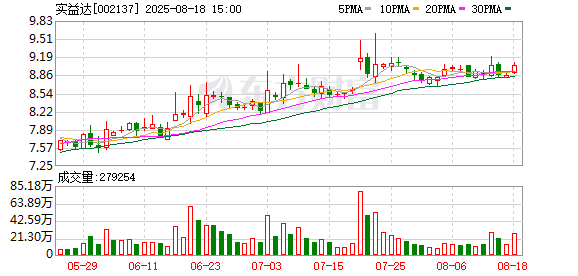
实益达:关于开展票据池业务的公告
Zheng Quan Ri Bao· 2025-08-18 13:36
Core Points - The company announced the approval of a proposal to engage in a bill pool business, allowing for a total bill pool limit of up to 1 billion RMB [2] - The bill pool will be available for use by the company and its subsidiaries, with the ability to utilize the limit in a revolving manner during the business term [2] - The proposal is subject to approval by the shareholders' meeting [2] Summary by Categories Business Development - The company plans to establish a bill pool business, which will enable it to share a total limit of up to 1 billion RMB [2] - The bill pool can be utilized through various forms of collateral, including maximum pledge, general pledge, certificate of deposit pledge, bill pledge, margin pledge, and other reasonable methods [2] Governance - The proposal for the bill pool business was approved during the 11th meeting of the 7th Board of Directors held on August 15, 2025 [2] - The final implementation of the proposal requires further approval from the shareholders' meeting [2]

政策加码对冲需求放缓,量价再平衡谋修复
China Post Securities· 2025-08-18 03:31
Economic Growth - In July, the economic growth rate is estimated to be 5.3%, a decrease of 0.4 percentage points from the previous value[1] - Consumption showed a slight marginal slowdown, while investment continued to decline, increasing the drag on economic growth[1] - Real estate investment is nearing its bottom, indicating ongoing challenges in the sector[1] Consumer Behavior - The year-on-year growth rate of social retail sales in July was 3.7%, down 1.1 percentage points from the previous value and lower than the expected 4.87%[11] - Consumer budget constraints remain cautious, with the marginal propensity to consume at 65.52%, a decrease of 0.08 percentage points from the previous year[16] - Upgrading consumption remains stable, with jewelry and cosmetics showing year-on-year growth rates of 8.2% and 4.5%, respectively[19] Investment Trends - Fixed asset investment growth rate for January to July was 1.6%, below the expected 2.68% and down 1.2 percentage points from the previous value[21] - Real estate investment saw a year-on-year decline of 12%, indicating ongoing pressure in the housing market[22] - Infrastructure investment growth rates were 3.2% for narrow definitions and 7.29% for broad definitions, both showing declines from previous values[21] Policy Implications - Incremental consumption policies are expected to boost retail sales growth by approximately 0.62%[28] - The "anti-involution" policy aims to improve price levels, with a focus on achieving a balance between quantity and price to enhance industrial profits[30] - Risks include escalating geopolitical conflicts and the possibility that policy effects may not meet expectations[31]