
商业地产

Search documents
尾部房企的流动性风险依然突出 行业将加速分化
Sou Hu Cai Jing· 2025-08-18 10:52
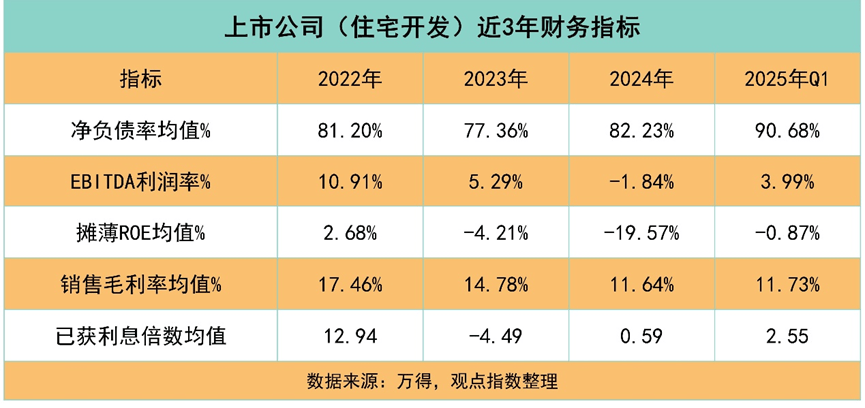
Core Viewpoint - The "2025 China Real Estate Full Industry Chain Development White Paper" indicates a weak recovery in residential development, with EBITDA margins ending a two-year decline, reflecting alleviated cash flow pressures [1] Residential Development - The industry is transitioning from a "high leverage, high turnover, high risk" model to a "low debt, light asset, high quality" approach, leading to structural differentiation among firms [2] - The residential development sector has entered a weak recovery phase, but the foundation for recovery remains fragile, with a "K-shaped" differentiation expected [3] - EBITDA margin for Q1 2025 is projected to rise to 3.99%, ending a two-year decline, primarily due to increased sales collections and controlled financial costs [4] - The average net debt ratio is expected to rise to 90.68% by Q1 2025, driven by rigid inventory in lower-tier cities and limited financing channels [4] - Gross profit margin is expected to slightly increase to 11.73% in Q1 2025, benefiting from lower land costs and relaxed price controls in some cities [4] Commercial Real Estate - The net debt ratio has surged to 7.20% in 2024, reflecting a trend of passive leverage increase, despite still being at a low absolute level [5] - EBITDA margin has significantly declined from 36.11% in 2022 to 28.13% in 2024, indicating a drop in profitability [5] - The average ROE has shown a slight increase from 3.37% to 4.37%, but this improvement is attributed to asset sales and temporary policy benefits rather than operational efficiency [6] - The interest coverage ratio has halved, indicating a critical cash flow stability issue, with the average interest coverage dropping to 4.07 in 2024 [6] Industrial Real Estate - The average net debt ratio for industrial real estate has increased from 53.65% in 2022 to 69.44% in Q1 2025, indicating a concerning trend of rising leverage [7] - EBITDA margin has decreased significantly from 47.19% in 2022 to 25.42% in Q1 2025, reflecting a substantial decline in profitability [8] - The average ROE has dropped from 7.79% to 0.76%, indicating a near-zero return on equity [8] - The interest coverage ratio for industrial real estate has unexpectedly risen to 8.71 in Q1 2025, which contradicts the trends of rising debt and declining profitability [9]

胖东来招900人,咨询电话被打爆!保安保洁要求“不超25岁+本科”
第一财经· 2025-08-18 08:38
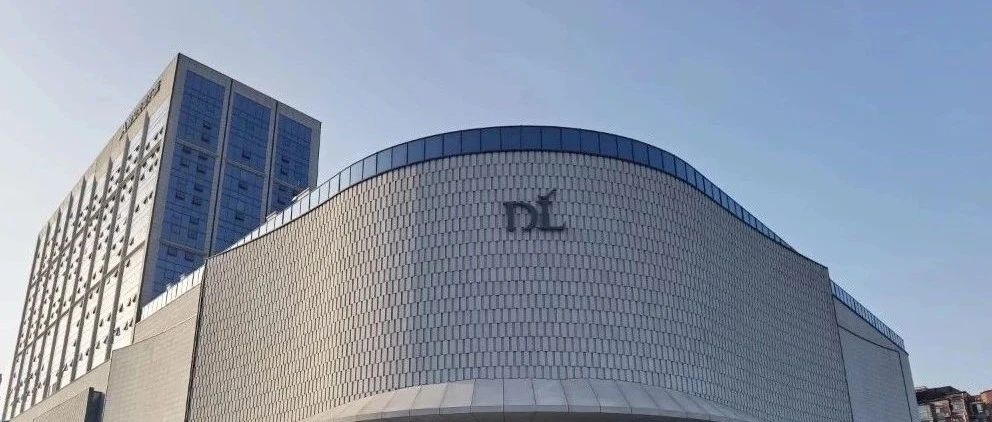
Core Viewpoint - The article discusses the recruitment announcement by Pang Donglai Commercial Group, highlighting the high educational requirements for positions such as security and cleaning staff, which has sparked public debate [3]. Recruitment Details - Pang Donglai is hiring 900 employees for its new store, specifically targeting candidates from Henan province [3]. - The job requirements for security and cleaning positions include a bachelor's degree and an age limit of 25 years or younger [3]. - The recruitment has generated significant interest, leading to busy phone lines for inquiries [3]. Salary and Benefits - The basic salary for security and cleaning positions is reported to be over 7,000 yuan per month after social insurance deductions, with total compensation nearing 9,000 yuan when including various company subsidies [3]. Company Background - New Xiang Kai De Commercial Real Estate Co., Ltd., associated with Pang Donglai, was established in November 2005 with a registered capital of 86.735 million yuan [4]. - The company operates in various sectors, including food sales, internet food sales, and catering services, and had 417 insured employees as of 2024 [3][4].
这家上市公司连续追投武汉
Chang Jiang Ri Bao· 2025-08-18 00:26
随着中创新航等龙头企业多次扩产,以及江苏林泉、凌云科技等产业链企业落户,武汉 经开区智汽园上半年签约额已超255亿元。配套方面,中国车谷全民健身中心(南馆)将迎 来升级扩容,无人驾驶公交线路规划落地,教育、商业资源持续导入。园区负责人表示,将 通过"15分钟生活圈"建设,不断提升汉南片区综合承载力,推动产城深度融合发展。 天源集团主营业务涵盖环境综合治理、绿色能源、数字技术、高端装备制造及商业地产 开发等领域,旗下天源股份于2021年在深交所创业板上市,入选国家级专精特新"小巨人"企 业,目前市值已超百亿元。 记者梳理发现,近年来,天源集团深耕车谷,持续追投武汉经开区。2024年7月,天源 集团在智汽园投资建设天源合源广场,打造纱帽片区首座高端商业综合体,目前该项目正以 7天一层楼的速度"向上生长",预计11月中旬主体结构封顶;今年7月25日,天源股份还竞得 41.5亩工业用地,拟建设环保装备智造基地。天源集团有关负责人表示,武汉经开区产业生 态日益完善,是企业长期布局的重要选择。 8月16日,长江日报记者从武汉经开区获悉,湖北天源环保集团有限公司(简称天源集 团)旗下武汉天源集团股份有限公司(简称天源股份) ...
首店经济引爆消费热潮,万达“提质提级”重构齐鲁商业生态
Sou Hu Cai Jing· 2025-08-17 10:42
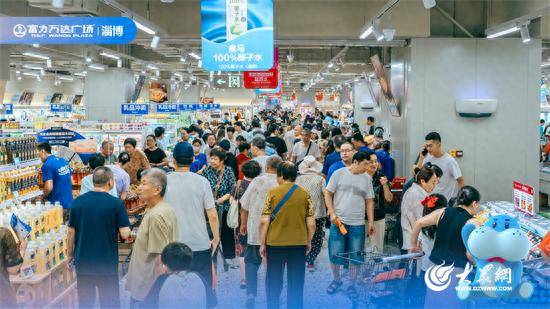
Core Insights - The opening of Hema's first store in Central Shandong marks the company's successful expansion into its seventh city in Shandong, highlighting the importance of "first store economy" in stimulating regional consumer activity [1] - The collaboration between Hema Fresh and Zhuhai Wanda Commercial Management Group in Jinan demonstrates the replicability of their commercial resource integration and consumption upgrade strategies [1][3] Group 1: Company Strategy - Zhuhai Wanda Commercial Management Group has been deeply rooted in Shandong for 15 years, operating 20 shopping centers across 11 cities, with plans for a new Wanda Plaza in Jinan by December 2025 [3] - The company is implementing a commercial ecosystem upgrade strategy, focusing on customer demand insights and tailored approaches for each store to enhance positioning and operational quality [3][6] - The restructuring strategy aims to activate existing commercial assets in response to consumption upgrade trends, emphasizing customer needs and precise market positioning [3][6] Group 2: Market Performance - The Jinan Weijiazhuang Wanda Plaza has successfully revitalized its offerings by introducing 48 new brands in the first half of 2025, including popular dining and tech brands, enhancing customer engagement [4] - The Dongying West City Wanda Plaza saw over 20% growth in both foot traffic and sales in the first half of 2025 after adjusting its positioning to cater to a younger demographic [6] Group 3: Customer Experience - Zhuhai Wanda Commercial Management Group is enhancing customer experience through comprehensive operational, marketing, and service innovations, focusing on creating immersive shopping environments [9] - The company has adopted a "one store, one color" principle to improve operational quality and customer perception, alongside significant upgrades to public facilities [9] Group 4: Marketing and Community Engagement - The marketing strategy has evolved from unified marketing to a multidimensional approach, integrating local cultural elements and hosting various events to enhance community engagement [10] - The upcoming Jinan Century Avenue Wanda Plaza aims to create a garden-style commercial space that combines cultural and natural elements, catering to diverse consumer lifestyles [11][13] Group 5: Future Outlook - The strategic framework of "first store economy explosion - existing structure adjustment - incremental benchmark creation" is guiding the regional commercial upgrade efforts of Zhuhai Wanda Commercial Management Group [16] - The company plans to expand its presence in more cities across Shandong, aiming to activate regional consumption potential and evolve commercial spaces into platforms for lifestyle value creation [16]
从老旧厂区到现代化商业新空间 西湖区这一地块将迎来焕新蝶变
Mei Ri Shang Bao· 2025-08-16 22:30
Core Viewpoint - The article highlights the successful implementation of an industrial land transformation project in Xihu District, which serves as a model for urban renewal and revitalization of old industrial spaces to better serve urban development and residents' lives [1] Group 1: Project Overview - The project involves the transformation of the old industrial site of Hangzhou Dongjian Trading Co., located in the Xianglongwei community of Sandun Town, into a modern home market experience center [1] - The project aims to address key issues such as inefficient use of old factory spaces, outdated building forms, and single-function layouts by demolishing old industrial buildings and changing the land use [1] Group 2: Project Specifications - The updated project will feature a significantly increased total construction area of 26,900 square meters, enhancing land use efficiency and spatial value [1] - The transformation is expected to turn the site from "inefficient land" into a "new realm of urban renewal" [1]
滨江宝龙城即将易主?中介:开价40多亿元寻找买家
Sou Hu Cai Jing· 2025-08-16 21:41
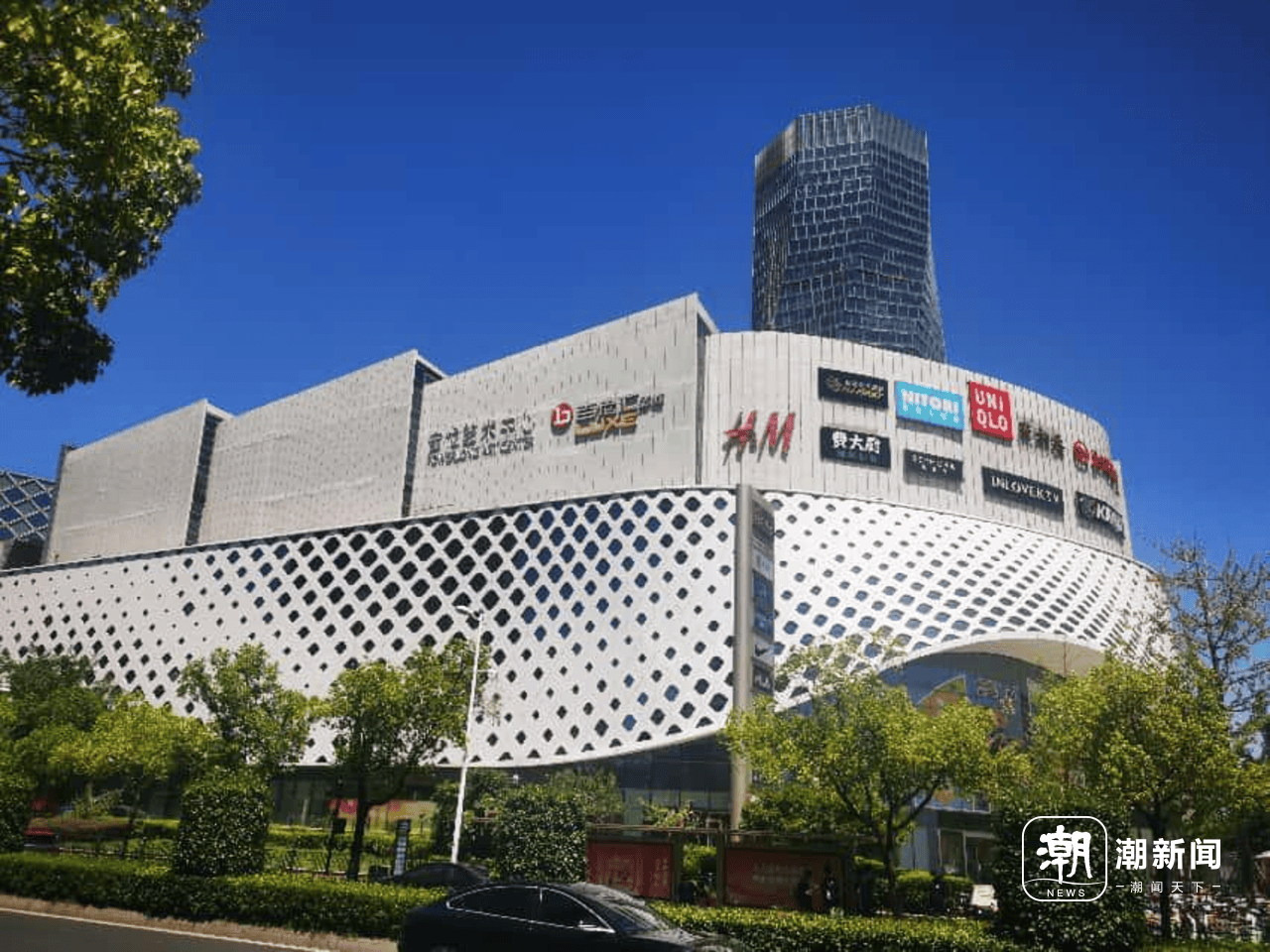
Group 1 - The news reports that Binhai Baolong City is actively seeking buyers for its commercial complex and office building assets, with the commercial complex covering 151,100 m² and priced between 2.8 billion to 3.5 billion yuan, while the office building spans 78,000 m² and is priced at 1.39 billion yuan [3][5] - Binhai Baolong City has been performing well since its opening in late 2016, maintaining nearly full occupancy and generating annual profits exceeding 200 million yuan, which justifies its high asking price [5][3] - The office building's average rental rate is currently 2.4 yuan/m²/day, with a 60% occupancy rate, indicating a significant decline from nearly 3 yuan/m²/day two years ago [5][7] Group 2 - The parent company, Baolong Real Estate, reported a projected sales revenue of 12.8 billion yuan for 2024, reflecting a 53% year-on-year decline, alongside an increased loss exceeding 5 billion yuan [7] - Baolong Real Estate has been selling assets across various locations in recent years, including a previous attempt to auction an office building in Hangzhou, indicating a trend of divestment [7] - Despite ongoing efforts to find buyers, the high valuation of the assets has led to prolonged transaction cycles, with no official sale plans for Binhai Baolong City announced yet [7]
上海放开“商改住”?商用房值得投资?当心,又有中介造谣
Sou Hu Cai Jing· 2025-08-16 17:37
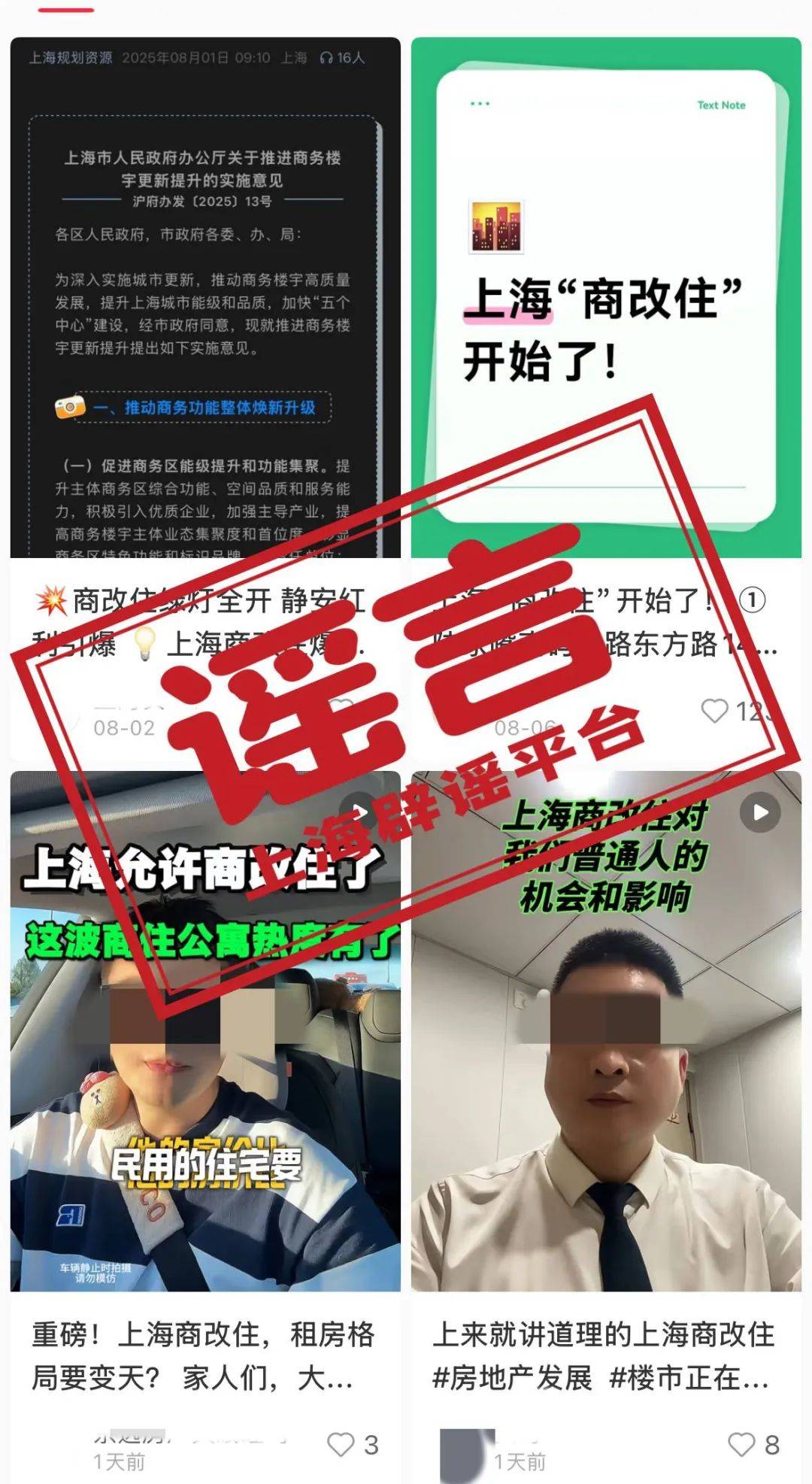
Core Viewpoint - The Shanghai Municipal Government has officially released implementation opinions to promote the upgrading of commercial buildings, allowing for the compatibility of rental housing (including talent apartments) within these properties, which has been misinterpreted by some media as allowing commercial office properties to be converted into residential units [1][4]. Group 1: Policy Overview - The new regulations are the first specialized policy for the upgrading of commercial buildings in China, establishing a comprehensive update path that includes planning, approval, operation, and supervision [4]. - The implementation opinions encourage the integration of various functions such as technology innovation, commercial hotels, cultural sports, and educational training in commercial buildings located in the main and sub-center areas of the city [4][5]. Group 2: Clarification on Misinterpretations - The policy specifically allows for the compatibility of rental housing (including talent apartments) in commercial buildings, not residential properties, countering previous misinterpretations that suggested a shift to residential use [6]. - The new regulations emphasize that the property rights, main structure, and usage of the buildings will remain unchanged, and do not involve land use adjustments or encourage investment transactions [6]. Group 3: Context and Background - The initiative comes in response to the aging of many commercial buildings in Shanghai and a global cyclical adjustment in the office market, presenting a window for updates [4]. - The policy aligns with broader national efforts to increase rental housing supply through various channels, including the repurposing of non-residential properties for rental housing [6].
中国国贸股价微涨0.93% 北京核心CBD资产运营获机构推荐
Jin Rong Jie· 2025-08-15 19:58
Group 1 - The core stock price of China International Trade reached 20.64 yuan as of August 15, 2025, with an increase of 0.19 yuan, representing a rise of 0.93% from the previous trading day [1] - The trading volume on that day was 25,773 hands, with a total transaction amount of 0.53 billion yuan [1] - China International Trade primarily engages in commercial real estate development and operation in Beijing's core business district, holding high-quality commercial assets in the CBD area, including office buildings, shopping malls, and hotels [1] Group 2 - A research report indicates that China International Trade possesses a leading advantage in the Beijing market, with stable revenue from its core business management and a year-on-year increase in net profit attributable to the parent company [1] - The report also highlights potential risks, such as insufficient consumer demand for held assets [1] - On August 15, the net outflow of main funds for China International Trade was 2.9275 million yuan, with a cumulative net outflow of 2.0125 million yuan over the past five days [1]

北京南城顶流商场荟聚或将易主险资,商场称“正常经营,未接到通知”
Hua Xia Shi Bao· 2025-08-15 14:25
Core Viewpoint - The Beijing Huiju shopping mall, operated by Ingka Group, is rumored to be sold to a consortium of insurance capital, which includes Taikang Life as a key player, amidst a backdrop of declining performance for Ingka Group [2][3][7]. Group 1: Transaction Details - The sale involves multiple Huiju malls across cities, with the first three being in Wuxi, Beijing, and Wuhan, amounting to a total investment of 16 billion yuan [3]. - The transaction is expected to facilitate a shift towards "light asset operation" for Ingka Group, with no significant changes anticipated in the current management team of the shopping malls post-acquisition [3][7]. - Despite the rumors, the Beijing Huiju mall continues to operate normally, with no official notifications regarding the sale received by the staff [2][4]. Group 2: Market Context - Ingka Group reported a revenue decline of 5.5% year-on-year for 2024, marking the first drop in five years, with net profit down by 46.5% [7]. - The insurance capital's interest in commercial real estate is driven by their strong financial position and the appeal of high-quality assets in prime locations during a period of real estate adjustment [7][9]. - Insurance companies have increasingly become key players in the commercial real estate market, with direct investments reaching 9.3 billion USD from 2022 to 2024, positioning them as leaders in the Asia-Pacific region [8]. Group 3: Implications for the Industry - The trend of insurance capital acquiring commercial real estate is seen as a response to the "asset shortage" and the need to optimize long-term yield structures, as traditional fixed-income assets face declining returns [9]. - The ongoing transactions are expected to continue as real estate firms and foreign operators seek to alleviate cash flow pressures by divesting mature projects [9].
皇庭国际股价微涨0.34% 核心资产面临司法拍卖
Sou Hu Cai Jing· 2025-08-15 14:10
Group 1 - The stock price of Huangting International reached 2.95 yuan as of August 15, 2025, with a daily increase of 0.34% and a trading range of 8.16% [1] - The company's main business includes commercial real estate operations and semiconductor business, with its core asset, Shenzhen Huangting Plaza, set for judicial auction on September 9, starting at a price of 3.053 billion yuan, which is a 30% discount from the assessed value [1] - Huangting International has reported continuous losses over recent years, accumulating over 4.4 billion yuan in losses from 2020 to 2024, and its semiconductor subsidiary failed to meet performance commitments, generating only 72.67 million yuan in revenue in 2024, significantly below expectations [1] Group 2 - On August 15, there was a net inflow of 34.0061 million yuan in main funds, with a cumulative net inflow of 74.7471 million yuan over the past five days [2]
