
黄金珠宝

Search documents
见证历史!金价 新纪录!商家:“不敢轻易增加库存!”|“双节”消费看变化
Zheng Quan Shi Bao· 2025-10-01 09:31
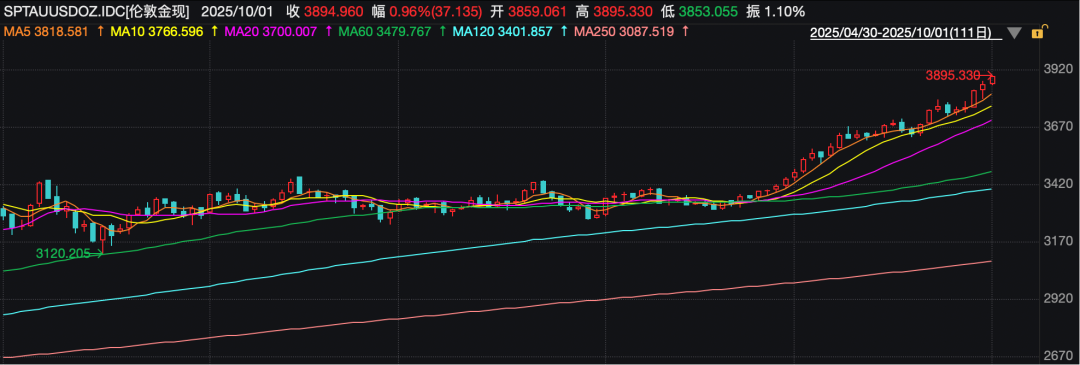
Core Viewpoint - International gold prices have reached new highs, with London gold surpassing $3,895 per ounce and COMEX gold exceeding $3,900 per ounce, indicating a strong upward trend in the gold market [1][3][4]. Market Trends - The rising international gold prices have led to record high prices for gold jewelry in the consumer market, coinciding with the National Day and Mid-Autumn Festival holidays, resulting in a surge in gold consumption [3][4]. - As of October 1, the price of gold jewelry reached 1,130 CNY per gram for brands like Chow Sang Sang and 1,129 CNY per gram for Chow Tai Fook, while the Shenzhen Shui Bei market reported prices of 888 CNY per gram, up from approximately 796 CNY per gram in early September [5][7]. Consumer Behavior - Despite the high prices, many consumers are in a wait-and-see mode, with some merchants noting that the current high prices pose challenges for inventory management, leading to a strategy of purchasing gold only as needed [8][10]. - Merchants are adapting to the market by promoting "fixed-price" gold jewelry, which has higher profit margins, as consumer preferences shift towards self-indulgence [8]. Price Dynamics - The gap between gold jewelry selling prices and buyback prices has widened significantly, with a current difference of over 30 CNY per gram compared to the historical range of 10-15 CNY [10]. - Analysts predict that gold prices may continue to rise, driven by factors such as a weakening dollar and expectations of further interest rate cuts by the Federal Reserve [10][11]. Future Projections - UBS forecasts a bullish outlook for the gold market, predicting prices could reach $4,200 per ounce by mid-2026, influenced by central bank purchases and increased ETF investments [11][14]. - Goldman Sachs maintains a target price of $4,000 per ounce for gold by mid-2026, with potential for prices to exceed $4,500 per ounce under certain conditions [14].

国内足金首饰价格最高已攀升至1130元/克
第一财经· 2025-10-01 08:45
据上证报,北京时间10月1日,金价再创新高。Wind数据显示,截至当日14点50分,伦敦现货黄金盘 中最高价超过3875.46美元/盎司。记者获悉,多家黄金珠宝品牌当日公布的境内足金首饰价格也水涨 船高,最高已攀升至1130元/克。 ...
“工业第一城”,继续“拥抱”传统产业
Mei Ri Jing Ji Xin Wen· 2025-10-01 00:20
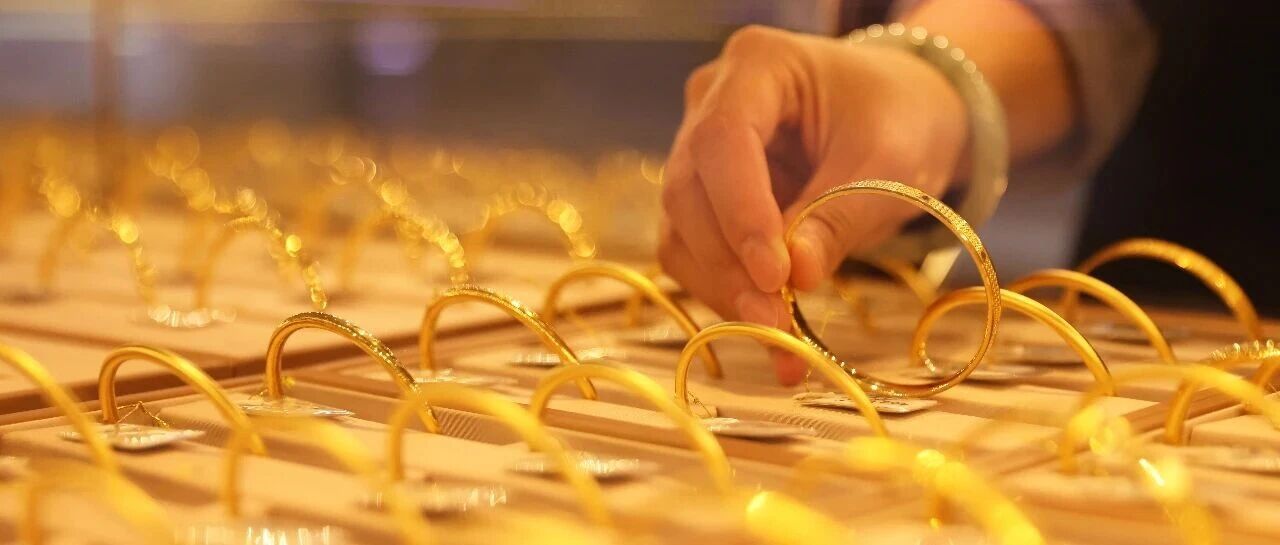
Core Insights - Shenzhen aims to leverage its rich innovation resources and diverse industrial categories to optimize and upgrade traditional industries, targeting a total scale of over 700 billion yuan in three years [1][2] - The city plans to implement 12 policy measures, including the establishment of various investment funds to support mergers and acquisitions in traditional industries [1][3] Group 1: Traditional Industries - Shenzhen has a strong presence in traditional industries, with high-end women's clothing brands and the gold jewelry industry leading nationally [2] - The city is a major production base for mid-to-high-end eyewear, accounting for approximately 50% of global output [2] - There is a shift in perception regarding traditional industries, recognizing that they can also encompass high-end development [2] Group 2: Technological Integration - Shenzhen will implement an action plan to accelerate the development of artificial intelligence in traditional sectors such as home appliances and eyewear from 2025 to 2026 [2] - The city aims to support over 100 traditional enterprises in their digital transformation within three years [2][3] Group 3: Policy and Market Integration - The city plans to encourage the integration of traditional manufacturing with new-generation information technology and high-performance materials, aiming to create over 100 cross-industry fashionable products by 2027 [3] - Shenzhen's approach of combining policy guidance, market leadership, and technological empowerment may serve as a replicable model for traditional industry transformation across the country [3]
厚德金荣获“2025行业最具投资价值品牌”!
Sou Hu Cai Jing· 2025-09-30 10:16
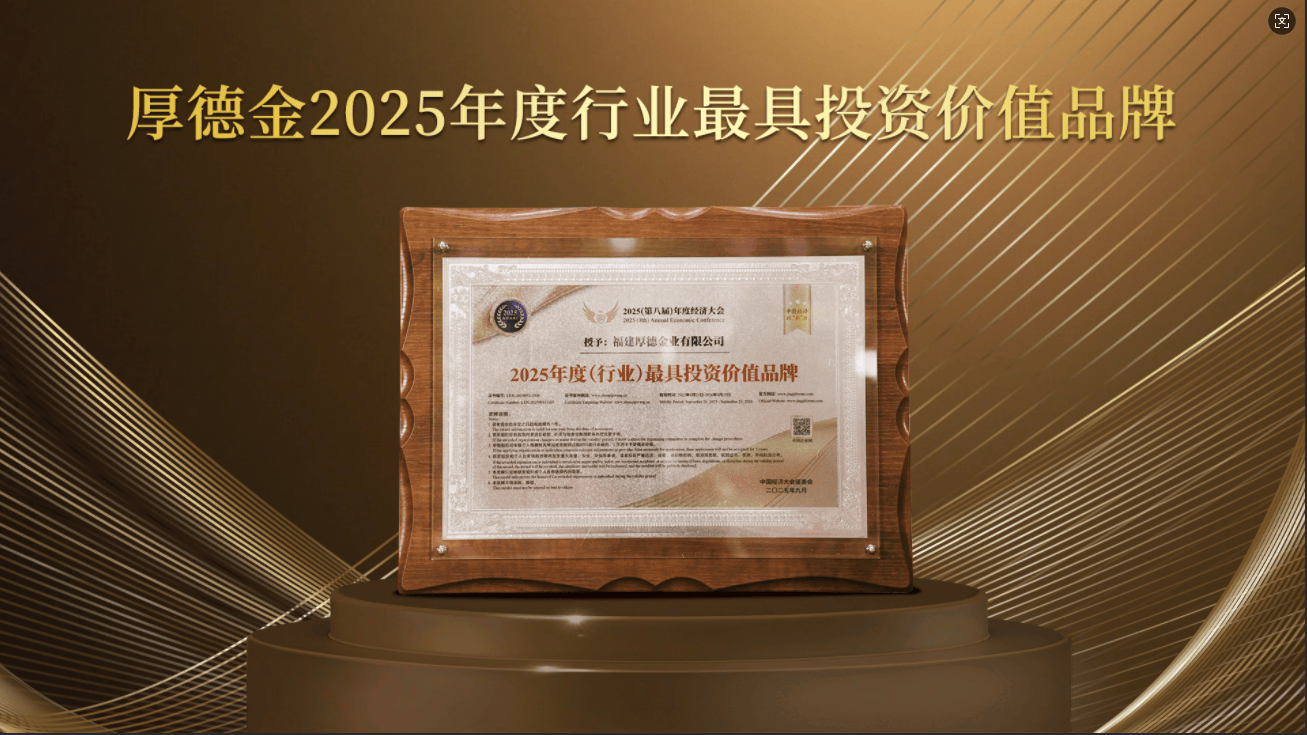
大会以"中国经济创新力"为主题,聚焦经济领域热点议题,通过系统梳理年度经济大事件,并对在经济社会各领域中作出突出贡献的行业、品牌予以表彰, 昂扬时代精神,传递向上力量!会上,德诚珠宝集团旗下"厚德金"品牌凭借创新的实物黄金买卖模式和为行业、市场提供的高价值"厚德金解决方案",荣 获"2025(行业)最具投资价值品牌"奖项。 这一奖项充分认可了厚德金在重构实物黄金买卖价值链方面的突破性贡献,更是为行业、品牌健康、持续发展 建立范式! 36年行业沉淀,打造实物黄金买卖新范式! 2025年(第八届)年度经济大会近日在北京隆重举行,中国关工委常务副主任、中共中央宣传部原副部长胡振民,中共中央对外联络部原副部长马文普,中 国节能协会监事长房庆,中国人民大学教授、博士生导师王亚星,中国经济大会秘书长贾涛等领导嘉宾出席此次会议。 作为金条销售与黄金回购领域的创新引领者,厚德金以"实物黄金买卖品牌"为战略驱动,构建了"金条销售+合规回购"的闭环体系,为广大消费者搭建了合 规安全的实物黄金买卖平台,全面展现了其在战略布局、产品创新与运营模式上的雄厚实力与革新魄力,更为市场和黄金行业的高质量发展提供了极具价值 的"厚德金方案"。 ...
深圳的底牌,不只是华为和大疆
Sou Hu Cai Jing· 2025-09-30 09:20
Core Insights - Shenzhen is launching a significant initiative to modernize traditional industries, focusing on sectors like clothing, jewelry, and eyewear, aiming to build a modern industrial system [1][2] - The city has introduced 12 major policies to boost traditional industries, targeting a total scale of over 700 billion yuan within three years [2][4] Policy Initiatives - The policies aim to support enterprises throughout their lifecycle, enhancing their growth and strength [4][5] - Key measures include optimizing the industrial policy system, strengthening investment through diversified funds, and accelerating core technology advancements [4][5] - The initiative emphasizes embracing artificial intelligence to foster new momentum in traditional industries [4][12] Industry Strengths - Shenzhen's clothing industry leads the nation in brand quantity, market share, and number of listed companies [4] - The gold and jewelry sector has maintained the highest industrial output value in the country, with annual gold delivery accounting for approximately 70% of the Shanghai Gold Exchange [4] - The city produces about 50% of the world's mid-to-high-end eyewear [4] Strategic Importance - The focus on traditional industries is part of a broader strategy to adapt to global industrial chain competition, emphasizing the need for both emerging and traditional industries to thrive [11][19] - Shenzhen's traditional industries are described as "invisible pillars" of the economy, having evolved from basic manufacturing to high-end manufacturing clusters with global influence [11][19] Technological Integration - The integration of technology into traditional industries is seen as essential for achieving dual-driven growth [12][13] - Successful cases include collaborations between tech companies and traditional businesses to enhance service efficiency and product innovation [12] Financial Support - Shenzhen has established a digital transformation support plan for traditional industries, offering subsidies up to 5 million yuan for eligible projects [17] - The city is also implementing various policy tools to help enterprises access resources at lower costs [16][17]

老铺黄金(06181):2025年中报点评:业绩跨越式增长,拓店和出海加速
Huachuang Securities· 2025-09-30 04:15
Investment Rating - The report maintains a "Strong Buy" rating for the company, with a target price of HKD 812.50 [2][8]. Core Insights - The company reported a significant increase in revenue and net profit for the first half of 2025, with revenue reaching HKD 12.35 billion, up 251% year-on-year, and net profit of HKD 2.27 billion, up 286% year-on-year [2][4]. - The growth is driven by rapid same-store sales growth, store expansion, and increased online sales, with same-store revenue growth of approximately 200.8% compared to the same period in 2024 [8]. - The company is expanding its high-end customer base and international presence, with a notable increase in loyal members and the opening of a new store in Singapore [8]. Financial Performance Summary - Total revenue projections for 2025 are estimated at HKD 25.89 billion, representing a year-on-year growth of 204.3% [4]. - Adjusted net profit for 2025 is projected at HKD 4.98 billion, with a year-on-year growth of 238.2% [4]. - The company’s gross margin slightly decreased to 38.1% due to rising gold prices, but operating leverage improved net profit margin to 19.0% [8]. Market Position and Strategy - The company is focusing on brand internationalization and market globalization, aiming to become a leading global gold brand with cultural heritage value [8]. - The overlap in consumer demographics with major luxury brands indicates a strong positioning in the high-end market [8].
A股近3000股上涨,存储芯片多股涨超10%,黄金站上3860美元
2 1 Shi Ji Jing Ji Bao Dao· 2025-09-30 04:07
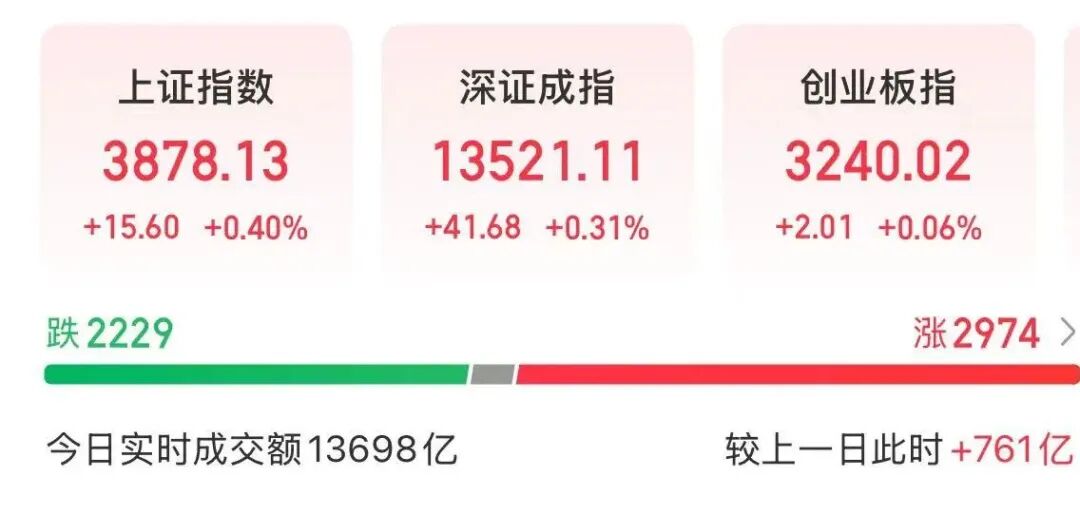
Market Overview - As of September 30, the Shanghai Composite Index rose by 0.40%, the Shenzhen Component Index increased by 0.31%, and the ChiNext Index saw a slight rise of 0.06%. The STAR Market 50 Index surged by 2% [1] - The total trading volume in the Shanghai and Shenzhen markets reached 1.37 trillion yuan, an increase of 76.1 billion yuan compared to the previous trading day, with nearly 3,000 stocks rising across the market [1] Storage Chip Sector - The storage chip sector experienced significant gains, with stocks like Jiangbolong (301308) rising by 20% and several others increasing by over 10% [2] - Major storage manufacturers, including SanDisk, Micron, Samsung, and Western Digital, have announced price increases since September, leading to a ripple effect in the downstream market as module manufacturers ramp up inventory [3][4] - Adata announced it would stop quoting DDR4 prices and prioritize supply of DDR5 and NAND flash to major clients, while Phison has resumed some pricing with a 10% increase [3][4] AI and Semiconductor Sector - The AI sector saw a collective rise, with stocks like Dahong Technology hitting the daily limit up of 20%, and others like Kaipu Cloud and Tuolisi rising over 5% [4] - The launch of DeepSeek-V3.2-Exp has led to a significant reduction in service costs, with API prices dropping by over 50%, prompting several domestic chip manufacturers to adapt to the new model [5][6] - Analysts from Huaxin Securities noted that the domestic AI chip industry is entering a new era, with a complete industrial chain from advanced processes to model acceleration being established [6][7] Gold Market - On September 30, spot gold prices reached a new high of $3,860 per ounce, marking a 0.72% increase for the day [11] - Domestic gold jewelry prices have also risen, with brands like Chow Sang Sang and Luk Fook reporting prices of 1,125 yuan per gram, an increase of 14 yuan from the previous day [13] - Analysts from Guohai Securities indicated that the long-term trend of gold prices is influenced by the strength of the US dollar and inflation expectations, with current conditions favoring gold due to potential stagflation [13]




华西证券:三季度时尚黄金珠宝品牌有望保持同店、开店双增长
Di Yi Cai Jing· 2025-09-30 00:44
Core Viewpoint - The report from Huaxi Securities indicates that gold prices have maintained a high level of fluctuation in July and August, with a gradual improvement in terminal sales of gold and jewelry due to a low base from the previous year. [1] Group 1: Market Performance - In July and August, retail sales of gold and jewelry products in large-scale enterprises increased by 8.2% and 16.8% year-on-year, respectively. [1] - September saw gold prices entering an upward cycle again, leading to a reduction in consumer wait times for purchases. [1] Group 2: Industry Trends - September is a crucial period for gold and jewelry brand ordering meetings, coinciding with the traditional sales peak season. [1] - Positive terminal sales performance in July and August is expected to encourage franchisees to stock up actively. [1] Group 3: Company Strategies - Gold and jewelry companies are enhancing brand competitiveness through craftsmanship and product innovation. [1] - In the third quarter, fashion gold and jewelry brands are anticipated to achieve growth in both same-store sales and new store openings, while traditional gold and jewelry brands are expected to show improvement in same-store sales compared to the second quarter. [1]

用好50亿基金 打造“AI眼镜第一城”
Sou Hu Cai Jing· 2025-09-29 23:13
Core Viewpoint - Shenzhen is transforming its traditional industries through digitalization and artificial intelligence, aiming to enhance the overall scale of traditional industries to over 700 billion yuan in the next three years [2][4][5]. Group 1: Traditional Industry Development - Shenzhen has a strong presence in high-end women's clothing, jewelry, and eyewear, with significant contributions to the global market [2]. - The city aims to optimize and upgrade traditional industries by leveraging new technologies, resulting in the emergence of new products, brands, services, and business models [2][4]. - The government is focusing on a multi-faceted policy approach to support various sectors, including clothing, jewelry, furniture, eyewear, watches, and leather [4]. Group 2: Artificial Intelligence Integration - Shenzhen plans to harness artificial intelligence to empower traditional industries, emphasizing the importance of AI in driving innovation and efficiency [5]. - The city has established major projects like Pengcheng Cloud Brain and Shenzhen Open Intelligent Computing Center to enhance AI service resources [5]. - Financial support mechanisms, such as "training vouchers" and "model vouchers," will be introduced to help companies reduce costs associated with AI implementation [5][6]. Group 3: Regional Initiatives - The Luohu District is enhancing its jewelry industry by integrating AI technologies into design, manufacturing, and retail, aiming to elevate the value creation process [7]. - The Longhua District is focusing on digital transformation in the fashion industry, promoting local brands on international platforms like Milan Fashion Week [8]. - Collaborative efforts with tech companies like Huawei are being made to establish smart centers that will further integrate AI into traditional sectors [7][8].

12条措施助传统产业“智变”
Sou Hu Cai Jing· 2025-09-29 23:13
Core Insights - Shenzhen is accelerating the optimization and upgrading of traditional industries, leveraging the technological revolution led by artificial intelligence to reshape the industrial landscape [1][2][3] Group 1: Background and Achievements - The traditional industries in Shenzhen are experiencing significant historical development opportunities, with high-end women's clothing brands ranking among the top in the country and the gold and jewelry industry maintaining the highest industrial output value nationally for several consecutive years [1] - Shenzhen aims to push the total scale of traditional industries to exceed 700 billion yuan within three years, significantly enhancing development capabilities [1] Group 2: Policy Measures - A comprehensive policy framework is being established to support enterprises in various sectors such as clothing, gold and jewelry, furniture, eyewear, watches, and leather, providing multi-faceted support to drive traditional industry upgrades [2] - The establishment of diverse investment models, including government-guided funds and partnerships with industry associations, aims to foster high-quality enterprises with strong technological advantages [2] Group 3: Technological Advancements - Key technological challenges are being addressed through initiatives like "revealing the list and taking the lead," focusing on critical materials and components that hinder high-quality development in traditional industries [2] - The implementation of an action plan for accelerating the development of artificial intelligence in traditional industries aims to integrate AI technology across various sectors, creating new growth drivers [2] Group 4: Product and Brand Development - A strategy to enhance product variety, quality, and branding is being implemented, with a goal of creating over 100 competitive products and more than 10 national consumer brands by 2027 [3] - Efforts are being made to promote Shenzhen's traditional industries through high-profile exhibitions and competitions, enhancing their visibility and influence [3][4] Group 5: Market Expansion - Initiatives to facilitate market expansion include organizing industry matchmaking events and supporting local brands in participating in international fashion weeks and trade shows [4] - A one-stop service model is being developed to optimize resource allocation and attract talent necessary for industry growth [4]