
脑机接口

Search documents
脑虎科技:高位截瘫临床试验成功,8年患者实现“意念”操控
Xin Lang Cai Jing· 2025-12-15 06:10
Core Viewpoint - Brain Tiger Technology has successfully completed the first clinical trial of its domestically developed fully implanted, wireless, and fully functional brain-computer interface (BCI) product, enabling a high-level paraplegic patient to control digital devices through thought alone [1][4]. Group 1: Product Features - The BCI product integrates all core modules, including the battery, fully implanted within the body, eliminating external cable interfaces and reducing infection risks associated with traditional systems [1][4]. - The battery module is innovatively placed subcutaneously in the chest, optimizing the established deep brain stimulation (DBS) technology framework and ensuring a reliable long-term usage for patients [1][4]. - The device features wireless power supply and data transmission capabilities, allowing patients to interact in real-time without the need for external devices during rehabilitation and daily life [1][4]. Group 2: Clinical Results - Post-surgery, the patient showed rapid recovery, moving to a regular ward just one day after the operation [2][5]. - The patient successfully operated the device five days post-surgery, achieving smooth web browsing, precise clicking, and video playback [2][5]. - The brain control decoding rate reached 5.2 BPS in standardized tests, comparable to international top levels [2][5].

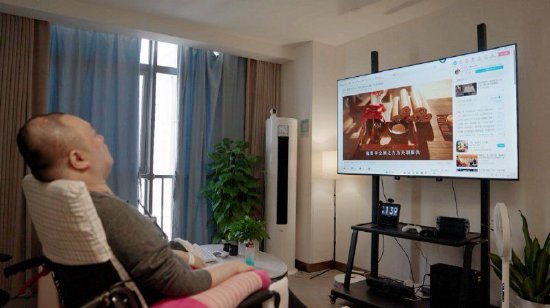
脑机接口产品又有新突破 植入者实现无线自由
Jin Rong Jie· 2025-12-15 01:37
Core Insights - The company Brain Tiger Technology announced the completion of the first clinical trial for its fully implanted, wireless, and battery-integrated brain-computer interface (BCI) product, which is the first in China and the second globally [1] - The product allows a patient with complete paralysis below the shoulders to browse the web and play games, showcasing significant advancements in user capabilities [1] Company Developments - The BCI product eliminates external cables, reducing the risk of infection associated with traditional exposed systems, and provides users with "wireless freedom" through integrated wireless power and data transmission [1] - The successful clinical trial marks a significant milestone in the development of advanced neurotechnology solutions [1] Industry Outlook - According to Huafu Securities, the global brain-computer interface market is projected to reach approximately $2.62 billion in 2024, increasing to $2.94 billion in 2025, and is expected to grow to $12.4 billion by 2034, with a compound annual growth rate (CAGR) of 17.35% over the next decade [1] - The Chinese brain-computer interface market is estimated to be worth 3.2 billion yuan in 2024, with projections to reach 6.14 billion yuan by 2028 [1]
工信部深化拓展制造业数字化转型 加快卫星互联网建设发展——《投资早参》
Mei Ri Jing Ji Xin Wen· 2025-12-14 23:23
2、全国发展和改革工作会议12日至13日在北京召开。会议强调,扎扎实实做好明年发展改革重点工 作。要大力培育壮大新兴产业和未来产业,培育壮大若干新兴支柱产业,深化拓展"人工智能+"行动, 补齐科技服务业短板。中国信息通信研究院信息显示,今年以来,我国人工智能产业呈加速发展态势, 2025年人工智能核心产业规模有望突破万亿元。数据显示,今年以来,生产制造环节的大模型应用增长 显著,应用案例占比由去年的19.9%增长至25.9%,带动人工智能产业规模快速增长。2025年这个数值 将会超过1.2万亿元,增速会进一步提升。 点评:"人工智能+"连续两年被中央经济工作会议重点强调,确认其作为引领性、颠覆性技术的战略地 位以及我国当下科技与产业融合的主攻方向。对比2024年中央经济工作会议中关于科技的提法是"以科 技创新引领新质生产力发展",更侧重于指明方向,今年的导向更侧重确保科技创新能真正转化为可 见、可量化的产业新动能和产业链竞争力,我们预计,未来政策导向将更侧重于产业增加值、市场份 额、龙头企业培育等具体经济指标。概念股包括易点天下、拓尔思、中文在线等。 3、12月13日,据媒体报道,据中国神经科学学会脑机接口与 ...
工信部深化拓展制造业数字化转型,加快卫星互联网建设发展;国内首款!华山医院联合脑虎科技完成内置电池脑机接口人体植入——《投资早参》
Mei Ri Jing Ji Xin Wen· 2025-12-14 23:18
每经记者|杨建 每经编辑|彭水萍 3、12月13日,据媒体报道,据中国神经科学学会脑机接口与交互分会年会透露,上海脑虎科技研发的 一款内置电池全植入脑机接口产品已于近期在复旦大学附属华山医院完成首例患者植入。据了解,目前 全球范围内掌握并验证内置电池全植入方案的公司数量极少,脑虎科技是除科技富豪马斯克的脑机接口 公司Neuralink之外,提供此类设备的首家中国公司,不仅填补了国内相关领域技术空白,也标志着中国 脑机接口技术跻身全球顶尖行列。复旦大学附属华山医院院长毛颖教授介绍称,患者术后1天即转入普 通病房,术后5天首次开机便成功实现意念操控。 点评:脑机接口下游应用市场潜力大,全球脑机接口医疗应用市场规模有望在2030年达到400亿美元, 2040年达到1450亿美元。脑机接口技术在医疗健康领域展现巨大潜力,为庞大的神经系统疾病患者群体 带来了新的治疗希望和康复途径。尤其是针对肢体运动障碍、意识与认知障碍、癫痫和精神性疾病等的 治疗和康复,脑机接口技术取得重要突破和长足进展。概念股包括中科信息、冠昊生物、爱朋医疗等。 (三)避雷针 (一)重要市场新闻 12月13日,据新华社报道,在中国国际经济交流中心举办 ...
机构研究周报:春季躁动或提前,债市短端机会更大
Wind万得· 2025-12-14 22:36
Core Viewpoints - The tightening monetary environment is improving, and market expectations are rising, suggesting that the "spring rally" may start in mid-December [1][5] Economic Policy - The Central Economic Work Conference emphasized a policy direction of stability and progress, focusing on quality improvement and efficiency enhancement, with a commitment to a more proactive fiscal policy and necessary fiscal deficits [3] - The conference's more positive tone compared to last year is expected to boost market sentiment, particularly in the bond market, due to expectations of monetary policy easing [3] Equity Market - Huatai Securities suggests that the "spring rally" may start early due to improved monetary conditions and rising market expectations, recommending a balanced allocation between growth and cyclical stocks [5] - CICC highlights that the A-share market's valuation is relatively reasonable, supported by AI technology and energy revolutions, with a focus on large-cap growth styles [6] - Guotai Fund notes that the A-share market is entering a window of policy and liquidity resonance, suggesting preparations for the upcoming spring rally, particularly in sectors like AI and new energy [7] Bond Market - CICC's fixed income team indicates that weak financial data in November has increased the attractiveness of bond allocations, with short-term opportunities being more certain [18] - Bosera Fund points out that recent adjustments in the bond market provide good entry opportunities, supported by a favorable monetary policy environment [19] - Zheshang Securities believes that the bond market's recent rebound may be nearing its end, suggesting a defensive strategy while monitoring the equity market's potential spring rally [20] Industry Research -招商基金 emphasizes the long-term investment trends and risks in the optical communication market, driven by AI and 5G demand, while advising caution regarding technological evolution and market competition [12] - Galaxy Securities recommends focusing on technology innovation and consumer sectors, as well as financial and real estate chains, which may have allocation potential [13] - CITIC Construction Investment highlights the rapid development of the brain-computer interface industry, supported by technological innovation and policy incentives, while cautioning against competitive pressures [14] Asset Allocation - Huatai Baichuan Fund suggests that the market may return to a profit-driven trajectory, with expectations of stable domestic fundamentals and liquidity, leading to potential upward revisions in corporate earnings [22]

脑机接口产品又有新突破,植入者实现无线自由
Xuan Gu Bao· 2025-12-14 15:44
Group 1 - Brain Tiger Technology announced the completion of the first clinical trial for its fully implanted, wireless, and fully functional brain-computer interface (BCI) product, which is the first in China and the second globally with an internal battery [1] - The BCI product allows a patient with complete paralysis below the shoulders for 8 years to browse the web and play games after training, showcasing significant advancements in user capabilities [1] - The product eliminates the risk of infection associated with traditional external systems by having all core modules, including the battery, fully implanted, and it offers true "wireless freedom" through integrated wireless power and data transmission [1] Group 2 - According to Huafu Securities, the global brain-computer interface market is projected to reach approximately $2.62 billion in 2024, $2.94 billion in 2025, and is expected to grow to $12.4 billion by 2034, with a compound annual growth rate (CAGR) of 17.35% over the next decade [1] - The Chinese brain-computer interface market is estimated to be 3.2 billion yuan in 2024, with expectations to reach 6.14 billion yuan by 2028 [1] - UCloud and Brain Tiger Technology are collaborating on a "speech synthesis brain-computer interface product" as part of Shanghai's 2024 "Technology Innovation Action Plan" [2] - Weisi Medical has been focusing on the non-invasive brain-computer interface field and has developed core technologies for high-precision EEG signal acquisition, environmental interference correction, neural feature extraction, and machine learning decoding algorithms [2]
未来产业周报第1期:量子万比特芯片技术突破,核聚变国际协作升级-20251214
Shenwan Hongyuan Securities· 2025-12-14 14:42
Quantum Technology - The report highlights the release of the world's first 3D-extended architecture 10,000-qubit quantum processor VIO-40K by QuantWare, which aims to overcome the scaling bottleneck of quantum processors and is compatible with NVIDIA's NVQLink platform [3][7][8] - The 2025 Zhongguancun Quantum Conference announced 16 quantum technology achievements and a 500 million yuan investment fund to support quantum entrepreneurship, showcasing advancements in quantum computing and applications in energy [3][13][14] Biomanufacturing - Levinthal Biotech completed a multi-million Pre-A round financing to accelerate the development of its AI-driven full-atom model protein design platform Pallatom, which addresses the design challenges of cyclic peptides [3][15][16] - Aopu Mai's acquisition of 100% of Pengli Biotechnology was approved, enhancing its capabilities in cell culture media and CDMO services, thereby expanding its market position [3][20][21] - Baiaosaitu has established a dual-platform listing strategy with its recent listing on the STAR Market, focusing on innovative drug development driven by gene editing technology [3][23][24] Hydrogen Energy and Nuclear Fusion - The report notes the deepening international cooperation in nuclear fusion, with a Chinese expert set to chair the ITPA Coordination Committee from 2026 to 2028, and the signing of a contract for the mass production of the ITER first wall [3][28][29] - Snowman Group's metal plate fuel cell stack project has passed final acceptance, marking a significant step in the commercialization of hydrogen energy technology [3][30][31] Brain-Computer Interface - Neuralink has demonstrated a significant efficiency breakthrough with its new surgical robot, reducing the electrode implantation time from 17 seconds to 1.5 seconds, showcasing advancements in surgical precision and safety [3][34][46] - The report emphasizes the competitive landscape, with the U.S. leading in invasive technologies while China excels in non-invasive applications, highlighting the ongoing developments in both sectors [3][48][49] Embodied Intelligence - Beijing Humanoid Robotics has launched the first fully autonomous humanoid robot tour guide solution, integrating IoT capabilities for various applications in exhibition halls and shopping malls [3][50][51] - The Shanghai humanoid robot pilot alliance was established to enhance the supply chain for humanoid robots, indicating a collaborative effort to scale the industry [3][53][54] - Yushu Technology has introduced a humanoid robot App Store, allowing users to upload and share action models, further promoting the commercialization of humanoid robotics [3][55]


晚报 | 12月15日主题前瞻
Xuan Gu Bao· 2025-12-14 14:38
Film Industry - As of December 13, 2025, China's box office has surpassed 50 billion yuan, an increase of nearly 7.5 billion yuan compared to the entire year of 2024, with 1.194 billion moviegoers, an increase of approximately 184 million compared to 2024 [1] - The animated film "Nezha: Birth of the Demon Child" leads the box office with 15.446 billion yuan [1] - Analysts believe that the high reputation and high screening rate of the imported animated film "Zootopia 2" may help its box office exceed expectations, while the upcoming "Avatar 3: The Way of Fire" is expected to further boost box office performance [1] Brain Science - Brain Tiger Technology announced the completion of the first clinical trial of its fully implanted, wireless brain-computer interface product, which allows a patient with complete paralysis to browse the web and play games [2] - The global brain-computer interface market is projected to reach approximately $2.62 billion in 2024 and $2.94 billion in 2025, with a compound annual growth rate of 17.35% expected to reach $12.4 billion by 2034 [2] Metaverse - The Ministry of Industry and Information Technology is soliciting opinions on the "Metaverse Industry Comprehensive Standardization System Construction Guide (2026 Edition)," aiming to establish over 20 national and industry standards by 2028 [3] - The metaverse is characterized by immersive interconnectivity between digital and physical worlds, with significant growth potential in areas such as XR, AIGC, and blockchain technologies [3] Rural Revitalization - The Ministry of Commerce and other financial authorities issued a notice to enhance collaboration between commerce and finance to boost consumption, particularly in rural areas [4] - The retail sales of consumer goods in rural areas are projected to reach 6.6729 trillion yuan in 2024, growing at a rate of 4.3%, which is faster than urban areas [4] Cannabis - Former President Trump is reportedly pushing for a historic plan to lower the federal regulation level of cannabis to that of common prescription painkillers, marking a significant shift in U.S. federal drug policy [5] Commercial Space - SpaceX is preparing for a potential IPO in 2026, with a target valuation of approximately $1.5 trillion, comparable to Saudi Aramco's record valuation [6] - The rapid expansion of SpaceX's Starlink satellite internet service and ongoing projects like the Starship lunar and Mars missions are key factors driving the IPO [6] Smart Healthcare - The National Medical Insurance Administration plans to advance smart healthcare initiatives by promoting AI development in the medical insurance sector and hosting competitions for AI-assisted diagnosis [7] - The integration of AI in healthcare is expected to accelerate, with significant investments from leading companies in the sector [7]
国内首款!华山医院联合脑虎科技完成内置电池脑机接口人体植入
第一财经· 2025-12-13 14:02
2025.12. 13 本文字数:1533,阅读时长大约2分钟 复旦大学附属华山医院院长毛颖教授向第一财经记者介绍称,首例植入患者是在获得严格伦理审批的 基础上进行的。患者为一名肩部以下完全不能动的高位截瘫者。患者术后1天即转入普通病房,术后 5天首次开机便成功实现意念操控。经过系统训练,在标准测试中,其脑控解码速率达到5.2BPS, 达到国际大脑解码的顶尖水平。 脑虎科技创始人兼首席科学家陶虎对第一财经记者表示,最新植入的这款脑机接口产品"全植入、全 无线、全功能"三大特征。过去的脑机接口产品往往需要将电池模块暴露在颅外,脑虎科技解决了这 一技术难题,实现了将含有电池的核心模块完全植入体内,集成无线供能与无线数据传输功能,使患 者使用时彻底摆脱体外设备的束缚,体表无任何线缆接口,也从物理层面根除了传统外露系统易导致 感染的风险。 作者 | 第一财经 钱童心 12月13日,第一财经记者在中国神经科学学会脑机接口与交互分会年会上获悉,上海脑虎科技研发 的一款内置电池全植入脑机接口产品已于近期在复旦大学附属华山医院完成首例患者植入。 据记者了解,目前全球范围内掌握并验证内置电池全植入方案的公司数量极少,脑虎科技是 ...
2025年我国脑机接口产业发展成效显著
Zhong Guo Xin Wen Wang· 2025-12-13 12:35
Core Insights - The brain-computer interface (BCI) industry in China is expected to achieve significant advancements by 2025, with breakthroughs in core technologies, multi-scenario applications, and the establishment of an industrial ecosystem [1][2] Group 1: Core Technology Developments - China has developed multiple brain-computer interface chips and implanted electrodes, with an increasing number of channels and improved stability [1] - The integration level and overall performance of complete systems have been optimized, with wireless, passive, and miniaturized systems emerging, some technical indicators nearing or reaching international advanced levels [1] Group 2: Decoding Algorithms - The rapid application of artificial intelligence has significantly enhanced decoding accuracy, enabling precise decoding of subjects' motor intentions and making complex scenarios like handwriting and speech decoding feasible [1] Group 3: Application Practices - Invasive and non-invasive BCI technologies are focusing on different scenarios, creating a collaborative development pattern; invasive BCIs are primarily used in medical settings, with dozens of clinical cases reported for spinal cord injury and stroke rehabilitation [1] - Initial explorations in new fields such as blindness restoration and addiction treatment are also progressing in an orderly manner [1] Group 4: Non-Invasive Applications - Non-invasive BCIs are targeting consumer and industrial sectors, with several devices already in mass production for applications in fatigue monitoring, emotion recognition, brain-controlled peripherals, and intelligent driving [2] - This is gradually building a multi-scenario application ecosystem, facilitating the transition from technology validation to large-scale commercialization [2] Group 5: Industry Ecosystem Characteristics - The BCI industry has formed a collaborative feature of "policy-research-industry-capital," with industry alliances and standardization organizations establishing preliminary norms around data formats, interface protocols, and safety ethics [2]