Securities

Search documents
吴清:既“追首恶”,又“惩帮凶”,坚决破除造假生态圈
Sou Hu Cai Jing· 2025-09-22 10:19
责编:史健 | 审核:李震 | 监审:古筝 【大河财立方消息】9月22日,国新办举行新闻发布会,介绍"十四五"时期金融业发展成就。证监会主 席吴清在回答记者提问时表示,"十四五"期间,证监会大幅增强监管执法的有效性、震慑力,聚焦财务 造假等投资者深恶痛绝的违法违规问题,既"追首恶",又"惩帮凶",系统构建全方位、立体式的综合惩 防体系,坚决破除造假"生态圈"。 ...
【机构策略】节前A股市场大概率仍以震荡整理为主
Zheng Quan Shi Bao Wang· 2025-09-22 05:47
Group 1 - The overall sentiment in the A-share market remains high, focusing on core independent trend stocks, with no clear signs of a peak or pullback [1] - The market is currently in a phase of horizontal consolidation, with historical reference points suggesting a potential pullback to the 60-day moving average [1] - The expectation for a slow bull market remains unchanged, with the potential for further gains if the Federal Reserve lowers rates by an additional 50 basis points this year [1] Group 2 - The recent interest rate cut by the Federal Reserve is seen as a macro event that is generally favorable for the market, although A-share indices have faced some pressure after initial gains [2] - There is a noted decline in the profitability of previously popular technology stocks, indicating a potential cooling of market sentiment [2] - The upcoming "Eleventh" holiday may lead to a decrease in trading activity, with the market likely to remain in a state of oscillation and consolidation before the holiday [2]

Stock market danger: The myth of buoyancy has turned it into a hamster wheel
MINT· 2025-09-21 07:34
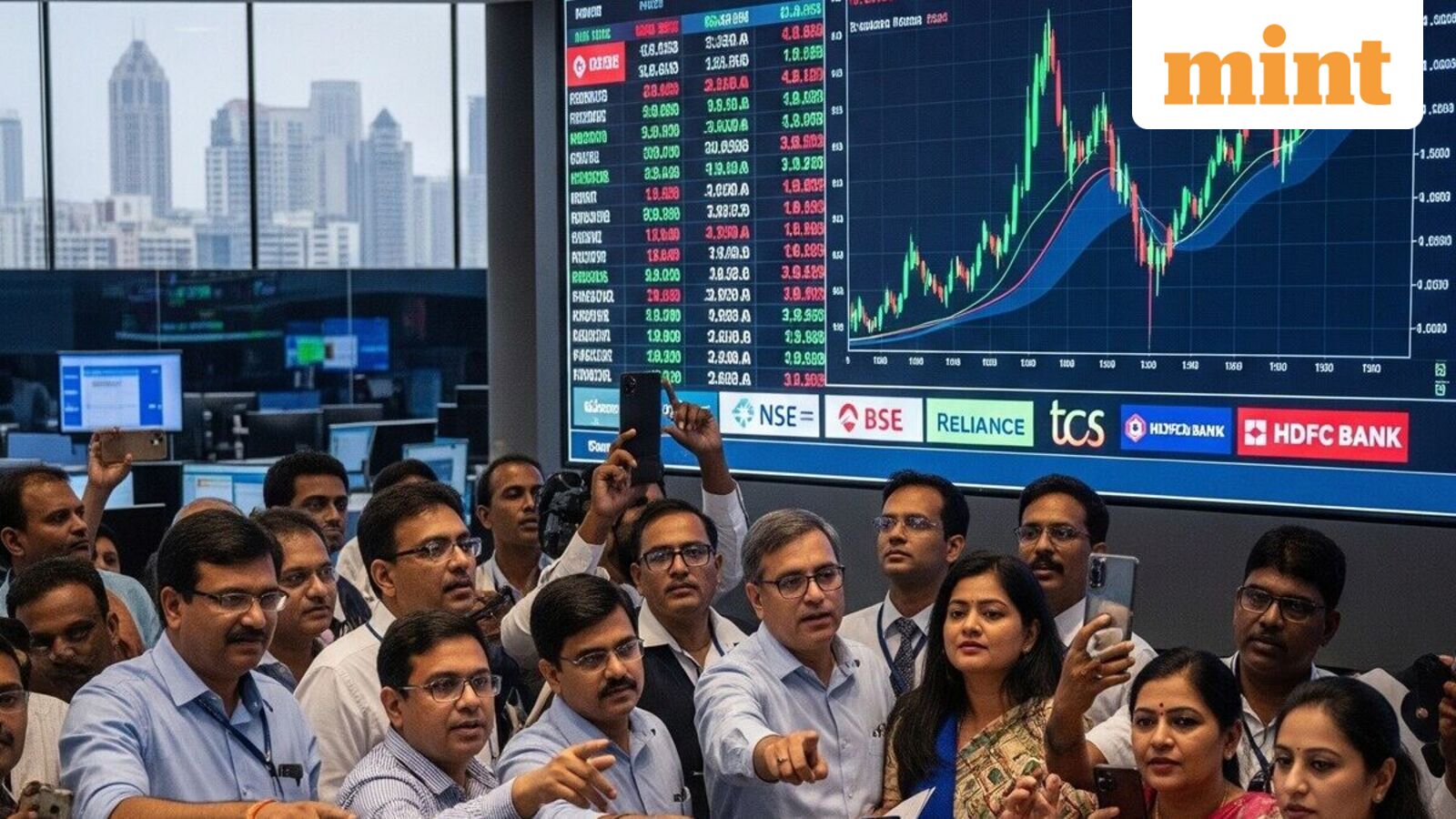
Core Insights - A recent report from Kotak Securities highlights the Indian stock market's poor performance, revealing low corporate earnings growth and near-zero investment returns over the past year [2][4] - The report suggests that the narrative of a buoyant stock market is misleading, as it overlooks fundamental issues affecting corporate and market performance [3][4] Group 1: Stock Market Performance - The report titled "1-year, $90 bn and 0% Return Later" challenges the prevailing optimism about the stock market by emphasizing the lack of substantial returns [2] - Assertions of stock market buoyancy are contradicted by middling earnings and high valuations, indicating a disconnect between retail investment inflows and actual market health [4][5] Group 2: Household Financial Savings - Net financial savings (NFS) of the household sector fell to 5.2% of GDP in 2023-24, down from 7.4% in 2016-17, primarily due to rising household liabilities [5][6] - The share of deposits in household financial assets decreased from 49.7% in 2011-12 to 38.3% in 2023-24, while investment in equity and funds rose from 12.8% to 26.8% during the same period [6] Group 3: Economic Implications - Low deposit rates are driving households towards riskier equity investments despite stagnant income growth, raising concerns about financial stability [7][9] - The Reserve Bank of India (RBI) acknowledges the shift from banking to equity as a healthy trend, although there are concerns about the risks associated with this transition [10][11] Group 4: Government Revenue and Market Dynamics - The increasing share of tax revenues from capital markets, particularly from securities transaction tax (STT), indicates a governmental interest in maintaining stock market activity [12] - The 2025-26 Union budget projects a 131% growth in STT collections compared to 2023-24, suggesting a potential motive for sustaining market performance [12][13]

浙商证券:美联储重启降息 国内降息渐行渐近
智通财经网· 2025-09-20 11:54
Group 1 - The core viewpoint is that the probability of the domestic central bank following the Federal Reserve in cutting interest rates has increased, with a higher likelihood of implementation after the end of October [1][4] - External constraints are weakening, creating a "maneuvering space" for monetary policy, as the narrowing of the China-US interest rate differential reduces the risk of capital outflow, thus opening a window for monetary easing [2] - The current low net interest margin of commercial banks and rising real interest rates pose internal constraints on further interest rate cuts, making the central bank cautious about comprehensive rate reductions [3] Group 2 - The bond market is showing signs of stabilization after three months of adjustments, and there is an expectation for a new round of smooth declines in bond market rates entering the fourth quarter [1][4] - Investors are advised to prepare for defensive strategies and consider entering the market around the 10-year government bond yield of 1.8% [1][4]

趣味互动学金融!福田街道金融行业专场活动点燃市民学习热情
Nan Fang Du Shi Bao· 2025-09-20 03:06
Group 1 - The event "Wow CBD·Futian CBD Enterprise Specialty Exhibition" was held on September 17 to enhance financial consumer risk awareness and support high-quality development of financial enterprises in the CBD area [1][5] - The event was co-hosted by multiple organizations, including the Futian District Financial Services and Risk Prevention Center and the Shenzhen Insurance Association, and attracted over 4,000 participants [5][6] - The exhibition featured 55 financial enterprises across banking, securities, insurance, and funds, utilizing immersive and interactive experiences to engage the public [5][6] Group 2 - Various innovative activities were conducted, such as interactive games and educational modules, to simplify complex financial concepts and risk prevention tips [6][7] - The banking area was particularly popular, featuring games that integrated fraud prevention and financial knowledge, while the insurance area focused on fun activities to teach anti-fraud techniques [7][8] - The event aimed to transform financial knowledge dissemination from a one-way communication to a two-way interaction, enhancing public understanding of financial safety [8] Group 3 - The "Wow CBD" initiative is part of a broader effort by the Futian Street Party Committee to promote economic development and has successfully hosted 27 themed events covering nearly 20 industries [8] - The initiative aims to address challenges in enterprise promotion and high advertising costs, continuously optimizing the business environment in the central district [8]

对所辖分支机构合规管理不到位 联储证券收到监管警示函
Sou Hu Cai Jing· 2025-09-20 02:21
Core Viewpoint - Zhejiang Securities Regulatory Bureau has identified compliance management issues at Lianchu Securities, leading to administrative regulatory measures against both the branch and the company itself [1][2] Group 1: Regulatory Actions - Lianchu Securities' Shaoxing Yumin Road Securities Branch failed to report significant events affecting its operations and client rights, resulting in a corrective administrative measure and a record in the securities market integrity file [1] - The company as a whole received a warning letter from the Zhejiang Securities Regulatory Bureau for inadequate compliance management across its branches, also recorded in the integrity file [1] Group 2: Previous Violations - In November of the previous year, Lianchu Securities was penalized by the Qingdao Securities Regulatory Bureau for insufficient risk management measures in its interbank lending business, leading to increased internal compliance checks [1] - The chairman and senior management of Lianchu Securities have also faced regulatory discussions and received warning letters from the Qingdao Securities Regulatory Bureau [2] Group 3: Company Overview - Lianchu Securities, established in 2001, is a fully licensed comprehensive securities company based in Qingdao, Shandong Province, with a registered capital of 3.23981 billion and net assets of 6.418 billion [2] - The company has 29 shareholders with no controlling shareholder, including major stakeholders such as Beijing Zhengrun Investment Group (23.67%) and Jiangsu Huaxi Village Co., Ltd. (11.7291%) [2] Group 4: Financial Performance - In the last annual report, Lianchu Securities reported an operating income of 64.194 million, a year-on-year decline of 91.50%, and a net loss attributable to the parent company of 956 million [2]
首创证券股份有限公司 2025年度第二期短期融资券兑付完成的公告
Zhong Guo Zheng Quan Bao - Zhong Zheng Wang· 2025-09-20 00:29
Core Points - The company successfully issued the second phase of short-term financing bonds for the year 2025 on April 9, 2025, with a total issuance scale of RMB 1 billion and a coupon rate of 1.90% [1][1] - The bonds have a maturity period of 162 days, with the repayment date set for September 19, 2025 [1][1] - On the repayment date, the company paid a total of RMB 1,008,432,876.71, which includes both principal and interest [1][1]

SEC Will Move to Overhaul Investor Disclosures, Atkins Says
Yahoo Finance· 2025-09-19 18:05
Group 1 - The SEC plans to overhaul investor disclosure rules for publicly-traded companies, moving towards semi-annual reporting instead of quarterly, as suggested by President Trump [1][6] - Chairman Paul Atkins emphasized the need to evaluate how information is disseminated to investors, noting that many prefer earnings calls over quarterly reports [2] - Atkins criticized the focus on short-term returns driven by quarterly reporting, which he believes affects corporate management negatively [3] Group 2 - Atkins has been a critic of the excessive disclosure requirements, indicating plans to reduce disclosures on executive compensation and potentially eliminate others, such as those related to conflict minerals [4] - The high cost of compliance with regulatory requirements is a significant factor keeping companies private, according to Atkins [5] - The SEC has mandated quarterly reports since 1970, leading to ongoing tensions between investors seeking information and companies wanting to reduce reporting burdens [7] Group 3 - Many companies already generate quarterly data for internal purposes, suggesting that reducing public-facing reports may only slightly lower compliance costs [8]
【财经分析】弱行情中不乏亮点 科创债ETF仍获青睐
Xin Hua Cai Jing· 2025-09-19 13:45
Core Viewpoint - The performance of the Sci-Tech Bond ETF has attracted significant attention in the industry, especially in contrast to the weak fluctuations in the interest rate bond market this year [1][2]. Group 1: Market Performance - Despite continuous adjustments in the bond market, the total scale of credit bond ETFs grew to approximately 350 billion yuan in August, with the Sci-Tech Bond ETF contributing significantly to this increase [1]. - As of September 18, the interbank interest rate bond market continued to show a weak trend, with the 2-year government bond yield rising by 5 basis points to 1.48% and the 10-year yield increasing by 2 basis points to 1.85% [2]. - The second batch of 14 Sci-Tech Bond ETFs was issued on September 12, raising a total of about 40 billion yuan, setting a new single-day record for fund issuance in 2023 [2]. Group 2: Investment Demand - The demand for allocation in the components of the Sci-Tech Bond ETF is expected to be stronger than that for benchmark market-making components, indicating potential investment opportunities [1]. - The first batch of 10 Sci-Tech Bond ETFs has exceeded a total scale of 120 billion yuan, more than tripling since issuance, with 8 of them entering the "100 billion club" [2]. - The spread between the component bonds of the Sci-Tech Bond ETF and non-component Sci-Tech bonds has compressed by approximately 10 basis points since the ETF's launch [2]. Group 3: Reasons for Popularity - The scarcity and safety of the Sci-Tech Bond ETF, as all component bonds are high-rated and liquid, are significant reasons for its popularity [4]. - The ETF's unique position as the only index tool for technology sector bonds enhances its long-term allocation value and market influence [3]. - The advantages of bond index funds, such as low management fees, strong tool attributes, transparency of underlying assets, and convenient trading, make them increasingly attractive in a declining interest rate environment [3]. Group 4: Cautionary Notes - There are concerns regarding the increasing crowding of ETF component bonds, which may complicate the purchasing process for managers as the ETF scale grows without a corresponding increase in the balance of index component bonds [6]. - The overall environment for credit spread compression is weaker in the fourth quarter, which may reduce the impact of incremental funds [6]. - Analysts have pointed out potential risks, including liquidity risks and the possibility of accelerated credit expansion due to ongoing government policies [7].
90万股历史股权纠纷案,长城证券起诉深圳三九胃泰
Nan Fang Du Shi Bao· 2025-09-19 10:32
Core Viewpoint - Changcheng Securities has filed a lawsuit against Shenzhen Sanjiu Weitai Co., Ltd. for a "shareholder qualification confirmation dispute," despite the latter being a "revoked" company and no longer in operation [2][3][5]. Group 1: Lawsuit Details - The lawsuit requests three main points: 1) confirmation of Changcheng Securities as a shareholder holding 900,000 shares; 2) issuance of share certificates and registration of Changcheng Securities in the shareholder registry; 3) the defendant to bear the costs of the case [3][4]. - The court has emphasized that due to the company's revoked status, it is using public announcement methods to deliver legal documents [3][4]. Group 2: Company Background - Shenzhen Sanjiu Weitai was established in 1993 and is a manufacturer of chemical pharmaceutical raw materials [2][6]. - Prior to its revocation, Shenzhen Sanjiu Weitai had four shareholders, including Shenzhen Jiusheng Biological Products Factory (now revoked), Huaxia Securities Co., Ltd., Shenzhen Sanjiu Pharmaceutical Co., Ltd., and other social legal entities [6][8]. Group 3: Historical Context - The company was previously controlled by Sanjiu Enterprise Group, which underwent debt restructuring in the early 2000s, leading to significant changes in ownership and structure [8][9]. - After the restructuring, Sanjiu Enterprise Group was merged into China Resources and became a wholly-owned subsidiary, while its listed company was renamed to "China Resources Sanjiu" [8][9].