
渔业

Search documents
海鲜+水产”上市供销两旺 “菜篮子”丰盈升腾“烟火气
Zhong Guo Chan Ye Jing Ji Xin Xi Wang· 2025-08-20 22:40
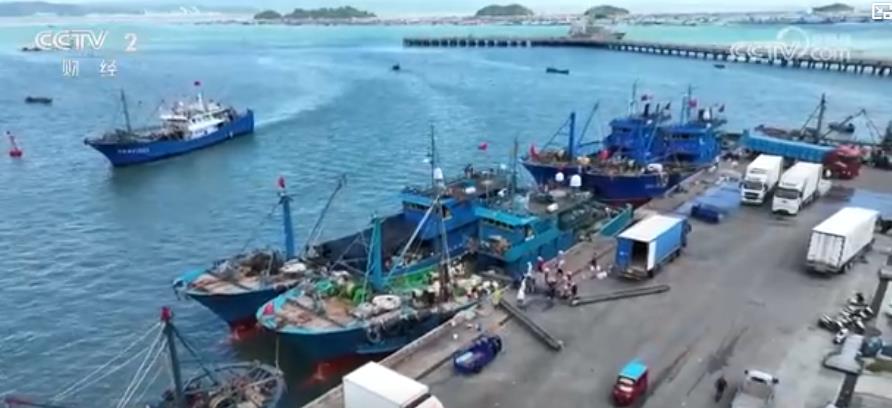
Group 1 - The fishing moratorium in the South China Sea ended on August 16, with over 3,400 fishing boats from Yangjiang, Guangdong, setting out to sea [1] - The first batch of catches included crabs, squid, shrimp, and fish, attracting seafood wholesalers and tourists to the port [1][2] - More fishing boats are expected to return from farther sea areas in the coming days [3] Group 2 - In Jiangsu, the peak season for the production and sale of shrimp and crabs has arrived, with significant catches reported [4] - Workers in Jiangsu's Taizhou are actively harvesting and sorting large quantities of shrimp, with wholesale prices around 20+ yuan per pound [4] - The catch of crabs in Jiangsu's Yancheng has also increased, with one boat reportedly bringing in over 30,000 pounds, and wholesale prices ranging from 20 to 30 yuan per pound [4]
美加征50%关税冲击巴西 卢拉政府双线应对
Sou Hu Cai Jing· 2025-08-20 17:11
Core Viewpoint - The U.S. has imposed punitive tariffs of up to 50% on Brazilian goods since August 6, significantly impacting several key export industries in Brazil, prompting the government to adopt a dual strategy of domestic relief and international market expansion [1][3]. Impact on Export Industries - Over 3,000 trade items were exempted from tariffs, but 694 items were included, primarily consisting of aerospace parts (565 items) and energy derivatives (76 items), leaving many products related to daily consumption and agricultural manufacturing unprotected [3]. - Approximately 44.6% of Brazil's exports to the U.S. are exempt from tariffs, while 35.9% face a direct impact from the 50% tariff, and an additional 19.5% are subject to global tariffs ranging from 25% to 50% [3]. - The agriculture, chemicals, minerals (especially steel), and machinery sectors are the most severely affected, with coffee and beef exports facing significant losses due to the tariffs [3][4]. Specific Sector Analysis - Brazil's coffee exports to the U.S. are projected to reach nearly $2 billion in 2024, accounting for 34% of the U.S. market, while beef exports are expected to total 532,000 tons, generating $1.6 billion, with an estimated loss of $1 billion due to the tariffs [3]. - The northeastern region of Brazil, particularly Rio Grande do Norte, is heavily impacted, with 96% of its exports to the U.S. subject to the 50% tariff, leading to severe disruptions in the seafood industry [3][4]. Government Response - The Brazilian government, under President Lula, has initiated the "Brazil Sovereignty Plan" to provide financial relief, including approximately 30 billion reais in credit and 4.5 billion reais for small and medium enterprises, alongside tax relief and government purchases of unsold products [4]. - Brazil has also sought to engage with the World Trade Organization to initiate dispute resolution mechanisms and is actively pursuing new market opportunities, particularly in China and other regions [4][5]. Long-term Strategy - Analysts suggest that diversifying trade and reducing reliance on the U.S. market will be a long-term and challenging task for Brazil, requiring systematic planning in logistics, export financing, and health regulations rather than temporary measures [5].


渔满舱、芡实肥、莲蓬香!秋收正当时,多地奏响“陆海丰收交响曲”
Yang Shi Wang· 2025-08-20 09:31
Group 1 - The fishing industry in Dongshan, Fujian, is experiencing a busy season with the first batch of fishing boats returning with fresh seafood after the fishing ban [1][3] - The first catch of the season is characterized by larger and higher quality fish due to the seasonal fishing ban policy [3] - Local fishermen utilize an "order" model, ensuring that fishing boats have pre-arranged contracts with processing companies and merchants before heading out to sea [5] Group 2 - In Jiangsu, the harvesting season for water chestnuts has begun, with workers efficiently collecting mature crops [6][8] - The harvesting period for water chestnuts typically spans from August to October, allowing for multiple rounds of collection [8] - In Anhui, the lotus seed harvesting is also in full swing, with local initiatives promoting agritourism and the economic potential of water-based agriculture [10]
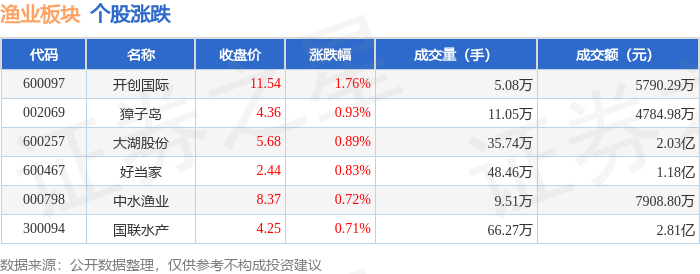
渔业板块8月20日涨0.94%,开创国际领涨,主力资金净流出3180.03万元
Zheng Xing Xing Ye Ri Bao· 2025-08-20 08:37
Group 1 - The fishing sector increased by 0.94% on August 20, with KaiChuang International leading the gains [1] - The Shanghai Composite Index closed at 3766.21, up 1.04%, while the Shenzhen Component Index closed at 11926.74, up 0.89% [1] - Key stocks in the fishing sector showed varied performance, with KaiChuang International closing at 11.54, up 1.76%, and Zhuangzi Island at 4.36, up 0.93% [1] Group 2 - The fishing sector experienced a net outflow of 31.80 million yuan from main funds and 12.81 million yuan from speculative funds, while retail investors saw a net inflow of 44.61 million yuan [1] - Detailed fund flow data indicates that KaiChuang International had a main fund inflow of over 1.58 million yuan, while Zhuangzi Island had a net inflow of 132.51 million yuan from retail investors [2] - Notably, Good Home saw significant outflows from both main and speculative funds, totaling 4.56 million yuan and 4.52 million yuan respectively [2]


南农晨读 | 海上粮仓
Nan Fang Nong Cun Bao· 2025-08-20 02:34
Group 1 - The end of the fishing moratorium in the South China Sea on August 16 marks a significant event for the marine economy in Guangdong, with thousands of fishing boats setting out to sea, symbolizing the return of seafood freedom for locals [3][4][5][6] - The event showcases the vibrant marine economy along the western coast of Guangdong, highlighting the region's economic vitality and the importance of seafood in local culture and commerce [5][6] Group 2 - On August 15, Guangdong celebrated the third National Ecological Day, emphasizing the theme "Green Water and Green Mountains are Gold and Silver Mountains," with the province's forest area reaching 144 million acres and a forest coverage rate of 53.39% [9][10][12] - The ongoing ecological construction in Guangdong aims to create a high-quality ecological environment and high-value ecological products, reinforcing the province's commitment to sustainable development [11][12] Group 3 - The focus on rural revitalization in Guangzhou includes integrating tourism resources and enhancing agricultural and cultural synergies, with various cities like Shantou and Shanwei implementing strategies to improve local governance and industry quality [14][15][16] - The collaboration between media and industries, such as the partnership between the New Year Chenpi and the emerging oil vine industry, aims to foster new cooperative initiatives between eastern and western regions, enhancing economic output [18][19] Group 4 - The recognition of the agricultural manager from the Jiusu Agricultural Cooperative in Foshan at a national competition signifies the advancement of professional agricultural management in the Pearl River Delta region [22][24] - Cultural initiatives, such as the art exhibition held in Enping, reflect the integration of culture and community development, promoting local heritage and artistic expression [26][28]

拉美观察丨美50%关税大棒落下 巴西对内纾困对外开拓市场
Yang Shi Xin Wen· 2025-08-20 01:54
Core Points - The U.S. has imposed punitive tariffs of up to 50% on Brazilian goods since August 6, 2025, severely impacting multiple export industries in Brazil [1][2] - The Brazilian government has quickly implemented economic relief measures and is seeking to diversify trade to reduce reliance on the U.S. market [1][11] Impact on Exports - Over 50% of Brazil's exports are affected by the U.S. tariffs, with approximately 35.9% facing a direct 50% tariff and an additional 19.5% facing global tariffs of 25% to 50% [5][2] - The most affected sectors include agriculture (tariffs increased from 4% to 40.8%), chemicals (from 2.3% to 40.1%), minerals (especially steel, from 0.5% to 38.7%), and machinery (from 0.8% to 38.2%) [5][2] - Specific products like coffee and beef are significantly impacted, with coffee exports to the U.S. projected at nearly $2 billion in 2024, and beef exports at 532,000 tons generating $1.6 billion [5][2] Regional Impact - The northeastern region of Brazil, heavily reliant on exports to the U.S., faces severe consequences, with 96% of its exports subject to the 50% tariff [6] - Seafood exports, particularly tuna, are critically affected, with over 70% of these products going to the U.S. [6] - The southern and southeastern regions benefit from some exemptions for high-value industrial products, providing temporary relief [5] Industry-Specific Effects - The orange juice industry, while exempt from the 50% tariff, still faces significant losses due to tariffs on related products and a drop in international prices, leading to an estimated loss of 1.54 billion reais (approximately $200 million) [10][9] - The overall average price of orange juice exported to the U.S. has decreased by over 20%, compounding the financial strain on the industry [10] Government Response - The Brazilian government has initiated the "Brazil Sovereignty Plan" to support affected exporters, including financial backing and tax relief [11] - Local governments are also implementing aid programs, such as São Paulo's release of tax credits and Ceará's inclusion of affected products in public procurement [12][13] Trade Diversification Efforts - Brazil is actively pursuing trade diversification to lessen dependence on the U.S. market, with plans to engage with BRICS nations and other international partners [14][15] - The government aims to sign international agreements to reduce trade barriers and promote Brazilian products in new markets [14][15]

广东阳江 开渔季的变与不变(经济聚焦)
Ren Min Ri Bao· 2025-08-19 22:46
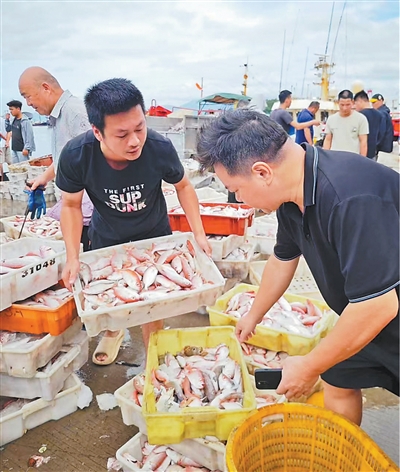
Core Viewpoint - The fishing season in Yangjiang, Guangdong, has transformed into a cultural and tourism event, showcasing advancements in fishing technology and promoting local seafood products, which enhances the economic landscape of the region [5][7][12]. Group 1: Fishing Industry Development - The fishing fleet in Yangjiang consists of over 3,400 registered ocean fishing vessels, with approximately 850 being steel vessels, making it the city with the most steel fishing boats in Guangdong Province [4]. - The marine catch production in Yangjiang is about 300,000 tons, accounting for over 25% of Guangdong's total, ranking first in the province [4]. - The local government supports fishermen with subsidies, including 150,000 yuan annually for marine resource conservation and 2,100 yuan per person during the fishing ban, allowing fishermen to earn additional income [3]. Group 2: Technological Advancements - Fishermen have transitioned from traditional wooden boats to modern steel vessels equipped with cold chain storage, satellite navigation, and sonar technology, significantly improving efficiency and safety [3][4]. - The use of technology has led to increased earnings, with one fisherman reporting an income exceeding 2 million yuan last year [4]. Group 3: Tourism and Cultural Events - The fishing season has evolved into a tourism brand for Guangdong, with the recent event attracting 547,000 visitors and generating 560 million yuan in tourism revenue, marking increases of 262% and 273% respectively [7]. - Various cultural activities, including traditional fishing feasts and competitions, have enriched the visitor experience, making the fishing season a vibrant celebration [6][7]. Group 4: Branding and Market Expansion - The launch of the "Yangjiang Seafood" regional public brand aims to enhance the value of local seafood products, with 16 local enterprises receiving brand plaques [9][11]. - Yangjiang's seafood is recognized for its high quality due to favorable ocean currents and effective ecological protection, with the region supplying 80% of the ice-fresh seafood to Hong Kong [10][11]. - The local industry is shifting from a traditional sales model to a brand-focused approach, aiming for higher value through standardized production and comprehensive supply chain management [12].
开渔不只有渔获(编辑手记)
Ren Min Ri Bao· 2025-08-19 22:46
Group 1 - The annual fishing season in Yangjiang, Guangdong, has evolved from simple fishing to diverse cultural and tourism activities, enhancing the overall experience for visitors [1] - The integration of cultural elements, such as folk customs and beach music festivals, transforms the fishing ceremony into a cultural tourism feast, which is crucial for driving consumption [1] - Establishing a public brand for seafood products through standardized production and full-chain supervision can significantly increase their value, allowing high-quality products to command better prices [1] Group 2 - The local industry aims to leverage two key strategies to expand the modern fishing industry's development space and improve the livelihoods of fishermen [2]
千帆竞发去 鱼虾满舱归 广东阳江 开渔季的变与不变(经济聚焦)
Ren Min Ri Bao· 2025-08-19 22:11
Core Viewpoint - The fishing season in Yangjiang, Guangdong, has transformed into a cultural and tourism event, showcasing marine culture, resource protection, and industry upgrades, while also significantly boosting local tourism and economy [1][6]. Group 1: Fishing Industry Development - The fishing fleet in Yangjiang consists of over 3,400 registered ocean fishing vessels, with approximately 850 being steel vessels, making it the city with the most steel fishing boats in Guangdong Province [2]. - The marine catch production in Yangjiang is about 300,000 tons, accounting for over 25% of Guangdong's total, ranking first in the province [2]. - The local government has promoted the use of steel fishing boats, enhancing fishermen's operational efficiency through technology such as satellite navigation and sonar fish finders, leading to annual earnings exceeding 2 million yuan for some fishermen [2]. Group 2: Aquaculture Growth - Yangjiang has developed two national-level marine ranch demonstration zones, with a seawater aquaculture area of 24,300 hectares and an output of 820,000 tons [3]. Group 3: Tourism and Cultural Events - The fishing season has evolved into a vibrant cultural and tourism festival, featuring traditional seafood banquets and various activities that attract tourists [4][5]. - During the fishing season from August 15 to 17, Yangjiang received 547,000 tourists, a year-on-year increase of 262%, generating tourism revenue of 560 million yuan, up 273% [6]. Group 4: Branding and Market Expansion - The launch of the "Yangjiang Seafood" regional public brand aims to enhance the value of local seafood products, leveraging the region's natural advantages and effective marine ecological protection [7][8]. - Yangjiang's seafood quality is recognized, with 80% of the ice-fresh seafood supplied to Hong Kong coming from this area, indicating a significant market presence [7][8].
江苏首单社会资本水土保持生态价值转化交易在宿迁签约
Xin Hua Ri Bao· 2025-08-19 22:03
Core Insights - The successful signing of the ecological product value conversion transaction in the Xihu small watershed of Sihong County marks a significant breakthrough in exploring the "soil and water conservation + market mechanism" path for ecological value conversion [1] - The transaction involves the transfer of modern fishery breeding rights over 2039.58 acres for 11.32 million yuan, showcasing a pioneering case of social capital cultivation in modern ecological aquaculture resource management [1] Group 1: Project Overview - The "Smart Sky and Sea Fishery" (ISF) project integrates "aerial technology + ecological governance + market operation," creating a new paradigm for ecological management that reconciles fish farming with soil erosion control [1] - The project has achieved a soil conservation rate of 99.93% and reduced soil erosion modulus to one-tenth of traditional methods, resulting in a decrease of 45,000 tons of sediment entering the lake annually [2] Group 2: Economic and Social Impact - The project employs a "governance-value-sharing" closed-loop system, establishing a dynamic accounting model for "carbon sinks, water quality, and soil," allowing for quantifiable ecological benefits [2] - The "127" revenue distribution mechanism allocates 10% for watershed governance, 20% for facility maintenance and technology development, and 70% benefits local villagers, leading to an average annual income increase of over 20,000 yuan for more than 50 households [2] Group 3: Future Directions - The city of Suqian aims to continue cultivating high-quality ecological products for soil and water conservation, implementing a comprehensive mechanism for "accounting-pricing-transaction-reinvestment" [3] - There is a focus on exploring diverse paths for value realization, aiming for a multi-faceted approach to ecological product value realization, expanding from soil and water conservation to broader water ecological product value [3]