钢铁

Search documents
“东北霸总”给员工发40亿年终奖,自己成了“辽宁首富”
Sou Hu Cai Jing· 2026-02-17 03:16
Core Viewpoint - The article discusses the contrasting approaches of companies in distributing year-end bonuses, highlighting the extravagant cash bonuses given by Fangda Group and the innovative reward strategies employed by other firms in 2026 [2][3][17]. Group 1: Fangda Group's Year-End Bonus Strategy - Fangda Group has distributed nearly 4 billion yuan in cash bonuses to approximately 130,000 employees over the past decade, showcasing a unique and impactful incentive strategy [3][6]. - The company's founder, Fang Wei, has seen his wealth increase significantly, reaching 52.5 billion yuan in 2025, reflecting the success of his business model [5]. - The "cash wall" phenomenon, where employees receive large sums of cash in a dramatic fashion, has become a viral sensation on social media, reinforcing Fangda Group's image as a "fairy-tale company" [3][6]. Group 2: Other Companies' Bonus Strategies in 2026 - JD.com has adopted a performance-based bonus system, with top-performing employees potentially receiving up to 24 months' salary as bonuses, and overall bonus spending increasing by over 70% [17]. - Chasing Technology has introduced a unique "golden bonus" where each employee received a custom gold banknote, totaling an investment of approximately 26 to 28 million yuan [17]. - Insta360 and Junshi Biosciences have also implemented substantial rewards, including luxury cars and significant cash prizes, indicating a trend among companies to enhance employee motivation through tangible rewards [19][17].


江苏首船西芒杜铁矿石靠泊镇江港
Xin Lang Cai Jing· 2026-02-16 21:33
西芒杜铁矿是我国海外布局规模最大的铁矿项目,已探明资源量约44亿吨,平均全铁品位达65%以上, 项目达产稳定运营后,将为我国钢铁工业提供稳定、优质、自主可控的原料支撑。此前,江苏省港口集 团旗下镇江港集团成功中标项目资源外运通道马瑞巴亚港矿石、通用及公共配套三大核心业务运营权。 此次"大隋"轮成功靠泊,验证了"海外矿山—海港减载—内河直达"全链条的可行性,进一步巩固了镇江 港作为国内海进江枢纽港的功能优势。 本报讯 (记者 薛诚) 2月15日上午,历经50天远洋航行的"大隋"轮载着8.4万余吨西非几内亚西芒杜高 品位铁矿石靠泊镇江港。这是几内亚西芒杜世界级大型优质露天赤铁矿项目自去年11月投产后运抵中国 的第二船、抵达江苏的第一船铁矿石,标志着从海外矿山运营到长江港口接卸的"金牌航线"实现全流程 贯通。 (来源:新华日报) 据了解,本船铁矿直达镇江港后,部分将进入长江航道物流网络,部分将在港区内的矿石加工厂进行混 配加工,精准匹配钢厂工艺需求。镇江港作为宝武资源在长江流域重要的"第二料仓",将持续推动岸 线"深水深用",保障优势大宗物资高效集疏运,助力混配加工、保税堆存、供应链金融等"延链"产业加 速集聚落地 ...
留在江苏,把年过成家的味道
Xin Lang Cai Jing· 2026-02-16 21:33
Group 1 - The article highlights the efforts of companies in Jiangsu to support migrant workers who choose to stay and work during the Chinese New Year, providing them with a sense of belonging and warmth [1][2] - Suzhou Kema Material Technology Co., Ltd. organized activities such as dumpling-making and provided a daily subsidy of 500 yuan for employees who stayed, along with a New Year gift package from the local government [1] - The Jiangsu government has implemented various policies to encourage migrant workers to remain during the holiday, including financial subsidies and special events to foster community among workers [2] Group 2 - The article mentions that over 800 million migrant workers are currently in Jiangsu, with many opting to stay for the New Year due to various reasons [2] - Local governments have introduced specific measures to support these workers, such as the "Warm Ten Articles" policy in Nanjing, which offers up to 500,000 yuan in subsidies for key enterprises [2] - The article emphasizes the importance of migrant workers in Jiangsu's high-quality development and the responsibility of the government and companies to ensure they feel at home during the festive season [2]
钢铁保护主义|再赢下去,美国就完蛋了
Xin Lang Cai Jing· 2026-02-16 13:00
Group 1 - The "Buy American Act" was enacted in 1933, requiring federal projects to prioritize domestically produced steel, with increasing strictness over time [1] - The "American Recovery and Reinvestment Act" (ARRA) of 2009 mandated that steel used in funded projects must be predominantly made in the USA, leading to stricter requirements than the original act [1][2] - The ARRA's "Buy American" provisions resulted in significant costs, estimated at $5.7 billion over three years, primarily due to higher domestic steel prices compared to imports [2][3] Group 2 - The ARRA's restrictions led to project delays and inefficiencies, as federal agencies struggled with complex exemption processes and contractors had to alter supply chains [2] - The domestic market for certain products became overly concentrated, raising costs for consumers and taxpayers due to reduced foreign competition [3] - Trump's administration implemented "America First" policies, including tariffs on imported steel and reinforced "Buy American" principles through executive orders [4][5] Group 3 - Trump's third executive order aimed to increase the domestic content requirement for steel in federal procurement from 50% to 95%, complicating the exemption process for cheaper imports [4] - The Biden administration continued to promote domestic manufacturing through various initiatives, including the "Infrastructure Investment and Jobs Act" (IIJA), which expanded "Buy America" provisions to more infrastructure projects [5][6] - The "Inflation Reduction Act" (IRA) included subsidies that favored domestic steel production, extending "Buy America" rules to federally funded private sector projects [6] Group 4 - Trump's tariffs on steel imports were primarily aimed at protecting the domestic steel industry and negotiating trade agreements, rather than genuine national security concerns [7][8] - The tariffs led to a decrease in steel imports by approximately 17% from 2017 to 2021, but domestic steel production did not significantly increase, with production declining from 81.6 million tons to 79.9 million tons [9] - The tariffs resulted in higher costs for American consumers and businesses, with steel prices rising significantly, impacting the competitiveness of U.S. manufacturing [10][11]
【环球财经】东京股市日经股指三连跌
Xin Lang Cai Jing· 2026-02-16 10:54
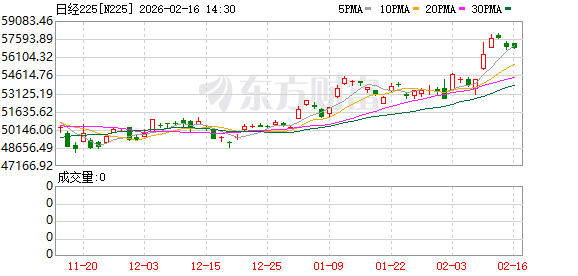
Core Viewpoint - The Tokyo stock market experienced a slight decline on February 16, with the Nikkei 225 index falling by 0.24% and the Tokyo Stock Exchange index dropping by 0.82% due to profit-taking and disappointing GDP data [1] Market Performance - The Nikkei 225 index closed down by 135.56 points at 56,806.41 points, marking its third consecutive day of decline [1] - The Tokyo Stock Exchange index fell by 31.47 points, closing at 3,787.38 points [1] Influencing Factors - The market opened higher due to a rise in the Dow Jones Industrial Average the previous day, with the Nikkei index briefly surpassing the 57,000 points mark [1] - Increased profit-taking by investors led to a reversal in market momentum, contributing to the decline [1] - The preliminary GDP data for the fourth quarter of the previous year released by the Cabinet Office was below market expectations, adding pressure to the market [1] Sector Performance - Most of the 33 industry sectors on the Tokyo Stock Exchange saw declines, with rubber products, banking, and precision machinery sectors experiencing the largest drops [1] - Conversely, sectors such as steel, information and communication, and mining showed gains [1]

东京股市日经股指三连跌
Xin Hua Cai Jing· 2026-02-16 10:44
Core Viewpoint - The Tokyo stock market experienced a slight decline on the 16th, with the Nikkei 225 index falling by 0.24% and the Tokyo Stock Exchange index dropping by 0.82% [2][3] Group 1: Market Performance - The Nikkei 225 index closed down by 135.56 points at 56806.41 points, marking its third consecutive day of decline [3] - The Tokyo Stock Exchange index fell by 31.47 points, closing at 3787.38 points [3] - Early trading saw the Nikkei index briefly surpass the 57000-point mark, buoyed by a rise in the Dow Jones Industrial Average the previous day [2] Group 2: Sector Performance - Most of the 33 industry sectors on the Tokyo Stock Exchange saw declines, with rubber products, banking, and precision machinery sectors experiencing the largest drops [3] - Conversely, sectors such as steel, information and communication, and mining showed gains [3] Group 3: Economic Indicators - The initial GDP estimate for the fourth quarter of the previous year released by the Japanese Cabinet Office was below market expectations, contributing to downward pressure on the market [2]
一周安徽上市公司要闻回顾(2.09-2.15)
Xin Lang Cai Jing· 2026-02-16 03:52
Group 1 - *ST Lifan plans to terminate its listing due to false disclosures in annual reports from 2021 to 2023, with over 500 million yuan in inflated revenue [1] - The stock will be suspended from trading starting February 24, and if delisted, it will enter a 15-day trading period under the name "XX退" [1] - Dragon Magnetic Technology plans to raise up to 760 million yuan through a private placement to expand production capacity in Vietnam and enhance AI chip inductors [2][3] Group 2 - Hanbo High-tech's subsidiary plans to acquire 70% of a special purpose company in South Korea for approximately 142.1 million USD to enter the wet electronic chemicals market [3] - Tuoshan Heavy Industry intends to acquire 51% of Xin Kaiyuan for 219 million yuan, making it a controlling subsidiary [4] - iFLYTEK has received approval from the Shenzhen Stock Exchange for a private placement, pending further registration with the China Securities Regulatory Commission [5] Group 3 - Blue Shield Optoelectronics' subsidiary has decided to waive its rights to purchase and subscribe for shares in a semiconductor company amid strategic considerations [6][7] - Qizhong Technology reported a fire at its subsidiary, which may reduce its revenue growth forecast for 2026 by 5-8 percentage points [8] - Huaihe Energy expects a net profit increase of 96.31% to 107.97% for 2025, with projected profits between 1.684 billion and 1.784 billion yuan [9] Group 4 - Wanlang Magnetic Plastic's controlling shareholder has pledged 11.09% of the company's shares, totaling 9.48 million shares [10] - Hanma Technology plans to increase capital in its subsidiary by 575 million yuan before transferring 100% of its shares to another company for 485 million yuan [11] - Efort intends to acquire 100% of Shengpu shares, valuing the company between 1 billion and 1.2 billion yuan [12]





天工国际涨超9% 粉末冶金产业链全球布局 机构上调公司目标价
Zhi Tong Cai Jing· 2026-02-16 02:59
Core Viewpoint - Tian Gong International (00826) has seen a stock price increase of over 9%, currently trading at HKD 4.19, with a transaction volume of HKD 51.57 million, following a strategic partnership with Bodycote, a leader in heat treatment and hot isostatic pressing technology [1] Group 1: Strategic Partnership - Tian Gong International has reached a deep strategic cooperation consensus with Bodycote to integrate core advantages in high-end manufacturing sectors such as aerospace, automotive, and energy [1] - The collaboration aims to create a new model of global collaborative development combining technology, capacity, and market [1] Group 2: Capacity Expansion - The company’s subsidiary, Jiangsu Tian Gong Xin Zhi Materials Co., is planning a second phase project in powder metallurgy, which includes the addition of five hot isostatic pressing machines [1] - This expansion is intended to strengthen the company's capacity and technological advantages in high-end alloy material powder metallurgy, providing solid support for the strategic partnership [1] Group 3: Market Outlook and Valuation - CICC recently published a report indicating that starting from 2026, Tian Gong International's high-end materials are expected to see sustained growth, facilitating the company's transition from a leader in tool steel to a high-end new materials supplier [1] - The firm has adjusted the company's valuation to 2026, maintaining an "outperform" rating and raising the target price by 76% to HKD 5.29, which corresponds to an 18.4x P/E for 2026, implying a 50% upside potential [1] - The current stock price reflects a 12.3x P/E for 2026 and a 9.5x P/E for 2027 [1]
新春走基层|一座“新”钢厂的诞生
Xin Lang Cai Jing· 2026-02-15 05:21
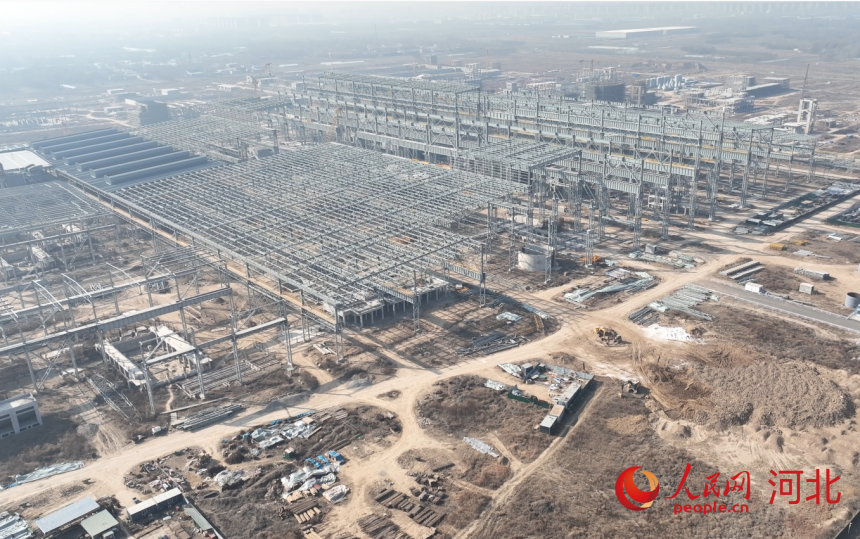
Core Viewpoint - The construction of the new plant by Hebei Xingang Company represents a significant upgrade from traditional production methods to a more modern, data-driven approach, aiming to enhance product quality and meet high-end market demands [3][4]. Group 1: Company Background - Hebei Xingang Company is a long-established steel enterprise in Xingtai, recognized as the only special steel wire rod manufacturer in Hebei and the largest cold heading steel production base in Asia [3]. - The company has faced challenges due to limited space in its old plant, outdated production processes, and increasing environmental pressures [3]. Group 2: New Plant Development - The new plant's key milestone is set for December 29, 2025, when the main production line will complete its hot trial, marking a significant step in the company's development history [3]. - The new facility will utilize advanced equipment, including high-rigidity short stress line rolling mills and automated control systems, achieving a dimensional accuracy of ±0.1 mm [4]. Group 3: Production Process Transformation - The transition from traditional long-process steelmaking to a short-process method eliminates several steps, such as sintering and blast furnace operations, resulting in more environmentally friendly and energy-efficient production [4]. - The new plant aims to produce higher-end steel products, including ultra-high-strength cold heading steel and corrosion-resistant steel, which were previously reliant on imports [4]. Group 4: Economic Impact - The new plant is projected to generate an output value of 30 billion yuan (approximately 4.6 billion USD) for the special steel industry cluster, contributing to local employment and industrial chain development [4].
美国消费者扛不住,特朗普又要降关税了?
Sou Hu Cai Jing· 2026-02-15 05:03
Core Viewpoint - The Trump administration is showing signs of easing tariffs on steel and aluminum products due to rising living costs and voter dissatisfaction, with plans to review affected product lists and potentially grant exemptions [1][6]. Group 1: Tariff Adjustments - Reports indicate that the U.S. government is considering reducing certain steel and aluminum tariffs and pausing the expansion of the tariff list, which has been criticized for increasing prices on everyday goods [1][6]. - The current tariff system is viewed as overly complex and difficult to enforce, prompting calls for simplification from U.S. trade officials [3]. Group 2: Economic Impact and Voter Sentiment - A recent poll shows that over 70% of American adults believe the current economic situation is below acceptable levels, with 52% stating that Trump's economic policies have worsened conditions [5]. - The average tariff in the U.S. has risen to 13% due to tariffs imposed by Trump, with 90% of the economic burden falling on consumers and businesses [5]. Group 3: Political Ramifications - Republican lawmakers are feeling voter discontent regarding tariffs, leading to instances of party members voting against proposed tariffs, indicating a significant internal rift [5][6]. - If the U.S. relaxes steel and aluminum tariffs, countries like the UK, Mexico, Canada, and the EU may benefit, although the Trump administration continues to defend the economic benefits of these tariffs [7].