
军工制造

Search documents
担忧被华卡脖子,美国企业被曝抢囤中国稀土,预计屯了2年储量
Sou Hu Cai Jing· 2025-12-13 16:48
Core Viewpoint - The article highlights the strategic acquisition of rare earth elements by U.S. defense companies from China, establishing significant stockpiles to support critical defense projects, while European companies face supply chain challenges and regulatory hurdles [1][3][20]. Group 1: U.S. Defense Companies' Actions - Multiple U.S. defense firms have been revealed to be purchasing large quantities of rare earth elements from China, creating strategic reserves that can support key defense projects for approximately two years [1][3]. - MP Materials, the largest beneficiary, operates the only rare earth mine in the U.S. and has secured a ten-year fixed-price contract with the government to mitigate market risks [3][9]. - The U.S. Department of Defense classified rare earths as "strategic defense-level resources" in 2021, leading to significant procurement over the following three years [3][9]. Group 2: European Concerns and Challenges - European countries are increasingly worried about their reliance on rare earths, as U.S. companies have been able to secure supplies more efficiently than their European counterparts [3][11]. - European firms often lack the foresight in procurement, leading to supply chain disruptions, while U.S. companies have established contracts and partnerships ahead of market tensions [11][15]. - The tightening of export controls by China has left many international companies unprepared, exacerbating the supply issues faced by European firms [5][11]. Group 3: Market Dynamics and Geopolitical Implications - The global pricing of rare earth oxides has surged, with prices for neodymium and terbium increasing by over 40% in three months, reflecting heightened market tensions [13][20]. - The geopolitical landscape surrounding rare earths has shifted, with countries like Vietnam also imposing export restrictions, complicating the supply chain further for European companies [13][20]. - The competition for rare earths has evolved into a comprehensive geopolitical strategy, where control over resources translates into industrial advantages in the global market [20].



普京带590亿访印,特朗普降关税抢盟友,为何印度突然如此抢手?
Sou Hu Cai Jing· 2025-12-12 11:38
Core Viewpoint - The geopolitical dynamics surrounding Russia's dependence on India for cash flow amidst financial crises, and the implications of U.S. tariff incentives for India, are reshaping global energy and military trade relationships [1][3][27]. Group 1: Russia's Financial Crisis - Russia is facing a severe financial crisis with a fiscal deficit rate rising to 3.8%, exceeding the 3% safety line by 1.2 percentage points [3]. - The Central Bank of Russia has reduced its gold reserves by 120 tons in the first half of the year, indicating a depletion of financial resources [3]. - Russia's reliance on foreign exchange reserves as emergency funds highlights its dwindling fiscal capacity [3]. Group 2: Importance of India to Russia - India has become a critical cash flow source for Russia, surpassing China's significance due to the reshaped trade dynamics from the Russia-Ukraine conflict [5]. - The trade volume between Russia and India reached $66 billion in the last fiscal year, with Russia enjoying a surplus of $59 billion, indicating a one-sided financial relationship [7]. - India's energy purchases, particularly in oil, have been vital for Russia, with India spending $55 billion on oil alone [7]. Group 3: U.S. Influence and Tariff Incentives - The U.S. has strategically positioned itself to exploit Russia's vulnerabilities by offering India reduced tariffs from 50% to 15%-16%, which is a significant incentive compared to tariffs faced by other regions [9]. - This tariff reduction could lower costs for India's textile and pharmaceutical exports to the U.S. by 70%, potentially recovering over $10 billion in lost orders due to high tariffs [11]. - India's energy imports from the U.S. have increased from 3% to 8%, with a notable contract for 2.2 million tons of LNG, further diminishing its reliance on Russian energy [13]. Group 4: Russia's Countermeasures - In response to U.S. pressure, Russia has employed a three-pronged strategy to maintain its influence over India, including economic pressure, technology partnerships, and securing trade routes [15][18][22]. - Russia's economic pressure tactic involved selling off excess rupees, causing the Indian rupee to depreciate significantly, which forced the Indian government to stabilize its currency [17]. - Russia has proposed technology transfers, such as establishing a production line for Su-57 fighter jets in India, to secure energy contracts worth at least $40 billion over three years [20]. Group 5: Broader Geopolitical Implications - The ongoing competition for India's allegiance between Russia and the U.S. reflects a larger struggle for influence, with India's decisions impacting Russia's economic recovery and the balance of power globally [27]. - The situation is further complicated by the ongoing conflict in Ukraine, which will ultimately determine the outcomes of these geopolitical maneuvers [27].
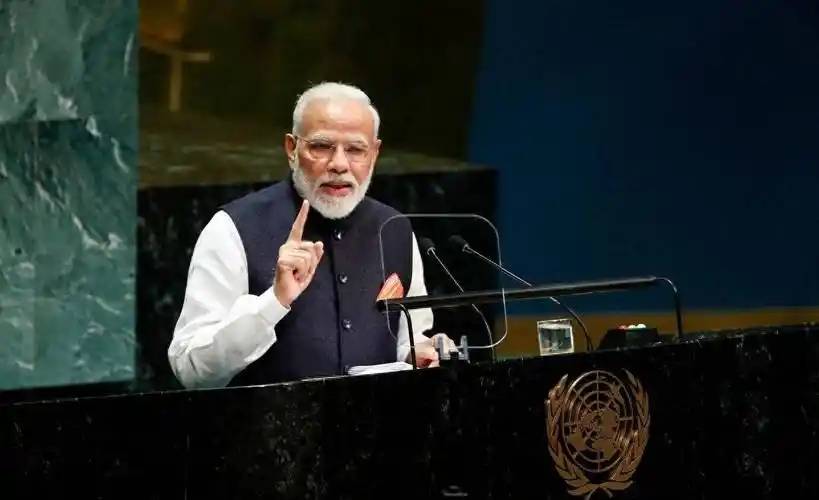
美国军费规模世界第一,但军工业为啥崩盘了?你不知道的真相!
Sou Hu Cai Jing· 2025-12-10 18:12
Core Insights - The U.S. defense budget for 2025 is set at $895.2 billion, which exceeds the combined military spending of the next nine countries and could purchase a significant portion of the European stock market [1][7] - The current state of the U.S. military-industrial complex is characterized by inefficiencies, corruption, and a lack of effective production capabilities, leading to a situation where funds do not translate into tangible military assets [1][7] Group 1: Budget and Spending - The F-35 program has consumed $1.7 trillion, equivalent to funding three Gulf Wars or rebuilding two Ukraines, yet it suffers from high failure rates and long maintenance schedules [3][7] - The U.S. shipbuilding industry has seen a drastic decline, with China capturing 50% of the global market share while the U.S. holds only 0.1%, indicating a severe industrial gap [5][7] Group 2: Industrial Capacity and Workforce - The existing industrial system is unable to convert financial resources into military supplies, exemplified by the inability to produce basic ammunition for Ukraine despite congressional funding [7][23] - The U.S. military-industrial sector has undergone significant consolidation, leaving only six major contractors, which has led to a lack of competition and innovation [10][12] Group 3: Supply Chain Vulnerabilities - A significant portion of critical minerals required for defense production is sourced from China, exposing the U.S. to supply chain vulnerabilities in times of conflict [14][23] - The military-industrial complex has shifted focus from defense production to financial gains, with executives prioritizing stock buybacks over national security [16][23] Group 4: Labor Issues and Future Outlook - Labor unrest is evident, as seen in the Boeing strike involving 3,200 workers, highlighting dissatisfaction with wages and working conditions in the defense sector [18][23] - The aging workforce in manufacturing poses a long-term challenge, as younger generations are opting for careers outside traditional manufacturing roles, leading to a skills gap [20][23] Group 5: Reform Challenges - Efforts to reform the procurement process face significant resistance from entrenched interests within the military-industrial complex, making it difficult to implement necessary changes [21][23] - The current military spending is resulting in unaccounted expenses and delays, contributing to a downward spiral in the defense industry's effectiveness [23]



基建巨头,大跌
Zhong Guo Ji Jin Bao· 2025-12-09 09:57
Market Overview - The Hong Kong stock market showed a gloomy sentiment on December 9, with all three major indices closing down: the Hang Seng Index fell by 1.29% to 25,434.23 points, the Hang Seng China Enterprises Index dropped by 1.62% to 8,936.41 points, and the Hang Seng Tech Index decreased by 1.90% to 5,554.68 points [2]. Company Performance - Major technology stocks experienced declines, with Baidu Group-SW and Xiaomi Group-W both falling over 3%, while Kuaishou-W and Meituan-W dropped more than 2%. Other notable declines included Netease-S, Alibaba-W, and JD Group-SW, which all fell over 1% [4]. - Heavy infrastructure stocks suffered significant losses, with China Metallurgical Group (China Zhongye) plunging over 21%, and Chalco International (China Aluminum International) dropping more than 4% [4][7]. - Semiconductor stocks also faced downturns, with Huahong Semiconductor falling over 5% and SMIC dropping more than 4% [4]. Specific Company News - China Metallurgical Group announced plans to sell its 100% stake in China Metallurgical Real Estate and related debts to Minmetals Land Holdings for approximately 60.7 billion yuan. Additionally, it will sell stakes in several subsidiaries to China Minmetals [7]. - In a separate development, Agile Group Holdings faced a significant drop in stock price, falling over 21% to a historical low of 0.3 HKD per share, ultimately closing down 18.42% at 0.31 HKD per share. This decline followed a petition for liquidation filed by a project partner [9].

基建巨头,大跌
中国基金报· 2025-12-09 09:56
【导读】 中国中冶重挫超 21% 中国基金报记者 伊万 12 月 9 日,市场情绪表现低迷,港股三大指数齐收跌。截至收盘,恒生指数跌 1.29% ,报 25434.23 点;恒生国企指数跌 1.62% ,报 8936.41 点; 恒生科技指数跌 1.90% ,报 5554.68 点。 盘面上,大型科网股普跌,百度集团 -SW 、小米集团 -W 跌超 3% ,快手 -W 、美团 -W 跌超 2% ,网易 -S 、阿里巴巴 -W 、京东 集团 -SW 跌超 1% ;重型基建股大跌,中国中冶重挫超 21% ,中铝国际跌超 4% ;半导体股下挫,华虹半导体跌超 5% ,中芯国际跌 超 4% ;此前大热的泡泡玛特跌超 5% ,老铺黄金跌近 3% 。 此外,保险股、石油股、航空股、军工股、中资券商股等纷纷走低。 | 泡泡玛特 | 190.300 | -5.04% | | --- | --- | --- | | 9992.HK | | | | 阿里巴巴-W | 150.900 | -1.63% | | 9988.HK | | | | 腾讯控股 | 602.500 | -0.41% | | 0700.HK | | | | 小 ...

中国稀土反制有多狠?继美后日本成下一目标,对华挑衅代价已显现
Sou Hu Cai Jing· 2025-12-09 09:22
Core Viewpoint - China's rare earth control is a strategic move that directly impacts the military-industrial sectors of both the United States and Japan, leveraging advanced traceability technology to enforce supply chain integrity and exert pressure on these nations [1][10][17]. Group 1: China's Rare Earth Control - China's innovative traceability technology assigns a unique digital identity to each batch of exported rare earths, allowing for real-time tracking from mining to final processing [1][3]. - The traceability system can identify the source of rare earths even if they are processed in other countries, making it difficult for the U.S. to circumvent supply chain issues [3][17]. - China's dominance in rare earth purification technology, developed over decades, creates a significant barrier for other countries attempting to replicate this capability [5][6][17]. Group 2: U.S. Military Implications - The U.S. military's reliance on rare earth materials for advanced weaponry, such as the F-35 fighter jet, is critical, with current stockpiles only sufficient for 14 months [9][10]. - The Pentagon has struggled to rebuild its rare earth supply chain, facing technological barriers that could take a decade to overcome [7][9]. - The urgency of the situation is underscored by the fact that delays in rare earth supply could halt production lines and disrupt national defense strategies [9][10]. Group 3: Japan's Dependency - Japan remains heavily reliant on China for rare earth imports, with 60% of its supply coming from China, particularly in high-tech sectors [12]. - Despite efforts since 2010 to diversify its rare earth sources, Japan's initiatives have not yielded significant results, leaving it vulnerable to supply disruptions [10][12]. - Potential economic losses for Japan due to a three-month restriction on rare earth exports from China could exceed 650 billion yen, escalating to 2.5 trillion yen if prolonged for a year [12]. Group 4: Strategic Implications - China's rare earth strategy combines resource control, advanced technology, and precise regulatory measures to exert targeted pressure on nations that challenge its interests [17][18]. - The approach maintains a surgical precision, affecting only key industries of provocateurs while not disrupting the global supply chain [18]. - China's actions serve as a warning to those undermining its core interests, emphasizing its capability to defend its rights and the consequences of provocation [18].

全球稀土大洗牌:美国囤货18个月,欧盟急建储备,中国稳坐钓鱼台
Sou Hu Cai Jing· 2025-12-09 06:17
Core Viewpoint - The recent tightening of rare earth exports by China has raised global concerns, particularly in the military, wind energy, and electric vehicle sectors, highlighting the strategic importance of these resources [3][9][12]. Group 1: Strategic Importance of Rare Earths - Rare earths consist of 17 metals essential for various technologies, including mobile chips, missiles, and wind turbines [3]. - China's management of rare earths is rooted in its recognition of these materials as strategic resources, akin to oil in the Middle East [3][22]. - The U.S. military's annual consumption of rare earths is less than 0.8% of global production, indicating a lower dependency than perceived [9]. Group 2: Regulatory Developments - In June 2024, China introduced the "Rare Earth Management Regulations," implementing total quantity control over mining and refining [5]. - The export control measures announced in April 2024 are part of a broader strategy to manage rare earth resources effectively [5][16]. Group 3: Market Reactions and Adjustments - The U.S. military and electric vehicle industries have expressed significant concern over their reliance on rare earths, with some companies exploring alternative sources and technologies [9][14]. - The European Union has initiated plans to diversify its rare earth sources, yet remains heavily reliant on China for critical materials [12][20]. Group 4: Economic Implications - The price dynamics of rare earths vary significantly, with heavy rare earths like neodymium and dysprosium remaining stable, while light rare earths have seen price drops due to increased production from other countries [18]. - China's shift from exporting raw materials to selling finished products has led to a significant market share in rare earth magnets, accounting for 70% of the global market [20][21]. Group 5: Future Outlook - By 2030, the global rare earth landscape is expected to shift from China's dominance to a more collaborative model, emphasizing the need for adherence to regulations [22]. - The U.S. Department of Defense is investing in a complete supply chain for rare earths, indicating a long-term strategy to reduce dependency on foreign sources [20].

俄将针对丹麦为乌克兰建军工厂采取措施
Xin Hua She· 2025-12-04 15:52
据丹麦政府发布的信息,一家乌克兰军工企业将在丹麦政府支持下,在位于日德兰半岛南部小城沃延斯 建设一座工厂。该工厂将生产导弹及部分无人机所需的固体燃料推进剂,以解决乌克兰相关材料的供应 瓶颈,为乌军远程打击能力提供支撑。该工厂是乌克兰在北约国家设立的首批军工生产设施之一,预计 将于2026年秋季投产。 扎哈罗娃当天在圣彼得堡举行的记者会上表示,俄方将继续坚定捍卫自身合法利益并采取相应措施消除 国家安全威胁。她说,丹麦与其他一些俄罗斯的敌对国家试图破坏外交解决乌克兰危机的努力,造成局 势进一步升级的风险。 俄罗斯外交部发言人扎哈罗娃4日说,俄方将针对丹麦为乌克兰建设军工厂造成的对俄国家安全威胁采 取适当措施。日前,位于丹麦日德兰半岛的乌克兰军工企业一座工厂启动建设。 (文章来源:新华社) 今年7月,丹麦与乌克兰签署一项协议,旨在加强两国在军事装备生产领域的合作。协议提出,两国将 合作帮助乌克兰军工企业在丹麦设立分支机构和生产设施。 ...
“高市早苗可能被发国际逮捕令”
第一财经· 2025-12-03 05:45
Core Viewpoint - The Japanese government plans to procure offensive drones from Israeli company Elbit Systems, which has faced strong opposition from parts of the Japanese public due to the company's involvement in military actions in Gaza [1] Group 1: Government Procurement Plans - The drones being considered for procurement include the "Sky Striker" model, which has been used in military operations in Gaza [1] - The procurement is linked to the actions of the Israeli military, raising ethical concerns among Japanese citizens [1] Group 2: Public Opposition - Various citizen groups held a protest on November 27 at the House of Representatives, opposing the procurement of Israeli drones [1] - Protesters labeled the military actions in Gaza as genocide and argued that trade relations with entities involved in such actions are unacceptable [1]


顶住美方压力,普京12月访印谈能源军工与太空,俄已成印最大原油供方,目标直指千亿美元
Sou Hu Cai Jing· 2025-11-29 21:22
Group 1 - The core agenda of the upcoming India-Russia annual summit includes energy, defense industry, and space cooperation, marking the first in-person meeting since 2021 [1][3] - India has significantly increased its oil imports from Russia, with a growth of over twenty times, making Russia India's largest oil supplier, and bilateral trade exceeding $39 billion in 2022 [3][6] - Energy security is a central topic, with discussions on new natural gas pipeline projects that could transform India's energy dependence from flexible transactions to stable long-term contracts [3][4] Group 2 - The defense cooperation is evolving from mere procurement to technology transfer and joint development, indicating a shift towards a partnership model [3][4] - India is interested in advanced defense systems, including the S-400 air defense system and potential joint development of the "Armor" air defense system [3][4] - Space cooperation is viewed as a new frontier, with expectations for satellite navigation interoperability and potential manned space collaboration [4][6] Group 3 - The geopolitical context includes discussions on Afghanistan, Central Asian security, and counter-terrorism, emphasizing the importance of a strategic partnership [6][9] - The bilateral trade volume is projected to reach $68.7 billion for the fiscal year 2024-2025, with aspirations to hit $100 billion soon [6][9] - The summit is not merely a ceremonial gathering but a critical negotiation to recalibrate the relationship between the two nations [10][11]
