
创新药

Search documents
月度创新药前沿跟踪 2026年2月-20260305
GUOTAI HAITONG SECURITIES· 2026-03-05 07:04
Investment Rating - The report rates the industry as "Overweight" [4] Core Insights - The report highlights significant advancements and investment opportunities in the global innovative drug sector, particularly in weight loss, PD-1/VEGF dual antibodies, and PROTAC/molecular glue technologies [2][3] Summary by Sections Weight Loss - Novo Nordisk's REDEFINE 4 study showed that CagriSema resulted in a weight loss of 23.0% over 84 weeks compared to 25.5% for Tirzepatide, failing to meet the non-inferiority benchmark set by the company [7][8] - Following the disappointing results, Novo Nordisk is expected to accelerate the development of four next-generation weight loss assets, including Cagrilintide, Zenagamide, UBT251, and GLP-1/GIP/Amylin [12][17] PD-1/VEGF Dual Antibodies - The PD-1/VEGF dual antibody market is projected to exceed $100 billion, driven by longer duration of treatment and survival benefits compared to PD-1 monotherapy [19] - The HARMONi-3 study has completed enrollment of 600 patients, with plans for an interim analysis in Q2 2026, which may support accelerated approval discussions with the FDA [22][23] PROTAC/Molecular Glue - The report notes positive developments in PROTAC and molecular glue technologies, particularly in autoimmune diseases and oncology [27] - Monte Rosa's NEK7 molecular glue MRT-8102 has shown promising early results, potentially offering a competitive edge in reducing systemic inflammation [28][31] Small Nucleic Acids - Early studies of ARO-INHBE and ARO-ALK7 suggest potential for competitive weight loss effects and safety profiles when combined with low-dose GLP-1 [27] - The report emphasizes the shift from single-target RNAi to combination therapies for lipid reduction, marking a significant evolution in treatment strategies [27] In Vivo CAR-T - Eli Lilly's acquisition of Orna for $2.4 billion underscores the growing strategic interest in in vivo CAR-T therapies, which aim to simplify production while ensuring controlled expansion and safety [27]






20cm速递|英伟达40亿美元押注CPO,创业板50ETF华夏(159367)上涨2.88%,同类产品最低费率档
Mei Ri Jing Ji Xin Wen· 2026-03-05 02:58
Group 1 - The core viewpoint of the article highlights Nvidia's $4 billion investment in optical technology companies Lumentum and Coherent to advance CPO applications in AI computing infrastructure [1] - Nvidia is leveraging its substantial profits to build a robust ecosystem that supports the development of advanced AI technologies, thereby increasing market demand for its chips [1] - The ChiNext 50 Index focuses on sectors such as information technology, new energy, fintech, and pharmaceuticals, with constituent stocks primarily consisting of leading technology companies [1] Group 2 - The ChiNext 50 ETF (159367) has two main advantages: a 20% price fluctuation limit, providing greater trading flexibility compared to traditional broad-based indices, and low management fees of 0.15% and custody fees of 0.05%, which effectively reduce investment costs [1]

ETF盘中资讯|反弹来了!港股通创新药ETF(520880)大涨超3%!中国生物制药新签大单,创移植赛道最大规模交易
Sou Hu Cai Jing· 2026-03-05 02:29
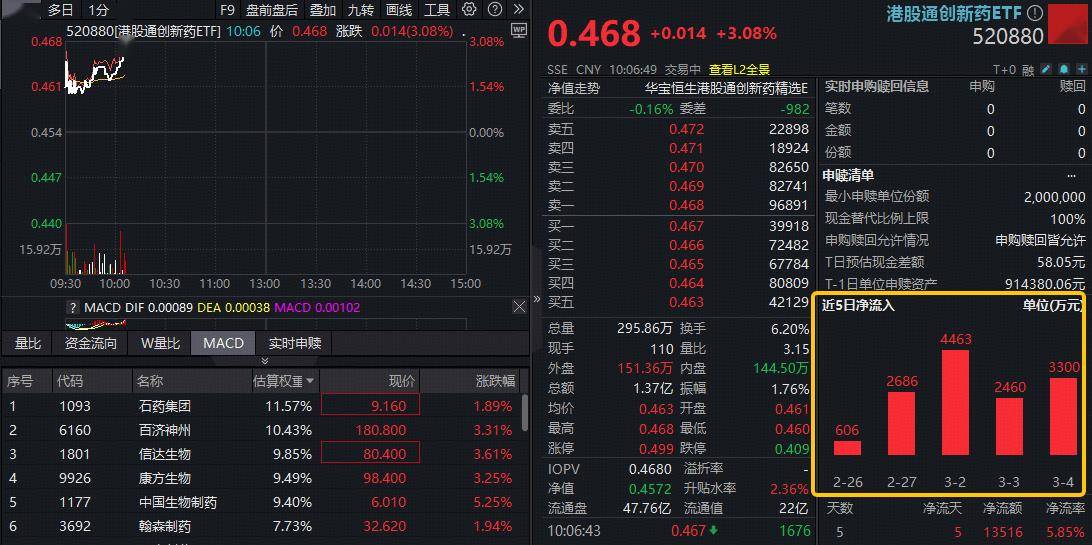
Group 1 - The core viewpoint of the news is that the Hong Kong pharmaceutical sector is experiencing a rebound, particularly in innovative drug stocks, with the Hong Kong Stock Connect Innovative Drug ETF (520880) rising over 3% after a period of decline [1][4] - The Hong Kong Stock Connect Innovative Drug ETF (520880) recorded five consecutive days of decline, reaching a historical low, but saw a capital inflow of over 135 million yuan during this period [1][2] - The healthcare sector in Hong Kong is showing signs of recovery, with major stocks like WuXi Biologics and BeiGene contributing to the rise of the Hong Kong Stock Connect Healthcare ETF [4][6] Group 2 - The total amount of business development (BD) for innovative drugs in China exceeded 50 billion USD in the first two months of 2026, with upfront payments surpassing 3 billion USD, indicating a strong growth trajectory [3] - Chinese pharmaceutical companies are entering a commercialization phase, with companies like Rongchang Bio turning a profit of 709 million yuan in 2025, and BeiGene achieving its first non-GAAP net profit [3] - China National Pharmaceutical Group's stock surged over 5% following the announcement of an exclusive licensing agreement with Sanofi, which includes an upfront payment of 135 million USD and potential milestone payments of up to 1.395 billion USD [1][3]


反弹来了!港股通创新药ETF(520880)大涨超3%!中国生物制药新签大单,创移植赛道最大规模交易
Xin Lang Cai Jing· 2026-03-05 02:18
Core Viewpoint - The Hong Kong pharmaceutical sector is experiencing a rebound, particularly in innovative drug companies, with the Hong Kong Stock Connect Innovative Drug ETF (520880) rising over 3% after a five-day decline, indicating increased investor interest despite recent lows [1][8]. Group 1: Market Performance - The Hong Kong Stock Connect Innovative Drug ETF (520880) opened high and is currently up over 3%, recovering from a historical low reached after five consecutive days of decline [1][8]. - The ETF has seen a net inflow of over 135 million yuan in the past five days, suggesting a strategic accumulation by investors [1][8]. - The Hong Kong medical sector ETF (159137) also opened higher, with significant contributions from major stocks like WuXi Biologics and BeiGene, indicating a broader market recovery [3][10]. Group 2: Company Developments - China National Pharmaceutical Group's stock surged over 5% following the announcement of an exclusive licensing agreement with Sanofi for a drug, which includes an upfront payment of $135 million and potential milestone payments totaling up to $1.395 billion [1][10]. - The innovative drug business development (BD) in China surpassed $50 billion in the first two months of 2026, with upfront payments nearing $3 billion, highlighting a significant growth trend in the sector [3][10]. - Companies like Rongchang Biologics and Junshi Biosciences are transitioning to profitability, with Rongchang expected to report a net profit of 709 million yuan in 2025 [3][10]. Group 3: Investment Opportunities - The Hong Kong Stock Connect Innovative Drug ETF (520880) and its associated funds are positioned as efficient investment vehicles for those looking to capitalize on the innovative drug sector, with over 70% of the top ten holdings being leading companies [5][12]. - The Hong Kong medical ETF (159137) encompasses a wide range of innovative medical concepts, including brain-computer interfaces and AI healthcare, providing diverse investment opportunities [6][12].
持续推荐创新药械产业链-2026年3月月报电话会
2026-03-04 14:17
Summary of Key Points from the Conference Call Records Industry Overview - The conference call focuses on the **pharmaceutical and medical device industry** for Q1 2026, highlighting performance disparities among companies like **Angelalign** and **Eli Lilly**, with profits exceeding 40% due to successful global operations and innovation [1][2]. Core Insights and Arguments - **Performance Disparities**: The pharmaceutical sector shows significant performance differences, with companies like **Angelalign** and **Eli Lilly** achieving over 40% profit growth, validating the logic of global operations and profit realization [1]. - **Investment Strategy**: The strategy for March 2026 shifts towards companies with strong annual report performance expectations, reducing the valuation weight of early pipeline projects, and increasing allocations to **CXO** and medical consumption sectors [1][2]. - **Haikang's Key Data Catalysts**: Haikang is expected to release critical Phase II data for CFB (IgA nephropathy) and THbeta (MASH) in H1 2026, which could lead to significant market expectations [1][4]. - **Federal Pharmaceutical's UBT251 Pipeline**: The strategic position of UBT251 is enhanced as Novo Nordisk accelerates its overseas Phase II trials, potentially narrowing the gap with similar products [1][2]. - **CXO Sector Premium**: The leading position of **WuXi AppTec** is highlighted, with a historical high discount of 10% between A/H shares, indicating strengthened competitive positioning in the medium term [1][2]. - **Medical Device Exports**: **Precision Medical** has over 60% of its orders from overseas, with expectations to increase its market share from 5% to 20% [1][2]. Additional Important Insights - **Eli Lilly's Financial Performance**: Eli Lilly reported Q1 2026 revenue of 1.5 billion, a 41.2% year-on-year increase, with net profit expected to reach approximately 600 million, reflecting a 44% growth [2][12]. - **Haikang's Pipeline Details**: Haikang's pipeline includes five major products with significant Phase II data expected in 2026, including PDE34 for COPD and oral TH beta for liver penetration [4][5]. - **Market Trends**: The overall market sentiment reflects a disconnect between stock prices and industry progress, with a focus on companies entering profit realization phases [2][3]. - **Regulatory Environment**: Changes in regulatory requirements for liver penetration may facilitate faster progression for Haikang's TH beta project [6][7]. - **Federal Pharmaceutical's Recovery Signals**: The company is expected to see recovery in its core business, with raw material prices stabilizing and animal health business growth anticipated in 2026 [7][8]. - **Medical Device Market Dynamics**: **Precision Medical** is positioned as a leader in surgical robotics, with significant growth in overseas orders and market share potential [14][15]. Conclusion The conference call provides a comprehensive overview of the pharmaceutical and medical device sectors, emphasizing the importance of innovation, global operations, and strategic positioning in navigating market challenges and opportunities. Key companies are highlighted for their strong performance and potential for future growth, particularly in the context of upcoming data releases and regulatory changes.


艾迪药业20260303
2026-03-04 14:17
Summary of the Conference Call for Eddie Pharmaceuticals Company Overview - **Company**: Eddie Pharmaceuticals - **Industry**: Pharmaceutical, specifically focusing on HIV treatment and human protein products Key Points and Arguments Financing and Clinical Development - The refinancing plan has shifted from a simplified procedure to a regular one, increasing the fundraising scale from 185 million to 1.276 billion yuan, with an additional 1.14 billion allocated for global multi-center clinical trials of a new integrase inhibitor [2][3] - Core product 017 has nearly 300 patients enrolled in domestic Phase III clinical trials, targeting 660 patients, with plans to apply for U.S. market entry by March 2026 [2][5] - The company aims to achieve approximately 730 million yuan in revenue in 2025, with a target of 480 million yuan from HIV business in 2026, representing a 70% year-on-year increase [2][13] Sales Strategy and Market Performance - A significant adjustment in sales strategy is planned, with the marketing team expected to expand to 350 members by 2026 [2][15] - January sales reached a record high of over 60,000 boxes, with expectations for Q1 2026 sales to exceed historical peaks of over 82 million yuan [2][16] Clinical Trial Progress and Regulatory Pathways - The company is focused on accelerating patient enrollment for the 017 integrase inhibitor, with a goal to complete enrollment by mid-2026 [5][10] - The international multi-center clinical project is primarily based in the U.S., with plans to submit documentation to the FDA by March 2026 [5][10] - The company anticipates potential adjustments in clinical trial requirements based on FDA feedback, including the possibility of bridge studies [10][11] Financial Projections and Profitability - Revenue projections indicate a significant increase in 2025 and 2026, with expectations of reaching 9 billion yuan in total revenue by 2026 [2][13] - The company aims to achieve profitability in 2026, with a target profit of 75 million yuan, although this may be challenging without successful business development outcomes [14][28] Research and Development Focus - The company is advancing multiple products in the HIV treatment pipeline, including 017, 077, and 085, with specific timelines for clinical trial approvals and market entry [20][23] - The focus on human protein products is expected to yield clinical trial approvals for two products by 2025, with a goal to launch within 3-5 years [24] Strategic Partnerships and Market Positioning - The company is exploring partnerships with multinational corporations (MNCs) for the development of long-acting products, particularly 077 and 085 [8][23] - The recent patent approval for the integrase inhibitor in Japan alleviates concerns regarding potential patent infringements in the U.S. and Europe, facilitating market entry [28] Investor Insights and Future Outlook - Investors are encouraged to focus on the growth trajectory in the HIV sector, with significant changes and catalysts expected in the coming years [28] - The company positions 2026 as a pivotal year for financial performance and operational transformation, with expectations of continued revenue growth and potential profitability [28] Additional Important Information - The company has established a clear timeline for its clinical trials and regulatory submissions, with a focus on maintaining communication with the FDA to ensure compliance and support for its projects [6][10] - The potential for adjustments in the financing plan and the involvement of major shareholders in the fundraising process is highlighted, with a lock-up period of 36 months for the controlling shareholder [7][9]

徐洪才:A股上涨的大逻辑与小风险
和讯· 2026-03-04 09:31
Group 1 - The article discusses the recent performance of the A-share market, highlighting a collective rise in major indices and significant gains in raw material sectors such as chemicals, oil and gas, steel, and non-ferrous metals [2] - Predictions indicate that the market may enter a "two sessions market" characterized by "oscillating upward" trends starting from March 4, with sectors related to commodities, consumer demand, AI computing, and infrastructure beginning to gain momentum [2] Group 2 - The article presents data from the National Bureau of Statistics showing that in January 2026, the Consumer Price Index (CPI) rose by 0.2% month-on-month and year-on-year, while the Producer Price Index (PPI) increased by 0.4% month-on-month but decreased by 1.4% year-on-year [3] - The analysis indicates that while consumer demand is recovering, the core CPI's mild increase reflects ongoing challenges in stabilizing domestic demand [3][4] Group 3 - The article emphasizes that rising prices signal a boost in demand, which can enhance corporate operating rates and stimulate investment expectations, thus serving as a positive signal for listed companies [5] - It is noted that persistent low PPI can dampen corporate investment enthusiasm, despite nominal interest rates being lowered, as actual financing costs remain high, affecting future expectations [12] Group 4 - The article outlines the need for proactive fiscal policies to drive demand, suggesting that fiscal spending should focus on public services and shortfall areas, while monetary policy should ensure relative liquidity [13][14] - It highlights the importance of increasing income levels for low-income groups to enhance consumption capacity, particularly through social security reforms [19] Group 5 - The article discusses the challenges of investment decline, attributing it to factors such as deep adjustments in the real estate sector, overcapacity in low-end manufacturing, and insufficient investment in high-end manufacturing [20] - It suggests that improving the business environment and encouraging private investment are crucial for reversing negative investment growth trends [20] Group 6 - The article mentions that the capital market's core attractions for 2026 lie in sectors driven by domestic demand, artificial intelligence, and new infrastructure, with a structural opportunity emerging from a new wave of technological innovation [22] - It notes that the recent bull market was driven by policy guidance and corrections of unreasonable pricing, with institutional investors playing a stabilizing role [22]

港股创新药大幅回调,百济神州领跌;沪鸽三度冲刺港交所,上市之路为何如此坎坷?|掘金创新药
Mei Ri Jing Ji Xin Wen· 2026-03-03 14:10
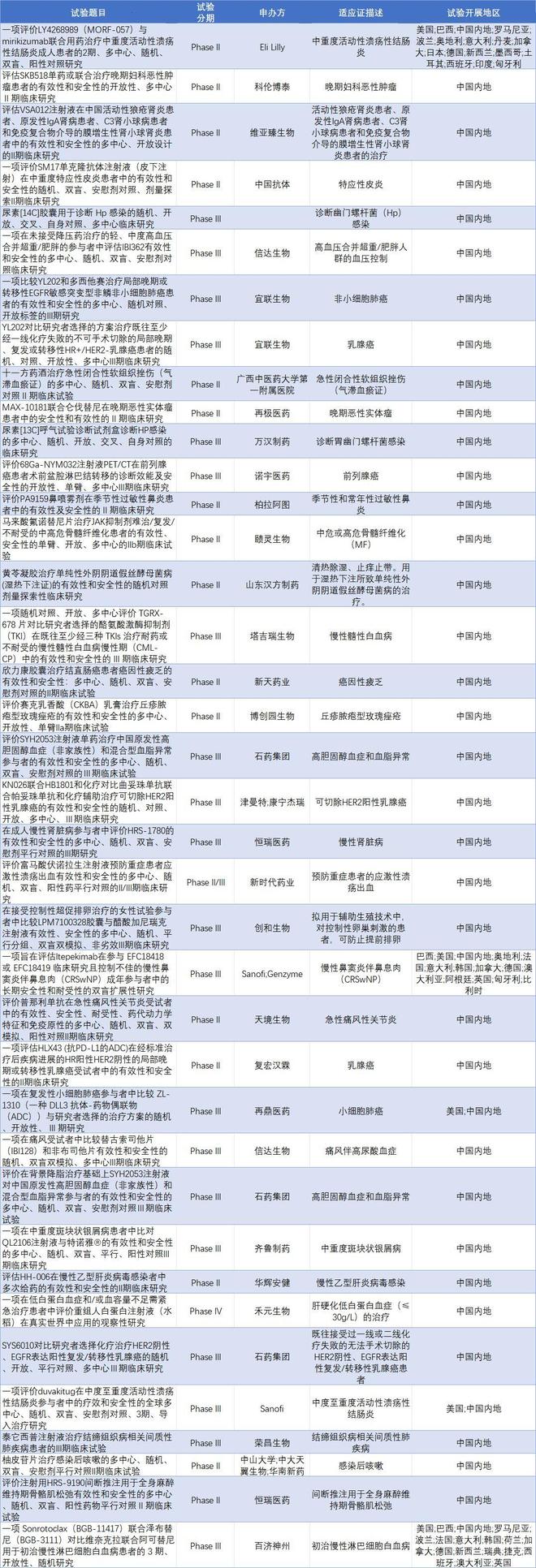
Market Overview - The pharmaceutical and biotechnology index fell by 0.34% last week, underperforming the Shanghai Composite Index by 2.32 percentage points [1][2] - The A-share innovative drug sector saw a slight increase of 0.43%, while the Hong Kong healthcare index and innovative drug ETF dropped significantly by 4.95% and 4.05%, respectively [1][2] Company Performance - BeiGene, a leading innovative drug company, experienced a significant decline in stock price despite reporting strong financial results, with total revenue expected to reach 38.205 billion yuan in 2025, a year-on-year increase of 40.4%, and a net profit of 1.422 billion yuan, marking a 1400% increase [2][3] - Following the earnings announcement, BeiGene's stock price dropped by 9.16% at one point, closing at 194.40 HKD per share, with a total market capitalization falling below 300 billion HKD [2] Market Dynamics - The market is currently focused on performance realization and growth expectations, with increased risk aversion among investors in the Hong Kong market [2][3] - There is a notable shift in the pricing logic for innovative drug companies, moving from a focus on pipeline reserves to a comprehensive evaluation of R&D capabilities, commercialization abilities, and compliance [3] New IPOs - Huge Dental Limited has submitted its application to the Hong Kong Stock Exchange for a listing, aiming to capitalize on its position as a leading supplier of dental materials in China [4][5] - The company has faced challenges in its previous attempts to list on A-shares and has now shifted its focus to the Hong Kong market, marking its third attempt to go public [4][5] Clinical Research Updates - From February 23 to March 1, the National Medical Products Administration disclosed 123 new clinical trial registrations, with 38 of these being innovative drugs in Phase II or higher [7] - Notable clinical trials include studies on treatments for moderate to severe ulcerative colitis and advanced gynecological malignancies, among others [8] Drug Approvals - Five innovative drugs received approval during the week, including a dual-target inhibitor for primary myelofibrosis and a KRAS G12C inhibitor for advanced non-small cell lung cancer [15][16] - The approval of these drugs highlights significant advancements in treatment options for conditions with high unmet medical needs [15][16] Research Insights - A recent report identified 100 new drug targets for 2025, with cancer-related targets making up 50% of the list, indicating a strong focus on oncology in drug development [12] - Over half of these targets were discovered by Chinese research teams, showcasing the country's growing influence in innovative drug research [12]

构建申万宏源策略未来产业定价体系:敢问梦想价值几何?
Shenwan Hongyuan Securities· 2026-03-03 08:09
Group 1: Valuation Models - The report introduces a "Future Industry Pricing System" to address the limitations of traditional DCF models for early-stage tech companies that are often unprofitable and have high uncertainty[3]. - Seven valuation sub-models are proposed, including Real Options Method, Risk-Adjusted NPV (rNPV), Milestone Method, User Value Method, Ecological Niche Valuation Method, Factor Cost Method, and Relative Valuation Method[3]. - The Real Options Method quantifies the value of management's choices in uncertain environments, treating uncertainty as an asset rather than a liability[14][19]. Group 2: Investor Behavior and Market Dynamics - The report categorizes investors into three types: industrial investors using Factor Cost Method for valuation, institutional investors focusing on high-frequency data with rNPV and User Value Method, and visionary capitalists valuing long-term potential with Real Options and Ecological Niche methods[3]. - Market temperature is divided into nine levels, influencing the weighting of valuation models based on investor sentiment, with optimistic models dominating during market peaks[4]. Group 3: Case Studies - SpaceX's valuation is segmented into three business lines: Starlink valued at $429.1 billion using comparable valuation, space computing at $312.1 billion using Real Options Method, and Mars exploration using Factor Cost Method[4]. - OpenAI's valuation ranges from $400 billion (conservative) to $1.28 trillion (optimistic), with a weighted final valuation of $780.8 billion closely aligning with market estimates[4].
创新药行业观点更新
2026-03-03 02:53
Summary of Conference Call Notes Industry Overview - The discussion primarily revolves around the **innovation drug sector** within the **pharmaceutical industry**. The focus is on the performance and trends of innovative drugs, particularly in the context of the Chinese market. Key Points and Arguments 1. **Market Performance**: Since February of the previous year, the Hong Kong stock market has seen significant gains in innovative drug stocks, particularly during the period from June to September, indicating strong market interest in this sector [1][2]. 2. **Current Market Correction**: The innovative drug sector is currently undergoing a correction phase, lasting approximately 5 to 6 months, which presents potential investment opportunities [2][3]. 3. **Business Development (BD) Metrics**: The total BD amount for the pharmaceutical sector is projected to exceed **$130 billion** in 2025, with **$50 billion** expected in 2024. The BD amount for the first two months of this year reached over **$53 billion**, indicating strong ongoing activity [3][4]. 4. **Transaction Characteristics**: The average transaction amount in early 2026 was approximately **$1.2 billion**, significantly higher than the **$600 million** average in 2025, reflecting an increase in the quality and reliability of domestic innovative drug assets [4][5]. 5. **Quality of Domestic Innovation**: The proportion of "first in class" innovative drugs has increased from below 50% to around 50%, indicating an improvement in the quality of domestic innovation [5][6]. 6. **Commercialization Growth**: The growth rate for innovative drugs in China is projected at around **8%** annually from 2025 to 2029, significantly higher than other pharmaceutical sectors [6][7]. 7. **Revenue Model Shift**: The revenue model for innovative drugs has evolved to include domestic growth, overseas sales, and the realization of BD rights, with domestic sales expected to maintain an **8%** growth rate [9][10]. 8. **Insurance Support**: The stability of insurance negotiations is expected to support the commercialization of innovative drugs, with a predictable annual negotiation process [10][11]. 9. **Investment Recommendations**: The investment strategy for 2026 emphasizes focusing on potential sectors such as skin medications, anti-tumor drugs, and immune modulators, which are expected to see rapid growth [12][13]. 10. **Emerging Technologies**: Attention is drawn to new technologies, particularly in small nucleic acids and complex molecular entities, which are anticipated to drive the next wave of innovation in the pharmaceutical sector [16][17]. 11. **Market Trends**: The market is expected to see a resurgence in interest in innovative drugs following a correction period, with a focus on the commercialization phase expected in the upcoming months [20][21]. Additional Important Insights - The innovative drug sector is characterized by a mix of early-stage transactions and a growing trend towards systematic collaborations, indicating a maturation of the market [4][5]. - The potential for breakthroughs in various therapeutic areas, including chronic diseases and neurological conditions, is highlighted as a key area for future investment [14][15]. - The overall sentiment suggests that while the market may not replicate the rapid growth seen in early 2025, there are still clear opportunities for targeted investments in high-potential companies and technologies [12][20].