制造业

Search documents
战略相持——周观点-20260301
Huafu Securities· 2026-03-01 12:26
Group 1 - The report indicates that the US dollar may rebound in the short to medium term due to marginal improvements in US monetary and fiscal policies, alongside ongoing credit expansion [3][15] - The report highlights that inflation in capital goods is increasing, with the core PPI rising to 3.600% year-on-year in January 2026, driven primarily by services and capital goods [8][15] - The report suggests that the re-industrialization of the US may be a focus area, with potential implications for capital goods inflation and manufacturing capacity recovery [3][15] Group 2 - The report notes that outside of China, non-US economies may be adversely affected by a strong dollar, indicating a potential risk for these markets [3][15] - The report emphasizes that the application of AI in China presents a competitive advantage that could systematically suppress the US stock market's AI industry chain, potentially limiting the dollar's rebound [3][15] - The report identifies a shift in focus from manufacturing construction to energy infrastructure, with energy and communication sectors showing resilience compared to the declining manufacturing sector [9][15] Group 3 - The report provides insights into the performance of the Hong Kong stock market, indicating a decline in major indices, particularly in technology stocks, with the Hang Seng Index down by 2.76% in February [17][21] - The report highlights that advanced manufacturing and cyclical sectors are leading in performance, while financial and real estate sectors are experiencing declines [22][33] - The report mentions that high-beta stocks continue to lead in performance, with low-priced and micro-cap stocks also showing significant gains [31][33]
Borderlands Mexico: Canada, Mexico draw record foreign investment in 2025
Yahoo Finance· 2026-03-01 12:00
Core Insights - Canada and Mexico attracted record levels of foreign direct investment (FDI) in 2025, highlighting North America's increasing significance as a global manufacturing and supply-chain hub despite trade-policy volatility [2] Group 1: Canada - Foreign direct investment into Canada reached $96.8 billion in 2025, the highest since 2007, with fourth-quarter inflows of $25.1 billion driven by mergers and acquisitions in trade, transportation, and manufacturing [3] - U.S.-based investment was a major contributor to Canada's inflows, with total net investment exceeding outflows for the year, marking a reversal from 2022 when capital flight outpaced inflows [4] - Canadian direct investment abroad decreased to $79 billion, the lowest since 2020, indicating a slowdown in overseas mergers and acquisitions [4] Group 2: Mexico - Mexico achieved a historic peak in FDI, attracting $40.871 billion in 2025, a 10.8% year-over-year increase, marking the highest level ever recorded in a single year [5] - Reinvestment of profits constituted 67.7% of total inflows, while new investments surged by 132.9% to $7.38 billion, indicating new project launches related to nearshoring and industrial expansion [5] - The U.S. remained Mexico's largest investor, contributing $15.877 billion, or 38.8% of total inflows, with Canada and Spain also being significant sources of capital [6] Group 3: Regional Supply Chains - The investment surges in Canada and Mexico occurred alongside a decline in global FDI flows to developing economies in 2025, suggesting a strong commitment to production capacity and infrastructure across North America [7] - Despite tariff volatility and political uncertainty, the data from 2025 indicates that investors are making long-term commitments to North America as a consolidated production platform [8]
印度,正在苦练德语,苦练日语,苦练俄语
虎嗅APP· 2026-03-01 09:28
Core Viewpoint - The article discusses the increasing trend of Indian migration to Germany, highlighting the growing number of Indian students and professionals learning German and seeking opportunities in Germany, driven by favorable immigration policies and labor shortages in various sectors [6][9][36]. Group 1: Indian Migration to Germany - As of 2026, the number of Indian students in Germany has reached 60,000, making India the largest source of international students in Germany, with a threefold increase over seven years and an annual growth rate of 20% [9]. - The number of Indians obtaining permanent residency in Germany has surged from 86,000 in 2015 to 280,000 in 2025, indicating a more than threefold increase in a decade [10]. - The participation of Indian workers in the German social security system has grown significantly, with 152,000 Indians contributing in 2025 compared to just 23,000 in 2015, marking a 660% increase [11]. Group 2: Language Learning and Cultural Integration - Approximately 250,000 Indians are currently learning German, with numerous language schools and institutions established across India, including over 140 Goethe Institutes [15][16]. - The article notes that many Indian professionals, including doctors and engineers, are motivated to learn German to pursue careers in Germany, with some aiming for high-level language proficiency to qualify for medical practice [17][18]. Group 3: Economic and Labor Market Factors - Germany's need for skilled labor, particularly in engineering and STEM fields, aligns well with the qualifications of Indian migrants, making it an attractive destination for them [31][32]. - The introduction of the EU Blue Card and the High Skilled Labor Immigration Act in Germany has facilitated the entry of skilled foreign workers, particularly from India, to address labor shortages exacerbated by an aging population [33][36]. Group 4: Broader Implications for Other Countries - The article suggests that the success of Indian migration to Germany could serve as a model for other countries, with similar trends emerging in Russia, Japan, and Nordic countries, where labor shortages are prompting these nations to seek skilled Indian workers [48][49][50]. - The article highlights that while countries claim to attract Indian migrants due to labor shortages, underlying economic and demographic factors also play a significant role in these migration patterns [52][56].


重磅!阿贝尔接棒巴菲特首度执笔 伯克希尔-哈撒韦2026年致股东公开信公布 (全文珍藏版)
新浪财经· 2026-03-01 08:12
Core Views - The annual letter to shareholders from Berkshire Hathaway, written by new CEO Greg Abel, marks the beginning of the "post-Buffett era" while maintaining the core principles of value investing and practical insights into business operations [2][4] - Berkshire's stock value increased by approximately 10.9% in 2025, underperforming compared to the S&P 500's 17.9% increase, but the long-term compound annual growth rate from 1965 to 2025 for Berkshire was about 19.7%, significantly higher than the S&P 500's 10.5% [3] Company Overview - Berkshire Hathaway is a unique conglomerate designed for rational and efficient capital allocation, with insurance as its core business and significant investments across various industries [11] - The company emphasizes a decentralized management model, allowing managers autonomy while holding them accountable for performance [14] Financial Strength - Berkshire maintains a strong balance sheet with over $370 billion in cash and U.S. Treasury securities, ensuring financial resilience and the ability to act decisively in investment opportunities [17] - The company generated $44.5 billion in operating profit in 2025, slightly lower than 2024 but above the five-year average of $37.5 billion, indicating robust core business performance [31] Insurance Business - In 2025, Berkshire's insurance operations achieved disciplined growth in underwriting profits and float, with a combined ratio of 87.1%, outperforming historical averages [32] - The insurance float reached $176 billion by year-end 2025, up from $171 billion in 2024, reflecting the strength of the insurance business [38] Non-Insurance Operations - The non-insurance segment includes high-quality companies in railroads, utilities, energy, manufacturing, services, and retail, with a focus on long-term value creation [39] - The Burlington Northern Santa Fe (BNSF) railroad generated $8.1 billion in operating cash flow in 2025, demonstrating its critical role in the U.S. economy [42] Capital Allocation - Berkshire's capital allocation strategy focuses on opportunities that align with risk and return, emphasizing long-term value enhancement [19] - The company is committed to maintaining capital discipline, avoiding dividend payouts unless retained earnings can generate more than $1 in market value for shareholders [24] Operational Excellence - Berkshire pursues operational excellence across all its businesses, emphasizing customer focus, efficiency, and continuous improvement [28] - The Precision Castparts company demonstrated effective crisis management during a significant fire incident, showcasing the company's operational resilience [29]

手握3700亿“弹药”,巴菲特继任者首封股东信,很务实,很像一份伯克希尔“说明书”
聪明投资者· 2026-03-01 07:14
Core Insights - The annual report from Berkshire Hathaway marks a significant transition with Greg Abel's name appearing for the first time, indicating a shift in leadership while emphasizing continuity in the company's core values and principles [2][4] - Abel's message focuses on maintaining Berkshire's financial conservatism, investment discipline, and reputation for integrity, rather than attempting to replicate Warren Buffett's legacy [4][12] Financial Performance - Berkshire Hathaway achieved an operating profit of $44.5 billion in 2025, slightly lower than the previous year's $47.4 billion but above the five-year average of $37.5 billion, indicating resilience and room for improvement [67] - The company's net cash flow from operating activities was approximately $46 billion, reinforcing its ability to capitalize on opportunities [68] Capital Allocation Strategy - Berkshire maintains a robust balance sheet with over $370 billion in cash and U.S. Treasury securities, which serves as a strategic reserve for future investments [44][43] - The insurance float, which is the capital held for future claims, reached $176 billion by the end of 2025, up from $171 billion at the end of 2024, showcasing the strength of its insurance operations [81] Investment Philosophy - Abel emphasized that stock investments are a core component of capital allocation, with a focus on a concentrated portfolio in a few key U.S. companies, including Apple and American Express, which are expected to compound over decades [9][10] - The company has also made significant investments in Japan, utilizing low-cost yen financing to acquire high cash flow assets, resulting in substantial unrealized gains [10][11] Operational Excellence - Berkshire's decentralized management structure allows for autonomy among its subsidiaries, fostering a culture of accountability and efficiency [33][35] - The company prioritizes integrity and transparency in its operations, with a commitment to maintaining its reputation as a cornerstone of its business model [38][39] Insurance Operations - The insurance segment achieved a combined cost ratio of 87.1% in 2025, an improvement from the five-year average of 90.7%, reflecting effective underwriting discipline [71] - GEICO, a key player in the insurance portfolio, has improved its cost structure and pricing discipline, although it faces challenges in customer retention due to recent premium increases [72][73] Non-Insurance Businesses - Berkshire's non-insurance operations include a diverse range of industries, with a focus on operational excellence and long-term value creation [83][84] - BNSF Railway, a significant asset, generated $8.1 billion in operating cash flow in 2025, with ongoing efforts to enhance safety and service reliability [89][90] Future Outlook - The company aims to continue its legacy of strong financial performance and operational integrity, with a focus on long-term value creation for shareholders [28][64] - Abel's leadership is characterized by a commitment to maintaining Berkshire's core values while adapting to future challenges and opportunities [12][30]
“后巴菲特时代”首封股东信:巴菲特仍坐镇,手握3700亿现金,坚守日本投资策略
华尔街见闻· 2026-02-28 14:22
Core Viewpoint - The letter marks the beginning of the "post-Buffett era" with Greg Abel as the new CEO, emphasizing continuity in leadership and commitment to shareholder value [2][12]. Financial Performance - In 2025, the company achieved an operating profit of $44.5 billion, down from $47.4 billion in 2024 but above the five-year average of $37.5 billion [40]. - The net cash flow from operating activities reached $46 billion, exceeding the five-year average of over $40 billion [40]. - The insurance float increased to $176 billion by the end of 2025, significantly up from $88 billion a decade ago [49]. Capital Management - The company holds over $370 billion in cash and U.S. Treasury bonds, maintaining a strong defensive position [3][25]. - The principle of not paying dividends remains unchanged; dividends will only be considered if retained earnings can create more than $1 in market value for shareholders [4][30]. - Stock buybacks are prioritized when the stock price is below the estimated intrinsic value [4][30]. Investment Strategy - In 2025, the company acquired OxyChem and Bell Labs, reinforcing its strategy of investing in companies with sustainable profitability [3][29]. - The company emphasizes a disciplined approach to capital allocation, focusing on investments that align with long-term value creation [27][30]. Insurance Business - The property and casualty insurance business achieved a combined ratio of 87.1%, significantly better than the five-year average of 90.7% [41]. - The insurance sector is facing pricing pressures due to increased capital influx, which may lead to stagnation in premium growth [41][45]. - The company’s insurance float is expected to continue growing, with a return of $29 billion to the parent company in 2025 [49]. Non-Insurance Business - The non-insurance segment includes high-quality companies across various industries, with a focus on operational excellence and accountability [50][51]. - The Burlington Northern Santa Fe Railway Company reported a net cash flow of $8.1 billion in 2025, returning $4.4 billion to the parent company [52]. - Berkshire Hathaway Energy is entering a significant investment cycle, driven by increased electricity demand from data centers [54]. Corporate Culture and Values - The company maintains a decentralized management model, empowering managers while holding them accountable for performance [19][20]. - Integrity and transparency are core values, with a commitment to uphold the company's reputation [21][22]. - The pursuit of operational excellence is a continuous journey, with a focus on long-term value creation rather than short-term gains [36][38].

我市上线《电子手册》,帮助资金供需两端精准对接
Nan Jing Ri Bao· 2026-02-28 02:32
Core Viewpoint - Nanjing is implementing a series of financial policies to enhance the synergy between fiscal and financial measures, aiming to support the real economy and stimulate market vitality through a comprehensive approach to policy integration [1][2]. Group 1: Financial Policy Tools - The city has developed a "Fiscal + Financial" policy electronic manual that outlines 60 policy products to help enterprises access financial support easily [1]. - The fiscal department is focusing on a more proactive fiscal policy by 2026, integrating various tools such as investment, loans, guarantees, and insurance to empower the real economy [1][2]. Group 2: Investment Empowerment - Nanjing is creating a "4+N" industrial fund to support technology, industry, and talent, facilitating industrial cultivation and the transformation of technological achievements [1]. - The city aims to enhance the effectiveness of investment tools to strengthen supply chains and promote technological advancements [1]. Group 3: Loan Support - The city is implementing loan interest subsidies in collaboration with national and provincial levels, reducing the effective loan interest rate for enterprises significantly, for example, from 2.9% to 0.9% after subsidies [1]. - In 2025, the city plans to allocate 80 million yuan for loan interest subsidies, which is expected to mobilize 17.4 billion yuan in social financing [1]. Group 4: Guarantee and Insurance - The city is enhancing credit guarantees for small and micro enterprises, providing upfront guarantee fee subsidies and backend risk compensation [2]. - The upgraded "Ningke Loan" product will support more technology enterprises by extending the loan period from 1 year to 3 years, with an expected allocation of over 48 million yuan for guarantee fee subsidies in 2025, leveraging a financing scale of approximately 26.794 billion yuan [2]. Group 5: Policy Accessibility - The electronic manual categorizes policies into four types: loans, guarantees, insurance, and investment, and organizes them by central, provincial, and municipal levels, facilitating easy access for enterprises [2]. - The manual is available on the "Ningqi Tong" platform, allowing for precise and quick connections between funding supply and demand [2]. Group 6: Future Initiatives - The fiscal department plans to promote financial policies across various sectors, including departments, parks, and enterprises, to inject new momentum into Nanjing's economic and social development [3].
打造绿色转型新引擎, 兴业银行抢滩国家级零碳园区建设
Jing Ji Ri Bao· 2026-02-28 02:05
Core Viewpoint - The development of national-level zero-carbon parks is a crucial step towards achieving green transformation in the industrial sector and meeting carbon reduction goals, with financial support being a key challenge for financial institutions [1][3]. Group 1: Zero-Carbon Park Development - The first batch of 52 national-level zero-carbon parks was announced in December 2025, marking a new phase in the green-driven development of industrial parks in China [1][3]. - The construction of national-level zero-carbon parks is a systematic project that requires precise and effective financial support [1][3]. Group 2: Financial Support and Product System - Industrial Bank has been a pioneer in green finance, exploring comprehensive service models for zero-carbon parks and creating a green financial product system to support various stakeholders [3][4]. - By the end of December 2025, Industrial Bank's green loan balance exceeded 1.1 trillion yuan, with over 450 billion yuan allocated to enterprises within the parks [4]. Group 3: Innovative Financial Products - Industrial Bank has developed a range of innovative financial products, including fixed asset loans linked to energy efficiency, to support the construction of green data centers and other projects [6][10]. - The bank has provided significant financial support to various low-carbon industrial projects, including nearly 10 billion yuan for the development of a zero-carbon battery factory [9]. Group 4: Digital and Smart Solutions - The bank utilizes a "dual-carbon management platform" to offer carbon data management and consulting services, helping enterprises achieve precise carbon management [11][13]. - As of the end of 2025, Industrial Bank has opened over 50,000 corporate carbon accounts, enhancing the carbon emission accounting capabilities of economic entities [13].

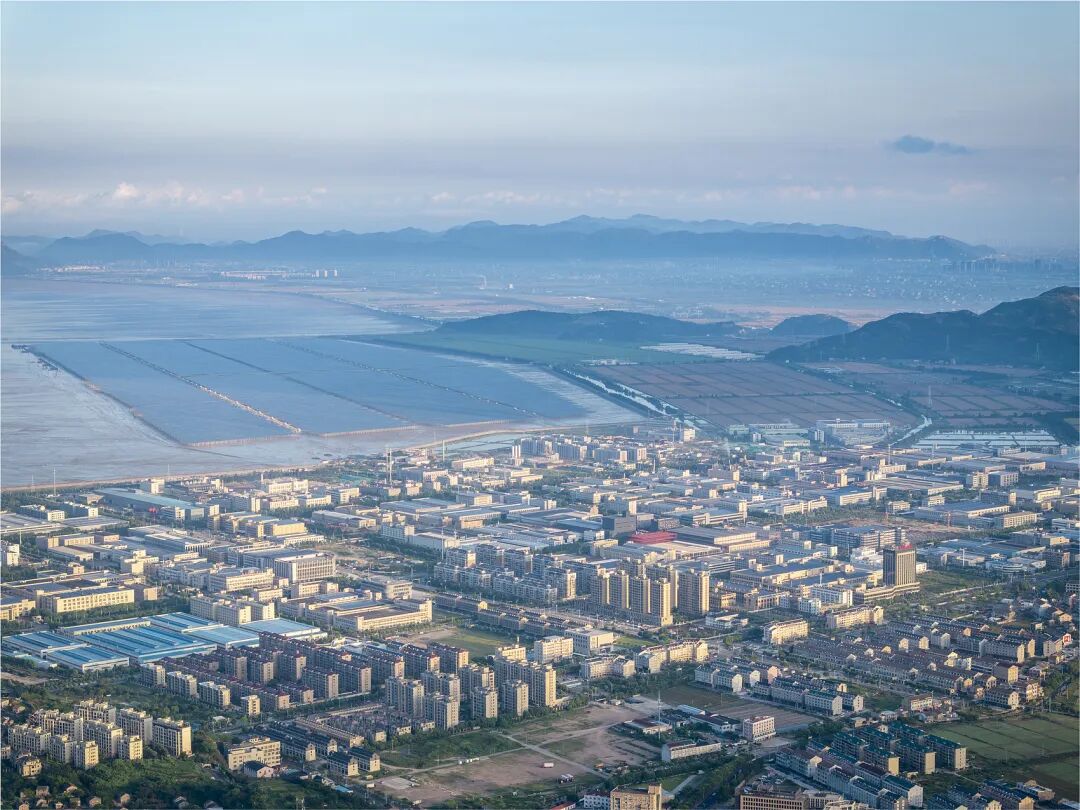
中华人民共和国2025年国民经济和社会发展统计公报
Guo Jia Tong Ji Ju· 2026-02-28 01:33
Economic Overview - The GDP for the year reached 140,187.9 billion yuan, growing by 5.0% compared to the previous year [3] - The primary industry added value was 93,347 billion yuan (3.9% growth), the secondary industry was 499,653 billion yuan (4.5% growth), and the tertiary industry was 808,879 billion yuan (5.4% growth) [3] - The per capita GDP was 99,665 yuan, reflecting a 5.1% increase year-on-year [3] Population and Employment - The total population at the end of the year was 1,404.89 million, a decrease of 3.39 million from the previous year [9] - The urban population was 953.80 million, accounting for 67.9% of the total population [7] - The total employment reached 72.50 million, with an urban employment rate of 65.6% [8] Industrial Performance - The total industrial added value was 416,826 billion yuan, marking a 5.8% increase [24] - The manufacturing sector saw a growth of 6.4%, with significant increases in automotive manufacturing (11.5%) and high-tech manufacturing (9.4%) [26][31] - The profits of industrial enterprises reached 73,982 billion yuan, a 0.6% increase year-on-year [31] Agricultural Output - The total grain output was 714.88 million tons, an increase of 1.2% from the previous year [21] - The production of pork was 59.38 million tons, reflecting a growth of 4.1% [23] Service Sector Growth - The value added by the wholesale and retail sector was 145,808 billion yuan, growing by 5.0% [36] - The information transmission, software, and IT services sector grew by 11.1% [36] Trade and Investment - The total import and export value reached 454,685 billion yuan, with exports growing by 6.1% and imports by 0.5% [60] - Foreign direct investment amounted to 747.7 billion yuan, a decrease of 9.5% [69] Financial Sector - The broad money supply (M2) increased by 8.5% to 340.3 trillion yuan [76] - The total social financing scale increased by 35.6 trillion yuan, with a year-end balance of 442.1 trillion yuan [77]
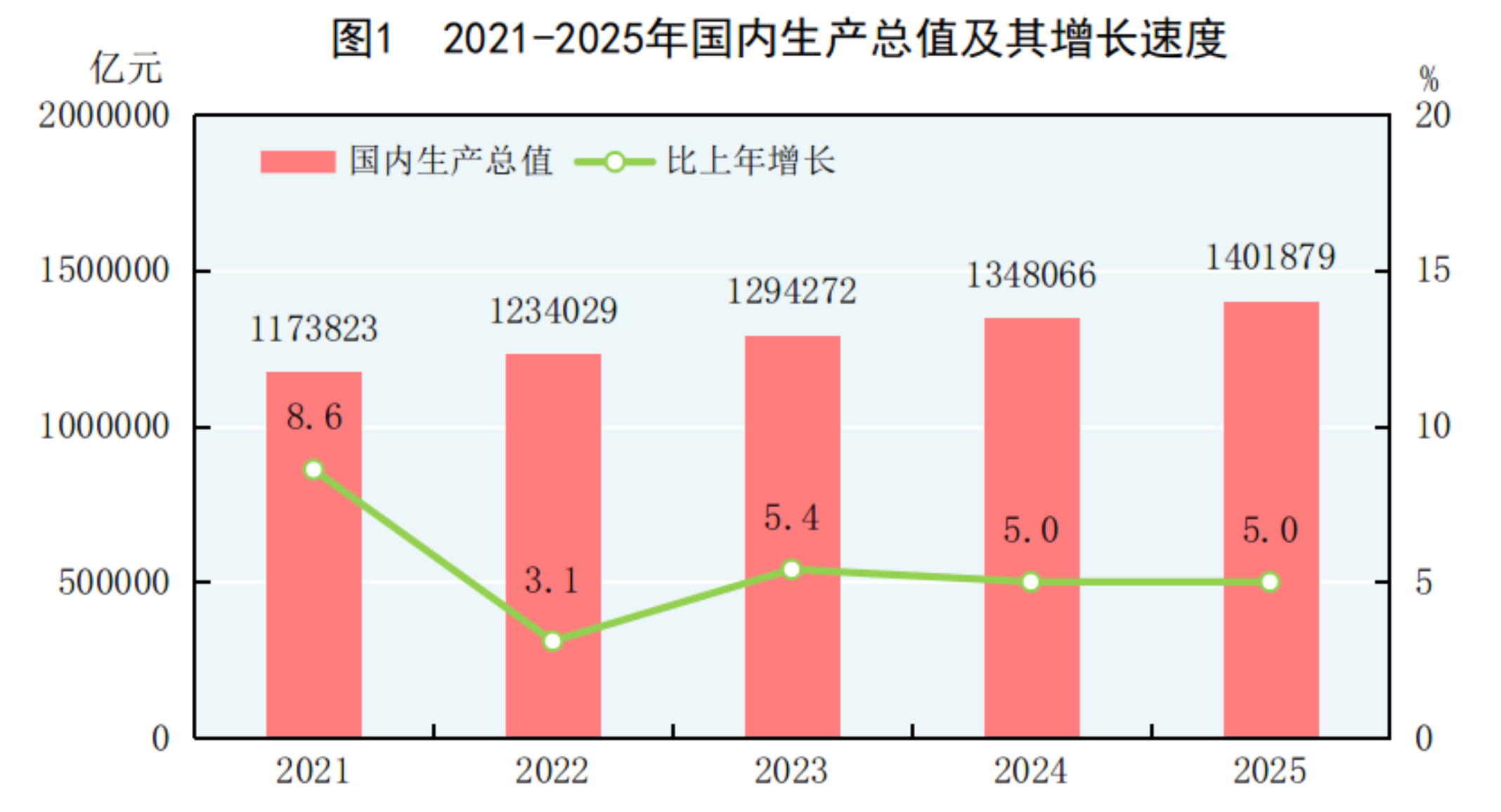
单项最高可达5000万元!24类高精尖产业项目将获扶持
Xin Lang Cai Jing· 2026-02-27 22:32
Group 1 - The Beijing Municipal Economic and Information Bureau has released the implementation guidelines for the 2026 development projects of high-precision industries and support funds for small and medium-sized enterprises, with 24 areas eligible for financial support, including integrated circuit design and product first-round wafer tape-out [1] - The highest amount of strategic project loan interest subsidies can reach 50 million yuan per project annually, aimed at encouraging enterprises to utilize bank loans for significant strategic projects [1] - The focus areas for support this year include industrial innovation transformation, quality improvement, and safeguarding enterprise growth [1] Group 2 - In the area of industrial innovation transformation, various key industries are covered, such as integrated circuit design, which can receive rewards up to 30 million yuan for multiple project wafer tape-out [2] - The medical health industry can also receive rewards for innovative drugs and medical devices, with a maximum of 30 million yuan per enterprise for scaling up applications [2] - The guidelines support digital transformation, with rewards for platform service providers and benchmark enterprises that help local manufacturing achieve digital transformation [2] Group 3 - Green and low-carbon development projects can receive rewards up to 30 million yuan for enterprises undertaking green transformation [3] - Support is also available for the renovation of old factory buildings, with a maximum reward of 10 million yuan per project, and for industrial tourism projects, which can receive up to 1 million yuan [3] - The "Win the Future" growth plan targets early-stage potential enterprises, providing support up to 10 million yuan through training and public roadshows [3]