
饲料

Search documents
邦基科技(603151.SH)发预增,预计2025年年度归母净利润同比增加119.43%到169.30%
智通财经网· 2026-01-26 09:22
智通财经APP讯,邦基科技(603151.SH)发布2025年年度业绩预告,经初步测算,预计2025年年度实现 归属于母公司所有者的净利润11,000万元到13,500万元,与上年同期相比,将增加5,987.02万元到 8,487.02万元,同比增加119.43%到169.30%。 本期公司盈利水平同比提升,主要系直销渠道合作的规模化养殖企业存栏量增加,拉动公司产品销量及 销售收入同步增长,进而推动整体盈利规模提升。 ...

邦基科技:2025年净利同比预增119.43%到169.3%
Zheng Quan Shi Bao Wang· 2026-01-26 08:19
人民财讯1月26日电,邦基科技(603151)1月26日公告,公司预计2025年度归属于母公司所有者的净利 润1.1亿元到1.35亿元,同比增加119.43%到169.3%。报告期内,直销渠道合作的规模化养殖企业存栏量 增加,拉动公司产品销量及销售收入同步增长,进而推动整体盈利规模提升。 ...
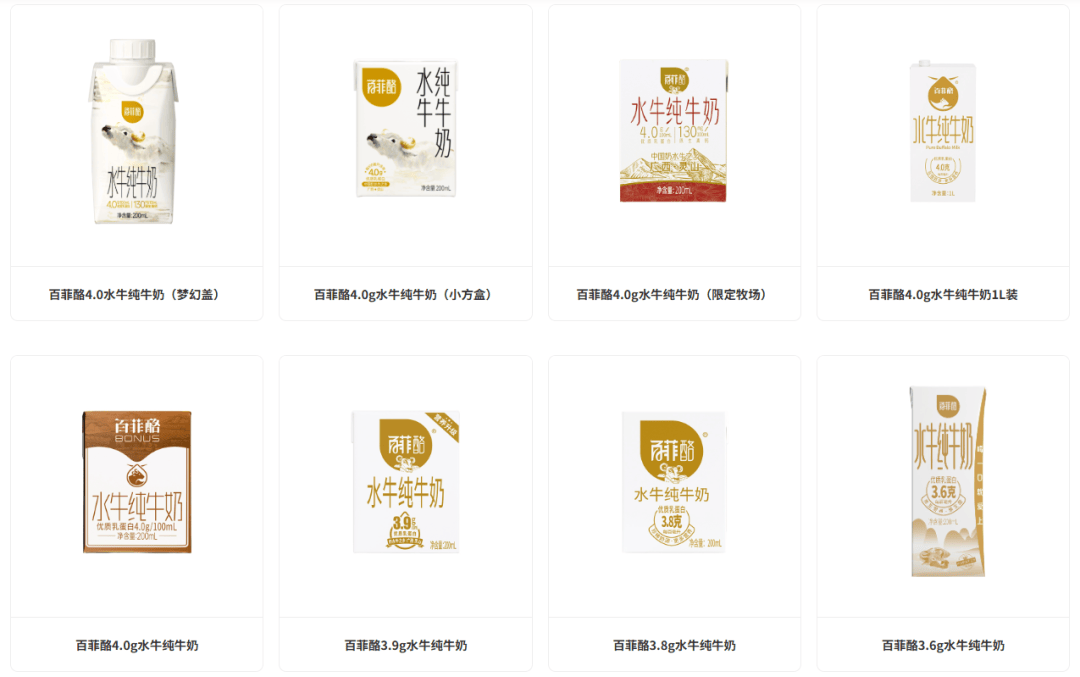
百菲乳业拟撤回上交所上市申请;方源资本收购吉香居92%股份
Sou Hu Cai Jing· 2026-01-26 01:21
Group 1: Company Developments - Baifei Dairy plans to withdraw its application for listing on the Shanghai Stock Exchange, citing strategic development considerations [1][2] - Junlebao officially submitted its listing application to the Hong Kong Stock Exchange, aiming to raise funds for factory construction, capacity expansion, and brand marketing [7][8] - Fangyuan Capital is acquiring 92% of Jixiangju, a pickled vegetable and compound seasoning company, enhancing its control over the firm [4][5] Group 2: Industry Trends - The total retail sales of consumer goods in 2025 are projected to exceed 50 trillion yuan, with restaurant revenue reaching 57.982 billion yuan, reflecting a growth of 3.2% [12] - The national standard for prepared dishes has been publicly solicited for opinions, indicating a regulatory shift in the food safety sector [14] - Uruguay will not impose additional regulations on the use of beef export quotas to China, with a quota of 324,000 tons set for 2026, indicating ample supply [15]

农林牧渔行业:本周猪价延续反弹,关注大宗农产品周期趋势
GF SECURITIES· 2026-01-25 11:48
Core Insights - The report indicates a rebound in pig prices, with the average price for lean pigs at 13.09 CNY/kg as of January 23, reflecting a 4.8% week-on-week increase, although down 17.6% year-on-year. The industry is returning to profitability, with self-breeding operations reportedly earning about 40 CNY per head [2][10] - The report highlights a significant increase in the price of piglets, which rose to 353 CNY/head, a 7% increase week-on-week, suggesting a positive outlook among farmers for pig prices in the second half of the year [2][10] - The report recommends major breeding companies such as Wens Foodstuffs Group and Muyuan Foods, while also highlighting potential in smaller firms like Tiankang Biological and Shennong Group [2][10] Livestock Farming - The average price of white feather chickens is reported at 3.7 CNY/jin, down 1.3% week-on-week, with supply concerns due to avian influenza affecting imports from France [2][10] - The dairy sector shows a slight increase in fresh milk prices to 3.03 CNY/kg, up 0.3% week-on-week, while some regions report prices rebounding to 3.3-3.4 CNY/kg [2][11] - The report notes that the supply of beef is expected to tighten due to new import tariffs, which may lead to increased domestic beef prices and improved earnings for companies like Yurun Food and Modern Farming [2][11] Feed and Animal Health - The report indicates a continued upward trend in aquaculture prices, driven by supply-demand imbalances and seasonal factors, which may benefit feed demand in the short term [2][12] - The feed industry remains competitive, with leading companies expected to gain market share due to their comprehensive advantages [2][12] - The report suggests that leading animal health companies are expanding into pet healthcare, with growth potential in pet vaccines and pharmaceuticals [2][12] Agricultural Sector Performance - The agricultural sector outperformed the market by 1 percentage point, with the sector rising by 0.4% while the CSI 300 index fell by 0.6% [2][18] - Sub-sectors such as planting, agricultural processing, and fisheries showed notable gains, with increases of 4.1%, 4.0%, and 2.9% respectively [2][18] Agricultural Product Prices - The report tracks significant price movements in agricultural products, noting a 4.8% increase in pig prices and a 1.3% decrease in chicken prices [2][20] - The report also highlights the current prices of corn at 2375 CNY/ton, up 0.5% week-on-week, and soybean meal at 3194 CNY/ton, down 0.1% [2][44][53] - The report indicates that the price of wheat has also increased by 0.5% to 2527 CNY/ton [2][55]





2025年白羽祖代更新量157万套,我国牛存栏已累计下降8.6%
Huaan Securities· 2026-01-25 07:45
Investment Rating - The report maintains a positive investment rating for the pig farming sector, recommending continued investment in this area due to low valuations and expected profitability [4]. Core Insights - The report highlights a rebound in pig prices to 13 CNY/kg, with self-breeding and self-raising operations achieving profitability for two consecutive weeks [4]. - The white feather breeding stock update for 2025 is projected at 1.5742 million sets, with a year-on-year increase of 4.9% [5]. - The pet food market in urban China is expected to reach 312.6 billion CNY in 2025, growing by 4.1% year-on-year [6]. Summary by Sections Pig Farming - Pig prices have rebounded to 13 CNY/kg, with a week-on-week increase of 0.7%. The average weight of pigs at slaughter has risen to 128.89 kg, with a decrease in the proportion of heavier pigs [4]. - The profitability of self-breeding and self-raising operations has reached 43.35 CNY per head, marking a significant recovery since December 2025 [4]. - The report forecasts a new wave of price declines post-Spring Festival, indicating potential capacity reduction in the pig farming industry [4]. Poultry Farming - The white feather breeding stock update for 2025 is 1.5742 million sets, with 55% from self-breeding and 45% from imports. The price of yellow feather chicken has increased by 2.6% week-on-week [5]. - The average price of chicken products is reported at 9,250 CNY/ton, with a slight year-on-year decrease of 0.5% [5]. Pet Industry - The urban pet market is projected to grow to 312.6 billion CNY in 2025, with dog and cat markets at 160.6 billion CNY and 152.0 billion CNY, respectively [6]. - The number of pet dogs and cats in urban areas is expected to reach 126.32 million, with a year-on-year growth of 1.8% [8]. - Pet food remains the primary consumption category, accounting for 53.7% of the market share, with a projected market size of approximately 167.9 billion CNY in 2025 [8].


大北农集团与国投生物、北京化工大学达成战略合作
Zheng Quan Shi Bao Wang· 2026-01-24 09:21
人民财讯1月24日电,日前,大北农(002385)集团与国投生物科技投资有限公司、北京化工大学正式 签署"绿色化学品与蛋白耦合联产战略合作"协议。本次三方合作旨在整合企业市场优势、资本力量与高 校科研能力,围绕功能性菌体蛋白、微生物发酵饲料、饲用氨基酸等方向,开展技术研发、成果转化与 产业化示范,共同构建产学研用深度融合的创新体系,为我国饲料行业提供可复制、可推广的技术与产 业模式。 ...
傲农生物:关于新增涉及诉讼、仲裁事项的公告
Zheng Quan Ri Bao Zhi Sheng· 2026-01-23 14:15
Core Viewpoint - Aonong Biological announced the addition of litigation (arbitration) amounting to 2,077.613 million yuan since July 7, 2025, with an uncertain impact on the company's profits due to ongoing cases [1] Group 1 - The total amount of new litigation (arbitration) is 2,077.613 million yuan [1] - The amount of unresolved cases is 1,236.807 million yuan, while the resolved cases amount to 840.806 million yuan [1] - The impact on the company's current and future profits remains uncertain due to some cases not yet being heard or concluded [1]

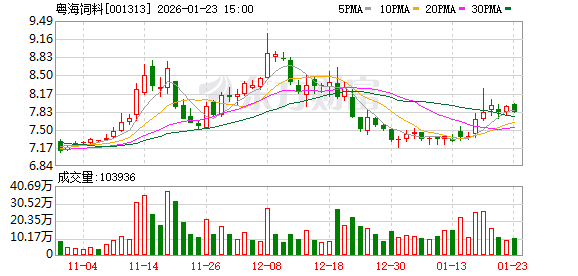
粤海饲料:公司将持续关注智慧农业前沿技术
Zheng Quan Ri Bao· 2026-01-23 12:45
证券日报网讯 1月23日,粤海饲料在互动平台回答投资者提问时表示,未来,公司将持续关注智慧农业 前沿技术,探索与主营业务协同的创新模式,积极履行社会责任,为乡村振兴贡献更多企业力量。 (文章来源:证券日报) ...


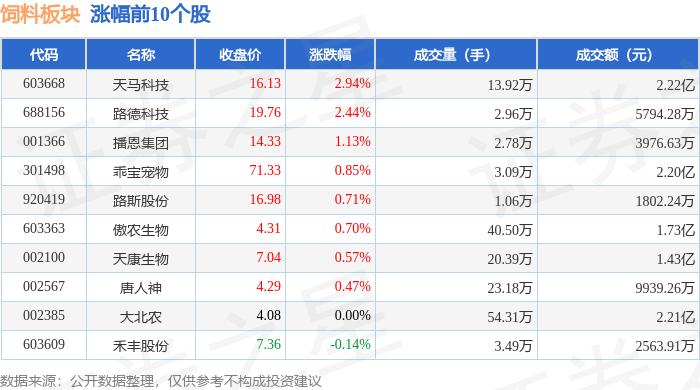
饲料板块1月23日跌0.29%,中宠股份领跌,主力资金净流出7063.74万元
Zheng Xing Xing Ye Ri Bao· 2026-01-23 09:04
Group 1 - The feed sector experienced a decline of 0.29% on January 23, with Zhongchong Co., Ltd. leading the drop [1] - The Shanghai Composite Index closed at 4136.16, up 0.33%, while the Shenzhen Component Index closed at 14439.66, up 0.79% [1] - Key stocks in the feed sector showed varied performance, with Tianma Technology rising by 2.94% to a closing price of 16.13, while Zhongchong Co., Ltd. fell by 1.55% to 49.52 [2] Group 2 - The feed sector saw a net outflow of 70.64 million yuan from institutional investors, while retail investors had a net inflow of 90.51 million yuan [2] - The trading volume and turnover for major stocks in the feed sector varied, with major stocks like Tianma Technology and Haida Group showing significant trading activity [3] - The net inflow and outflow of funds for specific stocks indicated a mixed sentiment among investors, with some stocks like Haida Group experiencing a net inflow of 13.67 million yuan from institutional investors [3]



禾丰股份:预计2025年净利润同比减少78.98%到85.98%
Xin Lang Cai Jing· 2026-01-23 07:40
Group 1 - The company expects a net profit attributable to shareholders of the parent company for 2025 to be between 48 million and 72 million yuan, representing a decrease of 270 million to 294 million yuan compared to the previous year, which is a year-on-year decline of 78.98% to 85.98% [1] - The company anticipates a net profit attributable to shareholders of the parent company, after deducting non-recurring gains and losses, to be between -69 million and -45 million yuan for 2025, indicating a decrease of 394 million to 418 million yuan compared to the previous year, which is a year-on-year decline of 112.88% to 119.74% [1] - The significant decline in performance is primarily attributed to the market environment affecting the main business operations, with substantial decreases in the average prices of domestic live pigs, broilers, and chicken meat during the reporting period [1]
