
进出口贸易

Search documents
前7月云南对湄公河五国进出口值超659亿元
Zhong Guo Xin Wen Wang· 2025-08-15 16:24
Core Insights - Yunnan Province's import and export value with the five Mekong countries reached 65.94 billion yuan in the first seven months of 2025, marking a year-on-year increase of 6.3% and accounting for 89.3% of Yunnan's total trade with the ten ASEAN countries [1] Group 1: Trade Performance - Yunnan's exports to the five Mekong countries totaled 24.55 billion yuan, reflecting a year-on-year growth of 10.2%, with key categories including agricultural products, electromechanical products, and labor-intensive products [1] - Imports from the five Mekong countries amounted to 41.39 billion yuan, showing a year-on-year increase of 4.2%, primarily consisting of agricultural products, metal ores, and natural and synthetic rubber [1] Group 2: Trade Agreements and Benefits - Yunnan Province is actively implementing tariff reduction policies under the Regional Comprehensive Economic Partnership (RCEP), China-ASEAN Free Trade Agreement, and China-Cambodia Free Trade Agreement, leading to a continuous increase in the utilization rate of free trade agreements [1] - In the first seven months, the value of imports from the five Mekong countries under preferential trade agreements reached 22.23 billion yuan, resulting in a tax reduction benefit of 4.41 billion yuan; 63,000 certificates of origin were issued for preferential treatment, with a total value of 9.92 billion yuan [1]
今年前7个月长三角地区进出口9.59万亿元 同比增长5.4%
Zhong Guo Xin Wen Wang· 2025-08-15 09:29
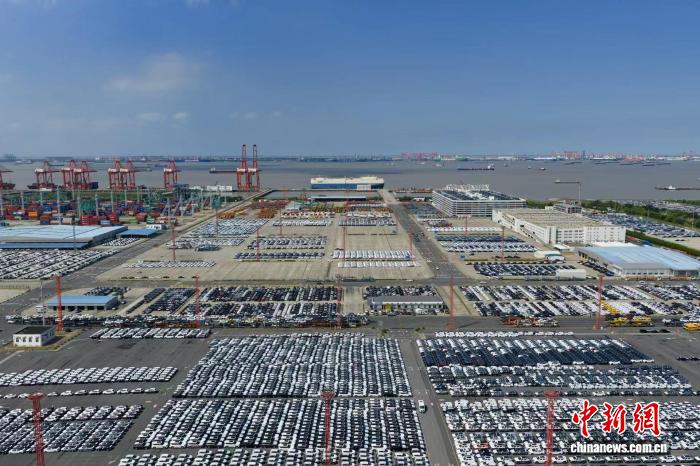
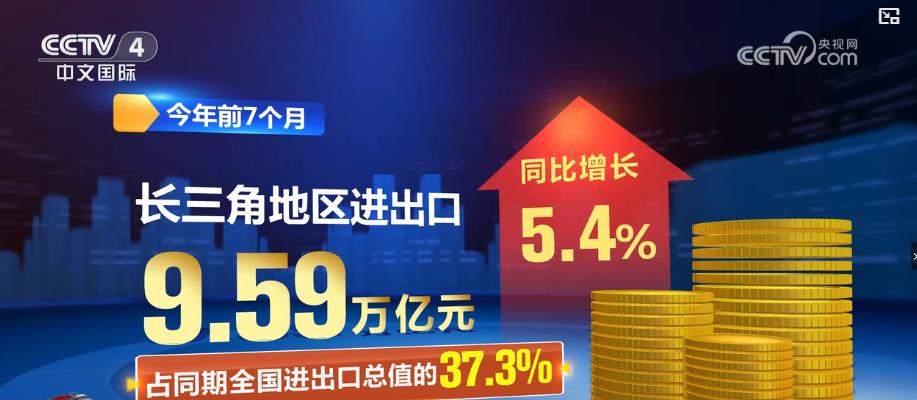
Core Viewpoint - The Yangtze River Delta region has shown a robust performance in foreign trade, with a total import and export value of 9.59 trillion yuan in the first seven months of the year, marking a year-on-year growth of 5.4% and accounting for 37.3% of the national total [1][2]. Group 1: Export Performance - Mechanical and electrical products remain the main export category for the Yangtze River Delta, with exports reaching 3.64 trillion yuan, a year-on-year increase of 9.4% [2]. - Notable growth in specific sectors includes electric vehicles (43.9%), high-end equipment (10.2%), and integrated circuit products (20.1%) [2]. Group 2: Import Trends - Imports related to daily life, such as food, medical instruments, and daily chemical products, have seen year-on-year growth of 4.8%, 10.1%, and 1.9%, respectively [2]. Group 3: Trade Relationships - The Yangtze River Delta's trade with ASEAN has reached 1.51 trillion yuan, a year-on-year increase of 17.5%, making ASEAN the largest trading partner for the region [2]. - Trade with Belt and Road Initiative countries totaled 4.77 trillion yuan, growing by 10.3% year-on-year [2]. - Trade with other RCEP member countries reached 3.02 trillion yuan, reflecting an 8.9% year-on-year increase [2]. - Trade with African countries amounted to 499.47 billion yuan, with a year-on-year growth of 15.2% [2]. Group 4: Role of Private Enterprises - Private enterprises in the Yangtze River Delta have played a significant role in foreign trade, with imports and exports totaling 5.35 trillion yuan, a year-on-year increase of 9.5%, accounting for 55.8% of the total trade value, up by 2.1 percentage points from the previous year [2].

跨越60年 雪域新画卷丨在“中尼货物跨境之旅”中看西藏对外贸易发展新气象
Yang Shi Wang· 2025-08-15 08:29
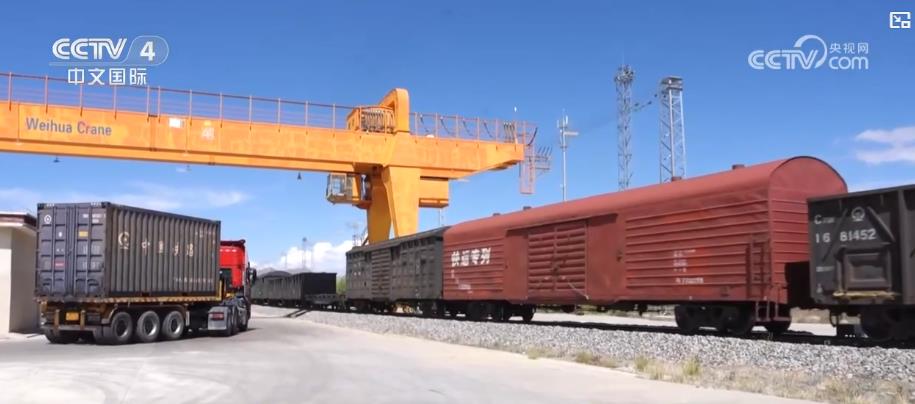
Core Viewpoint - The article highlights the strategic importance of Shigatse as a key border city for trade between Tibet and South Asian countries, particularly Nepal, Bhutan, and India, showcasing the growth of cross-border trade and logistics in the region [1][13]. Group 1: Trade and Logistics Development - Shigatse serves as a vital transit hub for goods exported to Nepal and other South Asian nations, significantly enhancing trade efficiency [1][5]. - The South Asia freight train service, initiated in 2021, has reduced the average transportation time from around 20 days to approximately 9 days, leading to lower logistics costs and damage rates [5][11]. - The establishment of a "one-stop" customs service at the Shigatse West Railway Freight Yard facilitates smoother operations for freight owners, allowing for direct customs clearance [5][11]. Group 2: Local Business Growth - Local logistics companies, such as the Tibet Yacangxiong Logistics Co., have emerged to capitalize on the increased demand for transportation services following the launch of the South Asia freight train [3][9]. - The rise in orders for various products, including electronic goods and new energy vehicles, reflects the growing sophistication of trade from Shigatse [3][11]. - The integration of logistics services, including customs clearance and transportation to Nepal, is being facilitated by local entrepreneurs, enhancing trade connectivity [9][11]. Group 3: Economic Impact - In the first half of the year, Shigatse's import and export value reached 1.78 billion yuan, accounting for 41% of Tibet's total trade volume, indicating a significant economic contribution [13]. - The development of a multi-modal logistics network combining rail and road transport has improved overall logistics efficiency by 50% [13]. - The expansion of trade partnerships to over 100 countries and regions marks Shigatse's transition from a remote area to an international trade hub connecting to South Asia [13].
9.59万亿元、5.2万亿元、1200亿元,向好!“数”读前7个月区域外贸亮眼“成绩单”
Yang Shi Wang· 2025-08-15 04:11
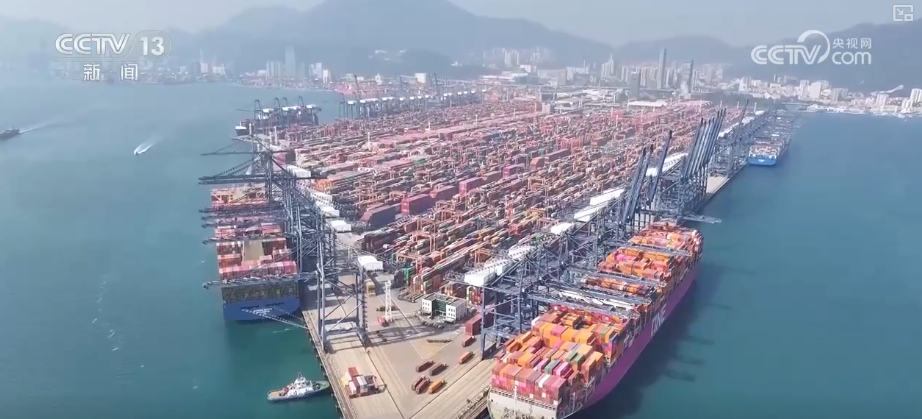
Core Insights - China's foreign trade has shown continuous improvement in the first seven months of 2025, with notable performances from regions such as the Yangtze River Delta, Guangdong-Hong Kong-Macao Greater Bay Area, and Beijing-Tianjin-Hebei [1] Group 1: Yangtze River Delta - The Yangtze River Delta region's import and export volume reached 9.59 trillion yuan, marking a year-on-year increase of 5.4%, accounting for 37.3% of the national total [5] - Exports of electric vehicles, high-end equipment, and integrated circuit products grew by 43.9%, 10.2%, and 20.1% respectively [5] Group 2: Guangdong-Hong Kong-Macao Greater Bay Area - The nine cities in the Greater Bay Area recorded an import and export volume of 5.2 trillion yuan, an increase of 4.7%, representing 20.2% of the national total [7] - The vitality of various business entities in the Greater Bay Area is strong, with private enterprises accounting for 64.5% of the total import and export volume; foreign-invested enterprises showed the fastest growth, making up 31.2% [7] Group 3: Beijing-Tianjin-Hebei - The Beijing-Tianjin-Hebei region exhibited a positive export trend, with export volumes exceeding 120 billion yuan for four consecutive months from April to July, achieving both monthly export scale and year-on-year growth rates at their highest for the year [9]
前7个月河南外贸民企“扛鼎” 外资进出口劲增超六成
Zhong Guo Xin Wen Wang· 2025-08-15 04:09
Core Insights - In the first seven months of this year, Henan's foreign trade import and export reached 483.38 billion yuan, showing a year-on-year growth of over 20% [1] - Private enterprises have emerged as the main engine driving this growth, while foreign-invested enterprises experienced the fastest growth rate, with a year-on-year increase of over 60% [1] Trade Performance - The number of foreign trade enterprises in Henan with import and export performance reached 12,200, with private enterprises accounting for 356.06 billion yuan, representing over 70% of the province's total foreign trade value [1] - Foreign-invested enterprises had an import and export value of 96.36 billion yuan, marking a year-on-year growth of 64.4% [1] Market Diversification - Henan's export markets have become more diversified, with significant growth in trade with the EU, South Korea, and Japan. The import and export value with the EU reached 65.76 billion yuan, up 28.7% year-on-year; with South Korea, it was 31.86 billion yuan, an increase of 16.6%; and with Japan, it reached 31.65 billion yuan, showing a remarkable growth of 133.4% [1] Product Export Trends - The "new content" and "green content" of Henan's foreign trade have further improved. In the first seven months, high-tech product exports amounted to 114.4 billion yuan, with a year-on-year growth of 33.4%, contributing 35.8% to the overall export growth of the province [1] - Exports of green low-carbon products, represented by electric vehicles, lithium batteries, and photovoltaic products, reached 16.09 billion yuan, marking a significant year-on-year increase of 158.1% [1]
【环球财经】中资企业在巴西的新窗口:海关便利化与交通基础设施特许经营
Xin Hua Cai Jing· 2025-08-15 03:48
Group 1 - The seminar titled "Opportunities in Brazilian Customs and Transportation" was held in São Paulo, focusing on customs policies and regulatory trends in rail and road concessions, aimed at providing practical insights for Chinese enterprises in Brazil [1][2] - China has maintained its position as Brazil's largest trading partner for 16 consecutive years, with Brazilian agricultural products gaining popularity in the Chinese market [1][2] - The Brazilian government is advancing "digital customs" reforms, which are expected to reduce tax burdens for eligible enterprises, particularly in the import of capital goods and technical equipment [2][3] Group 2 - The seminar addressed core issues such as import and export management, customs clearance, and regulatory models for concessions, which are critical for Chinese enterprises looking to expand in Brazil [2][3] - The Brazilian National Land Transportation Agency (ANTT) plans to launch new road concession projects from 2025 to 2026, attracting over $32 billion in investments, with contract durations potentially extending up to 60 years [4][5] - In the railway sector, multiple "greenfield" and "brownfield" projects are expected to enter the bidding phase in the coming years, with contract durations ranging from 35 to 50 years [4][5] Group 3 - The investment cycle for rail and road concessions is concentrated in the 3rd to 10th year of the contract, after which it transitions to maintenance and operation [5] - The seminar provided valuable insights for Chinese enterprises, helping them understand Brazilian customs and transportation policies, and offering clear decision-making references for future investments [5] - Industry representatives noted that the current infrastructure construction demand and trade facilitation policy adjustments in Brazil present "dual opportunities" for Chinese enterprises, including tax incentives and new spaces for participation in transportation infrastructure investment and management [5]
今年前7个月中国区域外贸持续向好 经营主体活力充沛
Yang Shi Wang· 2025-08-15 03:43
Core Insights - China's foreign trade has shown positive growth in the first seven months of this year, with notable performances from regions such as the Yangtze River Delta, Guangdong-Hong Kong-Macau Greater Bay Area, and Beijing-Tianjin-Hebei [1] Group 1: Yangtze River Delta - The Yangtze River Delta region's import and export value reached 9.59 trillion yuan, representing a year-on-year growth of 5.4% and accounting for 37.3% of the national total [3] - Exports of electric vehicles, high-end equipment, and integrated circuit products increased by 43.9%, 10.2%, and 20.1% respectively [3] Group 2: Guangdong-Hong Kong-Macau Greater Bay Area - The Greater Bay Area's nine cities recorded an import and export value of 5.2 trillion yuan, growing by 4.7% and making up 20.2% of the national total [5] - The vitality of various business entities in the Greater Bay Area is strong, with private enterprises accounting for 64.5% of the total import and export value; foreign-invested enterprises showed the fastest growth, comprising 31.2% [5] Group 3: Beijing-Tianjin-Hebei - The Beijing-Tianjin-Hebei region exhibited a positive export trend, with export scales exceeding 120 billion yuan for four consecutive months from April to July [7] - Both monthly export scale and year-on-year growth rates reached new highs for the year [7]
国家统计局:今年以来我国货物进出口持续增长
Sou Hu Cai Jing· 2025-08-15 03:35
Core Viewpoint - China's goods import and export maintained strong resilience and vitality in July 2023, with a total import and export value increasing by 6.7% year-on-year, reflecting the effectiveness of policies aimed at expanding high-level openness and promoting diversified foreign trade [1] Group 1: Import and Export Performance - In July, China's goods export value increased by 8% year-on-year, accelerating by 0.8 percentage points compared to the previous month, marking two consecutive months of acceleration [1] - The goods import value in July rose by 4.8% year-on-year, accelerating by 2.4 percentage points from the previous month, also showing two consecutive months of recovery [1] Group 2: Factors Supporting Export Growth - The diversification of foreign trade continues to show results, with exports to ASEAN, the EU, and countries involved in the Belt and Road Initiative increasing by 14.8%, 8.2%, and 11.7% respectively from January to July [1] - The competitiveness of export products has improved, with a 9.3% year-on-year increase in the export value of electromechanical products, and a 21.8% increase in integrated circuit exports from January to July [2] - The vitality of foreign trade enterprises remains strong, with private enterprises' exports growing by 8.7% year-on-year, outpacing the overall export growth rate [2]
这次轮到美国,救我们了?2025年特朗普救美,其实是在救“中”!
Sou Hu Cai Jing· 2025-08-15 03:16
结果是,美国经济逐步恢复,中国的出口也随之回暖。然而,到了2018年,美国发起了贸易战和科技战,这让很多人开始反思,若当初没有那么积极地协 助,或许接下来的麻烦会少一些。尽管如此,回顾历史纠结也无益,而从目前2025年特朗普再次上台后的政策来看,历史似乎又在回旋。特朗普试图挽救美 国经济,而这一过程中,也可能间接给中国带来了一些意外的好处。 2007年那场美国的金融危机,是大家都记得的一次重大事件。那时,美国的房地产市场崩盘,银行体系几乎陷入崩溃边缘,而中国当时的出口占GDP的比重 高达37%。为了稳定全球市场,中国选择增加债务投资,扩大生产力,积极向美国市场出口商品,这样一方面压制了通货膨胀,另一方面也稳住了美元。当 时的思路很明确——帮助美国渡过难关就等于帮助全球市场,而市场的稳定也意味着中国自己的经济利益能够得到保障。 在美联储方面,特朗普一向主张降息。他提出将基准利率从4.25%降至1%,以期降低政府的借贷成本。然而,美联储并未按照他的要求行动。尽管特朗普在 社交媒体上批评美联储主席鲍威尔,认为当前的通胀率几乎为零,因此应当立即降息,但鲍威尔坚持认为,通胀的迹象仍然存在,失业率上升,GDP增长出 现放 ...

小微融资机制一线调研 | 搭桥铺路破梗阻 多方协调“润”小微
Shang Hai Zheng Quan Bao· 2025-08-15 00:39
Core Viewpoint - The article emphasizes the establishment and effectiveness of a coordinated mechanism to support micro and small enterprises (MSEs) in securing financing, enhancing their resilience and growth potential through collaborative efforts among government departments, financial institutions, and the enterprises themselves [1][12]. Group 1: Mechanism Establishment and Functionality - The coordinated mechanism, initiated by the Financial Regulatory Bureau and the National Development and Reform Commission, has successfully created a financing channel for MSEs, allowing them to access necessary funds for production expansion and technological upgrades [1][12]. - The mechanism has transformed the financing landscape for MSEs, shifting their perception from being hesitant and unable to secure loans to being willing and able to obtain financing [1][12]. Group 2: Data Utilization and Analysis - The "Jin Yu Network" in Chongqing has been developed to analyze financial data, creating a comprehensive funding map that connects 43 industrial chains and identifies quality enterprises that require financing [2][3]. - By leveraging data from the "Jin Yu Network," financial institutions can better assess the creditworthiness of enterprises and generate recommendations for banks, facilitating targeted lending [2][3]. Group 3: Local Practices and Innovations - Different regions have adopted unique approaches to enhance MSE financing, such as the "joint diagnosis" mechanism in Shandong, which collaborates with various departments to address financing challenges faced by enterprises [4][5]. - The coordinated mechanism has led to significant financial support for MSEs, with Shandong reporting 1.17 trillion yuan in loans disbursed to MSEs through this initiative [8]. Group 4: Multi-Department Collaboration - The coordinated mechanism fosters collaboration among multiple government departments, enabling a more accurate assessment of MSEs' operational conditions and addressing the trust issues between banks and enterprises [5][6]. - The integration of various departments has allowed for a more comprehensive evaluation of enterprises' "soft strengths," facilitating access to financing for those lacking traditional collateral [6][7]. Group 5: Grassroots Engagement and Outreach - The "thousand enterprises, ten thousand households" initiative has been implemented to conduct extensive outreach to MSEs, ensuring that their financing needs are accurately identified and addressed [10][11]. - Local governments have established dedicated service points and hotlines to assist MSEs in navigating financing options and understanding available policies [11][12].