集成电路

Search documents
一周快讯丨国家创业投资引导基金启航;200亿,湖北社保科创基金签约;30亿母基金落地成都高新
FOFWEEKLY· 2025-12-28 05:59
Core Viewpoint - The article highlights the establishment and funding of various mother funds across China, focusing on sectors such as biotechnology, artificial intelligence, transportation infrastructure, and energy resources, indicating a strong push towards innovation and investment in emerging industries [2][3]. Group 1: National and Regional Funds - The national-level venture capital guidance fund has launched three regional sub-funds in Beijing, Shanghai, and Shenzhen, with a focus on artificial intelligence, quantum technology, and hydrogen energy storage, aiming to establish over 600 sub-funds to support emerging industries [4]. - The Guangdong-Hong Kong-Macao Greater Bay Area venture capital guidance fund has been established in Shenzhen with a target size of 504.5 billion yuan, focusing on early-stage technology companies in strategic emerging industries [11]. - The Jiangsu social security science and technology innovation fund has been approved with an initial scale of 500 billion yuan, targeting advanced manufacturing, artificial intelligence, and biomedicine among other sectors [15]. Group 2: Local Initiatives and Specific Funds - The Chengdu High-tech Zone has launched a 30 billion yuan venture capital fund, focusing on transportation, clean energy, and artificial intelligence, leveraging local industry strengths [10]. - The Henan angel investment fund has been successfully registered with an initial scale of 10 billion yuan, aimed at supporting technology transformation and innovation ecosystems [7]. - The Hubei social security science and technology innovation fund has signed agreements with a scale of 200 billion yuan, focusing on optoelectronics, automotive manufacturing, and health sectors [14]. Group 3: Specialized Funds and Sector Focus - The 320 billion yuan Hebei development equity investment fund has been established, focusing on high-end materials, new energy, and advanced manufacturing [6]. - The 8 billion yuan early-stage funds by Honghui have been launched, targeting biomedicine and smart medical equipment sectors [18]. - The establishment of the 20 billion yuan commercial aerospace socialized special fund aims to support high-growth startups in the aerospace sector [20].


优势互补完善空间格局——贯彻落实市委全会精神系列评论③
Jie Fang Ri Bao· 2025-12-28 02:11
Core Viewpoint - Shanghai aims to become a world-class socialist modern metropolis by 2035, with the next five years being crucial for comprehensive development and transformation [1] Group 1: Urban Development Goals - The city is transitioning from rapid urbanization to stable development, focusing on improving existing urban structures rather than expanding [1] - Shanghai's urban economy has reached 5 trillion, positioning it among the world's top cities, yet there is still room for optimization in spatial layout and economic structure [1] Group 2: Regional Coordination and Competition - Different areas in Shanghai have unique advantages, but there is still "involution" and homogenized competition in investment attraction and industrial layout [2] - A principle for the 14th Five-Year Plan is to adopt a pragmatic approach, recognizing local strengths and focusing on leading industries while avoiding overexpansion [2] Group 3: Infrastructure and Talent Attraction - Shanghai is tasked with promoting the development of the Yangtze River Delta urban agglomeration, requiring enhanced cross-regional collaboration in transportation, municipal facilities, and innovation [3] - The demand for high-end industries necessitates a shift towards a more efficient and multifunctional urban spatial structure to attract talent [3] Group 4: Integration of Industry and Community - Future plans include breaking down barriers between industrial parks and communities, integrating resources to create "innovation + living" spaces [4] - The construction goals for the "Five New Towns" emphasize not only industry but also achieving a balance between work and living environments [4] Group 5: Call to Action - The upcoming years are seen as a pivotal moment for Shanghai to enhance urban spatial structure and promote regional coordination, playing a leading role in China's modernization efforts [5]
长安新能源完成61.22亿元C轮融资;诺比侃登陆港交所,最新市值为149.88亿港元丨全球投融资周报12.20-12.26
创业邦· 2025-12-28 01:08
以下文章来源于睿兽Pro ,作者Bestla 睿兽Pro . 创业邦旗下横跨一二级市场的科创数据平台。实时投资数据、追踪产业创新。找数据、做分析、链资 源,就上睿兽分析。 全球投融资周报 睿兽分析每周整理当周最值得关注的国内外热门投融资事件,帮助大家及时了解全球市场动向。 一级市场投融资概览 根据睿兽分析监测数据,本周国内一级市场披露的融资事件68个,与上周相比减少13个,其中已披 露融资金额的事件44个,总融资规模为124.69亿元人民币,平均融资金额为2.83亿元人民币。 行业分布 从融资事件数量来看,本周智能制造、人工智能、医疗健康领域融资最活跃。分别为智能制造22 个、人工智能15个、医疗健康10个。 从已披露金额事件的融资规模来看,汽车交通最高,融资总规模约为61.52亿元人民币。其中新能源 汽车研发生产商「长安新能源」完成61.22亿人民币C轮融资。 深蓝汽车科技有限公司,前身为重庆长安新能源汽车科技有限公司,是一家专注于新能源汽车领域的 全产业链企业。公司致力于通过技术创新,打造全场景智慧出行的解决方案,满足用户对高品质、智 能化出行体验的需求。 其次是智能制造行业,已披露融资总额为22.33亿 ...

实施引领发展新质生产力行动计划 推进五大任务落地见效
Xin Lang Cai Jing· 2025-12-27 18:42
Core Viewpoint - The Shenyang Municipal Science and Technology Bureau emphasizes the integration of technological innovation and industrial innovation as a key focus for economic work in the coming year, aiming to support high-quality development and establish Shenyang as a regional technology innovation center in Northeast Asia [1][2]. Group 1: Technological Innovation - The city aims to build a highland for technological innovation, focusing on the construction of Hunnan Science City and promoting the transformation of over 500 major technological achievements locally [1][2]. - The implementation of the "Artificial Intelligence +" initiative includes the establishment of a national public computing power open innovation platform and the creation of domestic technology application scenarios [2]. Group 2: Economic Integration - The city plans to promote deep integration of technology and economy by advancing the "Smart Transformation and Digital Upgrade" initiative, targeting breakthroughs in critical technologies in integrated circuits, industrial mother machines, and high-end instruments [2]. - A gradient cultivation project for quality enterprises will be implemented, aiming to reserve 30 leading technology enterprises [2]. Group 3: Talent Development - The focus is on cultivating strategic scientists and leading technology talents through major scientific projects, supporting the establishment of workstations for academicians in Shenyang [2]. - A youth scientist workstation will be established to promote young scientists into the technology evaluation expert database, with support for no less than 110 projects for young and middle-aged technology talents throughout the year [2]. Group 4: Collaborative Innovation - The city plans to implement 30 provincial and above international technology cooperation projects and establish 15 international technology cooperation bases [2]. - The "Ha-Chang-Shen-Da" technology innovation integrated development cooperation framework agreement will be executed to build innovation centers in urban agglomerations [2]. Group 5: Ecosystem Support - Reforms in research institutions will be promoted to enhance the connection between technology policies and industry, talent, and financial policies [2]. - The "Shen Science Points" implementation plan will be introduced, along with products like "Talent Loans" and "R&D Loans" to support enterprises [2].
广东经济的新三驾马车
21世纪经济报道· 2025-12-27 15:00
Core Viewpoint - Guangdong is transitioning from a traditional growth model reliant on real estate, finance, and local government infrastructure to a new growth cycle focused on technology, industry, and finance, as it approaches the end of the "14th Five-Year Plan" period [1][2]. Technology Breakthroughs - Significant advancements in technology have been made in Guangdong, including the discovery of a new antiviral treatment target and the development of a high-energy neutron scattering spectrometer, which supports various cutting-edge research areas [3][4]. - The number of valid invention patents in Guangdong has increased from 439,600 in 2021 to 792,300 in 2024, reflecting a strong emphasis on innovation [4]. R&D Investment - Guangdong's R&D expenditure has risen from 400.22 billion yuan in 2021 to 509.96 billion yuan in 2024, with an average annual growth rate of nearly 10%, and R&D spending as a percentage of GDP reaching 3.60% in 2024 [4][6]. Industrial Growth - By 2024, Guangdong had over 77,000 high-tech enterprises, accounting for 15.4% of the national total, with total revenue exceeding 1.3 trillion yuan [9]. - The export value of high-tech products in Guangdong reached 1,828.46 billion yuan in 2024, marking a 10% year-on-year increase [9]. Financial Acceleration - From 2021 to 2024, the value added by Guangdong's financial sector grew from 1,111.56 billion yuan to 1,239 billion yuan, with the number of domestic listed companies increasing from 762 to 875 [13]. - As of November 2025, Guangdong's new RMB loans increased by 1.5 trillion yuan, a year-on-year increase of 191.1 billion yuan, indicating a recovery in financial growth [2][13]. Key Projects and Innovations - The establishment of the Guangdong Artificial Intelligence and Robotics Industry Investment Fund signifies a strategic move towards supporting early-stage investments in technology [15]. - The semiconductor company, Yuexin Semiconductor, has become Guangdong's first 12-inch wafer manufacturer, with revenues projected to grow significantly in the coming years [13][14].
工信部部署2026年重点工作,这些领域将迎利好
Xin Lang Cai Jing· 2025-12-27 12:40
Core Viewpoint - The national industrial and information technology conference emphasized the need to consolidate the positive momentum of the industrial economy as the primary task for 2026, focusing on ten key areas of work, including increasing the supply of green products, trendy products, and products for the elderly, while promoting the "Artificial Intelligence + Manufacturing" initiative [1][3][16]. Group 1: Industrial Economy - The conference highlighted the shift from "promoting stable growth" to "consolidating a positive momentum" in the industrial economy, indicating a focus on quality improvement rather than just stability [3][19]. - It was noted that the industrial economy has shown resilience and vitality, with expected growth rates of 9% for telecommunications business volume and 12% for software business revenue [3][19]. - The emphasis on "consolidation" suggests a long-term strategy to enhance quality and efficiency, moving away from temporary stimulus measures [20]. Group 2: Supply and Demand - The conference plans to increase the supply of green products, trendy products, and products for the elderly, responding to market demand trends [5][20]. - The focus on domestic demand as a priority reflects a policy shift towards building a strong domestic market [5][20]. Group 3: Traditional and Emerging Industries - The conference outlined plans to enhance traditional industries through "intelligent empowerment" and to develop emerging industries such as integrated circuits, new displays, new materials, aerospace, low-altitude economy, and biomedicine [6][9][24]. - The transition from "digital empowerment" to "intelligent empowerment" indicates a deeper integration of intelligent technologies to drive efficiency and innovation in traditional industries [22]. Group 4: Artificial Intelligence and Manufacturing - The "Artificial Intelligence +" initiative is a key focus, aiming to promote the digital transformation of manufacturing and cultivate key industry intelligent entities and original intelligent enterprises [21][24]. - The conference aims to support new-generation intelligent manufacturing systems and enhance the industrial internet platform ecosystem [21][24]. Group 5: Quality Enterprises and Innovation - The conference emphasized the cultivation of high-quality enterprises, including "little giant" enterprises and manufacturing champions, while addressing issues like overdue payments to businesses [28][29]. - It was reported that by 2025, over 60,000 technology and innovation-oriented SMEs and 50,400 high-tech enterprises are expected to be cultivated [28]. Group 6: Low-altitude Economy and Communication - The conference highlighted the importance of the low-altitude economy, with plans to establish frequency development guidelines to support its growth [29][15]. - The integration of 5G technology into various sectors is expected to enhance the service capabilities of the information and communication industry [28][29].

工信部部署2026年重点工作,这些领域将迎利好
21世纪经济报道· 2025-12-27 12:35
Core Viewpoint - The primary task for 2026 is to "fully consolidate the stable and positive trend of the industrial economy," reflecting a shift in policy focus from "stabilizing growth" to "improving quality" [3][4][5] Group 1: Industrial Economic Stability - The meeting emphasizes the need to support industrial provinces and stabilize effective investment in manufacturing [4][5] - There is a focus on increasing the supply of green products, trendy products, and products for the elderly, aligning with market demand trends [4][5] - The shift from "promoting stable growth" to "consolidating a stable and positive trend" indicates a deeper understanding of the current industrial economic situation [3][4] Group 2: Traditional and Emerging Industries - The meeting outlines plans to optimize and enhance traditional industries through "smart empowerment," which integrates digital and intelligent technologies [8][9] - Specific industries such as steel, non-ferrous metals, and light industry are highlighted for transformation and upgrading [9] - New emerging pillar industries include integrated circuits, new displays, new materials, aerospace, low-altitude economy, and biomedicine [11][12] Group 3: Artificial Intelligence and Smart Manufacturing - The "Artificial Intelligence+" initiative is crucial for promoting the digital transformation of manufacturing [7][11] - The goal is to cultivate key industry intelligent entities and support the integration of artificial intelligence with manufacturing [7][11] - The focus on "smart empowerment" aims to enhance efficiency and create new opportunities for traditional industries [8][9] Group 4: Quality and Innovation in Enterprises - The meeting stresses the importance of nurturing high-quality enterprises, including "little giant" companies and manufacturing champions [16] - There is a commitment to improving the innovation capabilities of industries and addressing core technological challenges [15][16] - The establishment of a national integrated technology market and the promotion of a "pay after use" model for technological achievements are part of the strategy [15][16] Group 5: Information and Communication Industry - The information and communication sector is directed to enhance its service capabilities, with a focus on 5G integration across various economic sectors [16][17] - The introduction of frequency development guidelines is aimed at supporting the low-altitude economy and addressing industry bottlenecks [17] - The meeting highlights the need for effective governance and the elimination of "involution" competition in the industry [17]

工信部部署2026年重点工作,集成电路、新型显示等产业被提及
2 1 Shi Ji Jing Ji Bao Dao· 2025-12-27 10:21
Core Insights - The primary focus of the national industrial and information technology conference is to "consolidate the stable and positive trend of the industrial economy" for 2026, marking a shift from "promoting stable growth" to a more quality-oriented approach [2][4] Group 1: Industrial Economic Strategy - The conference emphasizes the need to implement a new round of ten key industry growth plans, supporting major industrial provinces and increasing the supply of green products, trendy products, and products for the elderly [3][4] - The shift in focus from "promoting stable growth" to "consolidating a stable and positive trend" reflects a deeper policy transition from short-term stimulus to long-term quality improvement [2][4] Group 2: Emerging and Future Industries - The conference outlines plans to develop emerging pillar industries such as integrated circuits, new displays, new materials, aerospace, low-altitude economy, and biomedicine [9][10] - The emphasis on "artificial intelligence + manufacturing" aims to foster key industry intelligent entities and original intelligent enterprises, supporting the integration of AI and industrial internet [6][9] Group 3: Traditional Industry Upgrades - The term "smart empowerment" replaces "digital empowerment," indicating a deeper integration of intelligent technologies to enhance traditional industries [7] - The focus on service-oriented manufacturing aims to shift traditional industries from providing single products to offering comprehensive solutions, enhancing value chain positioning [8][10] Group 4: Quality Enterprise Cultivation - The conference highlights the importance of nurturing quality enterprises, including "little giant" companies and manufacturing champions, while addressing overdue payments to businesses [13][14] - The goal is to enhance the service capabilities of the information and communication industry, with significant growth in 5G infrastructure and its integration into various economic sectors [12][14]

商业航天“牛股”遭立案!翻倍涨势,恐将戛然而止?
Ge Long Hui· 2025-12-27 10:13
Core Viewpoint - The commercial aerospace sector is facing unexpected challenges, particularly with the recent investigation into Zhenlei Technology for alleged information disclosure violations, which coincides with a significant surge in its stock price due to market speculation around the commercial aerospace concept [2][3][7]. Company Situation - Zhenlei Technology announced on December 26 that it is under investigation by the China Securities Regulatory Commission (CSRC) for suspected information disclosure violations [2][3]. - The company confirmed that its operational, business, and financial conditions remain normal and it will cooperate with the investigation while fulfilling its disclosure obligations [5]. - The company faced previous issues, including the temporary inability of its chairman to perform duties due to being placed under detention, which was lifted on September 30 [5]. - A recent announcement on December 25 revealed corrections to prior accounting errors affecting financial data from the 2022 semi-annual report to the third quarter of 2025, particularly concerning accounts receivable, inventory, and profits [5][6]. Financial Performance - Zhenlei Technology's stock price has increased by 145.5% since November 24, reaching 138 CNY and a market capitalization of 29.54 billion CNY [8]. - The company reported a revenue of 303 million CNY for 2024, a year-on-year increase of 8.04%, but a significant drop in net profit by 75.37% [10]. - In the first three quarters of 2025, the company achieved a revenue of 302 million CNY, a substantial increase of 65.76%, and net profit surged to 101 million CNY, up 598.09% year-on-year [10][11]. - The core reason for the performance rebound is attributed to the recovery in downstream special industries and accelerated development in the satellite communication sector, with products transitioning to regular, continuous, and bulk delivery [12]. Market Context - The stock price surge is linked to the market's enthusiasm for the commercial aerospace concept, with the company previously issuing a risk warning regarding its high rolling P/E ratio of 216.55, significantly above the industry average [10]. - Zhenlei Technology is positioned as a key supplier of core components in the commercial aerospace sector, focusing on integrated circuit chips and microsystems [10].

金融助力科技创新和产业创新深度融合|新刊亮相
清华金融评论· 2025-12-27 09:25
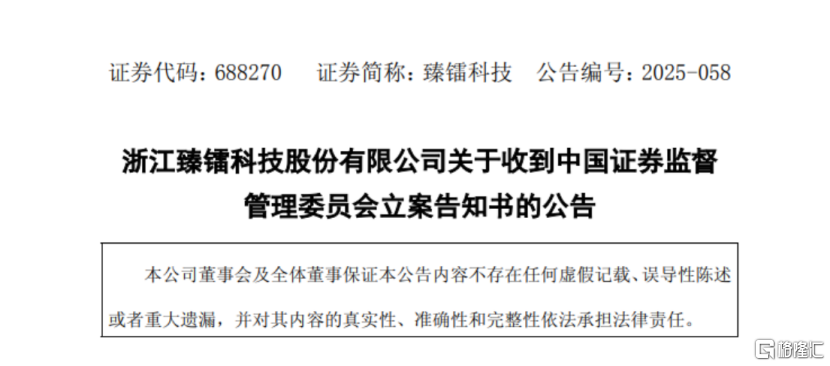
Core Viewpoint - The article emphasizes the role of the Science and Technology Innovation Board (STIB) as a "testbed" for capital market reforms, aiming to support high-level technological self-reliance and the integration of technological and industrial innovation in China [4][9]. Group 1: Role of the Science and Technology Innovation Board - The STIB has been established to serve as a platform for supporting technological innovation and deepening reforms in the capital market, aligning with national strategies for high-quality development [4][9]. - Since its inception, the STIB has facilitated the IPO and refinancing of 592 technology enterprises, raising over 1.1 trillion yuan (approximately 160 billion USD) to support their growth [5]. Group 2: Institutional Innovations and Measures - The introduction of the "Eight Measures for Deepening STIB Reforms" aims to enhance institutional inclusiveness and adaptability, with 35 specific initiatives designed to stimulate market vitality [5]. - The STIB has seen a significant increase in merger and acquisition activities, with over 140 new disclosures and more than 90 completed transactions since the implementation of the new measures [5]. Group 3: Focus on Key Industries - The STIB is concentrating on critical industries such as integrated circuits, biomedicine, and renewable energy, fostering a robust industrial chain that supports the digital economy [6]. - It has attracted over 120 integrated circuit companies and more than 110 biomedicine firms, positioning itself as a major listing venue for innovative drug companies outside the US and Hong Kong [6]. Group 4: Building a High-Quality Development Ecosystem - The STIB promotes a collaborative ecosystem that encourages long-term R&D investment, with a median R&D intensity of over 12% among its listed companies [7]. - The board has introduced mechanisms to incentivize talent retention and has seen significant participation in share buybacks and dividends, indicating a commitment to enhancing shareholder value [7]. Group 5: Future Directions and Strategic Goals - Moving forward, the STIB aims to deepen reforms, enhance market competitiveness, and better serve emerging industries and national strategic needs [8]. - The STIB will continue to focus on supporting "hard technology" enterprises and improving the regulatory environment to protect investor rights and promote quality growth among listed companies [8].