
智能手机

Search documents
苹果概念股普涨,苹果有望超越三星,重登全球手机销冠
Jin Rong Jie· 2025-11-27 03:00
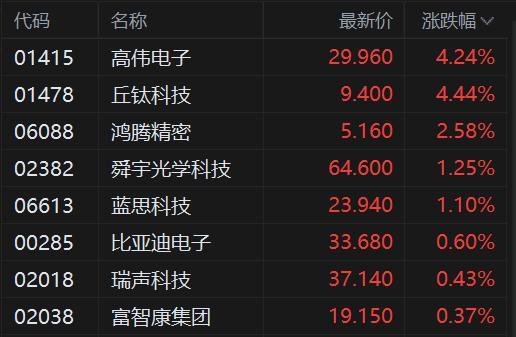
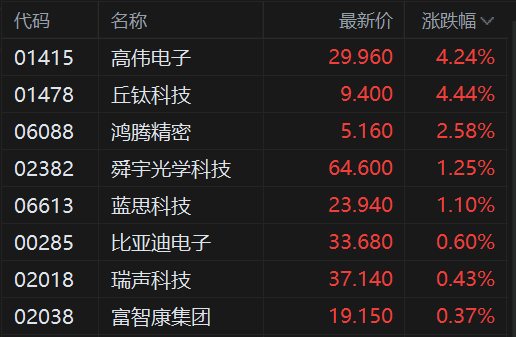
Group 1 - The core viewpoint of the article highlights that Apple is expected to reclaim its position as the world's largest smartphone manufacturer after more than a decade, driven by strong sales of the new iPhone series and a wave of consumer upgrades [1] - According to Counterpoint Research, Apple's sales in both the Chinese and American markets are projected to achieve double-digit year-on-year growth, significantly boosting its market position [1] - The analysis predicts that Apple will surpass its long-time competitor Samsung Electronics this year, with iPhone shipments expected to grow by approximately 10% in 2025, compared to Samsung's anticipated growth of 4.6% [1] Group 2 - The global smartphone market is expected to expand by about 3.3% in 2025, with Apple projected to capture a market share of 19.4%, marking its first return to the top of global sales rankings since 2011 [1] - Hong Kong-listed Apple concept stocks generally saw an increase, with notable gains from companies such as Q Technology and GoerTek, which rose over 4%, and others like Sunny Optical and Lens Technology, which increased by over 1% [2]


港股异动丨苹果概念股普涨 苹果有望超越三星,重登全球手机销冠
Ge Long Hui· 2025-11-27 02:43
Group 1 - The core viewpoint of the articles indicates that Apple is expected to reclaim its position as the world's largest smartphone manufacturer after more than a decade, driven by strong sales of the new iPhone series and a wave of consumer upgrades [1] - According to Counterpoint Research, Apple's sales in both the Chinese and American markets are projected to achieve double-digit year-on-year growth, significantly boosting its market position [1] - It is anticipated that Apple's iPhone shipments will increase by approximately 10% in 2025, while Samsung's growth is expected to be only 4.6%, allowing Apple to surpass its long-term competitor [1] Group 2 - The Hong Kong stock market saw a general increase in Apple-related stocks, with notable gains including 4.44% for Q Technology and 4.24% for GoerTek, among others [2] - Specific stock performance includes Q Technology at 9.400 with a rise of 4.44%, GoerTek at 29.960 with a rise of 4.24%, and other companies like Sunny Optical and Lens Technology also showing positive growth [2] - The overall smartphone market is projected to expand by approximately 3.3% in 2025, with Apple expected to capture a market share of 19.4%, marking its first return to the top of global sales since 2011 [1]
雷军一个月掉粉近70万,小米市值较高点蒸发超5500亿港元
Xin Lang Cai Jing· 2025-11-27 01:17
Core Viewpoint - The recent court ruling against Xiaomi regarding a car purchase dispute highlights issues with the company's sales practices and raises concerns about its reputation and market performance [3][5][6]. Legal Issues - A court in Haikou ruled that Xiaomi's demand for a customer to pay the remaining balance on a car before delivery was unfair and violated principles of good faith, resulting in a requirement for Xiaomi to refund double the deposit of 10,000 yuan [5][6][7]. - This case is not isolated; Xiaomi is also facing another lawsuit related to alleged false advertising regarding a car feature, which has further damaged the company's public image [8][9]. Financial Performance - Xiaomi's market value has decreased significantly, with a reduction of over 550 billion HKD from its peak this year [4]. - The company reported a total revenue of 113.12 billion yuan for Q3 2025, a year-on-year increase of 22.3%, with a notable growth in its electric vehicle and AI innovation segment, which saw a revenue increase of 199.16% [15][16]. - Despite strong year-on-year growth, Xiaomi's revenue declined by 2.4% compared to the previous quarter, indicating potential challenges in sustaining growth momentum [17]. Stock Market Activity - Following the release of the Q3 financial report, Xiaomi's stock price continued to decline, prompting founder Lei Jun to purchase 2.6 million shares to demonstrate confidence in the company's future [18]. - As of November 26, Xiaomi's stock price was 40.1 HKD per share, down from a yearly high of 61.45 HKD, reflecting a significant market capitalization loss [18].
浪人早报 | 罗永浩称华杉必须公开道歉、渠道人士称对华为Mate80定价意外、英伟达回应谷歌AI芯片威胁…
Xin Lang Ke Ji· 2025-11-27 01:16
Group 1 - Luo Yonghao demands a public apology from Huashan, stating that if not issued by a specified deadline, the public relations industry in China will remember him instead of Huashan [2] - Huawei's Mate 80 series pricing surprised industry insiders, indicating Huawei's strong market position and prompting competitors to reassess their strategies [2] Group 2 - Apple is projected to surpass Samsung in global smartphone sales by 2025, with iPhone shipments expected to reach 255 million units, a 10% increase year-on-year [5] - In October, iPhone sales in China accounted for 25% of total smartphone sales, reflecting a 37% year-on-year growth [5] Group 3 - Xiaomi has conducted its fourth stock buyback this month, purchasing 7.5 million shares at an average price of 40.14 HKD, totaling over 300 million HKD [6] - The total number of shares repurchased by Xiaomi this month has reached 31.5 million, with a total expenditure exceeding 1.2 billion HKD [6] Group 4 - Li Auto reported Q3 revenue of 27.4 billion RMB, down from 42.87 billion RMB year-on-year, and anticipates Q4 deliveries between 100,000 and 110,000 vehicles [7] - The company has initiated a recall of certain models, impacting its Q3 financial results [7] Group 5 - Apple has launched a feedback form for its AI services in mainland China, indicating a focus on local user engagement [8] Group 6 - Tesla has completed the construction of its largest Supercharger station in California, featuring 168 charging stalls and a solar power system [9] - The station operates independently from the public grid, showcasing Tesla's commitment to sustainable energy solutions [9] Group 7 - Tesla's VP denied reports of supply chain decoupling from China, emphasizing the high localization rate of components produced at its Shanghai factory [10] Group 8 - Former Zeekr CBO Guan Haitao has joined Honor's marketing department, focusing on overseas market strategies [11] - Zhao Changjiang, former head of BYD's Tengshi brand, has joined Chery's collaboration with Huawei as marketing general manager [12] Group 9 - Qualcomm has officially launched the Snapdragon 8 Gen 5 processor, designed to provide flagship-level performance for lower-priced devices [14] - The new processor features significant improvements in CPU, GPU, and AI tasks, along with reduced power consumption [14] Group 10 - Ten airlines were summoned for discussions regarding consumer rights, particularly concerning the practice of charging for seat selection, which may infringe on consumer rights [16]





货不对版!京东国民好车陷「批量退订潮」;李想承认犯错,理想汽车将回归创业模式;黄仁勋内部讲话泄露:少用AI?你们疯了吗?
雷峰网· 2025-11-27 00:28
Group 1 - Jensen Huang, CEO of NVIDIA, encourages employees to use AI more, opposing management's request to reduce AI usage, stating that all tasks that can be automated should be automated [4][5] - NVIDIA continues to hire aggressively, with plans to increase its workforce from 29,600 at the end of FY2024 to 36,000 by the end of FY2025 [5] - The company has expanded its global offices and aims to recruit approximately 10,000 more employees [5] Group 2 - JD.com's exclusive sale of the "National Good Car" Aion UT Super has faced a refund wave due to discrepancies between advertised and actual vehicle configurations, leading to consumer dissatisfaction [7][8] - The controversy centers around missing features such as a sunroof and undisclosed battery rental mileage limits, prompting JD to remove misleading promotional images [8] - After initial refusals, JD eventually apologized and processed refunds following public outcry [8] Group 3 - Li Xiang, CEO of Li Auto, announced a return to a startup management model after acknowledging past mistakes, aiming to enhance adaptability in a volatile market [11] - The company reported Q3 revenue of 27.4 billion yuan, a 36.2% year-over-year decline, with a net loss of 620 million yuan [11] - Li Auto plans to deliver its self-developed M100 chip by 2026, which will enable proactive service capabilities in vehicles [11] Group 4 - Xiaomi has expanded its robotics team, hiring members from Tesla's Optimus team to accelerate the development of its dexterous robots [9][10] - The company has been actively investing in robotics, with a focus on bionic robots and plans for mass production of its humanoid robot CyberOne [10] - Xiaomi's robotics division is currently recruiting for various positions related to dexterous hand technology [10] Group 5 - HP announced plans to lay off 6,000 employees by 2028, aiming to save $1 billion annually through increased AI integration [34][35] - The company reported a 4% revenue growth in Q4, reaching $14.65 billion, with a full-year revenue of $55.3 billion [34] - HP's restructuring will involve a $650 million investment, with $250 million allocated for FY2026 [34] Group 6 - Long-term plans for Great Wall Motors include establishing its first complete vehicle factory in Europe, targeting an annual production of 300,000 vehicles by 2029 [41][42] - The company is evaluating locations in Spain and Hungary for the new factory, aiming to enhance its competitive position against rivals like BYD [41][42] - Great Wall Motors has set a goal of achieving 1 million overseas vehicle sales by 2030, emphasizing the need for a faster European strategy [42] Group 7 - Epic Games' CEO Tim Sweeney highlighted the rising prices of memory components, which could significantly impact the gaming industry in the coming years [37] - The price of DDR5-6000 memory has surged, with costs exceeding 4,000 yuan, affecting consumer access to gaming hardware [37] - Sweeney attributed the price increase to manufacturers prioritizing AI-related production over consumer electronics [37] Group 8 - Tesla's VP clarified that the company is not eliminating Chinese suppliers, emphasizing that supplier selection is based on quality and cost rather than geographic origin [36] - Tesla's Shanghai Gigafactory has been instrumental in providing competitive pricing for its vehicles in the Chinese market [36]


8点1氪:香港火灾已致44人遇难;罗永浩喊话华杉公开道歉,无人应声;飞机锁座变相收费,10家航空公司被约谈
36氪· 2025-11-27 00:09
Group 1 - The Hong Kong fire incident in Tai Po has resulted in 44 fatalities and 45 injuries, with three individuals arrested for suspected manslaughter due to negligence in fire safety standards [2] - The fire spread rapidly, potentially exacerbated by flammable materials used in the building's exterior, leading to a police investigation into the responsible engineering company [2] Group 2 - Sinovac Biotech has secured a $700 million contract in Brazil, marking the largest international order for a Chinese vaccine company to date [5] - The contract involves a partnership with local firms to enhance Brazil's vaccine production capabilities over the next decade [5] Group 3 - HP has announced a global layoff of approximately 10% of its workforce as part of a comprehensive AI transformation plan aimed at cost reduction [8] - The company plans to cut 4,000 to 6,000 jobs by the end of the 2028 fiscal year, targeting annual savings of $1 billion through AI integration [8] Group 4 - Ideal Auto reported a revenue of 27.4 billion yuan for Q3 2025, a year-on-year decline of 36.2%, with a net loss of 624 million yuan [22] - The company anticipates vehicle deliveries between 100,000 and 110,000 units in Q4 2025 [22] Group 5 - HighTu announced a revenue of 1.579 billion yuan for Q3 2025, reflecting a year-on-year growth of 30.7%, while reporting a net loss of 147.1 million yuan [23] - The company continues to show resilience in its financial performance despite the losses [23] Group 6 - ByteDance's "Tomato" business is projected to exceed 60 billion yuan in overall revenue this year, with significant contributions from its various platforms [9] - The company has denied reports regarding the accuracy of these revenue figures [9] Group 7 - OpenAI forecasts that by 2030, it will have 220 million paid subscribers for ChatGPT, representing 8.5% of its estimated 2.6 billion weekly users [21] - The company anticipates annual revenue of approximately $20 billion by the end of this year, despite increasing losses [21]

“新鸿蒙+新麒麟”双轮驱动 华为携产业链发力手机高端市场
Shang Hai Zheng Quan Bao· 2025-11-26 18:26
Core Viewpoint - Huawei's recent launch of the Mate 80 series and Mate X7 has garnered significant attention due to its integration of the latest HarmonyOS 6 and the new Kirin 9030 series processors, aiming to capture a larger share of the high-end smartphone market amidst a challenging industry landscape [2][3][4]. Group 1: Product Launch and Features - The Mate 80 series and Mate X7 were officially launched on November 25, featuring the latest HarmonyOS 6 and Kirin 9030 processors, with a focus on performance improvements and innovative technologies [2][3]. - The Mate 80 Pro Max shows a performance increase of 42% compared to its predecessor, while the Mate 80 RS and Mate X7 also exhibit similar performance enhancements [3][4]. - The Mate 80 series has been priced lower than its predecessor, with the starting price set at 4699 yuan, which is 800 yuan less than the previous model, indicating a strategic move to attract consumers despite rising global storage chip prices [2][4]. Group 2: Market Position and Competition - Counterpoint's data indicates a 2.7% year-on-year decline in China's smartphone sales in Q3 2025, highlighting the competitive pressures in the market [2]. - Huawei's market share in the high-end smartphone segment (priced above $600) reached 34.4% in Q3 2025, compared to Apple's 48%, showing a significant increase from 21.4% in 2023 [4][6]. - The successful launch of the new devices is expected to help Huawei recover lost ground in the high-end market, particularly as chip supply issues are resolved [4][6]. Group 3: Ecosystem Development - The HarmonyOS 6, launched on October 22, 2025, introduces a new architecture for efficient device collaboration and enhanced security features, positioning Huawei's ecosystem as a competitive alternative to Android and iOS [5][6]. - Huawei has developed 300,000 applications and services in collaboration with ecosystem partners, with major apps like Alipay and WeChat now fully supporting HarmonyOS [6]. - The number of devices running HarmonyOS 5 and 6 has surpassed 27 million, growing at a rate of 100,000 devices per day, indicating a robust expansion of the ecosystem [6]. Group 4: Industry Impact and Supply Chain - The dual breakthroughs in chip and operating system technology are invigorating the supply chain, with companies like O-film and Lingyi iTech ramping up production to meet anticipated demand [7]. - O-film has confirmed its strong technical capabilities in 3D ToF technology, which is integrated into the Mate 80 series, and is prepared to meet customer orders [7]. - Other suppliers, including Changxin Technology, are also positioned to support Huawei's new devices, reflecting a collaborative effort within the industry to enhance product offerings [7].
时隔14年再次站上全球榜首?市场研究机构Counterpoint预计苹果(AAPL.US)今年手机出货量将超越三星
智通财经网· 2025-11-26 16:05
Core Viewpoint - Apple is expected to surpass Samsung in global smartphone shipments by 2025, marking its return to the top position after 14 years [1] Group 1: Market Performance - Apple is projected to ship approximately 243 million iPhones this year, while Samsung's shipments are expected to be around 235 million [1] - Apple's market share in the global smartphone market is anticipated to reach 19.4%, slightly above Samsung's 18.7% [1] - The strong performance of Apple is attributed to the iPhone 17 series launched in September, which has seen explosive sales during the holiday season [1] Group 2: Consumer Behavior - The current consumer upgrade cycle, particularly among those who purchased smartphones during the COVID-19 pandemic, is driving a new wave of demand [2] - The iPhone 17 series has outperformed the iPhone 16 series by 12% in the first four weeks of launch in the U.S., and in China, sales have increased by 18% compared to the previous generation [1][2] Group 3: Competitive Landscape - Samsung may face challenges in reclaiming the top position due to intense competition from Chinese manufacturers in the mid-to-low-end market [2] - Counterpoint predicts that Apple will maintain its leading position in the global smartphone market at least until 2029, supported by a large base of users upgrading from the 358 million second-hand iPhones sold from 2023 to mid-2025 [2] Group 4: Future Outlook - Apple plans to launch an entry-level iPhone 17e and a foldable phone next year, with a major design upgrade for the iPhone expected in 2027 [2] - The expansion of Apple's product line and its strategic focus on emerging markets and the "light luxury" segment are expected to enhance its appeal and maintain its competitive edge [3]
AI日报丨英伟达反驳TPU担忧,称其GPU仍“领先一代”,新AI模型可精准锁定人体致病突变
美股研究社· 2025-11-26 11:54
Group 1 - Alibaba is focusing on both AI to B and AI to C strategies, aiming to make Alibaba Cloud a leading full-stack AI service provider and develop AI applications for end-users [5] - Nvidia claims its GPU technology is a generation ahead of Google's AI chips, emphasizing its flexibility and capability to run all AI models across various computing scenarios [6][9] - A new AI model named popEVE has been developed by researchers from Harvard Medical School and the Barcelona Genomics Center, which can accurately identify disease-causing mutations in human proteins, potentially transforming genetic disease diagnostics [7] Group 2 - Apple is projected to surpass Samsung to become the world's largest smartphone manufacturer again, driven by strong sales of the new iPhone series and a significant upgrade cycle among consumers [9] - Meta is in negotiations with Google for a multi-billion dollar AI chip deal, which could significantly reduce its data center costs and allow for more investment in product innovation and user growth [10]

高端市场狙击苹果,华为Mate80系列打响“性价比”之战
Hua Xia Shi Bao· 2025-11-26 11:49
Core Insights - Huawei has launched its flagship Mate 80 series and Mate X7 foldable phone, aiming to strengthen its position in the high-end smartphone market as competition intensifies with Apple [1][5] - The Mate 80 series features significant performance improvements, with the Mate 80 Pro Max showing a 42% increase in overall performance compared to its predecessor [2][4] - Despite performance enhancements, the prices of the new models have decreased, with the Mate 80 starting at 4699 yuan, which is 800 yuan lower than the Mate 70 [3][4] Product Details - The Mate 80 series includes four models, all equipped with the HarmonyOS 6 operating system, and utilizes the Kirin 9020 and 9030 chips [2][3] - The pricing strategy reflects a focus on "cost-performance" in a market where memory prices are rising due to increased demand for AI technologies [4][5] Market Competition - Huawei aims to capture more market share in the high-end segment, where it faces strong competition from Apple, which has seen a 37% year-on-year increase in iPhone sales [5][6] - In Q3, Huawei held a 13% market share in China's smartphone market, experiencing a 19% decline in sales year-on-year, while it ranked first in the high-end market with a 33% share [6][7] Ecosystem Development - Huawei's HarmonyOS ecosystem has made significant strides, with over 30 million applications and services available, and a growing developer base of over 10 million [6][7] - The HarmonyOS currently holds a 4% share in the global smartphone market, indicating a stable but modest presence compared to Android and Apple [7]