物流

Search documents
百团千企 商城出海丨通关时效提升30% “先查验后装运”模式落地临沂
Xin Lang Cai Jing· 2025-12-20 11:52
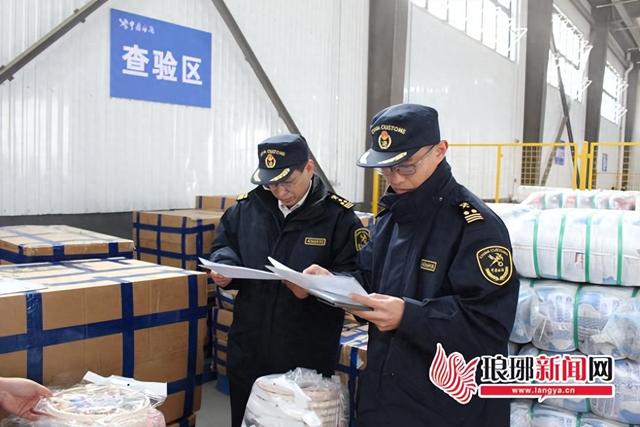
Core Viewpoint - The implementation of the "inspection before shipment" regulatory model in Linyi City significantly enhances the efficiency of customs clearance for export consolidated cargo, addressing previous bottlenecks in the process [1][3]. Group 1: Implementation Details - The new model was officially launched on December 19, allowing for a more streamlined process where goods are inspected before being loaded for shipment [1]. - The first company to adopt this model is Shandong Haodabao Supply Chain Co., Ltd., which successfully sent out two containers of goods valued at over 350,000 RMB to Malaysia [3]. Group 2: Operational Efficiency - The average time for goods to be cleared from port to export has been reduced from 2-3 days to 1-2 days, resulting in a 30% improvement in customs clearance efficiency [4]. - The new model reduces institutional transaction costs for companies by eliminating the need for repeated unpacking and repacking, thus lowering additional storage and labor costs [4]. Group 3: Strategic Importance - The initiative aligns with the Shandong Provincial Government's efforts to support high-quality development in Linyi, focusing on optimizing market procurement trade methods and advancing policy trials [3]. - The Linyi Customs and other departments have actively worked to establish a dedicated regulatory site and develop a "cargo supervision system" to enhance inspection processes [3].

南山集团荣登双榜单
Xin Lang Cai Jing· 2025-12-20 09:50
Group 1 - The core report titled "2025 Shandong Large Enterprises Development Research Report" was jointly released by Shandong Enterprise Federation and Shandong Entrepreneurs Association, revealing the rankings of the top 200 enterprises, top 100 industrial enterprises, and top 50 service enterprises in Shandong for 2025 [1] - Nanshan Group ranked 11th in the 2025 Shandong Top 200 Enterprises and 9th in the 2025 Shandong Top 100 Industrial Enterprises [1][3] Group 2 - Nanshan Group has developed over 47 years into a multi-industry conglomerate, with key sectors including Nanshan Aluminum, Nanshan Zhishang, Hengtong Co., Yulong Petrochemical, New Nanshan Chemical, finance, education, cultural tourism, health, real estate, and public aviation [3] - The company operates four major industrial parks: Nanshan Industrial Park, Donghai Tourism Resort, Yulong Petrochemical Industrial Park, and Qimu Island Port Industrial Park, and has established subsidiaries in multiple countries, accelerating its internationalization process [3] Group 3 - In 2023, Nanshan Group was ranked 148th in the China Top 500 Enterprises, 38th in the China Top 500 Private Enterprises, 3rd in the Shandong Top 200 Private Enterprises by Comprehensive Strength, and 1st among Yantai's Top 100 Enterprises [5] - The company aims to continue its core strategies of innovation-driven and international development, steadily advancing technology research and industrial upgrades, while actively cultivating new productive forces to contribute to the high-quality development of Shandong's economy [5]

002175 控制权拟变更!周一复牌
Zhong Guo Ji Jin Bao· 2025-12-20 06:26
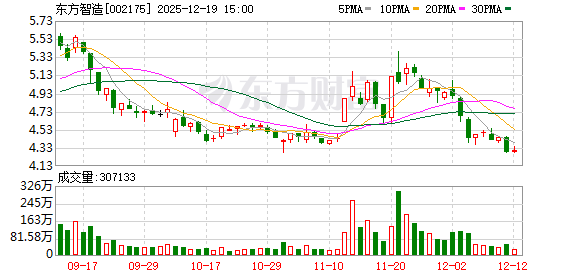
Core Viewpoint - The share transfer agreement between Kexiang High-tech and Guangxi Modern Logistics will result in a change of control for Dongfang Zhizao, with Guangxi State-owned Assets Supervision and Administration Commission becoming the actual controller [4][6]. Group 1: Share Transfer Details - Kexiang High-tech will transfer 14.3329% of Dongfang Zhizao's shares to Guangxi Modern Logistics and its subsidiary, with the total transfer price set at 732 million yuan (approximately 7.32 billion yuan) at a price of 4 yuan per share [5]. - After the transfer, Kexiang High-tech will hold 4.87% of the shares in Dongfang Zhizao [5]. Group 2: Company Background and Financials - Guangxi Modern Logistics, established in 1996, focuses on logistics and supply chain services, with a reported revenue of 47.603 billion yuan and a net profit of 101 million yuan for 2024 [5]. - Dongfang Zhizao's main businesses include intelligent manufacturing and comprehensive management services for industrial parks, achieving a revenue of 2.19 billion yuan and a net profit of 1.3281 million yuan in the first three quarters of the year [6].

顺丰控股:11月营收271.73亿元 同比增长7.85%
Zhong Zheng Wang· 2025-12-20 05:31
Core Insights - SF Holding reported a total revenue of 27.173 billion yuan in November, representing a year-on-year growth of 7.85% [1] - The express logistics business generated revenue of 20.66 billion yuan, up 9.88% year-on-year, with a business volume of 1.534 billion parcels, reflecting a 20.13% increase [1] - The supply chain and international business revenue reached 6.513 billion yuan, showing a year-on-year growth of 1.86% [1] Business Performance - The growth in core business segments is attributed to the ongoing domestic consumption upgrade and the expansion of cross-border trade [1][3] - SF Holding's strategic focus on service upgrades and cross-border supply chain development has been pivotal in driving revenue growth [1][2] Service Upgrades - On December 1, SF Holding launched a "late delivery compensation" service, allowing customers to receive cash compensation for delays caused by SF's transportation [1] - This initiative aligns with the industry's shift towards high-quality development and enhances SF's service quality across its operations [1] New Market Opportunities - The upgrade in timely services has opened new consumer scenarios, including the delivery of golf equipment, snow gear, and materials for international tours, which require high standards of timeliness and professionalism [2] - SF Holding has successfully transitioned from general logistics services to tailored solutions, expanding its business growth potential [2] Cross-Border Trade Transformation - SF Holding is evolving from a single cross-border logistics service provider to a comprehensive cross-border supply chain partner [2] - By integrating various services such as supply chain finance and just-in-time delivery, SF enhances its service offerings, ensuring stable supply for enterprises while reducing costs [2] Strategic Outlook - The November operational data reflects the resilience of SF Holding's core business and the foresight of its strategic layout [3] - With the continued advancement of consumption upgrades and cross-border trade, the strategic value of SF Holding is expected to be further realized [3]

西藏现代服务业提速,物流当日达覆盖七成订单
Xin Lang Cai Jing· 2025-12-20 00:33
Core Insights - The rapid development of logistics in Tibet, particularly through JD's local warehouses, has significantly improved delivery times, achieving same-day or next-day delivery for 70% of local orders [1][2] - The modern service industry in Tibet has seen an average annual growth of 12% during the 14th Five-Year Plan, reaching a value of 150.135 billion yuan, becoming a strong driver of economic growth [1][3] Policy Support - The development of modern service industries is strategically integrated into Tibet's overall planning, with the implementation of the "14th Five-Year Plan for Service Industry Development" outlining 8 core indicators and 11 key sectors [3] - Over 40 policy documents have been issued to support enterprises, enhance consumption, and develop logistics systems, creating a comprehensive policy framework for high-quality service industry development [3] Cold Chain Logistics - The Tibet Plateau Cold Chain Logistics Port, operational since August 2021, has filled gaps in cold chain logistics and improved standards and information levels, benefiting local consumers [2][3] Economic Growth and Investment - In the first three quarters of this year, Tibet attracted 494 investment projects in the modern service industry, with funds totaling 21.539 billion yuan and fixed asset investments reaching 6.758 billion yuan, indicating strong industrial appeal [10] - The financing guarantee balance for small and micro enterprises in Tibet increased by 45% year-on-year, reaching 7.899 billion yuan, facilitating business expansion [4] Digital Economy - The digital economy in Tibet is thriving, with 22,136 5G base stations built by 2024, and nearly 90% of administrative villages achieving 5G coverage, leading to a 115.6% increase in mobile internet access traffic since 2020 [7] - The number of digital economy enterprises in Tibet reached 4,275, with a value added of 19.6 billion yuan, showcasing the rapid growth of this sector [7] Talent Development - Talent cultivation is prioritized in the development of modern service industries, with 28,000 new skilled workers added in 2024 through various training programs [8] - The establishment of a favorable environment for businesses has attracted leading digital economy companies to Tibet, enhancing industrial clustering [9]
日本与中亚五国首次举办峰会
Huan Qiu Shi Bao· 2025-12-19 23:07
日本外务省披露,高市将在峰会上与五国确认在国际秩序方面的合作,就推动中亚地区"自主可持续发 展的经济合作"等交换意见。《朝日新闻》称,日方拟与五国建立人工智能领域的新合作框架,探讨连 接亚欧大陆、途经中亚的"中央走廊"建设,并通过开发援助等手段支援"里海航线"建设。"里海航线"是 一条连接欧洲、无需途经俄罗斯的物流网络。 彭博社称,中亚蕴含丰富的能源和矿产资源。受俄乌冲突影响,中亚五国加快推进经济安全与外交多元 化进程,此次峰会成为日本提升在这一区域影响力的契机。日媒称,一名日本政府官员表示,"关键矿 产的重要性在过去一年发生了显著变化",并强调深化与资源丰富的中亚国家关系的重要性。 哈萨克斯坦腾格里通讯社称,哈萨克斯坦总统托卡耶夫18日对日本进行正式访问。日本称哈萨克斯坦为 战略伙伴,并明确释放信号:东京期待深化合作。日本首相高市早苗在首相官邸会见了托卡耶夫,两国 领导人在会谈后签署了一份联合声明,双方代表团成员还签署了其他文件。日媒称,双方就加强哈萨克 斯坦石油、天然气等能源及矿产资源领域合作达成共识。据报道,日立公司还将向哈方提供用于核能领 域人员培训的科研设备。哈方还将在能源和冶金领域获得日方37亿美 ...
千亿级重磅并购,预案出炉!
Zhong Guo Zheng Quan Bao - Zhong Zheng Wang· 2025-12-19 15:00
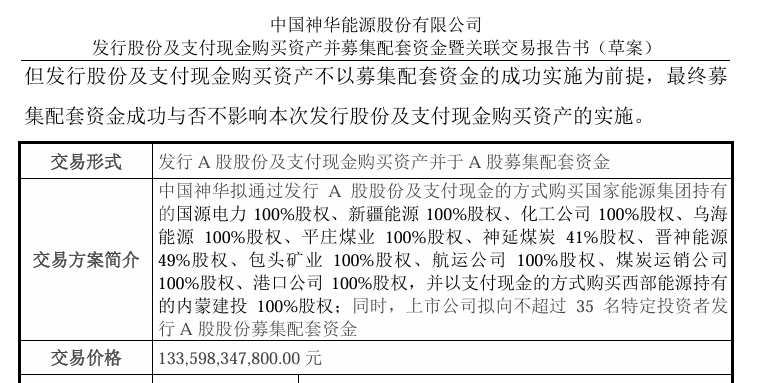
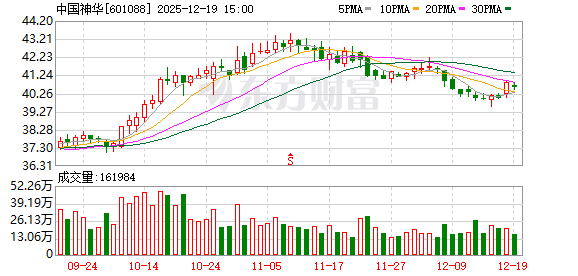
Core Viewpoint - China Shenhua plans to invest 133.598 billion yuan to acquire equity stakes in 11 core energy companies under the State Energy Group and 100% equity of Inner Mongolia Jian Investment held by Western Energy, with total asset scale exceeding 200 billion yuan [1][2]. Group 1: Business Expansion - The acquisition will significantly increase China Shenhua's business scale, with total assets expected to rise by over 200 billion yuan [2][3]. - Coal reserves will increase to 34.5 billion tons, a growth rate of 97.72%, while annual coal production will rise to 512 million tons, reflecting a growth rate of 56.57% [2]. - Power generation capacity will increase to 60.881 million kilowatts, a growth rate of 27.82%, and polyethylene production will rise to 1.88 million tons, with an increase of 213.33% [2]. Group 2: Industry Integration - The restructuring is a significant move for state-owned enterprises to address long-standing issues of intra-industry competition since 2004, enhancing resource reserves and core business capacity [3][4]. - The integration will optimize the entire industry chain, improving core competitiveness and supporting clean production and operational cost reduction [3][5]. Group 3: Policy Support - The restructuring is backed by favorable policies, including the simplified review process introduced by the China Securities Regulatory Commission, which will expedite the transaction [4]. - The new review process allows for a maximum of 12 working days from acceptance to approval, significantly enhancing transaction efficiency [4]. Group 4: Profitability Enhancement - The restructuring aims to create a full industry chain synergy, enhancing the company's quality and risk resistance, particularly during critical energy supply periods [5][6]. - China Shenhua has committed to a cash dividend policy, ensuring that the annual cash dividend ratio will not be less than 65% of the net profit attributable to shareholders [5][6]. Group 5: Market Impact - The restructuring is seen as a model for capital market service to the real economy and a benchmark for state-owned enterprise reform, potentially increasing market activity and scale [6]. - As of December 19, China Shenhua's stock price was 40.59 yuan per share, with a market capitalization of 790.9 billion yuan [7].

千亿级重磅并购 预案出炉!
Zhong Guo Zheng Quan Bao· 2025-12-19 14:55
Core Viewpoint - The capital market is witnessing a significant restructuring event as China Shenhua plans to invest 133.598 billion yuan to acquire equity stakes in 11 core energy companies under the State Energy Group and 100% equity of Inner Mongolia Jian Investment held by Western Energy, with total asset scale exceeding 200 billion yuan [2][3][7]. Group 1: Business Expansion and Competition Resolution - The acquisition will enhance China Shenhua's business scale, with total assets increasing by over 200 billion yuan, coal recoverable reserves rising to 34.5 billion tons (an increase of 97.72%), and annual coal production reaching 512 million tons (a growth of 56.57%) [7]. - The transaction involves the purchase of 100% equity stakes in various companies, including Guoyuan Power, Xinjiang Energy, and others, through a combination of A-share issuance and cash payment [5][3]. Group 2: Policy Support and Transaction Efficiency - The restructuring is supported by favorable policies from the China Securities Regulatory Commission (CSRC) and the State-owned Assets Supervision and Administration Commission (SASAC), which encourage mergers and acquisitions among state-owned enterprises [8]. - The newly implemented simplified review process for mergers and acquisitions will significantly enhance transaction efficiency, allowing for a maximum of 12 working days from acceptance to approval [8]. Group 3: Profitability and Shareholder Returns - The restructuring aims to create a full industry chain synergy, enhancing the company's quality and risk resistance, particularly in energy supply stability during peak demand periods [9]. - China Shenhua has committed to a cash dividend policy, ensuring that the annual cash dividend ratio will not be less than 65% of the net profit attributable to shareholders, with cumulative dividends exceeding 500 billion yuan since its listing [10].
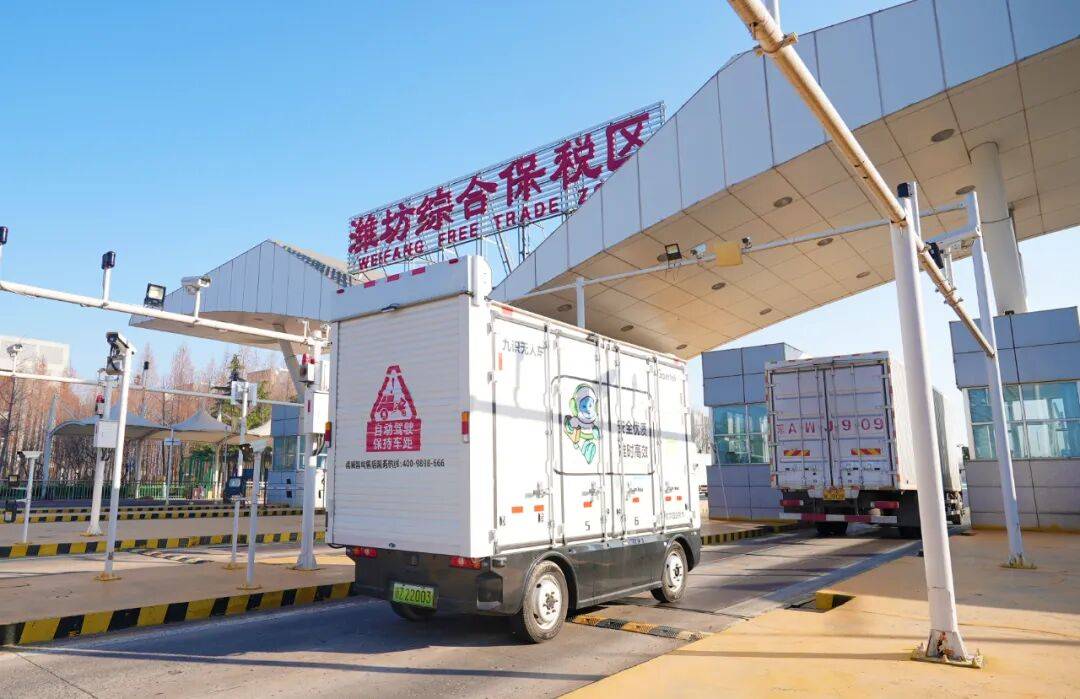
无人货车“秒通关”——潍坊综合保税区一般纳税人系统新版本正式上线
Sou Hu Cai Jing· 2025-12-19 13:39
Group 1 - The core viewpoint is that the Weifang Comprehensive Bonded Zone is enhancing its logistics capabilities to support foreign trade through system upgrades and technological advancements [2][4] - The upgrade of the business system was completed in just 45 days, addressing the needs of enterprises for unmanned transportation and improving efficiency [2] - The implementation of 5G technology has enabled the interconnection of unmanned trucks and customs supervision systems, allowing for 24/7 automated customs clearance, significantly reducing labor and time costs for enterprises [2] Group 2 - The Weifang Comprehensive Bonded Zone is advancing differentiated risk prevention for bonded goods and implementing state-based supervision for non-bonded goods, enhancing customs clearance efficiency [4] - Future plans include continuous optimization of customs supervision facilities and service processes, as well as strengthening real-time monitoring and maintenance of system operations [4] - The initiative aims to stimulate market vitality and contribute to high-level openness and high-quality development in the region [4]
海南自贸港封关运作 | 2025年12月物流仓储暨基础设施投资发展报告
Sou Hu Cai Jing· 2025-12-19 12:54
Core Insights - The logistics industry in China is experiencing an expansion phase, driven by the launch of Hainan's free trade port and supportive government policies aimed at enhancing logistics infrastructure and services [3][10][11]. Group 1: Logistics Industry Performance - In November 2025, the warehousing index stood at 50.4%, indicating stable operations above the expansion threshold, with new orders remaining steady at 50.5% [5]. - The logistics industry’s overall performance is supported by strong demand in industrial manufacturing, particularly in electronic components and new energy vehicles, while consumer logistics demand remains stable [7]. - The express delivery development index reached 478.1 in November, reflecting a 3% year-on-year increase, showcasing robust service capabilities during peak promotional periods [7]. Group 2: Policy and Strategic Developments - The Hainan free trade port's closure on December 18 marks a significant opportunity for logistics system upgrades, focusing on multi-modal transport networks and international logistics service systems [10][11]. - Policies supporting cross-border e-commerce and low-altitude economy development are expected to broaden the logistics industry's growth space, fostering a high-quality development framework [11][12]. - The "14th Five-Year Plan" emphasizes cost reduction, quality improvement, and market expansion, guiding the logistics sector towards high-quality development [9][11]. Group 3: Investment and Infrastructure - Cainiao and China Life have launched a 1.7 billion yuan logistics fund targeting high-standard warehousing in key urban areas, enhancing operational efficiency through a collaborative investment model [27]. - Major logistics companies are accelerating investments in smart logistics and green infrastructure, with projects like the Hainan International Smart Trade Cloud Port and various high-standard warehouses underway [22][21]. - The establishment of logistics hubs, such as the Haikou SF Express Industrial Park and the JD Smart Industrial Park, aims to optimize logistics operations and reduce costs significantly [18][19]. Group 4: Technological Advancements - The logistics sector is increasingly adopting intelligent technologies and green practices, with companies like JD and SF Express implementing automated sorting and AI-driven logistics solutions [17][19]. - The introduction of the first cross-strait low-altitude drone logistics route in Hainan exemplifies the innovative steps being taken to enhance logistics efficiency [16][12]. - Collaborative efforts between logistics firms and technology providers are driving the integration of smart logistics solutions across various cities, improving service delivery and operational efficiency [17][22].