
央企专业化整合

Search documents
“并购六条”以来沪市央企累计披露资产重组170单 借力资本市场加快专业化整合
Zheng Quan Ri Bao Wang· 2026-02-12 11:25
Group 1 - The China Securities Regulatory Commission has approved China Shenhua Energy Co., Ltd. to issue shares to acquire assets from the State Energy Investment Group, with a fundraising target of up to 20 billion yuan [1] - Central enterprises are focusing on enhancing core functions and competitiveness, utilizing capital market platforms for optimizing state-owned economic layout and structural adjustments [1] - Since the release of the "Opinions on Deepening the Reform of the Mergers and Acquisitions Market for Listed Companies," there have been 170 asset restructuring disclosures by central enterprises in the Shanghai market, with 13 major restructurings totaling 179.4 billion yuan [1] Group 2 - Technology innovation is a key feature of central enterprises' transformation and upgrading, with 288 listed central enterprises in the Shanghai market by the end of 2025, accounting for 60% of all listed central enterprises [2] - The capital market is facilitating asset integration and revitalization, with significant projects like China Shipbuilding Industry Corporation's major asset restructuring setting records in A-share mergers [2] - Mergers and acquisitions focusing on industrial synergy are becoming crucial for central enterprises to enhance core functions and competitiveness [3] Group 3 - Central enterprises are increasingly utilizing diverse capital tools for professional integration, such as mergers, cross-border restructuring, and strategic investments [4] - In recent years, central enterprises have actively used the Shanghai Stock Exchange's bond platform, issuing various types of bonds, including technology innovation bonds and green bonds, with a total of approximately 2 trillion yuan in company bonds filed by 2025 [4] - The issuance of innovative financial products, such as asset-backed securities (ABS) and REITs, has been significant, with 500 billion yuan in ABS applications and 348 billion yuan in REITs completed [5][6] Group 4 - The construction of an index investment system for central enterprises is progressing, with 19 central state-owned enterprise theme indices published by the Shanghai Stock Exchange by 2025 [7] - A total of 43 central state-owned enterprise ETF products have been listed, with a combined scale of 71.6 billion yuan [8] - The Shanghai Stock Exchange is enhancing services for central enterprises, conducting over 200 visits annually and hosting more than 30 training events to support high-quality development [8]

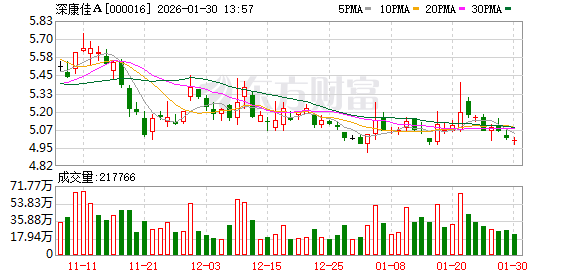
昔日掌门被查,康佳承压等待华润集团重塑
Xin Jing Bao· 2026-01-30 05:56
Core Insights - The article discusses the challenges faced by Konka Group, including declining performance and leadership changes, as well as a significant restructuring involving the transfer of shares to China Resources Group [1][5][4]. Group 1: Leadership and Management Changes - Zhou Bin has been with Konka Group since 2001, rising through various positions to become President in 2017, and later taking on multiple roles including Chairman and Party Secretary by 2024 [1][2]. - Zhou Bin is currently under investigation for serious violations of discipline and law, which has raised concerns about the company's governance [3][6]. Group 2: Financial Performance - Konka Group's revenue has significantly declined from 55.119 billion in 2019 to an estimated 11.115 billion in 2024, indicating a persistent downward trend [4]. - The company's gross profit margin from its trade business has been low at 1.12%, contributing to nearly 60% of its 2019 revenue, and has continued to decline until 2023 when improvements were made [4]. - The net profit for 2021 was nearly 1 billion, primarily due to investment gains from the disposal of subsidiaries, but the company has since entered a loss cycle for three consecutive years [4]. Group 3: Restructuring and Future Prospects - In 2025, Konka Group is set to undergo a significant restructuring as shares held by the former controlling shareholder, Overseas Chinese Town Group, will be transferred to China Resources Group, marking a new phase for the company [5]. - The restructuring aims to optimize resource allocation and enhance the company's strategic direction, technical capabilities, and market competitiveness [5].


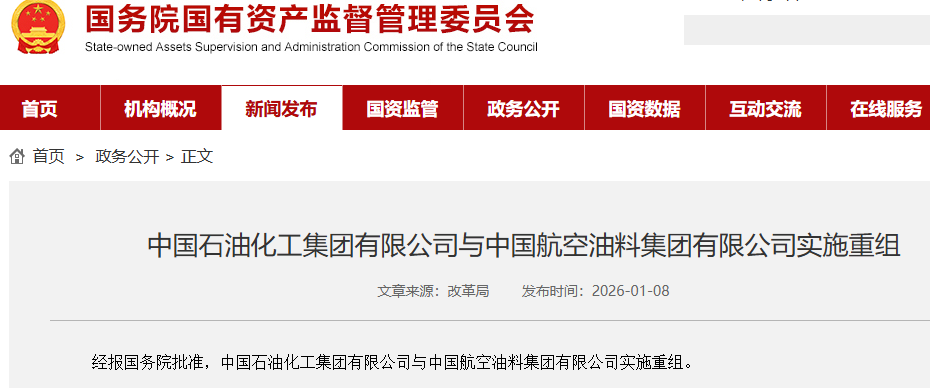
两大央企重组打造航油“巨无霸” 重塑产业格局
Zheng Quan Ri Bao Wang· 2026-01-09 13:02
Core Viewpoint - The restructuring of China Petroleum & Chemical Corporation (Sinopec) and China Aviation Oil Group is a strategic move aimed at enhancing competitiveness and optimizing resource allocation in response to international competition and green transformation [1][2]. Group 1: Restructuring Overview - The restructuring is not merely a stock or asset adjustment but a strategic integration that emphasizes specialization and resource optimization [1]. - This move is seen as a significant step in deepening state-owned enterprise (SOE) reforms and is expected to create a synergistic effect, achieving greater efficiency through collaboration [1][2]. Group 2: Industry Context - China Aviation Oil is the largest aviation fuel service provider in Asia, serving 258 transportation airports and 454 general airports, while Sinopec is the largest supplier of refined oil and petrochemical products in China [2]. - The integration is expected to leverage the complementary strengths of both companies, enhancing aviation fuel supply capabilities and reducing reliance on international markets [3]. Group 3: Market Dynamics - Post-restructuring, the companies are anticipated to reduce homogeneous competition and create a "refining-aviation fuel" synergy, improving supply chain efficiency and cost control [3]. - The restructuring aims to position the combined entity to compete with global energy giants like Shell and BP, enhancing market share and pricing power [3]. Group 4: Industry Growth Potential - The aviation fuel market is projected to grow, with China Aviation Oil reporting a 4.8% increase in sales volume and a 4.6% increase in revenue during the 14th Five-Year Plan period [5]. - The demand for aviation fuel is expected to rise significantly, driven by an increase in passenger transport, with projections of 8.1 billion passenger trips by 2026 [6]. Group 5: Green Transition - The restructuring aligns with the green transition goals, as sustainable aviation fuel (SAF) is becoming a key focus for the aviation industry [7]. - Sinopec has been a pioneer in bio-jet fuel, with successful applications in domestic airlines, which will facilitate the acceleration of energy transition in the aviation sector post-restructuring [7].

两巨无霸“联姻”,两千亿航油市场变局开启
Huan Qiu Wang· 2026-01-09 07:41
Core Viewpoint - The restructuring of China Petroleum & Chemical Corporation (Sinopec) and China Aviation Oil Group (CAOG) marks a significant event in the central enterprise's professional integration, potentially reshaping the 200 billion yuan aviation fuel market and impacting the trillion-level energy and chemical market [1] Group 1: Market Context - China's refined oil consumption is facing a historic turning point, with a projected decline due to the rapid growth of the electric vehicle industry and energy electrification [3] - Sinopec's net profit for 2024 is expected to decline by over 16% year-on-year, with further declines anticipated in the first three quarters of 2025 [3] - In contrast, aviation kerosene is one of the few refined oil categories with a certain growth outlook, with an estimated consumption of around 40 million tons in 2024, leading to a market size exceeding 200 billion yuan [3] Group 2: Strategic Integration - The merger aims to create an integrated supply chain from refinery to wing, leveraging Sinopec's refining capacity and CAOG's distribution network as Asia's largest aviation fuel service provider [3][4] - The vertical integration allows Sinopec to access CAOG's channels for aviation fuel sales, enhancing resource supply stability and bargaining power in international markets [4] Group 3: Industry Dynamics - The merger raises concerns about the bargaining power of downstream airlines, as aviation fuel typically accounts for about 30% of their total operating costs [5] - The consolidation may lead to a shift in market dynamics, potentially disadvantaging smaller domestic airlines against the newly formed "giant" in the upstream market [5] - Analysts suggest that to balance the power dynamics in the aviation fuel supply chain, the civil aviation industry may initiate a new round of consolidation, potentially forming large airline groups based on existing major carriers [5]
央企“巨无霸”重组启幕!超2000亿元航空燃油市场或将重构
Zheng Quan Shi Bao· 2026-01-08 22:53
Group 1 - The core viewpoint of the news is the restructuring of Sinopec and China Aviation Oil, which is expected to reshape the trillion-level energy and chemical market and enhance the competitiveness of state-owned enterprises [1][4][5] - The restructuring is seen as a response to the historical turning point in China's refined oil consumption, driven by the rapid development of the new energy vehicle industry and the electrification of end-use energy [2][3] - Sinopec's integration with China Aviation Oil aims to create a vertically integrated supply chain from refinery to wing, enhancing operational resilience and market competitiveness [4][6][7] Group 2 - The aviation fuel market is projected to grow, with China expected to consume approximately 40 million tons of aviation fuel in 2024, reflecting a 13% year-on-year increase [3] - The restructuring may lead to a redistribution of market share among major energy state-owned enterprises in the aviation fuel segment, providing Sinopec with new growth opportunities [3][6] - The integration is anticipated to improve the stability of aviation fuel supply for airlines, potentially reducing transaction costs and maximizing efficiency [6][9] Group 3 - The restructuring is part of a broader trend of state-owned enterprise consolidation aimed at optimizing the layout of state-owned economies and enhancing operational efficiency [5][8] - There are concerns among airlines regarding the potential impact on their bargaining power and cost control due to the consolidation of aviation fuel supply [9][10] - The restructuring may prompt a reevaluation of market strategies among airlines, especially if it leads to a dominant player in the aviation fuel market [9][10]
1336亿并购案落地!中国神华超级能源航母起航
Sou Hu Cai Jing· 2025-12-20 22:42
Group 1: Transaction Overview - China Shenhua has finalized a restructuring plan, acquiring 12 energy companies from its controlling shareholder for a total price of 133.598 billion yuan, marking the largest acquisition in A-share market history [1][5] - The acquisition will be financed primarily through cash, with 70% of the total price (approximately 93.519 billion yuan) paid in cash and 30% (around 40.080 billion yuan) through the issuance of shares [3] Group 2: Record Scale - The transaction's total price of 133.598 billion yuan surpasses previous record acquisitions, including China Shipbuilding's merger with China CSSC at 115.15 billion yuan and Guotai Junan's merger with Haitong Securities at 97.6 billion yuan [5] Group 3: Asset Composition - The acquired assets include key segments of the energy industry such as coal mining, coal power, coal chemical, and port logistics, covering 11 companies and one wholly-owned subsidiary [7] Group 4: Strategic Intent - The primary goal of the acquisition is to enhance the quality of the listed company and resolve long-standing issues of competition between China Shenhua and its controlling shareholder in coal resource development [9] Group 5: Synergy Effects - The restructuring is expected to strengthen the full industry chain synergy, allowing for a more resilient supply chain and reduced logistics costs through integrated operations [11] Group 6: Financial Impact - Post-acquisition, China Shenhua's coal reserves will increase from 41.58 billion tons to 68.49 billion tons, a 64.72% increase, while its coal production capacity will nearly double [13] Group 7: Capacity Expansion - The acquisition will also expand China Shenhua's power generation capacity from 47.632 million kilowatts to 60.881 million kilowatts, a growth of approximately 27.82% [15] Group 8: Shareholder Returns - China Shenhua has a strong track record of shareholder returns, with cumulative cash dividends reaching 491.9 billion yuan and an average dividend payout ratio exceeding 60% [17][18] Group 9: Review Process - The transaction qualifies for a simplified review process, which is expected to set a precedent for other state-owned enterprises in optimizing their asset structures through mergers and acquisitions [20] Group 10: Future Outlook - Following the transaction, the controlling shareholder's stake in China Shenhua will increase from 69.58% to 71.53%, enhancing control over the company and positioning it as a leading global energy player [22]

千亿级重磅并购,预案出炉!
Zhong Guo Zheng Quan Bao - Zhong Zheng Wang· 2025-12-19 15:00
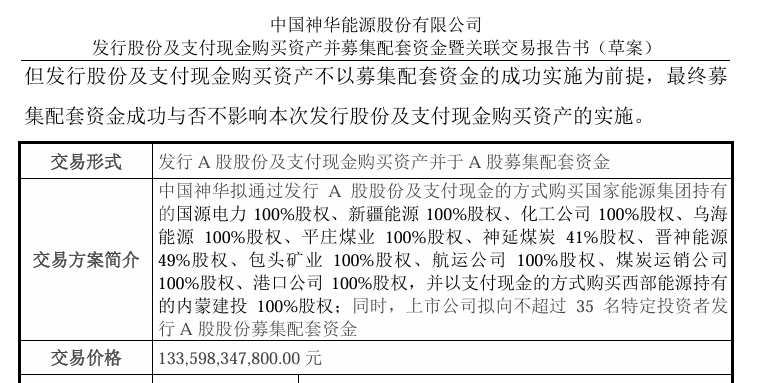
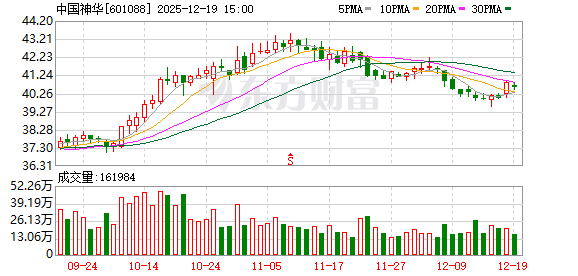
Core Viewpoint - China Shenhua plans to invest 133.598 billion yuan to acquire equity stakes in 11 core energy companies under the State Energy Group and 100% equity of Inner Mongolia Jian Investment held by Western Energy, with total asset scale exceeding 200 billion yuan [1][2]. Group 1: Business Expansion - The acquisition will significantly increase China Shenhua's business scale, with total assets expected to rise by over 200 billion yuan [2][3]. - Coal reserves will increase to 34.5 billion tons, a growth rate of 97.72%, while annual coal production will rise to 512 million tons, reflecting a growth rate of 56.57% [2]. - Power generation capacity will increase to 60.881 million kilowatts, a growth rate of 27.82%, and polyethylene production will rise to 1.88 million tons, with an increase of 213.33% [2]. Group 2: Industry Integration - The restructuring is a significant move for state-owned enterprises to address long-standing issues of intra-industry competition since 2004, enhancing resource reserves and core business capacity [3][4]. - The integration will optimize the entire industry chain, improving core competitiveness and supporting clean production and operational cost reduction [3][5]. Group 3: Policy Support - The restructuring is backed by favorable policies, including the simplified review process introduced by the China Securities Regulatory Commission, which will expedite the transaction [4]. - The new review process allows for a maximum of 12 working days from acceptance to approval, significantly enhancing transaction efficiency [4]. Group 4: Profitability Enhancement - The restructuring aims to create a full industry chain synergy, enhancing the company's quality and risk resistance, particularly during critical energy supply periods [5][6]. - China Shenhua has committed to a cash dividend policy, ensuring that the annual cash dividend ratio will not be less than 65% of the net profit attributable to shareholders [5][6]. Group 5: Market Impact - The restructuring is seen as a model for capital market service to the real economy and a benchmark for state-owned enterprise reform, potentially increasing market activity and scale [6]. - As of December 19, China Shenhua's stock price was 40.59 yuan per share, with a market capitalization of 790.9 billion yuan [7].
千亿级重磅并购 预案出炉!
Zhong Guo Zheng Quan Bao· 2025-12-19 14:55
Core Viewpoint - The capital market is witnessing a significant restructuring event as China Shenhua plans to invest 133.598 billion yuan to acquire equity stakes in 11 core energy companies under the State Energy Group and 100% equity of Inner Mongolia Jian Investment held by Western Energy, with total asset scale exceeding 200 billion yuan [2][3][7]. Group 1: Business Expansion and Competition Resolution - The acquisition will enhance China Shenhua's business scale, with total assets increasing by over 200 billion yuan, coal recoverable reserves rising to 34.5 billion tons (an increase of 97.72%), and annual coal production reaching 512 million tons (a growth of 56.57%) [7]. - The transaction involves the purchase of 100% equity stakes in various companies, including Guoyuan Power, Xinjiang Energy, and others, through a combination of A-share issuance and cash payment [5][3]. Group 2: Policy Support and Transaction Efficiency - The restructuring is supported by favorable policies from the China Securities Regulatory Commission (CSRC) and the State-owned Assets Supervision and Administration Commission (SASAC), which encourage mergers and acquisitions among state-owned enterprises [8]. - The newly implemented simplified review process for mergers and acquisitions will significantly enhance transaction efficiency, allowing for a maximum of 12 working days from acceptance to approval [8]. Group 3: Profitability and Shareholder Returns - The restructuring aims to create a full industry chain synergy, enhancing the company's quality and risk resistance, particularly in energy supply stability during peak demand periods [9]. - China Shenhua has committed to a cash dividend policy, ensuring that the annual cash dividend ratio will not be less than 65% of the net profit attributable to shareholders, with cumulative dividends exceeding 500 billion yuan since its listing [10].
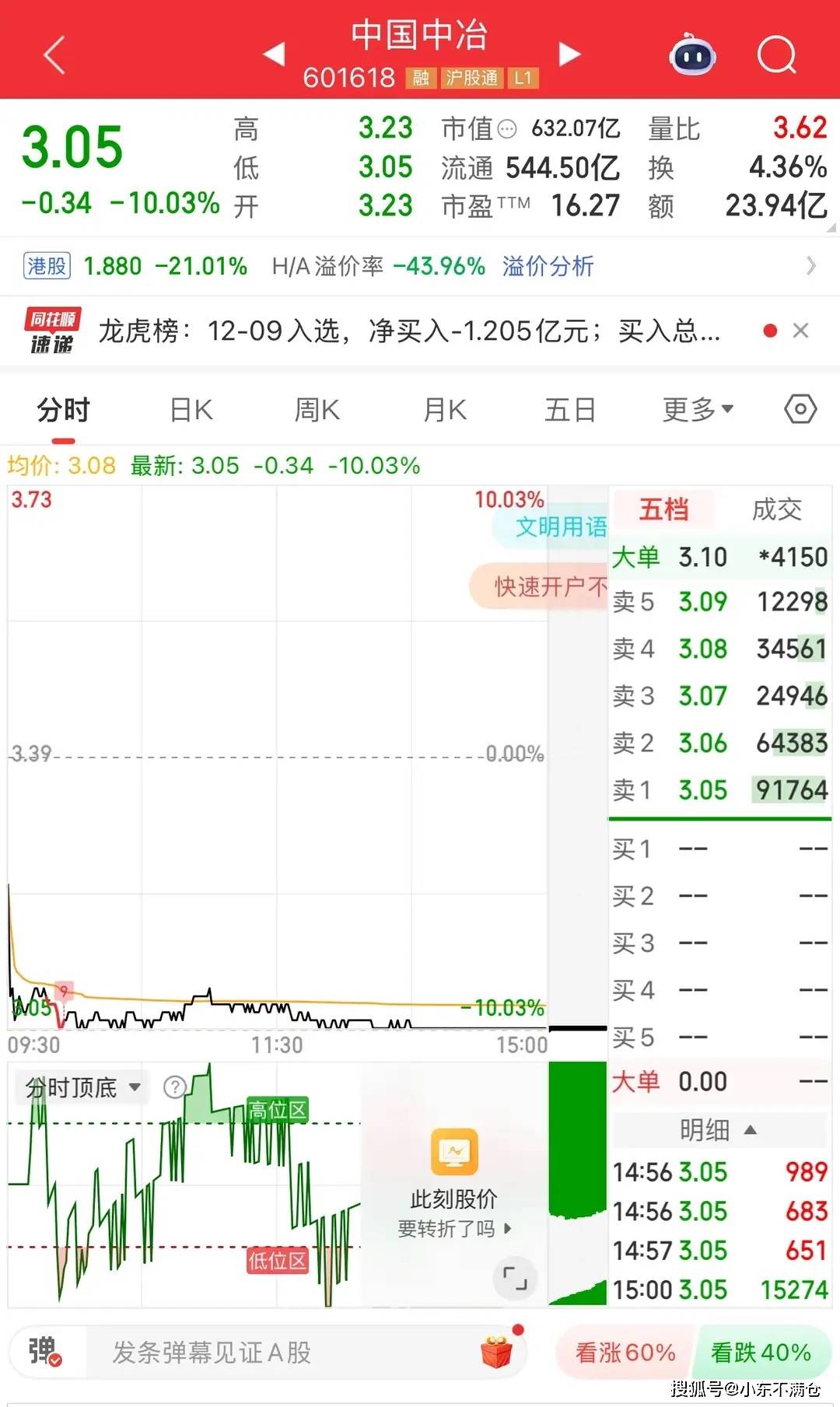
炸锅了!中国中冶闪崩跌停,28万投资者深夜无眠,散户该何去何从
Sou Hu Cai Jing· 2025-12-13 16:23
Core Viewpoint - The sudden drop in stock price of China Metallurgical Group Corporation (China MCC) is attributed to the announcement of a significant asset sale, leading to a market reaction that interpreted the move as a desperate divestment of valuable assets [4][6]. Group 1: Stock Performance - On December 9, China MCC's stock price fell to 3.05 CNY, marking a 10.03% decline, with a trading volume of 23.94 billion CNY and a turnover rate of 4.36%, the highest for the year [1][2]. - The Hong Kong-listed shares of China MCC plummeted over 20%, closing at 1.88 HKD, resulting in a market value loss of billions [1][4]. Group 2: Asset Sale Announcement - China MCC announced a plan to sell 100% equity of its subsidiary, China MCC Real Estate, and other core assets for 606.76 billion CNY, with the transaction to be settled in cash [4][6]. - The company claims this move aligns with the central enterprise's strategy for professional integration, focusing on its metallurgical engineering core business [4]. Group 3: Investor Concerns - Investors expressed anger over the sale of high-quality assets, particularly the resource assets expected to generate a combined net profit of 1.209 billion CNY in 2024, with some assets showing an appreciation rate exceeding 180% [6]. - The real estate division's assets were sold at a significant discount, with a devaluation rate of 45.18%, raising questions about the fairness of the transaction [6]. - The company's financial performance is under pressure, with a reported 18.79% year-on-year revenue decline and a 41.88% drop in net profit for the third quarter of 2025 [6][11]. Group 4: Market Reaction - The market reaction was severe, with institutional investors and northbound funds selling off shares, leading to significant losses for new shareholders, including a social security fund that recently acquired shares at a higher price [9][11]. - The drastic decline in stock price has raised concerns about the company's future performance and whether this asset sale will lead to a recovery or further decline [13].

中冶、五矿启动607亿资产交易 地产平台进行大整合
2 1 Shi Ji Jing Ji Bao Dao· 2025-12-09 23:08
Core Viewpoint - China Metallurgical Group Corporation (China MCC) announced a significant transaction involving the sale of various assets to China Minmetals, aimed at optimizing resource allocation and focusing on core business areas [2][3]. Group 1: Transaction Details - China MCC plans to sell 100% equity of MCC Real Estate and related debts to Minmetals Real Estate, along with 100% equity of several subsidiaries to China Minmetals [1][2]. - The total transaction price is approximately 60.676 billion yuan, constituting an associated transaction rather than a major asset restructuring [2]. - The sale of MCC Real Estate accounts for over half of the total transaction value, approximately 31.24 billion yuan, despite a significant discount from its assessed value of 46.17 billion yuan due to market value decline [5][6]. Group 2: Strategic Implications - This transaction is part of a broader strategy to respond to the central government's call for state-owned enterprises to focus on their main responsibilities and optimize resource allocation [2][3]. - Post-transaction, China MCC will concentrate on metallurgical engineering, non-ferrous and mining engineering, high-end infrastructure, industrial construction, and emerging industries, enhancing its core competitiveness and sustainable profitability [2][3]. - The transaction is expected to lead to a new round of personnel and structural adjustments, helping both companies focus on their strengths and reduce competition [4]. Group 3: Industry Context - The merger between China MCC and China Minmetals marks another significant consolidation in the state-owned enterprise sector, following previous mergers like CSR and CNR [3]. - China Minmetals, established in 1950, has a total asset value exceeding 1.3 trillion yuan and is ranked 86th in the Fortune Global 500 [3]. - Both companies have faced challenges in recent years, with declining revenues and profits attributed to the deep adjustment in the real estate sector [7].