
生态保护

Search documents
新发现大中型油气田和矿产地534处
Ren Min Ri Bao· 2025-09-11 07:21
Core Insights - The article highlights significant advancements in China's natural resource management during the "14th Five-Year Plan" period, emphasizing the importance of resource protection and sustainable development [1][2][3][4][5][6][7][8] Group 1: Agricultural and Land Resources - National cultivated land area reached 1.94 billion acres, with an increase of 28 million acres by the end of 2024 compared to 2020, establishing a three-dimensional protection framework for quantity, quality, and ecology [1] - Over 10 million acres have been rehabilitated through comprehensive land management, enhancing urban and rural spatial quality [4] Group 2: Mineral Resources - Major breakthroughs in mineral exploration, with the discovery of 10 large oil fields and 19 large gas fields, supporting stable production of 200 million tons of oil and over 240 billion cubic meters of natural gas [2] - Significant discoveries in strategic minerals, including a 2,800-kilometer "Asian lithium belt" with multiple large lithium mines found in Sichuan, Qinghai, Tibet, and Xinjiang [2] Group 3: Marine Resources - The marine economy has shown strong momentum, with a marine production value of 10.5 trillion yuan, an increase of 2.7 trillion yuan since 2020 [1] - The total marine product output has ranked first in the world for 36 consecutive years, with marine oil and gas becoming the main contributors to domestic production increases [3] Group 4: Ecological Protection and Restoration - The area of national parks has expanded significantly, with five national parks established, integrating over 120 existing nature reserves and enhancing ecosystem integrity [5][6] - The "Three North" project has completed 415 projects, restoring 16.4 million acres, contributing to ecological restoration and improving local livelihoods [4][8] Group 5: Digital Governance and Resource Management - The establishment of a unified management platform for natural resources has improved governance efficiency, with significant reductions in approval times for land and resource use [7] - The completion of property rights registration for five national parks and 1,096 key areas has enhanced accountability in resource protection and development [6]
权威发布·高质量完成“十四五”规划|新发现大中型油气田和矿产地534处
Ren Min Ri Bao· 2025-09-11 02:47
Core Points - The article highlights the significant progress made in China's natural resource management during the "14th Five-Year Plan" period, emphasizing the importance of resource protection and sustainable development [1][2][3] Group 1: Agricultural and Land Resources - The total cultivated land area in China has reached 1.94 billion acres, with a notable increase of 28 million acres by the end of 2024 compared to 2020 [2] - The country has implemented a comprehensive protection strategy for cultivated land, focusing on quantity, quality, and ecological balance [2][4] Group 2: Mineral Resources - Major breakthroughs in mineral exploration have been achieved, including the discovery of 10 large oil fields and 19 large gas fields during the "14th Five-Year Plan" [2] - The exploration of strategic minerals such as oil, gas, copper, and lithium has significantly advanced, supporting a stable production of 200 million tons of oil and over 240 billion cubic meters of natural gas [2][3] Group 3: Marine Resources - The marine economy has shown strong growth, with the marine production value reaching 10.5 trillion yuan, an increase of 2.7 trillion yuan since 2020 [1][3] - China has maintained its position as the world's largest producer of marine products for 36 consecutive years, with marine oil and gas contributing significantly to domestic production [3] Group 4: Ecological and Environmental Protection - The forest coverage rate has reached 25.09%, making China one of the fastest-growing countries in terms of green coverage [1][3] - Significant ecological restoration projects have been implemented, including the completion of over 10 million acres of land rehabilitation and the establishment of five national parks [4][5][6] Group 5: Digital and Technological Advancements - The integration of digital governance in natural resource management has improved efficiency, with a unified management platform established to resolve previous inconsistencies [8] - China has made strides in international cooperation and technological innovation, contributing to global sustainable development initiatives [8]
生物多样性富集区:如何在保护和利用中找到平衡点|记者观察
Di Yi Cai Jing· 2025-09-08 00:53
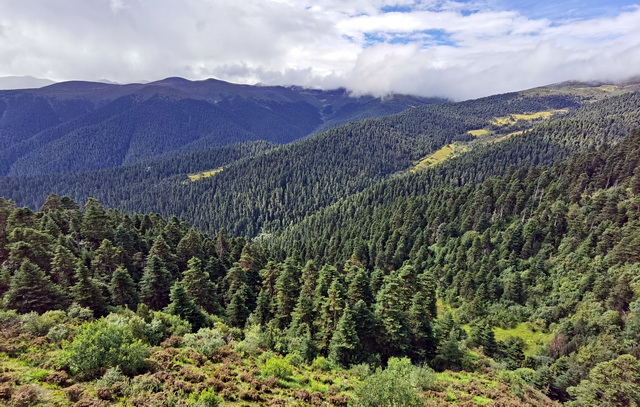
从川藏铁路西藏段、新藏铁路,到帕孜水利枢纽及配套灌区工程,再到雅鲁藏布江下游水电工程等,近 年来,国家在西藏布局了一系列重大建设工程。 西藏孕育了丰富而独特的生态系统和物种多样性。 这些重大工程对于促进区域经济一体化、扩大有效投资、带动相关产业发展、保障能源供应都将带来深 远影响。与此同时,西藏的生物多样性保护也更加引起各方关注。 "西藏是我国生物多样性最丰富的地区之一,独特的地形地貌孕育了丰富而独特的生态系统和物种多样 性。"9月7日,国家植物园体系建设专家委员会委员、中国植物学会民族植物学分会理事长杨永平说。 中华环境保护基金会等当日在西藏林芝召开"自然堂可持续发展喜马拉雅生物多样性保护项目研讨会"。 多位专家学者和企业界人士在研讨会上表示,西藏应持续强化野生动植物管理,严格保护野生动植物资 源和栖息地,保护生物多样性。同时,平衡资源、生态与发展的关系,让"保护"与"利用"形成相互支 撑、动态平衡的良性循环。 生物多样性富集区 "一提到青藏高原或者西藏,很多人会想到冰川、雪山、草地、荒漠。"中国科学院青藏高原所研究员张 林说,实际上,西藏拥有全国第三大的林区,"更重要的是,这里有我国面积最大的完整森林生态 ...

海上新广东·新生态图集
Nan Fang Nong Cun Bao· 2025-09-01 02:30
Core Viewpoint - Guangdong is actively promoting marine ecological civilization, focusing on harmonious coexistence between humans and the ocean, with significant advancements in ecological restoration and green economic development [4][6][35]. Group 1: Ecological Restoration - The area of mangrove forests in Guangdong has reached 11,400 hectares, ranking first in the country, contributing to coastal protection and biodiversity [14][15]. - The restoration efforts have transformed previously barren tidal flats into lush green areas, enhancing the habitat for various species [12][13][17]. - The population of the Chinese white dolphin in the Pearl River Estuary exceeds 2,000, with six natural reserves established for their protection [20][21]. Group 2: Biodiversity and Wildlife - The number of wintering waterbirds in Guangdong is projected to reach 129,000 by 2025, reflecting a growth of over 15% [24][25]. - Shenzhen Bay has become the third-largest habitat for the black-faced spoonbill globally, showcasing the success of ecological restoration [25][26]. - Rare bird species, such as the black-faced spoonbill and the spoon-billed sandpiper, are thriving in the restored mangrove and tidal flat areas [23][26]. Group 3: Economic Development - The "mangrove aquaculture coupling" model in the Leizhou Peninsula has increased per-acre income to 7,600 yuan [27]. - The first national transaction of mangrove carbon credit development rights was successfully auctioned for over 4 million yuan [28]. - The Nansha area in Guangzhou has seen nearly 60 million annual visitors due to ecological restoration efforts, promoting "blue tourism" [29].

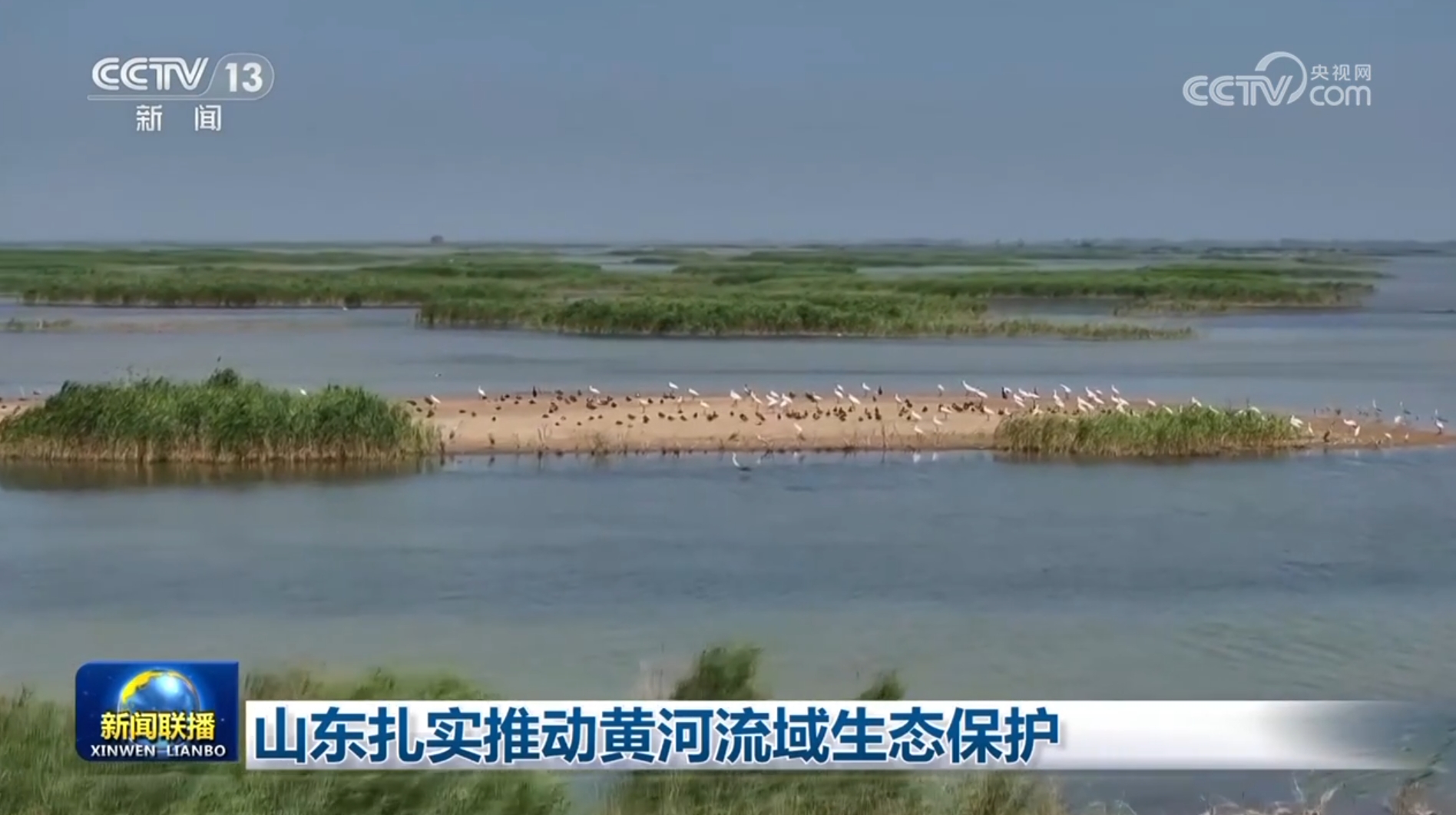
山东扎实推动黄河流域生态保护
Yang Shi Wang· 2025-08-24 12:44
Core Viewpoint - Shandong province is actively implementing ecological restoration and water pollution control measures to promote ecological protection in the Yellow River basin [1][3][5] Group 1: Ecological Protection Measures - Shandong has modified six ecological protection regulations and introduced the "Yellow River Ecological Corridor Planning" to enhance environmental governance in the tidal areas [3] - The province has completed the relocation of 19 villages and established community sewage treatment facilities [3] - 300 oil facilities within the protected area have been removed and ecological restoration has been completed, along with the construction of 490,000 acres of wetland corridors [3] Group 2: Water Quality Improvement - The water quality of agricultural drainage has improved from Class V to Class III after treatment in artificial wetlands [3] - The water quality of the Yellow River mainstream in Shandong has maintained Class II for four consecutive years [3][5] Group 3: Biodiversity and Wetland Restoration - Shandong is advancing the restoration of wetlands and biodiversity in the Yellow River Delta, successfully restoring 72,500 acres of wetlands and 47,000 acres of saline-alkali vegetation and seagrass beds [5] - The province is strengthening ecological environment zoning and control, and is focused on building ecological corridors [5]
详解千亿级增值税留抵退税政策大调整
第一财经· 2025-08-23 07:38
Core Viewpoint - China has made a significant policy adjustment regarding the value-added tax (VAT) refund system, becoming more cautious about refunds to reduce fiscal pressure and improve management efficiency [3][4]. Summary by Sections VAT Refund Policy Adjustment - The Ministry of Finance and the State Taxation Administration announced a new VAT refund policy effective from September, aimed at enhancing policy precision and reducing compliance costs [3][4]. - The VAT is China's largest tax, generating over 6 trillion yuan annually [3]. Historical Context - Since 2011, China has piloted VAT refunds for specific industries to alleviate financial pressure on enterprises, with significant expansions in 2019 and 2022 [4][5]. - The total amount of VAT refunds surged to 2.46 trillion yuan in 2022, a 3.8-fold increase from 2021, as part of measures to support businesses during the pandemic [5]. Changes in Eligible Industries - The new policy continues to allow full monthly refunds for the manufacturing, scientific research, software, and environmental sectors, while imposing restrictions on previously eligible sectors like wholesale and retail [6][10]. - Industries such as wholesale, retail, agriculture, and hospitality will now receive partial refunds (60% or 30%) instead of full refunds [6][10]. Real Estate Sector Provisions - The real estate sector has a separate VAT refund policy, allowing developers to apply for refunds under specific conditions, maintaining stability in the sector [7][9]. - The policy aims to support the real estate market amidst ongoing challenges, with a focus on maintaining operational stability [8][9]. General Industry Adjustments - Other industries not included in the specified categories will face stricter requirements for VAT refunds, including a minimum threshold of 500,000 yuan for new refundable amounts [10][11]. - The new policy reflects a shift from broad tax cuts to more targeted fiscal measures, addressing the need for fiscal sustainability and risk prevention [10][11]. Implementation and Management - The State Taxation Administration has issued detailed guidelines to ensure the effective implementation of the new VAT refund policy [11]. - Tax revenue data indicates a slight decline in overall tax income, with VAT revenue showing a modest increase of 3% year-on-year [11].

世界自然基金会:中国绿色发展经验启示全球
Zhong Guo Xin Wen Wang· 2025-08-22 10:10
Core Viewpoint - The urgency of global climate governance has led to a collective focus on accelerating green transformation and balancing economic development with ecological protection, with China's "Two Mountains" concept serving as a significant model for global green development [1][2]. Group 1: Global Actions and Priorities - The most pressing task for the international community is to restore nature, as global ecosystems are on the brink of collapse, affecting everyone [2]. - The global food system is a major source of natural destruction, necessitating a transformation in energy structure to achieve food production without harming nature [2]. - China's establishment of the world's largest clean energy system is highlighted as a significant contribution, providing a model for emerging economies to embrace a green economy [2][5]. Group 2: China's Achievements in Green Development - The "Two Mountains" concept has conveyed the message that economic development does not have to come at the expense of environmental degradation, contrasting with past industrial practices in many countries [2][3]. - Notable achievements in ecological restoration include the recovery of the Yangtze River and the population of the Yangtze finless porpoise, showcasing significant ecological progress [3]. - The rapid development of renewable energy in China has led to improved air quality and increased adoption of electric vehicles, contributing to a cleaner environment [5]. Group 3: Global Influence and Cooperation - China's low-carbon transition serves as a source of confidence and motivation for other countries, with accumulated technology and experience providing important references for global green development [6]. - The "Kunming-Montreal Global Biodiversity Framework" established under China's leadership at the 15th Conference of the Parties to the Convention on Biological Diversity outlines a clear path for global biodiversity governance [6]. - Ongoing collaborations between the World Wildlife Fund and China focus on species and ecological protection, emphasizing sustainable fisheries and resource recycling in supply chains [7].

江苏省生态文明教育“开学第一课”走进同里
Su Zhou Ri Bao· 2025-08-22 00:30
Core Points - The event "Exploring the Coexistence of All Things and Protecting Sustainable Harmony - 2025 Jiangsu Province Primary and Secondary School Ecological Civilization Education 'First Lesson of the School Year'" was officially launched in Tongli, Wujiang [1] - Suzhou was awarded the "International Wetland City" certificate at the COP15 Wetland Cities Certification Ceremony, becoming one of the nine new members from China and the only selected city from Jiangsu Province [1] - The Tongli National Wetland Park, established as a national wetland park in January 2020, has seen an increase in bird species from 91 to 246, leading among similar parks in Suzhou [1] Group 1 - The "First Lesson" was held in Tongli Wetland Park, chosen for its well-preserved wetland ecosystem in East China, aiming to instill ecological civilization values in children [2] - The park has been conducting public education activities since 2014, focusing on promoting environmental awareness and actions among the public [2] - A strategic cooperation agreement was signed with the World Wildlife Fund in April 2018 to develop engaging and scientifically sound educational programs [2] Group 2 - Over the past 11 years, Tongli National Wetland Park has conducted more than 4,000 public education activities, benefiting over 600,000 people [3]
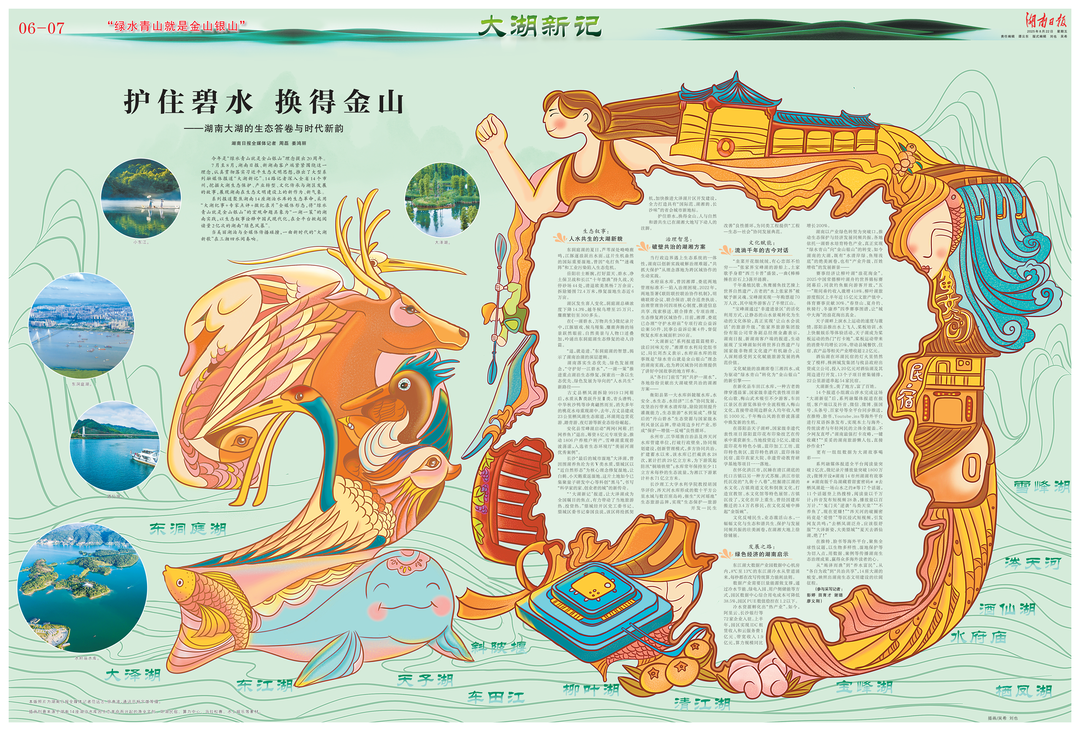
大湖新记丨护住碧水 换得金山——湖南大湖的生态答卷与时代新韵
Chang Sha Wan Bao· 2025-08-22 00:20
Core Concept - The article highlights the 20th anniversary of the "Green Mountains and Clear Water are Gold and Silver Mountains" concept, showcasing Hunan's ecological protection and development efforts through a series of multimedia reports titled "New Lake Chronicles" [2][3]. Group 1: Ecological Restoration - Hunan has implemented targeted ecological restoration strategies for its 14 lakes and reservoirs, resulting in significant improvements such as a 14.3% reduction in total phosphorus concentration in Dongting Lake and an increase in migratory birds to 250,000 [4][6]. - The ecological restoration efforts include the removal of harmful fishing practices and industrial pollution, leading to the revival of local wildlife and ecosystems [4][6]. Group 2: Collaborative Governance - Hunan has adopted a collaborative governance model to address ecological challenges, exemplified by the joint management of the Water Fubiao Reservoir by Xiangtan and Loudi, which has led to the resolution of 50 administrative public interest lawsuits [11][10]. - The province emphasizes cross-regional cooperation in ecological protection, demonstrating a shift from isolated management to a unified approach [11][10]. Group 3: Cultural Empowerment - Cultural initiatives are being integrated into tourism, with projects like the revitalization of traditional songs and crafts attracting significant visitor numbers, such as over 700,000 annual visitors to Baofeng Lake [13][16]. - The blending of cultural heritage with natural landscapes is driving tourism growth and enhancing local economies, as seen in various regions across Hunan [17][16]. Group 4: Economic Development - Hunan is leveraging its ecological resources to foster green economic development, with initiatives like the East Jianghu Data Industry Park reducing energy costs by 38.5% through innovative cooling methods [18][19]. - The province's focus on sustainable tourism and sports events has led to substantial economic benefits, such as a 418% increase in fishing-related income during the May Day holiday at Liuyue Lake [19][20]. Group 5: Media Impact - The "New Lake Chronicles" series has achieved over 200 million views across various platforms, significantly raising awareness and interest in Hunan's ecological initiatives [23][24]. - The multimedia campaign has successfully engaged both local and international audiences, highlighting Hunan's ecological achievements and attracting tourism [23][24].
哈萨克斯坦新设国家级自然公园 推动生物多样性保护
Zhong Guo Xin Wen Wang· 2025-08-21 09:48
Core Viewpoint - The establishment of the "Melk" National Park in Kazakhstan aims to protect the mountain ecosystem and biodiversity in the Tian Shan region, highlighting the government's commitment to environmental conservation [1] Summary by Relevant Sections Environmental Protection - The new "Melk" National Park covers an area of approximately 86,600 hectares and is home to endangered species such as snow leopards, argali sheep, porcupines, and lynxes, some of which are listed in the country's Red Book of endangered animals [1] - The park's establishment is a significant step towards enhancing natural resource protection and maintaining the balance of mountain ecosystems in Kazakhstan [1] Collaboration and Development - The creation of the park was achieved through collaboration among government departments, research institutions, local communities, and the United Nations Development Programme [1] - Future plans for the park include improving infrastructure, developing eco-tourism, and promoting environmental education, which will encourage public participation and create conditions for better regional ecological protection and sustainable resource use [1]