
畜牧养殖

Search documents
国信证券晨会纪要-20260105
Guoxin Securities· 2026-01-05 01:16
宏观与策略 宏观快评:12 月 PMI 数据解读-年末脉冲,助力收官 固定收益专题研究:2026 年 1 月转债市场研判及"十强转债"组合 策略深度:资配跨年展望(三)-龙头科技,强者恒强 总量专题(首席经济学家团队):总量专题-26 年牛市的变与不变 行业与公司 证券研究报告 | 2026年01月05日 | 晨会纪要 | | --- | | 数据日期:2025-12-31 | 上证综指 | 深证成指沪深 | 300 指数 | 中小板综指 | 创业板综指 | 科创 50 | | --- | --- | --- | --- | --- | --- | --- | | 收盘指数(点) | 3968.84 | 13525.02 | 4629.93 | 14545.57 | 3911.49 | 1344.20 | | 涨跌幅度(%) | 0.09 | -0.58 | -0.45 | -0.30 | -0.51 | -1.15 | | 成交金额(亿元) | 8295.11 | 12156.30 | 4444.91 | 4402.74 | 5436.91 | 492.84 | $\frac{10}{100}$$\frac ...
【图片故事】一只羊脚“踢”出致富人生
Xin Lang Cai Jing· 2026-01-04 20:04
Core Viewpoint - The article highlights the preservation and promotion of traditional sheep cooking techniques in Xiushan Tujia and Miao Autonomous County, showcasing the success of Chen Tianpei in revitalizing a local culinary heritage through innovative business models and e-commerce strategies [1] Group 1: Heritage and Tradition - The tradition of sheep farming and cooking in Xiushan has been passed down for hundreds of years, with the Chen family establishing the "Keng Yi Tui Manzi Yang Jiao" during the Qing Dynasty [1] - Chen Tianpei, a 53-year-old inheritor of this culinary heritage, has worked to bring the century-old sheep foot dish back into public view since opening his small shop in 2002 [1] Group 2: Business Model and Impact - Since 2020, Chen has developed a "company + base + farmers" model, creating a black goat breeding base covering over 200 acres, which provides breeding sheep, technical guidance, and guaranteed purchase for farmers [1] - Partnering farmers have seen an average annual income increase of over 30,000 yuan [1] Group 3: E-commerce and Market Expansion - Chen has embraced new e-commerce trends by forming a professional team to expand online markets [1] - He has also assisted local farmers in selling other regional products such as bamboo shoots and spicy peppers, helping to promote the unique agricultural products of the Wuling Mountain area [1]
农电一张网 守望一片心
Xin Lang Cai Jing· 2026-01-04 19:01
这个合作社养了180头牛,日产奶近一吨,远近闻名的"韩胖子酸奶",便出自这里。从挤奶、冷藏到加 工,可靠的电力更是不可或缺。有了电,合作社的发展红利便可持续释放,形成一条"育种养殖—精深 加工—冷链物流"的完整产业链,从业人员都是当地村民,他们主动承包撂荒的0.47公顷土地,种植玉 米,每年收入达十几万元。 早在建厂之初,因公网变距离远,国网黄化供电公司特地为合作社架设了1基杆塔与550米低压延伸线 路,解决了根本问题。这不,在越冬用电的高峰,定期的上门检查与贴心服务更成为常态。 韩福财和赵军的到来,像是一次次温暖的护航,确保这条绿色产业链,在寒冷的冬季也能一路远航,让 绿电赋能县域产业,助农增收。 (李昌慧) 2026岁初,早上6时,海东市循化撒拉族自治县孟达村晨光未启,牧达牛羊养殖专业合作社的牛舍里, 已是灯火通明。自动挤奶机上阵位列满,24头奶牛平静地反刍着草料,洁白的乳汁通过管道,不停息地 向制冷储奶罐奔涌。饲料搅拌机在另一角轰鸣着,为牛羊储备着一天的饲料。 从县城一路驶上赤色山峦,下了车,国网黄化供电公司工作人员韩福财和赵军再次踏入合作社的院 子。"韩老板,又来了,看看用电设备稳当不?"熟稔的问候刺 ...
进口牛肉保障措施: 权衡自由贸易与国内产业
Sou Hu Cai Jing· 2026-01-04 17:31
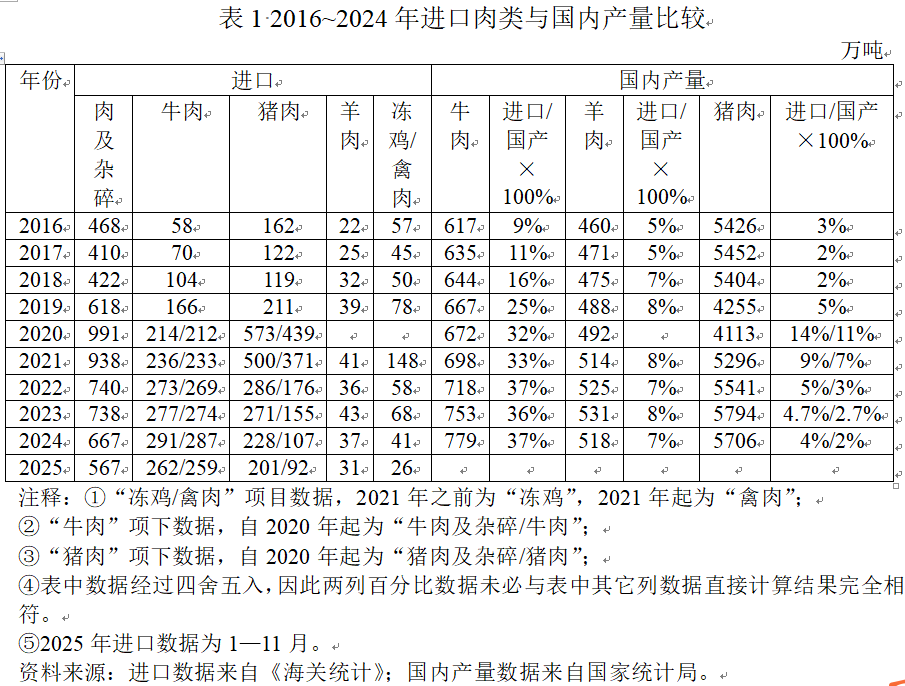
Core Viewpoint - China's meat production, particularly pork, has a comparative advantage, while beef and lamb production lacks this advantage, necessitating adjustments in domestic livestock farming structures and the development of related industries like prepared foods for export to balance trade and domestic needs [1][2][8]. Group 1: Trade Measures and Investigations - In 2024, the Ministry of Commerce initiated trade remedy investigations on imported pork and beef, with final rulings released in December 2025 confirming dumping and substantial damage to domestic industries [1][2]. - The Ministry of Commerce announced safeguard measures for imported beef in December 2024, recognizing that increased imports severely harmed domestic industries, leading to a three-year quota and tariff system starting January 2026 [2]. Group 2: Meat Production Trends - From 1996 to 2024, China's population grew from 1.22389 billion to 1.40828 billion, while meat production increased from 45.84 million tons to 97.799 million tons, reflecting a long-term growth trend despite setbacks from events like the African swine fever [3]. - In 2024, China imported 6.67 million tons of meat while exporting only 630,000 tons, indicating a significant trade imbalance in the meat sector [4]. Group 3: Import and Export Dynamics - In 2024, China imported 2.91 million tons of beef, with 2.87 million tons being beef alone, while sheep meat imports fluctuated significantly [5]. - The import of beef surpassed pork in 2023, with beef imports accounting for 37% of domestic production by 2024, compared to pork's much lower import ratio [9][10]. Group 4: Economic and Agricultural Implications - Maintaining a balance between domestic production and imports is crucial for economic security, with a focus on ensuring food security while expanding import capabilities [6][7]. - The comparative advantage of pork production supports a higher self-sufficiency rate, while beef and lamb production face challenges, suggesting a need for strategic adjustments in livestock production [10][11]. Group 5: Future Strategies - To enhance trade balance, it is recommended to reduce beef and lamb production while increasing pork production, alongside developing the prepared food industry to meet both domestic and international demands [11][12].
进口牛肉保障措施:权衡自由贸易与国内产业
Di Yi Cai Jing· 2026-01-04 13:15
Core Viewpoint - China's livestock industry needs to adjust its production structure based on comparative advantages, with pork production having a comparative advantage while beef and lamb production lacks it [1][3][10]. Group 1: Trade Measures and Investigations - In 2024, China's Ministry of Commerce initiated trade remedy investigations on imported pork and beef, with final rulings expected by December 2025 [2]. - The Ministry of Commerce found that imported pork and related products from the EU were being dumped, causing substantial harm to the domestic industry, with a final ruling confirming this in December 2025 [2][3]. - A safeguard investigation on imported beef was announced in December 2024, leading to a ruling in December 2025 that recognized serious damage to the domestic industry due to increased imports [2]. Group 2: Production and Import Trends - China is both a major meat producer and importer, with meat production increasing from 45.84 million tons in 1996 to 97.8 million tons in 2024, despite challenges like the African swine fever [4][5]. - In 2024, China imported 6.67 million tons of meat while only exporting 0.63 million tons, indicating a significant trade imbalance [5][8]. - The import of beef and lamb has been rising, with beef imports reaching 2.91 million tons in 2024, while lamb imports fluctuated significantly [8][11]. Group 3: Comparative Advantage and Future Outlook - The lack of comparative advantage in beef and lamb production suggests that import levels will remain high in the foreseeable future, while pork production benefits from a strong comparative advantage [10][12]. - The domestic supply of beef and lamb is heavily reliant on imports, with the import ratio for beef reaching 37% of domestic production by 2024, compared to only 2-4% for pork [11][12]. - The focus on pork production aligns with sustainable agricultural practices, as pig manure is more beneficial for soil health compared to that of cattle and sheep [12][13]. Group 4: Strategic Recommendations - To balance free trade and domestic industry needs, adjustments should be made to reduce beef and lamb production while increasing pork production [14]. - Developing the prepared food industry can enhance import demand for agricultural products and meet the growing overseas market for convenient food options, serving as a cultural export as well [14].

衡东鑫邦牧业液态肥还田服务项目谈判公告
Xin Lang Cai Jing· 2026-01-04 11:30
衡东鑫邦牧业液态肥还田服务项目已获湖南新五丰股份有限公司批准,现对该项目实施由湖南新五丰股 份有限公司组织谈判。 1.谈判项目名称:衡东鑫邦牧业液态肥还田服务项目 2.项目预算:32元/吨,外运量8000m³,总预算不超过25.6万元;超过预算的报价为无效报价,采购人不 予接受。 工期要求:60天(配合实际设备改造进度); 项目地点:衡东鑫邦牧业发展有限公司养殖场环保区内,位置处于湖南省衡阳市衡东县老头冲; 项目内容:通过吸粪车外运8000方液态肥,液态肥消纳地由成交方负责。 3.供应商资格要求:供应商需提供以下资格证明文件: (1)法人提交企业法人营业执照副本复印件; (2)法人提交法定代表人身份证明原件;授权委托人提交法定代表人授权委托书原件及法定代表人身 份证明原件。 4.谈判文件获取:凡有意参加投标者,请从2026年1月4日起在湖南新五丰股份有限公司网站 (http://www.newwf.com/)-新闻动态-招标信息专栏,在本公告发布页底端"相关下载"中自行下载谈 判文件。 5.响应文件提交的份数、截止时间、开启时间及地点: (1)递交谈判响应文件截止时间(响应文件递交截止时间即谈判时间,下同)为 ...

(乡村行·看振兴)山西长子:返乡养驴“蹚”出增收新路径
Zhong Guo Xin Wen Wang· 2026-01-04 05:56
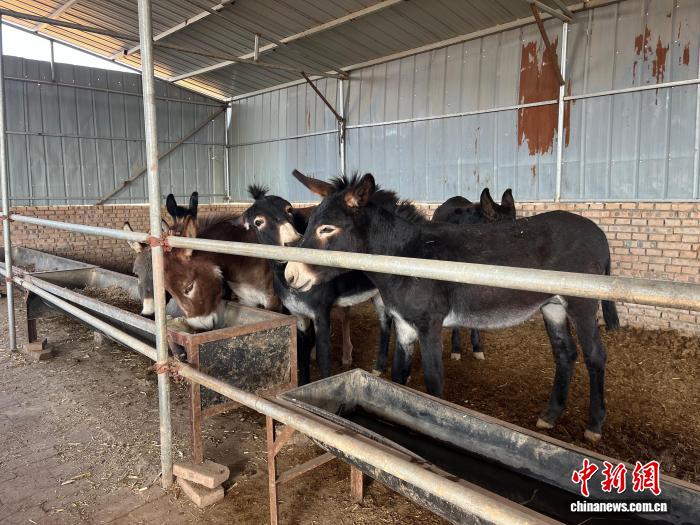
2024年底,首批10头驴经10个月精心饲养顺利出栏。活驴平均每头550斤左右,加上驴皮、驴骨,除去 成本净赚4万多元,驴刚出栏就被整车收购。此次成功让李继丽信心大增,今年4月,她购进10头驴苗, 规模扩大到20头。 中新网长治1月4日电 题:山西长子:返乡养驴"蹚"出增收新路径 作者 刘小红 黄梓晨 王浩东 隆冬时节,山西省长子县色头镇庄里村的养殖棚内,玉米秸秆经科学配比后成为黑驴的"营养大餐"。养 殖户李继丽在驴舍间添料、观察、打扫,忙碌不停。 长子县庄里村的养殖棚内,玉米秸秆经科学配比后成为黑驴的"营养大餐"。黄梓晨摄 李继丽是庄里村人,此前常年在外打工,难顾家中老小。2024年,一次市场考察让她发现养驴商机:驴 浑身是宝,驴皮、驴肉是紧俏原料,且周边就有商户上门收购,一头驴出栏能赚3000元到4000元,还能 守家。 说干就干,李继丽拿出多年积蓄,在自家闲置宅基地上建起180平方米的标准化驴棚,首批引进10头优 质种驴开启创业之路。 零基础入行的她,仔细钻研养殖细节。她将玉米秸秆粉碎青贮,按比例混合豆粕、麦麸和盐砖喂驴,这 样才能营养均衡、长得快、肉质好。为掌握技术,她积极参加县里农民培训,把兽医电话 ...
告别2025去产能周期!2026猪价将止跌回升?涨价信号来了!
Xin Lang Cai Jing· 2026-01-03 05:32
Core Insights - The livestock industry in 2025 experienced a steady progression amid policy adjustments and technological innovations, with "stabilizing production capacity, reducing costs, and strengthening technology" as the main themes [1] - The pig price showed a downward trend throughout the year, raising concerns about whether it would recover in 2026 [1] 2025 Review - The average price of lean pigs in China was 13.80 yuan/kg by December 22, 2025, a significant decrease of 17.66% year-on-year [2] - The price trend for 2025 was characterized by a "decline followed by stabilization and then further decline," with the highest price recorded at 16.36 yuan/kg on January 4 and the lowest at 10.72 yuan/kg on October 13 [2] - The core reason for the declining pig prices was the imbalance between supply and demand, with supply increasing significantly due to a release of production capacity [2] - The average number of breeding sows in 196 sample enterprises was 8.5264 million, a 5.61% increase compared to the previous cycle, leading to a total pig output of 168.965 million heads, a year-on-year increase of 21.58% [2] Demand Dynamics - Although there was a recovery in demand throughout the year, the growth was limited and insufficient to support a rise in pig prices [2] - The average daily slaughter volume was 175,700 heads, a 9.27% increase year-on-year, but this was primarily driven by increased output rather than a significant rise in demand [2] Ten Key Terms of 2025 - The ten key terms reflect a shift from scale expansion to high-quality development in the livestock industry, laying the groundwork for 2026 [3][4][5] 1. **De-capacity of Breeding Pigs**: A core regulatory policy aimed at stabilizing the number of breeding sows at 39 million [3] 2. **Going Global**: Leading enterprises are expanding internationally, marking the beginning of a "great navigation era" for Chinese agriculture [3] 3. **Liquid Precision Feeding**: A technology aimed at improving efficiency and reducing feed costs [4] 4. **Reduction of Soybean Meal**: A national strategy to ensure food security, with leading companies reducing soybean meal content in feed [4] 5. **Smart Farming**: The integration of AI and IoT to enhance farm management [4] 6. **Support for Beef/Dairy Industries**: Policies to assist struggling cattle and sheep farmers [4] 7. **Precise Disease Prevention**: A shift towards regular disease control measures [4] 8. **Green Farming**: Emphasis on sustainable practices [4] 9. **Standardization**: Initiatives to enhance regulatory compliance in the slaughter industry [4] 10. **Quality Improvement and Efficiency**: A focus on refined management and technological upgrades [4] 2026 Outlook - The pig price is expected to show a "low first, high later" trend in 2026, with a potential turning point in the second quarter [6] - The average number of breeding sows in 196 sample enterprises was 9.1831 million, an 8.54% increase compared to the previous cycle, indicating continued supply pressure in early 2026 [6] - Demand is likely to remain passive, with seasonal fluctuations affecting the market [6] - The average price in the first half of 2026 is projected to fluctuate between 11.4 and 11.8 yuan/kg, with a potential rebound in the second half of the year [7] - The competition among pig enterprises will increasingly focus on internal capabilities, with a shift towards low-cost, high-tech operations [7] Summary - The livestock industry navigated a challenging year in 2025, with significant price fluctuations and a focus on transformation [8] - The anticipated "low first, high later" price trend for 2026 suggests cautious optimism, with key indicators such as breeding sow inventory and slaughter volume being critical for production planning [8]

民企自主评审 九人获评副高职称
Si Chuan Ri Bao· 2026-01-02 22:28
Group 1 - The core viewpoint of the article highlights that New Hope Group has successfully conducted its first self-assessment for senior professional titles in the livestock and veterinary fields, marking a significant step in empowering private enterprises in Sichuan [1][3] - A total of 26 individuals applied for the assessment, with 9 professionals ultimately passing through a rigorous selection process that included material review, on-site defense, expert evaluation, and public announcement [1] - The assessment process was designed to align with the company's strategic direction and core technological needs, ensuring that the selected candidates are both theoretical experts and practical problem solvers [1] Group 2 - Sichuan's initiative to grant senior title assessment rights to private enterprises is part of a broader strategy to enhance the talent evaluation environment and support the development of the private economy [3] - In 2024, Sichuan plans to delegate senior professional title assessment rights for engineering, agriculture, and natural sciences to 17 pilot units, including New Hope Group [3] - New Hope Group has established a closed-loop talent development mechanism that integrates assessment, training, and utilization, supported by a digital management platform for talent tracking and development [2]

生活的盼头就在前方(视线)
Ren Min Ri Bao· 2026-01-02 00:31
Core Viewpoint - The transformation of Dariyabuyi Village in the Hotan region of Xinjiang showcases significant improvements in living conditions and economic opportunities for residents through relocation and modernization efforts [1][4][5]. Group 1: Historical Context - Dariyabuyi Village, located in the heart of the Taklamakan Desert, was historically characterized by primitive living conditions, lacking modern amenities such as electricity and communication facilities [3]. - The village was established in 1989, but residents faced significant challenges due to its remote location and inadequate infrastructure [3]. Group 2: Relocation and Modernization - Since 2017, the village has undergone a comprehensive relocation process, with new homes built along the Keriya River, significantly improving living standards [4]. - The new homes are equipped with modern appliances and are designed to accommodate community needs, including spaces for guesthouses and shops [5]. Group 3: Economic Development - Infrastructure improvements include a 90-kilometer asphalt road connecting the village to the national highway, facilitating easier access for residents and tourists [5]. - The establishment of a health clinic with modern facilities has enhanced healthcare access for villagers [6]. - The local economy is diversifying with initiatives in sheep farming and the cultivation of desert herbs, leading to an average income increase of 15,000 yuan per household [6]. Group 4: Tourism Growth - Dariyabuyi Village has become a popular destination for desert adventure tourism, with the establishment of a scenic area that includes both the new and old villages [7]. - Local residents have adapted to the tourism boom, with many opening guesthouses and restaurants, contributing to the village's economic vitality [7].