
资产管理

Search documents
港股强势延续,宏观经济稳中有进,财富之锚如何重塑?
中国基金报· 2025-11-06 12:11
Group 1 - The article emphasizes the increasing demand for investment and financial literacy among residents in the Guangdong-Hong Kong-Macao Greater Bay Area, driven by the diversification of asset management services and the active capital market [1] - The "Guangdong-Hong Kong-Macao Greater Bay Area Investment Open Class" series is launched to enhance investor confidence and market activity, in collaboration with industry associations and financial institutions [1] Group 2 - The capital market in 2025 is expected to present structural opportunities, with a gradual recovery in the domestic economy and stabilization in corporate profits, alongside a shift in manufacturing investment towards structural optimization [3] - The Hong Kong stock market has shown strong performance, with the Hang Seng Index ranking among the top global markets in the first three quarters of 2025, and the Hang Seng Technology Index demonstrating significant growth potential [3] Group 3 - The upcoming "Guangdong-Hong Kong-Macao Greater Bay Area Investment Open Class" will address investor concerns regarding asset allocation in a stable macroeconomic environment, focusing on balancing safety and returns [4] - The event will feature discussions on "Fixed Income +" investment strategies and the outlook for the Hong Kong stock market, with insights from fund managers at Dachen Fund [5] Group 4 - The event will be broadcasted across multiple media platforms, including the official video account of China Fund News, APP, Weibo, Douyin, and others, ensuring wide accessibility for participants [6]


推动金融要素向产业集聚 创投日·耐心资本走进宁波专场活动举行
Feng Huang Wang Cai Jing· 2025-11-06 11:36
"北仑在新能源汽车和机器人板块的布局,与我们投资的方向不谋而合。后续实地参观中,我们也会对 相关项目给予重点关注。"武汉博睿智联私募基金管理有限公司创始合伙人王玉娟说。宁波鼎一资产管 理有限公司董事总经理戴弋则点赞了北仑区政府部门务实的工作作风:"在这里经营发展、做大规模, 我们非常安心。希望能进一步和区内头部企业开展深度合作,帮助他们围绕产业上下游开展收并购,实 现共赢。" 如今,北仑作为对外开放的前沿阵地,宁波乃至浙江的经济强区、制造重镇,正以其雄厚的产业基础、 完整的产业链条和活跃的创新主体,吸引着越来越多目光长远的资本。"我们将以本次活动为契机,全 力打造最优营商环境,构建一流创投生态,与广大金融机构携手合作、共创共赢,让资本真正赋能实体 企业。"宁波经济技术开发区金融创新发展局局长陈峰表示。 推介会上,王程代表区委、区政府、宁波经开区管委会,向与会嘉宾的到来表示欢迎。他指出,耐心资 本是科技创新和产业发展的"源头活水"。北仑作为全国双创示范基地、制造强区,近年来坚持筑牢创投 底座、培优创投生态、打造创投森林,推动实现"创新-产业-金融"深度融合。真诚希望广大投资机构以 本次活动为契机,更好了解北仑, ...
智库称英国政府面临债务危机
Xin Hua She· 2025-11-06 09:00
Core Viewpoint - The report by the think tank "Better for Britain" warns that the UK is heading towards a debt crisis, emphasizing the need for urgent fiscal measures if market confidence in the government's ability to repay debt falters [1] Group 1: Report Contributors and Context - The report is co-authored by former Conservative cabinet minister John Redwood and Mark Dowding, Chief Investment Officer at RBC BlueBay Asset Management [1] - Redwood compares the current situation to the 1976 pound crisis, which led to the Labour government seeking assistance from the International Monetary Fund (IMF) [1] Group 2: Recommendations and Financial Implications - The report suggests that the Bank of England should stop paying interest on reserves held by commercial banks, estimating this could save approximately £13 billion by 2029 [1] - It also recommends an immediate halt to the sale of active gilt securities, which are high-grade securities issued by the government or large corporations [1]
看好中国投资机遇!专访东方汇理资管投资研究院院长
券商中国· 2025-11-06 08:21
Core Viewpoint - The article emphasizes the unique advantages and investment opportunities in the Chinese capital market amidst global economic and financial market volatility, highlighting the long-term strategic confidence from major asset management firms like Amundi [1]. Group 1: Investment Opportunities in China - Amundi identifies three key dimensions for investment opportunities in China: ongoing institutional openness, the role of Hong Kong as a bridge, and the potential of the pension market [1]. - The focus on technology sectors such as electric vehicles and artificial intelligence is seen as particularly attractive for investment due to their growth prospects and valuation [4][5]. Group 2: Asset Allocation Strategies - The article discusses the need for diversified asset allocation in the current high volatility environment, suggesting that investors should consider a mix of bonds, foreign exchange, and equities based on market attractiveness [3][5]. - A structural approach to asset allocation is recommended, with a focus on mid-term holding periods of three months or longer, allowing for flexibility in timing and entry points [5]. Group 3: Global Economic Context - The article notes the impact of global supply chain restructuring and changing tariff policies, which create investment opportunities in emerging markets, particularly in Asia [9]. - The anticipated interest rate cuts by the Federal Reserve are discussed, with predictions of two cuts next year, which could influence global asset allocation strategies [7]. Group 4: Gold as an Investment - Gold is highlighted as a key asset class due to its ability to hedge against inflation and geopolitical risks, with expectations of its price reaching $5,000 per ounce within three years [11]. - The increasing demand for gold from central banks and retail investors is noted as a significant factor influencing its market dynamics [11]. Group 5: Long-term Economic Themes - The article emphasizes the importance of high-quality development, climate change, and technological innovation as critical investment themes for the future [6]. - The concept of a "longevity economy" is introduced as a theme with substantial investment opportunities, extending beyond pharmaceuticals to infrastructure [12].

施罗德:看好环球股票及黄金未来前景 美元或继续在中期受压
Sou Hu Cai Jing· 2025-11-06 06:01
Core Viewpoint - Schroders' investment team indicates that the Federal Reserve's policy stance is more dovish than previously expected, leading to a decline in real yields, which, combined with strong corporate earnings and loose fiscal policy, has resulted in a positive outlook for global equities, particularly favoring U.S. and emerging market stocks [1] Group 1: Market Analysis - The investment firm previously held a neutral stance on equities, but recent negative U.S. non-farm payroll data has led to a re-pricing of interest rate cut expectations by the market [1] - U.S. Treasury yields have risen, pushing valuations into a more expensive range [1] Group 2: Asset Preferences - Schroders continues to favor gold due to its benefits from lower real yields and its protective qualities against debt sustainability and concerns over Federal Reserve independence [1] - The firm has downgraded its view on local currency debt in emerging markets after strong performance, while maintaining a bearish outlook on the U.S. dollar [1] Group 3: Regional Focus - The outlook for Chinese and emerging Asian equities has been upgraded, supported by improving economic activity indicators in China and signs of export recovery in South Korea and Taiwan, providing a strong basis for broader allocation in technology export-related sectors [1]
公告速递:东证融汇鑫享30天滚动基金暂停申购
Sou Hu Cai Jing· 2025-11-06 03:54
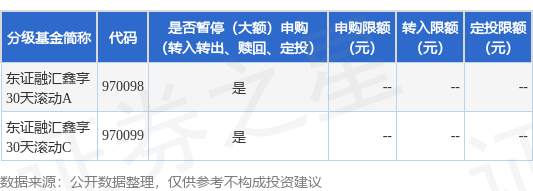
证券之星消息,11月6日东证融汇证券资产管理有限公司发布《东证融汇鑫享30天滚动持有中短债债券 型集合资产管理计划暂停申购的公告》。公告中提示,为了保证集合计划平稳运作,保护集合计划份额 持有人的利益,自2025年11月7日起东证融汇鑫享30天滚动持有中短债债券型集合资产管理计划暂停申 购,下属分级基金调整明细如下: | 分级基金简称 代码 | | 是否暂停(大额)申购 | 申购限额 转入限额 定投限额 | | --- | --- | --- | --- | | | | (转入转出、赎回、定投) | (元) (元) (元) | | 东证融汇鑫亭 30天滚动A | 970098 | 를 | | | 东证融汇整字 30天滚动C | 970099 | 를 | | 以上内容为证券之星据公开信息整理,由AI算法生成(网信算备310104345710301240019号),不构成 投资建议。 ...
资产配置:国际新秩序与产业新变革:2026年全球大类资产配置年度展望
GUOTAI HAITONG SECURITIES· 2025-11-06 01:28
Economic Growth Trends - East Asian economies are experiencing a slowdown in growth, with GDP growth expected to be slightly below 5% over the next five years[13] - After surpassing a per capita GDP of $12,000 (in 2015 USD), East Asian economies see a decline in growth rates from over 9% to a range of 3%-7%[13] - China's GDP growth rate during the transition period (2021-2024) is projected to average 5.53%[13] GDP Projections - To achieve the 2035 economic goals, China's GDP growth must average around 4.5% annually over the next decade[15] - By 2035, the aim is for per capita GDP to reach the level of moderately developed countries, enhancing overall living standards[15] Industry and Innovation - Emphasis on maintaining a reasonable proportion of manufacturing while fostering emerging industries and high-quality service sector growth[15] - The focus on technological innovation is crucial for enhancing productivity and capturing opportunities in the new technological revolution[15] Monetary Policy and Investment - The central bank's monetary policy is gradually normalizing but will remain accommodative for an extended period[39] - The narrowing of the interest rate differential between China and the US is expected to support the appreciation of the Renminbi[39] Market Outlook - A-shares are expected to experience a slight upward trend, with recommendations to overweight A-shares throughout the year[39] - Hong Kong stocks are also projected to trend upwards, driven by strong earnings expectations in the AI sector and improved liquidity conditions[59]
中国信达资产管理股份有限公司深圳市分公司与天津信中天企业管理合伙企业(有限合伙) 债权转让暨债权催收公告
Jing Ji Ri Bao· 2025-11-05 22:23
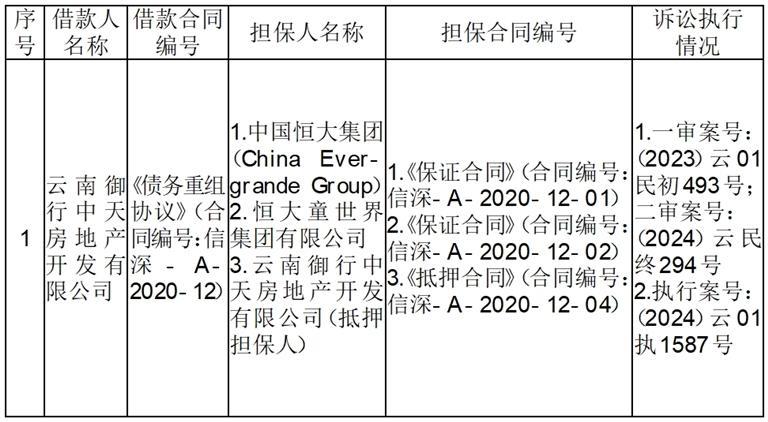
Core Points - China Evergrande Group is involved in a legal case regarding debt restructuring and has been subject to a first-instance judgment [1] - China Cinda Asset Management Co., Ltd. Shenzhen Branch has transferred its creditor's rights and guarantees to Tianjin Xinzhongtian Enterprise Management Partnership (Limited Partnership) [1][2] - Debtors and guarantors are required to fulfill repayment obligations to Tianjin Xinzhongtian Enterprise Management Partnership [1] Group 1 - The first-instance case number for China Evergrande Group is (2023) Yun Min Chu 493 [1] - The second-instance case number is (2024) Yun Min 294 [1] - The execution case number is (2024) Yun 1587 [1] Group 2 - The announcement serves as a notification to debtors and guarantors regarding the transfer of creditor's rights [2] - Contact information for inquiries is provided, including a contact person and phone number [2] - The announcement is dated November 6, 2025 [2]
中信金融资产(02799.HK):11月5日南向资金增持127.9万股
Sou Hu Cai Jing· 2025-11-05 19:29
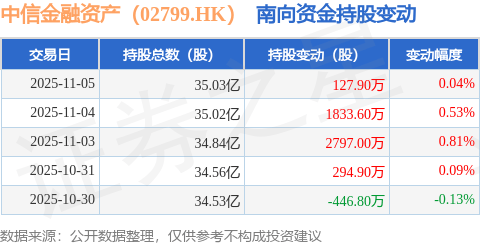
Core Viewpoint - Southbound funds have increased their holdings in CITIC Financial Assets (02799.HK) by 1.279 million shares on November 5, 2025, marking a positive trend in investment interest over recent trading days [1] Group 1: Shareholding Changes - In the last 5 trading days, southbound funds have increased their holdings on 4 days, with a total net increase of 46.066 million shares [1] - Over the past 20 trading days, there have been 13 days of net increases, totaling 92.597 million shares [1] - As of now, southbound funds hold 3.503 billion shares of CITIC Financial Assets, accounting for 9.9% of the company's total issued ordinary shares [1] Group 2: Daily Shareholding Data - On November 5, 2025, the total shareholding was 3.503 billion shares, with a change of 1.279 million shares, reflecting a 0.04% increase [2] - On November 4, 2025, the total shareholding was 3.502 billion shares, with a change of 18.336 million shares, reflecting a 0.53% increase [2] - On November 3, 2025, the total shareholding was 3.484 billion shares, with a change of 27.970 million shares, reflecting a 0.81% increase [2] - On October 31, 2025, the total shareholding was 3.456 billion shares, with a change of 2.949 million shares, reflecting a 0.09% increase [2] - On October 30, 2025, the total shareholding was 3.453 billion shares, with a change of -4.468 million shares, reflecting a -0.13% decrease [2] Group 3: Company Overview - CITIC Financial Assets Management Co., Ltd. primarily engages in asset management, operating through three main divisions: non-performing asset management, financial services, and asset management and investment [2]
金贝奖认证卓越实力 太平资产诠释“耐心资本”时代担当
2 1 Shi Ji Jing Ji Bao Dao· 2025-11-05 16:08
近日,在由《21世纪经济报道》主办的"2025资产管理年会暨第十八届21世纪『金贝』资产管理竞争力 研究案例"发布盛典上,太平资产荣获"2025卓越保险资管公司"奖项。 根据国家金融监督管理总局数据,截至2024年8月底,保险业通过债权、股权等多种方式为实体经济提 供资金支持达28.8万亿元,同比增长12.2%。这一数据背后,是保险资金在支持国家重大项目建设、促 进产业升级中的不可替代作用。 太平资产深刻把握保险资金规模大、期限长、来源稳定的特性,通过跨周期、跨市场的大类资产配置, 有效抵御短期波动,将其转化为服务实体经济的长效动力,为实体经济注入稳定持续的金融活水。 中国资产管理"金贝奖"评选始于2008年,历经十八载积淀,已成为衡量资管机构综合实力与行业贡献的 重要标尺。此次获奖,彰显了市场对太平资产长期坚持价值投资、深耕投研体系建设、持续服务实体经 济的高度认可。 作为中国太平保险集团旗下的专业资产管理平台,太平资产始终秉承"长期投资、价值投资、稳健投 资"的理念,在复杂多变的市场环境中展现出卓越的资产配置能力和风险管理水平。 近年来,伴随中央关于"培育耐心资本""引导中长期资金入市"等一系列政策部署, ...