
可再生能源

Search documents
中国绿证加快走出去,气候组织:在不确定的全球贸易中以“绿”取胜
Di Yi Cai Jing· 2025-05-13 13:15
Core Points - The Climate Group has officially recognized China's Green Electricity Certificate (GEC), marking a significant step in the internationalization of the GEC [1] - The recognition allows Chinese companies to participate in the formulation of international green rules and convert compliance pressure into market competitive advantages [1][3] Group 1: RE100 and GEC Recognition - RE100, a global initiative for companies to commit to 100% renewable energy, now fully recognizes the GEC, which is seen as a "gold standard" for green electricity consumption [3] - In 2024, RE100 member companies are projected to consume 545 billion kWh of electricity, with a renewable energy usage rate of 53%, up from 50% in 2023 [3] - Among 270 member companies in China, 770 billion kWh of electricity was reported, with 59% sourced from renewable energy [3] Group 2: GEC System and Internationalization - The GEC serves as the only proof of renewable energy's environmental attributes in China, with one certificate corresponding to 1,000 kWh of renewable energy [4] - The GEC system has been improved since 2023, addressing issues identified by RE100, such as attribute duplication and validity periods [4] - The transition from conditional to unconditional recognition of the GEC by RE100 simplifies the process for companies in China to declare renewable energy consumption [4] Group 3: Market Dynamics and Future Directions - The recognition of the GEC by RE100 is expected to enhance the green competitiveness of Chinese export-oriented enterprises and reshape the global green supply chain [5][6] - The National Energy Administration plans to strengthen communication with RE100 and promote the international recognition of the GEC [5] - In the first quarter of this year, the GEC market saw a sixfold increase in new transactions, with over 80% of consumers coming from the manufacturing and energy sectors [6]
绿电交易增11倍、跨境合作提速,粤港澳大湾区数据亮眼获赞
Nan Fang Du Shi Bao· 2025-05-13 13:09
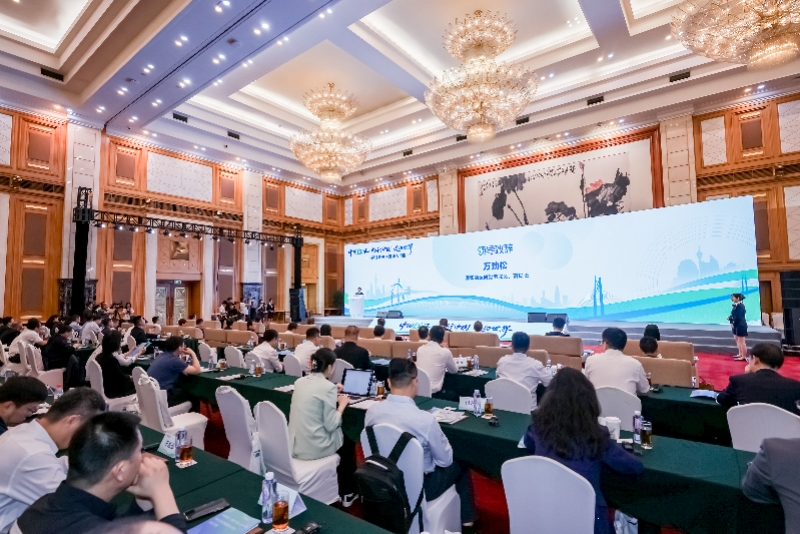
Core Insights - The event "Green Certificate Entering the Guangdong-Hong Kong-Macao Greater Bay Area" was held in Shenzhen, where representatives from the National Energy Administration, international climate organizations, and local governments discussed the construction and internationalization of the green certificate market [1][3] - China's green certificate has been fully recognized by the global renewable energy consumption initiative RE100, with a signed agreement for a transaction of 40 billion kilowatt-hours of green electricity [1][4] - The 2024 Guangdong-Hong Kong-Macao Green Electricity Consumption Report indicates a remarkable growth in the region, with a transaction volume of 49.1 billion kilowatt-hours, a year-on-year increase of 1100% [1][10] Green Certificate Market Development - The green certificate system in China has rapidly developed since its implementation in 2017, establishing a comprehensive lifecycle management system for green certificates [5][7] - The RE100 initiative, which includes around 430 large companies committed to using 100% renewable electricity, has embraced China's green certificate system, enhancing its credibility and international recognition [7][8] - The Guangdong-Hong Kong-Macao Greater Bay Area has become a significant growth area for green electricity consumption, with transaction volumes expected to reach 78 billion kilowatt-hours in the first quarter of 2025, a 1600% increase year-on-year [10][11] Cross-Border Cooperation and Market Activity - Cross-border green certificate transactions have gained momentum, with Hong Kong and Macau users purchasing 400,000 certificates (equivalent to 400 million kilowatt-hours) since the start of cross-border trading in 2023 [1][11] - Shenzhen leads the region in green electricity consumption, with a total of 12.7 billion kilowatt-hours, while Guangzhou, Dongguan, and Huizhou also contribute significantly to the overall consumption [11][13] - The Guangdong-Hong Kong-Macao region's green certificate market is highly active, with the Guangzhou Electric Power Trading Center accounting for three-quarters of the national green certificate transactions [11][13] Future Prospects and Recommendations - Experts suggest that the international recognition of China's green certificate should be pursued in stages, leveraging the Belt and Road Initiative to promote acceptance in neighboring countries and align with European and American market rules [8] - The establishment of a monitoring and early warning mechanism for cross-provincial green certificate trading is recommended to facilitate a more unified national market [18] - The market is currently influenced by energy consumption control policies, which may create barriers to inter-provincial trading, impacting the overall market dynamics [18]

绿色转型加速!中国洪都拉斯能源合作按下“快进键”
Sou Hu Cai Jing· 2025-05-13 13:00
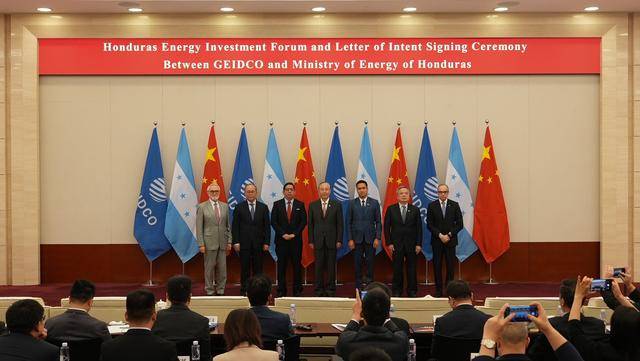
Core Insights - The Global Energy Interconnection Development and Cooperation Organization signed a cooperation memorandum with the Ministry of Energy of Honduras to enhance energy development and transformation in Honduras [1][3] - Honduras aims to increase the share of renewable energy in its power generation to 70% by 2030, highlighting the importance of China's energy storage systems and technologies [5][8] Group 1: Cooperation Framework - The cooperation will focus on system planning, renewable energy technology innovation, energy storage, and electric transportation [1][3] - Joint research will be conducted on clean energy development, grid interconnection planning, technology, and standards [3] - Project cooperation will facilitate the implementation of energy internet projects in Honduras by connecting government, enterprises, and funding [3] Group 2: Investment and Infrastructure - Honduras has initiated 11 electricity infrastructure projects to enhance generation and transmission capacity [7] - The energy demand in Honduras is expected to reach up to 3,000 megawatts in the coming years, necessitating an investment of $4.375 billion in power generation and transmission from 2026 to 2030 [8] - Innovative financing mechanisms will be required for these investments, with expectations for China to play a significant role as a partner [8]
国家能源局主要负责人会见蒙古人民党总书记、蒙古国能源部长一行
news flash· 2025-05-13 12:33
5月12日,国家能源局局长王宏志在京会见来访的蒙古人民党总书记索德巴特尔和蒙古国能源部长乔伊 吉勒苏伦一行。 王宏志表示,中蒙是山水相连的友好邻邦,紧密合作、携手发展完全符合双方共同利益。能源是中蒙务 实合作的重要内容,在双方的共同努力下,合作总体积极稳定。中方愿与蒙方同事继续加强沟通交流, 共同努力,携手推动中蒙能源合作水平迈上新台阶。 蒙方表示,蒙中是永久邻国和好伙伴。蒙方愿同中方进一步加强交流,推动开展煤炭、可再生能源、电 力以及油气等领域合作,不断提升两国能源合作水平。 ...
巴西将打造拉美首个零碳产业园,这家中国公司将打造“样板间”
Huan Qiu Wang· 2025-05-13 07:56
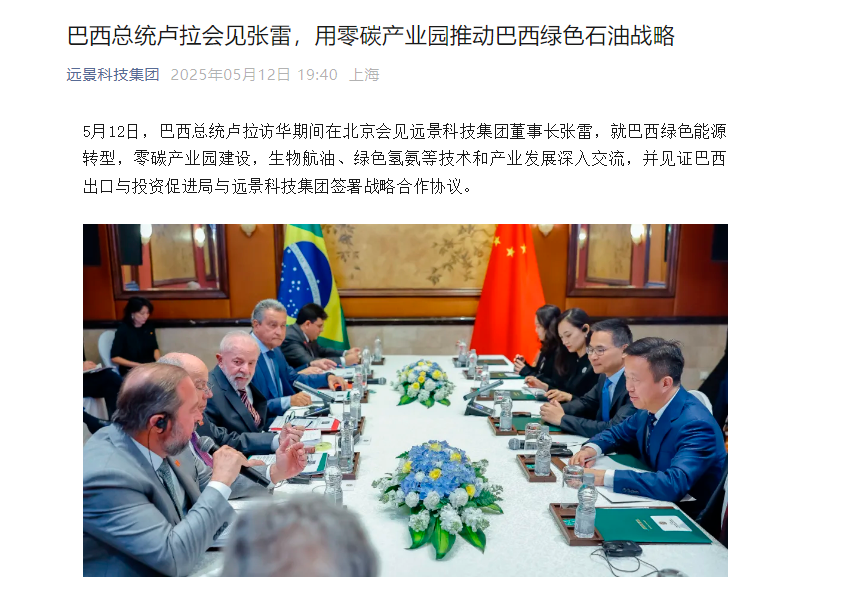
【环球网财经综合报道】近年来,在全球积极应对气候变化、推动能源绿色转型的大趋势下,中巴两国在清洁能源领域 的合作不断升温,成为国际能源合作领域的亮点。巴西凭借其得天独厚的水、风、光等可再生能源资源,正加速推进能 源结构调整,而中国在新能源技术研发、产业应用等方面成果斐然,双方合作前景广阔。 在此背景下,巴西开启能源融合发展之路,利用燃气电厂和火电厂应对电网高峰负荷,发挥调节电源及备用电源作用。 同时,可再生能源发电企业转向储能、氢能等领域,通过多种绿色能源融合发展解决可再生能源波动性等问题。巴西储 能企业高管表示,风光储氢等多种能源融合发展为可再生能源产业带来新机遇与商业模式,如Babilonia可再生能源发电 站光伏发电和风电共享连接传输系统,实现优势互补、减少波动性,表明多种能源融合发展是可行路径。(陈十一) 在此背景下,巴西总统卢拉访华期间,于5月12日在北京会见远景科技集团董事长张雷,就一系列能源合作议题展开深 入交流,并见证重要合作协议签署。 据合作协议,远景将在巴西打造拉美地区首个零碳产业园,以生物航油为核心在巴西发展绿色燃料价值链,并为巴西市 场提供先进的绿色氢氨装备,打造巴西绿色石油生态系统, ...
【环球财经】中国企业将在巴西投资逾270亿雷亚尔
Xin Hua Cai Jing· 2025-05-13 05:47
Investment Overview - Multiple Chinese companies are set to invest over 27 billion Brazilian Reais in Brazil, covering sectors such as express delivery, fast food, semiconductors, new energy, automotive manufacturing, and renewable energy [1][2]. Employment and Economic Impact - The projects are expected to create a significant number of jobs in Brazil and assist in industrial upgrades, enhancing bilateral economic cooperation between Brazil and China [1]. Service Sector Investments - Meituan plans to enter the Brazilian market under the "Keeta" brand, with an initial investment of 5.6 billion Reais over five years, focusing on customer service centers and logistics networks in the Northeast region [1]. - Mixue Ice Cream will invest 3.2 billion Reais to establish its first stores in Brazil, sourcing local fruits as raw materials, and is expected to create 25,000 jobs by 2030 [1]. Manufacturing and High-Tech Investments - Great Wall Motors will increase its investment by 6 billion Reais to expand production capacity in Brazil [1]. - GAC Group plans to invest 1.3 billion USD (approximately 7.3 billion Reais) to build a factory in Goiás [1]. - Longsys Semiconductor's subsidiary Zilia will invest 650 million Reais in São Paulo and Manaus to enhance memory chip production capacity [1]. Renewable Energy and Sustainable Development - Envision Group will create the first zero-carbon industrial park in Latin America in Brazil, with a total investment of 5 billion Reais [2]. - China General Nuclear Power Group will invest 3 billion Reais in wind and solar projects in Piauí, expected to create over 5,000 jobs [2]. - Didi Chuxing plans to strengthen its express delivery services in Brazil and will build 10,000 electric vehicle charging stations to promote green transportation [2]. - Notec Chemical Company, in collaboration with several Chinese partners, will invest 350 million Reais to establish an industrial platform in Brazil [2]. Market Confidence - Analysts indicate that this round of investments reflects the confidence of Chinese companies in the Brazilian market and will inject new momentum into China-Brazil cooperation [2].
乌拉圭驻华大使:拉中环保合作共筑绿色未来
人民网-国际频道 原创稿· 2025-05-13 03:50
Core Viewpoint - The fourth ministerial meeting of the China-Latin America and Caribbean Community Forum emphasizes the importance of environmental cooperation between China and Uruguay, particularly in the context of climate change and global energy transition [1][2]. Group 1: Environmental Cooperation - China and Uruguay are committed to multilateralism and environmental protection, supporting Brazil in hosting the 2025 COP30 conference, which is significant for developing countries in addressing climate change [1]. - The upcoming COP30 in the Amazon rainforest region is expected to raise awareness among local populations about the importance of protecting the Amazon [1]. Group 2: Bilateral Collaboration - There is a solid foundation for cooperation in environmental protection between China and Uruguay, with significant exchanges in renewable energy and electric vehicle promotion over the past few years [2]. - Uruguay ranks among the global leaders in wind and solar energy, while China has made notable advancements in renewable energy technology, allowing for complementary advantages in these sectors [2]. - The shift in Uruguay's primary exports to China from meat and wool to forest products like pulp, timber, and logs reflects a growing partnership that meets China's needs for sustainable forestry and contributes to Uruguay's economic benefits [2].
双碳研究 | 南非能源转型:可再生能源扛起主力大旗!
Sou Hu Cai Jing· 2025-05-12 17:06
Core Viewpoint - South Africa is undergoing a significant energy transition from coal to renewable energy, supported by international partnerships and funding commitments, despite challenges such as economic diversification and energy security [3][4][6]. Group 1: Project Overview - The Just Energy Transition Partnership (JETP) was established in 2021, attracting a total funding commitment of $11.8 billion (approximately 218 billion South African Rand) from various countries, despite the withdrawal of the United States [4]. - South Africa has initiated the Just Energy Transition Implementation Plan, detailing the transition path and cost estimates for achieving a low-carbon economy [4]. - The initial funding of $583 million (about 10.8 billion South African Rand) has been allocated to six key areas, including the electricity sector and green hydrogen [4]. Group 2: Achievements Summary - Research on the impacts of phasing out coal-fired power plants has been conducted, focusing on technical, economic, environmental, and social aspects [5]. - Upgrades to transmission and distribution infrastructure are underway to facilitate large-scale integration of renewable energy [5]. - Training for municipal departments is being implemented to plan grassroots renewable energy projects [5]. Group 3: Policy and Regulatory Reforms - Significant progress has been made in policy reforms to support the energy transition, including allowing private companies to generate electricity without a license [6]. - The Climate Change Act, passed in July 2024, aims to integrate climate change considerations into government strategies and planning [6]. Group 4: Existing Challenges - The renewable energy transition must align with economic diversification, involving key sectors such as agriculture, manufacturing, and services [7]. - South Africa faces structural challenges, including poverty, inequality, and unemployment, necessitating the creation of decent job opportunities through the energy transition [8]. - The country is experiencing severe energy security issues, with only about 8.8% of installed capacity coming from renewable sources, leading to intermittent power outages [8]. - There is a need to enhance the energy governance framework to clarify responsibilities and improve regulatory capabilities [8]. Group 5: Project Planning - The transition must adopt a people-centered approach, ensuring that solutions safeguard the livelihoods of all citizens, particularly vulnerable groups [10]. - Local governments play a crucial role in leading the renewable energy transition, but face challenges such as aging infrastructure and funding shortages for maintenance [10].
碳中和周报(第184期)丨RE100无条件认可中国绿证;国常会部署美丽河湖保护建设行动;电化学储能安全管理新政落地
2 1 Shi Ji Jing Ji Bao Dao· 2025-05-12 16:33
Group 1: Carbon Neutrality Initiatives - RE100 has unconditionally recognized China's green certificate, enhancing its international authority and credibility, which is expected to boost confidence in the consumption of Chinese green certificates [2] - The recognition is anticipated to increase the willingness of RE100 member companies and their supply chains to purchase and use Chinese green certificates, thereby expanding demand [2] - The establishment of a comprehensive green certificate system in China is highlighted, with a call for accelerating international mutual recognition of green certificates [2] Group 2: Water Ecological Protection - The State Council has initiated a beautiful rivers and lakes protection and construction action, emphasizing the need for precise pollution control and a comprehensive ecological governance system [3] - The focus is on source governance, monitoring, and preventing pollution from industrial, domestic, and agricultural sources [3] - Companies are encouraged to implement pollution prevention measures and utilize technology for long-term monitoring and management [3] Group 3: Energy Storage Safety Management - A new policy for the safety management of electrochemical energy storage has been issued, focusing on enhancing the inherent safety of battery systems and improving safety standards [4] - The policy outlines responsibilities for safety supervision and emphasizes inter-departmental collaboration and information sharing [4] - Companies are advised to prioritize compliance with safety standards and engage in third-party testing to improve quality control [4] Group 4: Renewable Energy Regulations - The "Beijing Renewable Energy Development and Utilization Regulations" came into effect, supporting Beijing's green and low-carbon energy transition [5] - The regulations cover various renewable energy sources and aim to establish a legal framework tailored to the needs of a megacity [5] - The regulations promote increasing the share of renewable energy in consumption, encourage technological innovation, and support local industry development [5] Group 5: Biofuel Export Licensing - Jiaao Environmental Protection has become the first company in China to receive an export license for bio-jet fuel, allowing it to produce 372,400 tons annually by 2025 [6] - The approval signifies a regulatory move towards standardizing the export of bio-jet fuel, which is crucial for the aviation industry's carbon reduction goals [6] - The support from policies indicates a growing emphasis on the dual value of bio-jet fuel in resource recycling and carbon reduction [6]

同比增长超四成,东南亚六国绿色投资已达80亿美元
Sou Hu Cai Jing· 2025-05-12 08:02
据近期发布的一份报告,24年期间,包括印尼、马来西亚、菲律宾、新加坡、泰国、越南在内的东南亚 六国私人绿色投资额较上年增长43%,达到80亿美元。 报告强调,就具体地域而言,马来西亚和新加坡贡献了超60%的交易额。另一方面,气候基金和基础设 施基金对该地区的兴趣也分别大幅增长了4倍和14倍。 据介绍,电力是其重点投资领域,占据了六国绿色投资总额的三分之二,且其交易额仍在不断上升。而 从这一点出发,针对太阳能细分领域的增幅最高,达到了100%。 这份由贝恩、GenZero、谷歌、渣打银行以及淡马锡联合发布的《东南亚绿色经济报告》表示,去年, 亚太地区以外对东南亚六国绿色经济的外国投资增加了超两倍,而来自亚太地区的外国投资则增加了一 倍。而作为对比,来自东南亚六国的国内投资则下降了40% 其次,在下一代电网发展方面,报告强调,上述六国的的国内电网需要实现扩展和现代化转型,以跟上 可再生能源、电池存储系统、分布式能源资源和微电网的整合。此外,这些地区还需要扩大跨境连接, 以加快电网的去碳化进程。 报告称,政府通过监管改革在加速电网发展方面发挥着至关重要的作用,这可以促进更多的私人投资、 跨境电力交易以及对关键基础设 ...