
家电

Search documents
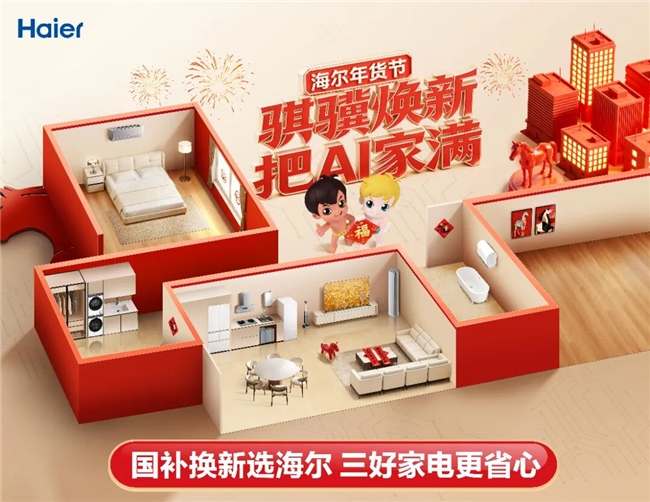
海尔智家年货节启动,携新国补硬核宠粉
Jin Tou Wang· 2026-01-12 07:29
Core Viewpoint - The upcoming Chinese New Year is driving demand for both traditional and technological "New Year goods," with Haier Smart Home actively promoting its products through a series of campaigns and subsidies [1]. Group 1: Technological Offerings - Haier Smart Home is launching various "technology packages" to cater to diverse family needs, with the Mai Lang series being a highlight, featuring a full range of products including refrigerators, washing machines, air conditioners, and more, incorporating 15 innovative technologies [3]. - The Mai Lang series includes AI technologies that enhance product functionality, such as AI full-space preservation for refrigerators and AI wind cruising technology for washing machines, ensuring optimal performance and user satisfaction [3]. Group 2: New Product Launches - In addition to the Mai Lang series, Haier Smart Home is set to introduce the Tian Yue series on January 13, targeting the growing silver economy and health management needs, making it suitable as a gift for parents and a health management solution for families [5]. Group 3: Consumer Incentives - Consumers purchasing Haier's technological New Year goods can benefit from national subsidies combined with six additional Haier-specific subsidies, including exclusive gifts and service offers [6]. - Special promotions include a chance to win a trip to watch European football matches and various prizes for purchases over certain amounts, enhancing the overall consumer experience [6]. Group 4: Consumer Engagement - Haier Smart Home is initiating a "crowd testing" campaign, inviting users to experience products in-store, which allows for hands-on interaction and builds consumer confidence in the technology [9]. - The shift in consumer focus from merely enjoying food and drink to prioritizing quality living and home comfort reflects a broader trend in the market, emphasizing the importance of smart home appliances [9].


外媒关注2026开年中国消费市场新趋势——中国消费迎来“开门红”
Ren Min Ri Bao· 2026-01-12 06:51
Core Insights - The Chinese consumer market is experiencing a significant transformation, moving from quantity to quality, which presents substantial opportunities for global markets [1][2][6] Group 1: Consumer Trends - During the New Year holiday, 142 million domestic trips were made in China, with total spending reaching 84.789 billion yuan, indicating strong consumer activity [1] - The "ice and snow tourism" has become a key driver of winter consumption, with record visitor numbers to ski resorts and hot springs [2] - The shopping preferences of travelers to China are evolving, with a shift towards high-tech products and cultural items, reflecting the diversity and quality of Chinese products [2][3] Group 2: Policy Support - China's 14th Five-Year Plan emphasizes promoting consumption as a key strategy for balanced economic growth [5] - The Central Economic Work Conference highlighted the implementation of proactive fiscal policies to stimulate consumption and investment in 2026 [4] - Recent policies aim to enhance consumer confidence through measures like consumption subsidies and improved social security systems [5][6] Group 3: Economic Resilience - The retail sales of consumer goods in China increased by 4% year-on-year in the first eleven months of 2025, showcasing the steady recovery of consumer demand [6] - The focus on domestic consumption is expected to drive sustainable economic growth, shifting the emphasis from investment and exports to services and consumption [5][6] - The resilience of the Chinese economy is further supported by targeted measures to expand domestic demand and enhance social security [6] Group 4: Global Market Opportunities - Global brands are encouraged to adapt their strategies to align with the evolving preferences of Chinese consumers, particularly in terms of value and local tastes [7] - There is significant potential for investment in China's smaller cities, where daily consumer spending shows remarkable resilience [7] - The younger generation in China is increasingly spending on experiences, such as travel and cultural events, presenting opportunities for service-oriented businesses [7]
天猫2025年度新品牌发展报告:超15万个优质商家创立品牌
Zheng Quan Shi Bao Wang· 2026-01-12 05:07
Core Insights - Tmall's 2025 New Brand Development Report indicates that over 150,000 quality new merchants established brands on the platform in the past year, marking a historical high in scale [1] - The number of brands achieving over 100 million yuan in sales in their opening year increased by over 40% year-on-year [1] - Among new brands established within three years, 276 brands achieved annual sales exceeding 100 million yuan, and 5,026 brands surpassed 10 million yuan, all setting historical records [1] Industry Breakdown - The top ten industries with the highest number of new brands achieving over 10 million yuan in sales in 2025 include apparel, home appliances, home decoration, 3C digital products, health, sports and outdoor, maternal and infant products, home goods, food and fresh produce, and jewelry [1] - The cities with the most new merchants in 2025 are Guangzhou, Shenzhen, Jinhua, Hangzhou, Quanzhou, Xiamen, Wuhan, Xuzhou, Dongguan, and Zhengzhou, with Guangzhou leading for three consecutive years [1] - In 2025, over 18,000 new merchants opened stores in Guangzhou, doubling the number from 2023 [1] Emerging Opportunities - A new wave of brands is rapidly emerging by addressing niche demands with differentiated high-quality products [1] - The report also highlights 50 blue ocean opportunity tracks for 2026, including smart robots, AI glasses, skin science, personalized makeup, wearable home clothing, vegetable-tanned HOBO bags, light customization in home decoration, smart mattresses, titanium kitchenware, small ball sports, lightweight sports gear, professional trail running, and outdoor pet products, indicating significant growth potential in these areas [1]
国际论道丨中国消费迎来“开门红”
Ren Min Ri Bao Hai Wai Ban· 2026-01-12 04:24
Core Insights - The Chinese consumer market is experiencing a significant transformation, moving from quantity to quality, driven by various factors including government policies and changing consumer preferences [1][4][6] Group 1: Consumer Activity - During the New Year holiday, 142 million domestic trips were made in China, with total spending reaching 84.789 billion yuan [1] - Hainan's duty-free sales on January 1 reached 251 million yuan, a year-on-year increase of 93.8% [2] - The rise of "China Shopping" reflects a shift in foreign tourists' purchasing habits towards high-tech products and cultural items [2][3] Group 2: Policy Support - The Chinese government is implementing a series of policies aimed at boosting consumption, including a more proactive fiscal policy and specific actions to stimulate consumer spending [4][5] - The "14th Five-Year Plan" emphasizes the importance of consumption in achieving balanced economic growth [5] Group 3: Economic Resilience - China's consumer market growth indicates a recovery in demand and an ongoing optimization of the economic structure, enhancing internal momentum and resilience [6] - Retail sales of consumer goods increased by 4% year-on-year in the first eleven months of 2025, showcasing the effectiveness of consumption-boosting measures [6] Group 4: Global Opportunities - Global companies and investors are encouraged to adapt to the evolving Chinese market, particularly in retail and service sectors, where local preferences are becoming increasingly important [7] - There is a notable opportunity in smaller Chinese cities, where daily consumer spending shows remarkable resilience, presenting long-term investment potential [7]
董明珠拒绝空调材料“铝代铜”,格力站在新“十字路口”
Sou Hu Cai Jing· 2026-01-12 04:04
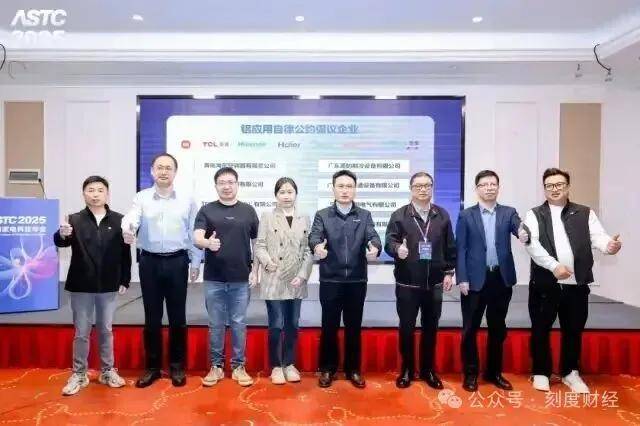
Core Viewpoint - The air conditioning industry is shifting towards aluminum as a substitute for copper, with many companies signing a self-regulatory agreement to promote this transition. However, Gree Electric Appliances, led by Chairman Dong Mingzhu, firmly opposes this shift, emphasizing the need for quality assurance before adopting aluminum technology [1][2][6]. Industry Trends - A self-regulatory agreement was signed by 19 air conditioning companies to promote the use of aluminum heat exchangers, aiming to enhance consumer trust in the technology [1][6]. - The aluminum substitution can reduce material costs by 20%-25%, with significant savings projected for manufacturers [7]. - The first domestic "aluminum substitute for copper" air conditioner is set to launch, priced approximately 20% lower than traditional copper models [7]. Gree's Position - Gree continues to prioritize copper in its products, with Dong Mingzhu stating that the technology for aluminum has not yet reached the reliability of copper [2][6]. - Gree's commitment to copper is seen as both a brand declaration and a potential strategic limitation, as the company faces increasing competition and market pressures [6][12]. Financial Performance - Gree reported a revenue of 137.18 billion yuan for the first three quarters of 2025, a decrease of 6.50% year-on-year, with a net profit of 21.46 billion yuan, down 2.27% [13][18]. - The air conditioning segment, which constitutes 78.38% of Gree's total revenue, has shown a decline, indicating a reliance on a single product line [13][18]. Competitive Landscape - Competitors like Xiaomi and Midea are adopting a more flexible approach, focusing on cost efficiency and appealing to price-sensitive consumers, which poses a threat to Gree's market share [12][20]. - Gree's average air conditioner price is significantly higher than that of competitors, limiting its competitiveness in the mid-range market [19][20]. Strategic Challenges - Gree's focus on high-quality products has led to a brand image that may be perceived as outdated by younger consumers, who prioritize smart features and design [26][27]. - The company's diversification efforts, such as the "Dong Mingzhu Health Home" initiative, have raised questions about brand identity and market positioning [30][31]. Future Outlook - The industry is moving towards aluminum technology, which may lead to Gree losing its influence in setting industry standards if it continues to resist this shift [25]. - The long-term viability of Gree's strategy of maintaining a copper-only approach is under scrutiny as market dynamics evolve [32].

2025中国品牌人物500强,华为“双雄”定局:任正非第1、余承东第3
Sou Hu Cai Jing· 2026-01-12 03:53
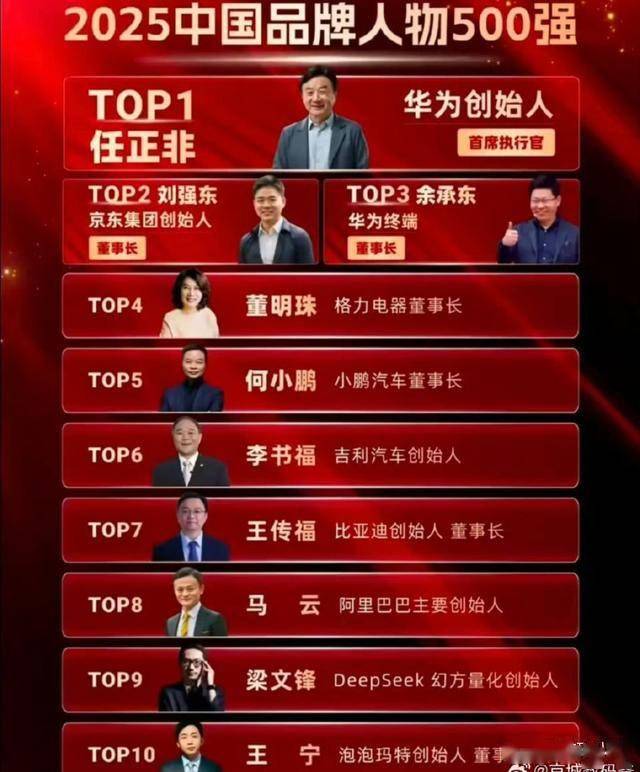
- TOP 3 余承东:华为终端董事长,"遥遥领先"的口号已经深入人心,他带领的华为终端业务,是华为 消费者业务的中流砥柱。 - TOP 4 董明珠:格力电器董事长,"铁娘子"的影响力依旧不减,是中国制造的标志性人物。 - TOP 5 何小鹏:小鹏汽车董事长,在新能源汽车的浪潮中,是中国造车新势力的领军者。 - TOP 6 李书福:吉利汽车创始人,从民营企业到收购沃尔沃,他的故事是中国汽车工业崛起的缩影。 刚刚出炉的"2025中国品牌人物500强"榜单引爆全网!华为创始人任正非毫无悬念地再次登顶榜首,而 华为终端董事长余承东也强势拿下第三名,华为成为了榜单中最大的赢家。 这份榜单的前十强,可以说是浓缩了当今中国最具影响力的商业力量: - TOP 1 任正非:华为创始人,以89岁高龄再次蝉联榜首,其带领华为突破重重封锁的传奇经历,早已 成为中国企业界的精神图腾。 - TOP 2 刘强东:京东集团创始人,凭借其强大的供应链体系,在零售和物流领域持续领跑。 - TOP 9 梁文锋:DeepSeek、幻方量化创始人,作为人工智能领域的代表,他的入选标志着科技新势力 的崛起。 - TOP 10 王宁:泡泡玛特创始人、董 ...
兆驰股份股价涨5.16%,易方达基金旗下1只基金重仓,持有47.29万股浮盈赚取18.92万元
Xin Lang Cai Jing· 2026-01-12 03:40
Group 1 - The stock of Zhao Chi Co., Ltd. increased by 5.16% on January 12, reaching a price of 8.15 CNY per share, with a trading volume of 662 million CNY and a turnover rate of 1.89%, resulting in a total market capitalization of 36.895 billion CNY [1] - Zhao Chi Co., Ltd. was established on April 4, 2005, and went public on June 10, 2010. The company specializes in the research, manufacturing, sales, and service of home audio-visual and electronic products. Its main business revenue composition is 66.90% from multimedia audio-visual products and services, and 33.10% from the LED industry chain [1] Group 2 - According to data from the top ten heavy stocks of funds, one fund under E Fund holds Zhao Chi Co., Ltd. E Fund's Zhongzheng Home Appliance Leader ETF (159328) held 472,900 shares in the third quarter, accounting for 2.48% of the fund's net value, ranking as the tenth largest heavy stock. The estimated floating profit today is approximately 189,200 CNY [2] - E Fund's Zhongzheng Home Appliance Leader ETF (159328) was established on November 7, 2024, with a latest scale of 126 million CNY. Year-to-date return is 2.46%, ranking 4270 out of 5579 in its category; the one-year return is 15.32%, ranking 3661 out of 4202; and the return since inception is 17.18% [2]

家电业务承压汇兑收益下滑,德昌股份2025年净利润同比预降超50%
Ju Chao Zi Xun· 2026-01-12 03:11
Core Viewpoint - The company forecasts a significant decline in net profit for the year 2025, with a decrease of over 50% compared to the previous year, primarily due to changes in the home appliance business environment and exchange rate fluctuations [2][3] Financial Performance Summary - The projected net profit for 2025 is estimated to be between 160 million yuan and 200 million yuan, a decrease of 210.83 million yuan to 250.83 million yuan from the previous year's net profit of 410.83 million yuan, representing a year-on-year decline of 51% to 61% [2] - The expected net profit attributable to the parent company after deducting non-recurring gains and losses is estimated to be between 145.36 million yuan and 185.36 million yuan, down from 393.25 million yuan in the previous year, indicating a decline of 53% to 63% [2] Business Segment Analysis - The automotive parts business continues to grow rapidly, while the home appliance segment faces multiple pressures, including international trade policy impacts and intensified industry competition leading to declining product prices [3] - New production capacity has been put into operation but is still in the ramp-up phase, resulting in increased amortization costs year-on-year, which negatively affects the gross margin of the home appliance business [3] - The company anticipates an exchange loss of approximately 18 million yuan for 2025, a decrease of about 60 million yuan compared to the previous year, further impacting overall performance [3]


家电、3C、汽车消费补贴落地,政策红利精准滴灌
Nan Jing Ri Bao· 2026-01-12 03:02
Group 1 - The "National Subsidy" policy has been implemented at the beginning of the year, stimulating consumer activity in sectors such as automotive, home appliances, and digital products, leading to a shift towards greener and smarter consumption [1][2] - Consumers are benefiting from significant savings, with reports of individuals saving up to 1,000 yuan on purchases by combining the "National Subsidy" with store discounts [2] - Sales data indicates a substantial increase in consumer traffic and sales volume, with a 110% increase in foot traffic at stores and a notable rise in sales of energy-efficient appliances and smart devices [2][3] Group 2 - The automotive subsidy policy has been upgraded, allowing for higher subsidies based on the price of new vehicles, with maximum subsidies of 20,000 yuan for scrapping old cars and 15,000 yuan for trade-ins [4][5] - The proportion of consumers opting for scrapping or trading in vehicles has increased from 10% to 30%, indicating a growing enthusiasm for new car purchases [5] - The "National Subsidy" policy is expected to drive further growth in the automotive market, with dealers reporting a 50% increase in customer traffic following the policy's implementation [5] Group 3 - The "National Subsidy" policy is aligned with the central government's focus on boosting domestic demand and upgrading industries, with over 2.6 trillion yuan in sales related to the trade-in program benefiting over 360 million people in the previous year [5][6] - The policy emphasizes quality upgrades and the adoption of new technologies, promoting energy-efficient and environmentally friendly products, which is expected to enhance consumer experience and drive long-term industry upgrades [6] - Retailers are adapting to the new policy by enhancing their service offerings, including integrated services for old product recycling and new product activation, to improve customer satisfaction [3][6]

中国宏观周报(2026年1月第2周)-20260112
Ping An Securities· 2026-01-12 02:40
Domestic Demand - In December 2025, retail sales of passenger vehicles in China were 2.296 million units, down 13% year-on-year, compared to a 7% decline in November[2] - Retail sales of major home appliances decreased by 28.5% year-on-year as of January 2, 2026, but improved by 8.4 percentage points from the previous value[2] - The volume of postal express deliveries decreased by 0.9% year-on-year as of January 4, 2026, a decline of 2 percentage points from the previous value[2] - Daily box office revenue for movies was 53.55 million yuan, down 26.3% year-on-year as of January 9, 2026[2] Industrial Sector - The Nanhua Industrial Index rose by 2.4% this week, with the black materials index up 2.7% and the non-ferrous metals index up 5.3%[4] - Daily average pig iron production and cement clinker capacity utilization rates increased, while the apparent demand for major steel products declined[4] - New home sales in 30 major cities fell by 38.4% year-on-year as of January 9, 2026, a decrease of 7.4 percentage points from the previous week[4] External Demand - Port cargo throughput increased by 1.1% year-on-year as of January 4, 2026, but this was a decline of 0.9 percentage points from the previous value[4] - Container throughput at ports rose by 7.7% year-on-year, an increase of 0.5 percentage points from the previous value[4] - South Korea's export value increased by 13.4% year-on-year in December, up 5 percentage points from November[4] Price Trends - The price of rebar futures increased by 0.7%, while spot prices rose by 0.6% this week[4] - Coking coal futures prices increased by 7.2%, with Shanxi coking coal spot prices remaining stable[4] - The agricultural product wholesale price index decreased slightly by 0.4% this week[4]