
半导体材料

Search documents
鼎龙股份:公司目前已成功实现光刻胶所需功能单体、主体树脂、含氟树脂等核心原料的自主研发与制备
Zheng Quan Ri Bao Wang· 2026-01-26 14:13
Core Viewpoint - The company has successfully developed and prepared core raw materials required for photoresists, including functional monomers, main resins, and fluorinated resins, which significantly reduces external dependency risks and ensures stable supply during the industrialization of high-end photoresists [1] Group 1 - The breakthrough in core raw material development lays a solid foundation for optimizing product performance and cost control [1] - The raw material research is tailored to meet the process requirements of the company's high-end photoresist products, achieving high compatibility in key indicators such as purity control and performance adaptability [1] - The company plans to continue increasing investment in core raw material research and development, enhancing technical processes, and improving product competitiveness [1] Group 2 - The company aims to actively explore the expanded application of raw material technologies, contributing to the development of China's photoresist industry [1]

价格下行与战略投入致短期承压,天岳先进2025年预亏1.85亿元-2.25亿元
Ju Chao Zi Xun· 2026-01-26 13:41
Core Viewpoint - Tianyue Advanced anticipates a significant decline in both revenue and net profit for the fiscal year 2025 compared to the previous year, primarily due to market price decreases and increased operational costs [2][3] Group 1: Revenue Forecast - The company expects to achieve an operating revenue of between 1.45 billion yuan and 1.5 billion yuan for 2025, representing a decrease of 15.17% to 17.99% compared to the previous year's revenue of 1.768 billion yuan [2] - The increase in sales volume of substrate products was not sufficient to offset the decline in overall revenue due to falling market prices [2] Group 2: Profit Forecast - The projected net loss attributable to shareholders of the parent company is between 185 million yuan and 225 million yuan, a stark contrast to the profit of 179 million yuan recorded in the previous year [2] - The net profit after deducting non-recurring gains and losses is expected to be a loss of between 235 million yuan and 275 million yuan, indicating a significant downturn [2] Group 3: Reasons for Performance Decline - The decline in revenue is attributed to both increased competition in the domestic market and strategic adjustments aimed at expanding market share, which led to lower average product prices [2] - Increased sales expenses due to efforts to penetrate emerging markets with larger-sized products and higher R&D expenses to maintain technological leadership contributed to the financial downturn [2] - Additional factors impacting net profit include increased tax-related expenses, reduced gross profit due to price declines, foreign exchange losses from currency fluctuations, increased asset impairment provisions, and additional costs associated with overseas listings [3]


南大光电(300346.SZ):公司现有ArF光刻胶产能50吨/年,目前未实施扩产
Ge Long Hui· 2026-01-26 13:06
Group 1 - The company Nanda Optoelectronics (300346.SZ) currently has an ArF photoresist production capacity of 50 tons per year [1] - The company has not implemented any expansion plans for its production capacity at this time [1]

2025年中国新材料产业一级市场投资分析报告
AMI埃米空间· 2026-01-26 06:43
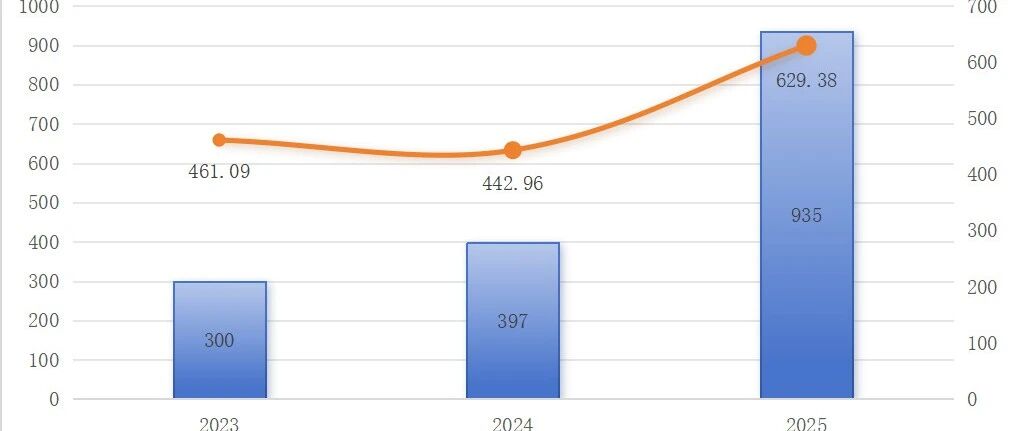
Core Insights - In 2025, China's new materials industry continued to thrive under the "14th Five-Year Plan," emphasizing technological self-reliance and nurturing new productive forces, with a significant increase in investment activities [1] - The total number of investment events reached 935, with disclosed financing amounting to 62.938 billion RMB, marking a year-on-year growth of 42.1% [1] - Investment activities in 2025 were more active and focused compared to 2024, with a 135.5% increase in events from the previous year [1] Investment Trends - The investment logic shifted from "responding to the cycle bottom" to "laying out future growth," with capital increasingly directed towards high-growth sectors like semiconductors, new energy, and biomedical materials [4] - Investment activities showed a trend of stability followed by a surge, with over 62% of events occurring in the second half of the year, indicating a systematic and sustained capital layout [4][8] - The investment stage distribution exhibited a "dumbbell" structure, with early-stage investments focusing on frontier technologies and strategic investments from industry leaders dominating the later stages [4][9] Sector Distribution - Capital was heavily concentrated in three core sectors: new energy materials (187.18 billion RMB), semiconductor materials, and synthetic biology and biomedical materials, collectively accounting for over 60% of total financing [5] - The investment direction aligns with the central government's strategic focus on emerging pillar industries like new energy and new materials [5] Regional Characteristics - Investment in the new materials industry is closely tied to regional industrial foundations, resource endowments, and policy guidance, forming distinct industrial clusters [10] - The Yangtze River Delta, Pearl River Delta, and Bohai Rim regions attracted the majority of investments due to their robust industrial chains and active capital environments [10][11] Detailed Sector Analysis New Energy Materials - Investment heat: 137 events with 187.18 billion RMB, leading in both event count and amount [12] - The focus has shifted from traditional lithium battery materials to next-generation technologies like solid-state batteries and sodium-ion batteries [12][15] Semiconductor Materials - Investment heat: 128 events with 111.46 billion RMB, targeting critical areas like photolithography and third-generation semiconductor substrates [16] - The investment strategy is increasingly focused on filling domestic gaps in key materials, with a growing emphasis on binding capital with downstream wafer fabs [16][20] Synthetic Biology and Biomedical Materials - Investment heat: 112 events with 48 billion RMB, showing the highest growth rate of 87% [21] - The focus is shifting towards clinical and commercialization stages, with significant interest in high-value implantable and regenerative medical materials [25]
AI+存储双重引爆,半导体板块盘初冲高,多股创新高开启主升浪!
Jin Rong Jie· 2026-01-26 02:57
Core Viewpoint - The semiconductor sector in A-shares is experiencing a strong upward trend, driven by multiple favorable factors including AI computing demand, a reversal in the storage cycle, and accelerated domestic substitution, leading to increased market attention and active trading in core stocks [1][2]. Group 1: Market Performance - The semiconductor sector has shown significant strength, with leading stocks like Chipone Technology and Xilinx achieving historical highs, indicating a robust structural market [1]. - The trading volume for Chipone Technology reached 4.123 billion yuan on January 23, reflecting strong capital allocation interest and active overall trading in the sector [1]. Group 2: Industry Developments - The domestic semiconductor equipment substitution rate is projected to rise from 25% in 2025 to 35% by 2026, with key equipment like etching and deposition tools exceeding 40% substitution, supported by a 15% procurement subsidy from the Ministry of Industry and Information Technology [2]. - A super cycle in memory storage is anticipated, with DRAM contract prices expected to rise over 50% and flash memory prices over 30% by Q1 2026, driven by strong demand and supply shortages [2]. - The National Big Fund Phase III has been launched with a total scale exceeding 350 billion yuan, with 40% of the initial 120 billion yuan allocated to equipment and materials, indicating unprecedented financial support for the semiconductor sector [2]. Group 3: Global Market Outlook - The global semiconductor manufacturing equipment market is expected to reach $145 billion by 2026 and $156 billion by 2027, with China projected to lead in equipment investment at approximately $39.25 billion [3]. Group 4: Benefiting Industries - The semiconductor equipment industry is set to benefit directly from global wafer fab expansions and accelerated domestic substitution, with AI computing demand driving significant increases in equipment needs [4]. - The semiconductor materials industry will see growth in demand for materials like photoresists and specialty gases, as domestic equipment manufacturing increases and global expansions accelerate [4]. - The AI server industry is projected to see a surge in shipments, with estimates of over 3 million units in 2026, further driving demand for storage and computing chips [4].
半导体光刻胶行业更新
2026-01-26 02:50
Summary of Conference Call on the Electronic Industry and Photoresist Market Industry Overview - The conference focused on the electronic industry dynamics and updates on the photoresist sector, highlighting the current market's vibrancy and key areas of investor interest, including commercial aviation and domestic computing power [1][2]. Key Points and Arguments Domestic Computing Power and Replacement - The domestic computing power sector is gaining attention, particularly regarding major cloud service providers like ByteDance and Alibaba, and their bidding activities [1]. - The domestic replacement trend is significant, especially with upcoming IPOs of major storage manufacturers, raising questions about potential investment opportunities [1][2]. Photoresist Market Dynamics - The photoresist market is categorized into semiconductor-grade and display-grade, with the domestic market size estimated at around 10 billion RMB, with semiconductor-grade photoresists accounting for 70-80% of this market [6][7]. - The market is dominated by Japanese and Korean manufacturers, holding approximately 88% of the global market share, while domestic production is gradually increasing, with a current localization rate of 30-40% [8][9]. Supply Chain and Challenges - The supply chain for photoresists faces challenges, particularly in raw materials and production equipment, which are heavily reliant on imports [15][16]. - Key raw materials include solvents (50-90% of the composition) and resins (10-40%), with domestic production still lagging behind in quality compared to imports [15][16]. Impact of Japan's Export Controls - The recent escalation in technology competition between China and Japan has created investment opportunities in materials, components, and equipment [5]. - Concerns about potential supply disruptions due to Japan's export controls are noted, but it is believed that the impact will not be as severe as anticipated, given existing inventories and the willingness of some suppliers to maintain business relationships [14]. Company-Specific Insights Major Domestic Players - **HuaMao Technology**: Achieved 80-90% production capacity for I-line and G-line photoresists, with revenues exceeding 100 million RMB [17][18]. - **Tongcheng**: Expected to generate 300 million RMB in revenue in 2024, with a 30% growth forecast for 2025, focusing on mid-to-low-end photoresists [19]. - **Nanda**: One of the earliest companies in China to engage in photoresist R&D, currently developing its own resin capabilities [19]. - **Shanghai Xinyang**: Produces I-line, KRF, and ARF photoresists, with a focus on resin synthesis [20]. Additional Important Content - The conference highlighted the potential for accelerated domestic validation and replacement of photoresists due to the current geopolitical climate, with a shift in focus towards local production capabilities [12][13]. - The verification cycle for new photoresist products is expected to shorten from 3-5 years to approximately one year due to increased demand for supply chain security [13]. This summary encapsulates the key discussions and insights from the conference call, providing a comprehensive overview of the electronic industry and the photoresist market dynamics.


神工股份:拟终止“集成电路刻蚀设备用硅材料扩产项目”
2 1 Shi Ji Jing Ji Bao Dao· 2026-01-26 02:31
Core Viewpoint - The company, ShenGong Co., Ltd. (688233.SH), has announced the termination of its fundraising project for the "Silicon Material Expansion Project for Integrated Circuit Etching Equipment" due to significant changes in the global and Chinese market environment [1] Group 1: Project Termination - The company plans to permanently supplement its working capital with the remaining raised funds amounting to 131.947 million yuan (including interest income and cash management returns) [1] - The original planned investment for the project was 209.0566 million yuan, with a cumulative investment of 82.3133 million yuan as of January 23, 2026, representing a progress rate of 39.37% [1] - Following the termination, the corresponding fundraising account will be canceled, and the remaining funds will be redirected to support the company's daily operations related to its main business [1] Group 2: Market Conditions - The decision to terminate the project is primarily based on significant changes in the global semiconductor market demand structure [1] - While the high-end market driven by artificial intelligence is experiencing robust growth, the mature process-related market remains sluggish, leading to slower-than-expected recovery in overall demand for silicon materials used in etching equipment [1] - The company's capacity utilization rate is insufficient due to these market conditions [1]

中国又一超级王牌,比稀土稀缺100倍!或将领导新一轮半导体革命
Sou Hu Cai Jing· 2026-01-24 14:12
Core Insights - The article discusses the significance of antimony, gallium, and germanium, which are less abundant than rare earth elements but are crucial for various high-tech applications. China produces over 70% of the global supply of these metals, primarily extracted from industrial waste rather than mined directly [1][3][4]. Group 1: Metal Abundance and Importance - Gallium and germanium are extremely rare, with gallium's abundance in the earth's crust at 0.0015% and germanium at 0.00015%, making them significantly less common than iron and aluminum [3][4]. - Antimony, while having independent deposits mainly in China and Russia, is also scarce, with a crustal abundance of only 0.0001% [3][4]. - These metals are essential for various applications, including semiconductors, military technology, and advanced materials [6][7]. Group 2: China's Industrial Advantage - China has developed a robust aluminum and zinc smelting industry, which allows for the recovery of gallium and germanium from waste products [9][10]. - The country has made significant advancements in refining techniques, achieving a high purity level of gallium (99.9999%) necessary for semiconductor applications [12][13]. - By 2020, China's high-purity gallium production accounted for over 90% of the global supply, showcasing its industrial capabilities [13]. Group 3: Technological Developments and Market Dynamics - The third-generation semiconductor materials, such as silicon carbide and gallium nitride, are becoming increasingly important, with gallium being a critical component [24][25]. - In 2023, the domestic market for power electronics using these materials surpassed 7 billion yuan, growing at an annual rate of over 20% [27]. - Chinese companies are achieving breakthroughs in core technologies, enhancing production efficiency and quality in semiconductor materials [28][30]. Group 4: Export Controls and Market Impact - In 2023, China implemented export controls on gallium, germanium, and antimony, requiring licenses for exports, which has significantly reduced export volumes [31][33]. - The price of antimony surged from around $10,000 per ton at the beginning of the year to $25,000 by the end, reflecting the impact of these controls on global markets [34]. - The U.S. Treasury Secretary expressed concerns about China's control over rare metals, indicating a potential shift in the global supply chain dynamics [34][36]. Group 5: Future Outlook - The article suggests that rebuilding a rare metal supply chain in the West will be a long and challenging process, requiring significant industrial infrastructure and expertise [36][39]. - China's strategy appears to focus on moving up the value chain from raw materials to high-end products, aiming for greater control and profitability in the global market [40].

德邦科技:芯片底部填充材料等几个品类的先进封装材料2025年已有小批量交付
Zheng Quan Ri Bao Wang· 2026-01-23 14:16
Core Viewpoint - The company, Debang Technology, indicates that advanced packaging materials such as chip underfill materials, chip frame AD glue, and chip bonding DAF/CDAF films are still in the early stages of development in China, with market share predominantly held by foreign manufacturers from Japan, South Korea, Europe, and the United States [1] Group 1 - The domestic market for advanced packaging materials is currently limited, with few manufacturers capable of validation or introduction [1] - The company is actively investing in research and development to keep pace with the domestic production process and has achieved mass production capabilities [1] - Small batch deliveries of advanced packaging materials are expected by 2025 for several categories, including chip underfill materials, chip frame AD glue, and chip bonding DAF/CDAF films [1] Group 2 - The company anticipates an acceleration in the domestic production process and is looking forward to customers actively adopting large-scale usage of these materials [1]

神工股份:关于终止部分募投项目并将节余募集资金永久补充流动资金的公告
Zheng Quan Ri Bao Zhi Sheng· 2026-01-23 14:15
Core Viewpoint - The company, ShenGong Co., has announced the termination of its fundraising project for the "Silicon Material Expansion Project for Integrated Circuit Etching Equipment" and plans to permanently supplement its working capital with the remaining raised funds amounting to 131,946,959.87 yuan, including interest income and cash management returns [1] Group 1 - The company has decided to terminate the implementation of the fundraising project [1] - The remaining funds of 131,946,959.87 yuan will be used to supplement working capital [1] - This decision has been approved by the company's third board of directors' audit committee and strategic committee meetings [1]