
民航

Search documents
民航系统举办学习贯彻党的二十届四中全会精神宣讲报告会
Zhong Guo Min Hang Wang· 2025-11-14 13:46
Core Points - The Civil Aviation Administration of China (CAAC) emphasizes the importance of studying and implementing the spirit of the Fourth Plenary Session of the 20th Central Committee as a major political task for the current and future periods [2][3] - The session's resolutions, particularly the "Suggestions" for the 15th Five-Year Plan, are seen as a significant mobilization for advancing Chinese-style modernization and will have a profound impact on the development of the Party and the country [2][3] Summary by Sections Meeting Highlights - The meeting was attended by key officials including CAAC Secretary and Director Song Zhiyong, who stressed the need for political awareness and unity among party organizations and members [2][5] - The session was conducted via a teleconference format, involving various levels of leadership within the CAAC [5] Key Messages from the Fourth Plenary Session - Song Zhiyong highlighted the importance of Xi Jinping's speech during the session, which provided a comprehensive overview of the drafting process, main considerations, and key issues of the "Suggestions" [3] - The speech addresses significant theoretical and practical questions regarding economic and social development during the 15th Five-Year Plan period, emphasizing high-quality development and modernization [3] Strategic Focus for the 15th Five-Year Plan - The "Suggestions" outline major achievements during the 14th Five-Year Plan and the strategic tasks for the upcoming period, with clear goals and practical measures [3][4] - The CAAC aims to enhance its leadership role in the development planning and implementation of civil aviation, focusing on high-quality development and addressing new demands in aviation services [4] - Key areas of focus include safety management, service quality, infrastructure development, innovation in science and education, green transformation, and improved governance capabilities [4]


第二届民航行业文化论坛在中国民航大学举办
Zhong Guo Min Hang Wang· 2025-11-14 12:43
《中国民航报》、中国民航网 记者蒲婉莹 通讯员陈红叶 报道:11月14日,第二届民航行业文化论坛在 中国民航大学举办。民航局相关领导、行业专家学者、院校代表以及民航相关企事业单位负责人等百余 人齐聚一堂,通过政策解读、经验分享、实地观摩等多种形式,共商民航文化建设新路径,为行业高质 量人才培育和高质量发展注入文化动能。 本届论坛以"新时代民航安全文化建设与高质量人才培养"为主题,设置了1个主论坛和"两业融合视域下 的民航安全文化建设""民航安全文化建设与民航院校担当"2个分论坛,旨在深入贯彻习近平总书记对民 航安全工作的重要指示批示精神,落实总体国家安全观,推动新时代民航安全文化建设与高质量人才培 养深度融合。 论坛核心议程聚焦民航安全文化政策解读和实践经验分享。参与嘉宾针对《关于加强新时代民航安全文 化建设的意见》,深入阐释了"生命至上、安全第一、遵章履责、崇严求实"的核心价值理念,为行业安 全文化建设提供了根本遵循;行业专家结合一线飞行经验,提出安全文化建设必须坚守"严+细+实"的 底线,并从行业管理、企业实践视角,分享了在航空运输生产过程中锤炼"安全文化力"的宝贵经验。 安全文化是民航文化的灵魂,是高质 ...
机构:多地中小学秋假带火“淡季”旅游,部分热门航线机票售罄
Bei Jing Shang Bao· 2025-11-13 06:36
Group 1 - The tourism market is experiencing a surge due to the autumn holiday effect, with popular destinations and attractions seeing a significant increase in demand [1][6] - Shanghai Disneyland has sold out all tickets for the period from November 13 to 18, indicating high visitor interest [6] - Domestic air travel is also witnessing a peak, with some popular flight routes experiencing supply shortages for tickets [1][6] Group 2 - Average ticket prices for domestic flights from November 12 to 23 to regions like Sichuan, Zhejiang, Guangdong, and Hubei are approximately 700 yuan, reflecting a year-on-year increase of about 7% [6] - Popular flight routes during the autumn holiday include Chengdu to Sanya, Chengdu to Haikou, and Hangzhou to Xiamen, with some flights already sold out [6]

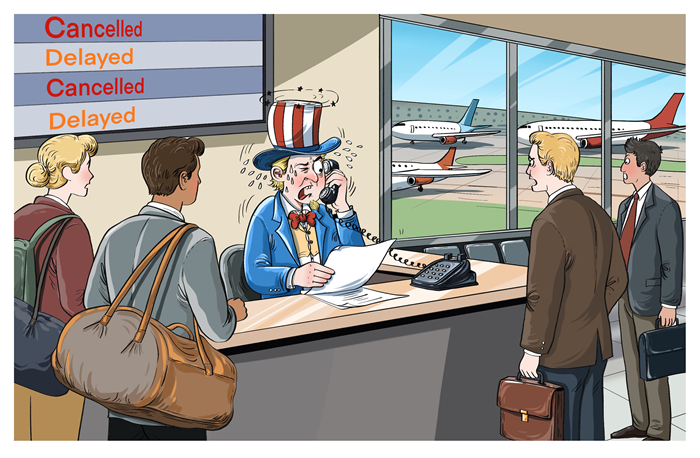
漫评美政府“停摆”创纪录:“飞不动”
人民网-国际频道 原创稿· 2025-11-13 02:10
这次持续时间最长的"停摆"对美国民航业造成灾难性的打击。自"停摆"以来,空中交通管制员和机 场安检人员被迫无薪工作,请假人员日渐增多,民航业人手短缺。多个主要机场的航班延误或取消,截 至11日上午,美国境内已有超过1100趟航班被取消、850趟航班延误。 此外,本次"停摆"对医疗、食品等领域都造成严重打击。尽管目前美国国会参议院已就结束联邦政 府"停摆"达成一致,但"关门"的负面影响仍在蔓延。 漫画作者:谭希光(人民网版权图片,未经授权请勿转载) 美国政府本次"停摆"已打破先前35天的纪录,创美国政府"停摆"历史新高。 ...
民航局印发《2025年冬季民航运行保障总体方案》
Zhong Guo Min Hang Wang· 2025-11-11 05:04
Core Insights - The Civil Aviation Administration of China (CAAC) has issued the "2025 Winter Civil Aviation Operation Guarantee Overall Plan" to enhance safety and efficiency during the winter season [2] Group 1: Operational Principles - The plan emphasizes three operational principles: "safety as the foundation, precise assessment," "refined measures, dynamic response," and "collaborative linkage, closed-loop efficiency" [2] - A comprehensive risk prevention, resource scheduling, and multi-party collaboration system is established to ensure smooth operations [2] Group 2: Performance Goals - The plan sets a target for the average flight punctuality rate to be no less than 88% and the average takeoff delay time to be less than 8 minutes from December 2025 to February 2026 [2] - Strict control standards are established for major airports and domestic passenger airlines regarding long delays, in-flight delays, and flight cancellations [2] Group 3: Core Measures - Eight core measures are outlined, including seasonal operation preparation, capability assessment, adverse weather response, flight dynamic adjustment, operational organization coordination, delay information communication, service guarantee collaboration, and post-event review [3] - The plan highlights the need for risk assessment, scenario planning, and resource preparation, including de-icing materials and equipment [3] Group 4: Coordination and Responsibility - The plan mandates strict implementation of responsibilities by regional management bureaus, airlines, airport companies, and air traffic control agencies, relying on a three-tiered collaborative mechanism [4] - Regulatory bodies are required to enhance oversight of key processes and ensure effective implementation of measures to safeguard aviation safety and passenger experience [4]
从121.9到126:上海重点产业国际竞争力指数六年间持续提升
Xin Hua Cai Jing· 2025-11-10 07:29
Core Insights - The "2024-2025 Shanghai Key Industries International Competitiveness Index Report" indicates that Shanghai's key industries competitiveness index increased from 121.9 in 2019 to 126 in 2024, reflecting a cumulative growth of 4.1 over six years, transitioning from "speed chasing" to "quality leading" in strategy [1][2]. Industry Analysis - The report highlights that in 2024, industries such as new energy vehicles, biomedicine, integrated circuits, and shipbuilding and marine engineering are the primary contributors to the competitiveness index, forming the "first tier" of Shanghai's key industries [2]. - Advanced materials, artificial intelligence, and civil aviation are identified as "frontier fields" in a critical phase of technological accumulation and market expansion, expected to become new growth points for Shanghai's industrial competitiveness [2]. - Traditional industries like petrochemicals and steel are undergoing transformation and upgrading, with a reduction in output value but still maintaining large scale, potentially reshaping competitive advantages through integration with emerging industries [2]. Sector-Specific Insights - The competitiveness of the new energy vehicle industry reflects Shanghai's early advantages in green and low-carbon transformation, with recommendations to deepen smart factory construction and supply chain collaboration to enhance industrial efficiency [2]. - The integrated circuit sector has seen the largest competitiveness increase in both international and domestic markets, attributed to its comprehensive industry chain layout and large-scale production of high-end equipment, with a call for continued investment in cutting-edge fields to overcome key technological bottlenecks [2][3]. Strategic Recommendations - The report suggests that global industrial competition has shifted from relying on scale, cost, and single-point technological advantages to focusing on rule systems, technological innovation, green compliance, digital operations, and regional collaboration [3]. - It emphasizes the need for Shanghai's industrial policies to transition from "factor aggregation" to "system capability," forming a systemic competitiveness structure centered on technology, institutions, and ecology [3].
单霁翔在西部机场集团开讲:以文化力量赋能人文机场建设
Zhong Guo Min Hang Wang· 2025-11-08 05:41
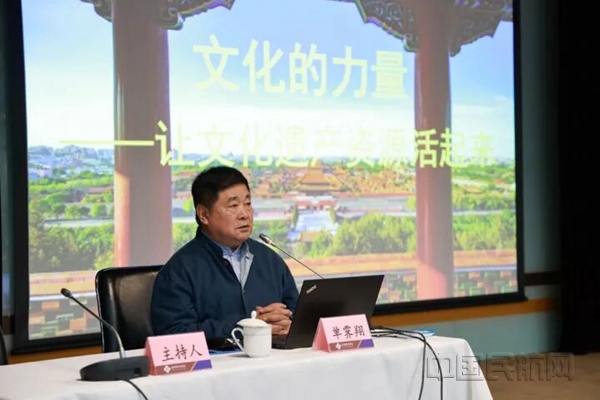
Core Insights - The Western Airport Group hosted a lecture themed "The Power of Culture - Revitalizing Cultural Heritage Resources," featuring expert Shan Jixiang, former director of the Palace Museum [1][2] - The lecture aimed to enhance cultural awareness among the group's management and employees, emphasizing the integration of cultural elements into airport operations [1][5] Group 1: Shan Jixiang's Contributions - Shan Jixiang is recognized as a leading figure in cultural heritage protection and revitalization, with a career spanning various roles, including director of the National Cultural Heritage Administration [2] - During his tenure as the director of the Palace Museum, he implemented significant initiatives that increased annual visitor numbers from 15 million to 19 million and achieved over 2 billion yuan in annual sales of cultural products [2] Group 2: Cultural Heritage Utilization - Shan emphasized that the core principles of cultural heritage revitalization are protection as a prerequisite, inheritance as the core, and innovation as the path [3] - He provided insights on how airports can serve as cultural showcases, suggesting that they should not only function as transportation hubs but also as windows for cultural display and regional identity [3] Group 3: Western Airport Group's Cultural Initiatives - The Western Airport Group has developed a unique "Aviation + Culture" model, integrating cultural elements into all aspects of airport planning and operations [4] - Notable projects include the "Sunshine Avenue" in T5 terminal, which uses light and shadow art to reflect the prosperity of the Silk Road, and the establishment of the first comprehensive airport museum in China [4][5] Group 4: Future Directions - The group plans to deepen the integration of culture and civil aviation, focusing on regional cultural resources like Silk Road and Yellow River cultures, and enhancing the Western Airport Museum [5] - The aim is to create a culturally rich travel experience for passengers, thereby improving the airport's cultural soft power and competitive edge [5]
碳达峰碳中和的中国行动白皮书丨白皮书:中国重点领域低碳发展深入推进
Xin Hua Wang· 2025-11-08 02:31
Core Points - The white paper titled "China's Actions on Carbon Peak and Carbon Neutrality" emphasizes the deepening of low-carbon development in key sectors, integrating carbon peak and carbon neutrality into the overall economic and social development strategy [1] - Key sectors identified for carbon emissions include industry, transportation, construction, and residential life, which significantly impact the achievement of carbon peak and carbon neutrality [1] Group 1: Industrial and Economic Transformation - China is promoting collaborative innovation and integrated development between traditional and emerging industries, optimizing and upgrading industrial structures, and advancing the development of green low-carbon industries [1] - The level of industrial green low-carbonization is continuously improving, with a focus on curbing high energy consumption, high emissions, and low-level projects [1] - The government is updating binding standards for key industries regarding environment, energy efficiency, water efficiency, and carbon emissions, while legally eliminating backward production capacity [1] Group 2: Transportation Sector - China is developing low-carbon transportation tools and equipment, optimizing transportation structures, and forming a modern comprehensive transportation system that is safe, convenient, efficient, green, and economical [2] - The country is rapidly promoting new energy vehicles, achieving the fastest global speed and largest scale in the promotion and application of these vehicles [2] - The electrification level of railways is world-leading, and there is a push for ships and aircraft to adopt clean energy [2] Group 3: Urban and Rural Development - China is accelerating the transformation of urban and rural construction methods, enhancing the green low-carbon development level and living quality in urban and rural areas [2] - The pace of low-carbon transformation in urban planning and construction is quickening, with significant improvements in building energy efficiency and a trend towards cleaner and low-carbon energy use in buildings [2] Group 4: Public Engagement and Lifestyle Changes - The white paper highlights the implementation of green low-carbon actions among the public, with a growing number of people consciously choosing a simple, moderate, green, low-carbon, and healthy lifestyle [2]
白皮书:中国重点领域低碳发展深入推进
Xin Hua She· 2025-11-08 02:11
Core Viewpoint - The white paper "China's Action on Carbon Peak and Carbon Neutrality" emphasizes the deepening low-carbon development in key sectors, integrating carbon peak and carbon neutrality into the overall economic and social development, and accelerating the establishment of green and low-carbon production and lifestyle to inject strong green momentum into high-quality development [1]. Group 1: Key Sectors and Strategies - Key sectors such as industry, transportation, construction, and residential life are significant contributors to carbon emissions and play a crucial role in achieving carbon peak and carbon neutrality [1]. - China is promoting collaborative innovation and integrated development between traditional and emerging industries, optimizing and upgrading industrial structures, and advancing the development of green and low-carbon industries [1]. - The level of industrial green and low-carbonization is continuously improving, with a focus on curbing high energy consumption, high emissions, and low-level projects, while updating binding standards for environmental, energy efficiency, water efficiency, and carbon emissions [1]. Group 2: Transportation and Urban Development - China is developing low-carbon transportation tools and equipment, optimizing transportation structures, and forming a modern comprehensive transportation system that is safe, convenient, efficient, green, and economical [2]. - The promotion of new energy vehicles has achieved the fastest global speed and the largest scale, with leading levels of railway electrification and initiatives for clean power in ships and aircraft [2]. - Urban and rural construction methods are being transformed, with improvements in green low-carbon development levels and living quality, alongside accelerated low-carbon transitions in urban planning and construction [2]. Group 3: Public Engagement and Lifestyle Changes - The implementation of green and low-carbon actions among the public is deepening, with a growing number of people consciously choosing a simple, moderate, green, low-carbon, and healthy lifestyle [2].
国际观察丨美联邦政府“停摆”近纪录 民众“伤不起”
Xin Hua Wang· 2025-11-04 01:21
Core Points - The U.S. federal government shutdown has reached its 34th day, nearing the record of 35 days set in late 2018 to early 2019, causing significant disruptions in various sectors, particularly aviation, food assistance, and healthcare [1] - The ongoing political deadlock between the Republican and Democratic parties is exacerbating the situation, with both sides using the shutdown to further their political agendas without signs of compromise [1][9] Aviation Industry - Approximately 13,000 air traffic controllers and 50,000 airport security personnel are working without pay, leading to staffing shortages and increased flight delays across the country [2][3] - Nearly half of the major air traffic control facilities in the U.S. are experiencing personnel shortages, with 90% of air traffic controllers in the New York area absent from work [3] - On November 2, nearly 4,300 flights were delayed and over 550 flights were canceled, indicating a severe impact on air travel [3] Food Assistance and Healthcare - The federal food assistance program, the Supplemental Nutrition Assistance Program (SNAP), ceased issuing benefits on November 1, affecting 42 million Americans, many of whom live below the poverty line [6] - The new enrollment period for the Affordable Care Act began on November 1, with 24 million participants expected, but rising premiums are anticipated due to the lack of agreement on government subsidies [8] - The Congressional Budget Office estimates that the shutdown could reduce the U.S. GDP growth rate by 1-2 percentage points in Q4, translating to potential economic losses of $7 billion to $14 billion depending on the duration of the shutdown [8] Political Dynamics - The shutdown is primarily driven by a stalemate over healthcare spending, with both parties unwilling to compromise, and each using the situation to advance their political goals [9][10] - The Republican party is seen as leveraging the shutdown to push for government downsizing, while the Democratic party aims to maintain support among low-income voters by advocating for food assistance [10]
