纺织服装

Search documents
消费温和复苏,悦己型春节消费崭露头角
Zhong Guo Yin He Zheng Quan· 2026-02-23 10:45
Investment Rating - The report does not explicitly state an investment rating for the industry Core Insights - The consumption sector is experiencing a mild recovery, with notable changes in consumption structure and patterns, particularly during the Spring Festival period. The government has initiated special activities to stimulate consumption and promote reasonable price increases [1][2] - There is a significant increase in consumer traffic and spending in key retail and dining sectors, although the market remains skeptical about a full recovery. For instance, the essential and non-essential consumption indices in Hong Kong saw declines during the Spring Festival [1][2] - New consumption trends are emerging, driven by smaller family structures and increased car ownership, leading to a rise in self-driving travel and experiential consumption [1][2] Summary by Sections 1. Spring Festival Consumption Monitoring - During the Spring Festival from February 2 to 20, 2026, cross-regional mobility increased by 5.1% compared to the same period in 2025, with significant growth in railway (4.1%), waterway (21.2%), and civil aviation (5.9%) passenger volumes [6][7] - The average ticket price for flights rose by 1.6% compared to 2025 and by 5.9% compared to pre-pandemic levels in 2019 [6] 2. Cultural and Tourism Consumption - The increase in car ownership and changes in population structure have led to a shift towards "self-pleasing" consumption during the Spring Festival, with a notable rise in self-driving trips and experiential activities [11] - The trend of "reverse New Year" is growing, where young people invite their parents to cities for celebrations, reflecting a shift away from traditional family gatherings [11] - The tourism sector saw a surge in hotel bookings in regions like Chaoshan, with Shantou experiencing a 186% increase in bookings compared to the previous year [11] 3. Hainan Duty-Free Consumption - Hainan's duty-free sales reached 9.7 billion yuan during the first four days of the Spring Festival, marking a 15.8% increase year-on-year [15][17] - Sales in Sanya's duty-free shops on the first day of the Lunar New Year hit 2.04 billion yuan, setting a record for the day [15] 4. Spring Festival Movie Box Office - The box office for the 2026 Spring Festival period reached 4.858 billion yuan, with a significant drop compared to the previous year, attributed to fewer blockbuster films [18][21] 5. Consumer Price Index (CPI) - The CPI showed signs of recovery, with year-on-year increases of 0.2%, 0.7%, and 0.8% in October, November, and December 2025, respectively. The growth was driven by rising prices in fresh produce and household goods [25]
复盘系列(四):春节之后
Changjiang Securities· 2026-02-23 07:26
- The report analyzes the post-Spring Festival performance of various indices from 2007 to 2025, highlighting structural differences in returns and win rates between small/micro-cap indices and large-cap indices. Specifically, the Wind Micro-Cap Index and CSI 2000 Index showed the highest win rates (89.5%) and median returns (11.22% and 8.47%, respectively) over 20 days post-festival, outperforming indices like CSI 300 and Wind All A Index[2][8][13] - Liquidity recovery post-festival is identified as a key driver for the outperformance of small/micro-cap indices. The Wind Micro-Cap Index exhibited the highest increases in average daily turnover over T+5, T+10, and T+20 intervals (30.7%, 42.7%, and 52.9%, respectively), followed by the CSI 2000 Index (26.4%, 37.0%, and 51.7%). In contrast, the CSI 300 Index showed relatively lower turnover growth (18.9%, 23.1%, and 30.5%)[8][17][18] - Industry-wise, growth and cyclical sectors performed better post-festival, while financial sectors underperformed. The electronics sector had the highest median return over 20 days (9.10%) with a win rate of 84.2%, followed by the environmental protection sector with a win rate of 94.7% and a median return of 7.02%. Other strong-performing sectors included textiles and apparel, paper and packaging, and non-metallic materials, all with win rates above 80% and median returns exceeding 5%[2][19][24]
分析师“春节见闻”!有何投资机遇?服务型消费成C位
Sou Hu Cai Jing· 2026-02-23 04:23
Core Insights - The annual analyst field survey during the Spring Festival reveals significant trends in China's economy, with a focus on consumer behavior and industrial developments [1] Consumer Insights - Service-oriented consumption has emerged as a key focus, with analysts noting a strong demand for service consumption during the Spring Festival, particularly in Shanghai, where logistics and service sectors thrived [3] - Observations from Jiangsu province indicate a structural upgrade in consumer behavior, shifting from product-centric to a balance of goods and services, with notable increases in prices and consumption levels in entertainment and dining [3] - The rise of new consumption patterns, such as KTV and cinema attendance, reflects a broader trend towards experiential and service-based spending [2][3] Industrial Insights - Analysts report a rise in new productive forces across various regions, with traditional industries undergoing significant upgrades [5] - In Dalian, the port's logistics advantages have fostered a traditional industrial cluster focused on petrochemicals and equipment manufacturing, with a shift towards refined production processes [5] - Shandong's industrial transformation is highlighted by significant investments in new energy storage technologies, indicating a growing focus on innovative industrial applications [6] Overseas Opportunities - Analysts emphasize the potential for Chinese companies to expand overseas, particularly in Southeast Asia, with Indonesia identified as a key market for Chinese enterprises [7] - The importance of localizing products for the Southeast Asian market is underscored, with successful examples like Mengniu and Mixue demonstrating effective market entry strategies [7] - Observations from Sydney indicate rising prices in consumer goods and housing, highlighting economic challenges in international markets [7]
制造业“硬实力”遇上服务业“软实力”,会激荡出怎样的能量? 广东给出答案:融则强 合则胜
Xin Lang Cai Jing· 2026-02-22 01:29
Core Insights - Guangdong is focusing on the "coordinated development of manufacturing and service industries" at the high-quality development conference, signaling a strong push for industrial transformation through deep integration of these sectors [1][2]. Manufacturing Industry - Guangdong's manufacturing base is robust, with the super high-definition video display industry cluster recently surpassing 1 trillion yuan in revenue, marking it as the first in the nation to achieve this milestone [2]. - By 2025, the added value of high-tech manufacturing in Guangdong is expected to account for 34.7% of the industrial output, while equipment manufacturing will represent 59.6%, exceeding national averages by 17.6 and 22.8 percentage points respectively [2]. - The province is home to ten trillion-yuan industrial clusters, including electronics, textiles, and new energy, which are crucial for supporting its economic backbone [2]. Service Industry - The modern service industry is positioned as a core engine for high-quality development, with its added value projected to reach 8.5 trillion yuan by 2025, making up 58.3% of GDP [3]. - There is a notable gap in the proportion of productive service industries compared to developed economies, indicating a need for Guangdong to transition from being a "world factory" to a "global service hub" [3][4]. Policy and Strategy - The Guangdong government has initiated measures to promote deep integration between manufacturing and productive services, focusing on 12 dimensions to create a systematic framework for collaboration [4][5]. - The province aims to establish 100 clusters for productive services by 2027, moving from isolated breakthroughs to comprehensive collaboration across regions [4]. Innovation and R&D - Guangdong leads the nation in innovation capabilities, with significant investments in R&D and a high number of high-tech enterprises [6]. - The province has implemented reforms to facilitate the transformation of scientific achievements into practical applications, significantly reducing costs for SMEs [6]. Case Studies - Zhijing Technology is transforming the garment industry in Guangzhou by integrating digital technology into the entire manufacturing process, enhancing efficiency and collaboration among small and medium-sized enterprises [10][11]. - Shugen Internet is pioneering digital maintenance services in the shipbuilding sector, creating a new industrial model that combines manufacturing with high-end services [12][14].
美国1750亿美元关税退税,对A股的影响(附50股)
Sou Hu Cai Jing· 2026-02-21 11:41
Group 1 - The core point of the article is that the recent US Supreme Court ruling on the $175 billion tariff refund has significant implications for both China and the A-share market, despite the refund being an internal US matter [2][6][28] - The $175 billion in tariffs was primarily collected from imports, including a 10% tariff on Chinese goods, and is now being refunded to US importers [8][10] - The refund will indirectly benefit Chinese companies as US importers, who have been financially strained by tariffs, will use the refunded money to pay off debts to Chinese suppliers and resume orders [12][14][28] Group 2 - The immediate impact on the A-share market is expected to be positive, with a potential "opening red" for A-shares as market sentiment improves following the ruling [40][46] - The ruling is seen as a signal that the previous high tariffs on Chinese goods may not be a permanent state, which could lead to a more favorable environment for Chinese exports [20][48] - Structural opportunities in the A-share market are identified, focusing on five main lines: export-oriented sectors, domestic substitution, strategic resources, domestic consumption, and new energy [51][62][88] Group 3 - Export-oriented sectors, particularly those with high exposure to the US market, are expected to benefit directly from the tariff refunds, with companies like Midea Group and Haier expected to see improved performance [52][72][73] - Domestic substitution and self-sufficiency in sectors like semiconductors and military equipment are highlighted as long-term strategic focuses, with companies like SMIC and AVIC Shenyang Aircraft being key players [53][78][86] - Strategic resources such as rare earths and gold are also expected to see price support due to ongoing global supply chain disruptions, benefiting companies like Northern Rare Earth and Shandong Gold [56][87]




华泰 | 海外看中国:海外上市公司如何看中国修复
Xin Lang Cai Jing· 2026-02-20 01:40
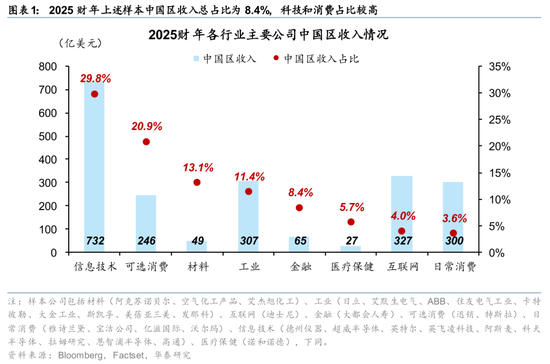
Core Insights - Domestic demand recovery is ongoing, with technological advancements and emotional consumption as structural highlights [1] - 45% of multinational companies reported improved performance in Q4 2025, while 33% expect further improvement [1][5] - The real estate sector continues to drag down growth, but there are notable structural strengths, particularly in technology and service consumption [1][5] Domestic Demand - Overall domestic demand remains weak, but there are structural highlights such as optimistic prospects for renovation in coatings and elevators [2][12] - Service and emotional consumption are experiencing high demand, with companies like Estée Lauder and Procter & Gamble reporting double-digit growth in specific product lines [2][12] - Companies are adapting to trade friction by increasing localization, with ABB reporting over 85% localization in China [2][12] Trade Friction - Localization strategies are being adopted by companies to mitigate the impact of trade tensions, with some firms shifting to local development and sales models [2][12] - Companies like SKF are facing supply chain pressures due to trade policy uncertainties, but are implementing measures to manage these risks [34] Technology - There is a slight decline in external demand for technology products, with a trend towards domestic substitution becoming evident [3][13] - Traditional companies are benefiting from increased demand driven by technological advancements, particularly in the semiconductor sector [3][13] - U.S. export restrictions and domestic competition are impacting overseas companies' revenues in China [3][13] Industry Summaries Materials and Industrial - Demand for materials and industrial products is generally weak, but there are structural demands in electronic gases due to the semiconductor industry [14][26] - The coatings sector is showing resilience due to renovation demand, while traditional electrical and elevator businesses are facing declines [14][27] Consumer Sector - The consumer sector shows significant differentiation, with companies like Uniqlo experiencing revenue declines due to increased competition [20][21] - High-end products in the beauty sector are performing well, while food and beverage sectors are facing slight declines [21][22] Financial Services - MetLife's operations in China are showing strong recovery, with a focus on optimizing distribution channels and enhancing service offerings [19][41] - The company is transitioning away from telemarketing and focusing on high-end customer segments [41] Technology Hardware - Semiconductor companies maintain a high revenue share in China, but face challenges from export controls and supply chain adjustments [23][30] - Companies like Intel and AMD are experiencing delays and increased competition from local manufacturers [30][31] Machinery - Caterpillar anticipates positive growth in the Chinese market, particularly in larger excavators, while SKF is facing challenges in the automotive sector [32][33] - Companies are adjusting their strategies to focus on local development and sales, with a shift in production towards Southeast Asia [39]
“羊绒工厂”直播忙
Xin Lang Cai Jing· 2026-02-19 21:59
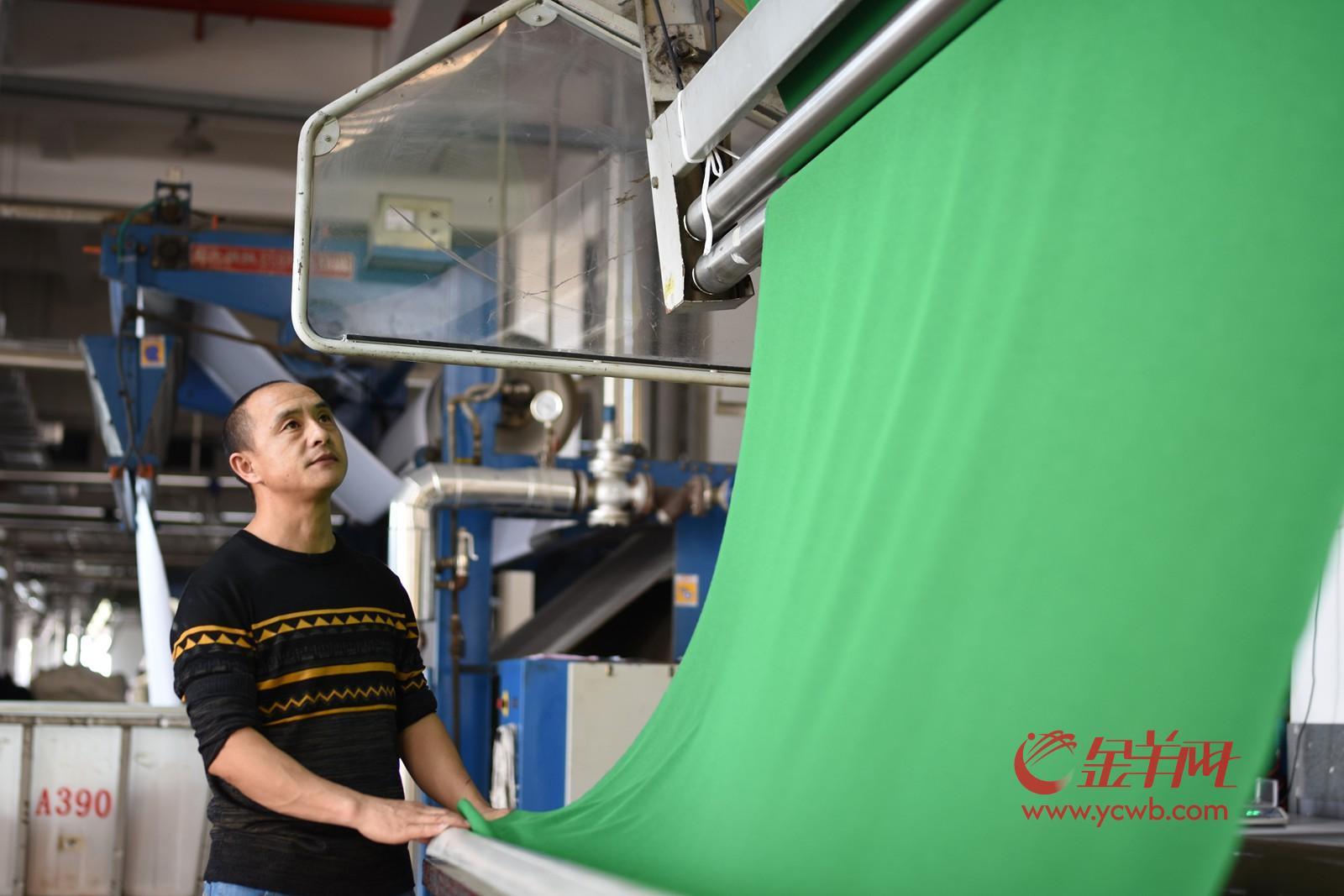
Group 1: Sales and Marketing Strategy - The company utilizes a "live streaming + flexible supply chain + data-driven" model, transforming traditional factories into 24-hour "digital cloud factories," achieving a single live stream sales peak of over 200 million yuan [2] - During the live stream, the company received over 300 orders with a sales amount exceeding 400,000 yuan on the first day of the Lunar New Year, showcasing the effectiveness of their online sales strategy [1] - The company has expanded its e-commerce live streaming team from 5 to 80 members, indicating significant growth in new roles such as hosts, stylists, and data operators [2] Group 2: Product Development and Consumer Engagement - The company integrates consumer feedback in real-time during live streams to dynamically adjust production plans, enabling a "small order quick response" approach [2] - New product lines, such as the small goat cashmere series and anti-static sprays, have been developed based on user feedback, demonstrating a commitment to innovation and consumer needs [2] - The company emphasizes building trust between the brand and consumers through live streaming, enhancing customer relationships [2] Group 3: Economic Impact and Community Support - The company has invested over 10 million yuan to provide quality price subsidies for cashmere sold by cooperative farmers, benefiting over 2,000 farming households [3] - The collaboration among government, enterprises, and farmers has led to a win-win situation, promoting sustainable economic development in the region [3] - The company aims to enhance breeding management levels and ensure profitability in the cashmere goat industry, contributing to local economic growth [3]
组建10支专项攻关团队直指行业痛点 汕头织造“科创芯”
Xin Lang Cai Jing· 2026-02-18 00:55
文/图 羊城晚报全媒体记者 赵映光 通讯员 吴潇婷 看似普通的纺织样布,竟能持久散发出淡雅的单丛茶香;平平无奇的织物,可在不同光线下悄然变幻颜色;源于废弃衣物的面料,居然能再次降解回归自 然…… 这些充满"黑科技"感的产品,并非来自国际巨头的实验室,而是诞生于化学与精细化工广东省实验室(以下简称"汕头实验室")内一个成立尚不满一年的机 构——汕头市纺织材料创新中心。 绿色功能助剂研究中心的谭礼林团队,则扮演了"技术急救员"的角色。当地龙头企业广东创新精细化工在生产增深硅油助剂时,长期受困于产品稳定性差、 效果不佳的难题。谭礼林团队驻厂研发,经过多轮攻关,成功破解了原油稳定性、增深效果和乳液稳定性三大瓶颈,助力企业产品完成中试并推向市场。 与此同时,更多突破正在涌现:低碳可降解聚酯完成百吨级中试;锦纶抗菌纳米材料即将量产;高效阻燃剂加速应用……仅2025年,汕头市纺织材料创新中 心就申请发明专利8件。 建立常态化创新平台 台下坐着的是宏杰内衣、创新精细化工等汕头本地纺织服装产业链上的企业代表,台上则是来自汕头实验室、汕头大学等科研院所的科学家。 与会企业直言不讳地提出技术痛点:产品附加值低、环保压力大、高端功能 ...
从瓷器到手机:广货们的时髦秘诀
2 1 Shi Ji Jing Ji Bao Dao· 2026-02-17 23:02
Core Viewpoint - "Guangdong goods" represent not only cost-effectiveness but also influence global aesthetic trends, showcasing Chinese cultural spirit and manufacturing aesthetics [1][6]. Group 1: Guangdong Goods and Cultural Significance - Guangdong goods are an important part of Chinese manufacturing and serve as a window to the world for Chinese cultural aesthetics [3]. - The aesthetic value of Guangdong goods is deeply rooted in the meticulousness of Guangdong artisans and their pursuit of inner spiritual beauty [3]. - Historical products like lacquerware exported from Guangzhou exemplify the blend of craftsmanship and aesthetics, becoming star products along the "Maritime Silk Road" [3]. Group 2: Modern Transformation and Consumer Preferences - In the context of the digital economy, Guangdong goods have undergone significant transformation, integrating aesthetics and cultural values into their products [3]. - Young consumers today prioritize not only the functional value of products but also the spiritual value they convey, seeking a higher level of resonance with their personal aspirations [4]. - The Guangdong home appliance industry leads the nation in scale, innovation, and export share, focusing on the integration of humanistic aesthetics and manufacturing [4]. Group 3: Fashion and Textile Industry - The Guangdong fashion industry boasts a strong foundation, with significant advantages in clusters and supply capabilities, leading the nation in quick response and cross-border e-commerce [5]. - The province is home to 29 textile and apparel industrial clusters and 53 fashion schools, producing around 150,000 designers [5]. - The ongoing "Wear Guangdong Fashion" initiative aims to upgrade the textile and apparel industry by incorporating Lingnan cultural elements into modern clothing [5]. Group 4: Technology and Aesthetics in Manufacturing - Guangdong's technological products, such as DJI drones and Huawei smart devices, combine innovation with design aesthetics, telling a compelling "technology + aesthetics" story [6]. - The smartphone industry in Guangdong is a major production and innovation hub, evolving from basic communication devices to multifunctional "super platforms" that integrate various aspects of life and aesthetics [6]. - The rise of foldable smartphones and the integration of AI technologies are key trends driving the smartphone industry's evolution in Guangdong [6].
又一资本大佬栽了,2000亿资本帝国一夜崩塌
创业家· 2026-02-17 09:22
Group 1 - The article discusses the downfall of Li Zhaoting, the former richest person in Shijiazhuang and head of the Dongxu Group, highlighting his recent detention by local authorities amid an ongoing investigation [3][5]. - Li Zhaoting's empire, which once included three publicly listed companies with total assets exceeding 200 billion yuan, has collapsed due to financial misconduct, including the inflation of revenues and profits through fraudulent accounting practices [5][9]. - The Dongxu Group was found to have inflated its revenue by 478.25 billion yuan and profits by 130.01 billion yuan from 2015 to 2019, leading to significant penalties from regulatory bodies [9][10]. Group 2 - Li Zhaoting's capital operations relied heavily on high leverage, with pledges on shares reaching 92.3% and 99.35% for Dongxu Optical and Dongxu Blue Sky, respectively, creating a fragile financial structure [13]. - The crisis began to unfold in 2019 when Dongxu Optical faced difficulties in meeting its debt obligations despite having substantial cash reserves, indicating underlying financial issues [14]. - Following the regulatory crackdown, Dongxu Optical and Dongxu Blue Sky were forced to delist from the stock market, leaving only Jialinjie as the remaining listed entity of the Dongxu Group [14][15]. Group 3 - Jialinjie reported a revenue of 918 million yuan and a net profit of approximately 52 million yuan for the first three quarters of 2025, showing a year-on-year growth of 205.46%, despite the turmoil surrounding its actual controller [15]. - The future of Jialinjie remains uncertain as it is controlled by Li Zhaoting through various investment vehicles, raising concerns about its operational independence [15][16].