
绿色金融

Search documents
二季度两项绿色金融指标居世界前列
2 1 Shi Ji Jing Ji Bao Dao· 2025-09-15 11:26
Group 1 - The green finance market is rapidly developing, with increasing information and data available, providing decision-making references for participants in the field [1] - As of the end of Q2 2025, carbon reduction support tools have guided financial institutions to issue carbon reduction loans exceeding 1.38 trillion yuan, with green loan balances around 42.4 trillion yuan and green bond balances over 2.2 trillion yuan, placing these indicators among the top globally [2] - The carbon market saw a highest price of 66.14 yuan/ton last week, with total trading volume of carbon emission allowances reaching 5,328,085 tons and total transaction value of approximately 332.61 million yuan [3] Group 2 - Shenzhen successfully issued 1 billion yuan of offshore RMB local government bonds in Macau, with a subscription rate of 6.62 times, indicating strong investor confidence [4] - The Hong Kong Monetary Authority is conducting public consultations on the prototype of the Hong Kong Sustainable Finance Classification Directory, aiming to provide clear definitions for green and sustainable activities [5][6] - The updated classification directory includes multiple optimization measures to enhance clarity and prevent "greenwashing," expanding coverage to new industries and introducing climate adaptation goals [6]
韩国人问:如果没有中国,世界会变成什么样?美国专家:可能会倒退100年!
Sou Hu Cai Jing· 2025-09-14 17:05
Group 1 - The discussion around the potential global impact of China's digital currency, the digital renminbi, highlights its significance in the evolution of a cashless economy and raises questions about the future of international monetary transactions without it [2][4] - The influence of Chinese culture, particularly the revival of Chinese tea culture, is noted for its economic impact in several Southern African countries, showcasing how niche cultural phenomena can drive local economies [4][5] - China's advancements in smart agricultural machinery, including autonomous tractors, are contributing to improved planting efficiency in various African nations, addressing the growing global food security challenges [5] Group 2 - China's green bond market is leading globally, with projections indicating that nearly one-third of the total issuance in 2024 will come from China, emphasizing its role in the global green finance landscape [7] - The rapid expansion of the renewable energy market in South America, driven by the promotion of Chinese photovoltaic equipment, positions China as a key player in the global transition to sustainable energy [7] - The conversation around the question "What would the world be like without China?" encourages a multifaceted exploration of China's contributions across technology, culture, and finance, suggesting that these non-mainstream achievements are integral to modern global development [7]


“开放创新 绿动未来”绿色价格认证研究成果发布会举办
Zheng Quan Ri Bao Wang· 2025-09-14 11:11
Core Insights - The event titled "Open Innovation Green Movement Future" was successfully held in Beijing, focusing on the release of various green development research outcomes, including the ESG information disclosure manual and the green development contribution index for Chinese listed companies [1][2] Group 1: Green Development Initiatives - The Beijing urban sub-center aims to leverage national policies to establish itself as a leading green development demonstration area, focusing on green buildings, transportation, and industries [1][2] - The event emphasized the importance of a green pricing mechanism to facilitate resource allocation and promote green transformation, aiming to create a comprehensive green pricing system that incorporates environmental costs into the economic cycle [2] Group 2: ESG Disclosure and Data Platforms - The ESG information disclosure manual includes 435 indicators covering the entire industry chain, providing a standardized framework for companies [3] - The "China Enterprise Green Development Social Contribution Data Platform" has integrated data from over 5,000 listed companies, enabling annual data visualization and rankings of green contributions at various levels [3] Group 3: Green Investment Performance - The "China Listed Companies Green Development Social Contribution Index" was introduced, featuring a comprehensive evaluation system based on ESG principles, with a reported annualized return of 12.3% from July 2022 to June 2025, outperforming market benchmarks [3] Group 4: Case Collection Initiative - A nationwide initiative was launched to collect innovative practices in low-carbon technology and green finance, aiming to compile representative cases into a publication for future policy reference [4]
2025服贸会观察—— “绿”潮涌动服贸会 “链”动低碳发展
Ren Min Wang· 2025-09-14 07:48
Group 1 - The 2025 China International Service Trade Fair (CIFTIS) showcases various green technologies and practices aimed at promoting a comprehensive green transformation of economic and social development [1] - Key areas highlighted include new energy and low-carbon services, environmental ecological services, and digital technology applications [1] - Companies like China National Petroleum Corporation and China National Offshore Oil Corporation are presenting integrated solutions for hydrogen energy and low-carbon technologies [1] Group 2 - In the engineering consulting and construction services section, China State Construction Engineering Corporation demonstrates the use of high-performance waterproof materials and eco-friendly decoration materials for building green low-carbon houses [2] - China Pacific Insurance showcases green finance initiatives, providing risk guarantees of 683.4 billion yuan for clean energy projects in the first half of 2025, reflecting a year-on-year growth of 3.6% [2] - The fair emphasizes the need for a shift in concepts and consumer behavior towards green development, with many companies launching green products across various sectors [2]
寻路全球绿色经济新空间
Bei Jing Shang Bao· 2025-09-13 16:06
Group 1: Global Green Economy Development - The global green transition has entered a critical stage driven by innovation, focusing on sustainable development goals (SDGs) and global cooperation [1] - Future green bonds and SDGs bonds are expected to become important financial tools to achieve the UN's 2030 sustainable development agenda [1] - Emerging markets, particularly in Asia, Africa, and Latin America, are anticipated to become significant growth engines for China's green industry [1] Group 2: Carbon Market and Energy Transition - The expansion of the mandatory carbon market will create new growth points for enterprises by integrating various emission reduction costs and subjects into a unified management system [2] - The green low-carbon transition in the energy sector requires a multidisciplinary approach and tailored solutions for different projects and enterprises [2] - Artificial intelligence is emerging as a core engine driving the transformation of green energy and equipment manufacturing, enhancing efficiency and smart capabilities [2] Group 3: Zero Carbon Park Construction - The construction of zero carbon parks focuses on optimizing energy structure and improving energy efficiency through various steps, including energy supply and consumption accounting [3][4] - The core value of creating zero carbon parks lies in cost reduction and efficiency enhancement, which can improve economic benefits and brand image [4] - Zero carbon parks aim to foster green industries and create new economic growth drivers through technology development and industrial transformation [4]
热议绿色经济,服贸会传递创新与全球合作声音
Bei Jing Ri Bao Ke Hu Duan· 2025-09-13 05:00
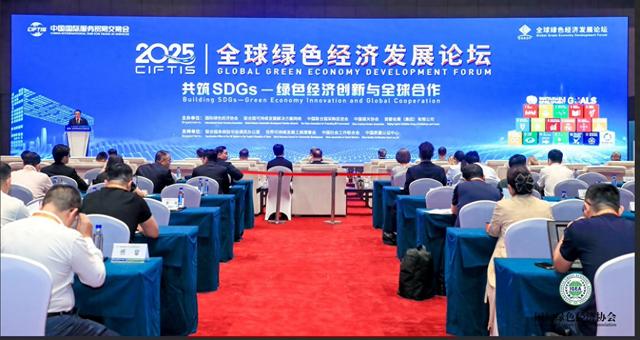
Group 1 - The "Global Green Economy Development Forum" was held with a focus on "Building SDGs - Green Economic Innovation and Global Cooperation" to discuss the advancement of the UN's 2030 Sustainable Development Goals (SDGs) [1][3] - Out of the 17 SDGs, 9 are directly related to the green economy, with only 35% of the 169 targets showing satisfactory progress according to the UN's July report [3] - Key areas of significant progress include public health, education, energy, and digital connectivity, while slow progress is noted in safe drinking water, sanitation services, and climate change [3] Group 2 - The forum emphasized the need to revive multilateralism and build ambitious global partnerships as essential for achieving the SDGs [3] - Former UN Deputy Secretary-General Sha Zukang highlighted that green trade, carbon footprints, zero-carbon parks, and AI applications in green industries are core areas for global cooperation [3][4] - The UN Resident Coordinator in China praised China's achievements in green economy initiatives, particularly in electric vehicles, and suggested enhancing international collaboration in green innovation, technology sharing, and standard recognition [4] Group 3 - Beijing is actively working to establish itself as a benchmark city for green economic development, focusing on green technology innovation, industry cultivation, and creating livable green cities [5] - The city government plans to incorporate the goal of becoming an international green economy benchmark city into its upcoming "14th Five-Year Plan" [5] - Seven strategic green industries will be prioritized, including advanced energy, synthetic biology manufacturing, alternative protein, smart connected vehicles, climate resilience, ecological protection, and green finance [5]
2025服贸会|王遥建言绿色金融:进一步发挥好货币政策工具定向引导作用
Bei Jing Shang Bao· 2025-09-13 02:42
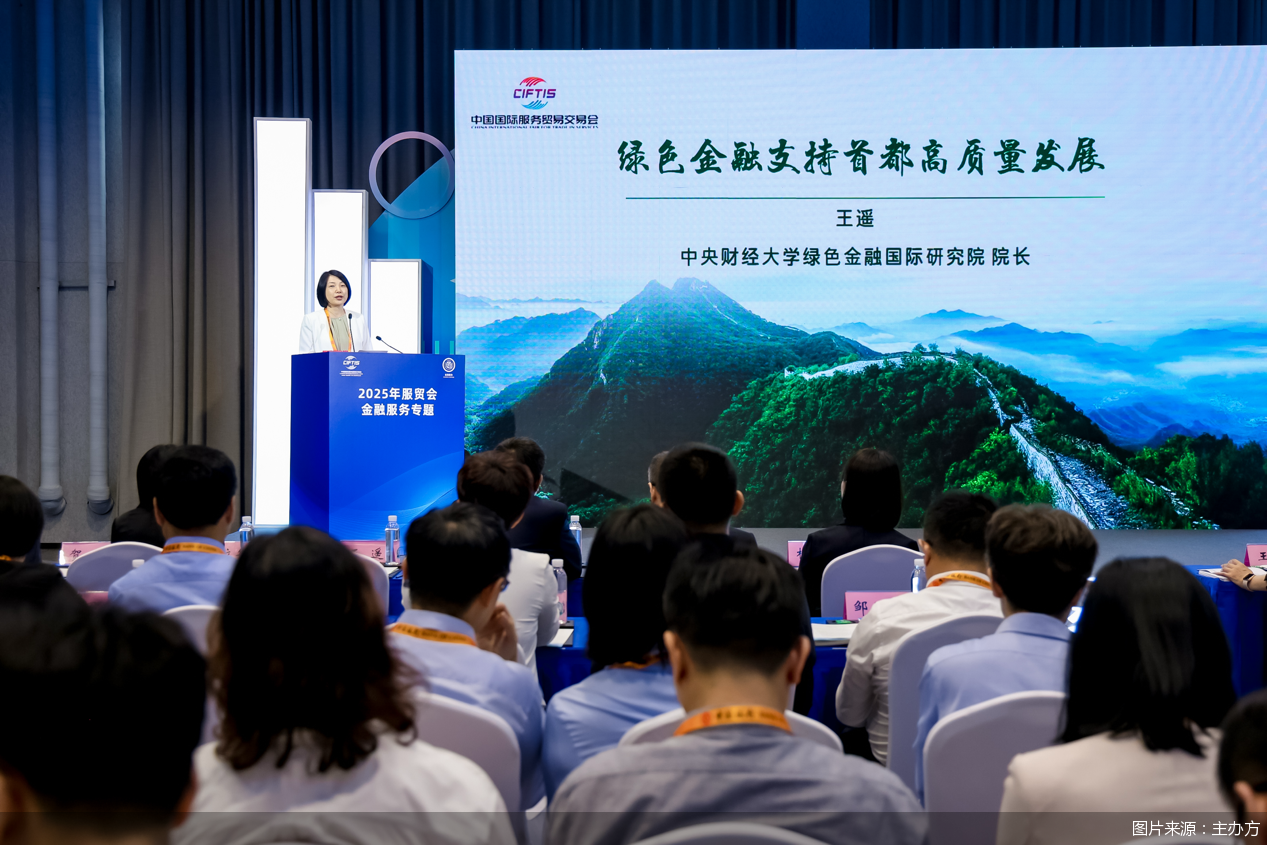
Core Viewpoint - Green finance is a crucial lever for the construction of a beautiful capital and is essential for promoting high-quality development in the capital city [1][3]. Group 1: Importance of Green Finance - Green finance serves as an important support for the multi-dimensional development of the beautiful capital [3]. - Beijing is focusing on strategic green industries such as advanced energy, synthetic biology, smart connected new energy vehicles, climate resilience, ecological protection, and green finance, providing ample application scenarios and innovation space for green finance [3]. Group 2: Achievements and Advantages - Beijing has made significant progress in building a green finance system, with a continuously expanding market scale, innovative products and services, and deepening international cooperation [3]. - The city possesses advantages in green finance, including a favorable policy environment, abundant financial resources, strong technological capabilities, and active international exchanges [3]. Group 3: Future Directions for Green Finance - Future efforts should focus on four dimensions: enhancing precise services, promoting product and model innovation, building a "technology + green" financial ecosystem, and fostering collaboration among government, market, academia, and industry [4][5]. - Financial support should align closely with the new urban planning and ecological protection requirements, emphasizing key areas such as clean energy transition, low-energy buildings, green transportation, and ecological restoration [4]. - Innovative financial products linked to carbon performance and environmental benefits should be developed to support the transition of traditional high-carbon industries to green low-carbon practices [4]. Group 4: Financial Tools and Support - The city has allocated no less than 60 billion yuan for re-loans and rediscounts to support green technology innovation [5]. - A whitelist system for green technology enterprises will be established to ensure targeted financial support [5]. - A comprehensive service platform for green technology finance will be created to provide one-stop financial solutions for green technology enterprises [5].
服贸会|北京发布140个招商项目,涉新一代信息技术、医药健康等领域
Zhong Guo Jing Ying Bao· 2025-09-12 16:45
Group 1: Investment Opportunities in Beijing - Beijing has released 140 investment cooperation projects, focusing on new generation information technology and healthcare sectors [1] - Key projects include the Changping Life Valley International Precision Medicine Industrial Park and Huairou Science City Industrial Transformation Demonstration Zone [1] - Various districts in Beijing, including Chaoyang, Fengtai, and Changping, have introduced 20 "Artificial Intelligence+" application scenarios to facilitate technology transfer [1] Group 2: Green Finance Initiatives - The Tongzhou District is actively promoting green finance, with the financial sector contributing approximately 10% to the district's GDP [2] - The Beijing Green Exchange has facilitated carbon emissions trading, with a cumulative transaction volume of 1.1 million tons [2] - Over 470 financial enterprises have been established in the district, including six specialized green finance institutions [2][3] Group 3: Economic Growth in Chaoyang District - Chaoyang District aims for a GDP of 923 billion yuan by 2024, accounting for nearly one-fifth of the city's total [4] - The district's GDP reached 462 billion yuan in the first half of this year, with a year-on-year growth of 5.1% [4] - The information service and technology service sectors contribute 23.7% to the district's GDP, with over 30% contribution to growth [4] Group 4: Policies and Support in Haidian District - Haidian District plans to release a series of policies aimed at funding and talent support for enterprises [5] - The district's GDP is projected to reach 1.29 trillion yuan in 2024, contributing 26.5% to the city's economy [5] - Haidian is focusing on building a modern industrial system centered around artificial intelligence and strategic emerging industries [5][6] Group 5: Digital Economy Development in Shijingshan District - Shijingshan District aims to establish a future digital space innovation experimental zone within three years [7] - The district's GDP is projected to reach 131.29 billion yuan in 2024, with a digital economy value added accounting for 57.4% of the total GDP [7] - By 2027, the district aims to become a hub for digital economy innovation, targeting a digital economy scale exceeding 220 billion yuan [7]
许正宇:去年香港绿色和可持续债务规模逾840亿美元
智通财经网· 2025-09-12 11:27
Core Viewpoint - Hong Kong has solidified its position as a major green finance hub in Asia, with green and sustainable debt exceeding $84 billion last year, and aims to focus on artificial intelligence and green technology for sustainable development in the future [1] Group 1: Green Finance Initiatives - The scale of green and sustainable debt in Hong Kong surpassed $84 billion last year [1] - Under the "Sustainable Bond Program," approximately HKD 240 billion worth of green bonds have been successfully issued [1] - The "Green and Sustainable Finance Grant Scheme" has been extended until 2028 [1] Group 2: Sustainability Goals - Hong Kong aims to reduce carbon emissions by 50% by 2035 and achieve carbon neutrality by 2050 [1] - The stated goals are not merely visions but a call to action [1]
香港金管局:正研究利用代币化工具提升碳市场流动性
2 1 Shi Ji Jing Ji Bao Dao· 2025-09-12 10:18
Group 1 - The Hong Kong Monetary Authority (HKMA) is exploring the use of tokenization technology to improve the issuance, trading, and cancellation processes of carbon credits, aiming to enhance market liquidity and depth [1] - The integration of financial expertise and technological innovation in green fintech can help address climate change by expanding climate risk analysis, improving accountability in carbon markets, designing sustainable financial products, and raising necessary investments for the green economy [1] - A survey by PwC indicates that 83% of 4,000 sampled companies have invested in the development of low-carbon products and services [1] Group 2 - In 2024, the scale of green and sustainable financing in Hong Kong exceeded $80 billion, representing a year-on-year growth of approximately 60% [2] - Transition finance currently accounts for about 10% of sustainable financing in Hong Kong, highlighting the urgent need for a robust ecosystem to meet the diverse economic structures in Asia over the next 5-10 years [2] - The Asian Infrastructure Investment Bank (AIIB) emphasizes that investment strategies must consider "risk, return, and impact" as an integrated whole, with a focus on financial sustainability, economic returns, and positive environmental impacts [2] - AIIB has mobilized approximately $9.4 billion into global green projects through a blended financing model, which combines public and commercial capital to attract more social capital [2]