绿色ABS

Search documents
绿色金融质变:价值创造赋能产业转型
Xin Lang Cai Jing· 2026-01-02 19:32
Core Viewpoint - A profound transformation focused on low-carbon pathways and development missions is underway in China, marking a new stage in green development where it becomes a core engine for higher quality and sustainable growth rather than a constraint on economic growth [1] Development History of Green Finance - The development of green finance in China has evolved significantly since its inception in 1995, when environmental protection was first integrated into the credit framework [2] - The "Two Mountains Theory" proposed by Xi Jinping in 2005 established a core mission for green finance, emphasizing the value of ecological civilization [2] - In 2007, the linkage between bank lending and environmental protection was formalized, marking the beginning of a structured approach to green finance [2] - The establishment of a green finance system was officially recognized in the 2015 State Council document, positioning it as a key driver for ecological civilization [2][3] Current Status and Future Directions - By the end of Q3 2025, the balance of green loans in China reached 43.51 trillion yuan, with major applications in infrastructure upgrades, energy transition, and ecological protection, accounting for 74.97% [4] - The green loan scale has grown from less than 10 trillion yuan in 2016 to 36.6 trillion yuan by the end of 2024, indicating rapid expansion [4] - The "14th Five-Year Plan" emphasizes the need for further development of green finance standards and innovative products to support low-carbon and sustainable sectors [6] Role of Green Finance in Industry - Green finance is seen as a catalyst for traditional industries' transition to greener practices, enabling banks to guide high-emission sectors towards strategic new industries [6][7] - Financial institutions are increasingly linking interest rates to companies' emission reductions, incentivizing green transformations [7] - The rise of green industries is attracting more investment, with a focus on sectors like energy storage, wind, and solar power, aiming for both economic and social benefits [8] Integration with Technology and ESG - The integration of green finance with technology finance is emphasized, particularly in sectors like renewable energy, where financial services are not only green but also technologically innovative [8] - Companies are adopting ESG scoring across their entire asset base, ensuring that green financial products maintain a significant proportion of related assets to prevent "greenwashing" [8]
创新驱动、链式赋能,光大银行上海分行打造绿色金融新样本
Di Yi Cai Jing· 2025-12-30 10:59
Core Viewpoint - Financial institutions play a crucial role in promoting industrial green upgrades and supporting the transformation of the real economy, particularly in the context of China's "dual carbon" goals and comprehensive green transition [1] Group 1: Green Financial Innovations - Everbright Bank's Shanghai branch has made significant breakthroughs in green finance, focusing on green bonds, green loans, and green ABS, aligning with national strategies such as technological innovation and low-carbon transition [2][4] - The branch successfully invested in Baowu Steel's first bond themed around technological innovation and low-carbon transition, amounting to 600 million yuan, with at least 70% of the funds directed towards low-carbon and Belt and Road initiatives [2] - The bank's green ABS investments, including a 620 million yuan investment in a green asset support plan for new energy vehicles, are expected to reduce carbon emissions by approximately 49,600 tons annually [2][3] Group 2: Green Building Initiatives - The bank has invested in a green asset support plan for the Expo City Best Practice Area, which has received LEED ND Platinum certification and aims for "zero carbon" certification by 2025, contributing to significant energy savings and carbon reduction [3] - The investment in the green building project is projected to achieve energy savings of 22.57 tons of standard coal and a carbon reduction of 49.89 tons in 2024 [3] Group 3: Organizational Structure for Green Finance - Everbright Bank's Shanghai branch has established a comprehensive organizational framework for green finance, including a leadership group focused on carbon peak and neutrality, and specialized working groups for green finance business expansion and ESG risk management [4] - The "1+N+X" organizational system promotes collaboration across departments and supports the establishment of green finance specialty branches, enhancing the bank's ability to implement green financial products and services [4] Group 4: Regional Green Financial Layout - The bank focuses on Shanghai's industrial structure, providing targeted support for green transportation, automotive supply chains, and innovative technologies, aligning with the city's goal of becoming a world-class automotive industry center [6][7] - The bank has provided 4.7 million yuan in loans to a private environmental technology company to support its growth in environmental technology research and production capacity [6] Group 5: Green Energy Financial Ecosystem - Everbright Bank is building a comprehensive green energy financial ecosystem, particularly in distributed photovoltaic projects, through innovative financial service models and partnerships with leading companies [8][9] - The bank's collaboration with a leading distributed photovoltaic company has resulted in project financing covering 185 MW of capacity, expected to reduce carbon emissions by approximately 200,000 tons annually [8][9] - The bank aims to integrate financial services with clean energy operational efficiency, establishing a benchmark in the distributed photovoltaic finance sector [9]

践行中国特色金融文化 在服务高质量发展中行稳致远
Zhong Guo Zheng Quan Bao - Zhong Zheng Wang· 2025-12-23 06:45
Group 1: Company Culture and Values - Company emphasizes the importance of corporate culture as the soul of the enterprise, promoting values such as integrity, innovation, and collaboration [1] - The core value of the company is summarized as "profit through righteousness, cooperation and inclusiveness, and pursuit of excellence" [1] Group 2: Strategic Development - The company has identified "serving the real economy" and "differentiated development" as its two main strategic lines since the beginning of the 13th Five-Year Plan [2] - A dedicated working group was established in 2016 to enhance services for the real economy, covering a comprehensive service system for various financial needs [2] - The company has achieved significant market presence, serving over 90% of large state-owned enterprises in Shanxi and completing numerous benchmark projects [2] Group 3: Financial Services and Innovations - The company is committed to high-quality development, focusing on enhancing the professionalism and sustainability of financial services [3] - A three-year action plan (2025-2027) has been established to implement the "Five Major Financial Articles" strategy, aligning with Shanxi's energy transition and industrial upgrading [3] - The company has developed a green finance service system, including innovative products like low-carbon transition bonds and green ABS [4][5] Group 4: Support for Technological and Traditional Industries - The company has issued 12 technology innovation bonds totaling 11.8 billion yuan to support local enterprises in their technological advancements [7] - It actively promotes the integration of technology finance and inclusive finance to support small and medium-sized enterprises [8] - The company has established a fund management role for the provincial angel fund, focusing on strategic emerging industries such as new energy and biomedicine [8] Group 5: Commitment to National Strategy - The company aligns its operations with the national strategy outlined in the 14th Five-Year Plan, emphasizing the construction of a modern industrial system and the strengthening of the real economy [6][9] - It aims to enhance its role in capital market reforms and high-quality development, contributing to the construction of a financial power [9][10]

夯实文化软实力 积极履责显担当 | 山西证券党委书记、董事长侯巍:践行中国特色金融文化 在服务高质量发展中行稳致远
Zhong Guo Zheng Quan Bao - Zhong Zheng Wang· 2025-12-23 04:45
Core Viewpoint - The article emphasizes the importance of optimizing the financial institution system and enhancing the cultural soft power of securities companies to achieve high-quality development in the financial sector, as outlined in the "14th Five-Year Plan" proposed by the 20th Central Committee of the Communist Party of China [1]. Group 1: Company Strategy and Culture - Shanxi Securities focuses on cultivating and practicing a distinctive financial culture that serves the real economy, aligning with national strategies and local development goals [2][3]. - The company has established a core value system based on principles such as integrity, stability, and innovation, which reflects its commitment to serving the real economy and fulfilling its responsibilities as a state-owned enterprise [3][4]. Group 2: Financial Services and Development - Shanxi Securities has developed a comprehensive service system that includes various financial services such as IPOs, mergers and acquisitions, and asset securitization, aimed at supporting the real economy and enhancing financial service quality [4][6]. - The company has been recognized for its significant contributions to the capital market in Shanxi, covering over 90% of major state-owned enterprises and completing numerous benchmark projects [4][5]. Group 3: Green Finance Initiatives - The company is actively involved in green finance, developing innovative financial products and services to support the dual carbon goals, including low-carbon transition bonds and green asset-backed securities [7][8]. - Shanxi Securities has established a three-in-one green finance service system that integrates product innovation, full-cycle services, and ecological collaboration to enhance its green finance capabilities [7]. Group 4: Support for Technological Innovation - The company is committed to integrating financial services with technological innovation, creating a comprehensive service system that supports enterprises at various stages of development, from seed to maturity [9][10]. - Shanxi Securities has facilitated the issuance of technology innovation bonds for local enterprises, totaling 11.8 billion yuan, to meet the funding needs for technological advancements [10][11].
山西证券党委书记、董事长侯巍:践行中国特色金融文化 在服务高质量发展中行稳致远
Zhong Guo Zheng Quan Bao· 2025-12-23 00:29
Core Viewpoint - The 20th Central Committee's Fourth Plenary Session has set clear requirements and strategic deployments for accelerating the construction of a financial power during the "14th Five-Year Plan" period, emphasizing the importance of integrating rule of law and moral governance in promoting high-quality financial development and building a financial strong nation [1] Group 1: Company Strategy and Culture - Shanxi Securities emphasizes the importance of a distinctive corporate culture as the foundation for its operations, promoting values such as integrity, innovation, and collaboration, while integrating traditional cultural elements [4] - The company has established a comprehensive service system covering various financial services, including IPOs, mergers and acquisitions, and asset securitization, to support the real economy and enhance service quality [5] - Shanxi Securities has adopted a "service the real economy" and "differentiated development" strategy, focusing on serving the local economy and enhancing its competitive advantage [6] Group 2: Financial Services and Contributions - The company has achieved significant regional influence, serving over 90% of large state-owned enterprises in Shanxi and completing numerous benchmark projects, leading in bond underwriting for five consecutive years [6] - Shanxi Securities is committed to high-quality development, aligning its operations with national economic strategies and focusing on key sectors to enhance financial service effectiveness [7] - The company has developed a three-in-one green finance service system, including product innovation, full lifecycle services, and ecological collaboration, to support sustainable development [8] Group 3: Green Finance Initiatives - Shanxi Securities has initiated multiple green finance demonstration projects, including the issuance of low-carbon transition bonds and ABS for clean energy projects, contributing to environmental protection efforts [9] - The company is actively advancing its first public REITs project in Shanxi, aimed at supporting the energy revolution and transformation [9] Group 4: Support for Technological and Industrial Development - Shanxi Securities is focused on integrating financial services with technological innovation and supporting traditional industries in their transformation towards high-end, intelligent, and green development [10] - The company has facilitated the issuance of 12 technology innovation bonds for local enterprises, totaling 11.8 billion yuan, to meet funding needs for technological advancements [11] - Shanxi Securities is enhancing support for small and medium-sized technology enterprises through customized financial services and investment funds, aiming to foster new quality productivity [12] Group 5: Future Directions and Commitments - The company is committed to following the path of Chinese-style financial development, focusing on serving the real economy and enhancing its professional service capabilities to contribute to the construction of a financial strong nation [13]

山西证券党委书记、董事长侯巍: 践行中国特色金融文化 在服务高质量发展中行稳致远
Zhong Guo Zheng Quan Bao· 2025-12-22 22:23
Core Viewpoint - Shanxi Securities emphasizes the importance of corporate culture and strategic clarity in driving high-quality development, focusing on serving the real economy and differentiating its services [1][2][3]. Group 1: Corporate Culture and Values - The company promotes a corporate culture rooted in the spirit of honesty, innovation, and collaboration, encapsulated in its core values of "integrity, stability, regulation, innovation, and efficiency" [1]. - Shanxi Securities aims to embody the principles of compliance, integrity, professionalism, and stability in its operations, reflecting the unique financial culture of China [1][10]. Group 2: Strategic Development - The company has identified "serving the real economy" and "differentiated development" as its two main strategic lines since the beginning of the 13th Five-Year Plan, focusing on deepening its engagement in Shanxi [2]. - A dedicated working group was established in 2016 to enhance services for the real economy, covering a comprehensive range of financial services including IPOs, mergers, and asset securitization [2]. Group 3: Financial Services and Innovations - Shanxi Securities is committed to high-quality development by integrating into the new development pattern and focusing on key economic strategies and sectors [3]. - The company has developed a three-pronged green finance service system, which includes product innovation, full lifecycle services, and ecological collaboration [4]. Group 4: Green Finance Initiatives - The company has launched various green financial products, such as low-carbon transition bonds and green ABS, to support the dual carbon goals [4]. - Shanxi Securities has successfully facilitated the issuance of innovative financial instruments, including the first low-carbon transition bond in Shanxi, to assist traditional industries in financing their transformation [5]. Group 5: Support for Technological and Traditional Industries - The company has issued a total of 12 technology innovation bonds for local enterprises, amounting to 11.8 billion yuan, to meet the funding needs for technological innovation [7]. - Shanxi Securities actively supports the transformation of traditional industries by utilizing various capital market tools and providing comprehensive advisory services [6][8]. Group 6: Commitment to National Development Goals - The company aligns its strategies with the national goals outlined in the 14th Five-Year Plan, focusing on building a modern industrial system and enhancing the foundation of the real economy [6][9]. - Shanxi Securities aims to play a significant role in the construction of a financial power by enhancing its service capabilities and supporting the development of new productive forces [9][10].
践行中国特色金融文化在服务高质量发展中行稳致远
Zhong Guo Zheng Quan Bao· 2025-12-22 20:19
Core Viewpoint - Shanxi Securities emphasizes the importance of corporate culture and strategic clarity in driving high-quality development, focusing on serving the real economy and differentiating its services [1][2][8]. Group 1: Corporate Culture and Values - The company promotes a corporate culture rooted in the "Jin merchant spirit," emphasizing honesty, innovation, and collaboration, while adhering to the principles of compliance, integrity, professionalism, and stability [1]. - Shanxi Securities has distilled its operational philosophy into core values of "benefiting through righteousness, collaboration and inclusiveness, and pursuing excellence" [1]. Group 2: Strategic Development - The company has identified "serving the real economy" and "differentiated development" as its two main strategic lines since the beginning of the 13th Five-Year Plan, focusing on deepening its engagement with the Shanxi economy [2]. - A dedicated working group was established in 2016 to enhance services for the Shanxi real economy, creating a comprehensive service system covering various financial services [2]. Group 3: Financial Services and Innovations - Shanxi Securities is committed to high-quality development, integrating new development concepts and focusing on key economic strategies to enhance the effectiveness and sustainability of its financial services [2][3]. - The company has developed a three-pronged green finance service system, which includes product innovation, full lifecycle services, and ecological collaboration [4]. Group 4: Green Finance Initiatives - The company has initiated several green finance projects, including the issuance of low-carbon transition bonds and ABS for urban heating services, contributing to environmental protection and energy transition [5]. - Shanxi Securities is actively working on the first public REITs project in Shanxi, aimed at supporting the energy revolution and transformation [5]. Group 5: Support for Innovation and Traditional Industries - The company supports the integration of innovation, industry, and finance, focusing on the needs of technology-driven enterprises and providing comprehensive services throughout their lifecycle [6]. - Shanxi Securities has facilitated the issuance of 12 technology innovation bonds for local enterprises, totaling 11.8 billion yuan, to meet funding needs for technological advancements [6]. Group 6: Commitment to Financial Development - The company aims to align its operations with the national strategy for building a modern industrial system and enhancing the real economy, as outlined in the 14th Five-Year Plan [8]. - Shanxi Securities is dedicated to fostering a financial culture that supports the real economy and adheres to the principles of the "Five Musts and Five Must Nots" [9].
湖北ABS市场首单保障房证券化项目落地 今年以来,湖北企业ABS发行数量和规模分别同比增长116.67%和190.39%
Zheng Quan Ri Bao· 2025-10-15 22:43
Core Insights - The issuance of the "CITIC Securities - Hongshan Guotou Affordable Housing Asset-Backed Special Plan" marks a significant milestone in Hubei's asset securitization market, particularly in the affordable housing sector, addressing funding shortages and expanding social capital participation channels [1] Group 1: Market Performance - Hubei's asset securitization market has seen a substantial increase in activity, with 26 asset-backed securities (ABS) projects issued this year, totaling 18.277 billion yuan, representing a year-on-year growth of 116.67% in the number of projects and 190.39% in issuance scale [3][5] - The majority of ABS projects (over 80%) were listed on the Shanghai Stock Exchange, indicating a strong preference for this platform among issuers [1] Group 2: Structural Growth - The market has diversified its asset types, covering nine categories including accounts receivable, infrastructure fees, and green ABS, with accounts receivable projects leading in quantity [3][4] - Local state-owned enterprises dominate the market, participating in over 50% of the ABS projects, which stabilizes the market and supports smaller enterprises through various financing methods [4] Group 3: Policy and Industry Drivers - The growth of Hubei's asset securitization market is driven by a combination of policy support, industry demand, and favorable market conditions, creating a robust foundation for rapid expansion [5][6] - Recent policies have outlined specific paths for different asset types, facilitating the securitization process and removing institutional barriers [5] Group 4: Economic Impact - Asset-backed securities are not merely financing tools but are pivotal in optimizing industrial structures and promoting high-quality regional economic development [7] - ABS provides differentiated support across various industries, aiding traditional sectors like automotive and equipment manufacturing, as well as emerging sectors such as green finance [7][8]
湖北ABS市场首单保障房证券化项目落地
Zheng Quan Ri Bao· 2025-10-15 16:22
Core Insights - The issuance of asset-backed securities (ABS) by enterprises in Hubei has seen significant growth in both quantity and scale, with a year-on-year increase of 116.67% in the number of issuances and 190.39% in total issuance volume [1][3] - The recent launch of the "CITIC Securities - Hongshan Guotou Affordable Housing Asset-Backed Special Plan" marks a breakthrough in financing models for affordable housing in Hubei, addressing funding shortages in regional housing construction [1][2] Market Performance - Hubei's ABS market has issued a total of 26 enterprise ABS projects this year, amounting to 18.277 billion yuan, with 19 projects listed on the Shanghai Stock Exchange, accounting for over 80% of the market volume [1][3] - The number of large-scale projects (over 500 million yuan) has increased significantly, with 11 such projects this year, representing over 40% of total issuances [3] Structural Growth - The ABS market in Hubei has diversified its asset types, covering nine categories including accounts receivable, infrastructure fees, and green finance, reflecting a deepening market capability in asset exploration [3][4] - Local state-owned enterprises dominate the market, participating in over 50% of the ABS projects, which stabilizes the market and supports financing for small and medium enterprises [4] Policy and Demand Drivers - The growth of Hubei's ABS market is driven by a combination of policy support, industrial demand, and favorable market conditions, creating a robust foundation for rapid expansion [5][6] - Recent policies have outlined specific paths for asset securitization, facilitating the issuance of ABS for various asset types, including real estate and debt [5] Industry Empowerment - ABS is increasingly viewed as a tool for enhancing industrial structure and promoting high-quality regional economic development, providing tailored support for different industries [7] - In traditional industries, ABS helps convert stagnant assets into funds for research and expansion, while in emerging sectors, it addresses long investment cycles and slow cash flow recovery [7] Future Outlook - The asset securitization process is evolving from a mere financing tool to a crucial mechanism for activating dormant assets and optimizing local government balance sheets, with significant potential for the next five years [8]
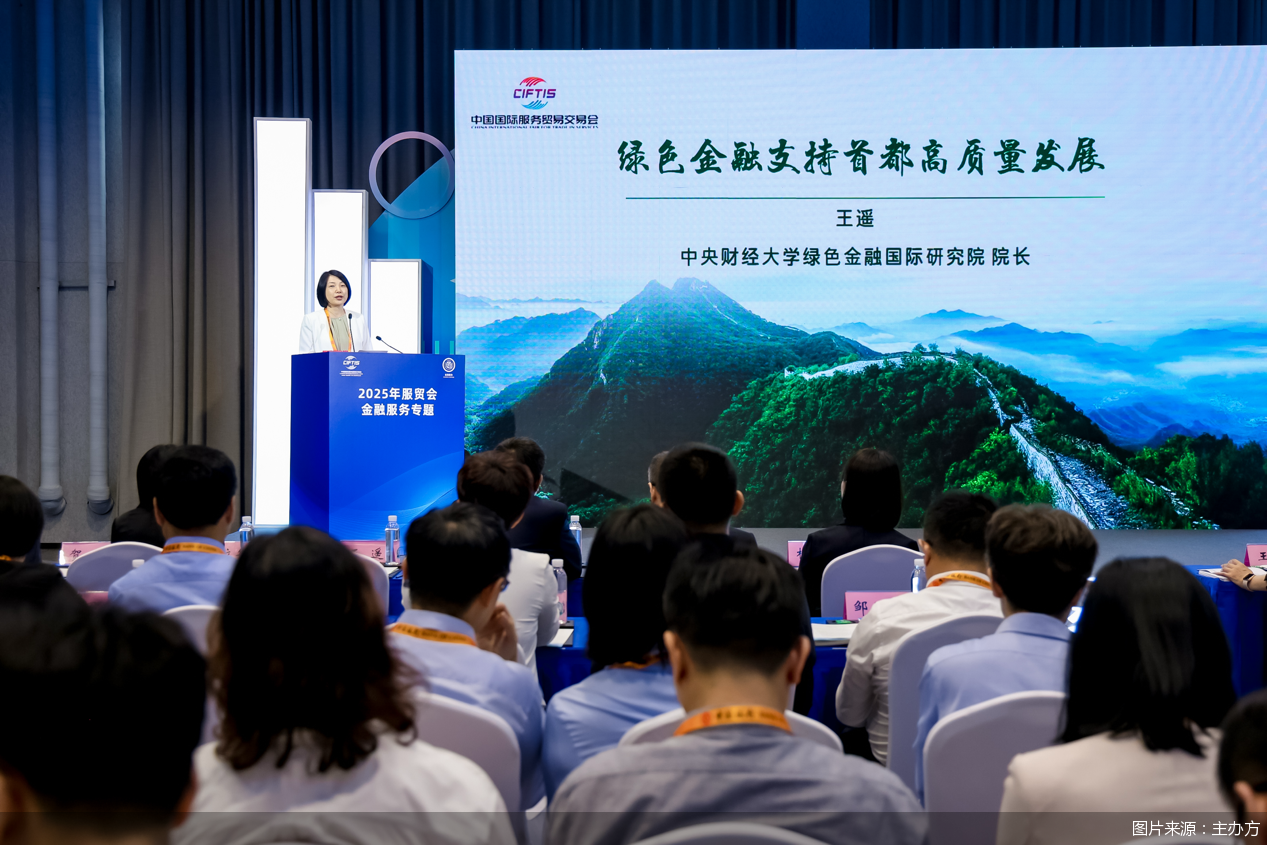
2025服贸会|王遥建言绿色金融:进一步发挥好货币政策工具定向引导作用
Bei Jing Shang Bao· 2025-09-13 02:42
Core Viewpoint - Green finance is a crucial lever for the construction of a beautiful capital and is essential for promoting high-quality development in the capital city [1][3]. Group 1: Importance of Green Finance - Green finance serves as an important support for the multi-dimensional development of the beautiful capital [3]. - Beijing is focusing on strategic green industries such as advanced energy, synthetic biology, smart connected new energy vehicles, climate resilience, ecological protection, and green finance, providing ample application scenarios and innovation space for green finance [3]. Group 2: Achievements and Advantages - Beijing has made significant progress in building a green finance system, with a continuously expanding market scale, innovative products and services, and deepening international cooperation [3]. - The city possesses advantages in green finance, including a favorable policy environment, abundant financial resources, strong technological capabilities, and active international exchanges [3]. Group 3: Future Directions for Green Finance - Future efforts should focus on four dimensions: enhancing precise services, promoting product and model innovation, building a "technology + green" financial ecosystem, and fostering collaboration among government, market, academia, and industry [4][5]. - Financial support should align closely with the new urban planning and ecological protection requirements, emphasizing key areas such as clean energy transition, low-energy buildings, green transportation, and ecological restoration [4]. - Innovative financial products linked to carbon performance and environmental benefits should be developed to support the transition of traditional high-carbon industries to green low-carbon practices [4]. Group 4: Financial Tools and Support - The city has allocated no less than 60 billion yuan for re-loans and rediscounts to support green technology innovation [5]. - A whitelist system for green technology enterprises will be established to ensure targeted financial support [5]. - A comprehensive service platform for green technology finance will be created to provide one-stop financial solutions for green technology enterprises [5].