
跨境电商

Search documents
创始人被查,捧出山西首富的跨境电商鼻祖环球易购破产了
Xin Lang Cai Jing· 2026-02-10 08:25
Core Viewpoint - The collapse of Global Easy Buy, a pioneer in cross-border e-commerce, signifies the end of an era characterized by rapid, unregulated growth in the industry, highlighting the shift towards a more competitive and refined market landscape [2][3][24]. Company Overview - Global Easy Buy, once a leading cross-border e-commerce giant with annual revenues exceeding 10 billion, has recently undergone its second bankruptcy asset distribution, receiving only 9 million yuan to cover less than half of employee wages, while 780 million yuan in ordinary debts remain unpaid [2][25]. - Founded in 2007, Global Easy Buy quickly rose to prominence through a data-driven and mass inventory model, becoming synonymous with "Chinese manufacturing going global" [2][25]. - The company was acquired in 2014 by the publicly listed Ba Yuan Pants Industry for 1.032 billion yuan, marking a significant strategic shift for Ba Yuan as it transitioned into cross-border e-commerce [11][35]. Financial Performance and Challenges - Following the acquisition, Global Easy Buy faced performance guarantees that required net profits of 65 million, 91 million, 126 million, and 170 million yuan from 2014 to 2017, which led to aggressive expansion and inventory accumulation [13][36]. - By 2018, the company reported inventory levels reaching several billion yuan, with a significant portion being unsold stock, which created a cash flow dependency that ultimately led to financial distress [15][38]. - In 2020, Global Easy Buy's financial situation deteriorated, resulting in a net loss of 3.374 billion yuan, prompting a rapid decline in stock price and eventual bankruptcy proceedings in November 2021 [40]. Industry Context - The rise and fall of Global Easy Buy reflect a broader trend in the cross-border e-commerce sector, where the initial advantages of scale and low-cost operations have diminished due to increased competition and tightening regulations on major platforms like Amazon and eBay [18][42]. - The industry is shifting from a "selling goods" mentality to a "brand-focused" approach, emphasizing customer retention and brand recognition over sheer volume and low prices [19][42]. - As the market evolves, companies are restructuring their operations to focus on fewer high-potential product categories, enhancing brand identity, and improving compliance and customer service [44].


连连国际1月跨境商家信心指数报告:三大指数均呈上涨态势,新年跨境市场整体回暖
Sou Hu Cai Jing· 2026-02-10 08:16
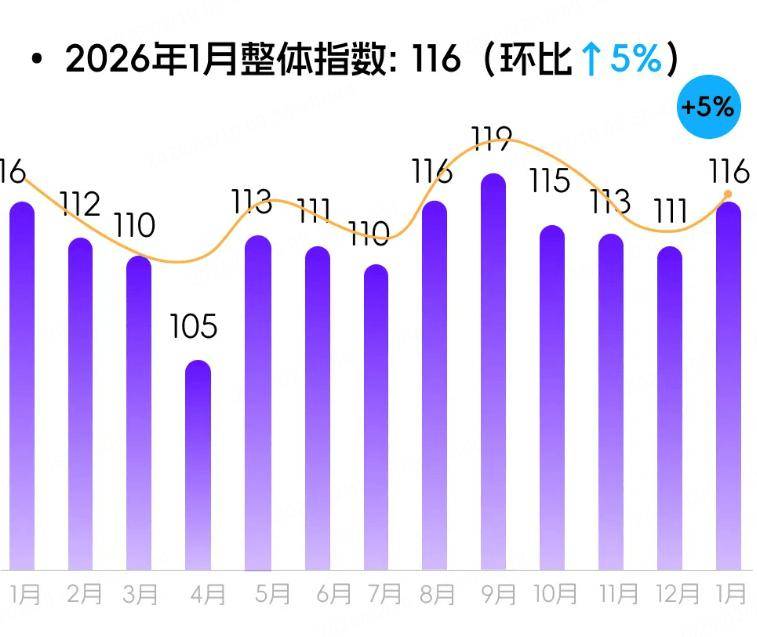
Core Insights - The LianLian Cross-Border Merchant Confidence Index for January 2026 indicates an overall recovery in merchant confidence at the start of the new year, reflecting a stable market opening despite significant behavioral divergence among merchants regarding inventory, recruitment strategies, and category selection [1][2]. Group 1: Confidence Index - The total merchant confidence index for January 2026 is 116, representing a 5% month-on-month increase; the current index is 93, up 7%; and the expected index is 139, which has increased by 2% [2][4]. - All three main indices show an upward trend, indicating a robust recovery in the cross-border market and stable seller confidence [2]. Group 2: Decision Divergence - In terms of recruitment, 80% of merchants are either pausing or slightly increasing hiring, reflecting a conservative outlook and a focus on maintaining current team sizes to avoid risks associated with blind expansion [5]. - Only 13% of merchants are actively expanding their workforce, indicating that genuine expansion motivation remains limited and is often tied to structural opportunities [5]. - For inventory decisions, 61% of merchants are increasing stock levels, suggesting a positive short-term demand outlook, while 23% are keeping inventory levels stable, and only 16% are reducing stock [6]. Group 3: Category Confidence Index - The confidence index for the Home & Garden category reached 115, a 13% increase, driven by sustained demand in the outdoor furniture and smart home appliance markets [9]. - The Fashion & Apparel category saw its confidence index rise to 111, a 3% increase, supported by fast fashion brands leveraging agile supply chains and social media marketing [9]. - The Electronics & Gadgets category's confidence index is 122, with a slight 1% increase, primarily fueled by innovations in AIoT devices and 3C accessories [9]. Group 4: Sales Growth Trends - 30.27% of merchants reported a sales growth of 5%-10%, a decrease of 4.75% month-on-month, indicating a contraction trend among mid-to-low growth merchants [10]. - 18.07% of merchants experienced negative growth, an increase of 4.50%, suggesting some merchants face post-peak pressure due to supply chain delays or inventory management issues [10]. - Conversely, 8.40% of merchants reported a growth of 15%-20%, an increase of 1.31%, indicating that a small segment of merchants with strong operational resilience continues to thrive [10].
培育数据流通服务机构,推进数据要素市场化价值化|营商环境周报
2 1 Shi Ji Jing Ji Bao Dao· 2026-02-10 07:33
Group 1: Government Initiatives in Service Consumption - The State Council has issued a plan to accelerate the cultivation of new growth points in service consumption, focusing on key areas such as transportation services, housekeeping services, and inbound consumption [2] - The plan aims to stimulate the development of sectors like railway tourism, cruise consumption, and night boat services, while also promoting the growth of the automotive aftermarket [2] - It emphasizes the need to establish a credit system in sectors like elderly care, housekeeping, and tourism, and to support qualified companies in issuing bonds and REITs for consumption infrastructure projects [2] Group 2: Data Market Development - Four departments, including the National Data Bureau, have released guidelines to cultivate data circulation service institutions and promote the marketization of data elements [3] - The guidelines focus on enhancing the service capabilities of data circulation institutions and supporting the development of resource-based data products and services [3] - There is an emphasis on utilizing existing funding channels to support the infrastructure construction of qualified data circulation service institutions [3] Group 3: Consumer Protection and Market Regulation - The State Administration for Market Regulation plans to introduce standards for safe consumption and cultivate trustworthy consumption entities to enhance consumer confidence [4] - The administration aims to deepen credit regulation reforms and improve the precision and effectiveness of market supervision [4] - By 2026, the administration will continue to enhance the review system for business concentration to stimulate market vitality while safeguarding competition [4] Group 4: Business Environment Improvement in Hainan - Hainan has implemented a comprehensive management mechanism for business environment issues, aiming to optimize the market environment [7] - The new guidelines require a clear classification and handling of issues, with a focus on timely resolution and feedback mechanisms [7] - The province will also promote a multi-faceted problem-solving approach and establish a leadership responsibility system for significant issues [7] Group 5: Cross-Border E-commerce Support in Dalian - Dalian Customs has introduced measures to support the high-quality development of cross-border e-commerce in Liaoning, focusing on customs facilitation and logistics efficiency [8] - The measures include establishing a "one city, one policy" approach to tailor support for local industries and enterprises [8] - A 24/7 customs clearance guarantee will be implemented, with specific measures to streamline export documentation and support cross-border return logistics [8]
三部门明确 跨境电子商务出口退运商品税收优惠政策
Ren Min Ri Bao· 2026-02-10 06:58
(文章来源:人民日报) 本报北京2月9日电近日,财政部、海关总署、税务总局联合发布《关于跨境电子商务出口退运商品税收 优惠政策的公告》。公告规定,对2026年1月1日至2027年12月31日期间在跨境电子商务海关监管代码 (1210、9610、9710、9810)项下申报出口,且自出口之日起6个月内因滞销、退货原因原状退运进境 的商品(不含食品),免征进口关税和进口环节增值税、消费税;出口时已征收的出口关税准予退还; 出口时已征收的增值税、消费税,参照内销货物发生退货有关税收规定执行。 以上4个海关监管方式代码,分别指"网购保税进口""直购进口""跨境电商B2B直接出口""跨境电商出口 海外仓"。公告继续对跨境电子商务出口退运商品实施税收优惠政策,旨在进一步降低跨境电子商务企 业出口退运成本,减少企业后顾之忧,积极支持外贸新业态发展。 ...
三部门发布跨境电商出口退运商品税收优惠政策
Sou Hu Cai Jing· 2026-02-10 06:38
观点网讯:2月9日,财政部、海关总署、税务总局联合发布跨境电子商务出口退运商品税收优惠政策, 以支持跨境电商新业态发展。 为支持跨境电子商务新业态发展,现将跨境电子商务出口退运商品税收优惠政策公告如下: 二、对符合第一条规定的商品,已办理出口退税的,企业应当按现行规定补缴已退的税款。企业应当凭 主管税务机关出具的《出口货物已补税/未退税证明》,申请办理免征进口关税和进口环节增值税、消 费税,退还出口关税手续。 三、第一条中规定的"原状退运进境"是指出口商品退运进境时的最小商品形态应与原出口时的形态基本 一致,不得增加任何配件或部件,不能经过任何加工、改装,但经拆箱、检(化)验、安装、调试等仍 可视为"原状";退运进境商品应未被使用过,但对于只有经过试用才能发现品质不良或可证明被客户试 用后退货的情况除外。 四、对符合第一、二、三条规定的商品,企业应当提交出口商品申报清单或出口报关单、退运原因说明 等证明该商品确为因滞销、退货原因而退运进境的材料,并对材料的真实性承担法律责任。对因滞销退 运的商品,企业应提供"自我声明"作为退运原因说明材料,承诺为因滞销退运,并据此办理退运免税等 手续。对因退货退运的商品,企业 ...

深圳两会有人携12份建议上会,有人直言部分用工单位报酬低
Nan Fang Du Shi Bao· 2026-02-10 05:48
Group 1 - The Shenzhen Municipal People's Congress representatives discussed key issues such as transportation, elderly care, healthcare, and traditional industry upgrades during a recent meeting [1] - Representative Liao Hailan proposed a "two beds in one" model to address the shortage of elderly care resources, suggesting the integration of nursing and medical beds, and encouraging community hospitals to take on elderly care services [1] - Liao also highlighted the challenges faced by the optical industry in Henggang, advocating for the establishment of an optometry research institute to enhance the industry's competitiveness through local high-end development [1] Group 2 - Representative Huang Xiang presented 12 suggestions covering various aspects such as livelihood issues, industry regulation, and talent recruitment [2] - One of the suggestions called for the acceleration of legislation on prepaid consumption to address the high complaint rates associated with it, emphasizing the need for clear fund supervision and service cycle regulations [2] - Huang also proposed enhancing the supply of composite talents to support the high-quality development of Shenzhen's cross-border e-commerce industry, reflecting a shift from scale expansion to quality improvement [2]
王健:持续释放跨境电商发展潜力
Xin Lang Cai Jing· 2026-02-10 05:40
Group 1 - The core feature of cross-border e-commerce is online transactions, which offers advantages such as diversification, directness, massiveness, and informatization compared to traditional international trade [1] - China's cross-border e-commerce has been growing rapidly, with a projected import and export scale of 2.75 trillion yuan by 2025, representing a 69.7% increase from 2020 [1] - The establishment of cross-border e-commerce comprehensive pilot zones across major cities and inland ports in China has been a significant factor in the growth of this sector [1] Group 2 - Cross-border e-commerce has created a commercial ecosystem involving third-party platforms, manufacturers, and service providers, facilitating trade and driving product innovation [2] - Collaborations between e-commerce platforms and public service sectors in various countries have improved global supply chain efficiency and created new trade opportunities [2] - The integration of cross-border e-commerce with industrial clusters has enabled manufacturers to enter international markets at lower costs and enhance product iteration through data empowerment [2] Group 3 - Cross-border e-commerce is not only about physical goods but also significantly contributes to the growth of digital service trade, with a projected service export scale of $232.71 billion by 2024, reflecting a 6.3% year-on-year increase [3] - The rapid development of digital services related to cross-border e-commerce, such as online payments and logistics, is enhancing the export of digitally deliverable services [3] Group 4 - The competitiveness of China's cross-border e-commerce is increasing, with a focus on refined, branded, and localized operations [4] - Emerging markets in Southeast Asia, Africa, and Latin America are becoming focal points for deepening international cooperation in cross-border e-commerce [4] - The industry faces challenges such as global trade friction and supply chain restructuring risks, necessitating active participation in international trade rule-making [4]
上游价格持续回落
Hua Tai Qi Huo· 2026-02-10 04:35
宏观日报 | 2026-02-10 上游价格持续回落 中观事件总览 生产行业:1)商务部召开汽车企业座谈会,研究汽车流通消费有关工作。商务部副部长盛秋平在会上指出,我国 超大规模市场基础牢,汽车消费链条长潜力大,政策接续实施支撑稳,全链条扩大汽车消费大有可为。2026年, 商务部将会同相关部门,坚持政策支持和改革创新并举,存量措施和增量政策集成发力,优化实施汽车以旧换新, 开展汽车流通消费改革试点,完善行业管理制度,多措并举推动汽车消费扩容提质。 服务行业:1)财政部、海关总署、税务总局发布关于跨境电子商务出口退运商品税收优惠政策的公告。支持跨境 电子商务新业态发展,现将跨境电子商务出口退运商品税收优惠政策公告如下:对自2026年1月1日至2027年12月 31日期间在跨境电子商务海关监管代码(1210、9610、9710、9810)项下申报出口,因滞销、退货原因,自出口 之日起6个月内原状退运进境的商品(不含食品),免征进口关税和进口环节增值税、消费税;出口时已征收的出 口关税准予退还,出口时已征收的增值税、消费税参照内销货物发生退货有关税收规定执行。 数据来源:iFind,华泰期货研究院 行业总览 上游: ...
跨境电子商务出口退运商品税收优惠政策
Ren Min Ri Bao· 2026-02-10 02:01
以上4个海关监管方式代码,分别指"网购保税进口""直购进口""跨境电商B2B直接出口""跨境电商出口 海外仓"。公告继续对跨境电子商务出口退运商品实施税收优惠政策,旨在进一步降低跨境电子商务企 业出口退运成本,减少企业后顾之忧,积极支持外贸新业态发展。 [ 责编:金昱希 ] 跨境电子商务出口退运商品税收优惠政策 本报北京2月9日电(记者曲哲涵)近日,财政部、海关总署、税务总局联合发布《关于跨境电子商务出 口退运商品税收优惠政策的公告》。公告规定,对2026年1月1日至2027年12月31日期间在跨境电子商务 海关监管代码(1210、9610、9710、9810)项下申报出口,且自出口之日起6个月内因滞销、退货原因 原状退运进境的商品(不含食品),免征进口关税和进口环节增值税、消费税;出口时已征收的出口关 税准予退还;出口时已征收的增值税、消费税,参照内销货物发生退货有关税收规定执行。 三部门明确 ...
跨境电子商务出口退运商品税收优惠政策明确
Ren Min Wang· 2026-02-10 01:43
以上4个海关监管方式代码,分别指"网购保税进口""直购进 口""跨境电商B2B直接出口""跨境电商出口海外仓"。公告继续对跨境 电子商务出口退运商品实施税收优惠政策,旨在进一步降低跨境电子 商务企业出口退运成本,减少企业后顾之忧,积极支持外贸新业态发 展。 近日,财政部、海关总署、税务总局联合发布《关于跨境电子商 务出口退运商品税收优惠政策的公告》。公告规定,对2026年1月1 日至2027年12月31日期间在跨境电子商务海关监管代码(1210、 9610、9710、9810)项下申报出口,且自出口之日起6个月内因滞 销、退货原因原状退运进境的商品(不含食品),免征进口关税和进 口环节增值税、消费税;出口时已征收的出口关税准予退还;出口时 已征收的增值税、消费税,参照内销货物发生退货有关税收规定执 行。 ...