
Robotics

Search documents
新股消息 | 卡诺普机器人拟港股上市 中国证监会要求补充说明业务涉及AI大模型的具体情况等
智通财经网· 2025-12-26 12:51
智通财经APP获悉,12月26日,中国证监会发布《境外发行上市备案补充材料要求(2025年12月22日— 2025年12月26日)》。中国证监会国际司共对19家企业出具补充材料要求,其中,要求卡诺普机器人补 充说明业务涉及AI大模型的具体情况等事项。据港交所11月17日披露,成都卡诺普机器人技术股份有 限公司递表港交所主板,国泰君安融资有限公司为其独家保荐人。 证监会请卡诺普机器人补充说明以下事项,请律师核查并出具明确的法律意见: 一、请补充说明你公司及下属公司是否涉及开发、运营网站、小程序、APP、公众号等产品,同时应包 括你公司及下属公司通过授权旗舰店、其他品牌商城、第三方平台店铺、电商店铺营运服务等业务,收 集、储存、接触、处理的个人信息或订单规模。是否涉及向第三方提供信息内容,提供信息内容的类型 以及信息内容安全保护措施;同时说明收集及储存的用户信息规模、数据收集使用情况,上市前后个人 信息保护和数据安全的安排或措施。 四、请补充说明你公司主要股东上层投资人中"境外企业"及中国境内主体的穿透情况,是否存在法律法 规规定禁止持股的主体。 五、请按照《监管规则适用指引——境外发行上市类第2号》完善你公司股 ...

Why these market watchers say the AI play has yet to unfold, but inflation will still be key in 2026
Youtube· 2025-12-26 12:14
Market Outlook - The market is expected to continue its strong performance into the final trading week of 2025, driven primarily by AI developments despite concerns about overvaluation [2] - Inflation is a significant concern for 2026, with potential inflationary pressures from oil and a weakening consumer backdrop [3][4] - There is a cautious outlook for 2026, with expectations of a flat market and reliance on dividend returns after a strong run in previous years [5] Consumer Behavior - The consumer market is described as bifurcated, with affluent consumers maintaining spending while lower-income consumers face financial pressures [6] - The overall job market is not strong, which may impact consumer spending and corporate results [6][7] - Consumers have accumulated high credit card balances, which may limit future spending despite potential rate cuts [7] Investment Focus - Investment strategies are shifting towards AI infrastructure, which is seen as less overpriced compared to applied AI segments [9] - Companies involved in cloud computing and chip manufacturing are highlighted as attractive investment opportunities due to their business infrastructure focus [9] - Beldin, a company focused on automation and robotics, is identified as a promising investment, benefiting from North American automation spending and trading at lower multiples compared to peers [10][11]


新华财经|大场景 新应用 人形机器人产业2026年值得期待
Xin Hua She· 2025-12-26 10:11
Core Insights - The humanoid robot industry in China is expected to transition from technology validation to large-scale commercialization by 2025, driven by supportive and regulatory policies, significant breakthroughs in self-research, and a rich variety of application scenarios [1][2] Policy Framework - A multi-dimensional support system has been established for the humanoid robot industry, combining national strategic focus with local government measures to address industry challenges [2][3] - The National Development and Reform Commission announced plans to create a robust entry and exit mechanism for the embodied intelligence sector, aiming to prevent market saturation with redundant products and foster fair competition [2] Local Government Initiatives - Local policies, such as Beijing's "Ten Measures for Embodied Intelligent Robots," provide targeted support including training rewards, sales subsidies, and supply chain platforms [3] - Experts suggest that policies should further support foundational materials and core algorithms through stable long-term funding and the establishment of ethical and safety standards [3] Technological and Capital Advancements - The humanoid robot industry has made significant technological advancements, shifting focus from flashy demonstrations to scalable applications, with cost and reliability being top priorities [6][8] - Major funding rounds in 2025 saw companies like Xingdong Jiyuan and Leju Robotics raise approximately 1 billion and 1.5 billion respectively, indicating strong investor interest due to their comprehensive self-research capabilities and clear commercialization results [8] Market Trends and Future Outlook - The 2025 World Artificial Intelligence Conference highlighted the emergence of "blue-collar robots" in various sectors, indicating a clear path toward scalable applications in industrial, logistics, and commercial services [9][10] - Predictions for 2026 suggest a wave of large-scale deliveries in B-end scenarios, with a focus on logistics and manufacturing, as well as an emphasis on international market expansion [10]
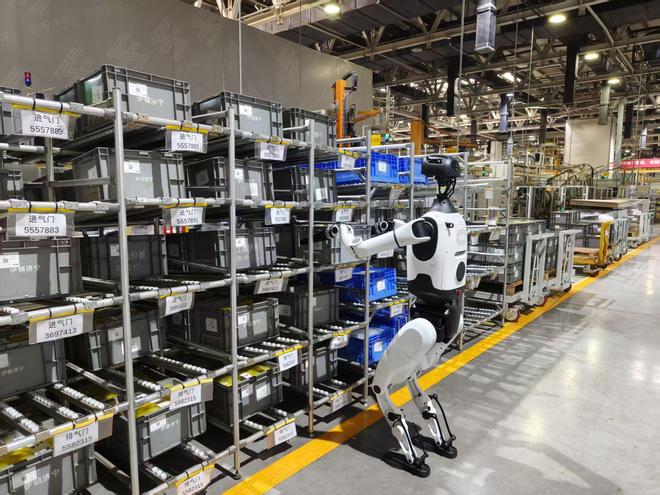
以VLA+MOE架构打造工业具身大脑,赛索德智能斩获千万级天使轮融资
机器人圈· 2025-12-26 10:07
Core Viewpoint - The article discusses the recent angel round financing of several million yuan completed by Saisode Intelligent, a developer of embodied intelligence for industrial scenarios, which will be used for core technology iteration and industrial application [2] Group 1: Company Overview - Saisode Intelligent focuses on creating a new paradigm of robotic systems defined by algorithms, aiming to develop an industrial-grade embodied brain that adapts to diverse, small-batch, and customized factory production scenarios [2] - The company has a strong core team with expertise in robotics, artificial intelligence, and industrial applications, led by founder Sun Xinhai, who has significant experience in the robotics industry [3][4] Group 2: Technology and Product Development - The company has identified key industrial pain points, such as the need for high precision in basic processes like bolt fastening and connector installation, which are critical for industrial automation [5] - Saisode Intelligent's product design features a wheeled structure that allows for mobility and transport, addressing the needs of advanced Tier 1 factories [5][6] - The company employs a unique ROI (Region of Interest) technology that enhances the model's ability to perceive fine actions, integrated into its "brain-bridge-brain" VLA architecture [7] Group 3: Market Positioning and Strategy - The company offers flexible leasing options for its robots, with a minimum rental period of six months and monthly payments around 6,000-7,000 yuan, aiming to lower initial investment barriers for customers [6] - Saisode Intelligent plans to expand into a Robot-as-a-Service (RaaS) model to further broaden market coverage [6] - The pricing strategy is informed by the labor costs in coastal manufacturing, with a target price range of 300,000 to 400,000 yuan for its robots, which is deemed acceptable by many industrial clients [10] Group 4: Industry Insights and Future Directions - The founder emphasizes that the core value of embodied intelligence lies in delivering systemic capabilities through algorithmic and model frameworks, moving beyond traditional one-off custom developments [8] - The article highlights the importance of reinforcement learning and continuous learning for real-world applications, suggesting that true breakthroughs in the industry depend on these concepts [10][11] - The completion of the financing round is expected to provide strong momentum for Saisode Intelligent's technology development and market expansion, aiming to drive the industrial embodied intelligence from concept to large-scale application [11]
首发经济热:“湾区造”逐浪全球大市场
2 1 Shi Ji Jing Ji Bao Dao· 2025-12-26 09:15
Core Insights - The launch of the world's first panoramic drone, Yingling A1, at an altitude of 1500 meters marks a significant milestone in the "premiere economy," which transforms exhibition traffic into tangible orders, particularly in markets like the US, Canada, and the UK [1][2] - Guangdong's "15th Five-Year Plan" emphasizes the development of the premiere economy, focusing on cities like Guangzhou and Shenzhen to enhance product influence and brand reputation through new technology and product launches [1][2] - Guangdong is transitioning from a "manufacturing base" to a "premiere highland," showcasing numerous global firsts in technology, including advancements in robotics and low-altitude economy [3][5] Group 1: Premiere Economy - The premiere economy is driven by market demand and application scenarios, allowing Guangdong's manufacturing to align closely with real needs, thus embedding each premiere into the industrial fabric [6][7] - The emergence of a "robot street" in Shenzhen exemplifies the effective "immediate exhibition and testing" model, shortening the distance between technology and market [4][6] - The rapid development of Guangdong's premiere economy is not coincidental; it is supported by a robust innovation ecosystem that attracts more enterprises to establish themselves in the region [5][8] Group 2: Global Positioning - The premiere economy enables Guangdong to redefine its position in the global industrial landscape, showcasing its hard-core technology and attracting quality buyers through the unique advantages of the Hong Kong and Macau markets [7][10] - Companies like Vision Source have successfully launched products in Macau, leveraging local government support for technology innovation and education, thus integrating into the local educational ecosystem [7][8] - The collaboration within the Guangdong-Hong Kong-Macau Greater Bay Area enhances the region's ability to attract cross-border technology initiatives and research transformations, positioning it as a hub for innovation [9][10]
华尔街日报:人形机器人赛道过热,创业者警告技术成熟度被高估
Sou Hu Cai Jing· 2025-12-26 09:14
Core Insights - Investors are pouring billions into humanoid robot startups, betting on their deployment in warehouses, factories, and homes soon, but leaders in the field caution that humanoid robots are overhyped and face significant technical challenges before becoming viable human worker replacements [2][4] Group 1: Industry Trends - The humanoid robot sector is experiencing a surge in investment, with approximately $5 billion allocated this year alone [14] - Predictions suggest that by 2035, around 1 million humanoid robots could be in operation, although the lack of training data remains a significant barrier to growth [14] - Technological advancements in battery and motor technology are enabling robots to better mimic human movements and operate for longer periods [13] Group 2: Challenges and Limitations - Current humanoid robots are primarily suited for simple, repetitive tasks, and the technology is not yet mature enough for more complex applications like household chores [10][15] - Safety concerns and high deployment costs are major factors deterring companies from adopting humanoid robots, with only about $20 of every $100 spent on robot deployment going towards the robots themselves [5] - The gap between the current capabilities of humanoid robots and the ambitious expectations for their future roles is significant, as highlighted by industry experts [5][10] Group 3: Perspectives from Industry Leaders - Some industry leaders express skepticism about the current state of humanoid robots, comparing them to the failed Newton PDA, suggesting that while the direction is correct, the technology is not yet ready for widespread adoption [8][9] - Optimistic views from figures like Elon Musk predict an insatiable demand for humanoid robots, with plans for Tesla to produce 1 million Optimus robots annually by 2030 [11][13] - The focus on humanoid form may be misguided, as experts suggest that future robots might be more efficient if designed with different forms rather than strictly humanoid [15]


是清洁工也是特种兵,越来越能打的机器人如何炼成
21世纪经济报道· 2025-12-26 08:11
Group 1 - The core focus of the article is on the rapid development and increasing attention towards the robotics industry, particularly in the context of upcoming events and competitions in 2025 [1] - The article highlights significant milestones in the robotics sector, including the first humanoid robot marathon and major robotics conferences, indicating a surge in public interest and technological advancements [1] - It mentions the Chinese government's proactive role in promoting the robotics industry through various policies and plans during the "14th Five-Year Plan" period, such as the "14th Five-Year Plan for Robotics Industry Development" and the "Robot+ Application Action Implementation Plan" [1] Group 2 - The article questions the current state of the robotics industry and its development progress, suggesting that there is more to the industry's growth than just visible advancements in robot capabilities [1] - It emphasizes the importance of understanding the underlying factors contributing to the rapid evolution of robotics, hinting at a broader context of innovation and investment in this field [1]

蓝思智能机器人公司增资至1.6亿,增幅约60%
Sou Hu Cai Jing· 2025-12-26 07:05
钛媒体App 12月26日消息,天眼查工商信息显示,12月24日,蓝思智能机器人(长沙)有限公司发生工 商变更,饶桥兵卸任法定代表人、董事长,由周群飞接任,新增蓝思国际(香港)有限公司、长沙锋云 企业管理合伙企业(有限合伙)为股东,同时,注册资本由1亿人民币增至约1.6亿人民币,增幅约 60%。蓝思智能机器人(长沙)有限公司成立于2016年7月,经营范围含工业机器人制造、智能机器人 的研发、软件开发、工业控制计算机及系统销售、智能机器人销售、人工智能硬件销售、服务消费机器 人制造等。股东信息显示,该公司现由蓝思科技及上述新增股东共同持股。(广角观察) ...
机器人日租金从3万元跌至3000元
21世纪经济报道· 2025-12-26 06:16
Core Viewpoint - The rental market for humanoid robots is experiencing a significant price drop, with rental fees now below 10,000 yuan, indicating a shift from speculative demand to a more sustainable market driven by real needs [1][4][9]. Group 1: Market Dynamics - The rental prices for humanoid robots have decreased from a peak of 8,000 to 10,000 yuan per day in March to a range of 3,000 to 6,000 yuan, with some basic models priced around 3,000 yuan and dance versions starting at 5,000 yuan [5][9]. - The demand for robot rentals has surged ahead of the New Year, with many businesses receiving prepayments for multiple units, indicating a robust interest in rental services [1][6]. - The rental market is transitioning from a focus on hardware to a comprehensive service model that includes software, data, and support, reflecting a change in customer expectations from novelty to value creation [1][9]. Group 2: Future Projections - The humanoid robot rental market is expected to exceed 10 billion yuan by 2025, with projections of reaching at least 100 billion yuan by 2026 as platform operations advance [13]. - The industry is anticipated to undergo structural changes, with a focus on rational pricing driven by increased supply and a shift in customer behavior towards value assessment [9][10]. - The rental model is seen as a viable pathway for commercializing humanoid robots, allowing businesses to test products at lower costs while providing feedback for product development [10][11]. Group 3: Industry Challenges - The current rental market faces challenges such as high operational costs, complex collaboration chains, and significant content homogeneity, which could hinder growth [17]. - The customization required for industrial robots makes them less suitable for a rental model, as they often need to be tailored for specific tasks, complicating the reuse of the same product [18]. - Despite the challenges, the demand for humanoid robots in domestic service and companionship is expected to grow, driven by societal changes such as aging populations [18].
专精特新第一城,为什么是深圳
2 1 Shi Ji Jing Ji Bao Dao· 2025-12-26 03:21
Core Viewpoint - Shenzhen has emerged as a vibrant hub for technological innovation, supported by a comprehensive financial service system that enhances the financing accessibility for technology-driven SMEs and directs financial resources towards key sectors like AI, semiconductors, and biomedicine [1][2][9] Group 1: Financial Support Mechanisms - Shenzhen's financial support for technology innovation has evolved beyond mere capital injection to a collaborative mechanism that stimulates vitality, diversifies risks, and accompanies growth [2] - The People's Bank of China in Shenzhen has introduced various financial products such as "Tengfei Loan," "Technology Startup Pass," and "Cross-Border Loan" to address the financing needs throughout the entire lifecycle of technology enterprises [3][5] - "Tengfei Loan" incorporates future revenue sharing into credit relationships, allowing banks to provide longer-term loans to high-growth tech companies, with 146 companies signing agreements totaling 8.63 billion yuan by November 2025 [3][4] Group 2: Innovative Financial Products - "Technology Startup Pass" has helped 5,037 enterprises secure loans totaling 8 billion yuan by utilizing data from social security, tax, and intellectual property to identify potential tech companies [5] - "Cross-Border Loan" facilitates rapid financing for growth-oriented companies lacking collateral, serving nearly 70 enterprises with a total of 200 million yuan [5] - The financial products are designed to support companies from the seed stage to growth, ensuring that they do not dilute ownership while receiving necessary funding [4][9] Group 3: Ecosystem Optimization - Shenzhen is building a collaborative "technology-industry-finance" ecosystem, enhancing the "stock-loan-debt-insurance-exchange" linkage in its financial service system [6][7] - The "Kowloon Technology Innovation Cooperation Zone" has pioneered the "Science and Technology Exchange" pilot program to facilitate cross-border flow of research funds, significantly improving the efficiency of foreign-funded research institutions [6][7] - The "Thousand Billion Financing Plan" in Nanshan District aims to alleviate financing difficulties for tech companies by creating a comprehensive service system that includes risk-sharing mechanisms [7][8] Group 4: Long-term Investment and Growth - Private equity firms are increasingly participating in funding rounds for tech companies, with tools like the "Technology Board" and risk-sharing instruments providing stable, low-cost funding sources [9] - The continuous growth in the number of "specialized, refined, distinctive, and innovative" enterprises and R&D investment in Shenzhen is supported by a financial service system that acts as a "co-builder" and "accompanying runner" for tech companies [9]