超市零售

Search documents
京东外卖餐饮布局动作不断:推外卖自提店,拟进军香港市场
news flash· 2025-07-23 13:59
Core Insights - JD.com has launched a new takeaway self-pickup store model, attracting significant attention within the industry [1] - The company has received over 20,000 applications from various catering enterprises for this new model [1] - JD.com is entering the Hong Kong market with plans to acquire the Hong Kong-based supermarket chain, Jia Bao, for a total transaction value of HKD 4 billion [1] - The acquisition includes the purchase of Jia Bao's retail network and properties, with payments to be made in installments [1] - A new company will be established on August 1 to manage the operations post-acquisition [1]

永辉超市发布2025暑期消费报告,调改店销售额增长75%
Xin Lang Cai Jing· 2025-07-23 12:36
Group 1 - The core event "717 Good Eating Festival" was successfully held by Yonghui Supermarket, featuring over 100 new products and quality goods, leading to a significant sales increase of 75% in remodeled stores during the event [1][2] - The sales report highlighted that fresh food categories, particularly shrimp and fruits, became the top shopping choice for consumers, with Fuan grapes seeing a sales increase of over 100 times [2][3] - Yonghui's partnership with Yili for a competitively priced fresh milk product resulted in sales exceeding 1 million yuan within four days of launch, indicating strong potential for becoming a billion-level product [2] Group 2 - The remodeling of Yonghui Supermarket's stores has entered a scalable and systematic phase, with plans to open one remodeled store daily on average in the third quarter [2] - As of July 23, there are 136 remodeled stores nationwide, with significant sales growth observed in both first and second-tier cities, as well as rapid growth in some third and fourth-tier cities [2][3] - The company aims to continue its remodeling efforts, targeting 208 remodeled stores by the end of September 2023 and 300 by the Lunar New Year in 2026 [3]

英国的穷鬼超市,开进中国就专供中产了?
虎嗅APP· 2025-07-23 00:32
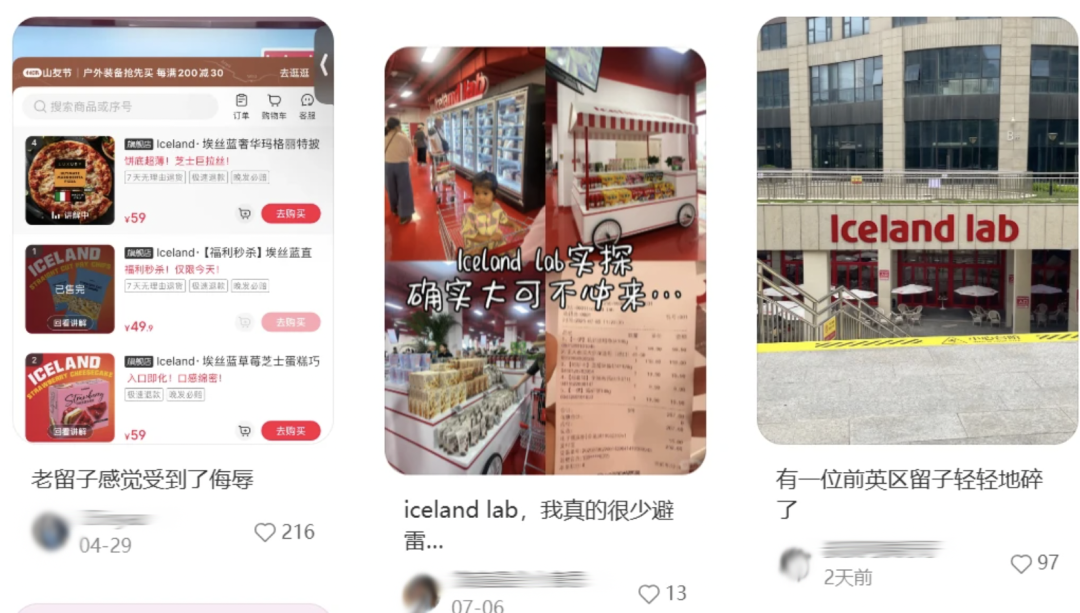
Core Viewpoint - The article discusses the opening of Iceland, a UK frozen food supermarket, in Beijing, highlighting its positioning as a mid-range store despite offering products typically associated with lower-income consumers in the UK. The store's pricing strategy and product selection have raised questions about its market fit in China, particularly among middle-class consumers [4][6][15]. Group 1: Store Opening and Initial Reception - Iceland opened its first store in Beijing's Mentougou district, attracting long queues on opening day, but the product offerings revealed that 70% were similar to those found in local supermarkets, with 30% being proprietary items priced higher than in the UK [4][6][14]. - The store's concept as a "frozen food expert" contrasts with the perception of frozen foods in China, where they are often seen as basic and inexpensive [14][15]. - Initial customer feedback has been largely negative, with many stating they would not return after their first visit [13][28]. Group 2: Product Offering and Pricing Strategy - Iceland's product range includes many imported frozen items, but the perceived value is low, as many products lack distinct advantages over local alternatives [6][10][25]. - The store's pricing strategy has been criticized for not being competitive, with some items priced higher than similar products at competitors like Sam's Club [15][34]. - The store's SKU count is significantly lower than typical supermarkets, with only around 600 SKUs compared to 10,000-15,000 in standard stores, limiting consumer choice [21][29]. Group 3: Marketing and Business Model - Iceland's business model includes a focus on live streaming and social media engagement, positioning the store as a "live broadcast base" rather than a traditional supermarket [28][30]. - The store operates only on weekends, with weekdays reserved for live streaming activities, indicating a shift in retail strategy towards digital engagement [28][30]. - The collaboration with local government and tourism groups suggests a broader strategy to attract visitors to the Mentougou area, rather than solely focusing on retail sales [29][32]. Group 4: Market Context and Competition - The article notes that Iceland's competition is not just other supermarkets but also local attractions and entertainment venues, as it aims to create a unique shopping experience [32][34]. - The rise of other mid-range supermarkets in China, such as Albert Wang and Auchan, indicates a growing market for imported and premium products, which Iceland is struggling to penetrate effectively [36][37]. - The middle-class consumer segment is increasingly targeted by various retailers, leading to a crowded market where differentiation is crucial for success [36][40].

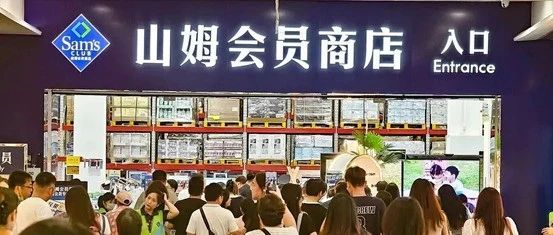
山姆又出事!有面包被指隐藏含转基因配料表,客服称若介意可不买
凤凰网财经· 2025-07-22 14:12
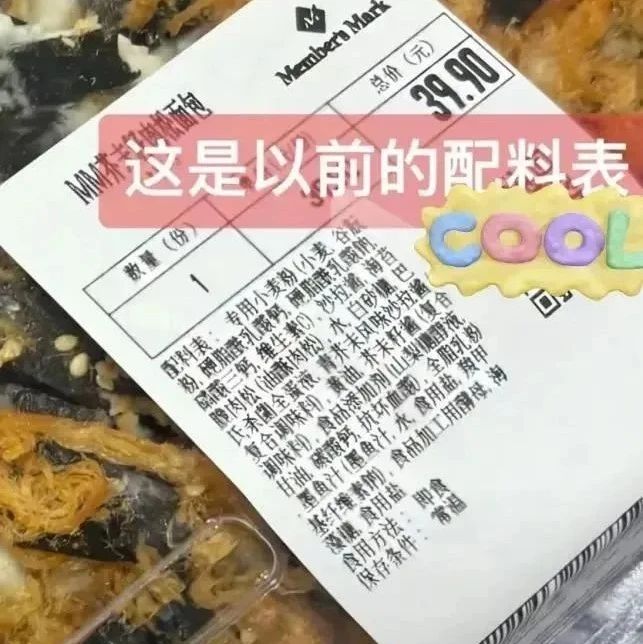
Core Viewpoint - The article discusses recent controversies surrounding Sam's Club, particularly regarding the labeling of ingredients in their MM mustard seed meat floss bread, which has led to consumer concerns and discussions about the company's product selection and membership value [1][5][9]. Group 1: Product Labeling Controversy - A recent post by a consumer highlighted that the packaging of Sam's Club's MM mustard seed meat floss bread no longer includes a detailed ingredient list, raising concerns about transparency [1]. - The previous ingredient list did not include "genetically modified soybean oil," which is now present in the online ingredient list [2][5]. - Sam's Club staff acknowledged the issue and stated they would report it to relevant departments for improvement, emphasizing that the product meets sales standards and quality guarantees [7]. Group 2: Membership and Product Selection Issues - Recent discussions on social media indicate that consumers are dissatisfied with Sam's Club's product offerings, feeling that the store is losing its unique selection and becoming more like Walmart [9][11]. - Members have expressed frustration over the reduction of membership benefits, leading some to consider not renewing their memberships [12]. - The company has seen a significant increase in paid memberships, with projections indicating over 9 million members by June 2025, generating substantial membership fee revenue [12]. Group 3: Expansion and Market Position - Sam's Club is rapidly expanding in mainland China, opening an average of 6 to 7 new stores annually, with a total of 53 stores expected by 2024 [14]. - Despite strong sales growth reported by Walmart China, the heavy asset investment model of Sam's Club poses challenges in managing cash flow and balancing revenue, profit, and investment [14]. - The overall performance of the supermarket market in China is underwhelming, raising questions about Sam's Club's ability to maintain its growth trajectory and avoid intense competition as it expands [15].

京东,又一笔收购
3 6 Ke· 2025-07-22 11:37
Group 1 - JD.com has announced the acquisition of Hong Kong's Jia Bao Food Supermarket for a total transaction amount of HKD 4 billion, which includes Jia Bao's retail network and property assets [1][4] - The acquisition agreement was signed four months ago, and a three-year transition period has been set during which JD.com will not intervene in daily management [1][9] - Jia Bao, founded in 1991, has established itself as a budget supermarket chain in Hong Kong, focusing on low-priced frozen meat and a variety of grocery items [2][3] Group 2 - Jia Bao's competitive pricing is supported by direct sourcing and self-built logistics, allowing for low-cost and high-turnover supply chain management [3] - The company has invested profits into commercial real estate since 2007, acquiring approximately 67 properties, which has helped reduce long-term operational costs [3] - JD.com aims to leverage its supply chain advantages to enhance the quality of retail offerings in Hong Kong, indicating a strategic focus on the Greater Bay Area's fresh food supply chain [5][6] Group 3 - JD.com has been increasing its investment in Hong Kong, previously announcing a HKD 1.5 billion reinvestment in September 2022 for price adjustments and logistics subsidies [7] - The company has also introduced various consumer services in Hong Kong, including a price guarantee and significant subsidies for home appliances [7][8] - The acquisition of Jia Bao is seen as a strategic move to accelerate JD.com's entry into the fresh food market while allowing Jia Bao to undergo a transformation with the support of JD.com's digital and supply chain capabilities [9][10] Group 4 - This acquisition is part of JD.com's broader strategy to expand its offline retail presence, which has been ongoing since 2014 with various store formats [11] - JD.com has established over 60 JD Malls across major cities, aiming to create a comprehensive offline retail experience [11] - The company is also expanding its supermarket operations, with plans for new stores and a focus on integrating online and offline retail strategies [14][15]
40亿港元收购香港佳宝超市?京东回应
21世纪经济报道· 2025-07-22 11:29
Core Viewpoint - JD.com is reportedly planning to acquire Hong Kong's Jia Bao Supermarket for a transaction value of HKD 4 billion, with the deal expected to enhance JD's presence in the Hong Kong retail market [1][2]. Group 1: Acquisition Details - The acquisition deal was signed approximately four months ago, and it includes the purchase of Jia Bao's retail network and properties, with payments to be made in installments [1]. - A transitional period is included in the agreement, during which Jia Bao's founder, Lin Xiaoyi, will continue to manage the company for three years before JD.com takes over [1]. - Jia Bao, established in 1991, operates 90 stores in Hong Kong and employs over 1,000 staff, focusing on frozen goods, grains, and vegetables with a commitment to affordability [1]. Group 2: JD.com's Retail Strategy - A JD.com representative indicated that the actual transaction amount may be lower than reported, and the company aims to leverage its supply chain advantages to enhance the quality of retail offerings in Hong Kong [2]. - JD.com has been active in the retail market, having announced plans to reduce its stake in Yonghui Supermarket, intending to sell up to 266 million shares between April 2 and July 1 [2]. - JD's self-operated supermarket brand, JD Seven Fresh, is rapidly expanding, with plans to have 71 stores nationwide by March 2025 and to establish new warehouse networks in cities like Tianjin to strengthen its instant retail layout [2].

ESG解读|山姆超市选品争议不断,食品安全问题频发,会员费价值受质疑
Sou Hu Cai Jing· 2025-07-22 09:04
Core Viewpoint - The recent controversies surrounding Sam's Club, including product selection disputes and food safety issues, highlight a significant divergence between its operational practices and Walmart's ESG commitments, particularly in product quality, supplier management, and member value assurance [10][15]. Group 1: Product Selection Controversies - Sam's Club has faced backlash for introducing common supermarket brands like Holi Friend and Wei Long, leading members to criticize the perceived decline in product quality and uniqueness [3][10]. - The controversial product "Low Sugar Holi Friend" claimed an 80% sugar reduction but was criticized for increased fat content and the use of additives, resulting in over 400 negative reviews and a quick removal from shelves [4][10]. - Members have reported that Sam's Club is increasingly resembling a regular supermarket, raising concerns about the loss of differentiated product offerings that justify the membership fee [4][14]. Group 2: Food Safety Issues - Sam's Club has been repeatedly exposed to food safety violations, including incidents of moldy cakes and infested nuts, with a reported 30% spoilage rate for cherries earlier this year [8][10]. - Complaints regarding food quality have surged, with nearly 288 complaints in the last 30 days on a consumer complaint platform, indicating ongoing issues with product safety and quality [8][9]. Group 3: Divergence from Walmart's ESG Commitments - Walmart's 2023 ESG report emphasizes a commitment to product safety and quality, aiming to promote a positive food safety culture, which contrasts sharply with Sam's Club's recent operational challenges [10][11]. - The report outlines responsible sourcing standards and supplier compliance monitoring, yet Sam's Club's recent actions suggest a failure to adhere to these standards, particularly in product selection and supplier management [12][13]. - The decline in perceived member value and service quality, including reports of unequal customer service response times, contradicts Walmart's stated goals of creating stakeholder value and providing unique offerings to members [14][15].
山姆被曝隐藏“转基因”标签!专家:或违法!
新浪财经· 2025-07-22 08:58
Core Viewpoint - The article discusses consumer dissatisfaction with Sam's Club regarding the lack of transparency in product labeling, particularly concerning genetically modified ingredients and the perceived decline in product quality [2][8][9]. Group 1: Product Labeling Issues - Consumers have reported that the packaging of the MM Mustard Seed Meat Floss Bread no longer includes a clear ingredient list, which raises concerns about transparency [2][6]. - The new formulation of the product includes controversial ingredients such as genetically modified soybean oil, which has not been prominently labeled, leading to accusations of consumer deception [4][9]. - Experts emphasize that consumers have the right to know about the ingredients in their food, and failure to disclose such information may violate food safety laws [8][9]. Group 2: Consumer Reactions - There is a growing backlash from Sam's Club members, with some expressing intentions to cancel their memberships due to dissatisfaction with the product offerings and perceived quality decline [10][18]. - Members have criticized the introduction of common snacks like Holi Friend cakes, which they feel do not align with Sam's Club's previous premium product strategy [11][13]. - The controversy surrounding the low-sugar Holi Friend cake, which has a similar carbohydrate content to the regular version but higher calories, has further fueled consumer frustration [10][14]. Group 3: Internal Adjustments and Strategy - Reports suggest that Sam's Club is undergoing internal changes, requiring products to meet specific criteria such as low purchase prices and high profit margins before being stocked [15][18]. - The company is focusing on collaborating with local brands that can meet their standards and financial requirements, which may limit the variety of products available to consumers [15].
美团快乐猴超市即将开业
3 6 Ke· 2025-07-22 07:56
Core Insights - Meituan, China's largest food delivery and instant retail platform, is facing competition from Alibaba, which plans to invest 50 billion yuan in subsidies to challenge Meituan directly [1] - Meituan announced that its daily orders for food delivery and flash purchase services have surpassed 150 million, indicating strong performance [1] - The company is set to open its first physical store, "Happy Monkey Supermarket," in Hangzhou, which is positioned as a hard discount store similar to Alibaba's Hema [1][2] Group 1: Business Expansion - Meituan plans to open 1,000 Happy Monkey Supermarket locations despite not having opened a single store yet, indicating a serious commitment to physical retail [2] - The company is actively recruiting for various positions in cities like Beijing, Hangzhou, Guangzhou, and Shenzhen, further supporting its expansion plans [2] - The Happy Monkey Supermarket is expected to open in mid to late September, aligning with the upcoming National Day sales peak [1] Group 2: Retail Strategy - The Happy Monkey Supermarket will focus on fresh produce and household goods, utilizing a self-operated model and hard discount pricing strategy [4] - Meituan's previous retail ventures, such as the "Zhangyu Fresh Supermarket," have faced challenges, leading to a rebranding and shift in strategy [3][4] - The company aims to enhance its supply chain and procurement capabilities to improve its competitive edge in the retail sector [4][5] Group 3: Market Positioning - Meituan's retail strategy includes a focus on low-margin, high-turnover sales, with an emphasis on private label products [6][7] - The company is leveraging its experience in managing offline fulfillment to establish a strong presence in the instant retail market [5][8] - Meituan's future plans include the establishment of 1,200 "Raccoon Canteens," which will serve as centralized locations for food delivery, enhancing operational efficiency [9]

英国全是速冻货的穷鬼超市,开进中国就专供中产了?
Hu Xiu· 2025-07-22 06:54
Group 1 - The core viewpoint of the article is that Iceland, a UK-based frozen food supermarket, has opened its first store in Beijing, but it struggles to resonate with the local market due to its pricing and product offerings [1][2][7] - The store's opening attracted long queues, indicating initial interest, but the reality of the product selection led to disappointment among consumers [3][17] - Iceland's product mix is heavily skewed towards domestic items, with 70% being similar to local supermarket offerings, and the remaining 30% being overpriced private label products [4][19] Group 2 - Iceland positions itself as a "frozen food expert," but the popularity of frozen foods in China is not as high as in Western markets, leading to challenges in consumer acceptance [20][21] - The store's limited SKU count of around 600 is significantly lower than typical supermarkets, which usually offer between 10,000 to 15,000 SKUs, making the shopping experience less engaging [29] - Iceland's pricing strategy does not provide a competitive advantage, as some products are priced higher than similar offerings from competitors like Sam's Club [52][54] Group 3 - The store operates as a "live streaming base," focusing on creating a lively atmosphere for online sales rather than traditional retail [39][41] - The collaboration between Iceland, the Shouqi Group, and the local government indicates a strategic push to attract tourism and investment rather than solely focusing on retail sales [44][45] - Despite the marketing efforts, initial sales figures have been disappointing, with low online engagement and sales numbers [49][50] Group 4 - The article highlights the broader context of the middle-class consumer market in China, which is increasingly sensitive to pricing and value, making it difficult for Iceland to establish a foothold [60][62] - The competitive landscape includes other international supermarket chains that are better positioned to meet the evolving demands of middle-class consumers [55][57] - The concept of "middle-class supermarkets" is becoming more prevalent, with various brands targeting this demographic through unique product offerings and pricing strategies [58][66]