二手车

Search documents
乘联分会:二手车市场日均交易量攀升至6.79万辆
Bei Jing Shang Bao· 2025-09-18 07:49
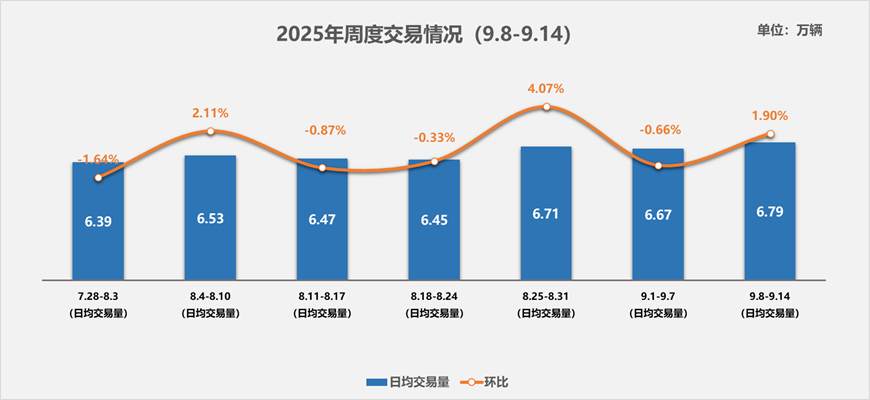
Core Insights - The second-hand car market in China is experiencing increased activity, with average daily transaction volume rising to 67,900 units, reflecting a 1.9% increase compared to the previous week and a 5 percentage point increase compared to the same period in August [1][1][1] Market Trends - The upcoming "Golden Week" holiday is driving demand for long-distance travel and self-driving trips, significantly boosting pre-holiday car purchasing intentions [1][1] - Various markets and dealerships are launching diverse promotional activities to cater to consumer demand during this peak buying period [1][1] Seasonal Patterns - September and October are traditionally peak months for the second-hand car market, characterized by increased vehicle replacement rates and relatively abundant supply [1][1] - Market demand and customer traffic are expected to show noticeable improvement during this period [1][1] Industry Challenges - Despite signs of market recovery, the second-hand car industry continues to face significant survival pressures [1][1] - Although the new car price decline has eased, the issue of high dealer inventory remains prominent [1][1]
中国汽车流通协会:“十一” 黄金周叠加“自驾游”需求利好 二手车市场交易量显著提升
智通财经网· 2025-09-18 07:38
智通财经APP获悉,9月17日,中国汽车流通协会发文称,9月8日至14日,全国二手车市场表现活跃,日均交易量攀升至 6.79万辆,与上周相比,实现了1.9% 的增长幅度,相较于8月同期,更是显著提升了5个百分点 。随着 "十一" 黄金周的临 近,长途跨省出行和自驾出行需求猛增,"自驾游" 成为热门旅游方式,极大地刺激了节前购车需求。与此同时,众多市场 和车商瞅准 "十一" 这个消费者集中选车换车的黄金时段,提前推出丰富多样的促销活动,有效迎合了消费者的购车意愿。 在此双重利好因素的推动下,二手车市场交易量显著提升,此前高库存的状况也得到了一定程度的缓解,为市场后续的稳 健发展奠定了良好基础。 通常情况下,9、10月是二手车市场的传统旺季。在这一时期,二手车置换率会有所上升,车源供给相对充足,市场需求和 客流量也将呈现出明显的好转态势。不过,尽管当前市场呈现回暖迹象,但整个二手车行业仍然面临着较大的生存压力。 新车降价潮虽然有所缓和,但尚未完全停止,车商库存高企的问题依旧突出。基于此,建议车商在制定四季度经营策略 时,仍需保持谨慎态度。 东北地区二手车日均交易量为0.25万辆,环比增长5.26%。本周,哈尔滨、 ...

乘联分会:9月1-14日全国乘用车市场零售73.2万辆 同比下降4%
智通财经网· 2025-09-17 09:01
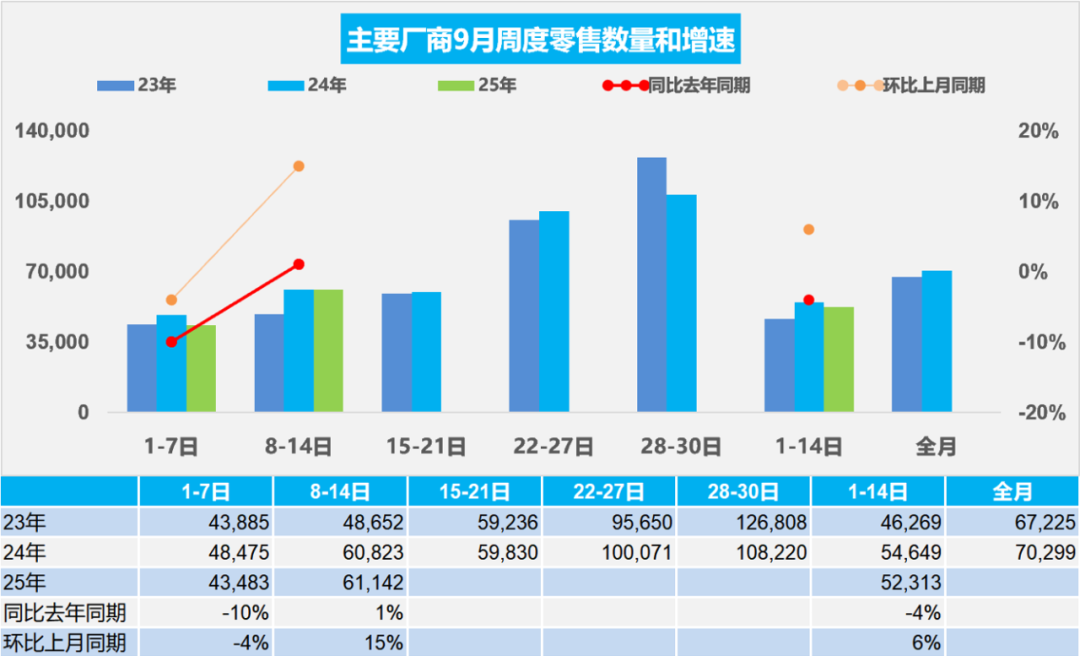
Group 1: Market Performance - From September 1 to 14, the national passenger car market retail reached 732,000 units, a year-on-year decrease of 4%, but a month-on-month increase of 6%. Cumulative retail for the year reached 15.497 million units, a year-on-year increase of 9% [1][5] - During the same period, wholesale of national passenger car manufacturers was 774,000 units, a year-on-year decrease of 3%, but a month-on-month increase of 18%. Cumulative wholesale for the year reached 18.816 million units, a year-on-year increase of 12% [1][9] Group 2: New Energy Vehicles - In the new energy sector, retail sales from September 1 to 14 reached 438,000 units, a year-on-year increase of 6% and a month-on-month increase of 10%. The penetration rate for new energy vehicles in the passenger car market was 59.8%, with cumulative retail for the year at 8.008 million units, a year-on-year increase of 25% [1][5] - Wholesale of new energy vehicles from manufacturers during the same period was 447,000 units, a year-on-year increase of 10% and a month-on-month increase of 21%. The cumulative wholesale for the year reached 9.39 million units, a year-on-year increase of 32% [1][9] Group 3: Market Trends and Challenges - The market is experiencing a mixed performance, with the "Golden September and Silver October" traditional peak season approaching, alongside the implementation of national and local purchase subsidies. However, the focus on high-priced models in local subsidy policies may hinder the growth of the mainstream market [5] - The introduction of new models at the Chengdu Auto Show has generated significant interest, but the lack of popular entry-level models has limited their contribution to overall sales [5][9]


Uxin Limited (NasdaqGS:UXIN) Conference Transcript
2025-09-16 14:02
Uxin Limited Conference Summary Company Overview - Uxin Limited is a leading player in the Chinese used car market, aiming to become the world's largest and most trusted used car retailer [7][25] - The company operates both offline superstores and online sales, combining elements of CarMax and Carvana [11][14] Industry Insights - China has the world's largest total vehicle ownership with 315 million cars, but the used car market is underdeveloped compared to the U.S. [8] - The annual used car transaction in China is only 60% of new car sales, indicating significant growth potential of 4 to 5 times if it follows the U.S. trajectory [8] - The used car market in China has been growing at an annual rate of about 11% over the past decade [8] Market Structure - The used car market in China is highly fragmented, with 95% of transactions occurring through small dealers with limited inventory [9][26] - Uxin aims to transform this "bazaar market" into a more organized retail environment, similar to supermarkets and warehouse models [10] Business Model and Operations - Uxin's superstores can display up to 10,000 cars and have a reconditioning factory with a production capacity of 100,000 cars per year [11][12] - The company has a unique shopping experience designed to build customer trust, featuring clean and organized showrooms [16] - Uxin's sales turnover is significantly faster than traditional dealers, with new stores achieving a turnover of less than 30 days [19] Financial Performance - Uxin reported a year-over-year retail growth of 134% in 2024, with guidance for over 100% growth in 2025 [23] - The company achieved its first adjusted EBITDA in Q4 2024 and aims for break-even adjusted EBITDA in the current year [24] Expansion Plans - Uxin plans to open 4 to 10 new superstores annually, targeting 50 superstores by 2030 with an annual retail volume of 1.5 million units and projected sales revenue exceeding $15 billion [25] - The company has identified 100 to 200 cities in China suitable for expansion based on vehicle ownership and used car transaction volume [27] Competitive Advantage - Uxin's advantages include a superior shopping experience, advanced reconditioning technology, standardized operations, and the ability to leverage inventory financing [15][23] - The company is positioned uniquely in the market, with no major competitors in the large-scale used car retail space [25][26] Technology and Data Utilization - Uxin employs an AI-powered dynamic pricing system that improves as sales increase, providing a competitive edge in pricing accuracy [26][27] - The company emphasizes the importance of data in the used car business, as it allows for better pricing and operational efficiency [22][23] Conclusion - Uxin Limited is strategically positioned to capitalize on the growth potential of the Chinese used car market through innovative business practices, advanced technology, and a focus on customer experience [7][25]

从零公里到长公里,中国二手车出海经历交棒期
Zhong Guo Qi Che Bao Wang· 2025-09-15 03:00
Core Viewpoint - The Chinese used car market is poised to leverage its position as the largest new car consumer market to expand into global markets, particularly through long-distance used cars, which are increasingly seen as a viable option for international trade [2][3]. Group 1: Market Potential - In 2024, China's used car export volume has surpassed 400,000 units, covering over 160 countries and regions, indicating a significant opportunity for growth in the global market [2]. - Long-distance used cars are gaining traction due to their price competitiveness and suitability for emerging markets, which prioritize practical and cost-effective vehicles [3]. Group 2: Export Market Dynamics - The primary target markets for China's long-distance used cars are approximately 117 left-hand drive countries, mainly in Southeast Asia, the Middle East, Eastern Europe, Africa, and Latin America, with an annual import growth rate of around 6% from 2021 to 2024 [4]. - In Central Asia and Northern Asia, China's used cars have captured about half of the import market share, with an annual growth rate of 28% [4]. Group 3: Challenges in Exporting - The development of long-distance used cars faces challenges such as fragmented vehicle sources, high certification costs due to non-standard vehicle conditions, and inefficiencies in the distribution process [5][6]. - There is a significant gap in after-sales service for exported used cars, with complaints emerging regarding the lack of support for vehicles sold overseas [7][8]. Group 4: Strategic Initiatives - Companies like SAIC Volkswagen are exploring various models for used car business, including repurchase strategies to stabilize prices and enhance competitiveness in international markets [9]. - The industry anticipates that if domestic dealers and trade enterprises can effectively utilize specialized international trade strategies, the export share of long-distance used cars could rise from under 8% to 50% within the next decade, achieving an annual export target of 5 million units [10].


崔东树:7月全国二手车市场交易量166万台 同比增长3%
智通财经网· 2025-09-12 10:34
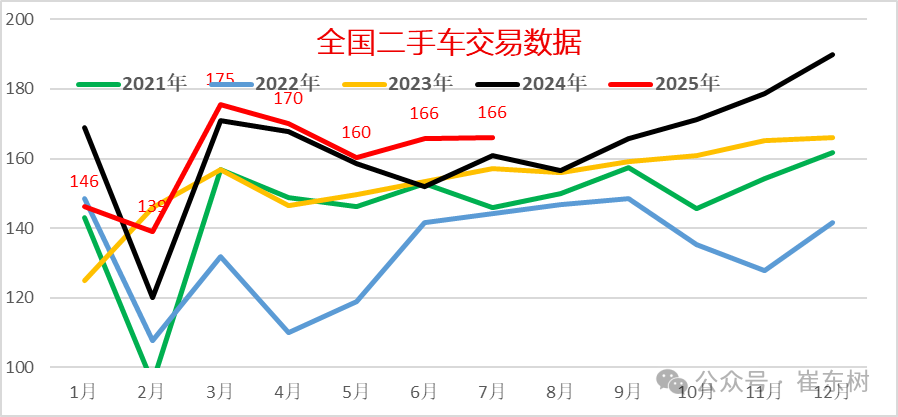
Core Viewpoint - The second-hand car market in China is experiencing growth, with significant potential for future development, particularly in the context of the rising popularity of electric vehicles [1][5]. Market Overview - In July 2025, the national second-hand car transaction volume reached 1.66 million units, a month-on-month increase of 0.2% and a year-on-year increase of 3% [1][5]. - From January to July 2025, the cumulative transaction volume was 11.23 million units, a year-on-year increase of 2%, while the transaction amount was 729.2 billion yuan, a slight decrease of 0.1% [1][5]. Industry Growth - The second-hand car market is recovering, with various local traffic management departments facilitating transactions and improving circulation [1][2]. - The market is still in a rapid growth phase compared to developed countries, indicating substantial future potential [1][5]. Transaction Structure - The transaction structure shows a growing preference for SUVs and MPVs, while the market for passenger cars is becoming more high-end [6][7]. - In July 2025, the proportion of cars aged 3-6 years accounted for 45% of transactions, indicating a trend towards newer second-hand vehicles [7][8]. Price Trends - The average transaction price of second-hand cars is trending towards mid-to-high-end models, with a notable increase in the proportion of cars priced between 80,000 to 150,000 yuan [13][17]. - The market for second-hand electric vehicles is also growing, with a significant increase in transaction volume and penetration rate [14][15]. Inventory and Turnover - The inventory pressure in the second-hand car market is gradually improving, with a notable decrease in the proportion of cars held for over 30 days [22]. - The turnover rate for second-hand cars has increased, reaching a historical high of 30.4% in Q3 2025 [19][20]. Future Outlook - The potential for growth in the second-hand car market remains strong, particularly with the ongoing development of electric vehicles and favorable government policies [1][18]. - The market is expected to continue evolving, with increasing consumer interest in newer, more efficient vehicles [24].
乘联分会:二手车市场有望在9月中旬迎来拐点
Bei Jing Shang Bao· 2025-09-12 07:47
Core Insights - The average daily transaction volume of used cars in China reached 66,700 units from September 1 to 7, 2025, reflecting a slight week-over-week decline of 0.66% [1] - The market is experiencing a minor adjustment due to the traditional seasonal transition and policy effects, with overall trading volume showing slight fluctuations [1] Market Dynamics - September is a critical transition month for the automotive market, moving from the summer season to the peak consumption period known as "Golden September and Silver October" [1] - Despite the continuation of local replacement subsidy policies and a wave of new car launches, market activity has decreased compared to late August due to the waning effects of summer consumption and consumer anticipation for promotional events during the National Day holiday [1] - Demand for family-oriented vehicles remains stable, while the trading pace for high-end luxury models has slowed down [1] Dealer Feedback - 38% of dealers reported a decrease in offline customer traffic compared to the previous period, and nearly 28% of businesses experienced a drop in transaction volume, particularly in non-restricted cities and third- and fourth-tier markets [1] - In terms of pricing, 48% of companies maintained stable end prices, while 41% reported a decline in terminal prices, with downward pressure primarily affecting mid-range models aged 3 to 5 years [1] Future Outlook - The used car market is expected to reach a turning point in mid-September, driven by the continuous release of policy benefits, new product iterations, and gradual recovery of consumer confidence [2] - With the upcoming Mid-Autumn Festival and National Day promotional seasons, along with a series of local auto shows, transaction volumes are anticipated to experience a stepwise increase, marking the official entry into the traditional peak season [2]
中国汽车流通协会:9月1日至7日全国二手车日均交易量达6.67万辆 环比上周下降0.66%
智通财经网· 2025-09-12 07:37
Core Insights - The average daily transaction volume of used cars in China decreased to 66,700 units from September 1 to 7, 2025, reflecting a 0.66% decline compared to the previous week, indicating a slight market adjustment [1] - September is a critical transition month for the automotive market, moving from summer to the peak consumption season, with mixed market characteristics observed [2] - The demand for family vehicles remains stable, while the trading pace for high-end luxury models has slowed down [2] Market Performance - The overall used car market showed a downward trend this week, with transaction volumes declining slightly compared to the previous week [4] - In the East China region, the average daily transaction volume was 23,500 units, down 1.85% week-on-week, with significant declines in cities like Jinhua (over 20% drop) and Nanchang (over 10% drop) [6] - The North China region maintained a stable trading atmosphere, with an average daily transaction volume of 2,400 units, although Beijing and Tianjin saw slight declines of 5.4% and 6.8% respectively [6] Regional Insights - The Northeast region's average daily transaction volume was 2,400 units, down 2.86%, with cities like Changchun and Jixi experiencing declines exceeding 10% [7] - The Southwest region saw a 5.44% increase in average daily transaction volume to 12,900 units, with Guiyang and Kunming showing notable growth [7] - The Central South region's average daily transaction volume was 24,400 units, down 2.15%, with Wuhan experiencing a significant decline of over 20% [8] - The Northwest region's average daily transaction volume was 1,100 units, down 6.74%, with cities like Xining and Bazhou facing declines exceeding 10% [8]
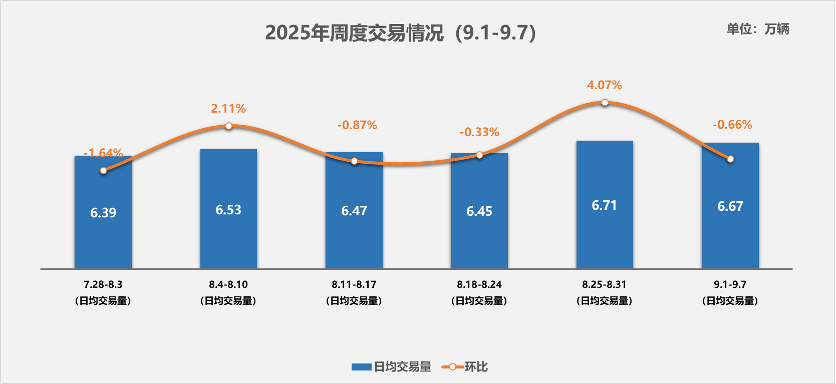
中国汽车流通协会:9月1日至7日全国二手车日均交易量比上周下降0.66%
Zheng Quan Shi Bao Wang· 2025-09-12 07:33
人民财讯9月12日电,中国汽车流通协会发布二手车周度快报。2025年9月1日至7日,全国二手车日均交 易量达6.67万辆,相比上周下降0.66%,周度交易呈现小幅回调态势。市场在月初传统调整周期与政策 过渡效应的双重影响下,整体交易规模略有波动。 ...
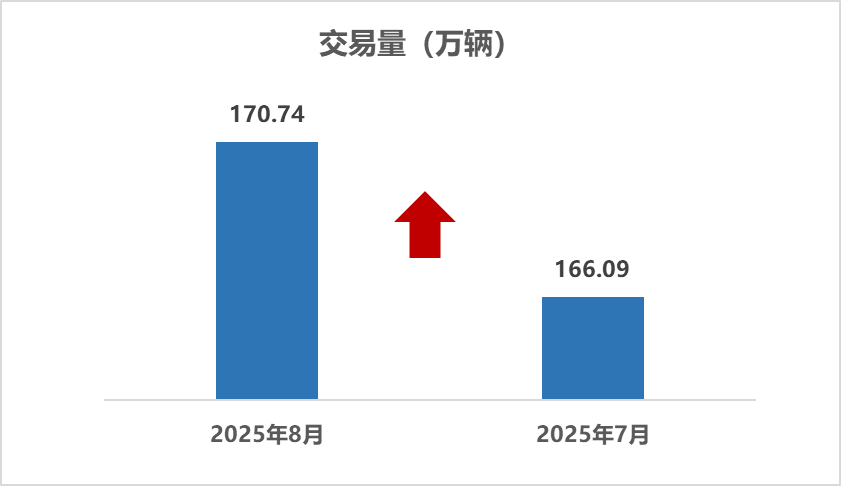
中国汽车流通协会:8月全国二手车市场交易量170.74万辆 同比增长9.02%
Zhi Tong Cai Jing· 2025-09-10 09:17
Core Insights - The second-hand car market in China shows a moderate upward trend in August 2025, with a total transaction volume of 1.7074 million units, reflecting a month-on-month increase of 2.80% and a year-on-year increase of 9.02% [1] - The total transaction amount for August reached 106.517 billion yuan, while the cumulative transaction volume from January to August was 12.9384 million units, marking a year-on-year growth of 3.03% [1] Market Performance - The second-hand car market is transitioning from a low season to a peak season, with the manager index for August at 43.1%, indicating a slight improvement in market conditions [5] - The demand for family cars is increasing due to the back-to-school season, particularly for SUVs and MPVs, which saw sales growth of 3.5% and 3.1% respectively [5] - Despite challenges from adverse weather and new car launches, the overall market remains stable, with a notable increase in transaction volume during the last week of August [5] Pricing Trends - Both acquisition and sales prices for second-hand cars have decreased month-on-month, with 41.2% of managers reporting lower acquisition prices and 33.3% reporting lower sales prices [6] - The average transaction price for second-hand cars fell to 62,400 yuan, down 1,400 yuan from the previous month [6] Inventory and Supply - The trading volume of vehicles over 10 years old increased by 4% year-on-year, reaching 220,000 units [7] - The average inventory period for car dealers extended to 46 days, indicating increased pressure on cash flow due to insufficient consumer demand [7] Segment Performance - In August, basic passenger cars sold 953,000 units, with SUVs and MPVs also showing growth, while commercial vehicles like trucks and buses performed well with year-on-year increases of 15.91% and 11.84% respectively [9][10] - From January to August, the cumulative transaction volume for passenger cars reached 10.1941 million units, with notable growth in MPVs and cross-type vehicles [11] Regional Insights - The North China region saw a slight decline in transaction volume, while other regions, particularly Central South and Southwest, experienced significant growth [15][16][17] - In August, the Central South region recorded a transaction volume of 460,800 units, up 4.33% month-on-month, with Henan province leading the growth [15] Transfer Rates - The transfer rate for second-hand cars in August was 30.85%, reflecting a month-on-month increase of 0.4 percentage points and a year-on-year increase of 1.8 percentage points [20]