农产品种植与加工

Search documents
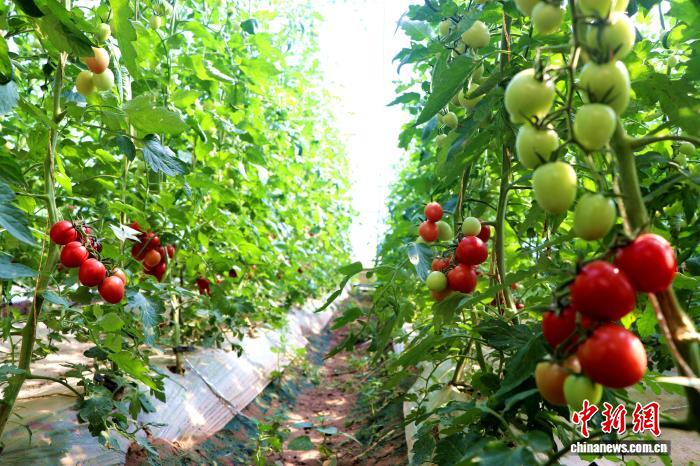
甘肃民勤:科技赋能沙漠寒旱农业
Zhong Guo Xin Wen Wang· 2025-11-14 06:40
Core Viewpoint - Gansu's Minqin County is leveraging technology to transform its arid desert agriculture into a sustainable and productive industry, focusing on high-quality produce and innovative agricultural practices [1][4][7]. Group 1: Agricultural Innovation - Minqin County is utilizing organic fertilizers and soil improvement techniques to enhance the quality of its agricultural products, such as the "desert ruby" tomatoes, which are in high demand due to their superior quality [1][4]. - The county has developed a multifunctional protective system that integrates windbreaks, soil conservation, and ecological restoration, significantly improving agricultural production conditions [4][7]. Group 2: Technological Empowerment - The local industry is adopting advanced technologies like automated production lines and low-temperature purification processes to enhance the quality of products such as fennel, which is becoming a key driver of local income [2][6]. - A comprehensive technical system has been established, combining information, knowledge, and smart equipment, to support the modernization of agriculture and improve production efficiency [4][5]. Group 3: Sustainable Development - Minqin County is focusing on ecological governance and sustainable development, aiming to combat desertification and ensure long-term agricultural viability [4][5]. - The county's agricultural strategy includes the development of a complete industrial chain from production to processing, ensuring the sustainable growth of its cold-resistant vegetable industry [7]. Group 4: Brand Building and Market Strategy - The county is enhancing the reputation of its agricultural products through systematic brand development and diversified promotional strategies, aiming to boost the recognition and quality of "Minqin-produced" goods [5]. - A strategic approach is being implemented to optimize the agricultural layout based on regional advantages, focusing on high-value crops and ecological practices [5][7].

云城番薯上市!2025年产量近3万吨
Nan Fang Nong Cun Bao· 2025-11-13 04:00
Core Insights - The article highlights the upcoming harvest season for sweet potatoes in Yunfu City, specifically in Yun District, which is a key production area in Guangdong Province [2][3][10]. Industry Overview - Yun District is recognized as one of the first key counties for sweet potato yield enhancement in Guangdong, benefiting from favorable subtropical monsoon climate and excellent soil conditions for cultivation [3][11]. - The district has implemented the "Hundred Million Project" to leverage its sweet potato industry advantages, focusing on increasing production and farmer income through substantial annual investments [12][14]. Production and Yield - By 2025, the sweet potato planting area in Yun District is expected to reach approximately 23,000 acres, with a projected yield of nearly 30,000 tons [15][18]. - The core area for sweet potato cultivation, Qianfeng Town, will have around 3,730 acres dedicated to sweet potatoes, with an anticipated yield of 4,460 tons [18][19]. Variety and Pricing - The district cultivates over 10 varieties of sweet potatoes, including fresh eating types like Watermelon Red and Marsha Lee, as well as dried and processed varieties [4][5][17]. - Expected purchase prices for sweet potatoes this year are similar to previous years, with Watermelon Red priced between 1.2-1.5 yuan per jin and retail prices ranging from 2-2.5 yuan per jin [20][21]. Future Development Plans - The local agricultural authorities aim to optimize sweet potato varieties, improve planting techniques, extend the industrial chain, and establish quality brands to create a standardized demonstration base for high-quality sweet potato cultivation [23][25]. - The goal is to develop the sweet potato industry into a pillar for rural prosperity and a model for integrated agricultural development in the province [25].

油脂油料早报-20251111
Yong An Qi Huo· 2025-11-11 01:05
Report Summary 1. Report Industry Investment Rating No information provided. 2. Core Viewpoints - The US soybean export inspection volume for the week ending November 6, 2025, was 1,088,577 tons, meeting expectations, with 0 tons exported to the Chinese mainland. The cumulative export inspection volume for this crop year so far is 8,889,371 tons, lower than 15,320,558 tons in the same period of the previous year [1]. - As of last Thursday, the planting rate of Brazil's 2025/26 soybean crop reached 61% of the expected sowing area [1]. - Malaysia's palm oil inventory at the end of October 2025 reached a six - and - a - half - year high of 246 tons, up 4.44% from the previous month, due to a significant increase in production. October's crude palm oil production was 204 tons, up 11.02% month - on - month, and exports were 169 tons, up 18.58% month - on - month [1]. - Malaysia's palm oil exports from November 1 - 10, 2025, decreased compared to the previous month, with AmSpec reporting a 9.5% decrease and ITS reporting a 12.3% decrease [1]. 3. Summary by Related Catalogs Overnight Market Information - US soybean export inspection volume for the week ending November 6, 2025, was 1,088,577 tons, within the market forecast range of 1,000,000 - 1,700,000 tons. The previous week's volume was 984,875 tons (revised from an initial 965,063 tons). In the same week of 2024, it was 2,363,532 tons [1]. - Brazil's 2025/26 soybean planting rate as of last Thursday was 61% of the expected sowing area [1]. - Malaysia's palm oil inventory at the end of October 2025 was 246 tons, 4.44% higher than the previous month. October production was 204 tons (up 11.02% month - on - month) and exports were 169 tons (up 18.58% month - on - month). Before the report, the expected inventory was 244 tons, production 194 tons, and exports 148 tons [1]. - Malaysia's palm oil exports from November 1 - 10, 2025, were 448,328 tons according to AmSpec (down 9.5% from the previous month) and 459,320 tons according to ITS (down 12.3% from the previous month) [1]. Spot Prices - Spot prices of various oilseeds and oils in different regions from November 4 - 10, 2025, are provided, including soybean meal in Jiangsu, rapeseed meal in Guangdong, soybean oil in Jiangsu, palm oil in Guangzhou, and rapeseed oil in Jiangsu [1]. Others - Information on precipitation in major producing countries, import soybean crushing profit on the futures market, and oil import profit is mentioned but no specific data is provided [1]. - Information on protein meal basis, oil basis, and oilseed futures price spreads is also mentioned without specific details [1].
明天11月9日:涨了!涨了!大涨、暴涨开始了?玉米、小麦全面上涨!猪价、牛羊价涨定了!农民警惕...
Xin Lang Cai Jing· 2025-11-07 21:43
Core Insights - The agricultural market is experiencing a significant price increase for corn, wheat, and livestock, which is expected to benefit farmers' incomes in the fourth quarter of 2025 [1][2][3] Group 1: Corn Market - Corn prices have started to rise, with state-owned enterprises like COFCO and Sinograin initiating a new round of targeted purchases in major production areas, leading to a price of 2090 yuan per ton in Harbin [1][2] - The overall trend for corn prices is expected to continue upward, supported by increased purchasing from deep processing enterprises as the new corn season begins [2] Group 2: Wheat Market - Wheat prices have also seen a significant increase, with some regions reporting prices exceeding 2800 yuan per ton, and high-quality wheat reaching around 3000 yuan per ton [2] - The rise in wheat prices is anticipated to further enhance farmers' income from grain production [2] Group 3: Livestock Market - The prices of pigs, cattle, and sheep are expected to rise due to seasonal demand, with current market conditions indicating that pig prices are at a low point and are likely to increase as slaughterhouses raise purchase prices [2][3] - The onset of colder weather is expected to drive consumer demand for meat, contributing to the anticipated price increases in livestock [3] Group 4: Climate Impact and Risks - The formation of La Niña is expected to bring colder weather, posing challenges for farmers, including increased risks of livestock diseases [3] - Farmers are advised to enhance vaccination efforts and improve sanitation practices in livestock management to mitigate these risks [3] - Grain storage practices should also be improved to prevent spoilage due to adverse weather conditions [3] Group 5: Policy and Future Outlook - The year 2025 is seen as a critical year for agricultural reform and rural revitalization, with expectations for increased production and income for farmers under new government policies [4]
视频丨囤秋菜、打年糕……南北方入冬仪式感拉满
Yang Shi Xin Wen Ke Hu Duan· 2025-11-07 06:38
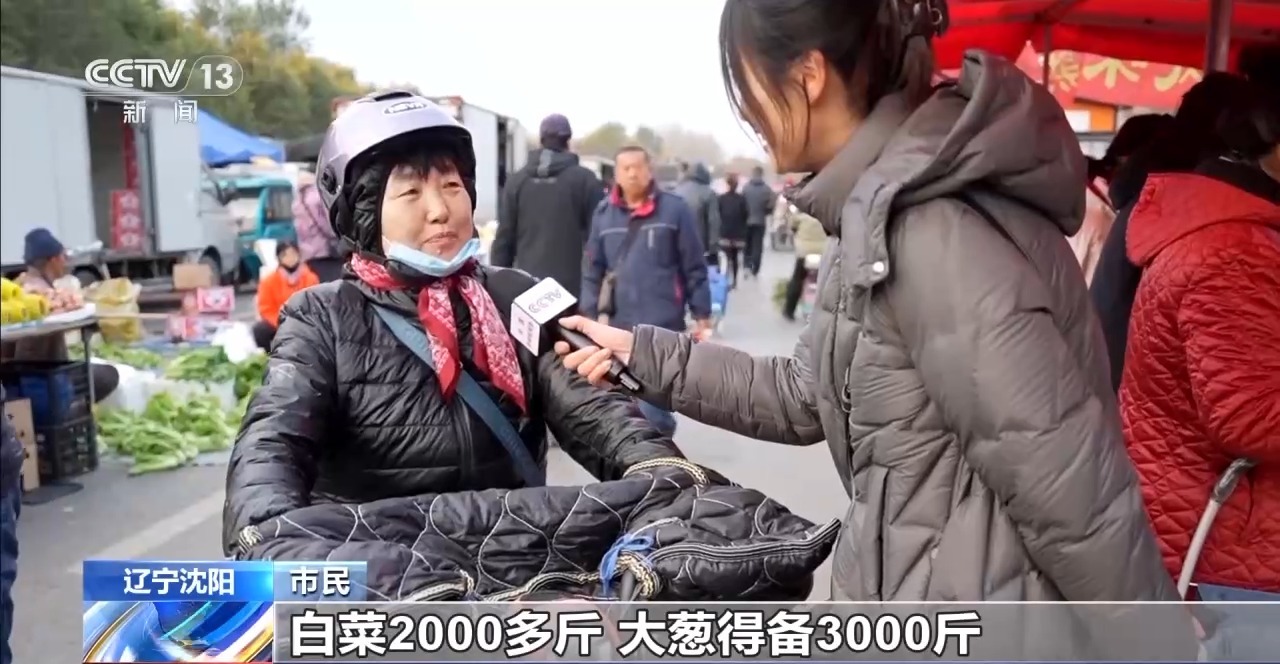
Group 1 - The article discusses the traditional practices of winter preparation in Northeast China, particularly the habit of storing autumn vegetables as a cultural ritual to welcome winter [1][16] - In Northeast regions, families typically store around 2,000 to 3,000 pounds of vegetables, but current practices have shifted to purchasing about 100 pounds at a time due to improved living standards [3][5] - The market for autumn vegetables is thriving, with daily trading volumes reaching hundreds of tons, particularly in Shenyang, which serves as a major distribution center for agricultural products [13][15] Group 2 - The article highlights the cultural significance of pickled vegetables, especially sauerkraut, in Northeast cuisine, which is prepared as a winter staple and symbolizes family gatherings [20][22] - In contrast to Northeast practices, Southern regions like Zhejiang celebrate winter by making rice cakes, which are associated with good fortune and community bonding [23][30] - The article also mentions the harvest of persimmons in Guangxi, where local farmers are busy making dried persimmons, contributing to the local economy with an annual production of 620,000 tons of fresh persimmons [34][36]
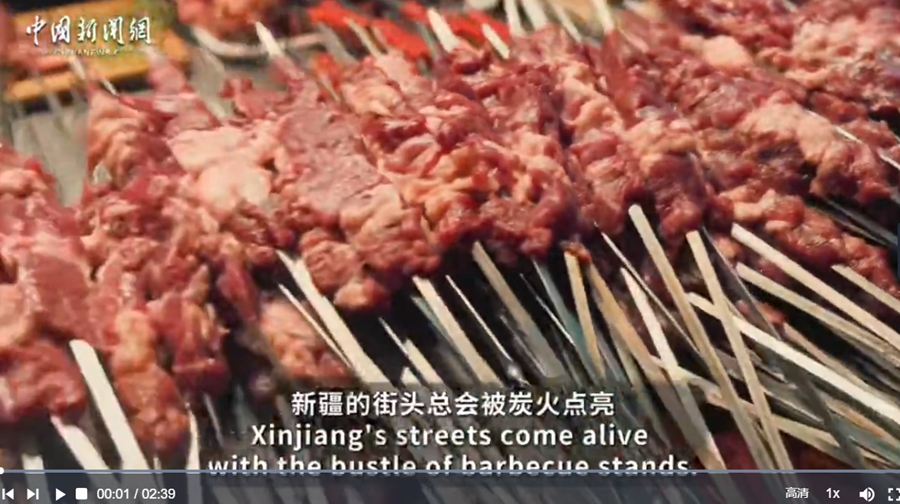
天山南麓的小作物,全球餐桌的大味道 | 中国城·边疆风采
Zhong Guo Xin Wen Wang· 2025-11-06 11:48
Core Insights - A small cumin seed from Yupu Lake County in Xinjiang is making its way from local fields to the international market, highlighting the global potential of this product [2] Industry Summary - The cumin industry in Xinjiang is leveraging digital production lines and global trading platforms to enhance its market reach [2] - The aromatic flavor of cumin from Northwest China is becoming a significant connector in international trade [2]
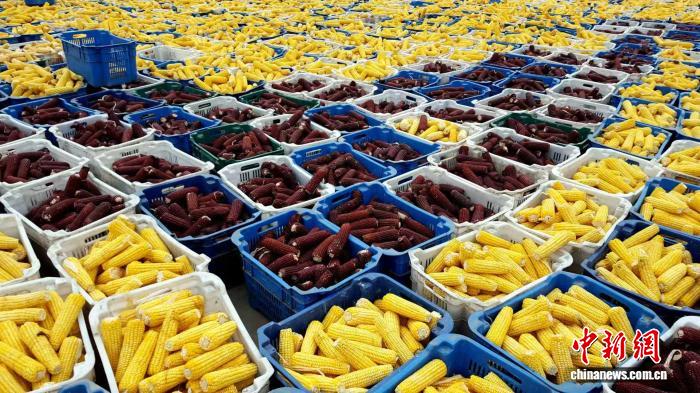
黄金纬度下,山西五寨甜糯玉米产业奔向60亿元未来
Zhong Guo Xin Wen Wang· 2025-11-05 07:29
Core Viewpoint - The sweet glutinous corn industry in Wuzhai, Shanxi, is projected to reach a market value of 6 billion yuan by 2030, driven by strong demand, technological advancements, and a comprehensive industry chain from planting to sales [1][7]. Group 1: Industry Development - Wuzhai County has implemented a special agricultural strategy, establishing sweet glutinous corn as a pillar industry supported by policies and technology [1][5]. - The county has invested 386 million yuan in the "Wuzhai Sweet Glutinous Corn Industrial Park," which features advanced production lines and a processing capacity of 200 million ears of corn annually [4][5]. - The sweet glutinous corn is recognized for its superior taste and high nutritional value, leading to a high repurchase rate among consumers [1][2]. Group 2: Technological Integration - The unique quality of Wuzhai sweet glutinous corn is attributed to its geographical advantages and technological enhancements, including a smart agriculture system that utilizes satellite remote sensing, IoT, and blockchain [2][5]. - The industrial park employs a three-hour freshness-locking process that retains over 90% of the corn's nutrients, with a defect rate below 2% [4][5]. Group 3: Market Expansion - Wuzhai County has developed a multi-channel sales system combining online e-commerce, offline supermarkets, and contract farming, leading to national sales and exports to countries like Russia [5][7]. - The county's "2365" industrial plan aims to expand sweet glutinous corn planting to 200,000 acres by 2030, with annual sales projected to reach 600 million ears [7]. Group 4: Brand Development - The "Wuzhai Sweet Glutinous Corn" brand was launched in September 2025, enhancing its market recognition and positioning it as a cultural symbol of the region [7]. - The brand has received certifications for green food and organic products, further solidifying its reputation in both domestic and international markets [7].
资讯早班车-2025-11-05-20251105
Bao Cheng Qi Huo· 2025-11-05 02:35
1. Macro Data Overview - GDP in Q3 2025 grew by 4.8% year-on-year, down from 5.2% in the previous quarter but up from 4.6% in the same period last year [1] - In October 2025, the Manufacturing PMI was 49.0%, down from 49.8% in the previous month and 50.1% in the same period last year [1] - The Non-manufacturing PMI: Business Activity in October 2025 was 50.1%, up from 50.0% in the previous month but down from 50.2% in the same period last year [1] - In September 2025, M1 and M2 increased by 7.2% and 8.4% year-on-year respectively, up from 6.0% and 8.8% in the previous month and -3.3% and 6.8% in the same period last year [1] - In September 2025, exports and imports increased by 8.3% and 7.4% year-on-year respectively, up from 4.3% and 1.2% in the previous month and 2.33% and 0.13% in the same period last year [1] 2. Commodity Investment Reference 2.1 Comprehensive - China hopes the Netherlands will stop interfering in corporate affairs and find a constructive solution to the Nexperia issue [2] - In October 2025, China's logistics industry prosperity index was 50.7%, down 0.5 percentage points month-on-month, but still in the expansion range [2] - The Shanghai Futures Exchange will adjust trading margins and price limits for alumina futures from November 7 [3] - The Dalian Commodity Exchange plans to adjust the coking coal delivery quality standards [3] - On November 4, 44 domestic commodity varieties had positive basis, and 25 had negative basis [4] 2.2 Metals - International precious metal futures generally closed lower due to increased market uncertainty [5] - After the implementation of the "Announcement", the price of pure gold jewelry per gram in multiple brands increased by 60 - 70 yuan [5] - As of November 4, the gold holdings of SPDR Gold Trust decreased by 0.30% from the previous trading day [5] - Codelco expects its copper production in 2025 to be 1.31 - 1.34 million tons, lower than the previous estimate [5] 2.3 Coking Coal, Steel, and Minerals - As of late October, the price of coking coal (main coking coal) increased by 3.95% month-on-month, reaching a new high since early December 2024 [7] - As of late October, the prices of all coal types in the national circulation field increased, with Shanxi Datun (Q5000) leading the increase [8] 2.4 Energy and Chemicals - The National Development and Reform Commission is paying close attention to the supply, demand, and price of natural gas during the heating season [9] - Canada may adjust its climate change policy, potentially abandoning the emission cap for the oil and gas industry [9] - Oman LNG and Spain's Naturgy signed a memorandum of understanding to explore a long-term LNG supply agreement [9] - Saudi Aramco expects global oil demand to reach 106 million barrels per day in 2025 and remain strong in 2026 [10] 2.5 Agricultural Products - As of late October, most agricultural product prices in the national circulation field increased, with live pigs (outside ternary) leading the increase [12] - As of November 2, the EU's soybean imports in the 2025/2026 period were 3.81 million tons, lower than the same period last year [12] - US soybean exports have decreased significantly, with exports to China in the first eight months of 2025 being only about 5.93 million tons [12] 3. Financial News Compilation 3.1 Open Market - The central bank resumed treasury bond trading in October, with a net investment of 20 billion yuan [13] - On November 5, the central bank conducted a 700-billion-yuan 3-month outright reverse repurchase operation, an equal-volume rollover [13] - On November 4, the central bank conducted a 117.5-billion-yuan 7-day reverse repurchase operation, with a net withdrawal of 357.8 billion yuan [14] 3.2 Important News - China will firmly safeguard the legitimate rights and interests of enterprises and stabilize the global semiconductor supply chain [15] - China and Russia will expand mutual investment and cooperation in various fields [15] - China welcomes Goldman Sachs to continue investing in China [15] - The central bank will adjust monetary policy according to the economic and financial situation [16] - The CSRC will introduce more opening-up measures to enhance the quality and efficiency of overseas listing filings [17] - In the first three quarters of 2025, China's service trade imports and exports totaled 5.93622 trillion yuan, a year-on-year increase of 7.6% [17] - The US federal government will continue to be shut down, and the current shutdown is about to set a new record [18] - The default rate of US office CMBS in October reached 11.8%, exceeding the peak during the 2008 financial crisis [19] 3.3 Bond Market Summary - China's bond market was weak and volatile, with most interest rate bond yields rising slightly [21] - The CSI Convertible Bond Index closed down 0.67% at 482.64 points, with a trading volume of 56.274 billion yuan [22] - The yields of European and US bonds generally declined [24][25] 3.4 Foreign Exchange Market - The onshore RMB closed at 7.1233 against the US dollar, down 8 points from the previous trading day [26] - The US dollar index rose 0.34% to 100.21 in late New York trading [26] 3.5 Research Report Highlights - The Fed will end its balance sheet reduction on December 1 [27] - Under the background of the "Southbound Connect" expansion, "Fixed Income +" products can allocate dim sum bonds and Chinese dollar bonds [27] - The "first-order inflection point" of the real estate market has appeared, and the absolute value may stabilize in 2026 at the earliest [28] 4. Stock Market News - The CSRC will introduce more opening-up measures to enhance the quality and efficiency of overseas listing filings [30] - The A-share market adjusted with reduced volume, with more than 3,600 stocks falling [30] - The Hong Kong Hang Seng Index closed down 0.79%, and the Southbound funds had a net purchase of HK$9.832 billion [31] - In October, the number of new A-share accounts opened was 2.31 million, a year-on-year decrease of 66% [31] - Since the beginning of this year, Southbound funds have had a cumulative net inflow of over HK$1.27 trillion, setting a new annual record [31] - Since October, well-known foreign institutions have surveyed 309 A-share listed companies [32] - Brokerage institutions expect the fundamentals of the Hong Kong stock market to improve in 2026 [32]
“从手提箱到集装箱,订单规模一路涨”
Ren Min Ri Bao Hai Wai Ban· 2025-11-05 01:45
Core Insights - Rwanda is the first African country to export dried chili peppers to China, marking a significant milestone in trade relations [1][3]. Group 1: Trade Opportunities - The China International Import Expo (CIIE) has provided a vital platform for Rwandan and other African agricultural products, allowing them to showcase their offerings to the Chinese market [3][9]. - Since its first participation in 2018, Rwanda has seen a substantial increase in trade, with 18 Rwandan companies showcasing products like coffee, chili peppers, tea, and honey at this year's expo [6][9]. - Rwandan coffee, known for its unique flavor due to its volcanic soil and climate, remains a key export product, with at least seven brands represented at the expo [6][9]. Group 2: Export Growth - The export of dried chili peppers has become a significant revenue source for Rwanda since its first shipment to China in 2021, with products being processed into various forms like sauces and juices for e-commerce platforms [6][7]. - The CIIE has facilitated a dramatic increase in orders for Rwandan products, with companies transitioning from small sample shipments to full container exports [8][9]. - In 2024, the bilateral trade volume between China and Rwanda is projected to reach $669 million, a 21.4% increase year-on-year, with Chinese imports from Rwanda growing by 22.5% [9]. Group 3: Economic Impact - The expansion of trade with China has not only met consumer demands but also significantly contributed to Rwanda's economic development and improved livelihoods for local farmers [11][12]. - A collaborative project between a Chinese company and a Rwandan farm has successfully exported 200 tons of dried chili peppers in its first season, enhancing local agricultural infrastructure [11][12]. - The coffee industry exemplifies the positive impact of trade, with Rwandan coffee farmers earning an additional $4 per kilogram sold compared to previous earnings [12]. Group 4: Future Cooperation - Rwanda aims to leverage its agricultural potential and is looking to enhance cooperation with China in areas such as agricultural mechanization and technology transfer to improve food security [13][14]. - Upcoming initiatives include the establishment of agricultural demonstration zones and the deployment of agricultural experts to foster local industry growth [13][15]. - The Rwandan government is keen on expanding partnerships in green energy, digital infrastructure, and artificial intelligence to further develop its economy [15].

“从手提箱到集装箱,订单规模一路涨”(进博连线)
Ren Min Ri Bao Hai Wai Ban· 2025-11-04 22:12
Core Insights - The Rwandan ambassador to China, James Kimonyo, highlighted the significant trade growth for Rwandan exhibitors at the China International Import Expo (CIIE), showcasing the potential of African agricultural products in the Chinese market [2][6][7]. Group 1: Trade Growth and Opportunities - Since its inception in 2018, CIIE has provided a vital platform for Rwandan and other African countries to showcase high-quality agricultural products, leading to increased trade opportunities [2][4]. - This year, approximately 18 Rwandan companies participated in CIIE, presenting products such as coffee, chili, tea, and honey, which are gaining popularity among Chinese consumers [4][6]. - Rwandan coffee, a key export product, has established a strong reputation in China due to its unique flavor profile, with at least seven brands represented at the expo [4][7]. Group 2: E-commerce and Market Expansion - The ambassador has actively promoted Rwandan products through e-commerce platforms, with notable success in selling Rwandan coffee and chili [3][4]. - The introduction of new products, such as macadamia nuts and avocados, into the Chinese market is expected to further enhance trade relations [4][10]. Group 3: Bilateral Trade Statistics - The bilateral trade volume between China and Rwanda is projected to reach $669 million in 2024, reflecting a year-on-year increase of 21.4%, with Chinese imports from Rwanda increasing by 22.5% [7][10]. Group 4: Economic Impact on Local Farmers - The trade relationship has tangible benefits for Rwandan farmers, with increased income from coffee sales, where farmers earn an additional $4 per kilogram sold compared to previous earnings [10][11]. - The collaboration between Rwandan and Chinese companies, such as the chili industry demonstration project, has improved agricultural practices and infrastructure in Rwanda, benefiting local farmers [9][10]. Group 5: Future Cooperation and Development - The ambassador emphasized the importance of continued cooperation in agriculture, technology transfer, and investment to enhance food security and economic development in Africa [11][12]. - Upcoming initiatives, including the establishment of agricultural demonstration zones and the empowerment of small and medium-sized enterprises, are expected to create significant employment opportunities in Africa [11][12].