芯片半导体

Search documents
恒富证券首席经济学家周聪:寒武纪股价超过贵州茅台,“茅台魔咒”是否会再现?
Cai Fu Zai Xian· 2025-09-01 10:06
Core Viewpoint - The article discusses the phenomenon known as the "Moutai Curse," where stocks that surpass the market value of Kweichow Moutai tend to experience significant declines shortly thereafter, often impacting the broader market [1][2]. Group 1: Market Dynamics - Stocks that surpass Moutai's market value are typically from trending industries, particularly technology, which can experience explosive short-term growth but lack long-term sustainability [2][3]. - The technology sector's growth is driven by valuation increases, while the liquor industry, exemplified by Moutai, is driven by consistent performance metrics such as stable earnings growth, high cash flow, and substantial dividends [2][3]. Group 2: Time and Sustainability - The concept of time is crucial in evaluating stock performance; a stock may surpass Moutai today but could collapse in the future, indicating that short-term gains do not equate to long-term success [3]. - Moutai remains a benchmark in the market, symbolizing stability and long-term growth potential, which is why it is often used as a standard for comparison [3]. Group 3: Industry Outlook - The recent surpassing of Moutai by Cambrian Technology in the semiconductor sector suggests a shift in China's economic landscape, moving from traditional real estate-driven growth to innovation-driven growth [3]. - Cambrian Technology's current valuation is significantly high, with a market cap of 600 billion and a projected annual profit of 20 billion, leading to a price-to-earnings ratio of 300, which is five times that of industry leader Nvidia [3].


寒武纪大跌
盐财经· 2025-09-01 09:03
Core Viewpoint - The article highlights the strong performance of the A-share and Hong Kong stock markets, particularly focusing on the significant rise of Alibaba's stock following its quarterly earnings report, which exceeded market expectations and showcased robust growth in AI-related revenues [2][8][10]. Market Performance - On September 1, A-shares opened high with all three major indices rising, particularly the ChiNext Index which surged over 1% [2]. - The sectors that performed well included non-ferrous metals, semiconductor chips, and pharmaceuticals, while insurance, aerospace, military industry, and brokerage sectors experienced fluctuations [4]. Alibaba's Earnings Report - Alibaba's Q1 FY2026 revenue reached 247.65 billion yuan, a 2% year-on-year increase, with a 10% growth when excluding the impact of divested businesses [10]. - The net profit for the quarter was 42.38 billion yuan, marking a 76% increase, surpassing market expectations [10]. - Alibaba's cloud business reported a 26% year-on-year revenue growth to 33.40 billion yuan, with AI contributing over 20% to external commercialization revenue [11]. AI Investment and Market Reaction - Alibaba has invested over 100 billion yuan in AI infrastructure and product development over the past four quarters, with plans to continue investing 380 billion yuan over the next three years [11]. - Following the earnings report, stocks related to AI and Alibaba surged, with companies like Bojie Co., Sanjiang Shopping, and Dataport hitting their daily limit [11]. Semiconductor Sector Performance - The semiconductor sector showed strong performance, with stocks like Liyang Chip and Allwinner Technology seeing significant gains, with Liyang Chip hitting a 20% limit up [13][15]. - Hong Kong's semiconductor stocks also performed well, with SMIC rising over 5% in early trading [15]. Cold Chain and AI Chip Market Insights - Reports indicated that Alibaba Cloud supports a domestic supply chain for AI chips, but rumors about a large GPU purchase from Cambrian Technology were deemed inaccurate [18]. - Goldman Sachs raised Cambrian's target price to 2,104 yuan, citing strong Q2 performance and increased AI chip shipments as reasons for the positive outlook [18].



寒武纪逆市跌近3%,市场或有风格切换?
第一财经· 2025-09-01 05:08
Core Viewpoint - The article discusses the recent volatility of the stock price of Cambrian (688256.SH), which is seen as a key indicator for the A-share market, and explores the future direction of the artificial intelligence (AI) sector amidst differing market opinions [2][3]. Summary by Sections Cambrian Stock Performance - Cambrian's stock price approached 1600 yuan but experienced significant fluctuations, closing at 1448 yuan with a decline of 2.98% on September 1 [2]. - The Shanghai Composite Index rose by 0.12% to 3862 points, while the Sci-Tech 50 Index increased by 0.71% to 1351 points, with total trading volume across Shanghai, Shenzhen, and Beijing reaching 1.85 trillion yuan [2]. Market Sentiment on AI Sector - Optimistic investors believe the AI market is far from over and continue to see it as a primary focus, suggesting opportunities in hardware and software services within the industry chain [2]. - Cautious analysts recommend "style switching," advising to take profits from high-performing stocks and shift towards sectors benefiting from "anti-involution" profit improvements [2]. Performance and Valuation Insights - According to investment advisor Li Qian, Cambrian's performance growth has not fully met market expectations, leading to evident short-term valuation pressure [3]. - Despite a significant turnaround from losses to profits, the semiconductor industry's high growth and elasticity are validated, with major institutions like Goldman Sachs setting target prices above 2000 yuan, indicating confidence in the long-term growth potential of the sector [3]. Investment Strategies - Advisor Yu Fenghui emphasizes the ongoing optimism in the AI sector, driven by economic transformation and industrial upgrades, with AI applications expanding across various industries [4]. - Investors are advised to remain "cautiously optimistic," taking profits from high valuations while diversifying into underexplored segments of the AI industry and other growth sectors like clean energy and healthcare [4]. Market Dynamics and Trends - Analyst Miao Yiling notes a shift within growth sectors from small-cap to large-cap stocks and from high to low valuations, indicating a broader market trend [5]. - The ongoing "anti-involution" movement is improving the operational conditions of domestic manufacturing companies, while global conditions are becoming favorable for manufacturing recovery [5].
寒武纪逆市跌近3%,市场或有风格切换?
Di Yi Cai Jing· 2025-09-01 04:27
Group 1: Market Overview - The stock price of Cambrian (688256.SH) experienced significant fluctuations, reaching nearly 1600 yuan before dropping to 1448 yuan, a decline of 2.98% [1] - The Shanghai Composite Index rose by 0.12% to 3862 points, while the STAR Market 50 Index increased by 0.71% to 1351 points, with total trading volume across Shanghai, Shenzhen, and Beijing reaching 1.85 trillion yuan [1] Group 2: Investment Sentiment - Some optimistic investors believe the AI sector remains a core market theme, suggesting continued exploration of opportunities in hardware and software services [1] - Cautious analysts recommend "style switching," advising to take profits on high-performing stocks and shift focus to sectors benefiting from "anti-involution" profit improvements [2] Group 3: Industry Analysis - The AI sector is supported by economic transformation and industrial upgrades, with applications moving from labs to various industries, backed by policy support and strong performance from leading companies [3] - Despite high overall valuations in the sector, investors are advised to remain "cautiously optimistic" and consider profit-taking strategies [3] - There is a noted shift from small-cap to large-cap stocks, indicating a transition from high to low valuations across the market [3][4] Group 4: Future Outlook - The ongoing improvement in domestic manufacturing conditions is being validated, with potential for a broader style switch as clearer profit signals emerge from low-value assets [4]
阿里巴巴绩后大涨,寒武纪开盘下挫
Zhong Guo Ji Jin Bao· 2025-09-01 03:27
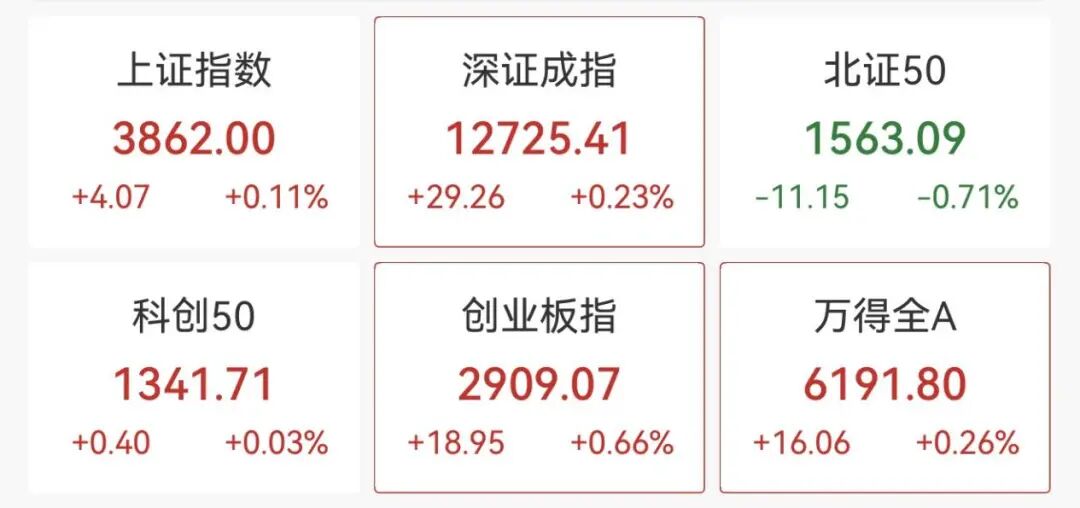
Core Insights - Alibaba's stock surged over 16% following the release of its Q1 FY2026 earnings report, which showed a revenue of 247.65 billion yuan, a 2% year-on-year increase, and a net profit of 42.38 billion yuan, a 76% increase, exceeding market expectations [5] - The AI segment of Alibaba has seen triple-digit growth for eight consecutive quarters, with AI contributing over 20% to external commercial revenue in Q2 [5] - The semiconductor sector, including companies like Liyang Chip and Allwinner Technology, experienced significant gains, with Liyang Chip hitting a 20% limit up [7][12] Market Performance - On September 1, the A-share market opened higher, with the Shanghai Composite Index at 3862.00, up 0.11%, and the Shenzhen Component Index at 12725.41, up 0.23% [2] - The Hong Kong market also saw gains, with the Hang Seng Index rising by 1.78% to 25525.16, and Alibaba's market capitalization reaching 2.5767 trillion yuan [4] Sector Analysis - The AI computing and Alibaba-related stocks were active, with companies like Bojie Co. and Sanjiang Shopping hitting their daily limit [6] - The semiconductor sector showed strength, with notable increases in stock prices for companies like Liyang Chip and Huahong Semiconductor [7][9] Company-Specific Developments - Alibaba has committed to investing over 380 billion yuan in AI capital expenditures over the next three years, emphasizing its focus on AI infrastructure and product development [5] - Despite the positive outlook for Alibaba, Cambricon Technologies saw a decline of over 6% in its stock price, although Goldman Sachs raised its target price for Cambricon to 2104 yuan, reflecting a positive long-term outlook [10][11]
寒武纪,大跌!
中国基金报· 2025-09-01 02:51
Core Viewpoint - Alibaba's stock surged over 16% following the release of its quarterly earnings report, driven by strong performance in AI product revenue, which has seen triple-digit growth for eight consecutive quarters [8][10]. Market Overview - On September 1, the A-share market opened with all three major indices rising, with the ChiNext Index increasing by over 1% [1]. - The sectors showing the most significant gains included non-ferrous metals, semiconductor chips, and pharmaceuticals, while insurance, aerospace, military industry, and brokerage sectors experienced fluctuations [3]. Alibaba's Performance - Alibaba reported a revenue of 247.65 billion yuan for Q1 of fiscal year 2026, marking a 2% year-on-year increase, and a 10% increase when excluding the impact of divested businesses [10]. - The company's net profit reached 42.38 billion yuan, reflecting a 76% year-on-year growth, exceeding market expectations [10]. - Alibaba Cloud's revenue grew by 26% year-on-year to 33.40 billion yuan, with AI contributing over 20% to external commercialization revenue [10]. Stock Market Reactions - Alibaba's stock price reached 135.10 HKD, up 16.77%, with a total market capitalization of 2.576 trillion HKD [6]. - Other notable stocks that rose included BYD Electronics (up 5.20%), Baidu Group (up 3.86%), and Alibaba Health (up 3.85%) [6]. Semiconductor Sector - The semiconductor sector showed strong performance, with stocks like Liyang Chip and Allwinner Technology seeing significant gains of 20% and 16.01%, respectively [12][13]. - SMIC's stock rose over 5% during early trading [14]. Cambricon's Market Activity - Cambricon's stock opened down over 6% despite a positive outlook from Goldman Sachs, which raised its target price to 2104 CNY, citing strong Q2 performance and increased AI chip shipments [16].


海外股市震荡 A股成长风格占优
Xin Lang Cai Jing· 2025-08-31 16:31
Group 1 - The overall trend in overseas stock markets was volatile, with US stocks declining due to weak semiconductor performance and a rise in core PCE year-on-year [1] - The A-share market saw a daily trading volume exceeding 2.9 trillion yuan, with the ChiNext Index and the Sci-Tech Innovation 50 Index both rising over 7% [1] - The current market cycle shows similarities to the period from 2012 to 2015, with overseas stock indices leading the way followed by a rebound in A-shares [1] Group 2 - The A-share Shanghai Composite Index recorded a monthly year-on-year return of 35.74%, surpassing major global indices and reaching a new high since 2016 [2] - The hereditary planning industry rotation model has performed well this year, achieving an absolute return of 36.15%, significantly outperforming the industry equal-weight benchmark by 17.81 percentage points [2] - The domestic absolute return ETF simulation portfolio has accumulated a return of 6.89% this year, reflecting a balanced approach to macroeconomic sensitivity and capital response [2] Group 3 - In global asset allocation, the current strategy favors bonds and foreign exchange, with a simulated portfolio annualized return of 7.25% and a Sharpe ratio of 1.50 [3] - Recent market sentiment is warming, indicating potential increases in volatility, which may present new opportunities and challenges for investors [4]
创投观察:行情向好,VC/PE如何更好地退出?
Zheng Quan Shi Bao Wang· 2025-08-31 09:39
Core Insights - The A-share market has been warming up since 2025, leading to a significant increase in share reductions by shareholders of listed companies, with a total of 428 companies involved in 1,315 reduction events amounting to nearly 60 billion yuan in the first half of 2025, doubling the figures from the same period in 2024 [1] - The National Big Fund has reduced its holdings in 12 listed companies, primarily in the semiconductor sector, with a total reduction amounting to 4.662 billion yuan and an average return of 7.38 times over an average holding period of 7.62 years [2] - The concept of "the art of reduction" has resurfaced as a focal point in the industry, highlighting the challenges faced by venture capital institutions in timing their exits during a bull market [2][3] Market Trends - The frequency of share reductions has increased, with 270 companies experiencing 544 reduction events in July and 224 companies with 435 events by August 25 [1] - The Science and Technology Innovation Board saw the highest reduction amounts, followed by the Shenzhen Stock Exchange's Growth Enterprise Market, with new material and new consumption sectors emerging as top areas for reductions [1] Investment Strategies - Many venture capital investors express regret over selling shares too early, missing out on significant price increases, while some choose to hold onto shares even after fund expiration, resulting in substantial returns as the market rebounds [3] - To optimize reduction timing and maximize exit returns, some investment institutions are hiring secondary market professionals to guide their reduction decisions [3][4] Industry Dynamics - The core competency of venture capital investors lies in assessing enterprise value rather than predicting secondary market trends, emphasizing the importance of adhering to internal industry rules and respecting limited partners' expectations for returns [4] - The current wave of reductions prompts a reevaluation of the essence of venture capital value and exit strategies, particularly in sectors like hard technology and semiconductors, where companies may still be in critical growth phases post-IPO [4][5] Innovative Approaches - Leading venture capital institutions are exploring "primary + secondary" linked models by establishing private securities investment institutions to acquire shares of companies they previously invested in, allowing them to meet exit needs while still benefiting from the companies' growth post-IPO [5]

中国光大控股发布中期业绩,股东应占溢利3.99亿港元 同比扭亏为盈
Zhi Tong Cai Jing· 2025-08-30 16:45
Core Viewpoint - The company has actively adjusted its fundraising, investment, and exit strategies to capitalize on industry recovery and a vibrant capital market, focusing on its core strengths and enhancing value potential [2][3][4] Fundraising and Investment Strategies - The company established two new funds with a total scale of RMB 2.5 billion, focusing on growth-stage projects in new energy, new materials, and intelligent manufacturing [2] - The company completed exits totaling HKD 2.018 billion, achieving a MOIC of approximately 2.78 times, which significantly boosted the performance of multiple funds [3] Performance and Financial Results - The company reported a revenue of HKD 2.801 billion, a decrease of 7.51% year-on-year, but achieved a profit attributable to shareholders of HKD 399 million, recovering from a loss of HKD 1.282 billion in the previous year [5] Strategic Focus on Technology Innovation - The company accelerated its investment pace in strategic emerging industries such as artificial intelligence, semiconductor chips, and biomedicine, investing approximately HKD 264 million [4] - It supported several leading technology enterprises, enhancing the strength of Chinese innovation [4] Operational Efficiency and Cost Management - The company optimized its financing structure, issuing RMB 3 billion in medium-term notes at a record low interest rate of 2.09%, resulting in a 133 basis point reduction in overall financing costs [4] Consumer Services and Community Engagement - The company enhanced product service quality to meet rising consumer demands, managing 18 shopping centers across nine cities and serving nearly 121 million consumers [6] - It provided over 30,000 elderly care beds in 49 cities, focusing on integrated healthcare and financial services for the elderly [6] ESG Initiatives and Sustainable Development - The company strengthened its ESG framework, maintaining an A-grade MSCI ESG rating and receiving the "BEST ESG(S)" award from HKIRA [7] - It implemented green initiatives in its operations and community projects, positively impacting local communities and promoting sustainable practices [7]
证监会终于发力!8月29日,明天将迎来更大的变盘?
Sou Hu Cai Jing· 2025-08-29 01:47
Group 1 - The China Securities Regulatory Commission (CSRC) is taking action to precisely control risks in key areas of the capital market, indicating a cautious outlook despite the A-share market's current prosperity [1] - The recent performance of the micro-cap stock index, which dropped 3.66% and previously nearly 4%, suggests underlying risks that need to be closely monitored [1] - The technology sector, including stocks like Cambrian and SMIC, is showing signs of accelerated growth, which historically indicates a market nearing its peak [1] Group 2 - A-shares' three major indices closed collectively higher, with a notable rebound in technology stocks, although the trading volume decreased by nearly 200 billion compared to the previous day [3] - The market is experiencing a mixed performance where individual stocks are either gaining or losing, reflecting a split sentiment among investors [3] - The recent volatility in the market, including a significant drop of 1.7% followed by a recovery, indicates a turbulent trading environment where both bullish and bearish opportunities exist [5][6] Group 3 - The market experienced a sudden drop, with the Shanghai Composite Index falling below 3800 points twice, but later rebounded with the ChiNext Index rising nearly 4% and the Sci-Tech 50 Index increasing over 7% [6][7] - The total trading volume in the two markets reached 2.97 trillion, a decrease of 194.8 billion from the previous trading day, suggesting a potential end to the recent sell-off [6] - The current market dynamics indicate that the recent sharp decline may have served as a washout, potentially leading to a broader rally in the near future [6]