基金

Search documents
知名基金公司,公开招聘总经理!
Xin Lang Cai Jing· 2026-02-08 06:42
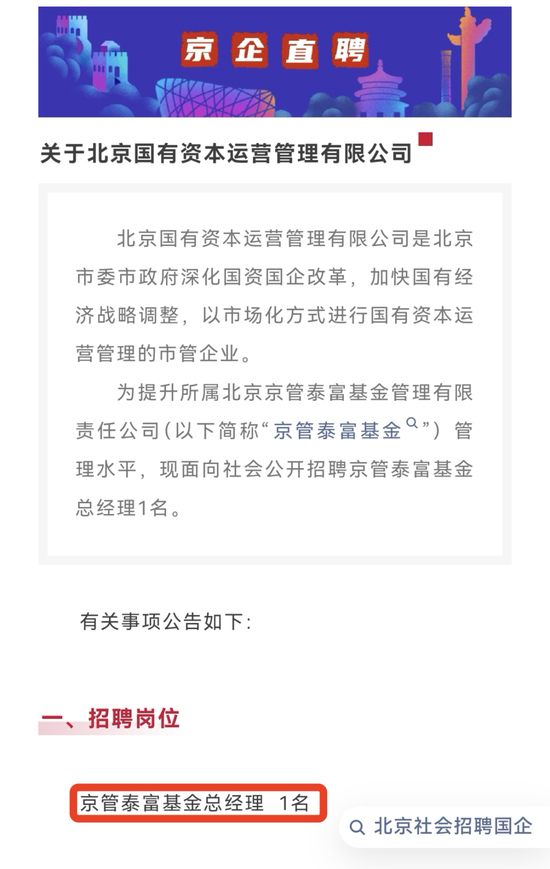
【导读】又有基金公司,公开招聘总经理! 中国基金报记者 若晖 又有基金公司公开招聘总经理。 近日,京管泰富基金股东方——北京国有资本运营管理有限公司对外公开招聘京管泰富基金总经理,应 聘者需要具备10年以上证券、基金、金融等相关工作经历,5年以上公募基金、证券公司、资产管理公 司等金融机构高级管理岗位工作经历等硬性条件。 报名截止日为2月9日,有志于担任公募基金总经理的小伙伴可以关注。 京管泰富基金总经理岗位招聘 "京企直聘"平台显示,为提升京管泰富基金管理有限责任公司管理水平,京管泰富基金股东方——北京 国有资本运营管理有限公司面向社会公开招聘京管泰富基金总经理。 对于基金公司总经理这一核心高管岗位,股东方提出了多个硬性要求,其中包括须是中共党员,具有硕 士研究生及以上学历学位;具备10年以上证券、基金、金融等相关工作经历,具备5年以上公募基金、 证券公司、资产管理公司等金融机构高级管理岗位工作经历;具有基金从业资格,通过证监会或其授权 机构组织的高级管理人员证券投资法律知识考试。 同时,还要求应聘者过往历史业绩优秀,公司治理能力突出,风控合规经验丰富,对公募行业有深刻的 理解和前瞻性视野,有完整的牛熊周期 ...

基金研究系列(35):从股债二元到多元配置:多资产基金投顾的三维画像与业绩归因
KAIYUAN SECURITIES· 2026-02-08 05:14
Quantitative Models and Construction Methods 1. Model Name: "Risk Preference-Concentration-Turnover" Three-Dimensional Label Classification System - **Model Construction Idea**: The model aims to classify multi-asset fund advisory products based on three dimensions: risk preference, concentration, and turnover rate, to better understand their risk-return characteristics and performance differentiation[3][32] - **Model Construction Process**: - **Risk Preference**: Classified based on the proportion of income-generating assets and growth assets in the portfolio. If income-generating assets exceed 70%, it is classified as debt-oriented; if growth assets exceed 70%, it is equity-oriented; otherwise, it is balanced[34] - **Concentration**: Measured using the Herfindahl-Hirschman Index (HHI), calculated as $ \sum_{i} w_{i}^{2} $, where $w_{i}$ represents the weight of each asset class. Thresholds are set as follows: HHI > 0.5 is high concentration, HHI < 0.25 is low concentration, and values in between are medium concentration[34] - **Turnover Rate**: Measures the timing adjustment ability of multi-asset fund advisory products at the asset class level. Annualized one-sided turnover rate is used, with thresholds defined as follows: turnover rate > 2 is high turnover, < 1 is low turnover, and values in between are medium turnover[34] - **Model Evaluation**: The model effectively captures the heterogeneity in multi-asset fund advisory products and provides insights into their risk-return characteristics and strategic differences[3][34] --- Model Backtesting Results 1. "Risk Preference-Concentration-Turnover" Three-Dimensional Label Classification System - **Risk Preference**: - Equity-oriented products: 2025 annualized return 18.5%, 2024 annualized return 10.5%, 2023 annualized return -1.0%[37][39] - Debt-oriented products: 2025 annualized return 7.4%, 2024 annualized return 5.9%, 2023 annualized return 3.9%[37][39] - Balanced products: 2025 annualized return 15.7%, 2024 annualized return 8.8%, 2023 annualized return -4.7%[37][39] - **Concentration**: - Low concentration (HHI < 0.25): 2025 annualized return 17.7%, 2024 annualized return 8.2%, 2023 annualized return 0.4%[37][39] - Medium concentration (0.25 ≤ HHI ≤ 0.5): 2025 annualized return 13.0%, 2024 annualized return 6.9%, 2023 annualized return -4.0%[37][39] - High concentration (HHI > 0.5): 2025 annualized return 7.8%, 2024 annualized return 6.9%, 2023 annualized return 3.9%[37][39] - **Turnover Rate**: - Low turnover (< 1): 2025 annualized return 15.6%, 2024 annualized return 8.8%, 2023 annualized return 1.7%[37][39] - Medium turnover (1 ≤ turnover ≤ 2): 2025 annualized return 10.6%, 2024 annualized return 7.3%, 2023 annualized return 0.5%[37][39] - High turnover (> 2): 2025 annualized return 11.2%, 2024 annualized return 7.6%, 2023 annualized return -5.4%[37][39] --- Quantitative Factors and Construction Methods 1. Factor Name: Brinson Attribution Model - **Factor Construction Idea**: The model decomposes the excess return of multi-asset fund advisory products into two components: allocation return and selection return, to evaluate the sources of excess returns[42][46] - **Factor Construction Process**: - **Allocation Effect**: Measures the timing and allocation ability of fund managers across major asset classes. The formula is: $$ R_{allocation} = \sum_{i} (w_{i}^{actual} - w_{i}^{benchmark}) \times r_{i}^{asset} $$ where $w_{i}^{actual}$ is the actual weight of asset $i$, $w_{i}^{benchmark}$ is the benchmark weight, and $r_{i}^{asset}$ is the return of asset $i$[42][46] - **Selection Effect**: Reflects the ability to select superior funds within each asset class. The formula is: $$ R_{selection} = R_{excess} - R_{allocation} $$ where $R_{excess}$ is the total excess return relative to the benchmark[42][46] - **Factor Evaluation**: The model provides a clear decomposition of excess returns, helping to identify whether returns are driven by strategic asset allocation or fund selection[42][46] --- Factor Backtesting Results 1. Brinson Attribution Model - **Equity-Oriented Products**: - Example: "Guotai Global Allocation" achieved 2025 allocation return of 10.5% and selection return of 6.3%[48][49] - Example: "招商海外掘金" achieved 2025 allocation return of -0.8% and selection return of 14.5%[48][49] - **Debt-Oriented Products**: - Example: "嘉实百灵全天候策略" achieved 2025 allocation return of 3.8% and selection return of 0.5%[56][58] - Example: "全球固收+" achieved 2025 allocation return of 2.6% and selection return of 1.3%[56][58] - **Balanced Products**: - Example: "时光旅行者" achieved 2025 allocation return of 15.6% and selection return of -10.3%[65][66] - Example: "绘盈长投计划" achieved 2023 allocation return of 10.1%, providing a strong safety net during a bear market[65][66]
节前,绩优基金清盘!什么情况?
券商中国· 2026-02-08 04:42
Core Viewpoint - The recent wave of fund liquidations, despite strong performance, is attributed to specific time factors and the structure of fund holders rather than poor fund management [1][4]. Group 1: Fund Liquidation Phenomenon - Multiple high-performing equity funds have announced liquidation announcements before the Spring Festival, driven by significant redemption requests [2][3]. - A notable fund from a northern mid-sized public offering reported a final operation date of November 26, 2025, with an asset scale of 340 million yuan and a return rate of nearly 90% since inception, despite a stock position of less than 15% [2]. - Another fund from a Shanghai-based public offering achieved a 33.72% return in 2025, showcasing strong performance in its category [2]. Group 2: Holder Structure and Market Dynamics - The funds that are liquidating are characterized by a high dependency on a small number of institutional investors, which significantly influences their survival [4]. - For instance, one fund had 91.88% of its holdings by a single institution, while another had 99.38% held by one entity, indicating a customized fund structure that can lead to liquidity risks [4]. Group 3: Market Sentiment and Future Outlook - The trend of fund liquidations reflects a shift in institutional investors' risk preferences towards a defensive stance, with a prevailing sentiment of "locking in profits" before the holiday [5]. - Analysts suggest that the recent redemption wave is nearing its end, with expectations of a market style shift from small-cap to large-cap stocks and from thematic to quality investments [5]. - Fund managers remain optimistic about the medium to long-term market outlook, anticipating that the current redemption pressures may signal the initial stages of market recovery [6][7].
众赢财富通:2026年资产配置新逻辑
Cai Fu Zai Xian· 2026-02-08 03:54
政策层面的变化同样是2026年不可忽视的重要变量。"十五五"规划进入开局阶段,稳增长、调结构、促 转型的政策思路更加清晰,宏观政策在节奏和力度上保持相对稳定,为市场提供了可预期的环境。财政 政策与产业政策的协同,有助于稳定经济基本面,也对企业盈利形成托底效应。在此背景下,全年通胀 运行的"斜率"成为影响市场高度的重要因素,既关系到政策取向,也影响投资者对估值中枢的判断。众 赢财富通认为,只要通胀保持温和上行,政策空间仍然充足,资本市场整体环境将维持偏友好的状态。 从外部环境看,全球主要经济体仍处在财政与信用周期相对宽松的阶段,美元在高利率周期后逐步走弱 的趋势愈发明显。在这一过程中,全球流动性边际改善,有助于提升非美元资产的配置吸引力。人民币 资产在估值、经济韧性和产业结构等方面具备相对优势,正在重新进入全球与国内投资者的配置视野。 众赢财富通研究发现,在弱美元与全球信用扩张共振的情形下,人民币资产更容易获得中长期配置资金 的关注,这种趋势并非短期交易行为,而是宏观环境变化下的结构性结果。 与此同时,国内金融环境的变化正在深刻影响资金流向。低利率状态延续,使得传统固定收益类资产的 回报空间受到压缩,部分资金开 ...

“千亿ETF”仅剩3只!股票型ETF开年“失血”超7000亿元
Mei Ri Jing Ji Xin Wen· 2026-02-08 03:30
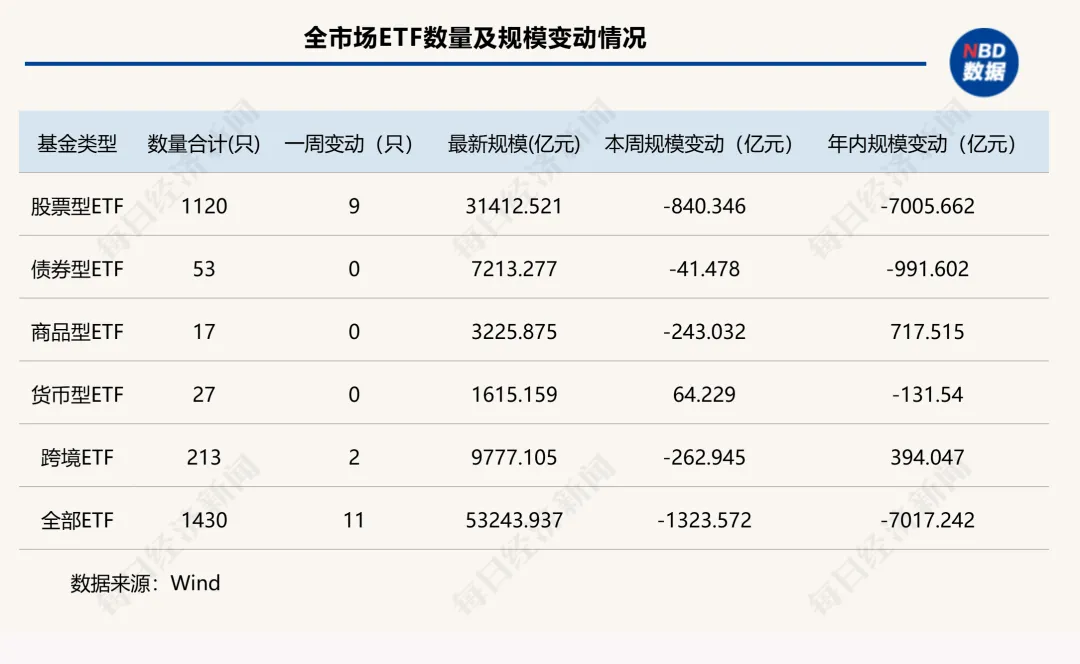
Market Overview - A-shares experienced fluctuations with major indices declining, including a 1.13% drop in the CSI 300 and a 3.28% drop in the ChiNext Index [1][16] - The ETF market is undergoing significant changes, with stock ETFs shrinking by over 700 billion yuan this year, reducing the number of "billion club" products to just three [1][16] ETF Market Dynamics - As of February 7, the total ETF market size decreased to 5.32 trillion yuan, with a weekly decline of 1,323 billion yuan [2][17] - Stock ETFs alone saw a reduction of 840.35 billion yuan, bringing their total size down to 31,412.52 billion yuan [3][18] - The number of ETFs listed reached 1,430, with 11 new ETFs introduced in the week, including 9 stock ETFs [2][17] Fund Management Changes - Fund size reshuffling is evident, with Guotai Fund maintaining its position in the top five, while Huabao Fund entered the top ten [1][22] - Major funds like Huaxia and E Fund have seen their ETF sizes shrink by over 100 billion yuan this year [1][22] Performance of Specific ETFs - The SGE Gold 9999 index saw a significant reduction of over 22 billion yuan, marking it as the largest decline among major indices [4][19] - The CSI 300 ETF managed by Huatai-PB has shrunk by over 2,000 billion yuan this year, now standing at 2,208.55 billion yuan [29][30] Institutional Fund Performance - Five institutions reported ETF size reductions exceeding 100 billion yuan, with Southern Fund experiencing the largest drop of 268.53 billion yuan [22][26] - Conversely, Huabao Fund and Hai Futong Fund both saw increases of over 30 billion yuan in their ETF sizes [23][26] Growth and Decline of ETFs - Only two products in the top 20 managed to achieve size growth, indicating a general trend of decline in the ETF market [26][27] - The "billion club" for ETFs has diminished, with only three members remaining due to widespread shrinkage [26][30]
“顶流”基金经理大起底
Zhong Guo Ji Jin Bao· 2026-02-08 03:13
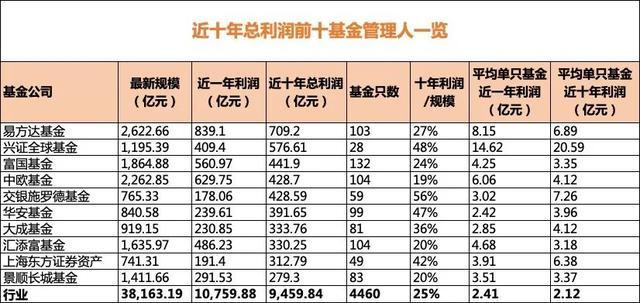
Core Insights - The active equity fund industry in China has generated nearly 1 trillion yuan in profits over the past decade, with significant contributions from leading fund companies [2][4] - Among 29 fund managers managing over 20 billion yuan, only 11 have consistently outperformed benchmarks over 1, 3, and 5 years, indicating a notable divergence in management capabilities [1][6] Industry Performance - The total profit generated by active equity funds in the last ten years reached 9,459.84 billion yuan, with an annual profit of 10,759.88 billion yuan in 2025 [2][4] - The top ten fund management companies contributed nearly 40% of the total profits, with E Fund, Xingzheng Global Fund, and Fortune Fund leading the profit rankings [3][4] Fund Manager Analysis - E Fund achieved the highest total profit of 709.20 billion yuan over ten years, while Xingzheng Global Fund demonstrated high profitability relative to its size, with a profit-to-scale ratio of 48% [4][6] - A select group of fund managers, including Yang Dong and Liu Jianwei, have shown exceptional performance, with some achieving over 100% excess returns over various time frames [7][8] Future Industry Trends - The industry is entering a new phase where the focus is shifting from mere scale growth to long-term value creation efficiency and the ability to manage large funds effectively [9] - Developing a robust investment research system that is resilient to market style changes and nurturing talent capable of managing large-scale funds will be crucial for high-quality development in the future [9]
200亿元,全国社保基金再落一子 | 融中投融资周报
Sou Hu Cai Jing· 2026-02-08 02:54
Group 1 - The Hubei Social Security Science and Technology Equity Investment Fund has been established with an initial scale of 20 billion yuan, focusing on industries such as optoelectronic information, automotive manufacturing, and life health in Hubei [2] - The Jiading Future Industry Fund, with a total scale of 800 million yuan, aims to support early-stage investments in disruptive technologies across five core sectors [2] - The Guangdong Hengjian Investment Holding Company has launched the Nanyue Green Beauty Ecological Investment Fund, the first provincial-level government investment fund focused on ecological construction, with an initial scale of 2 billion yuan [3] Group 2 - The Yanming Lake Fund, established to support the commercialization of technology from Yanshan University, has a registered capital of 10.2 million yuan and focuses on hard technology fields [4] - Waymo has completed a new funding round of 16 billion dollars, achieving a post-money valuation of 126 billion dollars, with significant backing from major investment firms [4][5] - SpaceX announced a stock-based acquisition of AI company xAI, resulting in a combined valuation of 1.25 trillion dollars, with SpaceX valued at 1 trillion dollars and xAI at 250 billion dollars [5][6] Group 3 - Meituan is set to acquire 100% of Dingdong Maicai's China business for approximately 717 million dollars, enhancing its instant retail capabilities [7] - AI startup ElevenLabs has raised 500 million dollars in funding, achieving a valuation of 11 billion dollars, with a significant increase from its previous funding round [7]




“顶流”基金经理大起底!
Zhong Guo Ji Jin Bao· 2026-02-08 02:32
Core Insights - The active equity funds have generated nearly 1 trillion yuan in profits over the past decade, with significant contributions from leading companies [2][3][6] - The performance of top fund managers managing over 20 billion yuan has shown considerable differentiation, with only 11 out of 29 achieving sustained positive excess returns over various time frames [8][9] Industry Performance - As of the end of 2025, the total profit generated by active equity funds reached 9,459.84 billion yuan, with an annual profit of 10,759.88 billion yuan for the year 2025 [3][5] - The top ten fund companies contributed nearly 40% of the total profits, with E Fund, Xingzheng Global Fund, and Fortune Fund leading the profit rankings, each exceeding 40 billion yuan [5][6] Fund Manager Analysis - Among the 29 fund managers with assets under management exceeding 20 billion yuan, only 11 have consistently outperformed their benchmarks over the past year, three years, and five years [8][9] - Notable fund managers achieving high excess returns include Liu Jianwei from E Fund and Yang Dong from Guangfa Fund, with excess returns of 100.19%, 108.5%, and 114.9% over one, three, and five years respectively [10][12] Profitability Metrics - The "input-output ratio" indicates the efficiency of profit generation relative to fund size, with Jiao Yin Schroder Fund leading at 56%, significantly above the industry average of 25% [6][9] - The average profit per fund for Xingzheng Global Fund reached 20.59 billion yuan, nearly ten times the industry average of 2.12 billion yuan, showcasing strong research and investment capabilities [7][12] Future Industry Trends - The industry is entering a new development phase where the focus shifts from mere scale growth to long-term value creation efficiency and the ability to manage large-scale funds [12][13] - Building a research and investment system that is not reliant on market styles and can withstand market cycles will be crucial for high-quality development in the future [12]
境内ETF规模突破6万亿元,成为亚洲第一大ETF市场
Huan Qiu Wang· 2026-02-08 02:03
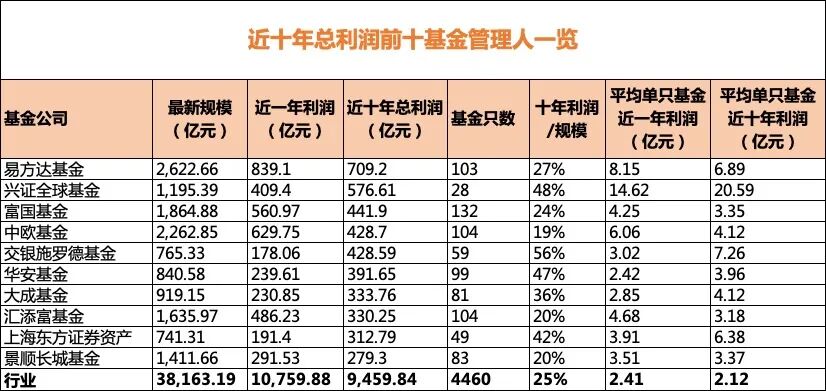
Core Insights - The global ETF market is experiencing rapid growth, with total assets expected to exceed $19.7 trillion by the end of 2025, representing a 31% increase from the end of 2024 [1] - Stock ETFs continue to dominate the market, projected to reach $15.3 trillion by the end of 2025, accounting for 77.7% of the total global ETF assets [1] Group 1: Market Performance - By the end of 2025, the Shanghai Stock Exchange ranks first in Asia and third globally in ETF trading volume, with a total asset scale ranking second in Asia and seventh globally [1] - The domestic ETF market in China shows strong growth, surpassing 4 trillion, 5 trillion, and 6 trillion yuan during the year, becoming the largest ETF market in Asia [1] Group 2: Product and Asset Growth - As of the end of 2025, there are 1,381 ETF products listed on domestic exchanges, a 35.7% increase from the end of 2024, with a total scale of 6.02 trillion yuan, marking a 61.4% growth [1] - The breakdown of ETF assets includes 3.83 trillion yuan in stock ETFs, 937.4 billion yuan in cross-border ETFs, 828.1 billion yuan in bond ETFs, 250.1 billion yuan in commodity ETFs, and 174.1 billion yuan in money market ETFs [1] Group 3: Fund Inflows - In 2025, the net inflow of funds into domestic ETFs exceeded 1.16 trillion yuan, indicating accelerated capital inflow [3] - Bond ETFs had the highest net inflow for the year, reaching 552.7 billion yuan, accounting for approximately 47.6% of total inflows [3] - Stock ETFs saw a net inflow of 94.4 billion yuan, while cross-border ETFs had a net inflow of 398.8 billion yuan, and gold ETFs experienced a net inflow of 112.7 billion yuan [3]
投顾周刊:资源主题基金开年一马当先
Sou Hu Cai Jing· 2026-02-08 00:33
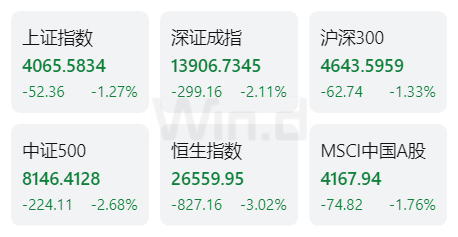
Group 1 - The annual duty-free allowance for residents of Hainan Free Trade Port is set at 10,000 RMB per person, applicable to specified goods purchased at designated locations [1] - The China Photovoltaic Industry Association predicts a decline in new installed capacity for solar energy in 2026, estimating it will fall to between 180 GW and 240 GW, with the Ministry of Industry and Information Technology focusing on addressing industry competition issues [1] - A global shortage of High Bandwidth Memory (HBM) is spreading from data centers to consumer electronics, particularly impacting the smartphone industry, with Qualcomm and Arm warning that this shortage will limit production [1] Group 2 - The activity in bank insurance agency sales has increased, with rural commercial banks in regions like Shandong, Hebei, and Anhui launching new insurance products and training staff to meet the growing demand for diversified financial services as the Spring Festival approaches [2] - Fund participation in private placements is becoming more active, with over 70% of financing directed towards new productive forces in sectors such as manufacturing, new energy, and information technology [2] - Resource-themed funds have performed well at the start of the year, with public funds embracing sector-focused strategies, leading to significant performance gains [2] Group 3 - The software sector in the US has seen a market capitalization decline of 1 trillion USD, driven by aggressive short-selling from hedge funds, which have made 24 billion USD in profits from shorting software stocks this year [3] - Following the merger of SpaceX and xAI, Elon Musk's net worth has surged by 84 billion USD, reaching a record 852 billion USD [3] - Recent stock market performance has shown divergence, with the Hang Seng Index down 3.02% and the S&P 500 down 0.10%, while the MSCI Europe Index has increased by 0.26% [3]