原油LOF

Search documents
36场危机、80年数据告诉我,组合里面应该有它!
雪球· 2026-03-15 13:01
Core Viewpoint - The article emphasizes the importance of including commodities, particularly gold, in investment portfolios to mitigate risks during geopolitical shocks, as evidenced by historical data showing commodities consistently perform well during such events [4][20][36]. Group 1: Geopolitical Events and Market Reactions - A study by J.P. Morgan analyzed 36 major geopolitical events from 1940 to 2022, revealing that stock market performance typically rebounds after initial declines following such shocks [8][12]. - The only significant exception was the 1973 oil embargo, which led to a 37% drop in the S&P 500 over 12 months due to the U.S.'s heavy reliance on imported oil [16][19]. - In contrast, the oil price shock from the 2022 Russia-Ukraine conflict saw prices spike but return to lower levels relatively quickly, highlighting the U.S.'s improved energy independence due to the shale revolution [19][20]. Group 2: Asset Performance During Geopolitical Shocks - During geopolitical shocks, commodities like gold and oil tend to show positive returns, while stocks and bonds often decline [24][25]. - Historical data indicates that gold averages a 1.8% increase during such events, while stocks and bonds average a -1.6% decline [24][25]. - The article notes that central banks have significantly increased gold purchases as a hedge against geopolitical risks, with U.S. central bank purchases quadrupling post-2022 conflict [27]. Group 3: Portfolio Composition and Strategy - The article advocates for a three-legged investment strategy: stocks for growth, bonds for interest, and commodities for stability during crises [29][30]. - It suggests that many investors currently lack adequate commodity exposure, particularly gold, which is essential for a balanced portfolio [30][36]. - The timing of commodity purchases is crucial; the article advises against buying during high volatility and suggests establishing commodity positions during stable periods [32][33].


油气ETF连续两日霸屏涨幅榜
第一财经· 2026-03-03 13:57
Core Viewpoint - The article discusses the surge in oil and gas stocks driven by escalating geopolitical tensions in the Middle East, highlighting the significant market reactions and the potential risks associated with this volatility [3][9]. Market Performance - On March 3, the oil and gas sector led the market with a 6.75% increase, with 27 stocks, including China National Petroleum (601857.SH) and Sinopec (600028.SH), hitting their daily limit [4][5]. - The oil and gas ETFs saw unprecedented trading volumes, with the National Oil and Gas Industry ETF reaching a record turnover of 8.443 billion yuan, a 32-fold increase from the previous week [5][6]. Fund Flows and Trading Activity - Over 51.23 billion yuan flowed into oil and gas ETFs on March 2 alone, with the Guotai Oil ETF attracting over 3.1 billion yuan [6][7]. - The trading activity was characterized by high turnover rates, with the highest being 167.95% for the S&P Oil and Gas ETF [6]. Risk Signals - Despite the bullish market, there are signs of risk, as many ETFs are trading at significant premiums to their net asset values, with the S&P Oil and Gas ETF showing a premium of 20.76% [6][7]. - Fund companies have issued multiple risk warnings, with at least 20 announcements regarding premium risks in just two trading days [7]. Future Outlook - Analysts suggest that the sustainability of the current oil price surge depends on the situation in the Strait of Hormuz and the duration of the ongoing conflicts [9][10]. - The geopolitical risk premium is expected to remain high, but the long-term outlook will depend on supply-demand fundamentals and production capacities [11][12].




超30只QDII基金扎堆预警,纳指ETF溢价高企
2 1 Shi Ji Jing Ji Bao Dao· 2026-02-25 12:54
Core Viewpoint - The recent surge in premium risks associated with QDII funds has raised concerns, with over 30 funds announcing premium risks shortly after the Spring Festival holiday, indicating a significant disparity between secondary market prices and net asset values [1][2][6]. Group 1: Premium Risk Announcements - More than 30 QDII funds issued announcements regarding premium risks within two trading days after the Spring Festival, including products like Nasdaq ETF, S&P 500 ETF, and others [1][2]. - On February 25, eight QDII funds reported that their secondary market prices were significantly higher than their reference net asset values, with some products showing a premium of up to 6% [2]. - The frequency of premium risk announcements has increased, with some funds issuing multiple warnings within a short period [4]. Group 2: Trading Suspension Measures - Some QDII funds have taken suspension measures to protect investors, such as the E Fund's crude oil LOF, which suspended trading on February 25 due to high premium levels [3]. - The Huatai-PineBridge Korea-China Semiconductor ETF also suspended trading on February 24, indicating a proactive approach to manage premium risks [4]. Group 3: Market Dynamics and Investor Behavior - The high frequency of premium risks is attributed to two main factors: strong market interest in overseas high-growth assets and limited QDII investment quotas [6]. - Analysts suggest that the current high premiums may lead to significant losses for investors if they purchase QDII funds at inflated prices, emphasizing the need for caution [6]. - The overall market sentiment reflects a growing demand for cross-border investments, with a notable shift in investor behavior towards high-premium products [6][12]. Group 4: Purchase Restrictions - A significant number of QDII products are currently under purchase restrictions, with over 60% of them limiting new subscriptions due to tight quotas [10]. - Fund managers are implementing these restrictions to protect existing investors and ensure stable fund operations amid high demand [9][10]. - The trend of imposing purchase limits is becoming more common as fund managers seek to balance supply and demand in the context of limited foreign exchange quotas [8][10].
多只石油LOF现高溢价 公募基金密集限购预警
Zheng Quan Ri Bao· 2026-02-03 16:42
Core Viewpoint - The recent volatility in the international oil market has led to a surge in trading activity for domestic oil and gas-themed funds, resulting in significant premium risks as market prices deviate from net asset values [1] Group 1: Premium Risks and Fund Responses - Multiple public fund institutions, including E Fund, GF Fund, Huaan Fund, and Harvest Fund, have issued warnings about high premium trading risks for their oil and petroleum LOF products, implementing measures such as suspensions and strict purchase limits to cool market enthusiasm [1][2] - On February 3, GF Fund and Huaan Fund reiterated warnings about premium risks in their oil LOF products, with GF Fund noting significant price deviations from net asset values, cautioning investors against blind investments in high premium funds [2] - Several public fund institutions have already warned investors about premium risks this year, with E Fund's oil LOF showing a net asset value of 1.1315 yuan on January 27, while the market closing price reached 1.437 yuan on January 29, prompting a suspension of trading [2] Group 2: Subscription Limit Adjustments - Many public fund institutions have reduced subscription limits for oil LOFs to prevent excessive capital inflow that exacerbates premium risks, with Huaan Fund adjusting its limit from 100 yuan to 2 yuan within a month [3] - E Fund's oil LOF reduced its subscription limit from 20 yuan to 10 yuan, while GF Fund lowered its limit from 500 yuan to 10 yuan, and Harvest Fund set its limit to 5 yuan, creating a "limit control matrix" across multiple products [3] Group 3: Market Dynamics and Risks - The high premiums for oil LOFs are attributed to a combination of limited QDII quotas, supply-demand imbalances, and the failure of arbitrage mechanisms, leading to a situation where investors turn to the secondary market, driving up prices [4] - The current high premiums are seen as driven by market sentiment rather than a reassessment of the underlying asset values, with warnings that investors may face dual risks of premium contraction and net asset value volatility [4] - Investors are advised to differentiate between the "net value (actual value)" of LOFs and "market price (supply-demand price)" and to monitor real-time net values and premium rates disclosed on fund websites to avoid potential risks [4]
黄金白银大跌!背后是哪些事情改变了?
Sou Hu Cai Jing· 2026-02-03 04:54
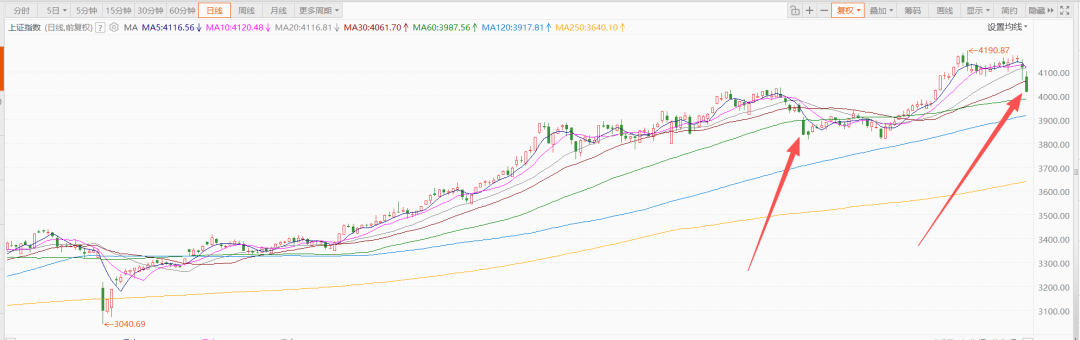
Market Overview - A significant decline occurred in the market, with over 4,600 stocks dropping and a median decline of 2.41%. The Shanghai Composite Index fell by 2.48%, marking one of the largest declines since April 7 of the previous year [1]. Precious Metals - The market for gold and silver saw substantial drops, with gold stocks hitting the limit down and silver LOFs also experiencing limit down. Trading volumes for these assets plummeted, with gold stocks seeing a decrease from 1.5-2 billion to under 700 million in transactions [2]. - The recent rise in gold and silver prices was attributed to geopolitical risks and concerns over a potential U.S. government shutdown, involving countries like Venezuela and Iran [4]. Institutional Actions - Several institutions have begun to reduce their holdings in U.S. dollar assets due to concerns over the unpredictability of the U.S. government and rising national debt. Notable actions include: - The Alekta Pension Fund in Sweden reduced its U.S. Treasury holdings by approximately 70-80 billion Swedish Krona. - Danish pension funds are also divesting from U.S. Treasuries, with one fund planning to sell 1 million USD by the end of the month [6]. Market Reactions - Recent market adjustments were influenced by the nomination of Kevin Walsh as the next Federal Reserve Chair, which stabilized the dollar and suppressed gold prices. Additionally, signals of easing tensions between the U.S. and Iran contributed to market fluctuations [7]. - The current market phase is characterized by a downward adjustment, with expectations of stabilization in the following trading days [8]. Long-term Perspectives - Concerns regarding the sustainability of U.S. debt and the independence of the Federal Reserve are driving central banks to increase their gold reserves, indicating a lack of turning point in asset diversification strategies [13]. - The strategy for gold stocks has shifted, with current prices being favorable for re-entering grid strategies, although caution is advised [13]. Arbitrage Strategies - The silver LOF has seen a halt in arbitrage opportunities, with the last transactions being cleared before the recent downturn. The oil LOF also faced similar challenges, resulting in minor losses for arbitrage attempts [14]. - The oil LOF market has been volatile, with previous experiences leading to skepticism about profitability in arbitrage strategies [15]. Conclusion - Despite recent losses, the potential for future arbitrage remains, with a focus on identifying high-probability success strategies in the market [19].
多只LOF将停牌1小时!套利热潮藏隐忧
Sou Hu Cai Jing· 2026-02-02 00:07
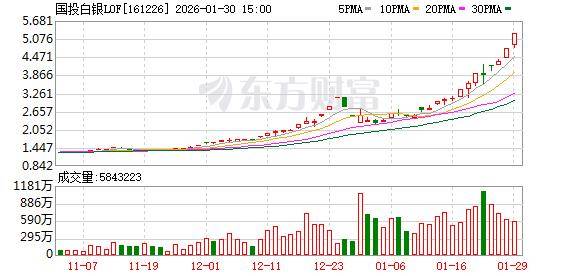
Core Viewpoint - The recent surge in LOF (Listed Open-Ended Fund) products has attracted significant attention from investors, with 16 LOF products experiencing a rare collective price surge, leading to a heightened interest in arbitrage opportunities [3][4]. Group 1: LOF Market Dynamics - The LOF arbitrage trend was ignited by the popularity of the Guotou Silver LOF, which saw its price soar due to its unique focus on silver futures, achieving a premium rate exceeding 60% [4]. - Following the suspension of subscriptions for Guotou Silver LOF, oil-related LOF products gained traction, with several experiencing price increases and premium rates surpassing 20% due to rising international oil prices [4]. Group 2: Investor Behavior and Sentiment - Many investors, like Xiao Lin, have been drawn to arbitrage strategies through social media platforms, reporting significant short-term gains, which reflects a broader trend of retail investors seeking quick profits [5]. - The excitement surrounding LOF arbitrage has led to a proliferation of "how-to" guides and live demonstrations by financial influencers, further fueling investor interest [4]. Group 3: Risks and Challenges - LOF arbitrage is not without risks; the time lag in transactions (T+2 for LOF and T+3 for cross-border products) can lead to potential losses if market conditions change rapidly during the waiting period [6]. - Liquidity risks are significant, as some LOF products have low trading volumes, which can result in sudden price drops and difficulties in selling during market downturns [7]. - There is a concern that some LOF products are experiencing price premiums without adequate support from underlying asset fundamentals, leading to potential losses for investors who chase high premiums without proper analysis [7].
多只LOF,今日停牌1小时!套利热潮藏隐忧
Zhong Guo Zheng Quan Bao· 2026-02-01 22:45
Core Viewpoint - The recent surge in LOF (Listed Open-Ended Fund) products has attracted significant attention from investors, with 16 LOFs experiencing a rare collective price surge, leading to a heightened interest in arbitrage opportunities [1][2]. Group 1: LOF Market Dynamics - The LOF arbitrage trend was ignited by the popularity of the Guotou Silver LOF, which saw its price soar due to its unique focus on silver futures, resulting in a premium rate exceeding 60% [2]. - Following the suspension of subscriptions for Guotou Silver LOF, oil-related LOFs gained traction, with several experiencing price increases and premium rates surpassing 20% due to rising international oil prices [2]. Group 2: Investor Behavior and Sentiment - Many investors, like Xiao Lin, have been drawn to arbitrage strategies through social media platforms, reporting significant short-term gains, which reflects a broader trend of retail investors seeking quick profits [3]. - The excitement around LOF arbitrage has led to a proliferation of "how-to" guides and live demonstrations by financial influencers, further fueling the interest in these investment strategies [2]. Group 3: Risks and Challenges - LOF arbitrage is not without its risks; the time lag in transactions (T+2 for LOFs and T+3 for cross-border products) can lead to potential losses if market conditions change rapidly during the waiting period [4]. - Liquidity risks are significant, as some LOF products have low trading volumes, which can result in sudden price drops and difficulties in selling during market downturns [4]. - There is a concern that some LOFs are experiencing price premiums without solid underlying asset support, leading to potential losses for investors who chase high premiums without due diligence [4]. - The influence of social media on investment decisions has created a "herd effect," where investors may follow trends without fully understanding the associated risks, increasing the likelihood of poor investment outcomes [4].
LOF屡现涨停!火爆背后的真相是什么?
Zhong Guo Zheng Quan Bao· 2026-01-30 14:28
Core Viewpoint - The recent surge in Listed Open-Ended Funds (LOFs) has led to multiple instances of price limits being reached, with significant premium rates observed, raising questions about the underlying reasons and potential risks involved [1]. Group 1: LOF Product Overview - LOF stands for Listed Open-Ended Fund, which allows for both off-market subscription and redemption like traditional open-end funds, as well as real-time trading on stock exchanges like stocks [2]. - LOFs differ from ETFs in that they can be subscribed with cash and have lower investment thresholds, while ETFs typically require a minimum of 1 million shares for subscription [3]. Group 2: Recent Market Activity - The recent batch of LOF price limits is primarily attributed to funds focused on commodities such as silver, gold, and oil, driven by rising prices in these resources and limited off-market subscription options [6]. - The surge in LOF prices is compounded by the small scale of many LOF products, leading to insufficient liquidity, where minimal trading volume can trigger price limits [6]. Group 3: Premium Rates and Constraints - High premium rates for LOFs are difficult to mitigate due to constraints such as QDII quotas for cross-border investment products and limitations on futures positions for resource-based LOFs [7]. - The inability to open subscription channels for high-premium LOFs means that the current pricing dynamics are likely to persist [7]. Group 4: Arbitrage and Risks - While LOF arbitrage has gained attention, it is important to note that high premiums are often unsustainable, and the T+2 or T+3 settlement delays can lead to potential losses if market conditions change [9]. - Risks associated with high premium purchases include volatility of underlying assets, liquidity issues due to potential fund suspensions, and the likelihood of premium corrections if subscription channels reopen [10].
资产配置中不可或缺的黄金和商品基金,最受欢迎的都在这里了
雪球· 2025-05-13 07:56
Core Viewpoint - The article discusses the performance of various funds, particularly highlighting the significant returns of gold and commodity funds compared to equity funds, emphasizing the importance of including commodity assets in investment portfolios for diversification and risk management [2][4]. Group 1: Fund Performance - From January 2, 2021, to May 7, 2023, the cumulative return of mixed equity funds was -19.00%, while gold ETFs, crude oil LOFs, and soybean meal ETFs achieved returns of 97.76%, 88.97%, and 59.70% respectively [2]. - The largest domestic gold ETF has surpassed 40 billion yuan in size, with several others exceeding 10 billion yuan, indicating a strong preference for domestic gold funds over QDII gold funds, which have a much smaller scale [6][8]. Group 2: Investment Strategy - The article suggests that investors should not chase high prices in gold and commodity assets but rather understand the low or negative correlation between commodities and equities, highlighting the essential role of commodity assets in asset allocation [4][8]. - It is noted that the E Fund Gold Theme LOF has outperformed other gold funds with a return of 25.22% in the first quarter, due to its strategy of investing not only in gold ETFs but also in gold stocks, which offer higher volatility and potential returns [8]. Group 3: Other Commodity Funds - Other commodity funds are limited, with the largest being the Huaxia Feed Soybean Meal Futures ETF, which tracks soybean meal futures prices and has a scale of 28.29 billion yuan [11][12]. - The Guotou Silver LOF, which directly invests in silver futures, ranks second among commodity funds with a scale of 17.85 billion yuan, indicating a trend of following gold price movements [12][13]. - The article also mentions various other commodity funds, including those focused on crude oil and colored metals, emphasizing their potential for high returns and the importance of monitoring their performance [15][17].