银行

Search documents
深夜突发,美股加速下跌,道指跳水超700点,英伟达再跌2%,中概股走低,软件、半导体重挫!黄金白银拉升,油价大涨
Mei Ri Jing Ji Xin Wen· 2026-02-27 15:17
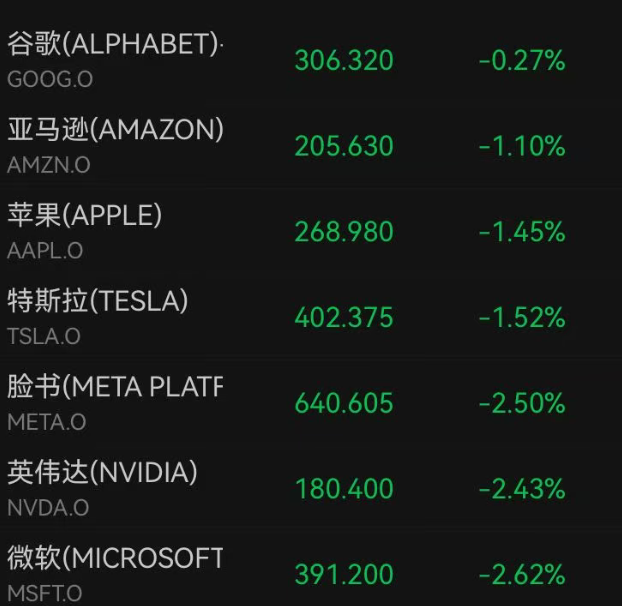
Market Overview - The US stock market experienced a significant decline, with the Dow Jones falling by 1.55%, losing 760 points, while the Nasdaq dropped by 1.17% and the S&P 500 decreased by 0.95%. Over 3,700 stocks in the market saw declines [1] - All seven major US tech companies reported losses, with Nvidia experiencing a drop of over 5% the previous day and an additional decline of over 2% on the current day, resulting in a market value loss of $95 billion (approximately 651.5 billion RMB) [1] Individual Stock Performance - Major tech stocks showed the following performance: - Alphabet (Google): $306.32, down 0.27% - Amazon: $205.63, down 1.10% - Apple: $268.98, down 1.45% - Tesla: $402.38, down 1.52% - Meta Platforms (Facebook): $640.61, down 2.50% - Nvidia: $180.40, down 2.43% - Microsoft: $391.20, down 2.62% [1] - Chinese stocks also fell, with Century Internet down over 7%, iQIYI down 5%, and Alibaba down over 2% [1] Sector Performance - The software, semiconductor, and banking sectors experienced significant declines, with the US software services index down by 2.93%, the textile and apparel index down by 2.71%, and the banking index down by 2.16% [2][3] Commodity Market - In the commodities market, precious metals saw an increase, with spot gold surpassing $5,220 per ounce and spot silver rising by 4% to $91.80 per ounce. International oil prices also increased, with both Brent and WTI crude oil rising by over 3% [3][4]


道琼斯指数跌1.6% 多数银行股下挫
Ge Long Hui A P P· 2026-02-27 15:06
Group 1 - The Dow Jones Index fell by 1.59%, closing at 48,710.54 points [1] - Most U.S. bank stocks experienced declines, with Citigroup dropping over 5% [1] - Other banks such as Bank of America and Wells Fargo fell by more than 4%, while JPMorgan and Barclays decreased by over 3%, and BNY Mellon dropped nearly 2% [1]


跌破“2”字头!民营银行中长期存款利率再下调
Guo Ji Jin Rong Bao· 2026-02-27 14:59
Core Viewpoint - The recent trend of declining deposit rates among private banks is a rational response to the macroeconomic downturn and loose monetary policy, aimed at controlling high-interest deposit risks and avoiding margin compression [1][3]. Group 1: Deposit Rate Adjustments - On February 25, Shanghai Huari Bank announced a reduction in its deposit rates by 5 basis points, with 2-year and 5-year products falling below 2% [2]. - Other private banks, such as Jiangxi Yumin Bank and Tianjin Jincheng Bank, have also adjusted their deposit rates, particularly for medium to long-term deposits [2]. - Jiangxi Yumin Bank's 2-year personal fixed deposit rate was lowered to 2.2%, while its 1-year and 2-year products have rates of 1.70% and 2.20%, respectively [2]. Group 2: Impact on Net Interest Margin - As of the end of Q4 2025, the net interest margin for commercial banks remained at a historical low of 1.42%, with private banks slightly narrowing their margins [4]. - The net interest margin for private banks was reported at 3.95% in Q1 2025, decreasing to 3.83% by Q4 2025, reflecting a decline of 0.27 percentage points from the end of 2024 [4]. - The loan market interest rate (LPR) has remained unchanged for nine months, with the 1-year LPR at 3% and the 5-year LPR at 3.5% [4]. Group 3: Future Strategies for Private Banks - Private banks need to balance profitability with serving the real economy, focusing on digital transformation and expanding inclusive finance and intermediary services [5]. - There is a need to optimize asset-liability structures and strengthen capital replenishment while exploring diversified income channels such as wealth management and ecosystem cooperation [6].
7.4到6.84,升值幅度较大,国内通胀及资产价格或将受到影响
Sou Hu Cai Jing· 2026-02-27 14:52
Group 1 - The offshore RMB to USD exchange rate reached a high of 6.8267, marking a significant appreciation of over 2% within two months, leading to a depreciation of USD holdings by approximately 6% for those who held USD last year [1][3] - The appreciation of the RMB is attributed to the weakening of the USD, driven by the Federal Reserve's interest rate cuts and a criminal investigation into its chairman, which has impacted the dollar's strength [3][4] - China's economic resilience, with a trade surplus of approximately $1.2 trillion in 2025, has contributed to the demand for RMB as companies convert their USD earnings into RMB for operational needs [3][4] Group 2 - Importing companies are benefiting from the RMB appreciation, as it reduces costs for products priced in USD, leading to increased net profits for firms like Shanghai Laishi and others in the paper industry [6] - Conversely, traditional export-oriented industries, such as textiles and toys, face increased pressure as their products become more expensive in international markets, potentially losing orders to competitors in Southeast Asia [7] - The real estate market is experiencing a nuanced impact, with core assets in major cities seeing increased foreign investment, while smaller cities struggle with high inventory and weak demand [8] Group 3 - The People's Bank of China has responded to the rapid appreciation of the RMB by lowering the foreign exchange risk reserve requirement for forward foreign exchange transactions from 20% to 0%, aiming to stabilize the currency [10] - Companies are encouraged to manage exchange rate risks through forward contracts, which have become more accessible due to reduced costs for banks following the policy change [10] - Investors are advised to focus on high-quality assets that benefit from cost reductions and asset revaluation rather than engaging in speculative trading [10]

2026年第3期:“申万宏源十大金股组合”
Shenwan Hongyuan Securities· 2026-02-27 14:41
Group 1 - The report presents the "Shenwan Hongyuan Top Ten Gold Stock Portfolio" for March 2026, reflecting the firm's market outlook and stock selection capabilities [1][11] - The previous portfolio saw an overall decline of 2.10%, with 8 A-shares rising by an average of 1.13%, outperforming the Shanghai Composite Index by 0.04 percentage points [6][14] - Since the first portfolio release on March 28, 2017, the cumulative return of the gold stock portfolio has reached 474.13%, with A-shares up 366.61% [6][14] Group 2 - The strategy for March indicates potential for a rebound due to key events such as the National People's Congress and observations on Sino-US relations, suggesting a continuation of the first phase of the market's upward trend [14] - Recommended investment directions include "prosperous technology" focusing on AI and semiconductor sectors, and "cyclical alpha" in shipping and power equipment [14] - The report highlights a "triangular" stock selection strategy, featuring stocks like China Merchants Energy Shipping, Huazheng New Materials, and TBEA [14][17] Group 3 - The current top ten gold stocks include China Merchants Energy Shipping, Huazheng New Materials, TBEA, Kweichow Moutai, Tongkun Co., Chongqing Bank, Zhongkong Technology, China Jushi, Yuanjie Technology, and Ping An Insurance (Hong Kong) [17][20] - The "triangular" stocks are expected to benefit from high industry demand and favorable market conditions, with specific growth drivers identified for each [17][20] - The report provides detailed valuation and profit forecasts for each stock, indicating expected growth rates and earnings per share for the coming years [22][23]




港股风向标|科技权重止跌恒指放量反弹 机构看好顺周期涨价机会
Sou Hu Cai Jing· 2026-02-27 14:36
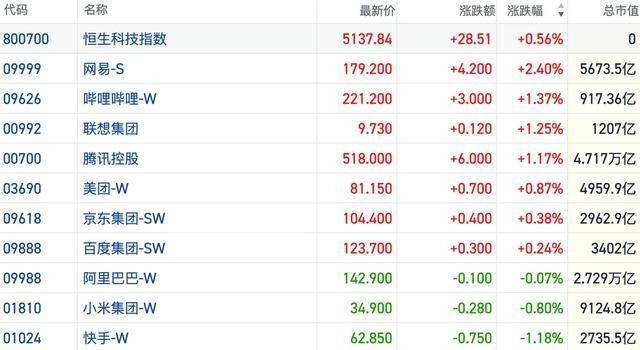
Market Overview - The Hong Kong stock market showed signs of recovery, with the Hang Seng Index rising by 0.95% to close at 26,630 points, while the Hang Seng China Enterprises Index and the Hang Seng Tech Index increased by 0.51% and 0.56% respectively [1][2]. Technology Sector Performance - Major tech stocks led the market rebound, with Tencent's stock price reaching 530 HKD during the day. Other tech companies such as NetEase, Meituan, JD.com, and Baidu also saw positive performance [2][3]. Stock Performance Data - Notable stock performances included: - Tencent Holdings (00700) at 518.00 HKD, up by 6.00 HKD (+1.17%), with a total market capitalization of 4.717 trillion HKD - NetEase (09999) at 179.20 HKD, up by 4.20 HKD (+2.40%), with a market cap of 567.35 billion HKD - Meituan (03690) at 81.15 HKD, up by 0.70 HKD (+0.87%), with a market cap of 495.99 billion HKD [3]. Sector Movements - Other sectors such as banking, real estate, and coal also showed strength, while power, steel, and oil stocks were active [4]. - Conversely, sectors like aviation, consumer electronics, and building materials experienced declines [4]. Market Dynamics - The overall trading volume in the Hong Kong market was 288.42 billion HKD, indicating increased liquidity. Short selling amounted to 36.55 billion HKD, representing 12.67% of the total trading volume, highlighting ongoing market divergence [4]. - The market is experiencing rapid rotation of hot and cold sectors, with cyclical stocks like steel and rare earths gaining strength, while AI-related sectors such as storage and chips faced declines [5][7]. Policy Implications - Recent meetings by the Central Political Bureau emphasized the need for more proactive macro policies to expand domestic demand and optimize supply, which may provide further support for the market [7]. A-Share Market Correlation - The A-share market mirrored the performance of the Hong Kong market, with a total trading volume of approximately 24,880.24 billion HKD, showing a decrease of about 504.22 billion HKD from the previous trading day. Over 3,200 stocks rose, particularly in the cyclical sector [8].

宁夏固原实现“村村有金融站点、家家有服务”
Xin Lang Cai Jing· 2026-02-27 14:18
Core Viewpoint - The Ningxia Hui Autonomous Region is actively promoting inclusive financial reforms in Guyuan City, aiming to enhance financial services for agriculture, small and micro enterprises, and rural areas, with significant progress reported in loan balances and insurance coverage [3][4]. Group 1: Financial Infrastructure - Guyuan City has established 164 bank outlets, 67 insurance outlets, and 626 rural revitalization service stations, achieving a near-complete coverage of financial services in rural areas [1]. - The region has 101 county-level bank outlets and 46 insurance outlets, ensuring that every village has access to financial services [1]. Group 2: Loan and Insurance Products - As of the end of 2025, loans in key inclusive finance sectors in Guyuan accounted for 51.08% of total loans, surpassing the regional average by 31.9 percentage points [3]. - The Ningxia Financial Regulatory Bureau has introduced specialized loan products such as "cattle live collateral," "land management rights collateral," and various agricultural loans to support local industries [3]. Group 3: Economic Impact - The total balance of "five special, five new, and five superior" loans reached 27.042 billion yuan, reflecting a growth of 12.61% since the beginning of 2025 [4]. - The cattle breeding industry has evolved into a million-scale full industry chain, creating employment for 153,000 rural workers [4]. - Insurance institutions have provided 1.47 trillion yuan in insurance coverage for the local economy, with agricultural insurance accounting for 8.062 billion yuan, enhancing the resilience and sustainability of agricultural sectors [4].

[2月27日]指数估值数据(刚开始定投基金,选什么会容易;港股指数估值表更新;抽奖福利)
银行螺丝钉· 2026-02-27 14:00
Core Viewpoint - The article discusses the current state of the stock market, focusing on index performance, investment strategies for beginners, and the importance of understanding risk tolerance in investment choices [2][11][18]. Market Overview - The major indices such as the CSI 300 and A50 experienced declines, while small-cap stocks showed slight gains. Value styles, including dividend stocks, remained relatively stable with minor increases. The ChiNext index saw a more significant drop after reaching overvaluation levels [2][4][12]. - The Hong Kong stock market opened lower but closed higher, with technology stocks also showing gains [2][29]. Investment Strategies - For new investors, starting with broad-based indices like the CSI 300 or value style indices is recommended for easier adherence to investment plans. Growth styles and thematic industry investments are more volatile and better suited for experienced investors [11][18]. - The article highlights the volatility of different investment styles: broad-based indices have an annual volatility of approximately 20-25%, while value styles exhibit about 60-70% of that volatility. For instance, if the broad market declines by 30%, a low-volatility dividend stock might only drop around 20% [4][6][12]. Performance Metrics - From 2021 to May 2024, the maximum drawdown for broad-based indices was around 40%, while value styles experienced a drawdown of about 20%. Growth styles, such as the Sci-Tech 50, faced drawdowns exceeding 60% [12][13][14]. - Since May 2024, broad-based indices have risen by 50-60% from their lows, while value styles have increased by 30-40%, and growth styles have doubled [15][16][17]. Risk Management - Investors are often prone to overestimating their risk tolerance. Starting with lower volatility investments can help individuals gauge their risk capacity more accurately [19][20]. - For those still concerned about volatility in dividend indices, increasing exposure to bond assets is suggested, leading to a more stable investment profile [21][26]. Hong Kong Market Valuation - The article provides a valuation summary for various Hong Kong indices, indicating that the overall market is currently rated around 3 stars, reflecting its valuation status [29][31]. Performance of Investment Products - The article mentions the success of the "Screw" investment advisory portfolio, which has helped investors achieve a cumulative profit of 2.72 billion yuan, with over 90% of holders making a profit [34][35].
世界首次五百强断崖差,日本149家,美国151家,中国3家,现在呢?
Sou Hu Cai Jing· 2026-02-27 13:53
Core Insights - The global economic landscape has shifted from a US-Japan dominance to a US-China rivalry, with Japan losing its prominence and falling to a third-tier position [2][4]. Group 1: US Economic Performance - The US maintains a strong economic presence, with a slight decrease in the number of Fortune 500 companies from 151 in 1995 to 138 in 2025, reflecting a loss of only 13 companies [4]. - Major US tech companies like Apple, Microsoft, and Amazon dominate the high-value sectors, achieving an average profit of $9.7 billion, which is more than double that of Chinese firms [4]. Group 2: Japan's Decline - Japan's representation in the Fortune 500 has drastically decreased from 149 companies in 1995 to only 38 in 2025, a decline of over 70% [4]. - The once-strong Japanese electronics and automotive sectors have either been surpassed by Chinese and Korean competitors or have gradually diminished, with only Toyota and Mitsubishi UFJ Financial Group remaining in the top 100 [4]. Group 3: China's Rise - China has seen a remarkable increase in Fortune 500 companies, growing from 3 in 1995 to 130 in 2025, making it the second-largest country in terms of representation, just behind the US [6][10]. - The rise of Chinese companies is attributed to a gradual process, starting with state-owned enterprises in energy and finance, followed by the emergence of private firms like BYD and Pinduoduo, which have quickly climbed the rankings [6][10]. Group 4: Financial Performance of Chinese Companies - The top Chinese companies by revenue include State Grid Corporation with ¥42,322.24 million and China National Petroleum Corporation with ¥31,844.66 million, showcasing significant earnings [7]. - Despite the increase in quantity, the average profit of Chinese firms is only $4.2 billion, significantly lower than that of US companies, indicating a need for improvement in quality and international presence [7][8]. Group 5: Economic Transition - The last thirty years have seen a shift in the global economic center, driven by different developmental paths: the US leveraging innovation and globalization, Japan lagging due to industrial upgrades, and China capitalizing on reform and a complete industrial chain [8][10].

汇丰银行将生成式 AI 定为重点投资领域
Sou Hu Cai Jing· 2026-02-27 13:38
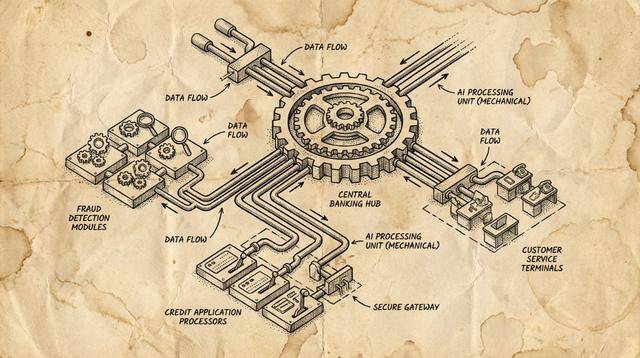
Group 1: HSBC's AI Investment Strategy - HSBC identifies generative AI as a key technology investment area, with CEO Al-Haidari stating it is the largest new technology investment focus today [2] - 85% of HSBC employees are able to use generative AI tools to become "future-ready talent," and the bank is assessing how this technology can help redesign 50 processes, including fraud detection and credit applications [2][6] - HSBC has observed productivity improvements due to the use of generative AI, with coding assistance tools increasing code patching and vulnerability fixing speed by five times [5] Group 2: Industry Trends in AI Investment - According to KPMG's AI quarterly pulse survey, banks plan to invest an average of $133 million in AI over the next 12 months, with over 80% of respondents expecting to continue investing regardless of immediate measurable returns [3] - UBS plans to leverage AI to redesign front and back office processes and improve services, with CEO Ermotti highlighting a portfolio of transformative AI projects aimed at enhancing operational resilience and customer experience [3] - TD Bank has implemented around 75 AI use cases in 2025, focusing on loan underwriting, creating smart leads, and deepening customer relationships, prioritizing AI investments in customer acquisition and insights as well as risk management [3][4]