
厨房电器

Search documents
亿田智能(300911):2025年半年报点评:盈利能力短期承压,算力业务有望打开新局面
Huachuang Securities· 2025-09-11 03:44
Investment Rating - The report maintains a "Recommendation" rating for Yitian Intelligent, with a target price of 59.00 CNY, compared to the current price of 51.99 CNY [4][8]. Core Views - Yitian Intelligent's revenue for H1 2025 was 170 million CNY, a year-over-year decline of 49.1%, with a net profit attributable to shareholders of -70 million CNY, a year-over-year decline of 507.0% [2][8]. - The core business of integrated stoves saw a significant revenue drop of 66.4% year-over-year, primarily due to low demand linked to the real estate market and high replacement costs [8]. - The newly added computing power business generated 10 million CNY in revenue, indicating potential for future growth [8]. - The overall gross margin for H1 2025 was 14.1%, down 29.5 percentage points year-over-year, reflecting pressure on pricing due to insufficient demand [8]. - The report highlights that the company's profitability is under pressure, with a net loss recorded in Q2 2025 due to declining gross margins and increased fixed costs [8]. Financial Summary - Total revenue projections for 2025, 2026, and 2027 are 584 million CNY, 594 million CNY, and 658 million CNY respectively, with corresponding year-over-year growth rates of -16.9%, 1.8%, and 10.7% [4][9]. - The net profit attributable to shareholders is projected to be 28 million CNY in 2025, 40 million CNY in 2026, and 59 million CNY in 2027, with growth rates of 3.9%, 43.7%, and 48.1% respectively [4][9]. - The report indicates a significant increase in the price-to-earnings (P/E) ratio from 355 in 2024 to 161 in 2027, reflecting anticipated recovery in earnings [4][9].

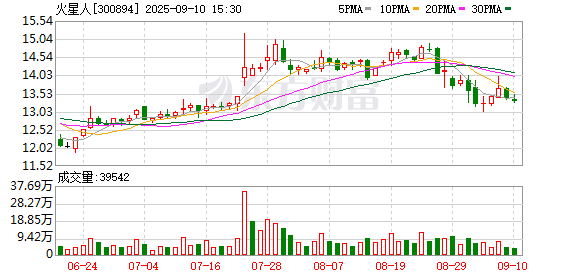
火星人:截至2025年8月29日,公司股东总户数为22910户
Zheng Quan Ri Bao· 2025-09-10 10:28
Core Insights - Mars Man stated on September 10 that as of August 29, 2025, the total number of shareholders is 22,910 [2] Company Summary - The company has a total of 22,910 shareholders as of the specified date [2]


人工智能生成合成内容标识方法等一批国家标准实施
Bei Jing Qing Nian Bao· 2025-09-02 01:00
Core Viewpoint - The implementation of several important national standards related to artificial intelligence, cybersecurity, smart home appliances, electric bicycles, and furniture will support the healthy development of emerging industries, promote energy conservation and emission reduction, create a favorable consumer environment, and ensure the safety of people's lives and property [1] Group 1: Artificial Intelligence and Cybersecurity Standards - The mandatory national standard "Methods for Identifying AI-Generated Synthetic Content" (GB45438—2025) aims to prevent security risks associated with AI-generated content and enhance the safety level of the AI industry [2] - The recommended national standard "Criteria for Network Attacks and Incident Determination" (GB/T37027—2025) provides guidelines for monitoring and analyzing network attacks, contributing to improved cybersecurity [2] Group 2: Electric Bicycle and Kitchen Appliance Standards - The mandatory national standard "Safety Technical Specifications for Electric Bicycles" (GB17761—2024) sets technical requirements for electric bicycles, enhancing product safety and promoting fair competition in the industry [3] - The mandatory national standard "Energy Efficiency Limits and Levels for Kitchen Appliances" (GB21456—2024) establishes energy efficiency levels for kitchen appliances, encouraging advanced products and promoting green consumption [3] - The mandatory national standard "Energy Efficiency Limits and Levels for High Voltage Three-Phase Asynchronous Motors" (GB30254—2024) aims to improve energy-saving technology in motor manufacturing [3] Group 3: Smart Home Appliances and Furniture Standards - The recommended national standard "Voice Interaction Technology for Smart Home Appliances Part 1: General Requirements" (GB/T45354.1—2025) aims to enhance the convenience and safety of voice interaction in smart home appliances [4] - The mandatory national standard "Flame Retardant Performance Safety Technical Specifications for Furniture" (GB17927—2024) sets requirements for the flame retardant performance of soft furniture, improving product quality and market order [5] Group 4: Drug Testing Standards - The mandatory national standard "Threshold Values and Testing for Drug Content in Vehicle Drivers" (GB45248—2025) establishes testing methods for 11 types of drugs, providing technical support for combating drug-related driving offenses [6][7]
老板电器2025年上半年业绩:掌舵烹饪数字化,稳健分红并开拓新增长极
Di Yi Cai Jing· 2025-09-01 14:36
Core Viewpoint - The AI wave is driving the kitchen appliance industry into a new growth cycle, with the company leading through technological product innovation and business model transformation, aiming to create a more comprehensive cooking ecosystem to activate new growth momentum in the industry [1] Group 1: Performance and Market Position - In the first half of 2025, the company achieved revenue of 4.608 billion yuan and a net profit of 712 million yuan, demonstrating strong operational resilience despite a challenging market environment [4] - The company’s market share in key product categories remains strong, with the combined sales of its range of kitchen appliances leading the domestic market, including a 31.28% share in range hoods and 38.2% in integrated stoves [4] - The company is focusing on user core needs and product innovation to maintain its leading position in the kitchen appliance industry [4][5] Group 2: Digital Transformation and User Engagement - The company is transitioning from a "kitchen appliance expert" to a "cooking partner," with digital kitchen appliance sales growing by 56.26% year-on-year in the first half of 2025 [6] - The company has developed a comprehensive cooking ecosystem that includes major and minor kitchen appliances, kitchen cleaning products, and commercial kitchen equipment, enhancing the user experience through digital services [6][9] - The company’s app and mini-program have over 5.4 million users, with features that address health concerns and enhance user engagement [6][9] Group 3: Expansion into Commercial and Overseas Markets - The company is expanding into the commercial kitchen market, which has a low concentration and a market size in the hundreds of billions, with a 70% increase in new customers in the first half of 2025 [10] - The company is also accelerating its overseas market expansion, establishing a subsidiary in Indonesia and creating a new partnership model for global operations [10] - The establishment of a culinary cultural research institute and a global culinary arts center reflects the company's commitment to culinary culture and aims to attract over 100,000 visitors annually [10] Group 4: Industry Trends and Future Outlook - The kitchen scene's digital transformation is an irreversible trend, and the company's multi-dimensional layout in technology research, ecosystem construction, and market expansion provides a reference for industry upgrades [12] - The integration of AI technology with cooking scenarios is expected to lead to a new value reconstruction in the kitchen appliance industry, with the company’s focus on user needs and balancing innovation with service quality being crucial for its market position [12]


老板电器2025年上半年业绩:掌舵烹饪数字化,稳健分红并开拓新增长极
第一财经· 2025-09-01 13:39
Core Viewpoint - The AI wave is driving the kitchen appliance industry into a new growth cycle, with Boss Electric (002508.SZ) leading through technological product innovation and business model transformation, aiming to create a more comprehensive cooking ecosystem to stimulate industry growth [1][3]. Group 1: Performance and Market Position - In the first half of 2025, Boss Electric achieved revenue of 4.608 billion and a net profit of 712 million, demonstrating strong operational resilience despite a challenging market environment [5]. - The company’s market share in key categories remains strong, with combined sales of range hoods and gas stoves leading the domestic market at 31.28% and 31.46% respectively [5]. - The company is focusing on user needs and product innovation to maintain its leading position in the kitchen appliance industry [5][6]. Group 2: Digital Transformation and User Engagement - Boss Electric is transitioning from a "kitchen appliance expert" to a "cooking partner," with digital kitchen appliance sales growing by 56.26% year-on-year in the first half of 2025 [7]. - The company has developed a user-centric product management system, enhancing decision-making efficiency by 40% through data-driven strategies [6][10]. - The "Shishen APP" and mini-program have over 5.4 million registered users, significantly improving user engagement and advertising ROI by 30% [6][10]. Group 3: Expansion into Commercial and Overseas Markets - The commercial kitchen market in China is valued at hundreds of billions, and Boss Electric is leveraging its expertise to expand its commercial kitchen business, with a 70% increase in new clients in the first half of 2025 [11]. - The company is also accelerating its overseas market expansion, establishing a subsidiary in Indonesia and implementing a partner-based approach for global operations [11][13]. Group 4: Cultural and Technological Integration - Boss Electric has established a Culinary Humanities Research Institute to explore the future of cooking and enhance culinary culture, receiving over 100,000 visitors annually [13]. - The company is actively participating in the formulation of industry standards, having contributed to 161 standards revisions, reinforcing its technological leadership [10][15]. - The integration of technology and culture is seen as a pathway for the company to balance commercial and social value, potentially transforming the kitchen appliance industry from hardware competition to ecosystem and experience competition [15].

苏泊尔:上半年外销业务整体实现营业收入37.16亿元,同比增长7.55%
Ge Long Hui· 2025-09-01 08:28
Core Viewpoint - Supor (002032.SZ) reported a year-on-year revenue increase of 7.55% in its external sales business for the first half of the year, amounting to 3.716 billion yuan [1] Group 1: Financial Performance - The external sales business achieved a total revenue of 3.716 billion yuan in the first half of the year [1] - The year-on-year growth rate for external sales revenue was 7.55% [1] Group 2: Future Outlook - The company will continue to follow the previously disclosed annual guidance for related transactions with the Cyber Group [1] - Future performance in external sales will primarily depend on the organic growth of the Cyber Group in the global market [1]

苏泊尔(002032.SZ):上半年外销业务整体实现营业收入37.16亿元,同比增长7.55%
Ge Long Hui· 2025-09-01 07:44
Core Viewpoint - Supor (002032.SZ) reported a year-on-year revenue increase of 7.55% in its external sales business for the first half of the year, amounting to 3.716 billion yuan [1] Group 1: Financial Performance - The external sales business achieved a revenue of 3.716 billion yuan in the first half of the year [1] - This represents a growth of 7.55% compared to the same period last year [1] Group 2: Future Outlook - The company will continue to follow the previously disclosed annual guidance for related transactions with the Cyber Group [1] - Future performance in external sales will largely depend on the organic growth of the Cyber Group in the global market [1]
今起一批国标正式实施 涉及网络安全技术、智能家电等
Yang Shi Xin Wen Ke Hu Duan· 2025-09-01 06:41
Group 1: New National Standards Implementation - A batch of national standards will be implemented starting September 1, aimed at regulating emerging industries and future industries, promoting energy conservation and emission reduction, creating a favorable consumption environment, and ensuring the safety of people's lives and property [1][2][3][4][5]. Group 2: Specific Standards Overview - The standard for "Cybersecurity Technology: Criteria for Network Attacks and Incidents" provides guidelines for monitoring and analyzing network attacks, enhancing cybersecurity [1]. - The "Flame Retardant Performance Safety Technical Specification for Furniture" sets requirements for the flammability of furniture, improving product quality and market order in the furniture industry [2]. - The "Energy Efficiency Limits and Energy Efficiency Grades for Kitchen Appliances" establishes energy efficiency levels for appliances like rice cookers and microwaves, promoting green consumption [3]. - The "Thresholds and Testing for Drug Content in Vehicle Drivers" defines thresholds for 11 types of drugs in drivers, aiding in the fight against drug-related driving offenses [4]. - The "General Requirements for Outdoor Fitness Equipment" outlines safety and design requirements for outdoor fitness equipment, supporting the upgrade of such facilities to meet diverse fitness needs [5].
开源证券吕明:政策红利下行业分化凸显 关注科技家电赛道投资机遇
Zhong Guo Zheng Quan Bao· 2025-08-29 00:34
Core Insights - The home appliance industry is experiencing significant differentiation, with the expansion of the trade-in policy stimulating consumption and driving the sector towards smart and green transformation [1][2][3] - White goods and tech appliances are showing strong profit growth, while kitchen appliances are facing revenue declines due to the sluggish real estate market [1][2] Industry Performance - The overall revenue of the home appliance industry has improved significantly compared to last year, driven by the trade-in policy that now covers 12 product categories [2] - The white goods sector has shown resilience, benefiting from national subsidies and improved cost structures, leading to revenue and profit growth that outpaces expectations for 2024 [2] - The TV industry has become a benchmark for policy benefits, with profit improvements driven by domestic subsidies and increased export shares, alongside technological upgrades like Mini LED [2] - The kitchen appliance sector is under pressure, with expected revenue declines in the first half of 2025 due to the real estate market's lack of recovery, although leading companies are gaining market share [2] - The tech appliance sector continues to grow rapidly, with companies like Roborock and Ninebot leading the charge, particularly in the robot vacuum segment, which is expected to see significant sales growth [2][6] Policy Impact - The trade-in policy has engaged over 66 million consumers, directly stimulating consumption by over 270 billion yuan, with retail sales of home appliances increasing by 30.7% year-on-year [3] - The policy has not only activated the existing market but also pushed the industry towards smart and green upgrades, with notable sales increases in energy-efficient and high-end products [3] Transformation Strategies - The home appliance industry is in a transformation phase, requiring breakthroughs through technology, supply chain optimization, and strategic balance [4] - AI technology is being integrated into home appliances, enhancing product design and functionality, particularly in cleaning appliances like robot vacuums [4][5] - Companies are encouraged to build digital supply chain systems to improve efficiency and reduce delivery times, while also creating differentiated solutions to enhance brand loyalty [5] Future Growth Areas - The growth momentum in the home appliance industry is shifting from traditional categories to tech-driven segments, with emerging categories like robot vacuums and lawn mowers expected to see explosive growth [6] - The global market for robot vacuums is projected to exceed 20 million units in 2024, with significant growth in other tech categories as well [6] - Investment opportunities are seen in tech appliance sectors with low penetration rates and high growth potential, particularly in smart cleaning devices [6][7] Competitive Landscape - The smart cleaning appliance sector has transitioned from price competition to differentiation, with leading companies enhancing their market share through product innovation and operational efficiency [7] - Investors are advised to focus on companies with strong domestic sales growth and international expansion capabilities in the smart cleaning appliance sector [7] - Companies in the white goods sector are expected to maintain stable growth due to favorable policies and high dividend yields, presenting good investment value [7]
政策红利下行业分化凸显 关注科技家电赛道投资机遇
Zhong Guo Zheng Quan Bao· 2025-08-28 22:29
Core Viewpoint - The home appliance industry is experiencing significant differentiation, driven by the expansion of the trade-in policy, which not only stimulates existing consumption but also promotes a shift towards smart and green technologies [1][2]. Group 1: Industry Performance - The overall revenue of the home appliance industry has improved significantly compared to last year, with notable differences across various segments [2]. - The white goods sector shows strong resilience, benefiting from national subsidies and improved cost structures, leading to revenue and profit growth that outpaces 2024 projections [2]. - The kitchen appliance sector faces challenges, with revenue declines expected in the first half of 2025 due to a sluggish real estate market, although leading companies are gaining market share [2]. - The technology appliance sector continues to grow rapidly, with companies like Roborock and Ninebot leading the charge, particularly in the robot vacuum segment, which is expected to exceed 15 billion yuan in online sales in 2024, marking a nearly 50% year-on-year increase [2]. Group 2: Policy Impact - As of July 2025, over 66 million consumers have participated in the trade-in policy, directly driving consumption by over 270 billion yuan, with retail sales of home appliances increasing by 30.7% year-on-year [3]. - The policy has not only activated the existing market but also pushed the industry towards smart and green upgrades, with significant sales growth in high-end products like energy-efficient air conditioners and built-in refrigerators [3]. Group 3: Transformation Strategies - The home appliance industry is in a transformation phase, requiring breakthroughs through technology, supply chain optimization, and strategic balance to achieve sustainable development [4]. - AI technology is rapidly being integrated into the home appliance sector, enhancing product design and functionality, particularly in cleaning appliances like robot vacuums [4][5]. - Companies are encouraged to build digital supply chain systems to improve efficiency and reduce delivery times, while also creating differentiated solutions to enhance brand loyalty [5]. Group 4: Investment Opportunities - The growth momentum of the home appliance industry is shifting from traditional categories to technology-driven segments, with emerging categories like robot vacuums and lawn mowers expected to see explosive growth [6]. - The smart cleaning appliance sector is highlighted as a core growth area, with significant market potential and a shift from policy-driven to technology-driven growth [6][7]. - Investors are advised to focus on leading companies in the smart cleaning appliance sector that can leverage both domestic penetration and international expansion for dual investment returns [7].