云计算

Search documents
国产化!京东云破局:渐进式“真替真用”
Zheng Quan Shi Bao· 2025-11-20 10:43
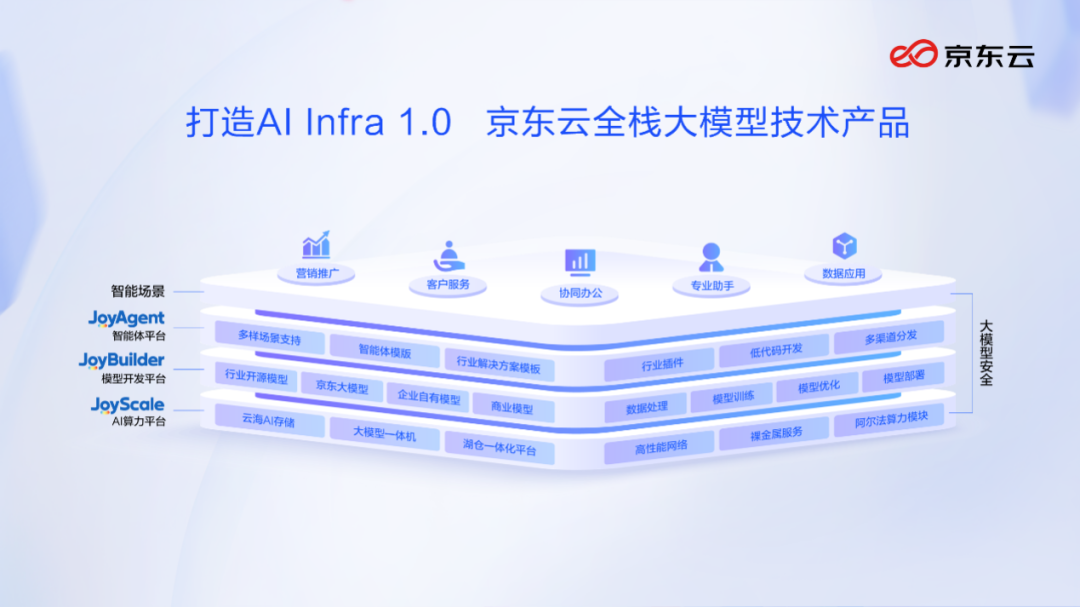
Core Insights - The article emphasizes the successful path taken by JD Cloud in the context of domestic chip and software development, highlighting the shift from policy-driven to market-driven approaches by 2025 [1][14] - JD Cloud's methodology of "gradual true replacement" is gaining traction as a practical model for domestic innovation, focusing on real business scenarios to validate technology [4][6] Group 1: Domestic Chip and Software Development - By 2025, domestic chips are expected to account for 40% of the market, with a notable increase in the performance of domestic software stocks [1] - The AI industry in China is transitioning from "usable" to "usable and effective," with AI workloads projected to dominate cloud computing by 2029 [1][10] Group 2: Challenges in Domesticization - The main challenges in domesticization are categorized into three areas: usability, controllability, and trustworthiness [2][3] - Usability issues arise from the need for stability in high-demand environments, particularly with the coexistence of X86 and ARM architectures [2] - Controllability concerns involve hidden costs related to software restructuring and personnel training, which can delay domesticization efforts [3] - Trustworthiness is critical, as businesses cannot afford the risks associated with complete system overhauls [3] Group 3: JD Cloud's Approach - JD Cloud's strategy includes multi-chip management to ensure system availability despite individual chip failures [5] - The gradual replacement strategy allows for controlled risk and cost management by starting with small-scale pilot projects [5] - JD Cloud leverages real business scenarios to refine its hardware and software solutions, ensuring continuous upgrades [5][9] Group 4: Technological Advancements - JD Cloud's JoyScale AI computing platform integrates various domestic chips, providing efficient computing solutions validated through extensive real-world testing [12] - The JoyBuilder model development platform enhances training and inference speeds while significantly reducing application costs [13][14] - Data security is prioritized through the use of national encryption standards and secure sandbox technologies, ensuring compliance and safety [14] Group 5: Market Perception and Future Outlook - The market's perception of domesticization is shifting from mere availability to the effectiveness and value of solutions [14] - By 2025, the focus will transition from policy-driven initiatives to commercially viable solutions that withstand extreme testing scenarios [14] - Companies like JD Cloud, which continuously enhance their capabilities, are expected to thrive in the competitive landscape of digital sovereignty [14]


国产化!京东云破局:渐进式“真替真用”
证券时报· 2025-11-20 10:40
Core Viewpoint - The article emphasizes that JD Cloud is successfully navigating the path of domestic innovation and transformation, focusing on practical applications and real business scenarios to drive its technological advancements [1][3]. Group 1: Domestic Innovation and Market Trends - By 2025, domestic chips are expected to account for 40% of the market, with a shift from policy-driven to market-driven dynamics in the domestic software sector [2]. - The AI industry in China is transitioning from "usable" to "usable and effective," with AI workloads projected to dominate cloud computing by 2029 [2]. - The increasing demand for digital infrastructure is pushing for advancements in computing power and system reliability [2]. Group 2: Challenges in Domesticization - The main bottlenecks in domesticization are not technological gaps but rather ecosystem fragmentation and high migration costs [5]. - The three core challenges identified are: 1. "Usability" issues, where existing domestic solutions need to prove stability under high-demand scenarios [5]. 2. "Controllability" concerns, as full replacement involves significant hidden costs related to software restructuring and training [6]. 3. "Trustworthiness" gaps, where businesses fear the risks associated with overhauling existing systems [7]. Group 3: JD Cloud's Approach - JD Cloud adopts a "gradual true replacement" strategy, which is gaining traction as a practical model for domesticization [10][11]. - The approach includes: 1. Multi-chip management to ensure system resilience against single architecture failures [12]. 2. Gradual replacement through pilot projects to manage risks and costs effectively [12]. 3. Continuous iteration of self-developed hardware and software based on real business scenarios [12]. Group 4: Infrastructure and AI Development - JD Cloud is transitioning to a GPU-centric mixed computing architecture, termed AI Infra 1.0, to support the deep application of large models [16]. - The JoyScale AI computing platform integrates heterogeneous computing resources, ensuring efficient scheduling and stability during peak demand [17]. - The JoyBuilder model development platform enhances training and inference speeds while ensuring data security through comprehensive encryption methods [19]. Group 5: Market Perception and Future Outlook - The market's perception of domesticization is shifting from mere availability to evaluating usability and value [19]. - By 2025, the focus will shift from policy-driven initiatives to commercially viable solutions that have been tested in extreme scenarios [19]. - The ultimate goal of domesticization is to empower Chinese enterprises with genuine choices in the global technology landscape, balancing performance and security [20].

长城证券:AI巨头上调资本开支 存储减产加剧价格上行
智通财经网· 2025-11-20 09:00
Core Viewpoint - The report from Changcheng Securities indicates that the demand for AI computing power is continuously strong, leading to a significant increase in prices for Flash Wafer and related high-end PCB products, benefiting the entire industry chain [1][2][3]. Group 1: Capital Expenditure Adjustments - Major North American CSPs such as Google, Microsoft, Amazon, and Meta have raised their capital expenditure forecasts for 2025, reflecting an unexpected surge in AI computing power demand [2][3]. - Google has increased its 2025 capital expenditure forecast from $85 billion to $91-93 billion, with a backlog of cloud orders amounting to $155 billion, up 82% year-on-year [3][4]. - Microsoft anticipates a growth rate in capital expenditure for FY26 that will exceed that of FY25, with a remaining performance obligation (RPO) nearing $400 billion, reflecting over 50% growth [4]. - Amazon's AWS backlog has reached $200 billion, with a capital expenditure forecast of $125 billion for 2025, expected to rise further in 2026 [4]. - Meta has also adjusted its 2025 capital expenditure forecast to between $70 billion and $72 billion, anticipating significant growth in computing power demand [4]. Group 2: NAND Flash Price Surge - NAND Flash prices have surged significantly, driven by major manufacturers reducing supply to counteract previous oversupply issues and enhance profitability [5][6]. - Companies like Samsung and Kioxia have lowered their NAND wafer production targets for the year, with Samsung reducing its target from 5.07 million wafers to approximately 4.72 million, a decrease of about 7% [5]. - The demand for NAND is expected to exceed supply significantly, with forecasts indicating that the data center market's bit demand will grow by over 40% year-on-year in 2026 due to increased AI inference capabilities [6].





盈利拐点已现!金山云Q3调整后净利润实现转正 布局黄金窗口开启
Zhi Tong Cai Jing· 2025-11-20 07:39
Group 1 - The AI sector remains highly active, with major companies like Nvidia surpassing a market value of $5 trillion, Amazon accelerating AI deployment, and Microsoft Azure experiencing a 40% growth driven by AI [1] - AI-related companies have shown a significant return rate of 165% over the past three years, compared to 24% for non-AI companies, indicating a clear distinction in asset performance [1] - Investment in AI is now considered a crucial long-term strategy for companies, as it is seen as a genuine and lasting productivity revolution [1] Group 2 - Market focus is shifting from "growth speed" to "return cycle," with companies like Volcano Engine and SenseTime gaining attention for their strong AI growth performance [2] - Kingsoft Cloud, referred to as the "AI market army," reported a nearly 120% year-on-year growth in intelligent computing cloud revenue, contributing to a total revenue increase of 31% to 2.48 billion yuan [2] - Kingsoft Cloud's unique position within the Xiaomi ecosystem enhances its growth potential, benefiting from increased demand for computing power driven by AI developments [3] Group 3 - Kingsoft Cloud's stock price surged by 90% in February due to the AI boom, and despite fluctuations, it continues to reach new highs, with a maximum single-day increase of nearly 15% [3] - Multiple financial institutions, including Citigroup, have a positive outlook on Kingsoft Cloud, with Citigroup setting a target price of $21.5 per share, indicating significant upside potential [3] - Kingsoft Cloud is viewed as a core asset to capitalize on the AI era, with its recent performance showing a turning point and a combination of profitability and rapid growth in its intelligent computing cloud business [3]
新材料大数据中心与阿里云联合发布首个钢铁材料设计大模型
Zheng Quan Shi Bao Wang· 2025-11-20 07:32
人民财讯11月20日电,据阿里云消息,11月20日,在第九届材料基因工程国际论坛上,新材料大数据中 心与阿里云联合发布首个钢铁材料设计大模型。该模型基于阿里通义千问实现了从数据挖掘、"成分-工 艺-性能"一体化设计到专业知识智能问答的全链路突破,在材料研发场景中,性能预测精度最高可达 90%。 ...
AI投资狂潮的另一面:科技巨头们发债逐梦AI 资金却悄然撤离投资级公司债
智通财经网· 2025-11-20 07:25
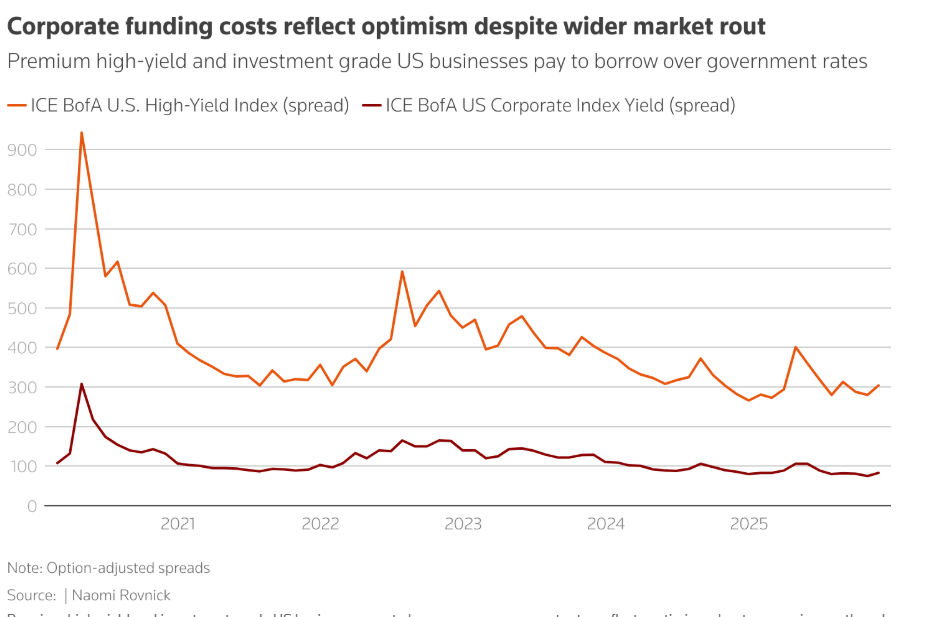
Core Viewpoint - The surge in borrowing and bond issuance by major US tech companies, including Meta, Amazon, and Oracle, alongside signs of panic in the private credit market, is causing caution among investors in the investment-grade bond market, potentially leading to increased financing costs and impacting global corporate earnings [1][2][3] Group 1: Market Sentiment and Trends - Investors are showing increased caution towards high-rated investment-grade bonds despite current credit spreads being near historical lows, influenced by fears of a market sell-off related to AI investment bubbles and upcoming US economic data releases [1][2] - Major Wall Street investment firms are reducing their exposure to top-rated bonds, with some even shorting this asset class due to concerns over pricing and risk [2][3] - The MSCI global stock index has dropped 3% this month, reflecting broader market fears and impacting various asset classes, including cryptocurrencies and commodities [1] Group 2: Credit Market Dynamics - The ICE-BofA index tracking top-rated US corporate bonds indicates spreads are only slightly above 27-year lows, suggesting limited additional yield for taking on corporate credit risk [3][7] - The private credit market, valued at $3 trillion, is experiencing anxiety as some investment firms implement measures to limit fund redemptions, indicating a lack of confidence in the pricing of investment-grade debt [2][3] - The pricing of investment-grade bonds does not adequately reflect the risks associated with potential economic downturns or credit events, leading to concerns about future performance [3][12] Group 3: Predictions and Strategies - Analysts predict that the next major point of concern in the market could be high-rated investment-grade debt, with some firms already taking profits on existing positions [3][4] - Investment strategies are shifting towards short positions in investment-grade bonds, particularly those linked to companies heavily investing in AI, as the financial environment is expected to tighten [16][17] - The anticipated reduction in the pace of interest rate cuts by central banks may signal the end of the current favorable financing conditions for heavily indebted sectors, including tech [16][17]

声网母公司连续四个季度GAAP盈利 赵斌:实时互动进入规模化应用阶段
Zhong Guo Jing Ying Bao· 2025-11-20 06:51
Core Insights - Agora, Inc. reported a total revenue of $35.4 million for Q3 2025, representing a year-over-year growth of 12% [2] - The company provided guidance for Q4 revenue in the range of $37 million to $38 million, indicating a year-over-year growth of 7.2% to 10.1% [2] - The net profit for Q3 2025 was $2.74 million, with a net profit margin of 7.8%, marking the fourth consecutive quarter of GAAP profitability [2] - The CEO highlighted that the continuous profitability is attributed to double-digit revenue growth and improving profit margins [2] Financial Performance - As of September 30, 2025, Agora, Inc. had cash and cash equivalents totaling $374 million [3] - The company has achieved a significant milestone with annual service minutes surpassing 1 trillion, indicating a new phase of scalable application in real-time interaction [3] AI and Product Development - Agora is significantly increasing its investment in conversational AI, launching several new products including the Conversational AI Engine 2.0 and AI Studio [3] - The integration of AI technology is expected to drive growth in 2026, with a focus on enhancing developer capabilities for creating interactive voice agents [3] - The company hosted the Convo AI & RTE 2025 conference to explore new opportunities in the integration of RTE and conversational AI [3][4] Industry Trends - The convergence of RTE and conversational AI is reshaping communication boundaries, leading to a new era of intelligent, real-time interactions [4] - Industry experts believe that conversational AI will first achieve scalable implementation in emotional companionship, smart hardware, and online education [3][4]


大行评级丨高盛:金山云第三季经调整EBITDA超预期 目标价微升至13.8美元
Ge Long Hui· 2025-11-20 05:22
Core Insights - Goldman Sachs reports that Kingsoft Cloud's Q3 revenue growth accelerated to 31% year-on-year, surpassing the previous quarter's 24% growth and meeting market expectations [1] Revenue Performance - AI cloud business revenue grew by 7% quarter-on-quarter and 116% year-on-year, accounting for 32% of total Q3 revenue [1] - Revenue from related parties, such as Xiaomi and the Kingsoft ecosystem, increased by 84% year-on-year, up from 70% in the previous quarter, driven by stronger AI training demand, representing 28% of total revenue [1] Profitability Metrics - Adjusted EBITDA reached 652 million yuan, exceeding both Goldman Sachs' and market expectations by 8% and 9% respectively, after excluding approximately 170 million yuan in one-time government subsidies [1] - Adjusted EBITDA margin improved by 14 and 9 percentage points year-on-year and quarter-on-quarter, reaching 26.3% [1] Future Projections - The firm raised its revenue forecasts for Kingsoft Cloud for 2026 and 2027 by 3% to 5%, and adjusted EBITDA forecasts by 5% to 7% [1] - The target price for US stocks was slightly increased from $13.5 to $13.8, maintaining a "Neutral" rating [1]
金山云绩后高开逾4% 2025年第三季度经调整净利润首度实现盈利
Xin Lang Cai Jing· 2025-11-20 04:40
Core Viewpoint - Kingsoft Cloud (03896) reported a significant increase in revenue and a reduction in net loss for Q3 2025, driven by growth in AI-related customer income [1] Financial Performance - Total revenue reached 2.478 billion yuan, representing a year-on-year increase of 31.4% and a quarter-on-quarter increase of 5.5% [1] - Gross profit was approximately 381 million yuan, up 25.6% year-on-year [1] - Net loss narrowed to 7.847 million yuan, a reduction of 99.26% year-on-year [1] - Non-GAAP net profit was 28.7 million yuan, marking a turnaround from loss to profit year-on-year [1] Revenue Drivers - The increase in revenue is primarily attributed to the continuous upgrade of AI infrastructure and products, leading to growth in income from AI-related clients [1]
马克龙放话欧洲不能沦为“附庸”
Huan Qiu Shi Bao· 2025-11-20 04:08
Core Points - The European Digital Sovereignty Summit was held in Berlin, where French President Macron and German Chancellor Merz emphasized the need for Europe to achieve independence in key digital technologies like artificial intelligence [3][4] - Macron proposed a "Europe First" policy to avoid European dependency on major US and Chinese tech companies, which dominate the market [4][5] - European media criticized the lack of action despite ongoing complaints about US tech monopolies, with American companies holding approximately 70% of the European cloud computing market [5][6] Group 1 - Macron highlighted the unacceptable reliance on the "Seven Giants" of US tech, which include Google, Amazon, Apple, Meta, Microsoft, Nvidia, and Tesla [4] - Both leaders called for a unified European voice to achieve digital sovereignty, acknowledging that the cost of digital dependence is higher than the cost of achieving sovereignty [4][5] - The summit focused on creating a simplified regulatory framework for AI and establishing a sovereign European cloud computing center [3][4] Group 2 - A report indicated that only 11.2% of the recommendations from a comprehensive study aimed at enhancing Europe's competitiveness in AI and digital economy have been implemented [6] - European companies are losing approximately €260 billion annually due to reliance on US tech giants, with 80% of their software and cloud service spending directed towards them [7] - The urgency for Europe to achieve technological independence has increased, especially in light of deteriorating transatlantic relations and the geopolitical implications of technology [7]