
Banks

Search documents
流量红利枯竭 存量博弈下银行APP被迫断臂求生
Jing Ji Guan Cha Wang· 2026-02-18 05:44
Core Insights - The Chinese mobile banking market is transitioning from "scale expansion" to "value cultivation," indicating a saturation of user growth and the end of the traffic dividend period [2] - Different types of banks are exhibiting varied development trends in this new landscape [2] State-Owned Commercial Banks - The six major state-owned banks dominate the mobile banking market, with Agricultural Bank of China leading with over 250 million monthly active users (MAUs) [2] - The top three banks, including Industrial and Commercial Bank of China and China Construction Bank, have MAUs of nearly 200 million and over 100 million, respectively [2] - All six major banks reported positive month-on-month growth in MAUs, with ICBC leading at a 6.1% growth rate [2] Joint-Stock Commercial Banks - Joint-stock banks are seeking to carve out a niche in the saturated market, with China Merchants Bank leading among them with over 70 million MAUs [3] - Some banks like Everbright Bank and CITIC Bank showed significant month-on-month growth rates of 11.0% and 9.2%, respectively [3] - The performance of joint-stock banks is mixed, with some experiencing negative growth [3] Urban Commercial Banks - Urban commercial banks are growing rapidly, with 17 banks making it to the top 50 list, led by Ningbo Bank with 3.644 million MAUs and a growth rate of 43.9% [3] - The growth is attributed to localized strategies that enhance customer engagement [3] Rural Commercial Banks and Credit Cooperatives - Rural commercial banks and credit cooperatives also performed well, with 17 banks in the top 50, led by Fujian Rural Credit with 781.6 thousand average MAUs [4] - 12 out of these 17 banks reported positive month-on-month growth [4] Private Banks - Private banks are facing significant challenges, with only WeBank making it to the top 50 list in the first half of 2025, experiencing a 27.3% decline in MAUs [4] - The competitive landscape has shifted, making it difficult for online-only private banks to maintain their initial advantages [4] Conclusion - State-owned banks leverage "ecosystem" advantages to solidify their market position, while joint-stock banks focus on "professional" opportunities [5] - Urban commercial banks establish a strong local presence, whereas private banks struggle to survive in the competitive environment [5] - The future of banking will require a focus on creating irreplaceable value for users through technology and insights into user behavior [5]





Stock markets open lower amid weakness in IT, Services shares
The Hindu· 2026-02-18 05:16
Equity benchmark indices Sensex and Nifty began the trade on a negative territory on Wednesday (February 18, 2026), tracking losses in IT and Services stocks in a volatile session. After a bearish start, the 30-share BSE Sensex further declined 247.92 points, or 0.30%, to 83,203.04. The 50-share NSE Nifty dropped 70.25 points, or 0.27%, to 25,655.15. Among the Sensex constituents, Infosys, Tech Mahindra, Adani Ports, HCL Technologies, Tata Consultancy Services, Eternal, Maruti Suzuki India, Asian Paints, Tr ...
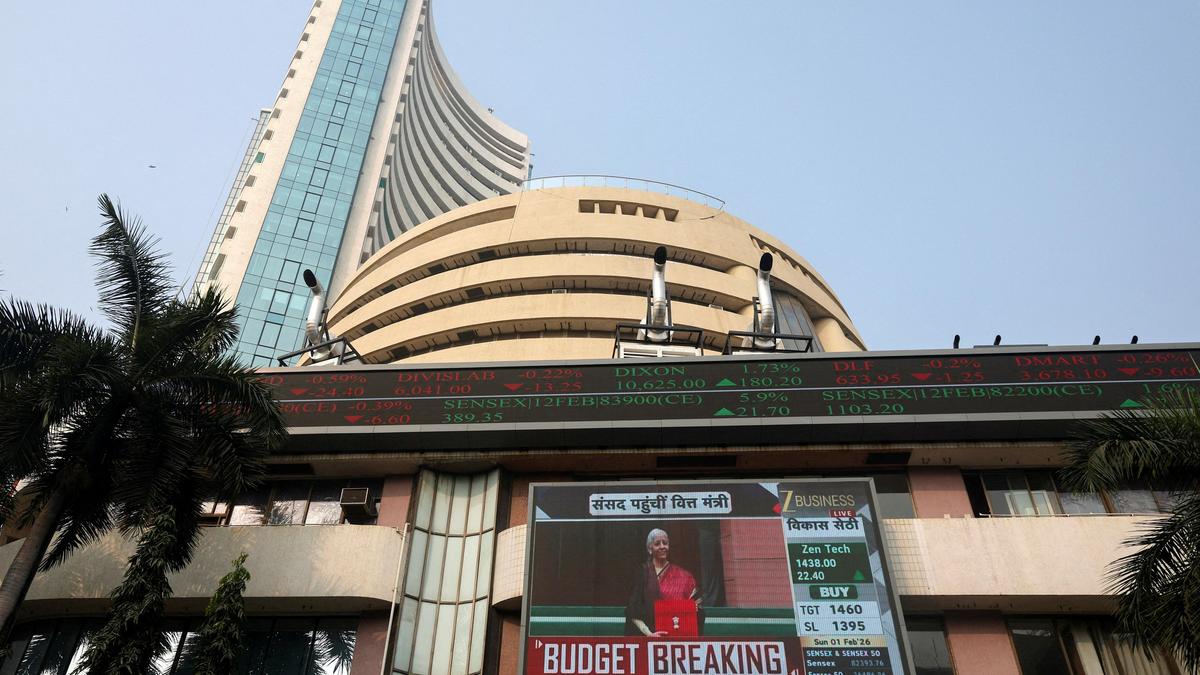
PSU banks still attractive despite rally; metals in secular upcycle, says Sudip Bandyopadhyay
The Economic Times· 2026-02-18 05:16
Speaking to ET Now, Bandyopadhyay said the valuation gap between PSU banks and private lenders remains significant and could narrow further, making current levels still attractive for long-term investors.PSU banks: Valuation gap yet to closeDespite the recent surge in the PSU Banking Index, Bandyopadhyay believes the re-rating story is not over.“There is still a meaningful valuation gap between PSU banks and private peers. I am not saying they will command the same valuation multiples as He highlighted Liv ...

工行成都分行:新春支付“惠”商圈 消费潮涌惠万民
Xin Lang Cai Jing· 2026-02-18 04:58
在优惠机制上,该行创新打造"梯度满减"福利矩阵,精准匹配不同消费层级。从日常一杯咖啡的小额优 惠,到大宗购车、家装置业的消费立减,每一笔支付都能为市民带来"真金白银"的实惠,真正实现"买 杯咖啡能省钱、购车置家更划算"。 金融服务要有"温度",也得有"厚度"。在成都环球中心等核心商圈,智联屏互动区成为亲子家庭的热门 打卡地。孩子们在趣味游戏中学习金融安全知识,家长则在陪伴中了解工行卡最新消费优惠。活动还将 川剧、变脸等四川非遗元素融入3D影音内容,让市民在感受传统文化魅力的同时,轻松掌握实用金融 常识。工行成都分行相关负责人说,将金融教育嵌入消费场景,是为了让市民在碎片化时间里"顺便 学、随时用",实现安全消费与愉悦体验并行。 截至目前,工行成都分行新春促消费活动已实现蓉城各大商圈、社区及特色街区服务网络全覆盖。上述 负责人表示,下一步将持续深化"政府指导+银行让利+商户联动"协同机制,以更加场景化、沉浸式的 金融服务助推惠民政策落地见效、消费活力提升。 编辑:幸骊莎 "从日常小额消费到品质购物、高端消费均有相应满减优惠""消费者在全市范围内均可平等便捷地享受 优惠。"2026年春节期间,工商银行成都分行启动 ...
2.7分钟定生死 手机银行存量厮杀谁在“断臂”,谁在“吃肉”?
Jing Ji Guan Cha Wang· 2026-02-18 04:57
Core Insights - The report by iResearch indicates that the monthly active users (MAU) of mobile banking apps in China have stabilized after fluctuating between 648 million and 739 million, signaling a ceiling in user growth and a shift from acquiring new users to enhancing existing user engagement [2] - User behavior is undergoing a structural reversal, with the effective daily usage time per device dropping from 4.9 minutes in 2023 to around 2.7 minutes by mid-2025, leading to a focus on high-frequency, short-duration, and functional usage [2] - Financial institutions are compelled to streamline operations and focus resources on core transaction scenarios to survive in this competitive landscape, where efficiency and precision are paramount [2] Mobile Banking Market Overview - The top three banks in terms of MAU are Agricultural Bank of China (2.49 billion), Industrial and Commercial Bank of China (1.94 billion), and China Construction Bank (1.09 billion), with all six major state-owned banks ranking in the top ten [3][5][6] - Private banks, represented by WeBank and MYbank, have faced significant setbacks, with many dropping out of the top 50 MAU rankings by 2025 [4] Competitive Landscape - State-owned banks are solidifying their dominance through extensive customer bases and integrated ecosystems, leveraging services embedded in high-frequency life scenarios such as government services and healthcare [7] - Joint-stock commercial banks are adopting a "specialized and precise" survival strategy, with China Merchants Bank leading among them with 71.85 million MAU, focusing on wealth management and intelligent interaction [8][10] - Regional banks are thriving by deeply engaging with local markets, while private banks struggle due to high customer acquisition costs and lack of local ecosystem support [13][14] Future Outlook - The mobile banking market is transitioning from a phase of scale expansion to one of value cultivation, with state-owned banks building moats through ecosystems, joint-stock banks seeking niches through specialization, and regional banks solidifying their local roots [14] - The ability to create irreplaceable value in a limited user engagement environment will be crucial, with technology applications such as AI reshaping service processes and enhancing risk management [15][16]


3月后存钱,牢记3要2不要,守好你的钱袋子
Sou Hu Cai Jing· 2026-02-18 04:48
Core Viewpoint - After the Spring Festival, individuals are concerned about how to effectively manage their year-end bonuses and red envelopes to ensure stable growth of their wealth, emphasizing the importance of avoiding traps in seemingly attractive bank deposit products [1] Group 1: Principles to Follow - The "two don'ts" principle advises against being lured by high interest rates and small gifts, as these may indicate non-deposit products that carry risks of capital loss [2] - It is recommended to avoid concentrating all funds in one bank to mitigate risks, suggesting a strategy of diversifying deposits across 2-3 banks, keeping each bank's total deposits within the 500,000 yuan insurance limit [2] - The "three do's" principle focuses on selecting the right methods for maximizing savings [2] Group 2: Choosing the Right Deposit Method - Selecting the appropriate deposit method based on the intended use of funds is crucial, with options including demand deposits, time deposits, and large-denomination certificates of deposit, each with different interest rates and flexibility [3] - Implementing a laddering savings strategy is advised, where funds are divided into multiple parts and deposited in varying terms to balance yield and liquidity, ensuring access to funds while maximizing interest [3] Group 3: Ensuring Safety of Deposits - Recognizing the deposit insurance mark is essential for safeguarding funds, as it indicates that deposits up to 500,000 yuan in a single bank are protected under the Deposit Insurance Regulations [4] - It is important to differentiate between deposit products and other financial products, as only deposits are covered by insurance, while investments in funds or insurance products are not [4] Group 4: Additional Tips - Individuals are encouraged to personally handle all deposit transactions and safeguard sensitive information to prevent theft [5] - It is advised not to focus solely on interest rates but to consider liquidity and inflation, potentially incorporating low-risk products like government bonds or money market funds for slight growth [6] - Keeping track of deposit receipts and transaction records is recommended for easy access and verification [6] Conclusion - Saving money is a vital method for individuals to protect their wealth, especially after the Spring Festival when they may have idle funds. Adhering to principles of selecting the right methods, planning effectively, recognizing insurance marks, and avoiding high-risk temptations can lead to both safety and reasonable returns [7]
孩子存1000元,比你存20万利息高?
3 6 Ke· 2026-02-18 03:35
Group 1 - The article discusses how parents are managing their children's "lucky money" received during the Chinese New Year, with many opting to deposit it in banks or invest in financial products due to declining interest rates on savings accounts [1][2][4] - Banks are actively marketing specialized savings products for children's "lucky money," with features like dedicated accounts and parental controls to help manage funds [2][4][6] - Some banks, like Beijing Rural Commercial Bank and Mongolian Merchant Bank, are offering higher interest rates on specialized savings accounts compared to standard rates, with rates for 1-year, 2-year, and 3-year terms ranging from 1.4% to 1.75% [4][6] Group 2 - As interest rates decline, parents are increasingly turning to investment products such as wealth management and insurance instead of traditional savings accounts, with some reporting difficulty finding savings products with rates above 2% [7][8] - The article highlights a trend where parents are diversifying their children's "lucky money" into various financial products, including insurance policies that offer long-term benefits and investment funds with higher returns [8][9] - Industry experts suggest that parents should focus on safety and long-term growth when managing children's funds, recommending stable financial products and educational insurance to secure future educational expenses [10][12]

黄金跌了价,2026年2月17日,国内黄金新价格、人民币黄金新价格
Sou Hu Cai Jing· 2026-02-18 02:32
Core Viewpoint - The international precious metals market is experiencing significant volatility, with gold prices under pressure due to high interest rate expectations and liquidity tightening, while silver has seen dramatic fluctuations, indicating a deep adjustment period in the market [1] Group 1: International Precious Metals Market Dynamics - On February 17, 2026, spot gold was reported at $5038.5 per ounce, having dipped to $4910 during trading, with bearish sentiment dominating as indicated by technical indicators [1] - Spot silver increased by 2.55% to $77.11 per ounce after a sharp decline, having previously reached a historical high of $121.65 at the end of January, followed by a single-day drop exceeding 36% [1] - The gold-silver ratio compressed to 47-49, significantly below the normal range of 50-80, indicating a potential for corrective pressure on silver prices [1] Group 2: Domestic Retail Gold Prices - Domestic retail prices for gold jewelry show significant differentiation, with wholesale prices in Shenzhen's Shui Bei at 1300 RMB per gram, the lowest in the country, while brand stores price gold between 1529 and 1548 RMB per gram [3] - The highest quoted brand is Lao Feng Xiang at 1548 RMB per gram, while other brands like Chow Tai Fook and Luk Fook Jewelry are priced at 1529 RMB per gram [3] - A comparison of consumer purchases shows a 37.5-gram gold piece priced at approximately 57375 RMB at China Gold, while the same weight at Shui Bei costs about 48750 RMB, highlighting the impact of brand premiums and processing costs on retail prices [3] Group 3: RMB Denominated Gold Market - Data from the Shanghai Gold Exchange indicates a general decline in RMB gold prices, with AuT D at 1108.50 RMB per gram, down 16.55 RMB, a decrease of 1.47% [4] - Au9999 fell to 1109.00 RMB per gram, while Au9995 dropped to 1080.05 RMB per gram, reflecting tightening liquidity and potential pricing anomalies [4] - The price of silver T D plummeted to 19270 RMB per kilogram, marking a 3.26% decline, indicating its high volatility [4] Group 4: Market Adjustments by Financial Institutions - In response to price volatility, several banks and gold stores are tightening their precious metals business, with announcements from China Gold and Cai Bai regarding the suspension of gold buybacks and implementation of daily limits [11] - Notably, banks like Industrial Bank and Postal Savings Bank have ceased personal gold trading services, reflecting a broader trend among at least 11 banks to restrict new positions and purchases [11] - These actions indicate heightened vigilance from regulators and financial institutions regarding market risks, particularly following significant drops in silver LOF funds [13] Group 5: Market Outlook - The current volatility in the precious metals market is primarily driven by speculative funds and the bursting of a price bubble, particularly in silver, which has seen inventory depletion leading to extreme market conditions [14] - Future price movements will depend on inflation data, Federal Reserve policy directions, and the recovery of market liquidity, with consumers advised to focus on wholesale market prices for practical insights [14]



Dollar holds gains as markets focus on peace talks, Fed minutes
The Economic Times· 2026-02-18 02:07
Economic Data and Market Sentiment - Japanese exports rose for the fifth consecutive month in January, indicating a positive trend in trade [6][9] - Confidence among Japanese manufacturers improved in February for the first time in three months, as per the Reuters Tankan poll [6][9] - The International Monetary Fund urged Japan to continue raising interest rates and avoid further loosening of fiscal policy [7][9] Geopolitical Developments - Progress was reported in nuclear talks between Iran and the U.S., with an understanding on main "guiding principles" reached, although a deal is not imminent [5][8] - Peace negotiations between Ukraine and Russia are ongoing, with U.S.-mediated talks taking place in Geneva [6][8] U.S. Economic Indicators - The Federal Reserve's Open Market Committee is set to release minutes from its January meeting, which may provide insights into future monetary policy [8] - The U.S. Commerce Department will issue its first estimate for GDP for the fourth quarter on Friday, which is a key economic indicator [8] Currency Market Movements - The dollar index remained stable at 97.11 after a two-day advance, reflecting mixed market sentiment [2][8] - The yen strengthened by 0.1% to 153.12 per dollar, while the euro held steady at $1.1852 [2][5] - The Australian dollar and kiwi remained steady at $0.7083 and $0.6047 respectively, with New Zealand's central bank expected to hold rates [8][9] U.S.-Japan Investment Initiatives - The Trump administration announced three projects valued at $36 billion to be financed by Japan, part of a larger $550 billion investment agreement aimed at reducing U.S. tariffs [7][9]

US Stocks Today |Equities close with slight gains as tech shares recover
The Economic Times· 2026-02-18 02:05
Market Overview - The S&P 500 information technology sector initially dropped by 1.5% but closed up 0.5%, driven by gains in Nvidia and Apple, despite declines in Microsoft and Oracle [1][12] - The S&P 500 financials index performed well, supported by gains in banks like Goldman Sachs and JPMorgan Chase, helping the Dow recover from an earlier decline [8][12] - The S&P 500 software index ended down 1.6%, with Intuit and Cadence Design being the worst performers, each declining by over 5% [6][12] Investor Sentiment - Investors are experiencing volatility, with frequent spikes in stock prices, indicating a short-term focus in the market [2][12] - Concerns about artificial intelligence disrupting business models have led to a selloff in software firms and other sectors [1][12] AI Developments - Alibaba introduced a new AI model, Qwen 3.5, which can independently execute complex tasks, adding to the uncertainty in the market regarding competition from Chinese AI players [3][12] - There is an expectation that AI-related investments will regain favor in the market [3][12] Economic Indicators - The upcoming personal consumption expenditure report will be crucial for understanding inflation trends and their potential impact on interest rates [9][12] - Traders are pricing in a 63% chance of a 25 basis points rate cut at the Fed's June meeting, marking the first time odds exceed 50% [10][12] Stock Performance Highlights - Norwegian Cruise Line shares surged by 12.1% after activist investor Elliott disclosed a stake of over 10% in the company [12] - Fiserv's shares increased by 6.9% following reports of a stake acquisition by activist investor Jana Partners [12] - Masimo's stock jumped 34.2% after Danaher announced its acquisition for $9.9 billion, while Danaher shares fell by 2.9% [12] Market Statistics - Advancing issues outnumbered decliners by a 1.02-to-1 ratio on the NYSE, while the Nasdaq saw a 1.07-to-1 ratio favoring decliners [11][12] - The S&P 500 recorded 42 new 52-week highs and 10 new lows, while the Nasdaq Composite had 81 new highs and 224 new lows [11][12] - Trading volume on U.S. exchanges was 17.76 billion shares, below the 20.7 billion average over the last 20 trading days [11][12]



