
半导体设备

Search documents
晶盛机电:汇添富基金、富国基金等多家机构于10月14日调研我司
Sou Hu Cai Jing· 2025-10-16 11:41
Core Viewpoint - The company, Jing Sheng Mechanical & Electrical (300316), is advancing its capabilities in semiconductor substrate materials, particularly in silicon carbide (SiC) and sapphire substrates, with significant developments in production and technology [1][2][3]. Semiconductor Substrate Materials - The company has established a leading position in sapphire substrate materials and is among the top in domestic 8-inch silicon carbide substrate technology, having also made breakthroughs in 12-inch SiC crystal growth technology [1][2]. - The first 12-inch SiC substrate processing pilot line has been officially launched, achieving 100% domestic equipment and technology, marking a transition from parallel development to leading in global SiC substrate technology [2][3]. - The pilot line encompasses the entire process from crystal growth to detection, utilizing domestically developed high-precision equipment, thus forming a complete closed loop for 12-inch SiC substrates [3]. Production Capacity Layout - The company is actively expanding its SiC production capacity, with a project in Shangyu aiming for an annual output of 300,000 SiC substrates and an 8-inch SiC substrate industrialization project in Penang, Malaysia [4]. - Additionally, a project in Yinchuan is set to produce 600,000 pieces of 8-inch SiC substrates annually, reinforcing the company's technological and scale advantages in the SiC substrate materials sector [4]. Semiconductor Equipment Sector - The company’s main products include semiconductor equipment, substrate materials, and semiconductor consumables, with a focus on domestic production of 8-12 inch silicon wafer equipment and advancements in third-generation semiconductor SiC equipment [5]. - As of June 30, 2025, the company has unfulfilled contracts for integrated circuit and compound semiconductor equipment exceeding 3.7 billion yuan (including tax), indicating strong demand in the semiconductor sector [5]. Financial Performance - For the first half of 2025, the company reported a main revenue of 5.799 billion yuan, a year-on-year decrease of 42.85%, and a net profit of 639 million yuan, down 69.52% year-on-year [6]. - The second quarter of 2025 saw a significant decline in revenue and net profit, with a revenue of 2.661 billion yuan, down 52.8% year-on-year, and a net profit of approximately 66 million yuan, down 93.56% year-on-year [6]. Analyst Ratings and Predictions - Over the past 90 days, 8 institutions have provided ratings for the stock, with 7 buy ratings and 1 hold rating, and the average target price set at 34.82 yuan [6][7]. - Profit forecasts for 2025 to 2027 show a projected net profit of approximately 1.069 billion yuan in 2025, increasing to 1.523 billion yuan by 2027 [7].

狂揽300亿欧元订单!阿斯麦剑指2030!
Ge Long Hui· 2025-10-16 11:09
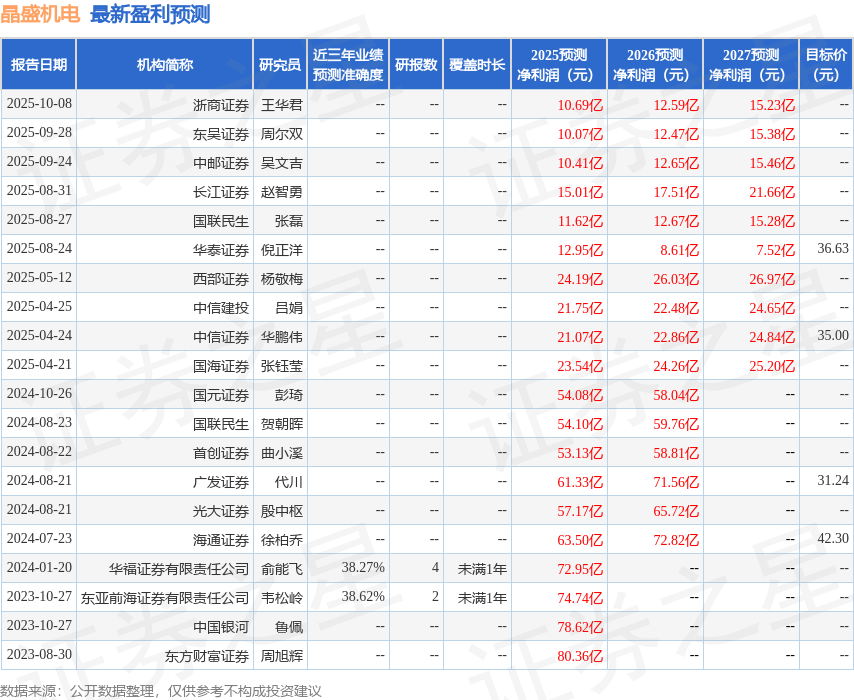
Core Viewpoint - The global AI infrastructure investment reached $350 billion in a single year, surpassing the total investment of the Apollo program, with ASML holding nearly €30 billion in backlog orders, equivalent to 92.3% of its projected 2025 revenue, while aiming for €60 billion in revenue by 2030. However, ASML's Q3 2025 revenue of €7.52 billion fell short of market expectations, raising questions about AI demand and technological transitions [1][2]. Financial Performance Analysis - ASML's Q3 2025 financial report showed a revenue of €7.52 billion, which was €270 million below market expectations, but the high sales ratio of EUV systems at 37.5% indicated a healthy trend towards advanced processes. The fluctuations in non-EUV business were attributed to the completion of prior orders from China, aligning with expectations [3][6]. - The adjusted earnings per share (EPS) of €5.49 exceeded market expectations by €0.12, with a net profit of €2.13 billion and a net profit margin of 28.3%, driven by high-margin EUV equipment and installation management services [3][6]. - Net system orders surged by 105% year-on-year to €5.4 billion, with EUV orders making up 66.7%, indicating strong demand for advanced equipment and a projected backlog of €30 billion by year-end [3][6]. Competitive Advantages - ASML's monopoly in the semiconductor equipment industry is supported by three key strengths: 1. Unique technology that is difficult for competitors to replicate, with EUV lithography machines requiring over 100,000 parts and collaboration from over 500 suppliers, alongside a consistent R&D investment of over 15% of revenue [7][9]. 2. Strong customer dependency, as the demand for EUV technology increases with the evolution of AI chips and high-end memory, creating a stable demand loop [9]. 3. Strategic positioning in the ecosystem, engaging deeply with clients in advanced process R&D and integrating AI technology into its products, making it challenging for competitors to enter the market [9][10]. Future Growth Drivers - ASML's future growth is anticipated to be driven by: 1. High-NA EUV technology, with the first device already validated and expected to generate large-scale orders by late 2026, potentially exceeding €300 million per unit [10][11]. 2. 3D integration technology, which enhances production capacity and positions ASML as a provider of advanced packaging solutions, opening new market opportunities [11]. Revenue Target and Pathway - ASML's ambitious revenue target of €44-60 billion by 2030 is supported by a clear pathway: - Short-term growth through Low-NA EUV sales to offset DUV business normalization, with EUV revenue expected to rise from 28% to over 35% [12]. - Mid-term growth driven by High-NA EUV entering mass delivery and 3D integration contributing to revenue, with a forecasted return to double-digit growth rates [12]. - Long-term growth from High-NA EUV becoming mainstream and 3D integration becoming a core segment, alongside high-margin installation management services [12]. Key Indicators for Success - To assess ASML's ability to meet its €60 billion revenue target, three critical indicators should be monitored: 1. Achievement of Q4 2025 revenue targets of €9.2-9.8 billion to validate production capacity effectiveness [13]. 2. Timing of High-NA order surges in late 2026, which will influence mid-term growth momentum [13]. 3. Recovery of the Chinese market post-Q1 2026 to stabilize DUV business and overall revenue [13].

纳尔股份拟收购菲莱测试控股权 布局半导体设备领域
Ju Chao Zi Xun· 2025-10-16 10:48
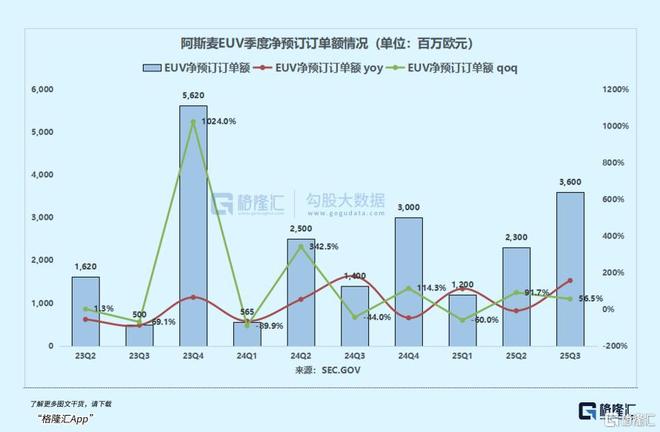
Core Viewpoint - NAR Co., Ltd. plans to acquire at least 51% of Shanghai Feilai Testing Technology Co., Ltd. for an estimated amount of 350 to 400 million yuan, aiming to enhance its strategic layout and business expansion in the semiconductor equipment sector [1][3]. Group 1: Acquisition Details - The acquisition will not constitute a major asset restructuring, and there are no related party relationships involved [1]. - The investment is part of NAR's cross-industry investment initiative to enrich its industrial structure and enhance its capabilities in emerging business layouts [1][4]. Group 2: Target Company Overview - Feilai Testing specializes in semiconductor chip testing and reliability solutions, with main products including wafer AOI equipment, chip testers, aging systems, and automated loading and unloading equipment [3]. - The company has received various honors, including being recognized as a national-level "Little Giant" and a high-tech enterprise, and has accumulated 45 patent authorizations by the end of 2024 [3]. Group 3: Financial Performance and Projections - Feilai Testing is projected to achieve revenues of 123 million yuan and a net profit of 1.9 million yuan in 2024, with expected revenues of 92.46 million yuan and a net profit of 22.93 million yuan in the first half of 2025 [3]. - The profit commitments for 2025 to 2027 are set at no less than 28 million yuan, 36 million yuan, and 48.2 million yuan, totaling at least 112 million yuan [3]. Group 4: Strategic Implications - The acquisition is a significant step for NAR in implementing its strategy of "vigorously developing new quality productivity," allowing it to enter the semiconductor equipment and components field [3][4]. - NAR aims to leverage Feilai Testing's R&D capabilities and market resources to create new profit growth points and enhance efficiency across R&D, procurement, and sales systems [3][4].

ASML:下行风险有限,上行潜力巨大
美股研究社· 2025-10-16 10:13
Core Viewpoint - ASML, as the exclusive supplier of EUV lithography equipment, is crucial for companies like TSMC and Intel in producing advanced chips for AI, smartphones, and computers. Despite its leading position, recent market sentiment has turned negative due to concerns over future orders and sales, particularly in the context of a potential "buyer monopoly" with TSMC as its primary customer [1][10]. Group 1: Market Dynamics - The global demand for wafers determines the need for semiconductor equipment, independent of production locations [1]. - ASML's dominance means any company needing DUV or EUV equipment must order from ASML, as competitors like Canon and Nikon hold negligible market shares [1]. - The demand for DUV equipment is expected to weaken in 2025 due to a return to normalcy in the Chinese market, and the transition to 2nm GAA transistor architecture will reduce the need for additional EUV layers [3]. Group 2: Order Characteristics - ASML's orders are characterized by "intermittency," with EUV equipment priced over $200 million and delivery times exceeding 12 months, limiting the customer base to 5-6 companies [4]. - The sales proportion to China dropped from 49% in the first half of 2024 to 27% by the second quarter of 2025, indicating a shift in market dynamics [4][5]. - Management anticipates that the sales proportion from China will stabilize around 25%, aligning with the order backlog structure [5]. Group 3: Customer Relationships - Concerns about ASML's reliance on TSMC are overstated, as both companies have a symbiotic relationship where their successes are interdependent [10]. - TSMC's N2 (2nm) series is projected to be its largest process node, suggesting sustained demand for EUV equipment [10]. - Despite TSMC being ASML's largest customer historically (about 30% of revenue), ASML has other EUV clients, and the demand from DRAM manufacturers will support EUV needs [11]. Group 4: Future Outlook - The recent collaboration between OpenAI and Samsung, aiming to significantly increase DRAM wafer production, highlights the growing demand for storage capacity in the AI sector [12]. - Concerns regarding Intel and Samsung's advanced process capabilities have eased due to investments from the U.S. government and partnerships with companies like Tesla [12]. - The risk-reward ratio for investing in ASML appears favorable when its dynamic P/E ratio is below 25, indicating limited downside risk and potential for significant upside once market uncertainties are resolved [12].

宝丰堂半导体冲击IPO,专注于等离子处理设备领域,一边融资一边分红
Ge Long Hui· 2025-10-16 09:49
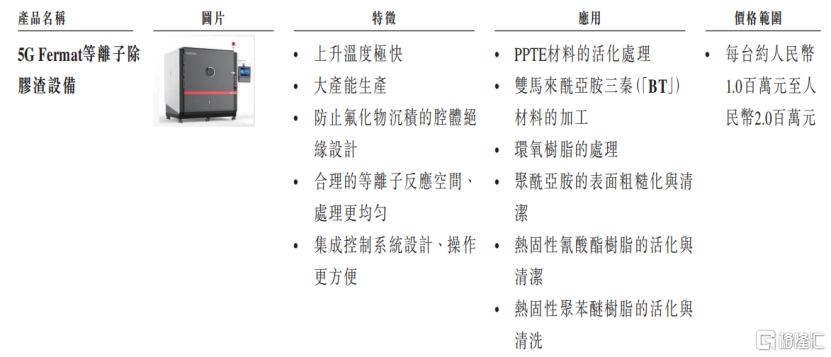
Core Viewpoint - The second Bay Chip Exhibition was held in Shenzhen, showcasing over 600 companies, including leading domestic firms like North Huachuang and Shanghai Microelectronics, with Baofeng Semiconductor gaining attention for its new product launch [1] Company Overview - Baofeng Semiconductor, established in May 2006 and restructured into a joint-stock company in January 2023, specializes in plasma processing equipment for high-tech electronics, including PCB and semiconductor manufacturing [4][5] - The company is headquartered in Zhuhai and has a post-investment valuation of approximately 750 million RMB as of June 2025 [4] Product and Technology - Baofeng Semiconductor's main products include plasma stripping equipment for PCB manufacturing, dry etching equipment for semiconductor manufacturing, and plasma cleaning equipment for semiconductor packaging [6][8] - The company maintains a focus on R&D, with expenditures of 8.4 million RMB, 10.1 million RMB, 10.5 million RMB, and 6.5 million RMB across the reporting periods, representing R&D expense ratios of 10.61%, 7.27%, 7.00%, and 8.21% respectively [17] Financial Performance - The company's revenue has shown growth, with figures of 79.2 million RMB, 139.5 million RMB, 149.7 million RMB, and 79.2 million RMB for the years 2022, 2023, 2024, and the first half of 2025 respectively [11] - Gross profit margins for the reporting periods were 49.3%, 53.3%, 50.0%, and 59.9%, with a noted decline in 2024 due to initial pricing strategies and production costs [15][16] Market Position - Baofeng Semiconductor holds a market share of less than 0.01% in the Chinese plasma processing equipment market, but approximately 3.9% in the PCB plasma stripping equipment segment, ranking among the top three [21][29] - The global plasma processing equipment market is projected to grow from 120.4 billion RMB in 2018 to 202.7 billion RMB in 2024, with a compound annual growth rate (CAGR) of 9.1% [25] Customer Base and Sales - The company has expanded its overseas revenue share from 6.6% in 2022 to 49.7% in the first half of 2025, with a customer base of 122, where the top five clients contribute 70.8% of revenue [18] - Baofeng Semiconductor has secured stable orders from major clients in the semiconductor sector, including Fuzhou Integrated Circuit and Changjiang Electronics [18] Cash Flow and Dividends - The company reported a decrease in net cash from operating activities in 2025, amounting to a reduction of 6.994 million RMB, while simultaneously distributing dividends of 50 million RMB in the first half of 2025, reflecting a payout ratio of 64.7% [20]
拓邦股份:运动控制卡已供货部分半导体设备生产公司
Zheng Quan Ri Bao Wang· 2025-10-16 09:44
Core Viewpoint - The company, Tuobang Co., Ltd. (002139), is optimistic about the market prospects in the semiconductor equipment sector due to the acceleration of domestic substitution and is committed to continuous product research and upgrades to adapt to more application scenarios [1] Group 1 - The company has supplied its motion control cards to certain semiconductor equipment manufacturers, but cannot disclose client names due to confidentiality agreements [1] - The company is focusing on product development and upgrades to meet the evolving needs of the market [1]

晶盛机电(300316) - 300316晶盛机电投资者关系管理信息20251016
2025-10-16 09:30
Group 1: Semiconductor Substrate Materials - The company has established a leading position in silicon carbide (SiC) substrate materials, with capabilities in 8-inch and 12-inch SiC crystal growth technology [2] - The first 12-inch SiC substrate processing pilot line was launched on September 26, 2025, marking a significant advancement in the company's production capabilities [2][3] - The company is actively expanding its SiC substrate production capacity, with a project in Shangyu aiming for an annual output of 300,000 pieces and another in Malaysia for 8-inch SiC substrates [4] Group 2: Semiconductor Equipment and Technology - The company has achieved domestic production of semiconductor equipment for 8-12 inch silicon wafers and is extending its reach into chip manufacturing and advanced packaging [5] - In the compound semiconductor equipment sector, the company focuses on third-generation semiconductor SiC equipment, successfully overcoming several core technology challenges [5] - As of June 30, 2025, the company has unfulfilled contracts for integrated circuit and compound semiconductor equipment exceeding 3.7 billion yuan (including tax) [6]
荷兰“芯”慌:当光刻机遇上稀土,谁才是真正的“卡脖子”高手?
Xin Lang Cai Jing· 2025-10-16 09:23
Group 1: Semiconductor Industry - The EUV lithography machines from ASML are heavily reliant on rare earth permanent magnets, with each machine requiring 1.2 tons of these materials, 80% of which are sourced from China [2] - In 2023, the Netherlands followed the US in restricting DUV lithography machine exports to China, leading to a two-week halt in ASML's DUV production, resulting in a loss of 4 million euros per day [2] - If the Netherlands imposes further restrictions, a potential cut in rare earth supplies could severely impact ASML's EUV production, with a projected loss of 60 billion euros in semiconductor equipment exports, accounting for 35% of the Netherlands' total equipment exports [2] Group 2: Agricultural Sector - The Netherlands is the second-largest agricultural exporter globally, with China being its third-largest market, projected to export 12 billion euros in agricultural products to China in 2024 [4] - Cheese exports to China are significant, with 180,000 tons sold, making up 25% of the Netherlands' total cheese exports; any trade restrictions could lead to a 25% price drop, resulting in losses exceeding 100 million euros for Dutch dairy farmers [4] - The flower industry, particularly tulips, is also at risk, as China imports 500 million tulips annually; increased inspections could lead to a 30% price drop, severely impacting small flower farmers [6] Group 3: Logistics and Trade - The Port of Rotterdam, crucial for the Dutch economy, handles 460 million tons of cargo in 2024, with 22% related to China; any reduction in trade could lead to an 8% drop in container throughput, equating to a loss of 368,000 standard containers [8] - The logistics company DSV has 18% of its revenue from China; a decrease in trade through Rotterdam could lead to significant job losses, with 2,000 dockworkers potentially affected [9] - The Netherlands' trade surplus with China is projected at 4.5 billion euros in 2024; retaliatory measures from China could flip this surplus into a deficit, negatively impacting GDP growth [11]
长川科技:截至2025年7月18日公司股东人数总数是78612户
Zheng Quan Ri Bao Wang· 2025-10-16 09:15
Core Insights - Longchuan Technology (300604) announced on October 16 that the total number of shareholders is expected to reach 78,612 by July 18, 2025 [1] Summary by Categories - **Company Information** - Longchuan Technology has provided an update regarding its shareholder count, indicating a projected total of 78,612 shareholders by mid-2025 [1]

科创板设备企业湾芯展“C位出圈” 协同创新领跑半导体自主化
Zheng Quan Shi Bao Wang· 2025-10-16 09:05
Core Insights - The 2025 Bay Area Semiconductor Industry Ecological Expo showcased significant technological breakthroughs in core equipment and key components, highlighting the path towards the localization of the semiconductor equipment industry in China [1] - The collaboration among various products and companies indicates a shift from isolated efforts to a comprehensive approach in achieving domestic substitution across the entire semiconductor supply chain [1] Equipment and Technology - Several core devices from companies listed on the Sci-Tech Innovation Board demonstrated industrialization achievements, such as the wafer-to-wafer hybrid bonding equipment from Tuojing Technology, which has already been delivered in bulk to advanced storage and logic chip production lines [1] - Huahai Qingke exhibited multiple high-performance equipment products that meet advanced process requirements, with applications in AI chips and HBM stacked packaging [1] - The introduction of a one-stop gas demand solution and core products like gas distribution plates by Fuchuang Precision highlights the acceleration of domestic component and supporting equipment localization [3] Market Position and Competition - Companies like Zhongke Feicai and Xinyuan Micro, in collaboration with Northern Huachuang, showcased competitive products such as 12-inch etching machines and coating development equipment, directly competing with international giants [2] - Shengmei Shanghai presented innovative equipment for advanced packaging, including the world's first horizontal plating equipment, which supports the transition from wafer-level to panel-level packaging for AI chips [2] Industry Growth and Development - The total shipment volume of equipment from Sci-Tech Innovation Board companies exceeded 16,000 units in 2024, with an average R&D investment intensity of 16.3% in the first half of 2025, surpassing the median levels of the sector and A-shares [3] - The number of patents accumulated by these companies exceeded 4,000 by the end of June, indicating a strong focus on innovation and technology development [3] - Industry experts noted that with national and industrial policy support, semiconductor equipment companies have accelerated technological breakthroughs and scale deliveries, positioning themselves as the main force in domestic semiconductor production [4]