新材料

Search documents
“卡脖子”:中国哪些新材料高度依赖日本进口及国外进口?国产企业又如何突破?
材料汇· 2026-02-17 14:42
Core Viewpoint - The article highlights China's heavy reliance on Japan for critical strategic new materials essential for high-end manufacturing and national security, particularly in the semiconductor and advanced materials sectors. It emphasizes the risks posed by this dependency and the urgent need for domestic production capabilities to mitigate potential supply chain disruptions [2][4]. Group 1: Dependence on Japan for Core New Materials - Japan holds a monopolistic or dominant position in semiconductor materials, high-end polymers, and electronic chemicals, with China's dependency exceeding 50% in several key categories, and nearly 100% in some high-end areas [4]. Group 2: Semiconductor Core Materials - The semiconductor manufacturing process is complex, with Japanese companies controlling key materials like photoresists and large silicon wafers, maintaining a global market share of over 60%, while China's import dependency is generally above 70% [6]. Photoresists - The overall import dependency for photoresists is about 90%, with high-end process photoresists being 100% reliant on Japan; 67% of China's photoresist imports come from Japan [7]. - Key companies include JSR, Tokyo Ohka, Shin-Etsu Chemical, and Fujifilm, which dominate 92% of the high-end photoresist market [7]. - Domestic companies can only produce low-end photoresists, with a domestic production rate of less than 5% [7]. 12-Inch Silicon Wafers - The overall import dependency for 12-inch silicon wafers is around 90%, with Japan being the largest source at 58% [9]. - Key companies like Shin-Etsu Chemical and SUMCO control over 60% of the global market, with 70% of China's major wafer manufacturers sourcing from these firms [9]. - Domestic production has achieved a 90% yield for low-end wafers, but high-end production remains 100% reliant on Japanese suppliers [9]. Semiconductor Cleaning Materials - The import dependency for high-purity cleaning materials is approximately 85%, with 60% sourced from Japan [11]. - Key companies include Mitsubishi Chemical and Morita Chemical, which dominate the market [11]. High-Purity Ruthenium Targets - The import dependency is 98%, with Japan holding a dominant market share [12]. - Domestic production is expected to improve, with a target of 30% import substitution by 2027 [12]. Group 3: High-End Polymer Materials - In high-end fields like flexible electronics and semiconductor packaging, Japanese companies dominate the market for polyimides and optical-grade polyester films, with import dependency exceeding 80% for high-end products [18]. High-End Electronic Grade Polyimide Films - The overall import dependency for polyimide materials is 85%, with high-end electronic-grade films being 90% reliant on Japan [19]. - Key companies include Toray Industries and Ube Industries, which control 75% of the high-end polyimide film market [19]. Optical-Grade Polyester Films - The overall import dependency for optical-grade polyester films is 75%, with 100% reliance for high-end films used in MLCCs [23]. Group 4: Other Key Materials in Electronics - The import dependency for high-end sputtering targets is about 95%, with Japan controlling 60% of the market [27]. - The import dependency for high-purity electronic gases is 70%, with Japan holding a 40% market share [31]. Group 5: Hydrogen Energy and Fuel Cell Key Materials - The import dependency for high-end carbon carrier materials used in fuel cells is 85%, with 90% reliance on Japan [35]. - The import dependency for high-purity aluminum nitride substrates is 92%, with Japan dominating the market [38]. Group 6: Other New Material Categories - Apart from Japan, the U.S., Germany, South Korea, the UK, and Taiwan dominate in areas like polyolefin elastomers and aerospace materials, with import dependency generally exceeding 60% [57].


【锋行链盟】科创板IPO全流程解析
Sou Hu Cai Jing· 2026-02-16 16:10
Core Viewpoint - The article outlines the comprehensive process of the IPO on the Sci-Tech Innovation Board (科创板), detailing the strict adherence to regulations set by the China Securities Regulatory Commission (CSRC) and the Shanghai Stock Exchange (SSE) throughout the entire IPO cycle [1]. Pre-IPO Preparation Phase - Companies must conduct self-assessments and strategic decisions, requiring collaboration with four core intermediaries [3] - Initial due diligence and issue rectification are essential steps before moving forward [3]. Counseling and Filing Phase - After signing a counseling agreement with the sponsor, companies must submit counseling materials to the local CSRC, initiating a counseling period typically lasting at least three months [3]. - The counseling process includes training on listing rules, corporate governance, and information disclosure requirements [5]. Application and Acceptance Phase - Companies must prepare application materials in accordance with the Sci-Tech Board's focus on "hard technology" across six key sectors [4]. - The selection of intermediary institutions is crucial, including sponsors, accounting firms, law firms, and asset appraisal agencies [4]. SSE Review Phase - The SSE employs an "inquiry-based review" process, involving multiple rounds of inquiries to uncover risks, requiring truthful responses from companies and intermediaries [6]. CSRC Registration Phase - Following SSE approval, application materials are submitted to the CSRC for registration review [9]. - The CSRC focuses on compliance with legal requirements and the accuracy of information disclosure during its review [12]. Issuance and Listing Phase - After receiving registration approval, companies conduct pre-roadshows and determine the issuance price range through market-based inquiries [15]. - The distribution of shares includes a minimum of 70% allocated to qualified institutional investors and a maximum of 30% to public investors [15]. Post-Listing Continuous Supervision Phase - Companies must adhere to ongoing regulatory requirements, including regular disclosures and maintaining corporate governance standards [14]. - The Sci-Tech Board has a stricter delisting system, with conditions triggering delisting procedures [15].
第179个国家高新区来了!雄安高新区正式升级,助力打造京津雄地区创新三角
Xin Lang Cai Jing· 2026-02-16 10:55
Core Viewpoint - The upgrade of Hebei Xiong'an High-tech Industrial Development Zone to a national high-tech zone is a significant development for the Beijing-Tianjin-Hebei region, aiming to enhance technological innovation and economic collaboration among the three areas [2][5]. Group 1: Upgrade of Xiong'an High-tech Zone - The State Council approved the upgrade of Hebei Xiong'an High-tech Industrial Development Zone to a national high-tech zone, making it the 179th national high-tech zone in China and the 6th in Hebei province [2]. - The planning area for the upgraded Xiong'an High-tech Zone is set at 20.84 square kilometers, divided into two blocks: Block One covers 16.37 square kilometers and Block Two covers 4.47 square kilometers [3][4]. - The core positioning of the Xiong'an High-tech Zone is to create a significant non-capital function area, an international first-class high-tech industrial development zone, and a green intelligent innovation development demonstration area [4]. Group 2: Industrial Development and Innovation - The industrial layout will focus on a "1+3" system, primarily developing aerospace information, modern life sciences and biomanufacturing, new materials, and modern services [4]. - As of August 2025, over 800 enterprises have registered in the Xiong'an High-tech Zone, including 45 high-tech enterprises and 17 specialized and innovative small and medium-sized enterprises [4]. - The Xiong'an High-tech Zone aims to support the integration of innovation resources and promote efficient transformation and landing of technologies, contributing to the construction of a modern city in Xiong'an [5][6]. Group 3: Policy and Future Directions - The upgrade process was conducted rigorously, adhering to national high-tech zone criteria, including metrics such as the proportion of high-tech manufacturing value added and the number of patents granted per ten thousand people [4]. - The Xiong'an High-tech Zone is expected to attract international organizations in the technology innovation sector and become a significant source of independent and original innovation [5]. - Strict regulations will be enforced regarding land use and project construction, prohibiting commercial real estate development to ensure sustainable land resource utilization [6].

内蒙古广东商会会长王鹏翔:广货已成为“高品质”与“智能化”代名词
Xin Lang Cai Jing· 2026-02-16 00:28
Group 1 - The "Guangdong goods going north" trend has deepened, evolving from basic commodity circulation to industrial collaboration and shared concepts between Guangdong and Inner Mongolia [1] - Guangdong's products have transitioned from representing "novelty" to being synonymous with "high quality" and "intelligent" offerings, reshaping consumption and production in Inner Mongolia [1] - Over 2,000 Guangdong enterprises have invested in Inner Mongolia, with actual investments exceeding several hundred billion yuan, making them a significant force in foreign investment in the region [1] Group 2 - Guangdong enterprises have contributed to Inner Mongolia through three main aspects: bringing talent and technology, financial investment exceeding 100 billion yuan, and creating over 50,000 local jobs, primarily in technical positions [2] - Recommendations for future cooperation include enhancing the "flying economy" model, promoting talent mobility between the two regions, and integrating digital industries with Inner Mongolia's computing resources [3]
未来已来 抢抓时代机遇!2026未来产业新材料博览会(6月10-12日 上海)
DT新材料· 2026-02-15 07:20
Core Viewpoint - The 2026 Future Industries New Materials Expo (FINE 2026) aims to lead global innovation in new materials, emphasizing their critical role in the transformation of high-tech industries and future economic development [1][2]. Group 1: Event Overview - FINE 2026 will take place from June 10 to June 12, 2026, at the Shanghai New International Expo Center, featuring a total exhibition area of 50,000 square meters and over 300 strategic and cutting-edge technology reports [2][18]. - The expo will focus on popular innovations applicable to various industries, including artificial intelligence, aerospace, smart vehicles, and renewable energy, while addressing five common needs in future industries: advanced semiconductors, advanced batteries, lightweight functionalization, low-carbon sustainability, and thermal management [2][10]. Group 2: Historical Context and Participation - The previous events, including the 2025 International Carbon Materials Expo and the 2025 Thermal Management Expo, achieved record attendance with over 35,000 professional visitors from 27 countries and regions, showcasing more than 500 exhibitors [7][36]. - The expected participation for FINE 2026 is over 100,000 professional visitors, with targeted invitations to over 5,000 industry investors to facilitate connections between startups and industry resources [35][37]. Group 3: Thematic Focus and Special Features - FINE 2026 will feature seven specialized thematic exhibition areas, including advanced semiconductors, AI chips, thermal management, and sustainable materials, aiming to present a comprehensive chain of innovation from components to cutting-edge technologies [13][15]. - The event will host over 30 forums with more than 300 renowned experts discussing trends in technology, investment strategies, and advanced manufacturing techniques related to new materials [22][24]. Group 4: Strategic Importance - The expo is positioned as a critical platform for technology transfer and industry innovation, leveraging China's growing influence in sectors like new energy vehicles, photovoltaics, and robotics, which are expected to create significant market opportunities for new materials [10][36]. - The timing of the event in June is seen as a strategic opportunity to capture business prospects for the second half of the year, supported by Shanghai's robust industrial and technological ecosystem [10][36].
开门红!惠州国投战略布局港股基石,所投企业沃尔核材港交所上市
Sou Hu Cai Jing· 2026-02-14 12:12
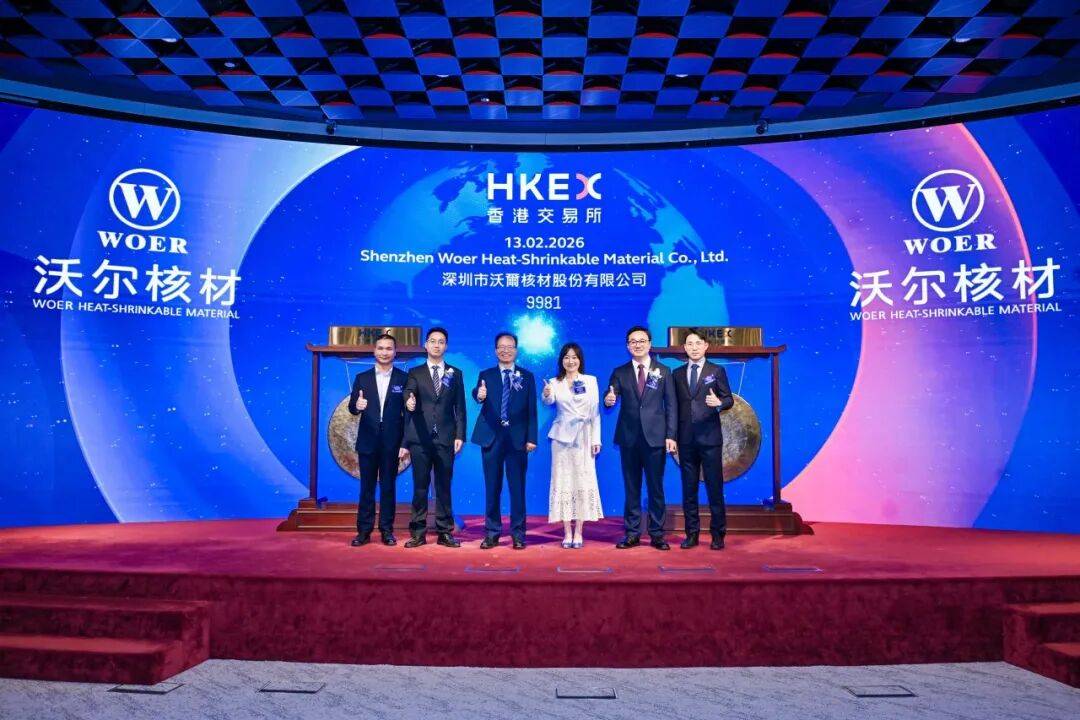
Group 1 - The core viewpoint of the news is that Shenzhen Wole Materials Co., Ltd. successfully listed on the Hong Kong Stock Exchange, marking a significant milestone for Huizhou Guotou as it aims for a strong start in 2026 [1][3] - Wole Materials focuses on the research, development, manufacturing, and sales of high polymer radiation-modified new materials and communication cables, with applications in key sectors such as AI, electronics, power, metallurgy, petrochemicals, automotive, and aerospace [3] - The company raised approximately HKD 28.13 billion by globally offering about 140 million H-shares, with the funds primarily allocated for product diversification, global business expansion, capacity enhancement, and potential strategic investments [3] Group 2 - The investment in Wole Materials represents a significant initiative by Huizhou Guotou to support local industries and promote high-end manufacturing through cross-border capital operations, establishing a precedent for A+H share listings [3] - The expansion of the Huizhou base is a major focus for the raised funds, aimed at consolidating the company's leading position in the industry [3]

陇南徽县:从“招商突围”到“双向奔赴”之约
Zhong Guo Xin Wen Wang· 2026-02-14 09:55
Core Viewpoint - The article highlights the transformative development in Huixian County, Gansu, driven by investment attraction, showcasing a blend of industrial growth and cultural tourism integration [1][3]. Investment and Economic Growth - During the 14th Five-Year Plan period, Huixian County signed contracts totaling 229.97 billion yuan, with 182.84 billion yuan actually received, leading to the rapid establishment of new factories and modern production lines [3]. - The number of industrial enterprises above designated size increased from 11 to 20, with four companies entering the provincial top 100 private enterprises and two successfully listed on the A-share market, indicating a structural upgrade in the industrial ecosystem [3]. - Industrial fixed asset investment surged by 94.5%, and the resource utilization level significantly improved, with low-carbon cement materials capable of processing 300,000 tons of industrial waste annually [3]. Service Optimization and Government Role - A case of bureaucratic hurdles faced by a food technology company catalyzed reforms in Huixian's business environment, shifting the government’s approach from compliance to proactive service [5]. - New mechanisms such as "joint handling of certificates," "pre-approval guidance," and "deficient acceptance" were implemented, reducing the approval time for businesses significantly [5]. Targeted Investment and Sustainable Development - The county has developed a clear investment blueprint for the 15th Five-Year Plan, targeting 7.6 billion yuan across various sectors, focusing on enhancing existing industrial chains rather than indiscriminate expansion [8]. - The strategy includes deep processing of meat products from pig farming and upgrading the mining sector towards high-value products like titanium alloys [8]. Development Logic Transformation - Huixian County has shifted its development logic from "policy competition" to "environmental superiority," from "resource-based investment" to "chain-based investment," and from "government-led" to "market interaction" [9]. - This transformation aims to create a robust "gravity field" for high-quality development, fostering a strong connection between enterprises and talent [9].
隆华科技业绩预增后股价调整,高估值与板块回调引关注
Jing Ji Guan Cha Wang· 2026-02-14 05:07
Group 1 - The company announced a profit forecast for 2025, expecting a net profit of 185 million to 235 million yuan, representing a year-on-year growth of 41.18% to 79.33% [1] - Despite progress in commercial aerospace materials and perovskite target materials, some institutions indicate that the current valuation (dynamic P/E ratio of approximately 58-78 times) has already priced in future growth expectations [3] - The stock price experienced a decline of 4.56% on February 13, with significant short-term capital fluctuations, as evidenced by a net outflow of 9,468.42 million yuan from institutional investors and a net inflow of 9,853.18 million yuan from retail investors [2] Group 2 - The new materials sector index fell by 1.14%, with the target material concept declining by 2.79% and the perovskite battery concept down by 1.73% on the same day [2] - The company faces uncertainties in the commercialization process of HJT technology within its target material business, and the pace of low-altitude economic policy implementation may affect order release speed [3] - Fluctuations in raw material prices, such as indium and other rare metals, could squeeze profit margins, with a reported gross margin of 23.2% in the 2025 Q3 report [4]

山西华阳集团华钠芯能以实干担当争创良好开局
Xin Hua Cai Jing· 2026-02-14 04:56
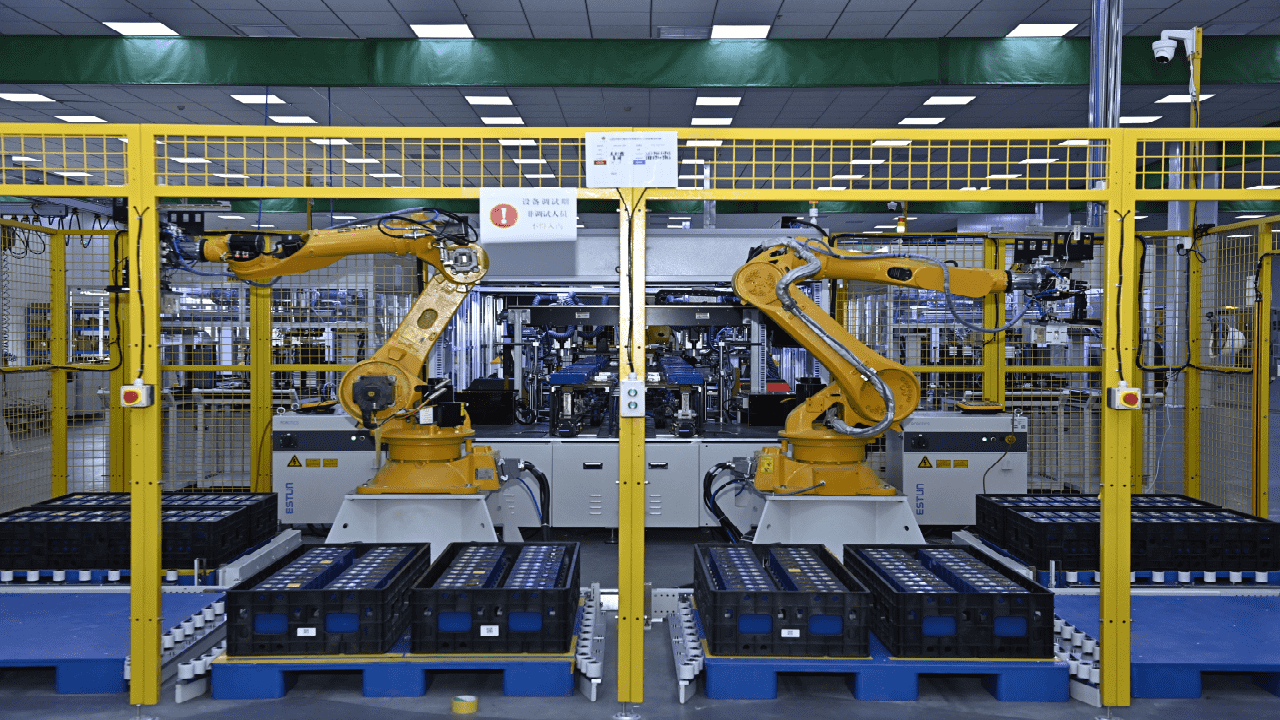
Core Viewpoint - The article highlights the rapid production and development of sodium-ion batteries by Huayang Group's subsidiary, Huana Xinneng, showcasing its innovative approach and successful transition into the new energy sector [1][3]. Group 1: Production and Demand - As of early 2026, Huana Xinneng has fully booked its orders, indicating strong demand for its sodium-ion batteries [3]. - The production facility utilizes automated robots to efficiently manufacture sodium-ion battery cells, which are set to be deployed across various applications, including emergency power sources and energy storage for buildings [1][3]. Group 2: Strategic Development - Huayang Group is implementing a "dual-wheel drive" development strategy, focusing on both traditional coal industries and new energy sectors, aiming for a unique transformation path [3][4]. - The establishment of the Huayang Group Industrial Technology Research Institute in January 2023 plays a crucial role in supporting the company's energy transition strategy [3][4]. Group 3: Research and Innovation - The research institute has developed a comprehensive research and industrial system, including three autonomous research branches and 29 related enterprises, focusing on sodium-ion batteries and other advanced materials [4]. - Huana Xinneng has successfully passed the first batch of national evaluations for sodium-ion battery products, gaining industry recognition for quality and performance [4]. Group 4: Application and Impact - The sodium-ion battery products are widely used in various fields, including electric bicycles, solar street lights, and large-scale energy storage systems, establishing a complete industrial chain from material development to application [4]. - A sodium-ion battery emergency power system has been successfully implemented in the Kaiyuan coal mine, providing a reliable and pollution-free power source, enhancing safety for miners [5].

冠军产品扩容:从67项到82项的滨州好品新答卷
Qi Lu Wan Bao· 2026-02-14 04:16
Core Insights - The number of champion products in Binzhou has increased from 67 to 82, with 19 of them being global champions, reflecting the city's industrial upgrade and the vitality of its market entities [1][13][14] Group 1: Champion Products and Market Position - Binzhou has achieved the top market share in various sectors, including electronic-grade hydrofluoric acid for advanced process logic chips, high-toughness lightweight aluminum alloy wheels, and wide-width cellulose fiber dyeing cloth [1][3] - The champion products are seen as a crucial benchmark for industrial competitiveness and a solid support for high-quality regional economic development [3][4] Group 2: Industrial Structure and Development - The 82 champion products span across 8 industries, with 51 from traditional sectors and 31 from emerging industries, enhancing the resilience and growth potential of Binzhou's modern industrial system [4][6] - Traditional industries like aluminum, high-end textiles, and chemicals continue to lead, while emerging sectors such as new energy and new materials are rapidly growing, indicating a robust industrial upgrade [6][10] Group 3: Innovation and Ecosystem - Binzhou has established a comprehensive innovation ecosystem that supports the entire chain of production, research, and development, facilitating the transformation of innovative results [7][9] - The city promotes a "Five Institutes, Ten Schools, N Bases" innovation consortium to address the challenges of isolated innovation efforts, ensuring seamless integration of research and industrial needs [7][12] Group 4: Future Growth and Strategy - By 2025, Binzhou aims to cultivate 240 provincial-level champion and specialized enterprises, maintaining the highest R&D investment intensity in the province for five consecutive years [9][14] - The city is transitioning from attracting resources based on cost advantages to leveraging value and ecological advantages, enhancing its industrial development dynamics [12][14]