
本地生活服务

Search documents
大众点评“必吃榜”境外上榜餐厅数量涨五成 明年将加速拓城出海
Zheng Quan Shi Bao Wang· 2025-11-11 11:30
Group 1 - The 2025 "Must-Eat List" by Dianping was launched in Dubai, featuring 10 restaurants from 8 different cuisines, reflecting the diversity of local food culture [1] - The number of restaurants on the list increased by 50% compared to last year, with nearly 60% of the featured restaurants being over 10 years old [1] - There has been a significant increase in interest in Dubai's cuisine in the Chinese market, with comment volume growth of 506.95%, note growth of 452%, and a 80% increase in search volume [1] Group 2 - Dianping's overseas business aims to enhance the coverage, accuracy, and timeliness of local life information, currently covering over 3,000 cities and nearly 1 billion merchants globally [2] - The company plans to invest at least 3 billion yuan over the next five years to upgrade its local life information infrastructure, focusing on information verification capabilities [2] - Since its establishment, Dianping has invested hundreds of billions in digitizing local physical world information and will accelerate its international expansion in this area [2]
大众点评的本质是真实的“本地生活赛博黄页”
乱翻书· 2025-11-11 07:54
Core Viewpoint - The article emphasizes that Dazhong Dianping is shifting its focus back to its core mission of building a comprehensive and accurate "cyber yellow pages" for local life, rather than merely being a content community or ranking platform [1][3][14]. Investment and Infrastructure - On November 5, Dazhong Dianping announced an investment of at least 3 billion over the next five years to upgrade its "local life information infrastructure," which will enhance its ability to verify information globally [1]. - The investment aims to establish a real-time digital replica of the physical world, ensuring accurate and timely information for users [1][10]. Importance of POI - Points of Interest (POI) are identified as the foundation of Dazhong Dianping's service, with content and rankings being secondary outcomes derived from accurate POI data [3][14]. - Accurate and timely POI information is crucial for user decision-making, as it serves as the basis for verifying the reliability of local businesses [7][9]. User Behavior and Trust - Users often engage in a "double-check" process, where they confirm information on Dazhong Dianping before making decisions, highlighting the platform's role in ensuring trust and reliability [3][9][14]. - The platform's long-standing commitment to maintaining accurate POI information has built a strong reputation for reliability, which is essential for user trust [9][14]. Challenges and Complexity - Maintaining a comprehensive and dynamic POI database is a complex and ongoing challenge, requiring significant resources and effort to ensure accuracy across millions of listings [10][17]. - The article notes that while many content platforms may not prioritize POI accuracy, Dazhong Dianping views it as essential to its business model and user experience [12][14]. Expansion of POI Boundaries - The investment will also focus on expanding the boundaries of POI to include not just commercial establishments but also parks, camping sites, and other recreational areas, enhancing the platform's utility for users [17][19]. - This expansion aligns with evolving user needs, as consumers seek inspiration for various activities beyond dining and lodging [17][19]. AI and Data Utilization - Dazhong Dianping plans to leverage AI models to enhance the efficiency of information verification and update processes, utilizing data from users, merchants, and delivery personnel [22]. - The structured nature of the POI data allows for innovative AI-driven content and decision-making tools, providing users with tailored recommendations based on their preferences [32].


消费两极化下,美团点评商家长效经营的“双循环”破局之道!
Sou Hu Cai Jing· 2025-11-09 17:12
Core Insights - The current consumer market is experiencing polarization, forcing merchants on platforms like Meituan to navigate between low-price competition and high-end offerings [1][2] - The key to achieving long-term profitability lies in balancing short-term growth with long-term brand building through a dual-cycle operational strategy [1][2] Short-term Cycle for New Stores - New or single stores should focus on creating a "quality + flow" positive cycle to quickly activate cash flow and build an initial customer base, rather than relying solely on price cuts [1] - Essential strategies include optimizing operational scores, refining quality group purchases, and designing targeted promotional activities to enhance competitiveness [1] - Utilizing a comprehensive marketing matrix, including live streaming and holiday promotions, can effectively capture high-intent customer traffic [1] Long-term Cycle for Established Stores - Established chain stores need to transition from merely fulfilling orders to building a brand, leveraging platform resources like exclusive member discounts and targeted customer recommendations [2] - By accumulating data assets through quality product offerings, stores can enhance their operational quality and gain more exposure during platform promotions [2] - This creates a growth flywheel of resource allocation, conversion accumulation, brand enhancement, and further resource acquisition [2] Overall Strategy for Merchants - The competition in Meituan's ecosystem is no longer just about marketing tools but about the ability to integrate various resources effectively [2] - Merchants are encouraged to embrace new scenarios and tools, using short-term cycles for immediate gains while establishing long-term brand barriers [2] - Finding a balance between cost-effectiveness and high quality is crucial for sustaining profitability in a polarized market [2]


Groupon(GRPN) - 2025 Q3 - Earnings Call Transcript
2025-11-07 14:00
Financial Data and Key Metrics Changes - Global billings grew 11% year over year, marking the second consecutive quarter of double-digit growth [3][4] - Adjusted EBITDA reached $18 million, exceeding expectations, while trailing 12 months free cash flow reached $60 million [4] - Marketing spend increased by 14% year over year, accounting for 37% of gross profit [46] Business Line Data and Key Metrics Changes - The core local category, which represents 89% of billings, grew 18% year over year, with North America local up 18% and international local (excluding Giftcloud) up 15% [4][5] - The "Things to do" segment experienced its seventh consecutive quarter of strong double-digit growth [5] Market Data and Key Metrics Changes - All four major international markets delivered a second consecutive quarter of double-digit growth [5] - Chicago has become the largest city for Groupon, growing at nearly double the rate of North America local overall [5] Company Strategy and Development Direction - The company aims to accelerate supply and growth towards a goal of over 20% billings growth while generating strong adjusted EBITDA and free cash flow [5][6] - There is a focus on building a hyperlocal experience marketplace that combines trust, curation, quality, and unbeatable value [6][7] Management's Comments on Operating Environment and Future Outlook - Management expressed confidence in the foundation being built for becoming a trusted destination for quality local experiences [6] - The company is optimistic about the impact of AI on sales processes and customer interactions, expecting to enhance lead generation and customer service [39][42] Other Important Information - The company is implementing a Customer Data Platform (CDP) to improve personalization and customer journey optimization [24][51] - Progress is being made on the Italian tax settlement, with a proposed settlement receiving several approvals [63] Q&A Session Summary Question: Growth in Chicago - Management confirmed that Chicago local billings are growing in the high 30s due to focused sales resources and a better understanding of the market [9][10] Question: Purchase Frequency Among New Cohorts - Management noted improvements in repurchase rates among new customers compared to previous cohorts, attributing this to ongoing technology enhancements [22][23] Question: Marketing Strategy Balance - The company plans to balance direct response marketing with brand advertising, with a focus on measuring ROI and adjusting budgets based on performance [26][27] Question: Impact of AI Initiatives - Management discussed the integration of AI in sales processes and customer service, expecting it to enhance conversion rates and customer interactions [39][42] Question: Travel Business Performance - The travel segment has seen growth due to partnerships with large enterprise brands and better offerings aligned with customer needs [55] Question: Italian Tax Settlement Update - The company is making progress on the Italian tax settlement, with a remaining amount owed of approximately $15 million [63]

追加30亿,大众点评要在AI幻觉里坚持「真实」
3 6 Ke· 2025-11-07 13:12
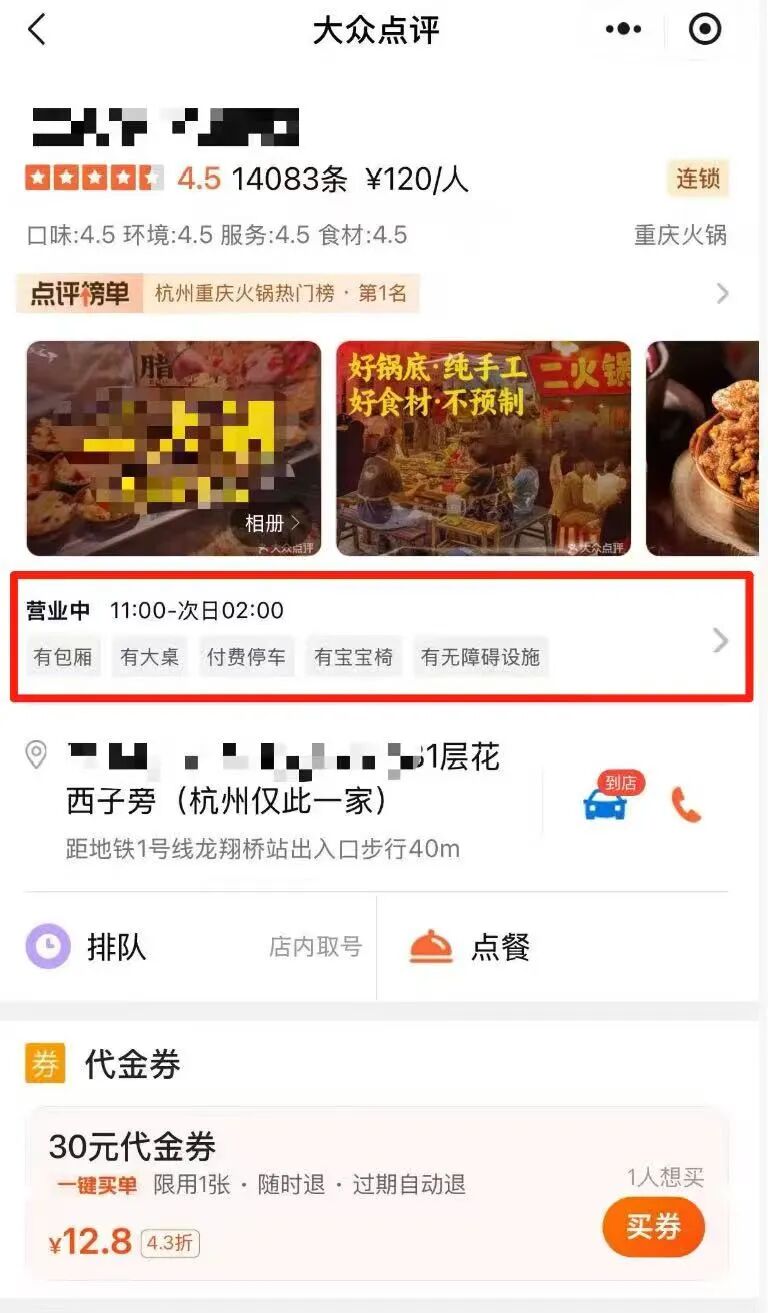
Core Viewpoint - The company, Dianping, announced a significant investment of at least 3 billion over the next five years to upgrade its "local life information infrastructure," focusing on enhancing information verification capabilities globally and developing a more efficient information calibration mechanism using its self-developed B-end large model [1][2]. Group 1: Investment and Strategy - The 3 billion investment will be directed towards two main areas: expanding information mining and verification capabilities in more global regions and building a more efficient information calibration mechanism [1][2]. - This investment reflects a long-term commitment to ensuring the "realness" of information, which is crucial in the current consumer landscape dominated by content seeding, live streaming, and algorithm-driven traffic [1][2]. Group 2: Importance of Accurate Information - Accurate and timely information about the physical world is essential for user decision-making, as consumers rely on basic information such as business hours and location when making choices [2][8]. - The accuracy of AI-generated recommendations is heavily dependent on the underlying information database's authenticity, highlighting the need for a robust information infrastructure [2][8]. Group 3: Complex System Behind Information Accuracy - The process of ensuring accurate basic information involves a complex system that includes data collection from various sources, including merchants, users, and delivery personnel [14][15]. - Dianping employs a dual verification mechanism combining AI and human review to ensure the accuracy of the information presented to users [15][16]. Group 4: Long-term Commitment to Information Infrastructure - The company has invested hundreds of billions since its inception to build a solid information infrastructure, which is a dynamic project requiring ongoing investment in technology, manpower, and resources [17][24]. - The long-term strategy emphasizes the importance of maintaining accurate, real-time data to enhance user trust and retention [19][20]. Group 5: Competitive Advantage - The extensive and deep accumulation of accurate information over two decades creates a significant competitive barrier that is difficult for others to replicate [19][20]. - The trust built through consistent delivery of accurate information fosters user habits that are hard to change, reinforcing Dianping's market position [20][25].

DoorDash Inc-A(DASH):增长再投资下短期利润略逊预期
HTSC· 2025-11-07 11:46
Investment Rating - The report maintains a "Buy" rating for DoorDash with a target price of $280.60 [6]. Core Insights - DoorDash reported a total gross order value (GOV) of $25.02 billion for Q3 2025, a year-over-year increase of 25.1%, exceeding consensus expectations by 1.9% [1]. - Revenue reached $3.45 billion, up 27.3% year-over-year, also surpassing expectations by 2.6%, driven by significant growth in monthly active users and improvements in average order value and frequency [1][2]. - GAAP net profit was $240 million, below the expected $290 million, while adjusted EBITDA was $750 million, a 42% year-over-year increase, aligning closely with expectations [1][3]. - The company anticipates a short-term profit pressure due to rising operational costs and planned reinvestments of several hundred million dollars in 2026, which are expected to benefit long-term growth [1][3]. Summary by Sections Performance Overview - In Q3 2025, DoorDash's order volume reached 776 million, a 21% year-over-year increase, exceeding expectations by 0.4% [2]. - The average order value (AOV) also surpassed expectations, contributing to the overall GOV exceeding forecasts [2]. Growth Drivers - Growth is driven by a resurgence in core categories, particularly in the U.S. restaurant sector, where GOV growth reached a three-year high [2]. - The international business is expanding robustly, with growth rates in several countries outpacing local competitors, and the integration of Deliveroo is expected to enhance scale and synergy [2]. Cost and Profitability - The increase in operational costs led to a GAAP net profit of $240 million, which was lower than the anticipated $290 million [3]. - The company’s expense ratio for Q3 2025 was 38.6%, higher than the expected 38.0%, primarily due to seasonal increases in rider costs and a higher proportion of low-margin international business [3]. Financial Projections - Revenue forecasts for 2025-2027 are adjusted to $13.76 billion, $17.34 billion, and $21.25 billion, reflecting increases of 4%, 8%, and 12% respectively [4]. - Adjusted EBITDA projections for the same period are revised to $2.8 billion, $3.7 billion, and $4.7 billion, with slight downward adjustments due to lower-than-expected Q4 guidance [4]. Valuation - The report suggests a valuation premium for DoorDash, switching to a 2026 valuation based on a 30x EV/EBITDA multiple, resulting in a target price of $280.60 [4].

为让你知道商家什么时候开门,大众点评竟然砸了上百亿了?
半佛仙人· 2025-11-07 07:54
Core Viewpoint - The article emphasizes the significant investment by Dazhong Dianping (大众点评) in enhancing the authenticity of local business information, with a commitment to invest 30 billion over the next five years to upgrade its "local life information infrastructure" [3][4]. Investment and Strategy - Dazhong Dianping has already invested hundreds of billions over the past 20 years in this area, focusing on solving the issue of the authenticity of offline store experiences [3][4]. - The company aims to ensure that the information users see matches the reality of the physical world, addressing the challenge of real-time changes in business operations [4][6]. Industry Context - The article discusses the shift in the industry from a lack of information to an overload of information, where the authenticity and timeliness of data have become critical user needs [6][10]. - Dazhong Dianping recognizes that the fundamental requirement is to filter out false information and provide users with reliable data to avoid wasting time and resources [10][11]. Data Collection and Verification - The company employs a multi-faceted approach to gather accurate information, relying on user feedback, merchant reports, and data from delivery riders, who provide timely and reliable updates on local businesses [10][11]. - The use of AI is highlighted, not as a gimmick, but as a means to logically correlate data to derive trustworthy conclusions, ensuring that the information provided is accurate and actionable [10][11]. Challenges and Value Proposition - The article outlines the immense difficulty in achieving this level of data accuracy, likening it to a significant barrier that, once overcome, could create a competitive advantage that is hard to replicate [11]. - Dazhong Dianping's commitment to this challenging path is seen as a reflection of its understanding of the true value of reliable local information, which is essential for users looking to minimize decision-making risks [11].

饿了么和淘宝闪购“同岗位”招聘
第一财经· 2025-11-05 12:38
Core Viewpoint - Alibaba is accelerating the integration of Taobao Flash Sale and Ele.me, as evidenced by the recent job postings for similar positions, indicating a strategic move towards unified marketing and operational strategies in the instant retail sector [3][7][8] Group 1: Job Postings and Responsibilities - New job postings for positions such as "BD Manager" and "Experience Interaction - Taobao Flash Sale" suggest a merging of responsibilities between Taobao Flash Sale and Ele.me, focusing on business cooperation and market strategy execution [3][5] - The job responsibilities include managing Taobao's flash sale business and Ele.me's business partnerships, highlighting a collaborative approach to market strategy [5][7] Group 2: Strategic Developments - Since the launch of Taobao Flash Sale on April 30, it has utilized Ele.me's logistics and delivery infrastructure, marking a significant strategic partnership in the instant retail space [7] - The recent branding changes, including the renaming of the Ele.me app to Taobao Flash Sale, indicate a deeper integration and potential rebranding strategy aimed at enhancing market presence [7][8] Group 3: Future Outlook - The future of Ele.me's integration into Taobao Flash Sale remains uncertain, but the recent developments suggest a strong ambition from Alibaba to dominate the instant retail market [8] - The introduction of a unified delivery outfit for riders from both platforms signifies a commitment to brand synergy and operational efficiency in the competitive landscape of instant retail [7][8]


大众点评升级“本地生活信息基建” 未来5年至少投入30亿
Xin Jing Bao· 2025-11-05 09:16
Core Insights - The company plans to invest at least 3 billion over the next five years to upgrade its "local life information infrastructure" [1][2] - The investment will enhance information verification capabilities globally and integrate AI models for better data calibration [1][2] - Accurate and timely local information is essential for improving user experience in online decision-making [1][2] Investment and Development - The additional 3 billion investment aims to further develop B-end AI models and improve product capabilities and operational mechanisms [2] - The company has already invested hundreds of billions since its inception to digitize physical world information for local life services [2] - The investment will accelerate the company's international expansion and enhance the accuracy and timeliness of local information [2] Operational Strategy - The company employs a multi-channel approach, combining AI and human efforts to dynamically update and calibrate information [2] - The "information infrastructure" encompasses data collection, processing, verification, and management across various commercial and non-commercial points of interest [2] - The role of "shopping experts" is part of a broader operational strategy to ensure timely updates of offline information [2]
大众点评升级“本地生活信息基建” ,未来5年至少投入30亿
Bei Ke Cai Jing· 2025-11-05 09:04
Core Viewpoint - Dazhong Dianping plans to invest at least 3 billion over the next five years to upgrade its "local life information infrastructure" to enhance information verification capabilities globally [1][2]. Group 1: Investment and Infrastructure - The investment will focus on establishing information verification capabilities in more regions worldwide, utilizing Meituan's self-developed B-end large model to build an information calibration mechanism [1]. - Dazhong Dianping has already invested hundreds of billions in digitizing physical world information since its inception, aiming to provide a model for "information infrastructure" in the local life sector [2]. Group 2: Information Accuracy and User Experience - Accurate and timely reflection of physical world information is essential for local life services, as consumers need reliable information about offline businesses, such as location and operating status [1][2]. - The platform's "information infrastructure" encompasses data collection, processing, verification, and management across various commercial and non-commercial points of interest [2]. Group 3: AI Integration and Challenges - The integration of AI and human resources is necessary to dynamically update and calibrate the rapidly changing and complex information of offline businesses [2]. - With the introduction of large models, user decision-making has become faster and more diverse, presenting new challenges for Dazhong Dianping's information services [3].