短剧

Search documents
中文在线全新短剧平台FlareFlow快速崛起 成海外短剧出海新样本
Zheng Quan Shi Bao Wang· 2025-08-25 08:48
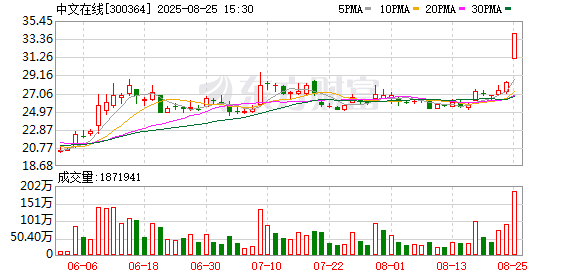
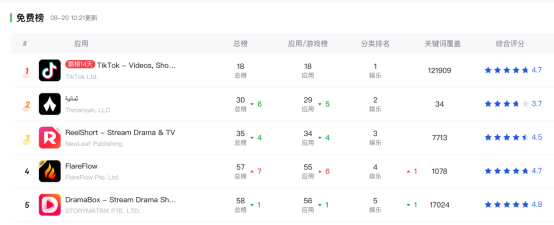
Core Viewpoint - The rapid rise of short dramas in the global market presents significant opportunities for Chinese digital content companies, with Chinese Online (中文在线) making notable advancements in this sector, particularly through its platform FlareFlow and its stake in Maple Leaf Interactive (枫叶互动) [2][3]. Group 1: Company Performance - Chinese Online's stock price reached a new high of 33.95 yuan, with a 20.01% increase, indicating strong market interest [2]. - Maple Leaf Interactive's core product, ReelShort, generated revenue of $384 million (approximately 2.76 billion yuan) in the first half of 2025, marking a 270% year-on-year increase and securing the top position in the global overseas revenue market for short dramas [2]. Group 2: FlareFlow Platform Growth - FlareFlow, launched in late April 2025, has shown significant growth, nearing 10 million downloads and generating approximately $20 million in user recharge within three months [4]. - The platform ranked 4th on the iOS free chart in the U.S. as of August 20, 2025, reflecting its increasing market influence [4]. Group 3: Content Strategy and Audience Engagement - FlareFlow has aggregated over 1,700 short dramas, with a focus on content that resonates with women aged 20-35, emphasizing emotional storytelling [6]. - Users are reportedly watching an average of 22 short dramas daily, with strong retention and payment metrics [6]. Group 4: Advertising and Market Strategy - FlareFlow employs a "long material direct investment" strategy, directly distributing complete episodes and utilizing multilingual content to reach a global audience, significantly improving advertising conversion rates [7]. - Key growth markets include North America, Europe, and Southeast Asia, where the platform's material strategy has proven effective [7]. Group 5: AI Integration and Cost Efficiency - The rapid growth of FlareFlow is closely linked to Chinese Online's strategic investments in AI, enhancing various aspects of content creation and distribution, leading to a 70% reduction in production cycles and significant cost savings [8]. Group 6: Industry Trends and Future Directions - FlareFlow represents not just a successful product but also a potential future direction for the short drama industry, with plans for differentiated strategies in Arabic, Spanish, and Portuguese markets [9]. - The platform aims to enrich its community ecosystem by incorporating user-generated content and collaborating with over ten overseas production companies, enhancing its global content supply chain [9].


中文在线全新短剧平台FlareFlow快速崛起,成海外短剧出海新样本
Zheng Quan Shi Bao Wang· 2025-08-25 08:46
Core Viewpoint - The rapid rise of short dramas in the global market presents significant opportunities for Chinese digital content companies, with Chinese Online leading the charge through its innovative platform FlareFlow and its stake in CMS, which has achieved remarkable revenue growth in the overseas short drama sector [1][2]. Company Summary - Chinese Online's stock surged to a new high of 33.95 yuan, reflecting strong market interest and expectations [1]. - The company has launched FlareFlow, a new short drama platform that has quickly gained traction, and its affiliate CMS reported a revenue of $384 million (approximately 2.76 billion yuan) in the first half of 2025, marking a 270% year-on-year increase [1][2]. - FlareFlow has accumulated nearly 10 million downloads and generated close to $20 million in user recharge within three months of its launch [3]. Industry Summary - The overseas short drama market is experiencing rapid growth, driven by the successful replication and localization of domestic short drama models, which have proven their viability and strong market appeal [2]. - FlareFlow has positioned itself as a key player in the international short drama landscape, with a focus on female audiences aged 20-35 and a content strategy that emphasizes emotional engagement [4][8]. - The platform has aggregated over 1,700 short dramas, achieving high user engagement with an average of 22 episodes watched per day [4][8]. - AI technology plays a crucial role in FlareFlow's operations, enhancing content creation and distribution efficiency, significantly reducing production costs and time [7]. - The short drama industry is entering a phase of refined competition, with a focus on high-quality content supply as a key to success [8].
借“泛娱乐”出海,中国短剧面临制作成本挑战
Sou Hu Cai Jing· 2025-08-24 13:15
Core Insights - The short drama market in China is rapidly gaining traction overseas, becoming a new highlight for cultural export, with significant growth in both revenue and downloads projected for 2025 [1][2] - The global short drama app in-app purchase revenue is expected to approach $700 million in Q1 2025, nearly quadrupling from Q1 2024, while downloads are projected to exceed 370 million, a 6.2-fold increase from the previous year [1] - The overseas success of short dramas is attributed to both macroeconomic factors, such as China's rising global influence, and the micro-level appeal of short dramas' fast-paced storytelling [2] Industry Trends - The micro short drama market is anticipated to reach a size of $36 billion in the overseas market [1] - The industry is transitioning from viewing short dramas as mere audiovisual "products" to recognizing them as "works," leading to changes in production methods and business models [3] - The push for quality and professionalism in short dramas is becoming more pronounced, with a focus on emotional resonance and innovative storytelling [3] Production Challenges - The production of short dramas overseas faces challenges such as actor accents and content selection, which require a dedicated and adaptable core team to address [2] - The cost of producing short dramas has significantly increased, with production costs rising from approximately $100,000 in June 2022 to around $250,000-$300,000 currently, reflecting market competition pressures [3] Future Outlook - Short dramas are envisioned as a powerful standard container that could evolve into an integrated leisure entertainment platform, offering not just short dramas but also variety shows and competitions [4] - The industry is expected to continue innovating despite the high failure rate of new content, with a recognition that around 80% of new themes may not succeed [3]
正道集团(01188.HK)预计中期由亏转盈
Ge Long Hui· 2025-08-22 12:36
Core Viewpoint - The company expects to report a net profit attributable to shareholders ranging from approximately HKD 0.1 million to HKD 0.5 million for the six months ending June 30, 2025, a significant turnaround from a net loss of approximately HKD 5.8 million in the same period of 2024 [1] Group 1 - The expected shift from net loss to net profit is primarily due to the recovery in revenue from the in-car audio and short video business, as well as the battery management system and spare parts [1] - Administrative expenses during the reporting period are anticipated to decrease, contributing to the improved financial outlook [1]
破圈·跨海:中国文化出海的新坐标
36氪· 2025-08-20 09:31
Core Viewpoint - The article emphasizes the accelerated trend of cultural export from China, showcasing how Chinese cultural products are gaining global recognition and acceptance, moving beyond domestic popularity to become integral to international consumer choices [2][10]. Group 1: Cultural Export Trends - Over the past year, cultural exports have evolved from individual hits to a collective effort across multiple sectors, indicating a more mature approach to global markets [2]. - The global consumer landscape is shifting towards value-driven choices, with a focus on cultural identity and emotional resonance rather than just price [4]. - The emergence of Generation Z and Alpha as key consumer groups is driving a demand for diverse cultural content, making cultural export a competitive core rather than an ancillary attribute [4]. Group 2: Characteristics of Successful Brands - Successful Chinese brands in the global market share three common traits: high recognition cultural symbols, the ability to link product functionality with emotional value, and flexible market adaptation capabilities [4][5]. - The gaming, short drama, and new consumption sectors are highlighted as particularly active areas for cultural export, utilizing localized narratives and emotional storytelling to integrate Chinese elements into local cultures [5]. Group 3: Strategic Approaches for Cultural Export - A multi-threaded, sustainable strategic approach is necessary for cultural export, moving away from a single-threaded model that focuses solely on viral hits [8]. - Continuous shaping of cultural symbols is essential, integrating products, stories, and social media into a cohesive narrative that can be recognized across different markets [8][9]. - Dynamic adaptation of channels and scenarios is crucial, as consumer touchpoints vary significantly across regions, necessitating real-time adjustments to distribution strategies [9]. Group 4: Upcoming Events and Initiatives - The upcoming cultural exchange event in Nanning on September 18, organized by 36Kr, aims to gather industry leaders to discuss new paths, challenges, and opportunities for Chinese culture in the global market [10][12]. - The event will focus on various sectors including gaming, new consumption, and short dramas, highlighting the importance of collaboration and shared insights among industry players [14][15].
从 ReelShort 看中国短剧出海:创新驱动下的全球突围
新华网财经· 2025-08-20 06:59
Core Viewpoint - The article highlights the rapid rise of short dramas in overseas markets, particularly emphasizing the role of Crazy Maple Studio as a pioneer in this field, creating numerous successful works since launching its global short drama app in 2022 [1][4]. Group 1: Market Dynamics - Short dramas are gaining popularity as a new form of leisure, driven by both macro and micro factors, with the strength of the country being a fundamental reason for their overseas success [5]. - The fast-paced storytelling of short dramas appeals to global audiences, contributing to their rising popularity [5]. - Crazy Maple Studio's platform, ReelShort, focuses on local production by collaborating with local teams in the U.S. to ensure cultural relevance [5]. Group 2: Production Challenges - The company faces challenges such as actor accents and content selection during overseas production, which are addressed through a dedicated and learning-oriented core team [6]. - The team has successfully launched a hit series, "The Double Life of My Billionaire Husband," through continuous learning and adaptation [6]. Group 3: Industry Evolution - The short drama industry is transitioning from a focus on audiovisual "products" to "works," with a shift towards high-quality, professional, and standardized production [8]. - The concept of "quality" in short dramas is defined by emotional resonance and narrative coherence rather than just production values [8]. Group 4: Cost and Innovation - Production costs for short dramas have increased significantly, from approximately $100,000 in June 2022 to around $250,000 to $300,000 now, reflecting market competition [9]. - The company acknowledges the challenges of content innovation, with a high failure rate for new themes, but remains committed to pursuing innovative ideas [9]. Group 5: Future Outlook - The global market for micro short dramas is projected to reach $36 billion, indicating substantial growth potential [10]. - The company emphasizes the need for collaboration across the industry to ensure sustainable development and high-quality content [10]. - There is a significant untapped audience for short dramas, with current overlap with Netflix users being less than 1%, suggesting room for growth [11]. - The future vision includes evolving the short drama app into a comprehensive entertainment platform that offers various forms of leisure content [11].

从 ReelShort 看中国短剧出海:创新驱动下的全球突围
Xin Hua Wang· 2025-08-20 06:24
Core Viewpoint - Chinese short dramas have emerged as a new highlight in cultural exports, with Crazy Maple Studio leading the way since launching its global short drama app in 2022, achieving multiple industry "firsts" and creating popular works that have garnered widespread attention [1][3]. Group 1: Market Dynamics - The rapid rise of short dramas overseas is attributed to both macro and micro factors, with the strength of the country being a fundamental reason for the increased global interest in local stories and expressions [4][6]. - The unique characteristics of short dramas, such as their fast-paced storytelling, have made them increasingly appealing to global audiences [4][6]. - Crazy Maple Studio's platform, ReelShort, has adopted a "local production" strategy since 2023, collaborating with local teams to ensure content resonates with local cultural contexts [4][6]. Group 2: Production Challenges and Innovations - The company faces challenges in overseas production, including issues related to actor accents and content selection, which require a dedicated and adaptable core team to address [5][6]. - The production costs for short dramas have significantly increased, from approximately $100,000 in June 2022 to around $250,000 to $300,000 currently, reflecting the competitive market landscape [5][6]. - Despite the challenges, the company remains committed to innovation, recognizing that content creation is inherently difficult and that many attempts may fail [6][7]. Group 3: Industry Trends and Future Outlook - The short drama industry is transitioning from a focus on audiovisual "products" to "works," driven by external management and internal development logic, leading to a more refined and professional approach [5][6]. - The future of the micro short drama market is promising, with projections indicating it could reach a scale of $36 billion [7]. - The company emphasizes the need for collaboration across the industry to ensure sustainable development and high-quality content, as the market expands and audience expectations rise [7][8].

小鱼盈通涨超4% 拟投资浙江出海数字技术 扩展短剧业务
Zhi Tong Cai Jing· 2025-08-19 03:45
Core Viewpoint - Company Xiaoyu Yingtong (00139) has seen a stock price increase of over 4%, currently trading at 0.023 HKD, with a transaction volume of 3.8266 million HKD, following the announcement of a memorandum of understanding with Zhejiang Chuhai Digital Technology Co., Ltd. for potential investment opportunities in the rapidly growing short video industry [1]. Group 1 - Xiaoyu Yingtong's stock price rose by 4.55% to 0.023 HKD, with a trading volume of 3.8266 million HKD [1]. - The company signed a memorandum of understanding on August 18 with Zhejiang Chuhai Digital Technology Co., Ltd. for potential investment, including but not limited to acquiring equity in the target company [1]. - The board of directors is actively seeking opportunities to expand the group's business scope, identifying the target company as having development prospects and growth potential in the fast-growing short video industry [1].
港股异动 | 小鱼盈通(00139)涨超4% 拟投资浙江出海数字技术 扩展短剧业务
智通财经网· 2025-08-19 03:44
Group 1 - The core point of the article is that Xiaoyu Yingtong (00139) has seen a stock price increase of over 4%, currently trading at 0.023 HKD with a transaction volume of 3.8266 million HKD [1] - Xiaoyu Yingtong announced a memorandum of understanding with Zhejiang Chuhai Digital Technology Co., Ltd. on August 18, indicating plans for potential investment, including but not limited to acquiring equity in the target company [1] - The announcement highlights that the board is actively seeking opportunities to expand the group's business scope, believing that the target company has growth potential in the rapidly developing short video industry [1]
红果自制剧首场编剧沙龙在杭举办,共探短剧创作之道
Sou Hu Cai Jing· 2025-08-19 03:00
Core Insights - The short drama industry is transitioning from rapid growth to a focus on quality, facing challenges such as content homogenization and a lack of support for emerging writers [3][5][12] Group 1: Industry Transition - The short drama sector has experienced rapid growth due to its strong emotional appeal and tight pacing, but is now entering a "refined era" centered on quality [3] - Challenges include content sameness, difficulty in creative differentiation, and a lack of pathways for writer development, leading to common struggles among creators [3][5] Group 2: Policy Interpretation - The newly upgraded script collaboration incentive policy aims to support writers through resource allocation and institutional guarantees, fostering a sustainable creative ecosystem [5][7] - Special support plans for writer studios are introduced to help new writers enter the industry and grow, promoting a cycle of individual growth and industry prosperity [5][7] Group 3: Trend Sharing - Future script trends emphasize emotional storytelling, strong plot points, and a balance of innovation and logic in setting and plot [8] - Industry representatives suggest that writers should focus on innovative themes that align with the fast-paced, conflict-driven nature of vertical short dramas [9] Group 4: Practical Insights - The importance of content quality is highlighted, with recommendations to refine pacing, emotional intensity, and character development to ensure audience engagement [9][11] - Emphasis is placed on understanding market data and production costs to create scripts that are both appealing and feasible for production [9][11] Group 5: Future Collaboration - The event facilitated deep exchanges among over a hundred writers and industry guests, aiming to address creative challenges and enhance collaboration [12] - The company plans to maintain an open platform for ongoing dialogue among creators, focusing on industry pain points and resource integration to better align with market demands [12]