无人机

Search documents
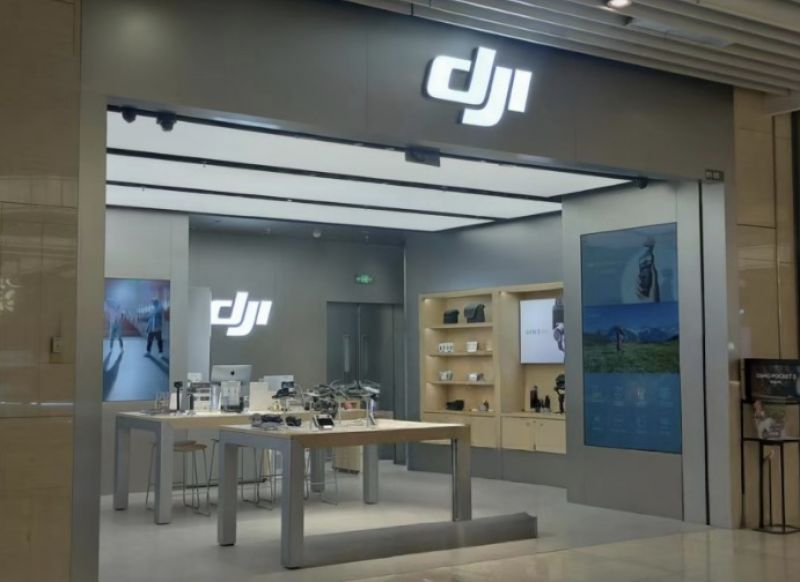
“空中焦虑”从天空杀向客厅!无人机“围城”吃紧,大疆“地面”增多线战事
Hua Xia Shi Bao· 2025-08-07 06:51
Core Viewpoint - DJI has officially entered the vacuum cleaner market with the launch of its first cleaning robot, priced starting at 4699 yuan, which aligns with industry expectations. The success of this product will depend on its market performance and consumer reception [1][2]. Group 1: Market Entry and Product Details - DJI's new product is a sweeping and mopping robot, not just a vacuum cleaner, reflecting current consumer preferences for multifunctional cleaning devices [2]. - The pricing strategy positions DJI's product in the high-end segment, consistent with its brand image [2]. - The company has been developing this product since 2020, indicating a long research and development cycle of over five years [5]. Group 2: Competitive Landscape - The global smart vacuum cleaner market saw shipments of 5.096 million units in Q1 2025, with a year-on-year growth of 11.9%. The top five manufacturers hold a combined market share of 63.4% [4]. - DJI's main competitors in the vacuum cleaner market include domestic brands such as Roborock, Ecovacs, and others, alongside iRobot [5]. - The vacuum cleaner market in China is characterized as a "red ocean," with intense competition and price wars among leading brands [5]. Group 3: Strategic Rationale - DJI's expansion into the vacuum cleaner market is part of a broader strategy to diversify its business and mitigate risks associated with the drone industry, which faces regulatory challenges and market saturation [1][8]. - The company aims to leverage its technological advantages from the drone sector, such as SLAM path planning and multi-sensor obstacle avoidance, to enhance the performance of its vacuum cleaner [7]. - The entry into this market is seen as a natural extension of DJI's capabilities, aiming to meet evolving consumer demands for smarter and more efficient home cleaning solutions [6][7]. Group 4: Industry Trends and Future Outlook - The demand for vacuum cleaners is expected to grow, with the global market maintaining double-digit growth rates and a low penetration rate in China, indicating significant potential for expansion [6]. - Despite the potential, experts caution that the adoption of cleaning appliances in China may not reach the same levels as other household appliances due to their non-essential nature [6]. - DJI's strategic moves reflect a response to increasing competition in the drone market, particularly from new entrants like Yingshi Innovation, which has also announced plans to enter the drone sector [11][12].

关于低空经济无人机产业相关公司的架构搭建与发展模式探索(仅供参考)
Sou Hu Cai Jing· 2025-08-07 04:44
Company Structure - The board of directors is the highest decision-making body responsible for strategic planning, major investment decisions, and appointing senior management, comprising industry experts, seasoned entrepreneurs, and investor representatives to ensure scientific and forward-looking decisions [3] - The management team, consisting of a general manager and deputy general managers, is responsible for daily operations, executing board decisions, and coordinating departmental work [3] - Functional departments include: - General Affairs Department: Manages administrative tasks, human resources, and logistics support [4] - Finance Department: Handles financial management, risk control, budgeting, and financial reporting [4][9] - Marketing Department: Conducts market research, develops marketing strategies, and enhances brand awareness [4][9] - Technology R&D Department: Focuses on research and innovation in low-altitude economy technologies [4][9] - Operations Department: Manages specific business operations, including drone leasing and low-altitude flight services [4][9] - Safety Management Department: Ensures safety in low-altitude flight activities through safety checks and training [5] - Legal Department: Manages legal affairs, including contract review and intellectual property protection [6] Development Model - Business areas include: - Drone R&D and manufacturing, focusing on high-performance drones for various industries [11] - Low-altitude flight services, offering drone leasing and customized flight solutions [11] - Low-altitude infrastructure construction, collaborating with local governments for hardware support [11][12] - Low-altitude data services, utilizing drone-collected data for analysis and commercial applications [11] - Cooperation models involve: - Industry-academia-research collaboration to enhance technology and talent development [12] - Industry alliance cooperation to share resources and enhance competitiveness [12] - Government-enterprise cooperation to align with local low-altitude economic development plans [12] Market Expansion - Regional expansion focuses on establishing business bases in economically developed areas with favorable low-altitude policies, such as the Pearl River Delta and Yangtze River Delta [13] - Industry expansion targets high-demand sectors like logistics and agriculture, leveraging successful case studies for broader market penetration [13] Profit Model - Revenue generation through product sales of self-developed drones and related equipment [15] - Service fees from drone leasing, flight training, and data services [15] - Government subsidies and rewards for low-altitude economy enterprises [15] - Revenue sharing from collaborative projects based on partnership agreements [15]
深圳参与制定三千余项国际标准
Xin Lang Cai Jing· 2025-08-07 04:12
Group 1 - The core viewpoint of the article highlights the success of innovative companies in Shenzhen, such as Huawei, BYD, and DJI, which excel in both domestic and international markets due to their involvement in international standards [1] Group 2 - As of the end of 2024, Shenzhen's enterprises and institutions have participated in the development of a total of 3,379 international standards, primarily in emerging industries like photovoltaics, drones, genetic testing, and graphene [1]
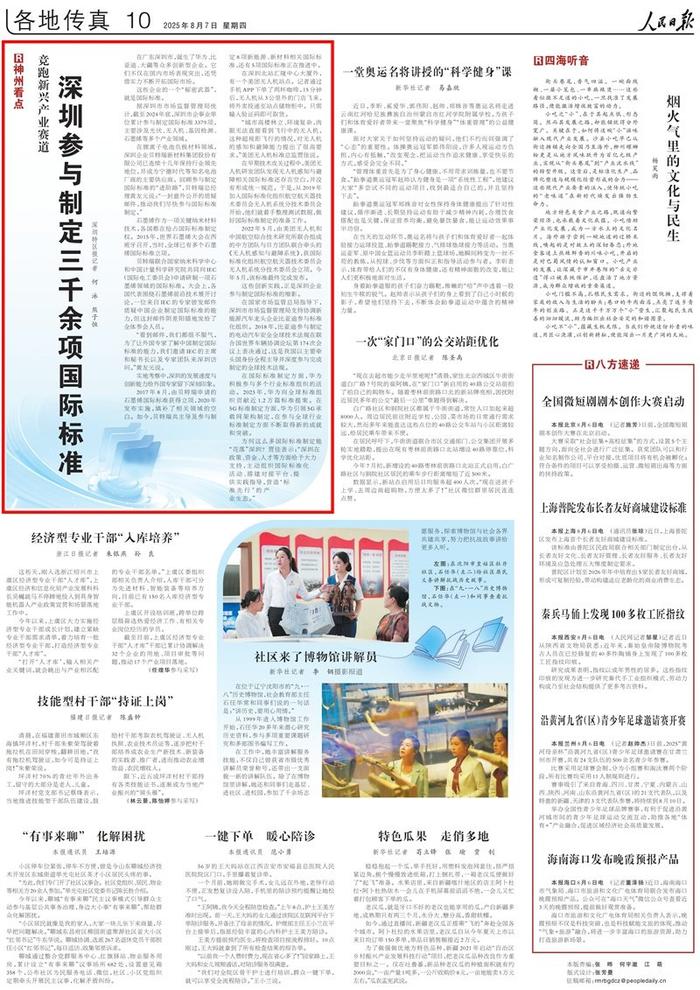
深圳参与制定3000余项国际标准
Ren Min Wang· 2025-08-07 02:13
Core Viewpoint - Shenzhen has become a hub for innovative companies like Huawei, BYD, and DJI, excelling in both domestic and international markets through active participation in the formulation of international standards [20][21]. Group 1: International Standards Participation - As of the end of 2024, Shenzhen enterprises have participated in the formulation of 3,379 international standards, covering various industries such as photovoltaics, drones, gene testing, and graphene [20]. - The company BetterRay has maintained a leading position in the lithium-ion battery anode material sector for over a decade and is a major supplier to well-known battery manufacturers like CATL [20]. - BetterRay's involvement in international standard formulation was catalyzed by a critical email that prompted them to engage in the process [20][21]. Group 2: Technological Innovations - The graphene international standard initiated by BetterRay was officially established in 2017 and filled a significant gap in the field [22]. - Meituan's drone delivery service exemplifies the need for advanced perception and obstacle avoidance capabilities in complex urban environments, leading to the establishment of international standards in this area [22][23]. - The international standard for drone perception and obstacle avoidance systems was officially published in May 2023, following collaborative efforts between Chinese and Japanese teams [23]. Group 3: Supportive Ecosystem - Shenzhen's success in international standard formulation is attributed to strong support in policies, funding, and talent, fostering an ecosystem that prioritizes standards [25]. - BYD's participation in the global technical regulations for electric vehicle safety was recognized at the United Nations World Forum, showcasing China's leadership in international standardization [24]. - Huawei contributed nearly 12,000 standard proposals to global standard organizations in 2023, demonstrating its active role in shaping industry standards [24].

大疆跨界扫地机器人:堆料足但难出头,背后藏着更大的野心
Tai Mei Ti A P P· 2025-08-07 02:01
Core Viewpoint - DJI has entered the vacuum cleaner market with its ROMO series, leveraging its expertise in drone technology, but faces challenges in competing with established brands due to pricing and product performance issues [2][4][12]. Group 1: Market Context - The global smart vacuum cleaner market shipped 5.096 million units, showing a year-on-year growth of 11.9%, with the top five manufacturers holding a 63.4% market share, an increase of 3.5% from the previous year [4]. - The vacuum cleaner market has a low penetration rate compared to traditional home appliances, indicating significant growth potential [12]. - The top five brands in the market, including Ecovacs and Xiaomi, dominate over 90% of the market share, highlighting the competitive landscape [12]. Group 2: Product Features and Performance - The ROMO series features a transparent design that reflects DJI's industrial aesthetics and includes advanced obstacle avoidance technology, utilizing dual fisheye vision sensors and solid-state LiDAR [5][7]. - Despite its strong design and technology, the ROMO series is criticized for its cleaning capabilities, using a disc mop system rather than more advanced options like roller mops, which are common in mid-to-high-end products [9][15]. - Initial sales figures indicate strong consumer interest, with over 2,000 units sold on JD.com and more than 1,000 on Taobao, leading to some versions being sold out [9][20]. Group 3: Strategic Intent and Future Aspirations - DJI's entry into the vacuum cleaner market is seen as a strategic move to diversify its product offerings, with potential future developments in humanoid robots hinted at [3][17]. - The company has been planning this move since 2020, indicating a long-term strategy rather than a spontaneous decision [14]. - The integration of advanced technologies from its drone expertise into household products is viewed as a potential advantage, but the company must overcome significant marketing and competitive challenges in this new sector [15][16].


千余家企业将抱团出海拓市场 市商务委等将组织企业参加101个海外展会 提升订单量及品牌国际曝光度
Jie Fang Ri Bao· 2025-08-07 01:57
Group 1 - The core viewpoint is that participating in overseas exhibitions is a crucial strategy for companies to expand markets and secure orders, and it is a key focus of China's stable foreign trade policy [1][2] - Shanghai plans to organize 1,388 companies to participate in 101 overseas exhibitions in the second half of the year, covering an exhibition area of 15,000 square meters [1] - The overseas exhibitions will focus on key industries such as high-end manufacturing, digital economy, biomedicine, green energy, as well as traditional foreign trade sectors like light industry products, textiles, machinery, building materials, food, and automotive parts [1] Group 2 - The Shanghai Municipal Commission of Commerce has established a mechanism for organizing companies to participate in overseas exhibitions and has released a recommended directory for 200 overseas exhibitions in 2025, covering key foreign trade sectors [2] - In the first half of the year, Shanghai organized 445 companies to participate in 104 recommended overseas exhibitions, with a total exhibition area of 6,157 square meters [2] - Support is provided for exhibition fees for participating companies, including those not listed in the recommended directory, with over 1,400 companies receiving funding for international market expansion [2]
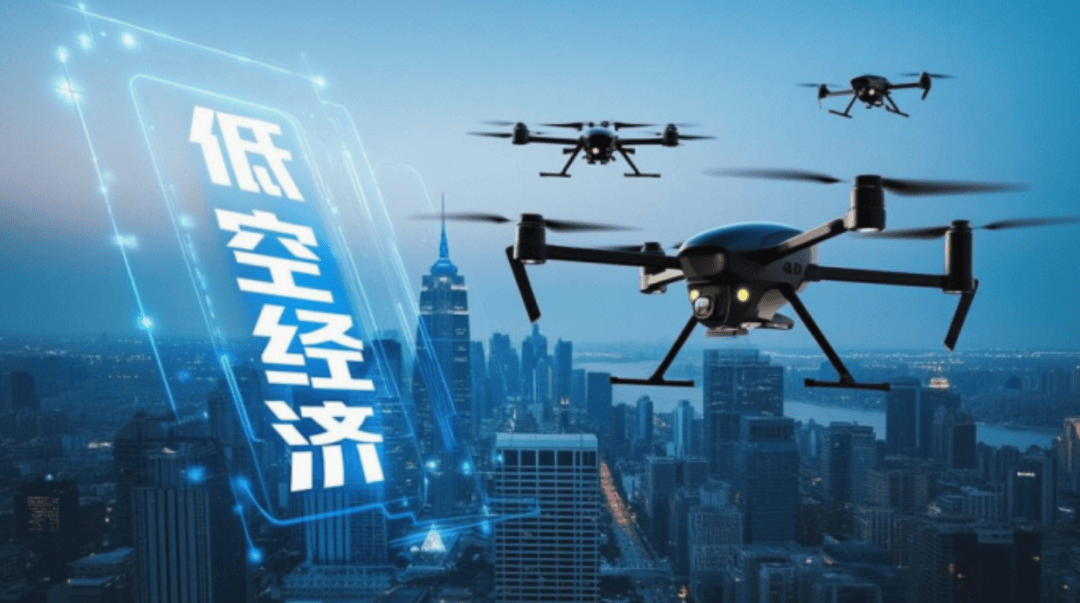
低空经济,正在快速起飞
Huan Qiu Wang· 2025-08-07 01:33
Core Insights - The National Development and Reform Commission (NDRC) is promoting the high-quality development of the low-altitude economy, emphasizing a principle of localized development and prioritizing safety [1][4] - The low-altitude economy is recognized as a significant growth point for China's economy, with a broad development outlook supported by both policy and market forces [4][6] Policy and Market Support - Recent policies have led to the issuance of 110 regulations related to the low-altitude economy by Q2 2025, covering various aspects such as airspace management and infrastructure development [4] - The introduction of special bonds for the low-altitude economy is seen as an innovative financing tool for local governments, addressing the challenges of high initial investment and long return cycles in emerging industries [3][6] Industry Structure - The low-altitude economy encompasses a long industrial chain, covering nearly 20 industries and over 300 application scenarios, divided into upstream, midstream, and downstream sectors [4] - Upstream focuses on infrastructure, including aircraft development and energy solutions; midstream involves aircraft operation and services; downstream caters to consumer needs with applications like aerial tourism and logistics [4] Market Growth and Projections - The low-altitude economy market is projected to reach 1.5 trillion RMB by 2025, with an expected annual growth rate of 15% to 20% over the next decade [6][8] - The number of low-altitude economy-related enterprises in China surpassed 86,500 by May 2025, with a significant increase in new registrations [6][8] Investment Trends - The low-altitude economy has become a hot spot in the primary market, with 52 investment cases in the first half of 2025, reflecting a 48.6% year-on-year increase [7] - New low-altitude economy industry funds established in 2025 exceeded 14, with a total amount exceeding 50 billion RMB [7] Technological Advancements - Significant technological breakthroughs have been achieved in the low-altitude economy, including the development of hydrogen-powered drones and advanced logistics drones [8] - A multi-level talent training system is being established, with 55 universities involved in low-altitude economy talent cultivation by July 2025 [8] Strategic Recommendations - The low-altitude economy is experiencing a comprehensive implementation from macro-level national planning to micro-level local subsidies and infrastructure projects, suggesting a positive outlook for related sectors [9]
长沙低空经济规模今年将破500亿元
Chang Sha Wan Bao· 2025-08-07 01:31
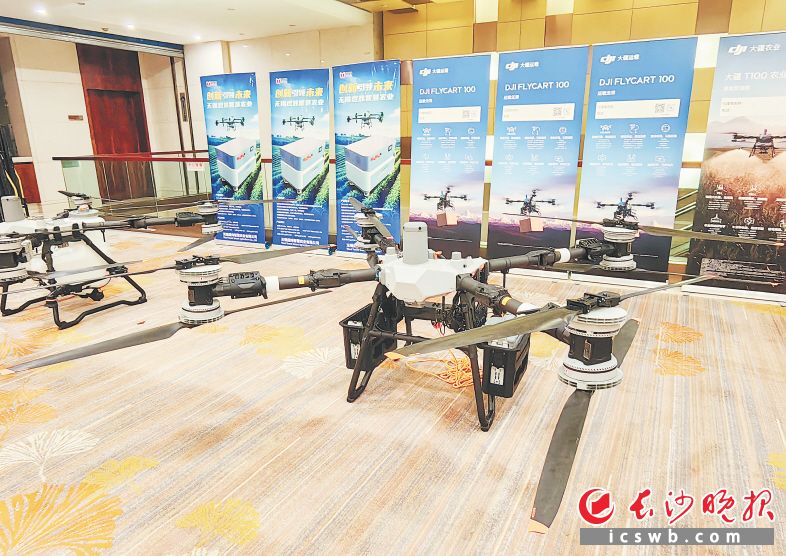
在大会现场获悉,作为全国首个全域低空管理改革试点省份,湖南建成覆盖全省的"1+13+N"低空飞行服务保障 体系,实现低空通信、导航、监视和飞行服务"一张网"运行。同时,凭借制度创新、产业集群与场景拓展等多 维优势,湖南率先构建低空经济"湖南模式",有效推动空域资源利用率提升30%。 大会现场,大疆发布新型运载无人机。 2025年湖南省低空经济总产值预计突破1600亿元,其中长沙低空经济规模将突破500亿元。8月6日,湖南省2025 空域生产力创新大会暨大疆FC100新品发布会在长沙举行。本次大会以"智载未来·低空启航"为主题,汇聚政、 产、学、研、用各界代表逾千人,共同探讨低空经济高质量发展新路径,见证中国无人机技术的最新突破。 湖南率先构建低空经济"湖南模式" 城市低空经济"链接力"指数居全国第12位。湖南省低空经济协会监事长罗旭新介绍,2025年长沙低空经济规模 将突破500亿元,规模以上企业将达到20家,一批龙头企业正在加速崛起。一个集研发设计、零部件制造、整机 制造、运营服务的完整产业链条,正在长沙加速成型。 此外,湖南湘江通用航空产业投资基金合伙企业(有限合伙)于近日顺利通过中国证券投资基金业协会备 ...
【西咸新区】新增109平方公里低空空域使用权
Shan Xi Ri Bao· 2025-08-06 23:54
沣西新城管委会相关负责人介绍,沣西新城坚持"空域+产业+服务"三向发力,构建了较为完善的 飞行安全保障体系与产业生态体系,集聚无人机产业链企业50多家,初步形成"基础研究—研发制造— 行业应用—服务保障"全生态闭环,有效激活了域内无人机研发制造、培训教育、低空应用等产业发 展,为低空经济高质量发展作出了积极贡献。(记者:沈谦) 8月5日,记者从西咸新区沣西新城管委会获悉:日前,位于沣西新城的陕西沣西科创发展有限公司 授权获批109平方公里、真高300米以下的低空空域使用权,标志着西咸新区新增109平方公里低空空域 使用权,将为秦创原无人机产业创新聚集区建设提供有力支持。 该空域范围东起沣河沿岸、西至西部科技创新港西侧、南到临兴高速沣京服务区、北临尚业路与沣 柳路交叉处,是目前西咸新区范围内获批整体范围最大、高度最高的低空飞行空域,基本覆盖沣西新城 所有适飞区域,包括城区、村镇、景区、农田、河道等场景,将为飞行企业开展研发试制、检测验证、 试验飞行、适航服务、飞手培训、场景应用等业务提供有力支持。 ...
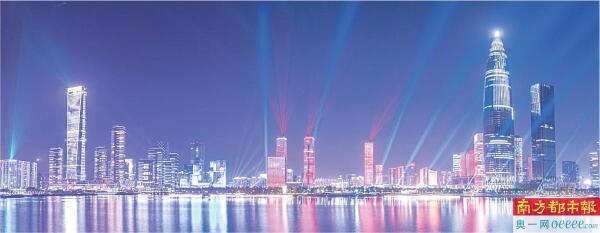
南山区九连冠
Nan Fang Du Shi Bao· 2025-08-06 23:13
Core Insights - Nanshan District in Shenzhen has 19 global unicorn companies across 15 cutting-edge sectors, showcasing its economic vitality and innovation capacity [2][3] Economic Performance - Nanshan's GDP reached 950.97 billion yuan in 2024, nearly matching Dalian's total GDP, and the district is on track to enter the "trillion yuan club" with a 4.8% growth rate in the first half of 2025 [2] - The district boasts a GDP density of over 5 billion yuan per square kilometer, with secondary and tertiary industries growing at 5.3% and 4.7% respectively, indicating a dual-driven model of high-tech industries and modern services [2] Innovation and R&D - Nanshan's R&D investment intensity stands at 7.66%, nearly three times the national average, reflecting its strong innovation ecosystem [3] - The emergence of 19 unicorns has transformed Nanshan's innovation landscape from isolated breakthroughs to a cluster explosion, particularly in hard technology sectors [3] Ecosystem and Talent Development - Nanshan's self-sustaining ecological cycle in innovation is supported by research platforms like Pengcheng Laboratory and policies that encourage young talent, resulting in 586,000 business entities [4] - The "basic research + industrialization" model has significantly shortened the product development cycle, enhancing the region's competitive edge [4] Global Expansion - Nanshan serves as an innovation engine for the Greater Bay Area, with companies like DJI expanding their supply chains across the region and globally [6] - The "Entrepreneur Star" competition has fostered world-class companies and established a comprehensive global innovation chain, attracting numerous international projects [6] Quality of Life and Social Development - Nanshan's development is reflected in improvements in education, healthcare, and sports, enhancing residents' quality of life [7] - Initiatives like the "New Six Actions" have significantly increased residents' happiness, demonstrating Nanshan's commitment to high-quality urban development [7]