
软件

Search documents
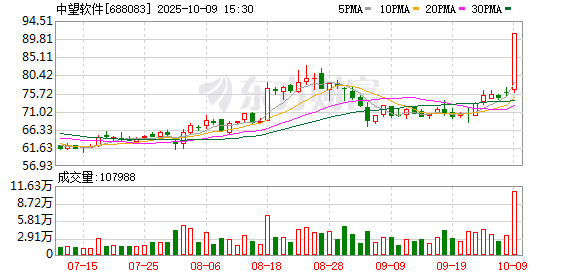
中望软件龙虎榜数据(10月9日)
Zheng Quan Shi Bao Wang· 2025-10-09 12:46
Group 1 - The stock of Zhongwang Software (688083) closed at 91.14 yuan on October 9, reaching the daily limit with a trading volume of 9.27 billion yuan and a turnover rate of 6.37% [2][3] - The stock was listed on the daily trading list due to a price increase of 15% at the close [2] - The top five trading departments accounted for a total transaction amount of 4.36 billion yuan, with a net buying amount of 40.78 million yuan [2] Group 2 - The main capital inflow for the stock was 50.98 million yuan throughout the day [3] - The largest buying department was the Shanghai-Hong Kong Stock Connect, with a buying amount of 79.84 million yuan [3] - The largest selling department was Changcheng Securities, with a selling amount of 65.09 million yuan [3]


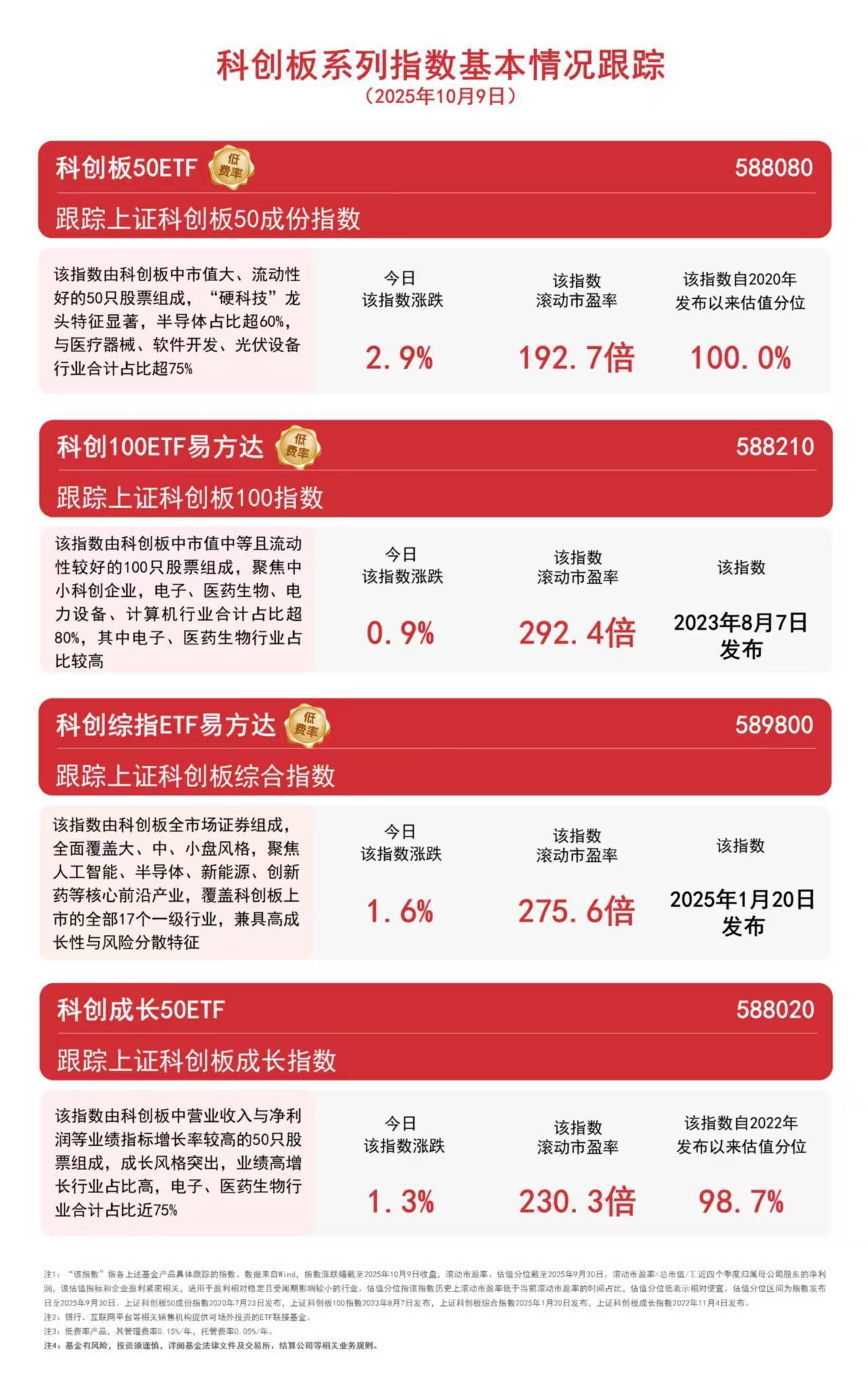
科创板50指数涨近3%,收获三连阳,关注科创板50ETF(588080)等产品后续表现
Sou Hu Cai Jing· 2025-10-09 10:11
Group 1 - The technology sector experienced a collective surge, with significant gains in the semiconductor industry, software, and nuclear power sectors [1] - The STAR Market 50 Index rose by 2.9%, achieving three consecutive days of gains, while the STAR Composite Index increased by 1.6%, the STAR Growth Index by 1.3%, and the STAR 100 Index by 0.9% [1] - According to Wind data, the semiconductor industry accounts for over 65% of the weight in the STAR Market 50 Index, which is the highest among the mentioned indices [1] Group 2 - As of the last trading day, the scale of the STAR Market 50 ETF (588080) reached nearly 77 billion yuan, ranking first among all ETFs in the STAR Market [1]
浩辰软件:与上海子虔科技有限公司签订《战略合作协议》
Mei Ri Jing Ji Xin Wen· 2025-10-09 09:13
Group 1 - The core point of the article is that Haocen Software has signed a strategic cooperation agreement with Shanghai Ziqian Technology to enhance collaboration in the field of 3D CAD software, aiming for technological innovation and application promotion in industrial software [1] - The cooperation includes a long-term and stable OEM cooperation plan for general-purpose 3D CAD products represented by ZIXEL3DCAD [1] - As of the announcement, Haocen Software's market capitalization is 3.8 billion yuan [1] Group 2 - For the fiscal year 2024, Haocen Software's revenue composition is projected to be 98.58% from software sales and 1.42% from other businesses [1]
浩辰软件(688657.SH):签订战略合作协议及OEM合作框架协议
Ge Long Hui· 2025-10-09 08:48
Core Viewpoint - The company, Haocen Software (688657.SH), has signed a strategic cooperation agreement with Shanghai Ziqian Technology Co., Ltd. to enhance collaboration in the field of 3D CAD software, aiming for technological innovation and application promotion in industrial software [1] Group 1 - The strategic cooperation will focus on key areas and projects related to 3D CAD software, leveraging the strengths of both companies for comprehensive strategic alignment [1] - Following the strategic agreement, the company has also signed an OEM cooperation framework agreement with Ziqian Technology, establishing a long-term and stable OEM cooperation plan for general-purpose 3D CAD products represented by ZIXEL3DCAD [1]
为什么美国刮起反印度浪潮?原因很简单:印度人正成不可忽视群体
Sou Hu Cai Jing· 2025-10-09 08:17
Group 1: Economic Relations - The U.S. imposed a 50% punitive tariff on Indian goods, targeting key export sectors like IT, pharmaceuticals, and textiles, which has significantly impacted Indian export businesses [3] - India's manufacturing sector is facing challenges, with foreign capital withdrawal and factory closures, as major companies like Apple consider relocating back to China [5] - India has emerged as a dominant player in the global service industry, handling about 60% of U.S. customer service outsourcing, which has caused anxiety among American workers [8] Group 2: Political Influence and Tensions - The political influence of the Indian diaspora in Western countries is growing, with Indian-American voters being seen as "golden voters" due to their high turnout, income, and education levels [7] - A recent assassination of a Sikh leader in Canada has damaged India's diplomatic image, leading to accusations against India and the expulsion of an Indian diplomat [7] - Australia has introduced the "Overseas Influence Transparency Act," which, while not explicitly targeting India, raises concerns about the funding flows of Indian communities [9] Group 3: Cultural Dynamics - There is a growing perception of cultural conflict between Indian and Western cultures, with reports of caste-based favoritism in Silicon Valley workplaces [11] - The cultural confidence of the Indian diaspora is being viewed as "cultural oppression" by some in the West, leading to fears of cultural invasion as Indian customs become more visible in public life [12] - The median income of Indian-American households has reached $128,000, nearly double that of white households, contributing to social unease in the U.S. [12] Group 4: Geopolitical Positioning - India's role in global geopolitics is becoming increasingly ambiguous, maintaining strategic cooperation with the U.S. while also fostering close ties with Russia [14] - The expectation that India would serve as a counterbalance to China has proven unreliable, as India sometimes appears to act in its own interests [14] - The backlash against India reflects broader anxieties in the West regarding a multipolar world and shifting global power dynamics [16]

软件ETF(515230)涨超2.8%,AI工具包升级提振行业预期
Mei Ri Jing Ji Xin Wen· 2025-10-09 06:40
Core Insights - OpenAI has launched AgentKit, a developer toolkit that simplifies the development of agents through a visual canvas called "Agent Builder" and an embedded chat component known as "ChatKit" [1] - OpenAI aims to establish ChatGPT as an "AI operating system" by allowing developers to build interactive applications within ChatGPT using an Apps SDK, emphasizing contextual memory and understanding [1] - The company plans to implement an "entry + ecosystem" strategy to deeply bind users, targeting the goal of becoming the "infrastructure entry point of the AI era" [1] - The growth potential of domestic computing power and AI applications is viewed positively in the context of accelerating global AI application development [1] Industry Overview - The software ETF (515230) tracks the software index (H30202), which selects publicly traded companies involved in system software, application software development, and related services [1] - The software index primarily focuses on the information technology sector, characterized by significant growth and innovation, serving as an important indicator of the software industry's development trends [1]
公募齐发声,A股看涨逻辑长期不变
Huan Qiu Wang· 2025-10-09 05:03
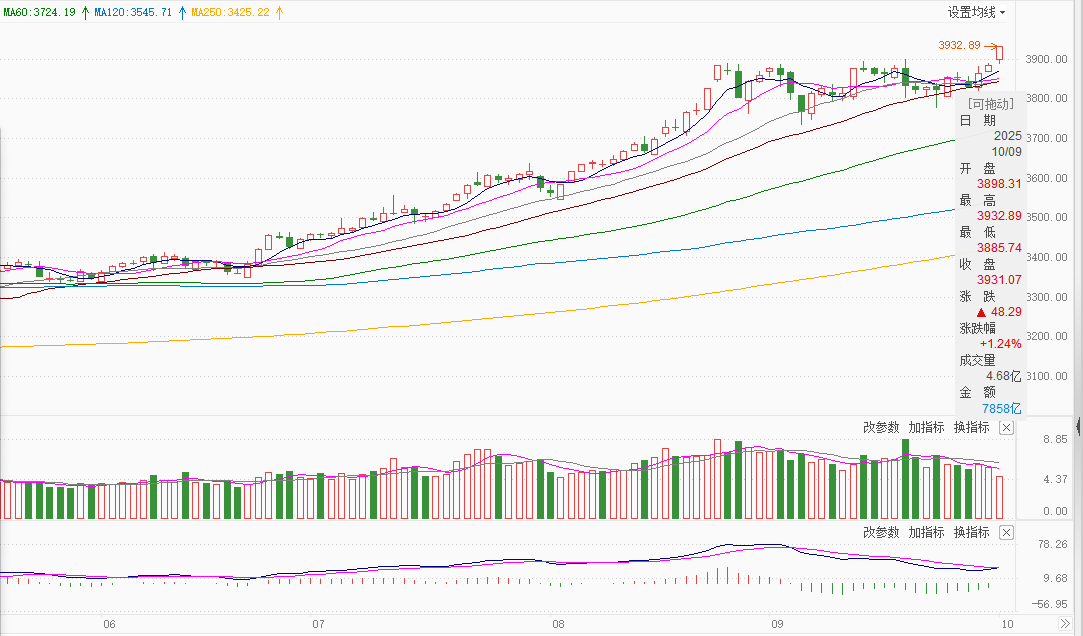
Group 1 - The A-share market has shown strong performance in 2023, with the Shanghai Composite Index surpassing the 3900-point mark on October 9, driven by policy support and increased capital inflow [1][3] - Major institutions maintain an optimistic outlook for the market, citing reasonable overall valuations and potential for upward movement in the medium to long term [3] - Factors contributing to the market's strength include the rise of quality enterprises, active capital participation, and supportive policies, which are seen as the foundation for the revaluation of A-shares [3] Group 2 - Investment focus is shifting towards two core sectors: consumption and technology, with a consensus among public fund institutions [4] - In the technology sector, the AI industry chain is highlighted as a significant opportunity, particularly in software and AI applications, with expectations for domestic computing power to show trends in the fourth quarter [4] - The consumption sector is viewed through the lens of structural opportunities, with an emphasis on "value-for-money consumption" as consumer income expectations improve [4] - Additional investment themes include "new productivity" and the trend of Chinese companies expanding overseas, which are seen as key drivers for future economic growth and opportunities for investors [4]
阿里巴巴20251008
2025-10-09 02:00
Summary of Alibaba's Conference Call Industry Overview - The AI cloud infrastructure has significant potential, with energy demand expected to reach 16 GW by 2032, requiring approximately 10 GW of new facilities, leading to an investment scale of trillions of RMB [2][3] - The chip supply situation is easing, providing opportunities for cloud vendors, although AI cloud profitability is currently impacted by depreciation costs [2][3] - The overseas AI cloud market is dominated by Microsoft and Amazon, with token fees stabilizing around $15 per million [2][4] - Emerging cloud vendors like Oracle and CoreWeave are capturing market share by leasing NVIDIA cards [2][4] - ByteDance's entry into the domestic market poses competitive pressure on Alibaba, with its domestic AI token consumption reaching 55% [2][4] Company Performance - Alibaba's cloud business is expected to maintain a high single-digit EBIT margin in Q3, with profitability under pressure due to scale expansion [2][4] - The PaaS layer (e.g., databases) and SaaS layer have higher gross margins and are seen as future profit growth points, with PaaS margins reaching 60-70% and SaaS margins around 90% [2][4] - The company aims to enhance its PaaS capabilities as a key driver for future profit growth [2][4] AI and Software Development Trends - The software industry is moving towards agent autonomy, simplifying user interactions and enhancing agent performance [2][5][7] - Alibaba is developing custom features to enhance agent memory capabilities, allowing users to personalize settings [8][9] - The trend indicates that each company may have thousands of autonomous agents to meet specific needs, shifting focus from user interaction innovation to enhancing agent capabilities [6][7] E-commerce Innovations - In the e-commerce sector, OpenAI is exploring a conversational e-commerce fee model, while Alibaba has launched "AI Help Me Search" on Taobao, improving conversion rates by training on buyer show data [11][12] - This method is particularly effective for mid- to long-tail products, enhancing sales conversion rates [12][14] DingTalk Developments - DingTalk's future prospects are closely tied to Microsoft's Copilot strategy, emphasizing the need for SaaS and software companies to enhance their AI product capabilities [5][6] - Innovations in DingTalk for 2025 include the launch of an AI-native version and a global AI-driven information flow work platform, enhancing collaborative work through natural language interactions [10] Market Expectations and Financial Outlook - Alibaba's Q3 performance is expected to meet forecasts, with e-commerce growth projected at 8-9% and cloud computing revenue growth around 30% [17][18] - The company anticipates losses in its food delivery business between 35 billion to 40 billion RMB, with potential losses expanding due to increased AI-related computational investments [17][18] - Key focus areas for the upcoming Double Eleven shopping festival include the impact of customer management revenue (CMR) acceleration and the food delivery business's contribution to overall sales [18]

开盘:美股周三高开 标普500终结七连涨后重拾涨势
Sou Hu Cai Jing· 2025-10-08 13:33
Group 1 - The core concern is the sustainability of AI-driven trading, highlighted by Oracle's disappointing cloud business profit margins and losses in transactions involving NVIDIA chips, raising fears of a potential AI bubble similar to the late 1990s internet bubble [1] - Market observers are urging investors to adjust their portfolios, acknowledging that while the AI craze may still have upward potential, the overall market indicators appear overbought [2] - Goldman Sachs suggests that concerns over a tech stock bubble are premature, as the strong price increases are supported by robust earnings growth, although valuations are becoming elevated [3] Group 2 - Tesla has launched lower-priced versions of its Model Y and Model 3 on its U.S. website, indicating a strategic move to capture a broader market segment [4] - Alibaba has established an internal AI robotics team, reflecting its commitment to advancing in the AI sector [4] - Gold stocks have seen a broad increase, suggesting positive market sentiment in that sector [4]

高盛版“AI叙事框架”:关于AI的五个关键争议
Hua Er Jie Jian Wen· 2025-10-08 07:57
Core Insights - The ongoing debate about whether the market has entered an AI bubble is intensifying, particularly following Goldman Sachs' recent report analyzing five key controversies in the AI sector [1][2]. Group 1: AI Adoption and Monetization - Consumer AI adoption is accelerating, with ChatGPT reaching a record of 700 million weekly active users in July, but monetization capabilities are lagging behind infrastructure investments [1][3]. - A significant disparity exists between the rapid growth of consumer AI usage and the slower monetization efforts by AI companies, as evidenced by only 40% of companies purchasing official LLM subscription services despite 90% of employees using personal AI tools [3][4]. Group 2: Corporate AI Deployment and ROI - Companies are expanding internal AI applications to enhance efficiency, yet the visibility of ROI remains low, with only 5% of firms reporting measurable impacts on their financial statements [5][6]. - The advertising sector is identified as a potential disruption area, with AI-driven platforms threatening traditional advertising agencies, which collectively represent a profit pool of approximately $161 billion [5][6]. Group 3: AI Infrastructure Investment - AI infrastructure investment is at an unprecedented level, with the five major cloud service providers expected to spend $381 billion in 2023, marking a 68% year-over-year increase [1][7]. - By 2025, total spending on AI-related capital is projected to reach around $1.4 trillion, driven by increasing consumer demand and significant partnerships announced recently [7][8]. Group 4: Power Infrastructure Demand - The rapid expansion of AI workloads is expected to increase global power demand for data centers by over 165% by 2030, necessitating substantial new power generation capacity [10][11]. - In the U.S., 60% of future power demand will require new generation facilities, primarily from natural gas, solar, and wind sources [10]. Group 5: Bubble Risk Assessment - While there are similarities between the current market and the late 1990s, the current valuation levels are significantly lower, with the Nasdaq 100 index trading at a 46% discount compared to the peak of the internet bubble [2][11]. - The IPO activity is also markedly lower than during the late 1990s, indicating a more cautious market environment [11].
