自动驾驶

Search documents
车企助力全运:300台无人驾驶汽车接驳,人形机器人辅助安检
2 1 Shi Ji Jing Ji Bao Dao· 2025-10-23 07:06
Group 1 - The core event of the 15th National Games and the Special Olympics provides a diverse application scenario for autonomous driving technology, with over 300 L4 Robotaxi deployed by GAC Group in cities like Guangzhou, Shenzhen, and Zhuhai [1] - The Robotaxi services will focus on key scenarios such as media transportation, guest travel, and public access to the games, connecting major venues and transportation hubs [1] - Other autonomous vehicles, including cleaning robots and logistics vehicles, are also being utilized to provide stable and reliable services for residents [1] Group 2 - GAC Group's fourth-generation humanoid robot, GoMate Mini, will participate in reception, security checks, and patrol duties during the games, showcasing advancements in robotics technology [2] - The automotive industry in Guangdong is experiencing strong growth, with a 43% increase in the production of new energy vehicles last year, making Guangdong a significant player in the national market [2] - The hosting of the games in the Guangdong-Hong Kong-Macao Greater Bay Area offers automotive companies a valuable opportunity to demonstrate their capabilities and enhance confidence in autonomous driving technologies [2]


新石器完成逾6亿美元D轮融资 创中国自动驾驶领域融资记录
Cai Jing Wang· 2025-10-23 06:57
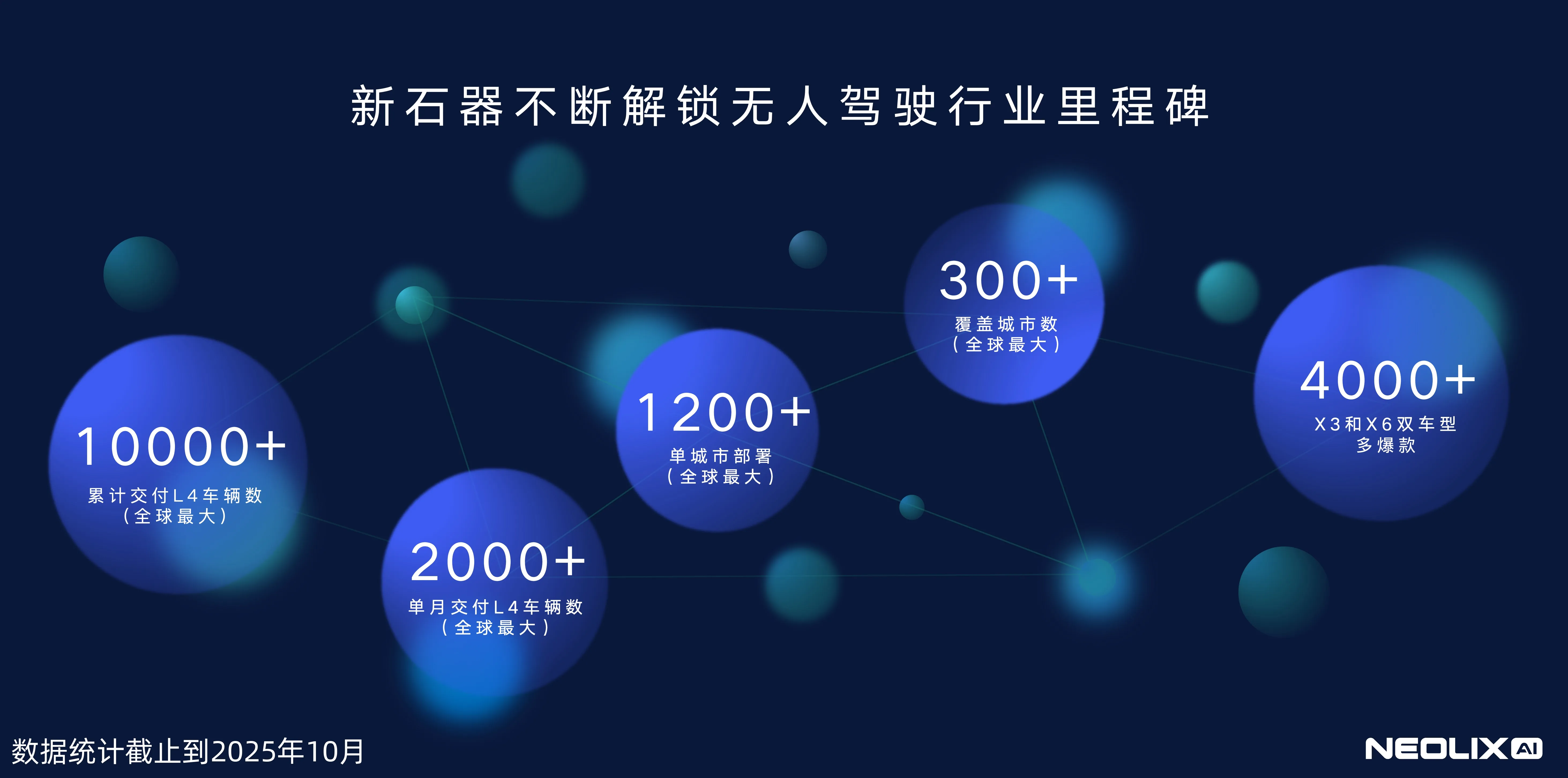
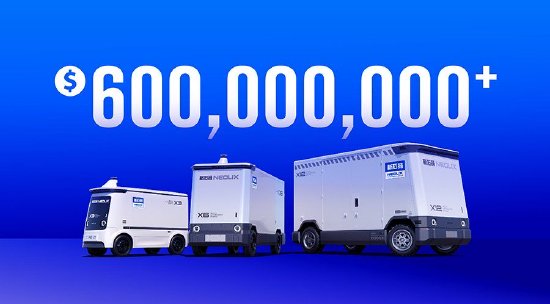
Core Insights - Neolix, the world's largest L4-level RoboVan solution provider, has completed over $600 million in Series D financing, marking the largest private equity financing in China's autonomous driving sector to date [1][2] - The funding will enhance Neolix's technological capabilities and market competitiveness in the unmanned urban distribution sector, accelerating the commercial application of autonomous vehicles [2][6] - Neolix aims to leverage this financing to invest in algorithm and technology development, expand product offerings for various commercial scenarios, and improve service networks [1][2] Financing Details - The financing round was led by Stone Venture and included participation from several prominent investors such as Gaocheng Investment, Xincheng Capital, and others [1] - This financing is a significant milestone for Neolix, reflecting strong market recognition of its technology and business model [1] Technological Advancements - Neolix has made key advancements in autonomous driving technology, including the commercial delivery of its L4-level mapless autonomous driving solution, becoming the first in the unmanned delivery industry to do so [4] - The company has developed a foundational model called Neolix-VA, which integrates visual and action capabilities, allowing its RoboVan fleet to operate efficiently in complex traffic environments [4][5] - The mapless technology reduces reliance on high-precision maps, saving over 90% in related costs and significantly lowering hardware expenses [4] Market Position and Growth - Since its establishment in 2018, Neolix has delivered over 10,000 L4 autonomous vehicles, leading the RoboVan industry [2][6] - The company has achieved a market share exceeding 60% in cumulative shipments and over 70% in monthly new shipments, dominating the unmanned delivery sector [6][7] - Neolix has expanded its service to over 300 cities and has partnered with major logistics companies, covering a wide range of clients [6][7] Expansion and Future Outlook - Neolix is not only leading in the domestic market but has also made significant strides in international markets, including obtaining the first RoboVan license in the UAE [8] - Industry experts predict a rapid growth phase for unmanned delivery vehicles, with expectations of over 30,000 units sold by 2025 [9] - The company envisions a future where unmanned delivery vehicles will form an intelligent logistics network, enhancing overall logistics efficiency [9]

新石器宣布获逾6亿美元D轮融资,高成、鼎晖VGC等联合领投
Xin Lang Ke Ji· 2025-10-23 06:43
Core Insights - Neolix, a provider of L4-level autonomous delivery solutions, has completed a Series D funding round exceeding $600 million, led by Stone Venture from the UAE, with participation from several prominent investors [1][2] Funding Details - The funding round includes contributions from investors such as Gaocheng Investment, Xincheng Capital, Dinghui VGC, Chaoxi Capital, Beijing AI Industry Investment Fund, and a major internet company, along with continued support from existing shareholders like Junlian Capital and others [1] Company Vision and Strategy - Neolix aims to solidify its technological capabilities and market competitiveness in the autonomous delivery sector, accelerating the commercial application of autonomous vehicles to meet the growing demand in domestic and international markets [2] Product and Market Achievements - Neolix has delivered over 10,000 L4 autonomous vehicles, becoming the first company globally to achieve this milestone, with monthly deliveries surpassing 2,000 units [2] - The company has deployed over 1,200 vehicles in Qingdao, making it the city with the highest number of autonomous vehicles globally [2] - Neolix's X3 and X6 models have each surpassed 4,000 units in cumulative deliveries, establishing the company as the only one in the industry to achieve large-scale delivery of multiple popular models [2]
新石器完成逾6亿美元D轮融资,此前已突破1万台交付门槛
Feng Huang Wang· 2025-10-23 06:39
Group 1 - Neolix, a provider of L4 level autonomous delivery solutions, has completed over $600 million in Series D financing, marking the largest private equity financing in China's autonomous driving sector to date [1][2] - The financing round was led by Stone Venture, with participation from several notable investors including Gaocheng Investment, Xincheng Capital, and others, indicating strong interest in the autonomous delivery market [1] - The funds will enhance Neolix's technological capabilities and market competitiveness in the unmanned urban delivery sector, aiming to accelerate the commercial application of autonomous vehicles [2] Group 2 - Neolix has achieved a significant milestone by delivering over 10,000 L4 autonomous vehicles, becoming the first company globally to reach this delivery volume [2] - The company has announced key advancements in its autonomous driving technology, with its self-developed L4 level unmapped autonomous driving solution beginning commercial delivery and limited application [2] - Neolix's CEO emphasized the importance of unmanned delivery as a critical component of future urban logistics, aiming to improve efficiency and digital transformation in the logistics industry [2]
申万投资公司顺利完成上海西井科技F+轮融资项目
申万宏源证券上海北京西路营业部· 2025-10-23 02:26
Core Viewpoint - The investment by Shenwan Investment Company in Xijing Technology represents a strategic move to support technological innovation and align with national development goals, particularly in the context of the Belt and Road Initiative [2][3]. Group 1: Investment Overview - Shenwan Investment Company successfully led a financing round (F+ round) for Xijing Technology, a high-tech firm focused on AI and autonomous driving solutions for large logistics scenarios, with operations in 28 countries [2]. - The investment aligns with the central financial work conference's spirit and aims to implement the "five major articles" of financial work [2]. Group 2: Strategic Alignment - Xijing Technology's global business layout is highly compatible with the high-quality development requirements of the Belt and Road Initiative, having successfully implemented smart port projects in several countries along the route [2]. - The company enhances operational efficiency and intelligence at key logistics hubs, promoting the application of Chinese technology and standards in Belt and Road regions [2]. Group 3: Financial Structure and Impact - This investment marks the first use of an SPV structure by Shenwan Investment, connecting with the new "1+6" policy of the Sci-Tech Innovation Board, providing critical support for tech companies from R&D to international development [3]. - The investment exemplifies a virtuous cycle of "technology-industry-finance," demonstrating the effectiveness of financial empowerment in innovation and its service to national strategies [3].
某大型Tier 1中阶项目量产不顺......
自动驾驶之心· 2025-10-23 00:04
Core Viewpoint - The article discusses the challenges and dynamics in the autonomous driving industry, particularly focusing on the relationships between automotive companies and Tier 1 suppliers, highlighting the shift in power dynamics and the need for collaboration in development [5][11][14]. Group 1: Challenges in Production - A major Tier 1 supplier faced difficulties in mass production for a leading automotive company, leading to the need for alternative suppliers to step in [5]. - Many Tier 1 suppliers with strong business capabilities but weak engineering skills are struggling with mass production, resulting in project handovers to more capable suppliers [7][8]. - The trend of some automotive companies shifting projects from underperforming suppliers to those with solid production capabilities is evident, with companies like 易航 benefiting from this transition [7][10]. Group 2: Development Models - The article questions whether autonomous driving should be standardized or customized, emphasizing the importance of tailored solutions for different vehicle types and user preferences [6][9]. - A collaborative development model proposed by 易航 allows automotive companies to build their algorithm capabilities while ensuring that the developed solutions meet specific user needs [8][10]. - The need for joint development between automotive companies and Tier 1 suppliers is highlighted as essential for creating effective autonomous driving solutions that resonate with end-users [9][10]. Group 3: Supplier Dynamics - The power dynamics in the industry are shifting, with Tier 1 suppliers gaining more influence over automotive companies, leading to a situation where companies are no longer seen as "valued clients" [12][13]. - Automotive companies are increasingly seeking reliable Tier 1 suppliers that can provide customized solutions and respond to specific needs, as opposed to the more dominant Tier 1 suppliers who may not be as flexible [13][14]. - The article identifies a limited number of Tier 1 suppliers capable of being "cornerstone suppliers" for automotive companies, with 易航 being highlighted for its ability to collaborate effectively and support self-research initiatives [14].
中概股回港上市带来三重变化
Zheng Quan Ri Bao· 2025-10-22 16:43
Group 1 - The recent trend of Chinese concept stocks returning to Hong Kong is primarily driven by companies in new economic sectors such as autonomous driving and biomedicine, indicating strategic adjustments and changes in global asset allocation [1][2] - The tightening regulatory environment in overseas markets, particularly the proposed changes by Nasdaq, has prompted companies to consider a dual listing in Hong Kong as a risk mitigation strategy, allowing them to diversify their shareholder base and avoid uncertainties in a single market [1][2] - The return of these companies to Hong Kong is not only for financing purposes but also represents a strategic move to align with local industry resources and attract investors who better understand their market positions and growth prospects [2][3] Group 2 - The return of Chinese concept stocks to Hong Kong is supported by the collaboration of regulatory bodies in mainland China and Hong Kong, which have simplified procedures and eased restrictions on cross-border capital flows [2][3] - The Hong Kong Stock Exchange has implemented continuous reforms, such as allowing dual-class shares and easing listing requirements for unprofitable biotech firms, which have facilitated the return of these companies [3] - The Hong Kong government has expressed its commitment to assist Chinese concept stocks in making Hong Kong their preferred return destination, enhancing the market's attractiveness for hard tech companies [3]
大厂出海记:新“App工厂”里的代码与密码
Bei Jing Shang Bao· 2025-10-22 15:38
Core Insights - Chinese tech companies are expanding overseas, focusing on markets in Latin America, Southeast Asia, and other regions with significant growth potential and population advantages, driven by domestic market saturation and competition [5][17] - The approach to internationalization involves not only technology and service exports but also cultural influence, leveraging corporate power for greater impact compared to previous cultural initiatives [5][6] - Companies face challenges in adapting to local markets, including regulatory compliance, cultural differences, and operational logistics, which require thorough market research and localized strategies [11][16] Group 1: Market Expansion - Lalamove and other Chinese tech firms are establishing a presence in various international markets, with Lalamove achieving significant milestones in Brazil and Southeast Asia [1][10] - The ride-hailing and delivery sectors are particularly competitive, with companies like Didi and 99 facing unique challenges in Latin America, where motorcycles are more practical than cars [4][6] - The gaming industry is a major battleground for Chinese firms, with a significant presence in Southeast Asia, where Chinese mobile game developers occupy a large share of the market [7][8] Group 2: Operational Challenges - Companies must navigate complex regulatory environments, with compliance being a primary challenge, especially in regions with stringent data protection laws like the EU [16][17] - The cost of customer acquisition in the gaming sector is rising, with many companies facing increased competition and higher operational costs [8][9] - The need for localization in branding and marketing is critical, as many Chinese tech firms adopt new brands to resonate with local consumers while managing risks [9][11] Group 3: Technological Adaptation - The migration of services to cloud platforms, as seen with Gojek's transition to Tencent Cloud, highlights the importance of technological infrastructure in supporting international operations [5][6] - Companies are encouraged to leverage existing cloud capabilities to avoid redundant investments and streamline their international expansion efforts [15][16] - The integration of AI and other advanced technologies is becoming essential for maintaining competitiveness in global markets, but firms must balance development costs with potential returns [15][16]

优步(UBER.US)加码自动驾驶布局 携手Nebius(NBIS.US)向Avride投资3.75亿美元
Zhi Tong Cai Jing· 2025-10-22 12:53
优步(UBER.US)与荷兰云基础设施公司Nebius(NBIS.US)计划共同投入最多3.75亿美元,用于发展Nebius 旗下自动驾驶汽车子公司Avride。Avride发言人表示,这笔新资金(包括战略投资与商业承诺)将有助于 加速Avride自动驾驶车队的扩张,规模预计可达500辆。如果Avride达到双方约定的特定里程碑,两家公 司将进一步追加投资,使潜在总投资额达到3.75亿美元。该公司还表示,这笔投资还将支持Avride的产 品开发及其向新市场的拓展。 优步首席执行官Dara Khosrowshahi此前表示,这家网约车巨头将继续投资自动驾驶技术生态系统,押注 于"人类驾驶与无人驾驶并行"的未来。迄今为止,优步已向多家自动驾驶及无人机公司投资或承诺资 金,包括文远知行(WRD.US)、小马智行(PONY.US)、Lucid Group(LCID.US)、Nuro和Flytrex等,以及运 营或拥有无人驾驶汽车的车队公司。其中一些交易金额高达数亿美元,例如与Lucid、Nuro之间的合 作。 自2020年出售自有自动驾驶部门后,优步已与十多家自动驾驶公司建立合作关系,以与 Alphabet(GOOG ...

萝卜快跑宣布落地瑞士,推出自动驾驶服务AmiGo
Huan Qiu Wang Zi Xun· 2025-10-22 09:50
Core Insights - The company "萝卜快跑" has announced a strategic partnership with Swiss PostBus to launch an autonomous driving service named "AmiGo" in Switzerland [1][3] Group 1: Service Launch and Features - The initial fleet testing for AmiGo is set to begin in December 2025 in the eastern regions of Switzerland, specifically St. Gallen, Appenzell Outer, and Inner Appenzell, with full autonomous operations expected by the first quarter of 2027 [3] - The service aims to fill the transportation gap in less accessible areas, providing seamless travel experiences for residents and complementing public transport [3] - AmiGo will allow passengers to book rides via a mobile app, offering exclusive or shared rides for up to four passengers [3] Group 2: Vehicle and Safety Technology - The service will utilize the company's sixth-generation autonomous vehicles, designed to accommodate four passengers and featuring a removable steering wheel for future full automation [3] - The safety of the vehicles is ensured through a comprehensive solution that includes the "Apollo ADFM large model + hardware products + safety architecture," incorporating ten layers of safety redundancy and six MRC safety strategies for stable operation in complex environments [3] Group 3: Market Expansion and Achievements - The company has previously formed strategic partnerships with leading ride-hailing platforms like Uber and Lyft, facilitating its entry into markets across Asia, the Middle East, and Europe [3] - As of August, the company has expanded its operations to 16 cities globally, including Hong Kong, Dubai, and Abu Dhabi, providing over 14 million services and accumulating more than 200 million kilometers of safe driving [3]