
中医药

Search documents
干咳就吃秋梨膏吗?
Xin Lang Cai Jing· 2026-01-06 17:29
Group 1 - The article discusses the misconceptions surrounding the use of traditional Chinese medicine for treating coughs and colds, emphasizing that not all symptoms require the same treatment approach [2] - It highlights that cooling and detoxifying medicines are only effective for specific conditions, such as when wind-heat invades the lungs or when there is internal heat toxin [2] - The use of autumn pear syrup is appropriate mainly for dry coughs associated with yin deficiency, characterized by little to no phlegm and symptoms like dry mouth and red tongue [2] Group 2 - The article advises against the habitual use of autumn pear syrup for all types of dry coughs, suggesting that dietary therapy should be tailored to the specific condition [2] - For coughs caused by wind invasion, it recommends using herbs like perilla leaves and windbreak to alleviate symptoms [2] - It mentions that chronic respiratory diseases such as asthma and COPD can worsen in winter, and suggests moxibustion on specific acupuncture points to reduce the frequency of exacerbations [2][3] Group 3 - The article provides guidelines for moxibustion, recommending a method called suspended moxibustion for 10-15 minutes, twice a week [3] - It cautions that not everyone is suitable for moxibustion, particularly those with heat-type constitutions or symptoms of yin deficiency [3]

赴一场十年之约 感受灾区新面貌
Si Chuan Ri Bao· 2026-01-06 11:16
Group 1 - The event "Hong Kong, Macao compatriots, overseas Chinese, and international friends visit Sichuan" was officially launched, with over 500 invitees visiting cities affected by the Wenchuan earthquake to explore post-disaster reconstruction achievements [1] - The Macau delegation visited key projects such as the Liyuan Center Elderly Care Home and the Guangyuan Aoyuan Sports Center, showcasing the impact of Macau's aid [1] - Participants expressed admiration for the significant improvements in public infrastructure in Guangyuan, noting that it is now comparable to Macau [2] Group 2 - The Sichuan-Hong Kong Rehabilitation Center, a project funded by Hong Kong, is recognized as one of the most advanced rehabilitation centers in Southwest China, demonstrating improved medical services [2] - Future cooperation opportunities were discussed, including plans for a new traditional Chinese medicine hospital in Hong Kong and strengthening educational exchanges between youth in Macau and Sichuan [3] - The Sichuan Hong Kong Olympic Sports School, funded by the Hong Kong Jockey Club, plays a crucial role in nurturing high-level sports talent and facilitating exchanges between Sichuan and Hong Kong [3] Group 3 - Overseas Chinese, such as 温锦华, have made significant contributions to the disaster recovery efforts in Guangyuan, including the construction of "Overseas Chinese Love Homes" [4] - There are intentions to introduce advanced Russian technology to develop the health and wellness industry in Guangyuan, indicating potential for international collaboration [4]

助力共建“一带一路” 中医药科技成果转化联合体在四川彭州启动
Mei Ri Jing Ji Xin Wen· 2026-01-06 08:09
Core Viewpoint - The establishment of the "Belt and Road" Traditional Chinese Medicine (TCM) Technology Achievement Transformation Joint Body in Sichuan is expected to enhance cross-border collaboration and internationalization of TCM, addressing existing challenges in the sector [1][2]. Group 1: Establishment of the Joint Body - The joint body was initiated by 11 organizations, including the Sichuan Academy of Traditional Chinese Medicine and Chengdu University of Traditional Chinese Medicine, aiming to cover the entire chain of "government, industry, academia, research, finance, and application" [1][2]. - The joint body will serve as a "collaboration hub" for TCM internationalization, facilitating efficient connections between policies, technology, capital, and markets [2]. Group 2: Challenges and Opportunities - Current challenges for TCM in the "Belt and Road" initiative include ineffective cross-border collaboration mechanisms, difficulties in standard alignment, and uncoordinated intellectual property protection systems [1]. - The joint body signifies a shift from "dispersed promotion" to "systematic collaboration" in the international transformation of TCM [2]. Group 3: Future Plans - The next steps for the joint body include building a cross-border achievement docking network and promoting the standardization and scaling of TCM products and services internationally [2]. - The joint body will also focus on international joint research and talent cultivation, aiming to deeply integrate TCM research with international market demands [2].
生态协同 创造消费新范式
Mei Ri Shang Bao· 2026-01-05 23:35
Core Viewpoint - The sustainable development of new consumption relies on a multi-dimensional ecological collaboration involving policy, market, and regulation. Despite the flourishing of new consumption scenarios, challenges such as insufficient consumer capacity and willingness, a relative shortage of high-quality supply, and the need for an optimized consumption environment persist. To invigorate consumption, a systematic ecology must be established, focusing on income support, regulatory oversight, policy empowerment, and building trust [1]. Group 1 - The primary task of ecological collaboration is to strengthen income support for residents, providing a solid foundation for consumption. The core of consumption is demand, which is fundamentally based on income. The Central Economic Work Conference has emphasized promoting reasonable growth in wage income and broadening channels for property income [1]. - A key aspect of ecological collaboration is improving the regulatory environment for consumption, ensuring that consumers feel more secure. As consumption scenarios continue to innovate, issues such as prepaid consumption risks, digital privacy breaches, and the lack of service standards in new scenarios have become increasingly prominent. Local governments are accelerating the establishment of a comprehensive, multi-layered regulatory system [1][2]. Group 2 - An example of effective implementation is found in Shishe Village, where "trustworthy consumption" is integrated into grassroots governance and business practices, supporting rural revitalization. The village, once considered "hollow," now attracts over one million visitors annually, with a stable and transparent consumption environment being a crucial factor for its sustained appeal [1][2]. - The important guarantee for ecological collaboration is to strengthen cross-departmental policy coordination, making development more robust. The cultivation of new consumption scenarios involves multiple departments, including commerce, culture, tourism, sports, technology, and market regulation, necessitating the breaking down of silos to form a collaborative effort. The National Development and Reform Commission has issued measures to create new consumption scenarios, clarifying departmental responsibilities and cooperation mechanisms [2]. Group 3 - Recent reports from the Zhejiang New Consumption Brand Research Institute indicate that the development of new consumption in Zhejiang is transitioning from "single-point innovation" to "ecological co-prosperity." The boundaries of industries are being fundamentally reshaped, creating new scenarios and redefining value chains [2][3]. - For instance, the integration of "agriculture, commerce, and tourism" has become a new paradigm, exemplified by the brand Panda Pig, which has created an industrial complex with an annual revenue exceeding 350 million, achieving value creation through synergy. Additionally, the "culture, commerce, and tourism" integration has opened new avenues, as seen in the M511 Light and Shadow Hub in Hangzhou, which combines cultural, technological, and commercial elements into a new consumer experience [3].
“医药健康+金融资本”双轮驱动 走中医药现代化发展之路
Zheng Quan Ri Bao· 2026-01-05 22:49
Core Viewpoint - The Chinese traditional medicine industry is experiencing significant growth driven by policy support and increasing health demands, with a focus on balancing tradition and innovation [1] Group 1: Company Strategy - Jilin Aodong Pharmaceutical Group Co., Ltd. adopts a dual-driven strategy of "medicine health + financial capital" to modernize traditional Chinese medicine [1] - The company has established a robust capital collaborative network, holding 20.11% of Guangfa Securities and being a major shareholder in several pharmaceutical companies, which supports its main business [2][3] - Financial returns from investments in Guangfa Securities contributed 12.43 billion yuan and 17.49 billion yuan in 2023 and 2024 respectively, providing continuous financial support for the pharmaceutical business [3] Group 2: Financial Empowerment - The financial layout allows Jilin Aodong to maintain stable and abundant returns, which are reinvested into the pharmaceutical sector to alleviate the high risks and long cycles of research and development [3] - The company emphasizes a principle of "main business first, financial empowerment," ensuring that financial gains are directed back to support the core pharmaceutical operations [3] Group 3: Technological Innovation - Jilin Aodong places technological innovation at the core of its strategy, focusing on the research of key raw materials and advancing in fields like anti-aging and regenerative medicine [5] - The company has developed a closed-loop industrial chain around the breeding, processing, and quality control of deer antler, ensuring the quality and traceability of raw materials [5][6] - The implementation of modern technology in traditional practices is seen as essential for unlocking the core value of traditional Chinese medicine [5][6] Group 4: Industry Development - The modernization of traditional Chinese medicine is supported by national policies aimed at enhancing quality, digital transformation, and new drug development [4] - Jilin Aodong aims to reshape production factors through technological innovation, transitioning from resource-dependent to innovation-driven models [6] - The company is committed to continuous investment in research and development, enhancing its intelligent layout across the entire industrial chain, and maintaining its heritage as a time-honored brand [7]


吉林敖东董事长李秀林:“医药健康+金融资本”双轮驱动 走中医药现代化发展之路
Zheng Quan Ri Bao· 2026-01-05 16:47
Core Viewpoint - The Chinese traditional medicine industry is experiencing significant growth driven by policy support and increasing health demands, with a focus on balancing heritage and innovation [1] Group 1: Company Strategy - Jilin Aodong Pharmaceutical Group Co., Ltd. adopts a dual-driven strategy of "pharmaceutical health + financial capital" to modernize traditional Chinese medicine [1] - The company has established a robust capital collaborative network, holding 20.11% of Guangfa Securities and being a major shareholder in several pharmaceutical companies, which supports its main business [2][3] Group 2: Financial Performance - In 2023 and 2024, the investment in Guangfa Securities is expected to contribute 1.243 billion and 1.749 billion yuan in revenue, respectively, with a total of 8.757 billion yuan in cash dividends provided to the company [3] - Financial returns are reinvested into the pharmaceutical business, alleviating the high risks and long cycles associated with research and development [3] Group 3: Technological Innovation - The modernization of traditional Chinese medicine relies on modern technology to unlock its core value, transitioning from "experience inheritance" to "scientific decoding" [4] - Jilin Aodong focuses on core material research and is actively involved in cutting-edge fields such as anti-aging and regenerative medicine [4][5] Group 4: Production and Quality Control - The company has developed a closed-loop industrial chain around the breeding, processing, and quality control of its core product, the Aodong deer antler [4][6] - Investments exceeding 46 million yuan have been made to upgrade disease prevention facilities and implement a digital quality control system across its standardized breeding bases [6] Group 5: Future Outlook - Jilin Aodong aims to deepen its dual-driven advantages and integrate new productive forces throughout its industrial development process, focusing on continuous investment in research and intelligent layout [7]
河南:全国唯一中医药国家人工智能应用中试基地揭牌 为古老中医装上智慧大脑
He Nan Ri Bao· 2026-01-05 09:21
Core Viewpoint - The establishment of the National Artificial Intelligence Application Pilot Base (Medical Field) in Henan marks a significant integration of traditional Chinese medicine (TCM) with modern AI technology, aiming to enhance the entire TCM industry chain through intelligent solutions [1][2]. Group 1: Reasons for Establishment - The pilot base is a response to the challenges faced by traditional Chinese medicine, such as difficulties in inheritance, standardization, and scalability, and aims to accelerate the application of AI technology in TCM [2]. - Henan, as a major birthplace of TCM and home to rich cultural and resource advantages, provides a unique environment for the development of AI in TCM, supported by a vast population and clinical data [2]. Group 2: Construction Plans - The pilot base will serve as an open public service platform focused on the deep integration of AI and TCM, addressing systemic challenges like data fragmentation and innovation transfer [7]. - It aims to build three foundational platforms: computing power, data, and models, with a focus on creating a high-quality, standardized public data resource pool [7]. - The base will concentrate resources on developing two vertical models: "TCM services" and "medical auxiliary diagnosis," enhancing innovation efficiency across the industry [7]. Group 3: Expected Impacts - The pilot base is expected to empower grassroots healthcare by promoting AI-assisted diagnostic systems and intelligent medical devices to community health centers, thus addressing the uneven distribution of medical resources [10]. - It will serve as a powerful incubator for the TCM industry, facilitating the standardization and branding of TCM products, and enhancing the overall value of the industry chain [10]. - The base will also contribute to establishing industry standards and best practices for AI applications in TCM, potentially influencing national guidelines and fostering the modernization and internationalization of TCM [11].
南阳“十五五”规划建议:拓展“中医药+”业态模式,推动中医药产业迈向千亿级
Sou Hu Cai Jing· 2026-01-05 01:55
Core Viewpoint - The Nanyang Municipal Party Committee has proposed a comprehensive plan for the 15th Five-Year Plan, focusing on economic and social development, emphasizing the importance of direct financing, technological innovation, and the integration of traditional Chinese medicine into modern industries [1][2]. Group 1: Economic Development Strategies - The plan includes actions like "Inviting Capital to Nanyang" and "Insurance Capital into Nanyang," aiming to accelerate the development of technology, green finance, and digital finance [1][3]. - A significant goal is to enhance the direct financing environment and promote corporate listings to attract long-term and patient capital [1][3]. - The "Wan Medicine Revitalization" initiative aims to develop modern Chinese medicine enterprises and expand the industry to a scale of 100 billion [1][3]. Group 2: Infrastructure and Innovation - The establishment of key laboratories and research institutions is prioritized to focus on major industrial chains and significant projects [1][3]. - The plan emphasizes the need for a modernized industrial system, with a focus on advanced manufacturing, green food, and new materials [15][16]. - The integration of digital technology into traditional industries is highlighted, promoting the development of a digital economy [18][19]. Group 3: Social and Environmental Goals - The plan aims to improve the quality of life for residents by enhancing public services and ensuring equitable access to resources [13][14]. - Environmental sustainability is a key focus, with initiatives to improve ecological quality and achieve carbon peak goals [12][14]. - The development of a modern agricultural system is emphasized, aiming to enhance food security and promote rural revitalization [33][34]. Group 4: Governance and Market Reforms - The plan outlines the need for comprehensive reforms to enhance market efficiency and reduce competition that leads to inefficiencies [24][25]. - It stresses the importance of a unified market and the removal of barriers to facilitate smoother resource allocation [24][25]. - The governance framework aims to enhance administrative efficiency and public trust in government [11][12].

全国唯一中医药国家人工智能应用中试基地揭牌 为古老中医装上智慧大脑
He Nan Ri Bao· 2026-01-04 23:31
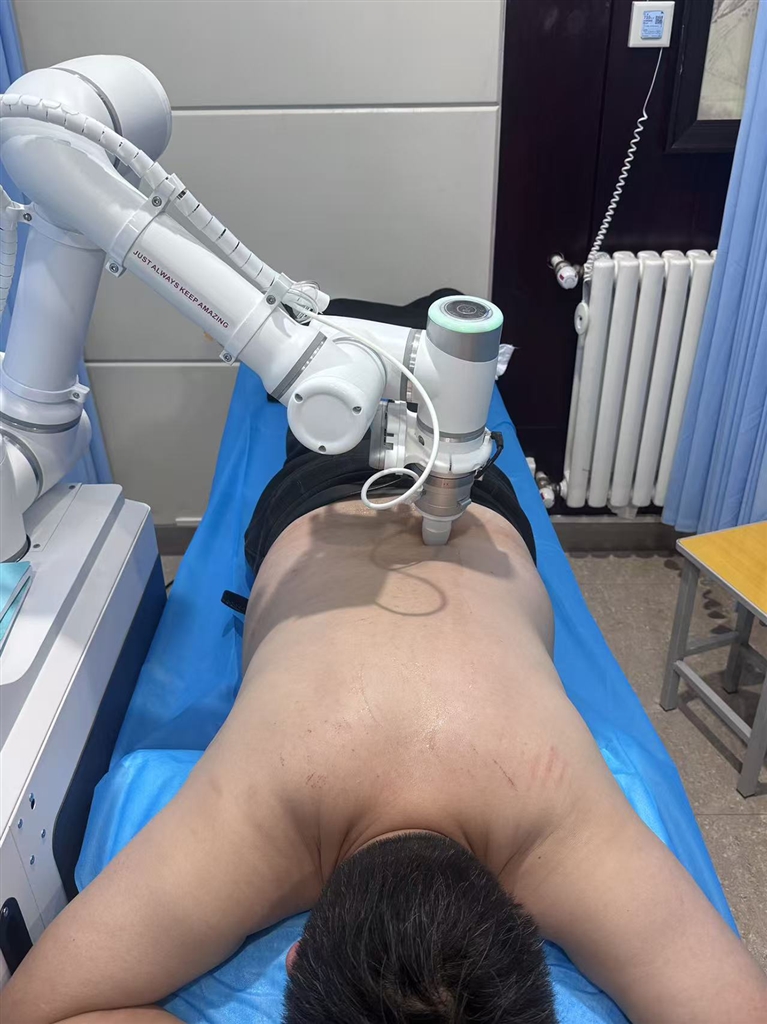
Core Viewpoint - The establishment of the National Artificial Intelligence Application Pilot Base (Medical Field) in Henan marks a significant integration of traditional Chinese medicine (TCM) with modern AI technology, aiming to enhance the efficiency and standardization of TCM practices [6][7][10]. Group 1: Reasons for Establishment - The pilot base is strategically located in Henan due to its rich cultural heritage in TCM and vast clinical data resources, which are essential for training AI models [7][8]. - The base aims to address challenges in TCM such as inheritance, standardization, and scalability by accelerating the application of AI technologies [7][10]. Group 2: Development Plans - Henan has introduced several policies to promote the integration of AI and healthcare, including the "Artificial Intelligence + Healthcare" three-year action plan [9][10]. - The pilot base will focus on building three foundational platforms: computing power, data resources, and model development to support TCM innovation [12][14]. Group 3: Technological Innovations - Recent achievements include the development of an AI-assisted TCM diagnosis model with an 85% agreement rate with expert evaluations, and a precision massage robot that enhances treatment efficiency by 50% [10][11]. - The base will also create a public service platform for AI applications in TCM, facilitating the transition from research to market [12][14]. Group 4: Expected Impact - The pilot base is expected to empower grassroots healthcare by providing AI-assisted diagnostic systems and smart treatment devices to local medical institutions [16][17]. - It aims to foster a new ecosystem in TCM that includes smart planting, intelligent manufacturing, and health management, thereby enhancing the overall value of the industry [17][18]. - The base will also contribute to establishing standards for AI applications in TCM, potentially influencing national guidelines and practices [18][19].
河南出台系列医保举措支持中医药发展 “互联网+”中医药服务纳入医保支付范围
He Nan Ri Bao· 2026-01-04 23:31
Group 1 - The core viewpoint of the news is the introduction of measures to enhance the support for the inheritance and innovation of traditional Chinese medicine (TCM) through medical insurance policies [1][2] Group 2 - The measures include expanding the service supply by incorporating eligible TCM medical institutions, retail pharmacies, and various healthcare facilities into the medical insurance designated management [1] - The inclusion of TCM services in the medical insurance payment scope will now cover "Internet+" TCM services, ensuring equal payment policies for online and offline services [1] Group 3 - The measures emphasize the adjustment of service prices for TCM medical services, prioritizing those with significant functional efficacy and wide patient acceptance [1] - There will be a dynamic adjustment mechanism for the inclusion of TCM preparations and decoctions in the basic medical insurance fund payment scope [2] Group 4 - The payment policy reform will promote disease-based payment for TCM advantages and expand pilot programs, enhancing the role of TCM in preventive care at grassroots healthcare institutions [2] - The measures also support the establishment of tightly-knit county-level medical communities led by TCM medical institutions [2]