
加密货币

Search documents
深扒Rentahuman,AI 雇佣人类是假,币圈“割韭菜”才是真?
3 6 Ke· 2026-02-07 08:16
Core Insights - The emergence of rentahuman.ai highlights the growing economic ecosystem around AI agents, with rapid user registration and platform visits indicating significant interest in the concept of AI hiring humans [2][4][24] - The platform operates by allowing AI agents to issue commands for humans to complete real-world tasks, blurring the lines between digital and physical labor [5][6] - Despite the initial hype, the platform lacks genuine market demand, with most tasks being marketing gimmicks rather than legitimate job opportunities [6][7][9] Group 1: Platform Functionality - Rentahuman.ai is described as the "meatspace layer for AI," where agents can order humans to perform tasks based on their skills and location [4][5] - The platform has attracted over 80,000 registered users, but the actual demand from businesses is minimal, indicating a disconnect between supply and demand [6][9] - Tasks on the platform often serve more as promotional stunts rather than real job opportunities, raising questions about the platform's sustainability [7][12] Group 2: User Experience and Trust Issues - Many registered users are merely curious or seeking social media buzz, leading to a lack of genuine engagement with the platform [9][10] - The platform's design lacks essential protections for workers, such as dispute resolution mechanisms, which could lead to significant risks for those completing tasks [28][30] - The absence of a reliable verification system for task completion undermines trust, making it difficult for users to feel secure in their engagements [20][28] Group 3: Legal and Ethical Considerations - Rentahuman's model raises potential legal issues, as it classifies workers as independent contractors, potentially violating labor laws [30] - The ethical implications of AI hiring humans for tasks, especially those that may be illegal or unsafe, are significant and largely unaddressed by the platform [30][33] - The platform serves as a reflection of societal anxieties regarding the future of AI and its role in the workforce, prompting discussions about the ethical boundaries of such technologies [32][33]


2026年2月6日,黄金比特币美股一夜全崩,超过43万人一夜爆仓,爆掉近21亿美元
Sou Hu Cai Jing· 2026-02-07 04:19
Core Viewpoint - The financial markets experienced a significant crash on February 6, 2026, driven by a sudden shift in monetary policy expectations, high leverage trading, and a retreat of risk aversion, leading to widespread sell-offs across various asset classes [1][8]. Group 1: Precious Metals - Silver prices plummeted over 19% in a single day, marking the most severe drop in five years, with domestic futures contracts hitting the limit down [1] - Gold prices fell below the critical psychological level of $4,800 per ounce, reaching a low of $4,780, with a daily decline of 4.08% [3] Group 2: Energy Markets - WTI crude oil futures dropped over 2%, falling below $64 per barrel, while Brent crude also declined over 2%, losing the $68 mark [3] Group 3: Stock Markets - The Dow Jones index fell nearly 600 points, a decrease of approximately 0.97%, while the Nasdaq composite index saw a deeper drop of 1.39% [3] - Major tech companies, including Apple, Microsoft, Alphabet, and Nvidia, all experienced declines, exacerbated by disappointing earnings reports [3] Group 4: Cryptocurrency Market - Bitcoin's price fell below the critical support level of $70,000, dropping to $67,000 with a maximum decline of over 12% within 24 hours [4] - Over 430,000 investors were liquidated, with total losses amounting to $2.069 billion [4] Group 5: Key Negative Factors - The first factor was a 180-degree shift in expectations regarding the Federal Reserve, with potential hawkish leadership signaling a faster reduction of the balance sheet and prolonged high interest rates [5] - The second factor involved high leverage among investors, particularly in precious metals and cryptocurrencies, which led to forced liquidations as margin requirements were raised [6] - The third factor was a retreat of risk aversion and tightening liquidity, as geopolitical tensions eased and investors sold off positions in gold and silver to cover losses in other markets [6] Group 6: Market Dynamics - The market exhibited characteristics of liquidity drying up, with a lack of buying depth leading to significant sell orders being executed at lower prices [7] - Uncertainty in U.S. economic data, including a delay in the non-farm payroll report and rising layoff announcements, contributed to market apprehension [7] - The overall environment indicated a tightening of global liquidity, with major central banks signaling a shift away from ultra-loose monetary policies [7]

昨夜 中国资产大涨
Shang Hai Zheng Quan Bao· 2026-02-07 01:59
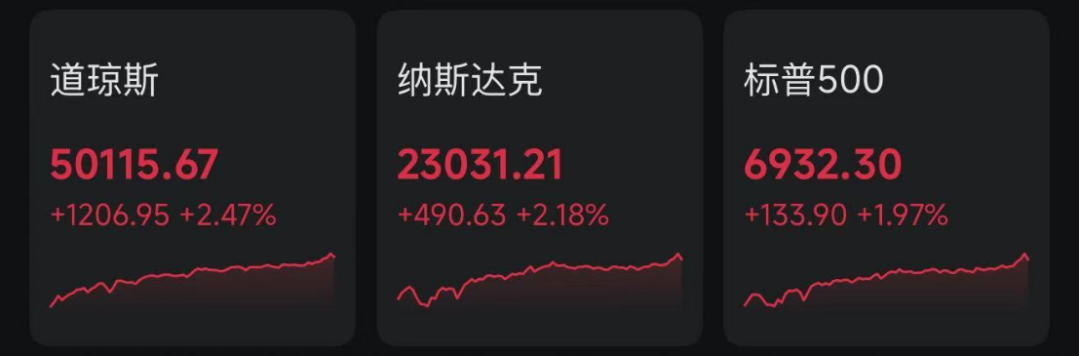
Market Performance - The Dow Jones Industrial Average (DJIA) has surpassed the 50,000 points mark for the first time, closing at 50,115.67 points, up 2.47% [2][3] - The Nasdaq Composite Index rose by 2.18%, closing at 23,031.21 points, while the S&P 500 Index increased by 1.97%, closing at 6,932.30 points [3] Individual Stock Movements - Nvidia shares surged nearly 8%, with CEO Jensen Huang emphasizing that the company's significant AI spending is "reasonable and sustainable" [8][10] - Major tech stocks showed mixed results, with Tesla up over 3%, Microsoft nearly 2%, and Amazon down over 5% [5] Precious Metals Market - The precious metals market experienced a strong rebound, with London spot silver rising nearly 10% and gold increasing by nearly 4% [12] - The iShares Silver Trust, the largest silver ETF, rose over 5%, and several mining companies saw significant gains [12] AI and Technology Investment - Huang stated that the current period represents the largest infrastructure build-out in history, driven by the transformative impact of AI [10] - He noted that as long as there is a willingness to pay for AI, companies will continue to invest heavily in this area [10] Chinese Stocks Performance - The Nasdaq Golden Dragon China Index rose by 3.71%, with notable gains in companies like NIO (over 7%) and Li Auto (over 6%) [6]
一夜突发!比特币闪崩,58万投资者集体爆仓,金额高达26.65亿美元,背后三个可怕信号
Sou Hu Cai Jing· 2026-02-06 21:47
Core Viewpoint - The cryptocurrency market experienced a significant crash on February 6, 2026, with Bitcoin's price dropping from nearly $67,000 to around $60,000, marking a decline of over 10% within hours. This decline affected nearly all major cryptocurrencies, leading to a rapid evaporation of market capitalization [1][3]. Market Dynamics - The crash triggered a wave of forced liquidations, with 586,219 investors being liquidated within 24 hours, resulting in a total liquidation amount of $2.665 billion. Most of these liquidations were from long positions, amounting to $2.314 billion, indicating that investors betting on price increases suffered the most [3][10]. - The "Fear and Greed Index" dropped to 10, indicating extreme fear in the market, a level not seen since earlier bear market cycles. Investors shifted their focus from which cryptocurrencies to buy to concerns about how low prices could go and whether it was too late to cut losses [3]. Causes of the Crash - The first key pressure point was a reversal in macro policy expectations, with the new Federal Reserve chair nominee's stance interpreted as a continuation or intensification of monetary tightening, leading to prolonged high-interest rates. This shift undermined the rationale for institutional investors to hold cryptocurrencies [4]. - The second pressure was a significant outflow of funds, with over $740 million exiting from more than 140 cryptocurrency-themed ETFs on February 5 alone, and nearly $4 billion in total over the past three months. This indicated a withdrawal of institutional long-term capital from the market [8]. - The third pressure stemmed from the disillusionment with regulatory intervention, as U.S. Treasury Secretary Janet Yellen stated that the Treasury had neither the power nor the intention to intervene in the natural fluctuations of the crypto market, exacerbating feelings of helplessness among market participants [8]. - The fourth pressure was the inherent fragility of the market structure due to excessive leverage, with many investors using high leverage to amplify returns. This led to a vicious cycle of price declines triggering forced liquidations, further driving down prices [9]. Market Impact - The crash had repercussions beyond the cryptocurrency sector, impacting publicly traded companies holding Bitcoin. For instance, Strategy Inc. saw its stock price plummet over 17% on February 5, following a reported net loss of $12.4 billion in Q4 2025 due to the decline in Bitcoin asset values [10]. - The average cost for investors who purchased Bitcoin through U.S. spot Bitcoin ETFs was approximately $84,100, while Bitcoin's price hovered around $64,000, indicating that many ETF investors were facing significant unrealized losses [12]. - Analysts expressed concerns about the potential for a self-reinforcing "death spiral" in Bitcoin prices, with some suggesting that Bitcoin has proven to be a speculative asset rather than a reliable hedge against economic uncertainty [11][13].

US Consumer Data Sparks Relief Rally in Bitcoin, Gold, and Stocks
Yahoo Finance· 2026-02-06 19:47
Core Viewpoint - Global markets experienced a significant rebound on February 6 after a sharp sell-off, with Bitcoin recovering to around $70,000 and US equities, gold, and silver also advancing due to technical buying and easing macro fears [1]. Group 1: Market Recovery - The rebound was initiated after key technical levels held across asset classes, particularly the S&P 500 touching its 100-day moving average, which triggered mechanical buying from funds rebalancing risk exposure [2]. - Bitcoin mirrored this pattern, rebounding sharply after a brief fall to $60,000 as forced liquidations slowed and funding rates stabilized, allowing spot buyers to support a short-term recovery [3]. Group 2: Positioning and Selling Pressure - The previous sell-off had cleared excess leverage across markets, particularly in crypto, where derivatives positioning had been heavily skewed toward longs, amplifying downside risks [4]. - By February 6, much of the excess leverage had been flushed out, easing marginal selling pressure and allowing prices to rebound without new bullish catalysts [6]. Group 3: Macro Signals - US macro data released on February 6 showed stronger-than-expected consumer sentiment, marking a six-month high, which helped stabilize market sentiment and reduced fears of sudden economic deterioration [7]. - Bond markets reacted by pricing a slightly higher probability of a near-term rate cut from the Federal Reserve, which pushed short-term yields lower and eased financial conditions, supporting risk assets [8]. Group 4: Safe-Haven Assets - Gold and silver also saw sharp recoveries, reinforcing the view that the prior session's decline was due to liquidity stress rather than a fundamental rejection of safe-haven assets [9].
比特币价格单日暴跌12%至6万美元,创16个月新低
Sou Hu Cai Jing· 2026-02-06 17:26
Group 1 - Bitcoin price dropped over 12% on February 6, reaching a low of $60,062, down more than 48% from its historical high of $126,000 on October 6, 2025, marking a new low in 16 months [2] - Coinglass reported that Bitcoin's price fluctuated between $75,000 and $80,000 at the end of January 2026, but began to decline sharply in February, falling from around $79,000 to approximately $75,000 between February 3 and 4 [2] - On February 5, Bitcoin broke below the $70,000 support level, leading to accelerated sell-offs and a significant increase in market liquidations, with over $10.96 billion in long liquidations and approximately $2.48 billion in short liquidations, affecting more than 570,000 traders [2] Group 2 - Strategy (NASDAQ: MSTR), a major corporate holder of Bitcoin, reported a quarterly loss of approximately $12.4 billion for Q4 2025, primarily due to the significant drop in Bitcoin prices since late 2025 [3] - The company's stock price has declined over 44% in the past six months, reflecting the downturn in Bitcoin prices, and its "Bitcoin treasury strategy" is facing severe challenges with substantial losses in holdings [3] - As of February 1, 2026, Strategy held 713,502 Bitcoins at a total cost of $54.26 billion, with an average purchase price of $76,052 per Bitcoin, and concerns are rising that selling these holdings could lead to further declines in Bitcoin prices [4]


全线暴跌!凌晨超43万人爆仓,美股、黄金、白银、比特币、石油集体重挫
Sou Hu Cai Jing· 2026-02-06 16:33
Group 1: Cryptocurrency Market Collapse - The cryptocurrency market experienced a significant crash, with Bitcoin's price plummeting from over $70,000 to $63,860.8, marking a daily drop of 12.81% and a total decline of over 48% since its peak in October 2024 [3] - The total market capitalization of Bitcoin halved from its peak of $2.48 trillion to $1.27 trillion, with over 43,000 traders facing liquidation, resulting in total losses of approximately $2.069 billion [3] - Ethereum dropped by 13.1%, XRP fell over 22%, and other cryptocurrencies like SOL and Dogecoin also saw declines exceeding 14% [3] Group 2: Traditional Financial Markets Impact - The traditional financial markets were not spared, with major U.S. stock indices falling over 1%, and the Nasdaq index experiencing a 1.59% drop, marking its worst three-day decline since April of the previous year [4][5] - Major tech stocks such as Amazon and Microsoft saw declines exceeding 4%, while Nvidia dropped over 1%, reflecting a broader sell-off in the tech sector [5] - Concerns arose from the introduction of a new AI model by Anthropic, which led investors to worry about the potential disruption to traditional software and financial services companies [5] Group 3: Economic Indicators and Employment Data - The U.S. labor market showed signs of distress, with employers announcing 108,435 layoffs in January 2026, the highest number for that month since the global financial crisis [6] - Initial jobless claims increased beyond market expectations, and job vacancies fell to their lowest level since September 2020, indicating a cooling labor market [8] - The disconnect between job losses and GDP growth, which remained around 4%, raised concerns about the long-term implications for the economy [6] Group 4: Precious Metals and Commodities - Precious metals also faced significant declines, with silver prices dropping over 19% and gold prices falling more than 3%, following a historical sell-off [8] - The Chicago Mercantile Exchange raised margin requirements for gold and silver futures to control market volatility, which could force leveraged traders to liquidate positions [8] Group 5: Investor Sentiment and Market Fear - A "crisis of confidence" spread from the cryptocurrency sector to the broader financial market, with the CNN Fear and Greed Index plummeting to 10, indicating extreme fear among investors [11] - The proportion of individual investors expecting a market downturn surged to 68%, the highest level since December 2008, reflecting widespread pessimism across both institutional and retail investors [12]

盘前:美股股指期货探底反弹 纳指期货现涨0.51%
Xin Lang Cai Jing· 2026-02-06 13:44
Market Overview - Global markets experienced a decline due to concerns over the disruptive effects of AI and the substantial investments required, leading to significant sell-offs in U.S. stocks, which further spread globally [1][2] - The S&P 500 index futures rose by 0.52%, while the Dow and Nasdaq futures increased by 0.60% and 0.51% respectively, after initially dropping over 1.6% [1] - The MSCI All Country World Index is expected to record its worst weekly performance since mid-November, with a weekly decline of approximately 1.6% [1] AI Spending Concerns - Amazon announced a capital expenditure plan of $200 billion for AI infrastructure, significantly exceeding Wall Street expectations, which caused market shockwaves [2][15] - The combined expected AI spending from Amazon, Microsoft, Google, and Meta is around $600 billion this year, raising concerns about the costs associated with the AI boom [2][15] Market Sentiment and Reactions - The S&P 500 Software and Services Index fell by 4.6%, with a total market value loss of about $1 trillion since January 28, leading to the term "software-mageddon" being used to describe the sell-off [3][16] - There is a notable market rotation occurring, with the Nasdaq underperforming compared to the S&P 500 and traditional consumer staples stocks gaining traction [3][16] Cryptocurrency and Commodities - Bitcoin rebounded by 3.9% after experiencing its worst single-day performance since June 2022, stabilizing around $65,000 [2][19] - Gold and silver prices have been volatile, with gold futures expected to rise by 3% this week, while silver dropped by 4.1% to $73.56, with expectations of a cumulative decline of over 6% for the week [19][20] Economic Indicators - Initial jobless claims in the U.S. surged, further dampening market sentiment, and U.S. Treasury yields fell to a three-week low [17] - The market is increasingly betting on a potential interest rate cut by the Federal Reserve, with the probability of a 25 basis point cut rising to 20.7% for the March meeting [5][18]

美股盘前丨股指期货盘前齐涨 亚马逊跌近8%
Xin Lang Cai Jing· 2026-02-06 13:37
Company News - Amazon's stock fell nearly 8% in pre-market trading due to concerns over its projected capital expenditures reaching $200 billion by 2026 [1] - STELLANTIS's stock dropped over 20% in pre-market trading after announcing a €22 billion impairment charge related to adjustments in its electric vehicle strategy [1] - Reddit's stock rose over 7% in pre-market trading after approving a stock buyback plan of up to $1 billion [1] Market Dynamics - U.S. stock index futures rose, with Dow futures up 0.42%, S&P 500 futures up 0.41%, and Nasdaq futures up 0.46% [1] - Major European stock indices mostly increased, with the UK FTSE 100 up 0.41%, France's CAC40 down 0.04%, Germany's DAX up 0.49%, and the Euro Stoxx 50 up 0.66% [1] - International oil prices increased, with WTI crude rising 1.39% to $71.99 per barrel and Brent crude rising 1.34% to $75.66 per barrel [1] - Cryptocurrency-related stocks rebounded, with Coinbase up nearly 4% and Bitmine Immersion Technologies up nearly 3% [1]
NCE平台:比特币重挫触及关键支撑
Xin Lang Cai Jing· 2026-02-06 13:05
Group 1 - The cryptocurrency market has experienced significant volatility, with Bitcoin dropping over 10% to around $63,000 within 24 hours, marking the most severe single-day decline since the FTX incident in November 2022 [1][3] - Bitcoin's price has halved since reaching a peak of $126,000 in October last year, indicating the fragility of investor sentiment in the current high-volatility environment [1][3] - A global asset sell-off has intensified panic, with silver plummeting 14% and gold retreating from historical highs, affecting the stock market, particularly tech stocks closely linked to crypto assets [1][3] Group 2 - Analysts attribute the price volatility to liquidity exhaustion, where insufficient market depth can trigger large-scale forced liquidations from small sell-offs [2][4] - The market is still in a bottom-seeking phase, with no clear signs of stabilization or reversal, and investors should monitor the 200-day moving average between $58,000 and $60,000 as a critical support level [2][4] - In the altcoin sector, the decline has been even more pronounced, with major tokens like XRP experiencing drops close to or exceeding 20% [2][4]